
Reviewed · BUS TOURS IN KYOTO
Kyoto: Hop-on Hop-off Sightseeing Bus Ticket
Kyoto rewards a plan, not a sprint. This $27 hop-on hop-off bus ticket gives you a simple way to reach far-flung sights such as Kinkakuji, Ginkakuji, Nijo Castle, and Kiyomizu-dera without decoding the city’s busy transport system. I like the freedom to stay five minutes or two hours at a stop, and I like that a full loop can help you get your bearings before choosing where to spend your time.
I also like the friendly, helpful staff and the generally punctual service. Guides such as Miyuki, Casey, Lauren, and Frederick have earned warm praise for practical advice and good storytelling. The catch is timing: buses may be about 45 minutes apart, and one missed bus can create a long wait, especially in the late morning. The open top is fun in good weather, but direct sun, rain, cold, or severe storms can change the experience quickly.
In This Review
- Key points to know before you board
- Why this bus works well in spread-out Kyoto
- Starting at Kyoto Station with a mobile voucher
- Nijo Castle and the central Kyoto stops
- Kinkakuji and the northern temple route
- Kyoto Imperial Palace and eastern Kyoto
- Gion, Kiyomizu-dera, and the final southern stops
- What the ride feels like from the upper deck
- One day or two days for $27?
- Timing, staff, and practical limits
- Who should choose this Kyoto bus?
- Should you book it?
- FAQ
- Where can I board the Kyoto sightseeing bus?
- How long is the ticket valid?
- Which languages are available for the audio guide?
- Does the ticket include temple and museum admission?
- Can young children ride for free?
- Can I bring food or an umbrella on the bus?
- What happens if the weather is bad?
Key points to know before you board
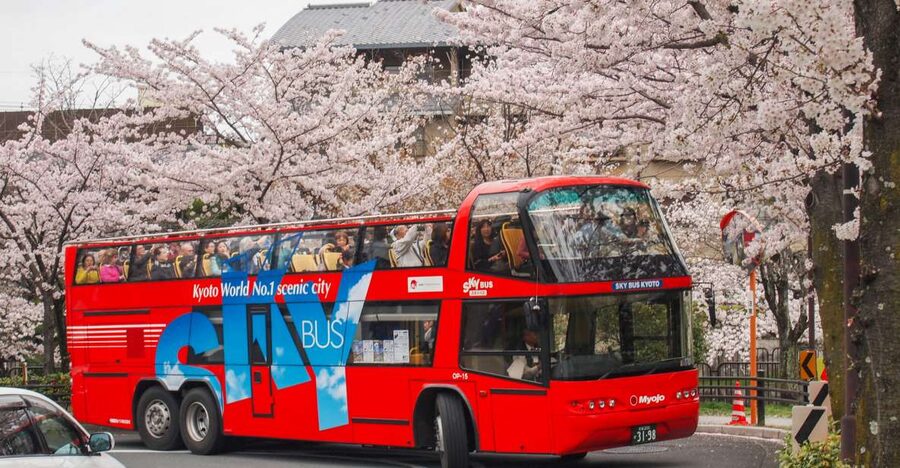
- Kyoto Station is the easiest starting point: Find the stop outside the north central exit, directly in front of the Isetan department store.
- Two days gives you breathing room: A one-day ticket works for an overview, while the two-day option lets you spend proper time at several temples.
- The route links major sights: You can reach Nijo Castle, Kinkakuji, Ginkakuji, Kyoto Imperial Palace, Gion, and Kiyomizu-dera areas.
- A full circuit takes about 45 minutes: Riding once without getting off is a useful way to understand the city’s layout.
- Expect gaps between buses: Service can be roughly 45 minutes apart at some times, so check the timetable before leaving a temple or market.
- The audio guide covers seven languages: English, French, Japanese, Korean, Chinese, Spanish, and German are available.
Why this bus works well in spread-out Kyoto
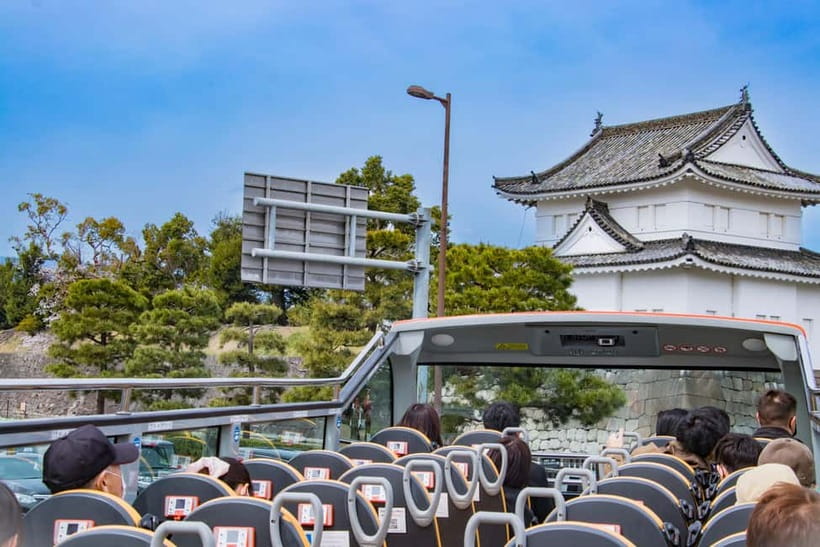
Kyoto looks compact on a map, but its big sights are scattered across different parts of the city. Nijo Castle sits west of the central shopping streets. Kinkakuji is farther northwest. Ginkakuji and Heian-jingu are on the eastern side, while Kiyomizu-dera and Gion sit southeast of the center.
That makes this ticket useful for a first visit, especially if you do not want to work out several train, subway, and city-bus connections. The bus does not replace every form of transport, but it creates a clear line between many of Kyoto’s main sights.
I especially like the option of riding the complete circuit first. One full loop takes about 45 minutes, giving you a quick look at the city and helping you decide which stops deserve your limited sightseeing hours. You can then get off at the places that appeal most, rather than guessing from a map.
The service is described as having red and blue routes, with one line focused more heavily on temple areas. Take a moment to confirm the route before boarding. A little confusion between the two lines has been reported, and a clear timetable is more useful than a hopeful glance at the next bus stop.
More Bus Tours in Kyoto
- PERFECT KYOTO 1-Day Bus Tour
★ 5.0 · 13,518 reviews - Kyoto: Fushimi Inari, Kinkakuji, Bamboo Grove 1 Day Bus Tour
★ 4.8 · 4,316 reviews - Kyoto/Osaka: Nara, Fushimi Inari Taisha, Arashiyama Bus Tour
★ 4.7 · 1,275 reviews
Starting at Kyoto Station with a mobile voucher
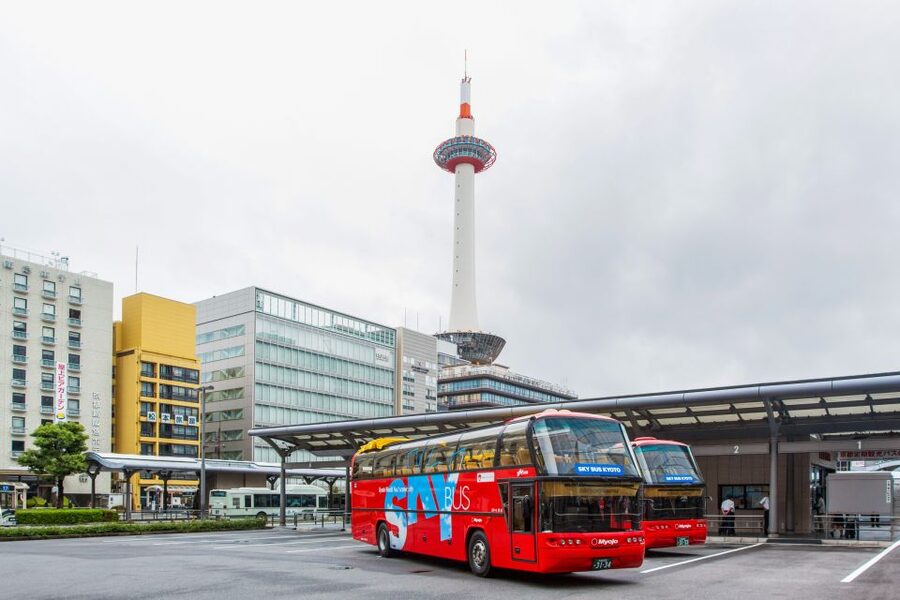
Kyoto Station is the practical place to begin. Exit through the north central side, then look for the sightseeing bus stop directly in front of the Isetan department store. You can board at Kyoto Station or at any other stop along the route by showing your mobile voucher.
Starting here has two advantages. First, the station is easy to reach and has restaurants, shops, restrooms, and places to pause when you return. Second, beginning at the first stop makes it easier to plan the day before you get deep into the route.
The bus is intended for sightseeing rather than point-to-point commuting. You may find a seat downstairs, while the open upper deck offers the better view when conditions are pleasant. Some sections of the top deck are covered, which helps with heat and light rain, but you should still expect direct sunlight.
Bring water in a plastic bottle or another soft drink with a lid. Food, alcohol, umbrellas, smoking, and selfie sticks are not allowed on board. Raincoats are provided in wet weather, although rainy conditions can still limit what you see from the upper deck.
Nijo Castle and the central Kyoto stops
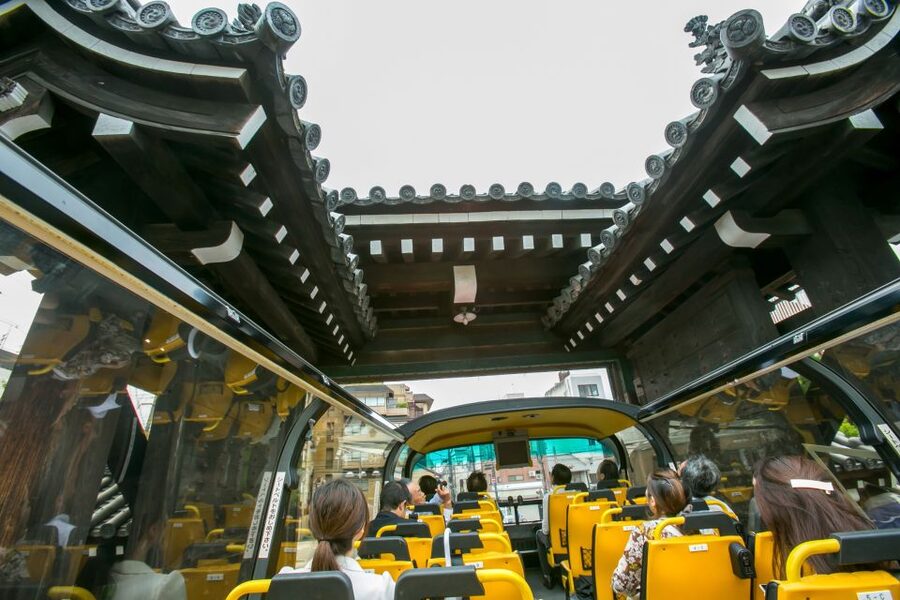
The Nijo-jo Castle stop is one of the strongest early choices. The castle gives you a break from the bus and a chance to see one of Kyoto’s major UNESCO World Heritage sites. Allow enough time for the visit rather than treating it as a quick photo stop, because the grounds and interiors need more than a few minutes.
The bus also stops near Nishihonganji, at the Kyoto Tokyu Hotel. This is useful for travelers who want to add a major temple in the central area, though the stop itself may require a short walk depending on your exact destination.
Shijo Karasuma and Nishiki-ichiba Market bring you into Kyoto’s shopping and food district. This is a good place to get off for a meal, browse the market, or walk around Teramachi-dori and the Kawaramachi area. One practical point: you will probably want more time here than the bus interval allows, so check the next departure before wandering too far.
For a first-day plan, I might ride from Kyoto Station to Nijo Castle, continue to the market district, and then use the bus again after lunch. That gives you history, food, and central-city streets without constantly changing transport.
Kinkakuji and the northern temple route
Kinkakuji, the Golden Pavilion, is one of Kyoto’s headline sights and a major reason to choose this bus. The stop is close enough to make the visit convenient, though you should not expect the bus itself to provide a clear view of the pavilion. The attraction is reached on foot from the stop, and the best photographs come after entering the grounds.
Carry cash for the admission fee. The Golden Pavilion accepts cash, and there is no ATM on the premises. This is exactly the sort of small detail that can save you an awkward pause at the entrance.
The area around Kinkakuji can be crowded, particularly during popular seasons. The bus removes much of the transport stress, but it cannot remove the crowds at the temple itself. Go early if your schedule allows, and leave extra time for the walk from the stop and the entrance line.
Daitokuji Temple is another northern stop. It gives you an alternative to the better-known Golden Pavilion and may suit you if you prefer a quieter temple visit. The route also serves Kitano-tenmangu Shrine and Kamishichiken, an area with traditional Kyoto associations and historic streets.
I would not try to visit every northern stop in a single rushed morning. Pick one major sight, then add another only if you have checked the bus schedule and the attraction’s opening details separately. Your bus ticket does not include entrance fees.
A completely different kind of day out in Kyoto:
- Kyoto: Tea Ceremony in a Traditional Tea House in Kiyomizu
★ 4.9 · 3,519 reviews - Kyoto Geisha Walking Tour: Gion District & Hidden Gems
★ 4.7 · 3,273 reviews - Kyoto: Tea Ceremony Ju-An at Jotokuji Temple
★ 4.9 · 3,207 reviews - Kyoto: Gion Magical Night Walking Tour with Geisha Trivia
★ 4.9 · 2,393 reviews
Kyoto Imperial Palace and eastern Kyoto
The stop at Doshisha University serves the Kyoto Imperial Palace area. The palace grounds offer a useful change of pace from temple interiors and narrow lanes. You can pair this stop with a walk through the surrounding central district before returning to the route.
On the eastern side, Ginkakuji, the Silver Pavilion, is a particularly valuable inclusion. It is not always included in short guided city tours, yet it gives you a different feel from Kinkakuji. The Silver Pavilion is not silver in the same showy way as its golden counterpart, and the surrounding garden is an important part of the visit.
From Ginkakuji, you may want to allow time for the nearby walking areas before returning to the bus. The attraction is not simply a quick stop for a photograph. If you are using a one-day ticket, watch the clock carefully, because a long visit here can affect your chance to reach Gion or Kiyomizu-dera later.
Heian-jingu Shrine and Okazaki Park provide another eastern option. This stop works well if you want a large shrine setting and open space between temple visits. It also breaks up a day that might otherwise feel like one famous religious site after another.
The audio commentary adds basic context as the bus moves between these places. It is available in seven languages, but I would treat it as an introduction, not a full lecture. The narration can cut off as the bus nears a stop and switch to a directional announcement. Some passengers also found the background music louder than the spoken information.
Gion, Kiyomizu-dera, and the final southern stops
The Gion stop, near Kotowa-Kyoto Yasaka, puts you close to one of Kyoto’s best-known traditional districts. This is a good place to get off and walk rather than simply look from the bus window. The streets are more rewarding at ground level, and the bus stop gives you a useful return point once you have finished.
Gojozaka serves the Kiyomizu-dera Temple and Gion area. Kiyomizu-dera is another UNESCO World Heritage site and one of Kyoto’s essential visits. The stop is convenient, but expect an uphill walk toward the temple. Comfortable shoes matter here, especially if you are also visiting Gion and other eastern stops the same day.
The Sanjusangendo and Kyoto National Museum stop, near the Hyatt Regency Kyoto, gives you two strong cultural options. Sanjusangendo is known for its long temple hall and rows of Buddhist statues, while the National Museum offers a broader look at Japanese art and culture. Entrance fees are separate, and you should check how much time you want to spend before choosing one or both.
These southern stops are close enough to combine with Kiyomizu-dera in a longer day, but do not confuse convenient transport with a short visit. Kyoto’s major sights often have large grounds, queues, and walking routes. A two-day ticket makes this part of the city much easier to enjoy without racing back to the bus.
What the ride feels like from the upper deck
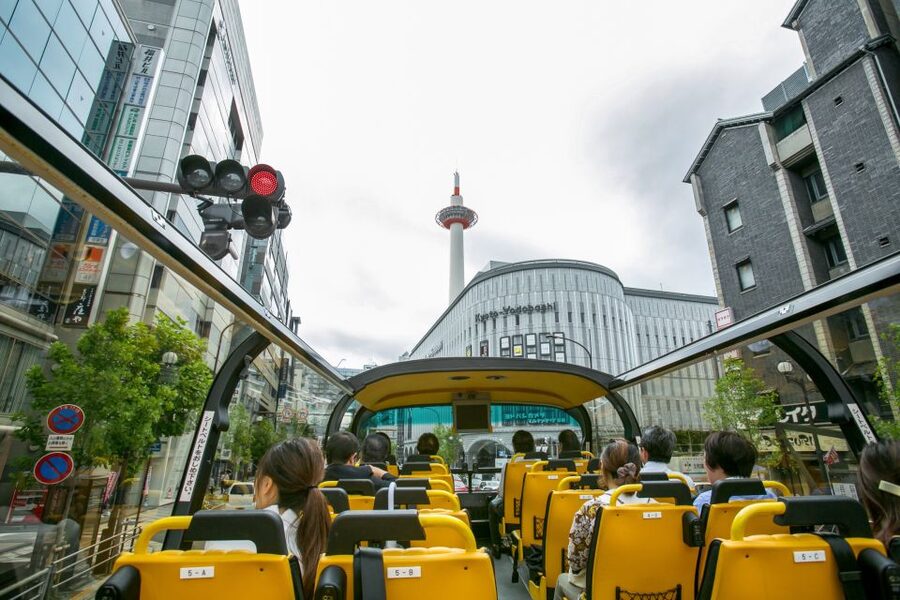
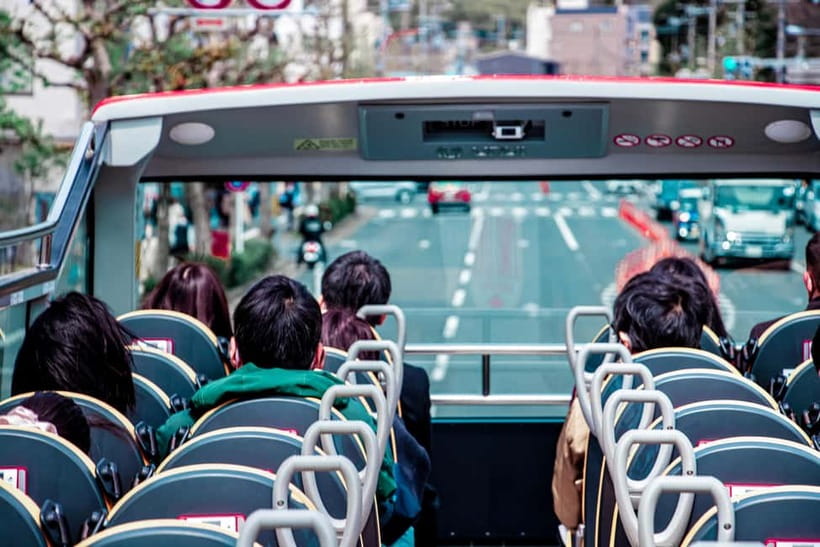
The open-top double-decker bus is most enjoyable when the weather cooperates. From above, you get a broad view of Kyoto’s streets and buildings, along with a better sense of how the old districts connect with the modern city.
The top deck is not a shaded observation platform. You are in direct sunlight, and summer heat can be intense. In winter, the open air can feel very cold. Wet weather pushes most people downstairs, where views are more limited. The bus may stop operating during severe weather such as typhoons or thunderstorms.
Air conditioning has been appreciated during hot months, and a partly covered upper deck offers some protection. Still, dress for the day rather than assuming the bus will solve every weather problem. A hat, sunscreen, and a light layer are sensible choices, while a raincoat is more useful than an umbrella because umbrellas are not allowed on board.
The Wi-Fi service is listed as temporarily suspended, so do not depend on it for maps or live information. If you want to track bus locations, download or prepare what you need before boarding. One positive detail is that some passengers found the service clean, comfortable, and orderly even when city traffic was heavy.
One day or two days for $27?
At $27 per person, this ticket offers good value if you use it for several long rides and visits. A couple of taxi journeys can quickly approach that price, especially when you are crossing Kyoto between the northwest, east, and southeast districts.
The one-day ticket makes sense if you want an overview and a few carefully chosen stops. It also suits a short stay when you have limited time and want to reduce the chance of getting lost around unfamiliar stations.
The two-day ticket is the better buy for most first-time visitors who want to enter several attractions. Use the first day to ride the circuit, note the stops that appeal to you, and visit one or two highlights. Use the second day to return to the areas you liked and stay longer.
The main value is not simply the number of rides. It is the time and mental energy saved by having one clear sightseeing network. You still need to walk between stops and attractions, pay entrance fees, and plan around traffic, but you avoid rebuilding your transport plan at every corner.
Timing, staff, and practical limits
The staff receive some of the strongest praise. Drivers and attendants are often described as friendly, helpful, and good with English. Guides including Miyuki, Casey, Lauren, and Frederick have been singled out for useful local suggestions, clear explanations, humor, and strong storytelling.
That human help matters if you are unsure which line to take or how to reach a nearby attraction. Staff have also helped passengers when buses were full, although capacity and departure times can vary.
Do not assume buses arrive every few minutes. A gap of about 45 minutes has been reported, with particularly long waits possible between 10 a.m. and noon. If you miss one, an hour can disappear from your sightseeing day.
I would plan around the timetable, not against it. Keep the bus stop location in mind, and leave a margin after each visit. The service may run on time, but Kyoto traffic can still affect the schedule.
Children aged five and under ride free when seated on the lap of an adult with a ticket, with one child per ticketed adult. Entrance fees, food, drinks, and hotel pickup are not included. Lower-deck seating and access may be a consideration for older visitors, since a ramp and more seats would make the service easier for some passengers.
Who should choose this Kyoto bus?
I would recommend it most strongly to first-time visitors, short-stay visitors, families, and anyone who finds Kyoto’s transport system intimidating. It is also useful if you want to see how the city is laid out before deciding where to return on foot.
It suits people who value flexibility. You can get off for a temple, stay for a market, and board again without buying another ticket each time. It also works well for a mixed-age group that needs a break from walking.
I would think twice if you want a detailed guided history of every attraction. The audio commentary gives useful facts and orientation, but it is not a replacement for an in-depth temple tour. I would also reconsider on a very wet or cold day if your main goal is open-top sightseeing.
Should you book it?
Book this bus if you want an easy first look at Kyoto and plan to visit several of the listed districts. The two-day ticket is my preferred choice because it lets you separate sightseeing from transport pressure.
Choose one day if you are short on time and will focus on three or four major stops. Either way, start at Kyoto Station, confirm the red and blue route information, carry cash for Kinkakuji, and build your day around the bus gaps.
This is not a magic shortcut through Kyoto. You still face crowds, walking, entrance fees, weather, and traffic. But for $27, it is a practical way to connect the city’s major sights while keeping your schedule in your own hands.
FAQ
Where can I board the Kyoto sightseeing bus?
You can board at any stop along the route. The first stop is at Kyoto Station, outside the north central exit and directly in front of the Isetan department store.
How long is the ticket valid?
You can choose a one-day or two-day ticket. Check availability for the applicable starting times when booking.
Which languages are available for the audio guide?
Audio commentary is available in English, French, Japanese, Korean, Chinese, Spanish, and German.
Does the ticket include temple and museum admission?
No. Entrance fees to attractions are not included. Food, drinks, hotel pickup, and hotel drop-off are also excluded.
Can young children ride for free?
Children aged zero to five do not need a ticket if they sit on the lap of an adult passenger with a ticket. The allowance is one child per ticketed adult.
Can I bring food or an umbrella on the bus?
Food, alcohol, smoking, selfie sticks, and umbrellas are not allowed. You may bring soft drinks with lids, such as plastic bottles or lidded coffee.
What happens if the weather is bad?
The bus has an open top, so you will be exposed to direct sunlight. Raincoats are provided in wet weather, but service may stop during severe conditions such as typhoons or thunderstorms.
Just added around Kyoto
- Kyoto: Gion Night Walking Tour with Geisha Insight★ 5.0 · 39 reviews
- Kyoto: Private Customizable Day Trip by Car★ 5.0 · 38 reviews
- Kyoto: Full Day Bike Tour★ 4.9 · 39 reviews
- Private Japanese Calligraphy in Kyoto – Learn Shodō with a Master★ 5.0 · 39 reviews
- Kyoto: Gion Evening Walk with Hidden Gems, Geisha & Sake★ 5.0 · 41 reviews
- Experience a tea ceremony in an authentic tearoom, in Kyoto!★ 4.5 · 41 reviews
- Kyoto Private Photo Shoot & Tour by SnapKyoto★ 5.0 · 41 reviews
- The Way of Tea: Kyoto Crafts, Hidden Temples & Wabi-Sabi Walk★ 5.0 · 41 reviews
Bus Tours in Kyoto, compared.
Fushimi Inari, Kinkakuji, Bamboo Grove 1 Day Bus Tour
Read our review →
Kyoto/Osaka: Nara, Fushimi Inari Taisha, Arashiyama Bus Tour
Read our review →
Nara History Guided Half Day Bus Tour with Lunch
Read our review →Browse the lists this tour appears in