
Reviewed · BUS TOURS IN KYOTO
Kyoto: Nara & Traditional Matcha Experience Bus Tour
Nara’s deer are only the beginning. This full-day coach tour gives you three major heritage sites, a close look at Japanese religious traditions, and a hands-on matcha session in Uji, all without piecing together several train and bus connections yourself. I especially like the mix of famous sights and quieter Uji, plus the warm, practical guiding style praised by guests such as At-Chan, Nanami, Mai, Yuta, and Rina.
I also like the comfortable air-conditioned bus, free Wi-Fi, included temple admissions, and time set aside for photos and shopping. The main trade-off is the pace: you cover Nara and Uji in about eight and a half hours, so each stop has a firm time limit and this is not the tour for slow, wandering exploration.
In This Review
- Key points to know before booking
- Why this Nara and Uji combination works
- Starting near Kyoto Station at 8:00 AM
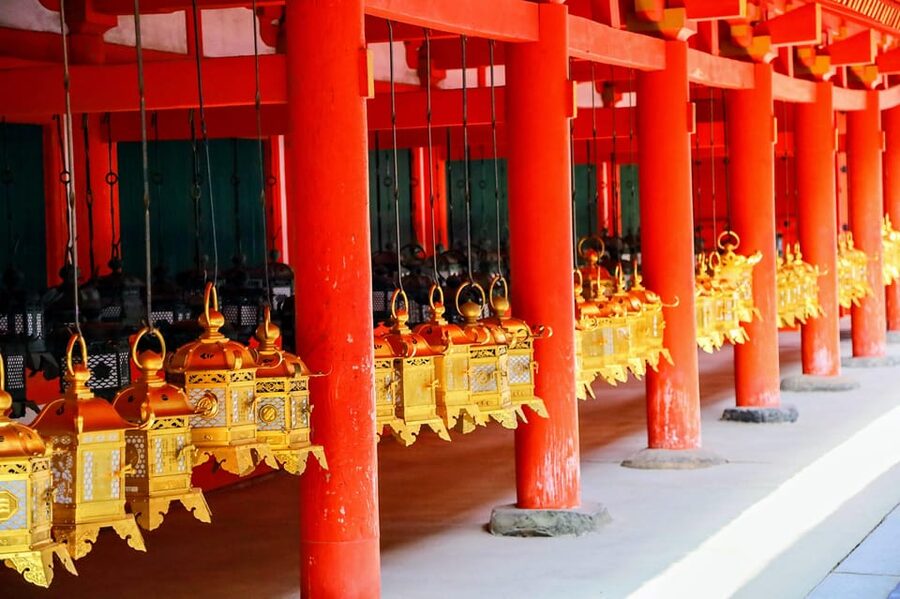
- Kasuga Taisha and its 3,000 stone lanterns
- Meeting Nara’s deer at Nara Park
- Todaiji Temple and the Great Buddha
- The included lunch option in the Uji area
- Byodoin Temple and the Phoenix Hall
- Making matcha from scratch in Uji
- The guides make a real difference
- What the 510-minute schedule feels like
- Who should book this tour?
- Practical tips for a smoother day
- Should you book the Nara and Uji tour?
- FAQ
- Where does the tour meet?
- Is hotel pickup included?
- What languages are available?
- Is lunch included?
- Is the tour suitable for wheelchair users?
- What happens if I arrive late?
Key points to know before booking
- Three major heritage stops: Visit Todaiji Temple, Kasuga Taisha Shrine, and Byodoin Temple in one day.
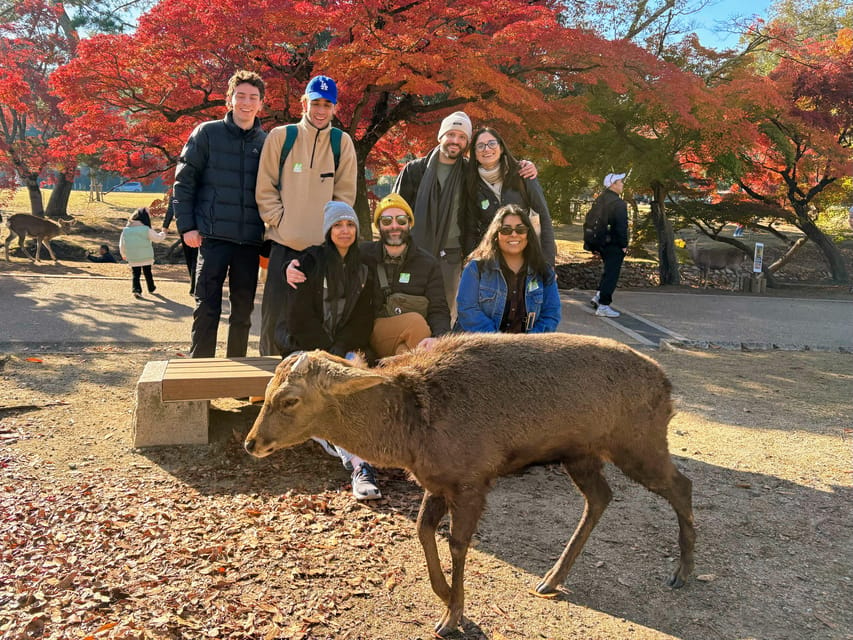
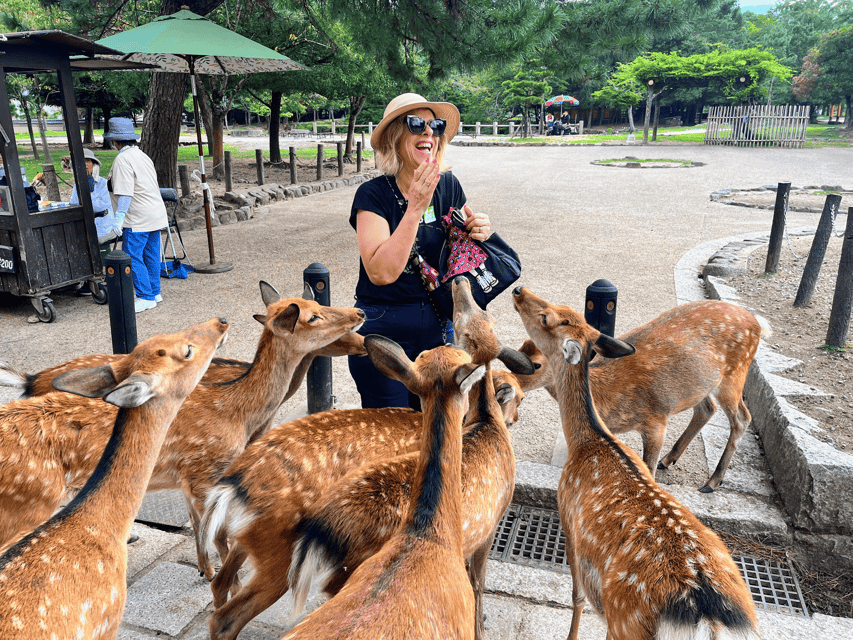
- Deer at Nara Park: Feed Nara’s famously polite wild deer with rice crackers, while keeping your fingers clear of eager mouths.
- Hands-on Uji matcha: Learn how finely ground green tea is made and prepare matcha yourself.
- Strong guide support: English-speaking guides such as Mai, Nanami, At-Chan, Yuta, and Rina have been praised for clear explanations, humor, and personal care.
- Coach convenience: Travel between Kyoto, Nara, and Uji by air-conditioned bus with free Wi-Fi.
- Important physical note: Expect stairs, hills, and plenty of walking. The tour is not suitable for wheelchair users or people with mobility impairments.
Why this Nara and Uji combination works
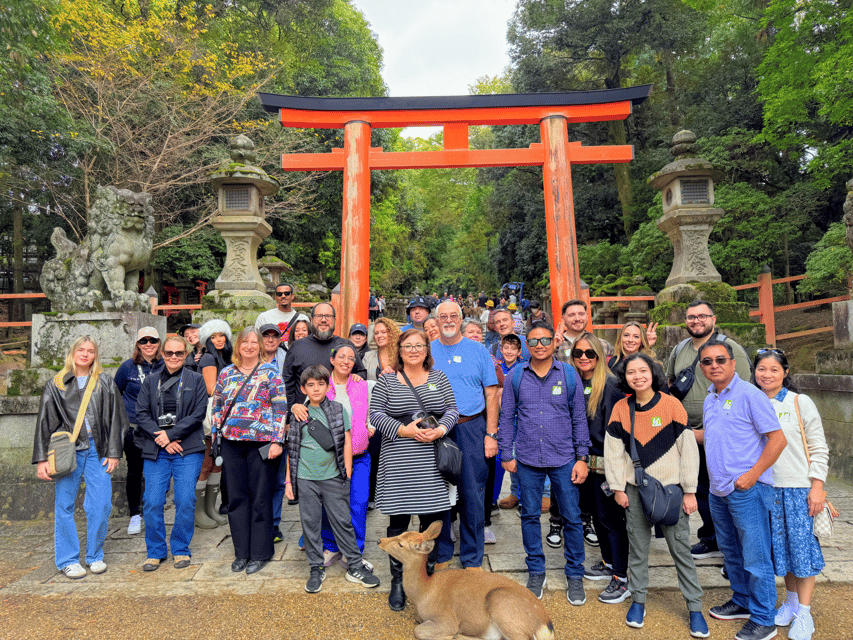
Many day trips from Kyoto focus only on Nara. This one adds Uji, giving you two very different sides of the region in one outing. Nara brings enormous temples, shrine lanterns, and deer. Uji brings tea culture, a smaller-town feel, and one of Japan’s most recognizable Buddhist buildings.
I like that the day is not built around temples alone. You get a living animal encounter at Nara Park, a Japanese lunch if you select that option, time for small shops, and a tea activity where you do more than simply watch someone prepare a drink.
The price is $122 per person. That is not a bargain-basement bus ride, but it includes transportation, an English-speaking guide, admission to Todaiji and Byodoin, and the matcha experience. When you add the trouble of arranging transport between Kyoto, Nara, and Uji, the price can make sense, especially for a first visit or a short stay.
The value depends on what you want. If you prefer independent travel and already feel comfortable using Japan’s trains, you could spend longer at each location on your own. If you want a well-organized day with cultural explanation and no route planning, the fee is easier to justify.
More Bus Tours in Kyoto
- PERFECT KYOTO 1-Day Bus Tour
★ 5.0 · 13,518 reviews - Kyoto: Fushimi Inari, Kinkakuji, Bamboo Grove 1 Day Bus Tour
★ 4.8 · 4,316 reviews - Kyoto: Hop-on Hop-off Sightseeing Bus Ticket
★ 3.9 · 2,034 reviews
Starting near Kyoto Station at 8:00 AM
The meeting point is in front of Tully’s Coffee at the Kyoto Avanti Store, at 31 Higashikujo Nishisannocho. Check-in is at 7:50 AM, with departure at 8:00 AM. Look for the green and white Japan Panoramic Tours flag.
Give yourself extra time to find the café. Kyoto Station is large, and reaching the correct side or crossing through the station can take longer than expected. One guest found the meeting point difficult to locate and needed help from the tour company, so I would not cut this close.
There is no hotel pickup or drop-off. You need to reach the meeting point yourself, and the operator does not offer refunds or changes for late arrivals or no-shows.
Once aboard, you travel in an air-conditioned coach with free Wi-Fi. The bus is regularly ventilated and has an antibacterial coating. A professional English-speaking guide handles the main commentary, while audio headsets offer additional language support in French, German, Italian, Portuguese, Spanish, and Ukrainian.
The road toward Nara takes about an hour. Along the way, the guide may point out sights such as Fushimi Castle and the former Heijokyo palace area. These are passing views rather than scheduled stops, but they help connect modern Kyoto with the older capitals and power centers of Japan.
Kasuga Taisha and its 3,000 stone lanterns
The first scheduled visit is Kasuga Taisha, one of Nara’s most atmospheric shrines. You have about 30 minutes here, enough to see the main approach and appreciate the repeated rows of stone lanterns.
The lanterns are the visual hook. They line the paths through the wooded shrine grounds and create a strong sense of place, especially when you move away from the road and toward the shrine buildings. Your guide can explain the role of the shrine and the customs connected with visiting a Shinto site.
Thirty minutes is useful but short. You will not have time to inspect every corner or linger over every detail. Stay with the group’s timing, and ask your guide what deserves your attention before you wander off for photographs.
The paths include uneven ground, steps, and some uphill walking. Wear shoes that can handle a full day outdoors, not just stylish footwear for Kyoto’s cafés.
Meeting Nara’s deer at Nara Park
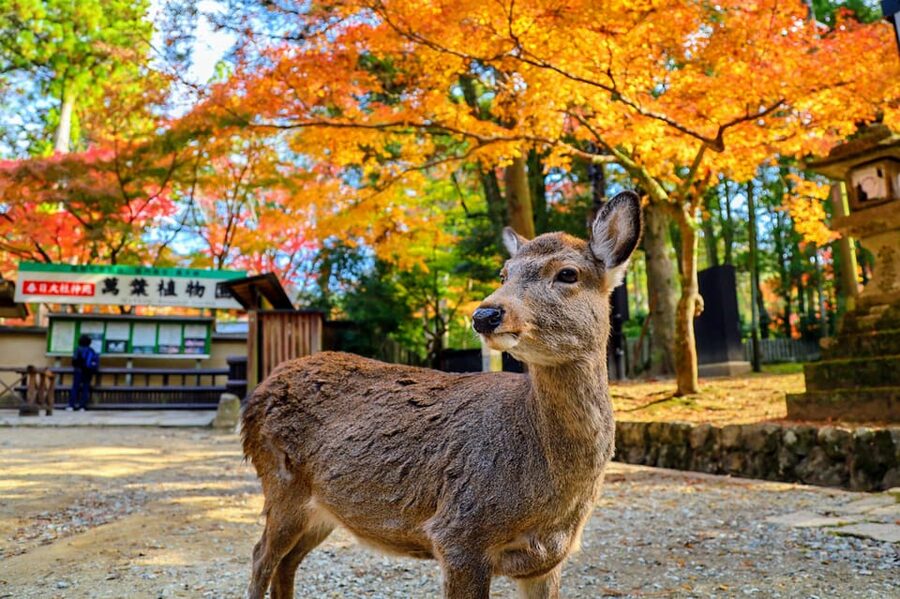
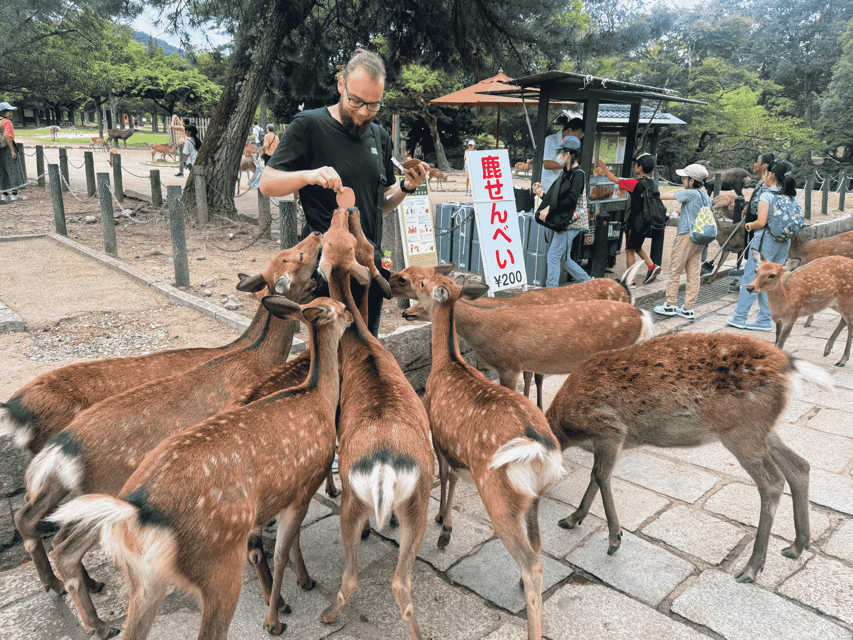
Nara Park is beside Todaiji, so the tour naturally links the animals with the temple visit. You get around 30 minutes in the park, where wild deer move freely around the paths and public areas.
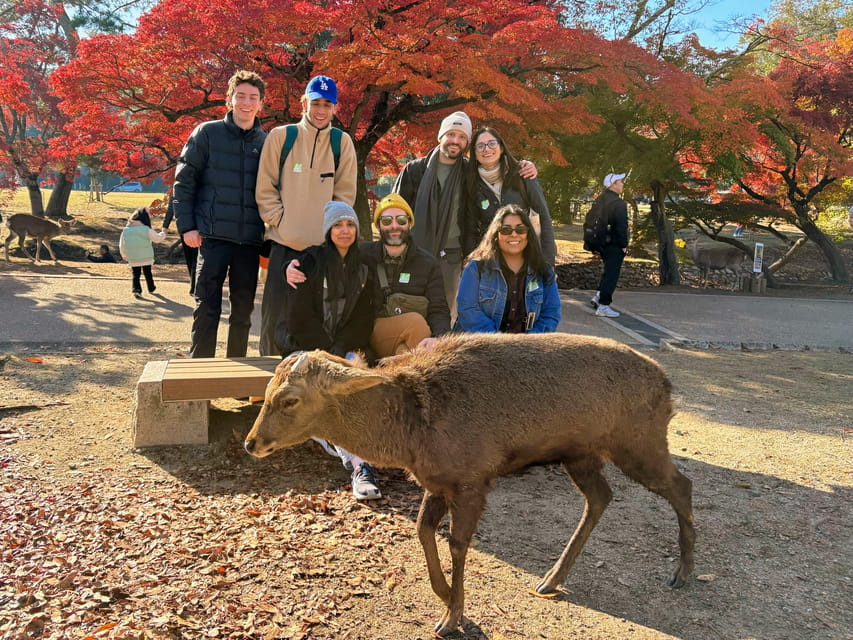
The deer are accustomed to people and may bow when you offer them rice crackers sold at roadside stalls and near the shrine paths. This is one of the day’s most memorable moments, particularly if you have never been close to animals that wander freely in a major historic setting.
Keep your feeding session controlled. The deer can be charming, but they can also become persistent once they see food. Hold the cracker openly, feed it, and put away any remaining paper or food before continuing. A guest specifically warned that the deer can bite, so keep your hands and fingers out of the way.
The half-hour window gives you time to buy crackers, feed several deer, and take photos. It is not long enough for a relaxed park walk. If the deer are your main reason for booking, remember that traffic, weather, and operating conditions can affect the schedule.
A completely different kind of day out in Kyoto:
- Kyoto: Tea Ceremony in a Traditional Tea House in Kiyomizu
★ 4.9 · 3,519 reviews - Kyoto Geisha Walking Tour: Gion District & Hidden Gems
★ 4.7 · 3,273 reviews - Kyoto: Tea Ceremony Ju-An at Jotokuji Temple
★ 4.9 · 3,207 reviews - Kyoto: Gion Magical Night Walking Tour with Geisha Trivia
★ 4.9 · 2,393 reviews
Todaiji Temple and the Great Buddha
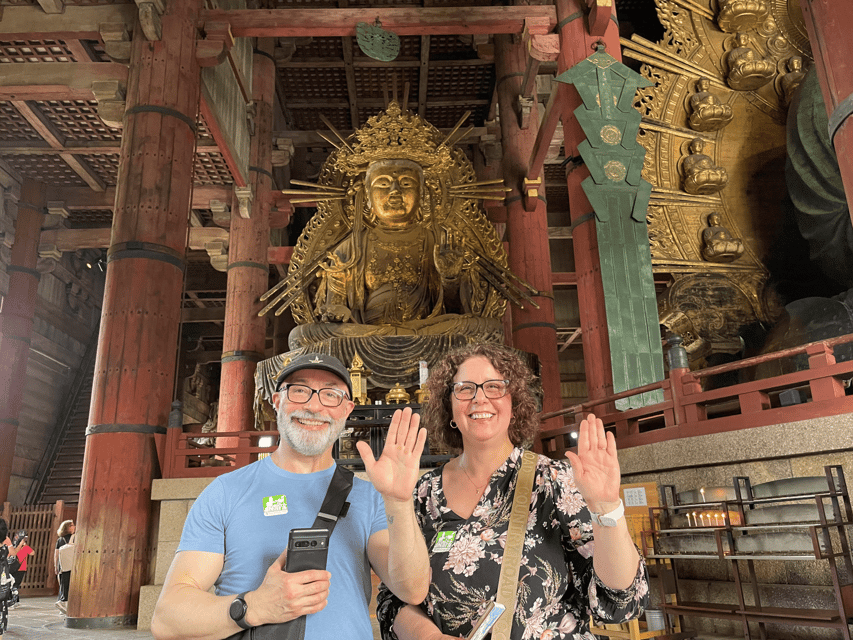
Todaiji is the heavyweight stop. The temple’s Daibutsuden Hall houses the Great Buddha of Nara and is one of the world’s largest wooden buildings. Admission is included, and you have about 50 minutes to enter the temple area, see the Buddha, and take in the scale of the hall.
This is where the tour’s historical context pays off. A building of this size can be difficult to understand from a quick photograph, but standing before the wooden structure gives you a better sense of its ambition. Inside, the Great Buddha provides the visual center, while the surrounding hall shows how architecture, faith, and political power were linked in ancient Japan.
The grounds can be busy, particularly during popular seasons. Your guide helps you reach the main features without wasting the available time. Guides including At-Chan, Yuta, and Nanami have been praised for explaining the history clearly and keeping groups organized.
Because Nara Park and Todaiji are next to each other, you may encounter deer around the temple approach as well. Watch your belongings and keep your attention on the guide when the group is moving. A large coach tour is convenient here, but it also means you must return at the agreed time.
The included lunch option in the Uji area
After Nara, the coach continues toward Uji. The day includes a 50-minute lunch break at a local restaurant. You can choose the tour with a Japanese lunch option, or arrange your own food and drinks.
The included meal is described as a traditional Japanese lunch, and one guest found it tasty and worthwhile. It is a practical choice if you want a set meal without spending part of your free time searching for a restaurant.
Vegetarian arrangements must be made at least two days before the tour date. Last-minute bookings receive the regular meal, so do not assume a special diet can be handled on the day. Additional food and drinks are not included.
The lunch break is functional rather than leisurely. You have a set amount of time before Byodoin, so this is not the moment for a long restaurant visit or an extended café stop.
Byodoin Temple and the Phoenix Hall
Byodoin is the Uji stop with the strongest visual identity. Its Phoenix Hall appears on the Japanese 10-yen coin, and the temple is part of the UNESCO-listed Historic Monuments of Ancient Kyoto.
You have about one hour here. The hall sits beside a pond, where its balanced form and reflection create the classic view. The building’s name comes from the phoenix figures on the roof, and your guide can help you notice details that are easy to miss when you are focused only on taking a picture.
The one-hour visit gives you a reasonable look at the temple grounds and time for photographs. As with Todaiji, it does not allow a slow study of every room or exhibit. The tour works best if you accept that you are sampling several important sites rather than treating Byodoin as a full museum visit.
The route includes stairs and hills, and you should expect to walk between the coach, temple areas, and later tea facilities. Comfortable shoes and a bottle of water are essential.
Making matcha from scratch in Uji
The final major activity is the matcha experience, with about 70 minutes for tea-related activities and free time in Uji. Uji is closely associated with Japanese green tea, so this is more than a decorative add-on after the temples.
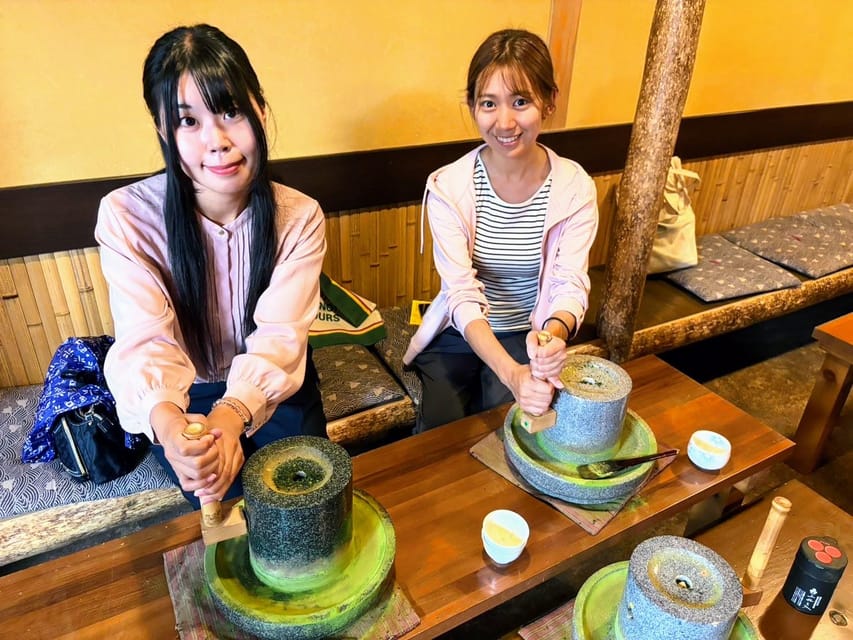
You learn that matcha is made from finely ground green tea leaves. It is used in tea practice, but also in sweets and cooking. The hands-on part lets you prepare matcha yourself, which makes the drink feel less like a café purchase and more like a small piece of local craft.
The activity is often described as a tea ceremony or traditional matcha experience, but the useful point is that you participate. You are not only watching a formal performance. Your guide and the tea instructors provide the explanation and direction, making this a good choice if you want cultural context without needing prior knowledge.
Uji also gives you time to browse small shops, restaurants, and tea sellers. You can buy matcha and souvenirs, and one guest appreciated having enough free time to look for a particular tea shop. Keep an eye on the clock, since the coach leaves after the matcha session and shopping period.
The guides make a real difference
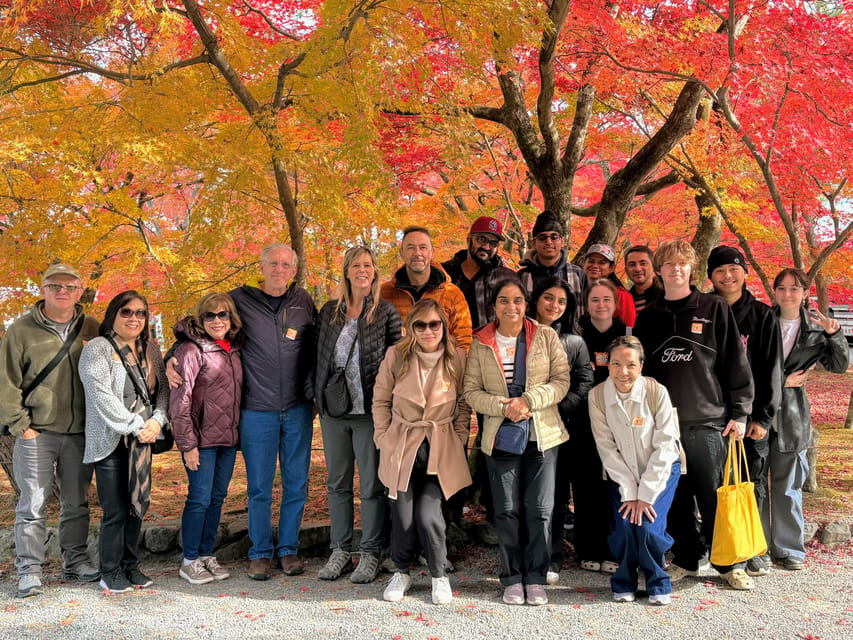
The strongest part of this experience is the guide service. Many guides have been praised for clear English, historical explanations, humor, and thoughtful help with practical problems.
Mai has used homemade visual materials, taught Japanese counting and phrases, and helped keep the day engaging during bus rides. At-Chan has offered language tips, helped a guest find a tea shop, and supported people with extra care when they were struggling in the heat. Nanami has been praised for clear explanations and for looking after families with children and older relatives.
Yuta, Rina, Den, Aoi, Tsubasa, Harry, and other guides have also been singled out for friendliness, organization, cultural explanations, and personal attention. The exact guide varies, but the pattern is clear: this tour depends heavily on having someone who can keep a busy day calm and easy to follow.
That matters because you are moving through several sites with different customs. Knowing where to meet, how to behave at a shrine, how to feed the deer, and what to notice at a temple can make the day much less stressful.
What the 510-minute schedule feels like
At 510 minutes, or eight and a half hours, this is a substantial day. The bus removes much of the transport hassle, but you still spend time on the road between Kyoto, Nara, and Uji.
The schedule is best described as full but manageable. Each stop has a clear purpose:
- Kasuga Taisha gives you shrine architecture and lantern-lined paths.
- Nara Park provides the deer encounter.
- Todaiji delivers the day’s largest temple experience.
- Lunch gives you a break.
- Byodoin adds a refined temple setting and the famous Phoenix Hall.
- Uji finishes with tea, shopping, and hands-on preparation.
Traffic, weather, and operational needs can change the order. If a listed site is closed, an alternative location is used. You should treat the timing as a framework, not a promise that every stop will happen in exactly the listed sequence.
Who should book this tour?
I would recommend it most strongly if you are visiting Kyoto for the first time, have limited time, or want someone else to manage the transport between three destinations. Families can benefit from the clear meeting points and guide support, though young children still need supervision around the deer and on the temple paths.
It also suits visitors who want more than photographs. The Japanese language tips, shrine customs, temple explanations, and matcha preparation add useful context without turning the day into a lecture.
You should think twice if you use a wheelchair, have a mobility impairment, or find stairs and hills difficult. The tour is specifically not suitable for wheelchair users, and the walking can be tiring.
Independent visitors may prefer separate train trips. You would gain flexibility and could spend much longer at Nara Park, Todaiji, or Byodoin. You would lose the group guidance, included admissions, and the easy link to a scheduled tea activity.
Practical tips for a smoother day
Arrive early at Kyoto Avanti. The meeting point can take time to find, especially if you are unfamiliar with Kyoto Station.
Wear comfortable walking shoes and bring water. Cash is useful for deer crackers, snacks, drinks, and small purchases in Uji.
If you want a vegetarian lunch, arrange it no later than two days before the tour. Do not rely on a last-minute request.
Keep your day flexible. The itinerary can change because of traffic, weather, or closures, and late arrivals are not covered by refunds or changes.
Should you book the Nara and Uji tour?
Book it if you want a well-paced introduction to Nara’s major sights plus a worthwhile taste of Uji tea culture. The best reasons are the Great Buddha, the deer, and the hands-on matcha session, supported by guides who consistently bring energy and care to the day.
Skip it if you want long, quiet visits or prefer to set your own schedule. At $122, the tour is strongest for convenience and guidance rather than absolute low cost. For a first visit, I think the combination is unusually useful: you see the essential Nara sights, reach Byodoin without transport puzzles, and finish with something you actually make yourself.
FAQ
Where does the tour meet?
Meet in front of Tully’s Coffee at the Kyoto Avanti Store, 31 Higashikujo Nishisannocho, Minami Ward, Kyoto. Check-in is at 7:50 AM, and departure is at 8:00 AM. Look for the green and white Japan Panoramic Tours flag.
Is hotel pickup included?
No. Hotel pickup and drop-off are not included, so you must reach the Kyoto Avanti meeting point yourself.
What languages are available?
The live tour guide speaks English. Audio guides are available in French, German, Italian, Portuguese, Spanish, and Ukrainian.
Is lunch included?
Lunch is included only if you select the lunch option when booking. The meal is Japanese-style. Vegetarian arrangements can be made up to two days before the tour date.
Is the tour suitable for wheelchair users?
No. The tour is not suitable for wheelchair users or people with mobility impairments. You will need to manage stairs, hills, and walking during the day.
What happens if I arrive late?
No refunds or changes are given for latecomers or no-shows. Arrive before the 7:50 AM check-in time, since the coach departs at 8:00 AM.
Just added around Kyoto
- Kyoto: Private Customizable Day Trip by Car★ 5.0 · 38 reviews
- Kyoto: Gion Night Walking Tour with Geisha Insight★ 5.0 · 39 reviews
- Kyoto: Full Day Bike Tour★ 4.9 · 39 reviews
- Private Japanese Calligraphy in Kyoto – Learn Shodō with a Master★ 5.0 · 39 reviews
- Experience a tea ceremony in an authentic tearoom, in Kyoto!★ 4.5 · 41 reviews
- Kyoto: Gion Evening Walk with Hidden Gems, Geisha & Sake★ 5.0 · 41 reviews
- Kyoto Private Photo Shoot & Tour by SnapKyoto★ 5.0 · 41 reviews
- The Way of Tea: Kyoto Crafts, Hidden Temples & Wabi-Sabi Walk★ 5.0 · 41 reviews
Bus Tours in Kyoto, compared.
Fushimi Inari, Kinkakuji, Bamboo Grove 1 Day Bus Tour
Read our review →
Kyoto/Osaka: Nara, Fushimi Inari Taisha, Arashiyama Bus Tour
Read our review →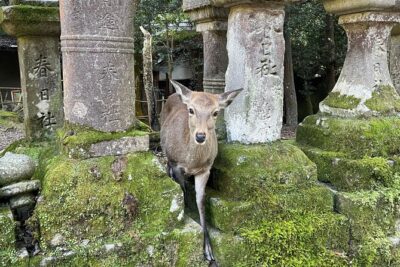
Nara History Guided Half Day Bus Tour with Lunch
Read our review →Browse the lists this tour appears in