
Reviewed · VIP
Kyoto: Private Highlights Tour with Guide and Luxury Vehicle
Kyoto rewards a smart plan. This private day tour lets you cover far more ground than public transport alone, with hotel pickup, a comfortable vehicle, and a guide who can adjust the day around your interests. I especially like the door-to-door service from Kyoto, Osaka, or Nara and the freedom to spend more time at a favorite stop. The main catch is simple: this is a very full 10-hour day, and many temples still require a fair amount of walking.
I also like that the tour works for a small private group of up to six people, so you are not herded from shrine to shrine with strangers. Guides such as Sam, Yash, Hashan, Malik, and Isuru have been praised for being patient, punctual, helpful with photos, and willing to change the plan. Just remember that entry fees, lunch, drinks, and bottled water are not included.
In This Review
- The best parts of this Kyoto day
- Why private transport matters in Kyoto
- Arashiyama, Bamboo Grove, and the western side of Kyoto
- Kinkaku-ji and the famous Golden Pavilion
- Fushimi Inari and its endless red torii
- Gion, Kiyomizu-dera, and Kyoto’s traditional streets
- Nishiki Market and choosing lunch
- Can you really see Kyoto’s highlights in 10 hours?
- Price, group size, and overall value
- Walking, accessibility, and what to bring
- Who should book this private Kyoto tour?
- Final verdict: a smart one-day Kyoto sampler
- FAQ
- How long does the Kyoto private highlights tour last?
- Where can pickup and drop-off take place?
- How many people can join the private tour?
- Is lunch included in the tour price?
- Are temple entrance tickets included?
- What languages are available for the guide?
The best parts of this Kyoto day
- Pickup beyond Kyoto: You can begin and end at accommodation in Kyoto, Osaka, or Nara, useful if Kyoto is only a day trip.
- A flexible private schedule: Your guide can adjust the stops, timing, and lunch plan to match your group.
- Major sights in one day: Arashiyama, Kinkaku-ji, Fushimi Inari, Kiyomizu-dera, Gion, and Nishiki Market can all fit into one ambitious outing.
- Comfort between long walks: An air-conditioned luxury vehicle with Wi-Fi gives you a place to rest between temples.
- Helpful family service: Several guides have been praised for patience with children, tired legs, changing requests, and photo stops.
- Good transport value for groups: At $383 for up to six people, the per-person price becomes much more appealing when the vehicle is full.
Why private transport matters in Kyoto
Kyoto is not a city where every famous sight lines up neatly along one train route. Arashiyama sits in the west, Fushimi Inari in the south, and Kinkaku-ji, Ginkaku-ji, Gion, and Kiyomizu-dera are spread across different parts of the city.
That geography is the strongest reason to consider this tour. You are not spending the day figuring out bus connections, finding the right station exit, or hauling a family across town. Your driver meets you at your accommodation or another agreed pickup point, then takes you from one area to the next.
The vehicle is especially useful for people staying in Osaka or Nara. A day trip from either city can be tiring by train and local bus. Here, you can leave from your hotel and return there after a long day. Several people also used Kyoto Station as their starting point when arriving for a one-day visit.
The vehicle is air-conditioned and described as comfortable and clean. Wi-Fi is provided onboard. That does not turn the day into a lounge experience, since you will still walk at each stop, but it gives you a welcome break while crossing the city.
The driver quality appears to be one of the tour’s strongest points. Sam is repeatedly praised for punctuality, patience, safe driving, and good communication. Yash is praised for adapting the schedule and explaining each place. Hashan helped organize busy spring sightseeing and was also praised for his photography. Other guides named in the feedback include Bagas, Shan, Suny, Dhanu, Ali, Isuru, Malik, and Narayan.
You should not assume you will receive a particular guide unless the operator confirms it. The useful point is that the service seems built around driver-guides who do more than simply open the van door.
A few more Kyoto experiences worth weighing up
- PERFECT KYOTO 1-Day Bus Tour
★ 5.0 · 13,518 reviews - Kyoto: Fushimi Inari, Kinkakuji, Bamboo Grove 1 Day Bus Tour
★ 4.8 · 4,316 reviews - Kyoto: Tea Ceremony in a Traditional Tea House in Kiyomizu
★ 4.9 · 3,519 reviews
Arashiyama, Bamboo Grove, and the western side of Kyoto
Arashiyama is usually the most time-sensitive part of the day. The area includes the Sagano Bamboo Forest, Tenryu-ji Temple, Togetsu-kyo Bridge, Monkey Park Iwatayama, and the Kimono Forest near the train station.
The bamboo grove is the classic photo stop. Tall green stalks rise on both sides of the path, and the narrow route has a calm look even when the area is busy. The walk is not long in the context of a full day, but crowds can slow you down. Your guide can help with timing and point out where to pause for photos.
Tenryu-ji is worth more than a quick exterior look. Its garden gives you a quieter view of Arashiyama, with carefully arranged ponds, trees, rocks, and mountain scenery. If you want to understand how Japanese gardens use borrowed views and controlled space, this is one of the better stops on the route.
Togetsu-kyo Bridge offers a different feel. It is an open riverside view rather than a temple visit, and it gives you a chance to stretch your legs and see the wider Arashiyama setting.
Monkey Park Iwatayama is listed as an option, but it is the stop to discuss carefully before departure. The park is on a hillside, so reaching the animals means an uphill walk. If your group has limited mobility, young children, or a packed list of temples, you may prefer to use that time elsewhere.
The Kimono Forest is a quick, colorful stop near Arashiyama’s station. Its pillars are wrapped in patterned kimono fabric, creating a photogenic display that feels more modern than the nearby temples. It is easy to add if you enjoy design and photography, though it should not replace Tenryu-ji if this is your first time in the area.
Kinkaku-ji and the famous Golden Pavilion
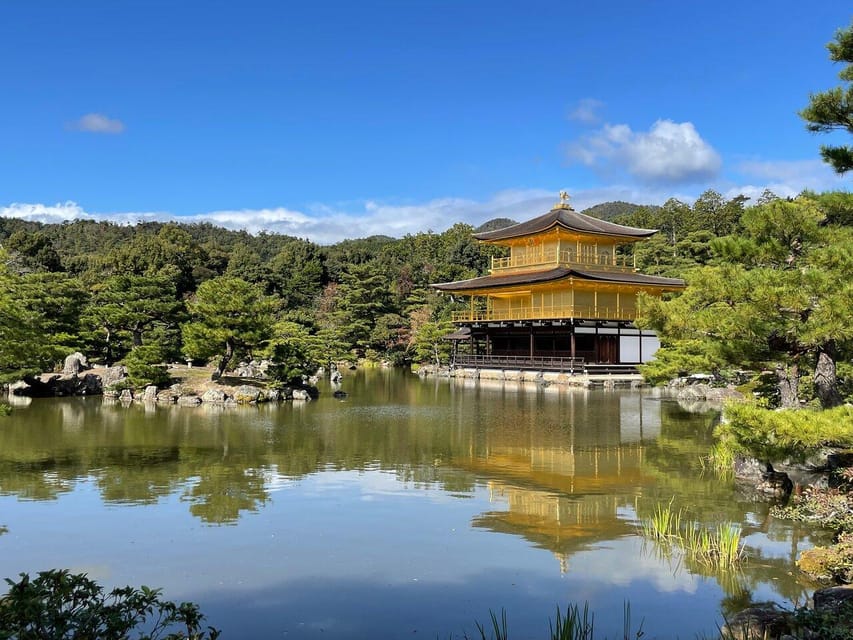
Kinkaku-ji, also called the Golden Pavilion, is one of Kyoto’s most instantly recognizable sights. The gold-covered upper floors reflect in the pond, and the garden route gives you several framed views of the building.
This is a controlled sightseeing experience rather than a place for long wandering. You follow the garden path, stop at viewing points, and take in the pavilion from different angles. The visual impact is immediate, but the site can feel crowded, especially during peak seasons.
The tour includes guided sightseeing here, and that context helps. Kinkaku-ji is not just a pretty building beside water. Your guide can explain its Zen Buddhist setting, its changing role over time, and the design choices that make the reflection view so effective.
Allow for the entrance fee, which is not included. Bring cash because some temple ticket offices may not accept cards. Comfortable shoes matter, even when the walk at an individual temple seems easy, because the day adds up.
Fushimi Inari and its endless red torii
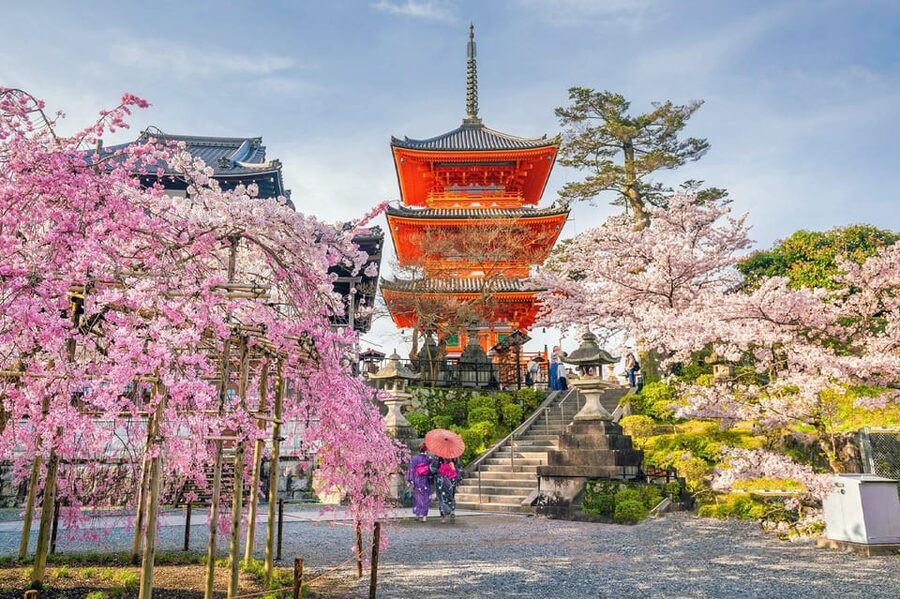
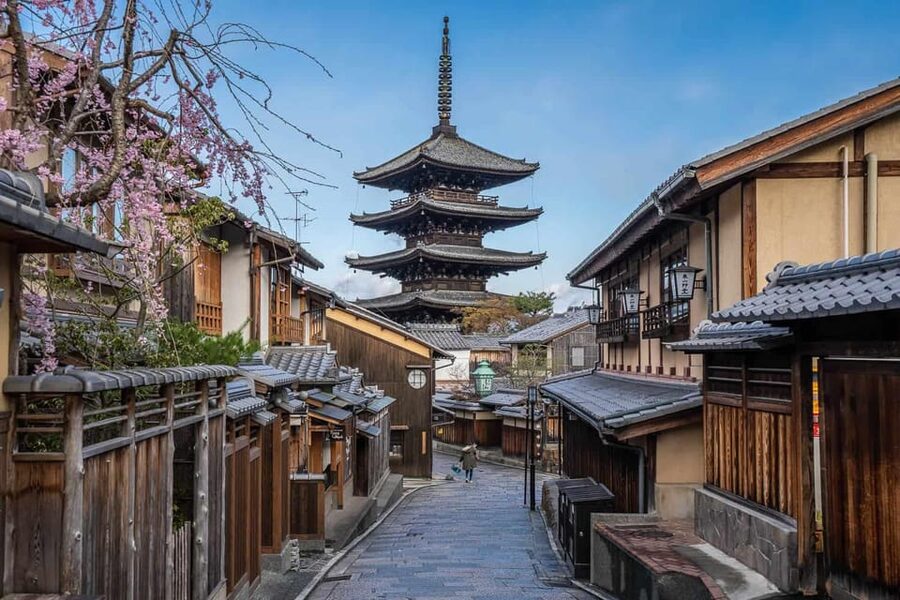
Fushimi Inari Taisha is one of Kyoto’s most memorable shrines. Thousands of red torii gates climb through the wooded slopes behind the main shrine, creating a long corridor of color and shadow.
You do not need to walk the entire mountain route to enjoy the place. A shorter section gives you the famous visual experience, while a longer walk takes you farther from the busiest entrance area. Your group should decide in advance how much time and energy you want to spend here.
The shrine is also one of the tour’s more physically demanding stops. The ground rises, and the torii route includes steps. If you are managing limited walking ability, tell the guide early so the schedule can be adjusted.
Fushimi Inari works well late in the day if traffic and opening hours make that practical, but the best order depends on your pickup location and the day’s crowd levels. One of the tour’s real advantages is that the guide can rearrange the sequence rather than following a fixed route.
A completely different kind of day out in Kyoto:
- Kyoto Geisha Walking Tour: Gion District & Hidden Gems
★ 4.7 · 3,273 reviews - Kyoto: Tea Ceremony Ju-An at Jotokuji Temple
★ 4.9 · 3,207 reviews - Kyoto: Gion Magical Night Walking Tour with Geisha Trivia
★ 4.9 · 2,393 reviews - Kyoto: 45-Minute Tea Ceremony Lesson Experience
★ 4.3 · 2,378 reviews
Gion, Kiyomizu-dera, and Kyoto’s traditional streets
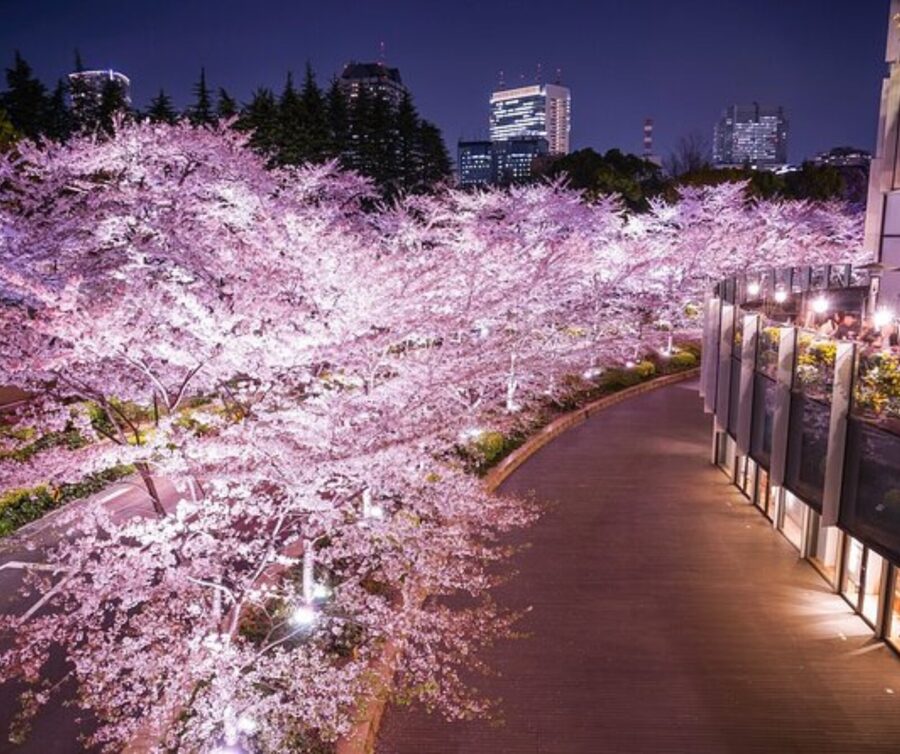
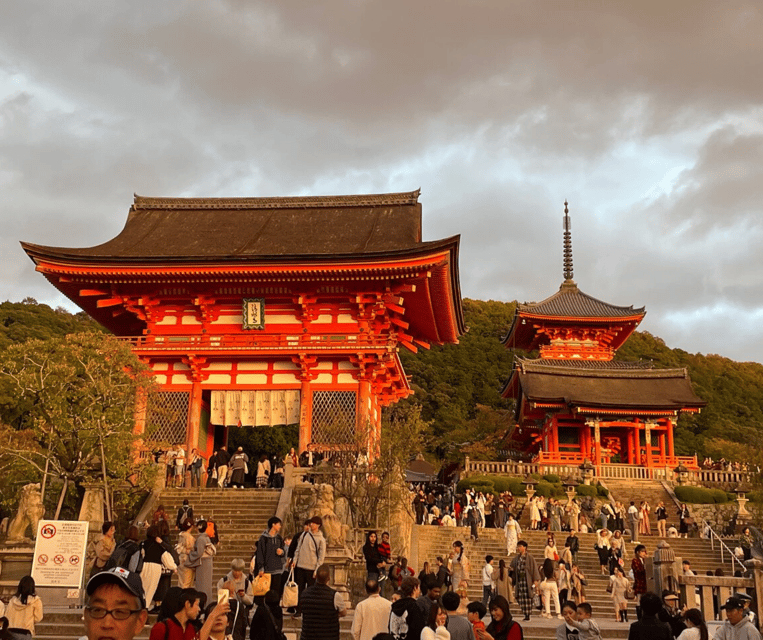
Kiyomizu-dera is one of Kyoto’s great viewpoints. Its wooden stage projects over the hillside, giving you broad views across the city and surrounding trees. The temple grounds include several buildings and paths, so you will want time to look beyond the main stage.
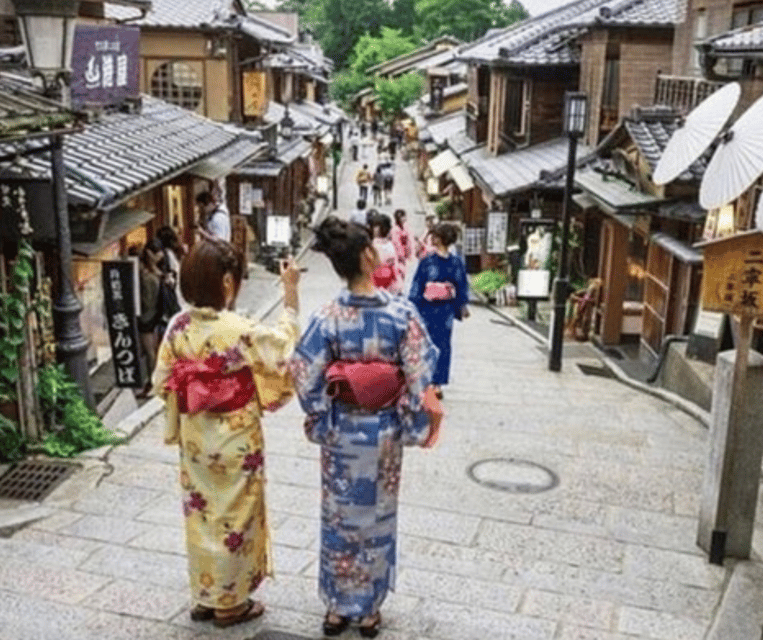
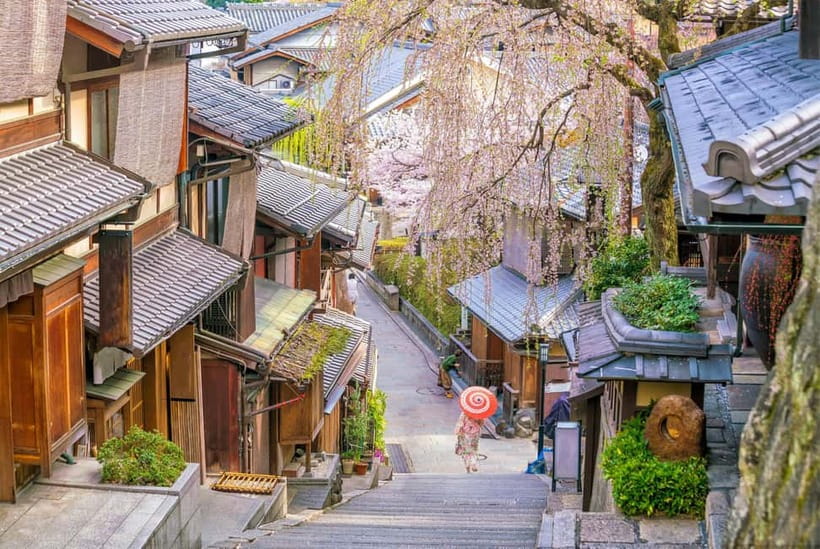
The approach streets, Ninenzaka and Sannenzaka, are part of the experience. Traditional wooden buildings, tea shops, snack counters, and souvenir stores line the sloping lanes. They are attractive, but they can be crowded and uneven underfoot. A private car cannot take you right through every pedestrian area, so expect to walk from the vehicle drop-off.
That point matters. One person with limited walking ability expected private transport to reduce the physical strain, but still found the day tiring because the temples and Gion area require walking. The vehicle solves the distance between districts, not the steps, slopes, and stone lanes inside them.
Gion gives you a chance to see another side of Kyoto. Its traditional teahouses and narrow streets are tied to the city’s geisha culture, though you should treat the district as a living neighborhood rather than a stage set. Your guide can explain the area’s customs and history, while you should be respectful around private entrances and anyone going about their work.
The tour may also include Ginkaku-ji and Sanjusangen-do, depending on the plan you agree to. Ginkaku-ji, the Silver Pavilion, is known for its restrained design and garden rather than silver decoration. Sanjusangen-do is famous for its long wooden hall and rows of Buddhist statues. Both are worthwhile, but adding every major temple can leave you rushing.
Nishiki Market and choosing lunch
Nishiki Market is a practical lunch option because it gives your group plenty of choice. You can browse local snacks, prepared foods, sweets, and small eateries, then choose according to appetite and dietary needs.
The market is a narrow shopping street, not a spacious food hall. It can feel crowded, and you may need to eat in an orderly way rather than walking around with food. Your guide can help identify a suitable place, and one guide even found a vegan restaurant for a guest.
You can also choose a restaurant outside the market. This may be the better choice if you want a proper seated meal, need a quieter break, or are traveling with children. Since food and drinks are not included, the decision is yours, and the guide can offer suggestions.
Do not skip lunch to squeeze in one more temple. This tour covers a great deal, and regular food and coffee breaks can make the afternoon much more enjoyable. Bring your own water as well. The service includes Wi-Fi, but bottled water and other extra amenities are not provided.
Can you really see Kyoto’s highlights in 10 hours?
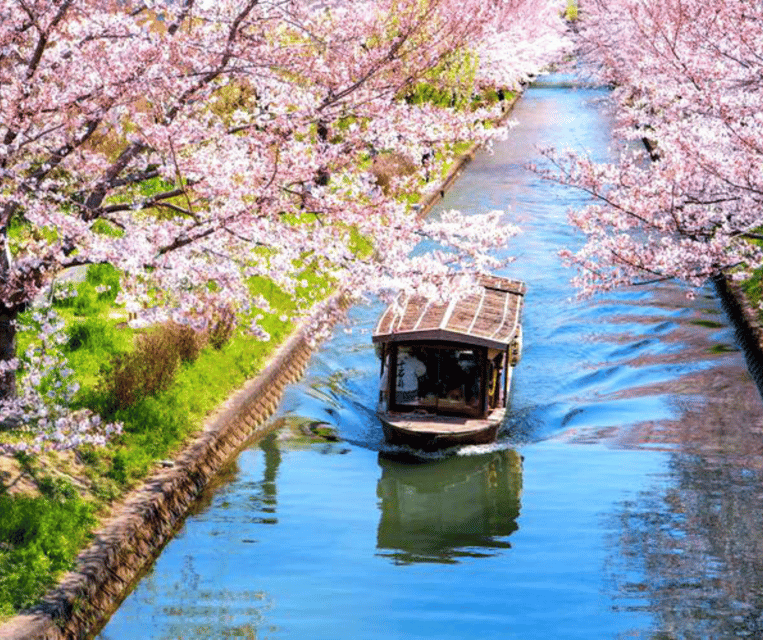
You can see a remarkable amount, but you cannot experience every place slowly. The listed day includes stops of about an hour at several locations, with a shorter photo stop at the bamboo forest. That sounds generous until you add driving, parking, meals, ticket purchases, and walking between the vehicle and each site.
The tour works best when you choose your priorities. For a first visit, I would put Arashiyama, Kinkaku-ji, Fushimi Inari, Kiyomizu-dera, and Gion near the top. If you care more about gardens and Buddhist art, ask about Tenryu-ji, Ginkaku-ji, and Sanjusangen-do. If you are traveling with children, Monkey Park may be fun, but its uphill path could make the rest of the day harder.
The schedule can also respond to conditions. Guides have adjusted routes for snow, rain, New Year crowds, cherry blossom crowds, tired children, and traffic. That flexibility is more useful than a long fixed list of stops.
Start times are subject to availability. A later start can suit families or people arriving from Osaka, but an early start may help you manage popular sights and still leave time for lunch. Discuss this before the day begins.
Price, group size, and overall value
The price is $383 per private group of up to six people. For one or two people, that is a premium over using trains and buses. For a full group, the cost works out to about $64 per person, before entrance fees and food.
That price includes hotel pickup and drop-off, private transportation, an English-speaking guide, air conditioning, and Wi-Fi. The ability to start in Osaka or Nara makes the value stronger because you are also paying for convenience across the wider region.
You are not paying for a luxury hotel-style service with meals or drinks. Entry tickets are extra, and the tour is best described as comfortable and practical rather than full of decorative perks. One guest specifically described it as a no-frills activity, so bring your own water and cash.
The value is highest when your time is limited, your group includes children or older relatives, or you want to avoid managing Kyoto’s transport system. It is less compelling if you enjoy moving slowly, spending several hours at one temple, or traveling cheaply by local train.
The experience has an overall rating of 4.6 from 316 reviews, and 89 percent of transport ratings are perfect. The most consistent praise centers on punctual pickup, clean vehicles, safe driving, flexible planning, and guides who take care of practical details.
Walking, accessibility, and what to bring
The experience is wheelchair accessible, but accessibility should still be discussed with the operator before you book. Kyoto’s temple grounds, hillside routes, steps, sloped lanes, and pedestrian streets vary considerably.
Wear comfortable shoes. This is not optional advice. Even with a car between districts, you will walk at bamboo groves, shrine paths, temple grounds, market streets, and Gion.
Take an umbrella if rain is forecast. Bring cash for temple admission and personal purchases, and carry your own water. Alcohol and drugs are not allowed, and alcoholic drinks cannot be consumed in the vehicle.
Free cancellation is available up to 24 hours before the start time, and you can reserve now while paying later. Those terms help if your Kyoto plans are still shifting, but you should still check the available starting times and pickup details before confirming.
Who should book this private Kyoto tour?
I would choose this tour if you have only one day in Kyoto and want to see the major sights without handling every connection yourself. It is particularly useful for a private family group, a party of four to six, or anyone making a day trip from Osaka or Nara.
It also suits people who value help with photos, restaurant suggestions, and route changes. Guides such as Sam, Hashan, Yash, and Malik received praise for patience and personal attention, though your assigned guide may be different.
I would hesitate if your main goal is a slow, reflective temple day. The itinerary is ambitious, and even a well-driven schedule can feel tiring. Ask the guide to cut stops rather than trying to collect every famous name.
Final verdict: a smart one-day Kyoto sampler
Book this tour if time and convenience matter more than a slow pace. You get private transport, a flexible plan, and a realistic way to connect Kyoto’s widely scattered highlights in one day.
Skip it if you prefer independent public transport, low-cost sightseeing, or several hours at one garden or temple. For everyone else, especially a full group starting in Osaka or Nara, the $383 price can be fair value. Set your priorities, budget for tickets and lunch, wear good shoes, and let the guide shape the route around traffic and energy levels.
FAQ
How long does the Kyoto private highlights tour last?
The tour lasts 10 hours. Starting times depend on availability, so check the schedule when booking.
Where can pickup and drop-off take place?
Pickup and drop-off are available from accommodation, hotels, or Airbnb locations in Kyoto, Osaka, and Nara. Kyoto Station pickup is also mentioned as an option in the tour arrangements.
How many people can join the private tour?
The private group can include up to six people.
Is lunch included in the tour price?
No. Food and drinks are not included. You can choose a restaurant or eat around Nishiki Market, where the guide may suggest suitable options.
Are temple entrance tickets included?
No. Entry tickets are not included. Bring some cash because certain temple ticket offices may not accept card payments.
What languages are available for the guide?
Live guides are available in English, Japanese, Hindi, and Urdu.
Just added around Kyoto
- Kyoto: Gion Night Walking Tour with Geisha Insight★ 5.0 · 39 reviews
- Kyoto: Private Customizable Day Trip by Car★ 5.0 · 38 reviews
- Kyoto: Full Day Bike Tour★ 4.9 · 39 reviews
- Private Japanese Calligraphy in Kyoto – Learn Shodō with a Master★ 5.0 · 39 reviews
- Kyoto: Gion Evening Walk with Hidden Gems, Geisha & Sake★ 5.0 · 41 reviews
- Experience a tea ceremony in an authentic tearoom, in Kyoto!★ 4.5 · 41 reviews
- Kyoto Private Photo Shoot & Tour by SnapKyoto★ 5.0 · 41 reviews
- The Way of Tea: Kyoto Crafts, Hidden Temples & Wabi-Sabi Walk★ 5.0 · 41 reviews
VIP, compared.

Luxury Sumo Show Experience & Japanese cuisine & Drink
Read our review →

Luxury van Ride to famous car meet up spot Daikoku
Read our review →
Haneda Airport Private Transfer – Luxury Car & Meet & Greet
Read our review →
Luxury Kyoto 1-Day Private Car Tour with Nara & Osaka Options
Read our review →
Tokyo VIP Hidden Food & Bar Night – Private Local Experience
Read our review →
Tokyo VIP Guided Private Car Tour with Optional Airport Transfer
Read our review →Browse the lists this tour appears in