
Reviewed · FOOD & DRINK
Kyoto: Replica food making experience
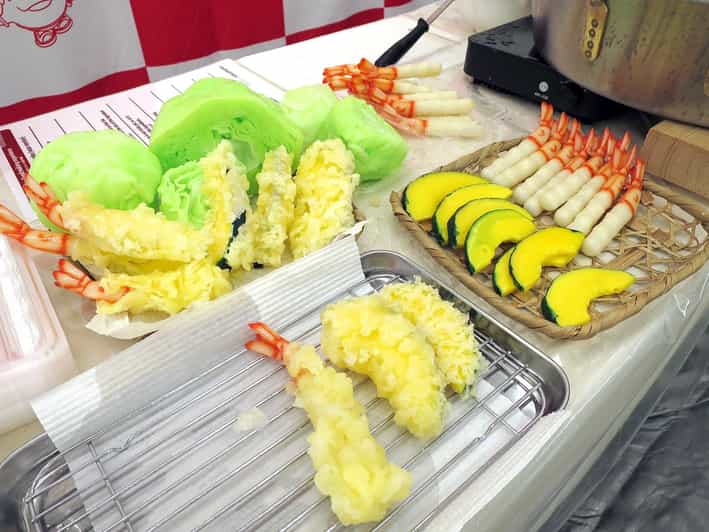
Fake food, real fun. Kyoto’s replica food workshop gives you a hands-on look at a distinctly Japanese craft: the lifelike dishes displayed outside restaurants to help diners choose what to order. In one hour, you shape melted wax into shrimp and pumpkin tempura, then take your finished creations home.
I like the small groups of up to four, which gives the instructor time to correct your technique. I also like the useful souvenir, packaged like a supermarket purchase rather than tucked away as a forgettable trinket. The main consideration is that the wax is hot, so children need help, and the activity is not suitable for anyone under six.
In This Review
- Why this Kyoto workshop is worth an hour
- The Japanese craft behind the fake food
- Finding the workshop near the giant crab sign
- Your first project: shrimp and pumpkin tempura
- Optional lettuce and other display pieces
- What the one-hour schedule feels like
- The finished souvenir and the practical warning
- How much value do you get for $22?
- Who will enjoy this most?
- Tips for a smoother visit
- My take: should you book it?
- FAQ
- How long does the replica food workshop last?
- What food replicas do you make?
- Can I take my replica food home?
- Is the replica food edible?
- Is the workshop suitable for children?
- Where do I meet the instructor?
Why this Kyoto workshop is worth an hour
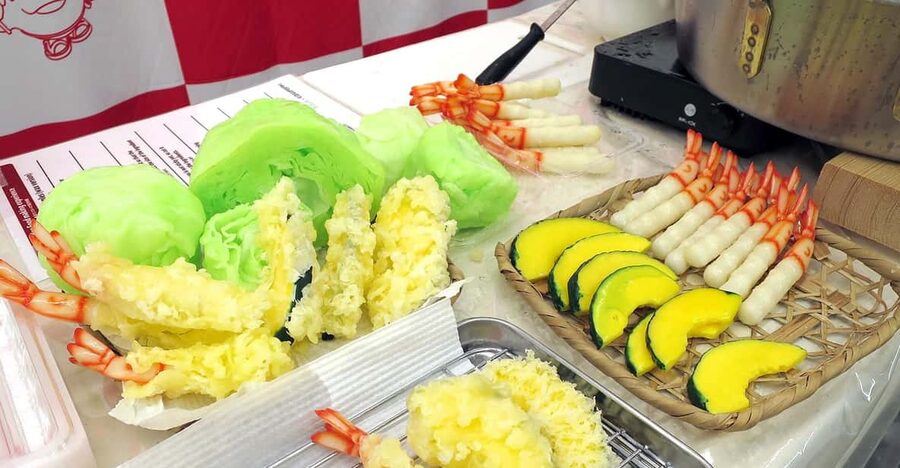
- You make real restaurant-style replica food, not just watch a demonstration.
- The traditional wax method lets you shape texture by controlling how the wax lands in hot water.
- Shrimp and pumpkin tempura give you two different forms and textures to practise.
- Lettuce is available as an optional extra, adding another small project if offered during your session.
- Your finished food is packaged for the journey home, making it an easy souvenir to carry.
- The location near Sanjo Meiten-gai and Nishiki Market fits neatly into a central Kyoto afternoon.
The Japanese craft behind the fake food
Look outside many Japanese restaurants and you may see plastic or wax dishes arranged behind glass. These samples show portion size, ingredients, and presentation before you sit down. For visitors who cannot read a menu, a model bowl of noodles or a neatly arranged tempura set can make ordering much easier.
The craft is called shokuhin sampuru, or food replica making. It is not simply a novelty. These models are part of the way restaurants present their menus, and the best examples are made with careful attention to color, shape, shine, and texture.
This workshop gives you a small taste of that work. You will not produce a professional restaurant display in an hour, but you will understand why it takes skill. A convincing tempura shrimp needs a believable curve, a thin-looking coating, and the uneven surface that suggests crisp batter. That is harder than it looks.
I like this cultural context because it gives the activity more purpose. You are not only making a cute object. You are learning why Japanese food displays look so precise and why they remain useful in front of restaurants.
More Food Tours in Kyoto
- Kyoto Night Foodie Tour in Gion (9+ dishes + 6 Sake tastings)
★ 5.0 · 1,762 reviews - 3-Hour Kyoto Insider Sake Brewery Tour with Tastings & Pairings
★ 5.0 · 917 reviews - Arashiyama Bamboo, Temple, Monkeys, or Secret Sake Brewery
★ 4.8 · 886 reviews
Finding the workshop near the giant crab sign
The meeting point is diagonally across from Kani Douraku, the restaurant marked by its large crab signboard. That is the key landmark to remember. In central Kyoto, a clear visual marker is much more useful than a long street address, especially when you are moving through shopping streets.
The workshop sits in the Sanjo Meiten-gai shopping arcade area, and it is also not far from Nishiki Market. That makes it easy to pair with browsing, lunch, or an afternoon stroll. You could schedule the workshop before visiting the market, then eat afterward, or use it as a break when your feet need a rest from Kyoto’s temples and shopping streets.
Arrive at your reserved time. The instructor explains the process to the group at once, so arriving late could mean missing the opening instructions. The activity lasts about one hour, though one session has taken around 45 minutes, depending on the pace of the group.
Your first project: shrimp and pumpkin tempura
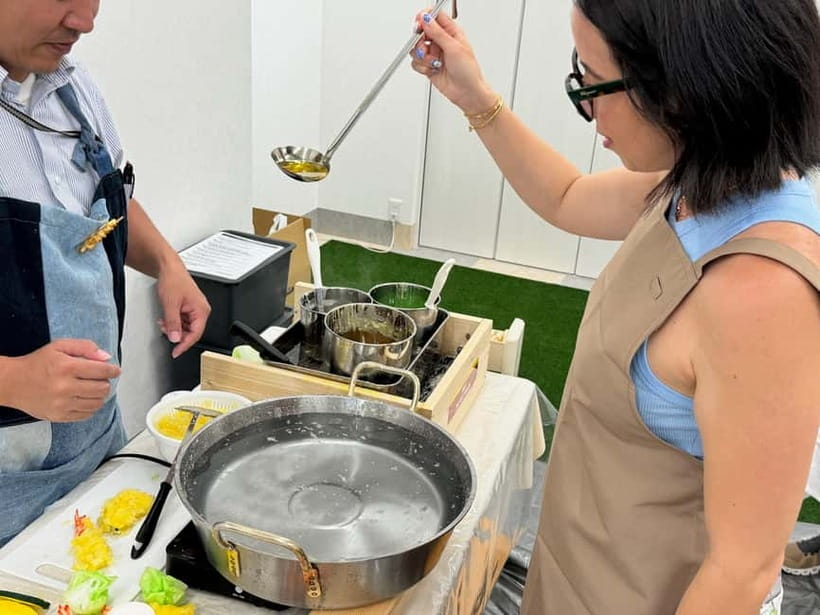
The main workshop focuses on two familiar tempura ingredients: shrimp and pumpkin. You work with melted wax and hot water, using the water to cool and shape the material before it hardens.
The first stage is about learning control. Wax dropped from different heights creates different textures, so the height and timing of each pour matter. You will practise before making the pieces you take home, which is welcome news for anyone who does not consider themselves crafty.
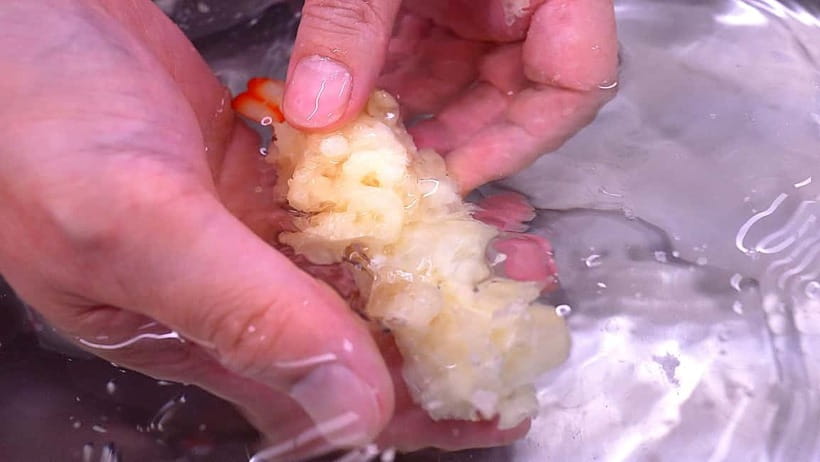
The shrimp requires a convincing shape. You need to form the body and work the coating around it without losing the basic outline. Pumpkin gives you a different challenge, with a chunkier shape and a batter effect that must look irregular rather than perfectly smooth.
The instructor demonstrates each step and then lets you try. English and Japanese are offered, and the teaching style is patient and practical. Communication has also worked well with simple gestures and a translation app when needed. You do not need advanced Japanese to follow the process, though it helps to watch closely and copy the hand movements.
This is not a passive demonstration. You handle the materials, make mistakes, and adjust your technique. That small amount of difficulty is part of the fun. If the batter looks too thick or the shape is a little wonky, you have made something by hand rather than bought a factory-made souvenir.
Optional lettuce and other display pieces
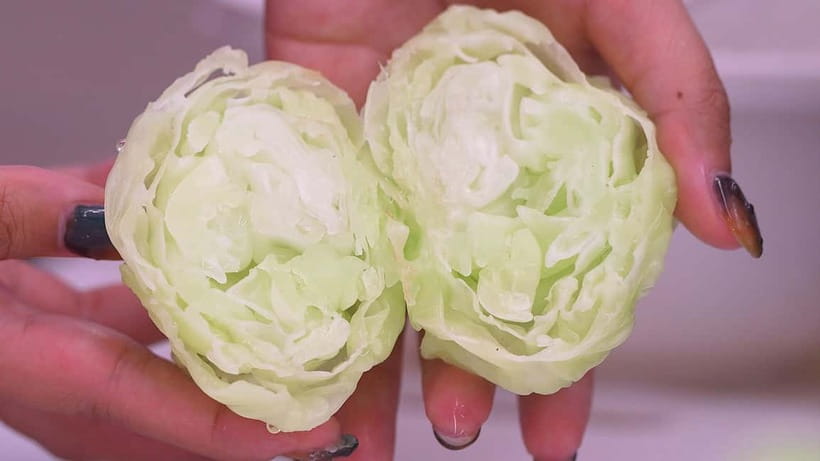
Lettuce can be added as an option. It gives you another chance to work with wax and create a thinner, more irregular form. If you enjoy the tempura process, ask about the lettuce option when you arrive.
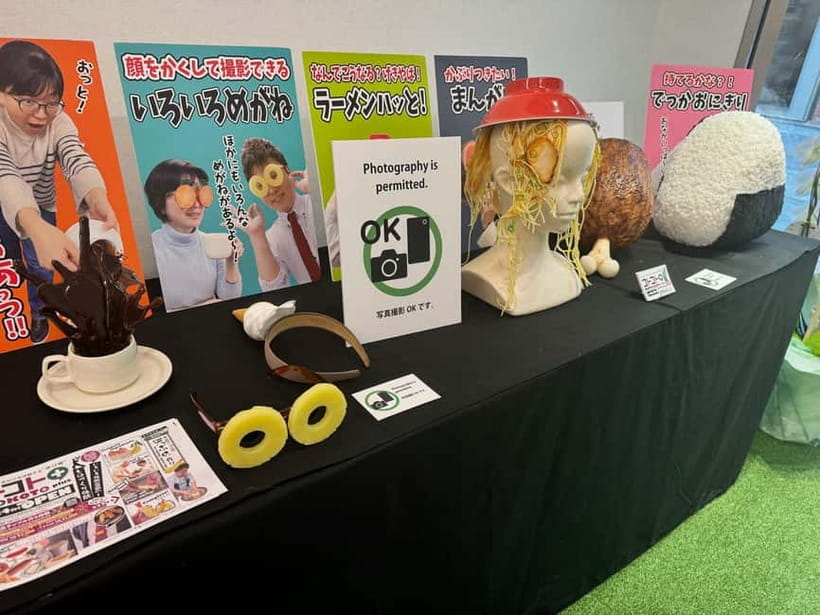
The studio also has other replica food examples, including oversized pieces that can be used for photos. These details are not the main reason to book, but they add a playful edge to the visit. The workshop is especially good for families because the finished objects are both souvenirs and proof of what each person made.
Some sessions may offer other workshop designs, such as a melon float. Availability can vary, so treat those as possible alternatives rather than guaranteed parts of the shrimp and pumpkin session.
A completely different kind of day out in Kyoto:
- PERFECT KYOTO 1-Day Bus Tour
★ 5.0 · 13,518 reviews - Kyoto: Fushimi Inari, Kinkakuji, Bamboo Grove 1 Day Bus Tour
★ 4.8 · 4,316 reviews - Kyoto: Tea Ceremony in a Traditional Tea House in Kiyomizu
★ 4.9 · 3,519 reviews - Kyoto Geisha Walking Tour: Gion District & Hidden Gems
★ 4.7 · 3,273 reviews
What the one-hour schedule feels like
The workshop moves through a simple sequence:
- You meet the instructor at the marked location and settle into the small studio.
- The instructor explains replica food culture and shows the wax technique.
- You practise shaping the material in hot water.
- You make the shrimp and pumpkin tempura pieces.
- You may add lettuce if that option is available.
- Your finished replica food is packaged for you to take home.
The small group limit of four is important. An activity involving hot wax and fine hand movements benefits from direct attention. You can ask questions, get help with a difficult shape, and take photos without feeling lost in a crowd.
The teaching is also friendly rather than formal. Children have remained engaged, including ages nine and eleven, while adults have enjoyed the craft just as much. Younger children may need parental assistance, particularly around the hot wax. Anyone under six should choose another activity.
The finished souvenir and the practical warning
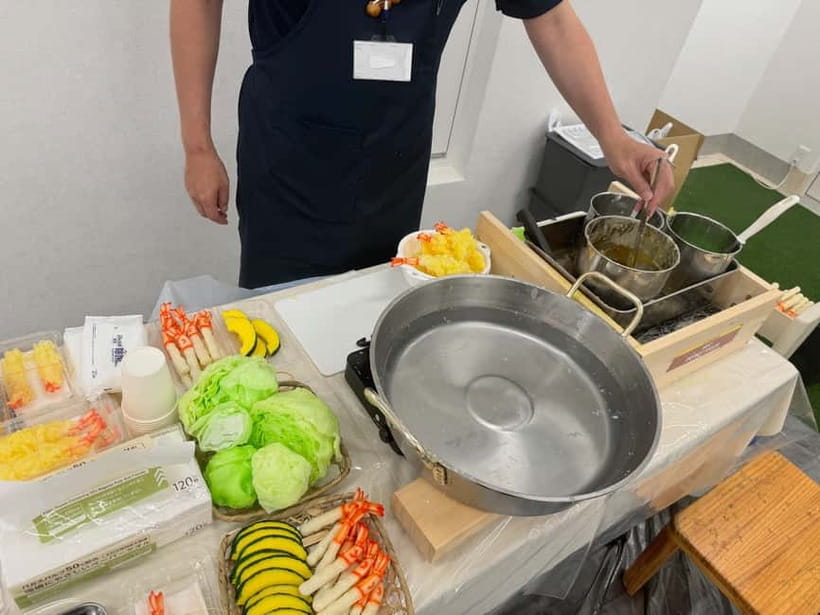
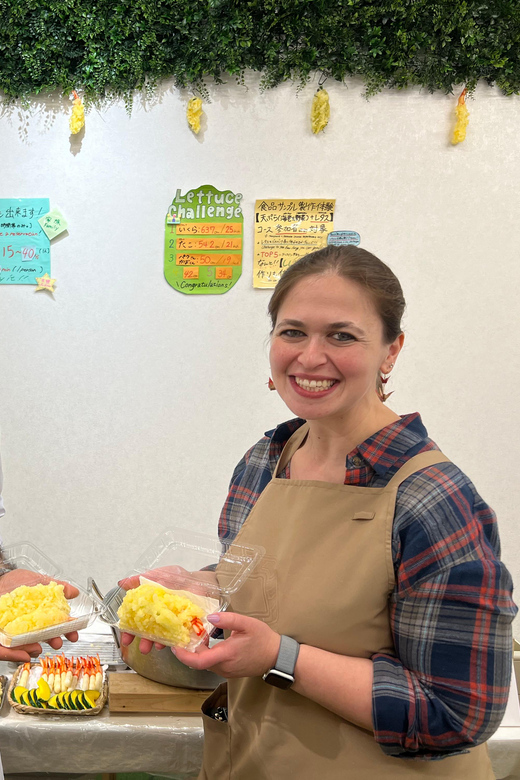
At the end, your replica food is packed in a container that looks like supermarket packaging or a takeaway box. That presentation is part of its charm. It makes the object feel like a miniature Japanese food purchase until you remember that it is entirely for display.
You should label it clearly once you get home. The finished shrimp and pumpkin can look remarkably edible, and that is precisely the point. Keep the replica away from the dinner table and make sure children understand that it is not food.
The souvenir is compact enough to fit into luggage more easily than a fragile ceramic bowl or a large craft item. Still, pack it with some care. The activity does not promise that the studio will ship it separately, so you should be prepared to carry it home yourself.
How much value do you get for $22?
At $22 per person, this is a good-value short activity. The price includes the workshop, all materials, instruction, and the food replica you make. You are paying for participation and a souvenir, not simply admission to watch someone else work.
The value is strongest for families and couples who want a shared activity. Each person can make something, compare results, and take home an object tied to the trip. It is also useful for a rainy afternoon or for a day when you want something other than another shrine, garden, or museum.
For solo visitors, the small group helps the price feel fair because you still receive personal instruction. The main limitation is the short duration. If you want a long craft class or a detailed lesson in professional food-model production, this is too brief. Think of it as a compact cultural workshop with a take-home result.
I also see value in the location. Since you can combine it with Sanjo shopping streets and Nishiki Market, the workshop does not require a separate cross-city outing. That saves time in a Kyoto itinerary, where moving between districts can eat up more of the day than expected.
Who will enjoy this most?
This is a particularly good choice for:
- Families with children aged six and older
- Couples looking for a shared souvenir
- Anyone interested in Japanese restaurant customs
- Visitors who enjoy hands-on craft activities
- People seeking a short indoor break near central Kyoto
- Anyone who wants a souvenir that is unusual but easy to carry
It is less suitable if you dislike guided activities, do not want to handle hot materials, or prefer a quiet cultural visit with no practical work. The craft also requires patience. Your first attempt may not look perfect, and the instructor can help, but you still need to shape the wax yourself.
The workshop works well for mixed-age groups because the goal is not artistic perfection. Children can enjoy the process, while adults often appreciate the cultural explanation and the challenge of making the batter look natural.
Tips for a smoother visit
Wear clothes you do not mind getting a little wax on. Aprons and chef jackets are available, but one past participant was advised to consider a change of clothes, so a little caution makes sense.
Arrive on time, since the instructions are given together. If you are travelling with children, plan to help them when hot wax is involved rather than expecting them to work independently.
Keep your phone ready for photos, but do not let photography distract you from the shaping steps. The difference between a convincing texture and a flat-looking one comes from watching the demonstration carefully.
If you do not speak Japanese, do not panic. English instruction is available, and clear demonstrations, simple directions, and translation apps can bridge gaps when necessary. The instructors have been described as kind, patient, and willing to explain a step more than once.
Book ahead if this is important to your schedule. With only four places in a group, an attractive starting time may fill quickly. Free cancellation is available up to 24 hours before the activity, and you can reserve now and pay later, which helps if your Kyoto plans are still moving around.
My take: should you book it?
I would book this workshop if you want a short, distinctive Kyoto activity that teaches you something and leaves you with a souvenir. The best part is the combination of culture, handwork, and humor: you learn why Japanese restaurants display fake food, then make something that looks good enough to fool your friends.
The main tradeoff is the limited length and the need to handle hot wax carefully. That is a small concern for adults and older children, but it matters for families with young children.
Book it especially if you are already planning to visit Nishiki Market or the Sanjo shopping arcade. For $22, the workshop adds a personal memory to a central Kyoto outing, and your tempura replica will be far more interesting than another souvenir picked from a shop shelf.
FAQ
How long does the replica food workshop last?
The scheduled duration is one hour. Some sessions may finish in around 45 minutes, depending on the group’s pace.
What food replicas do you make?
The main activity includes shrimp and pumpkin tempura made with melted wax. Lettuce may also be available as an optional project.
Can I take my replica food home?
Yes. The replica food you make is included as a souvenir and is packaged to resemble supermarket or takeaway food packaging.
Is the replica food edible?
No. It is made for display only and should not be served or placed on the dinner table by mistake.
Is the workshop suitable for children?
Children under six are not allowed to take part. Older children can participate, but parental assistance may be requested, especially when working with hot wax.
Where do I meet the instructor?
The meeting point is diagonally across from Kani Douraku, identified by its large crab signboard. The workshop is in the Sanjo Meiten-gai shopping arcade area, not far from Nishiki Market.
Just added around Kyoto
- Kyoto: Gion Night Walking Tour with Geisha Insight★ 5.0 · 39 reviews
- Kyoto: Private Customizable Day Trip by Car★ 5.0 · 38 reviews
- Kyoto: Full Day Bike Tour★ 4.9 · 39 reviews
- Private Japanese Calligraphy in Kyoto – Learn Shodō with a Master★ 5.0 · 39 reviews
- Experience a tea ceremony in an authentic tearoom, in Kyoto!★ 4.5 · 41 reviews
- Kyoto: Gion Evening Walk with Hidden Gems, Geisha & Sake★ 5.0 · 41 reviews
- Kyoto Private Photo Shoot & Tour by SnapKyoto★ 5.0 · 41 reviews
- The Way of Tea: Kyoto Crafts, Hidden Temples & Wabi-Sabi Walk★ 5.0 · 41 reviews
Food & Drink, compared.
Shinjuku Food Tour (13 Dishes at 4 Local Eateries)
Read our review →
Tokyo Tsukiji Fish Market Food and Culture Walking Tour
Read our review →
Shinsekai Food Tour with 13-15 Dishes at 5 Eateries
Read our review →
Osaka Food Tour: 13 Dishes at 5 Local Eateries
Read our review →
Shinjuku Food Tour (15 Dishes and 4 Eateries)
Read our review →
Best of Shinjuku: Izakaya Food Tour (4 Stops, 14+ Tastings)
Read our review →
Kyoto Night Foodie Tour in Gion (9+ dishes + 6 Sake tastings)
Read our review →
Hungry Osaka Street Food Tour:15 Tastings & 3 Drinks with a Local
Read our review →Browse the lists this tour appears in