
Reviewed · TEMPLE & SHRINE TOURS
Kyoto: Zen Experience in a Hidden Temple
Quiet Kyoto has a different rhythm. This two-hour visit to Jusho-in Temple pairs two 20-minute zazen sessions with matcha, seasonal sweets, and time beside a 400-year-old garden. I like the calm setting and the chance to learn directly from Eitetsu Nishida, the temple’s 16th-generation abbot. One consideration: sitting upright for two 20-minute sessions can be tough, especially if you are not used to floor seating.
I also like the small-group feel, the patient English support, and the fact that a photographer records the experience without asking you to handle your phone. The temple is not wheelchair accessible, and the chief priest’s English can be difficult to follow at times because of his strong accent, so clear translation matters.
In This Review
- Key points at a glance
- Why this Kyoto Zen experience feels different
- Meeting at Myoshin-ji’s north gate
- Entering Jusho-in and meeting the abbot
- The first 20-minute zazen session
- The pause between sessions
- The second 20-minute sitting
- Matcha, wagashi, and the garden view
- A final conversation and photographs
- What sitting in a temple is really like
- Who gets the most from the $109 price
- Should you book the Jusho-in Zen experience?
- FAQ
- Where does the Kyoto Zen experience meet?
- How long does the experience last?
- How many meditation sessions are included?
- Is the experience suitable for beginners?
- Is the experience available in English?
- Can I sit on a chair instead of the floor?
- What should I wear?
- What is included in the price?
- Can I cancel the booking?
Key points at a glance
- Two 20-minute zazen sessions: You get enough time to feel the challenge of meditation, with a break between sessions for stretching and questions.
- A working Zen temple: Jusho-in dates to 1599 and is one of 46 sub-temples within the large Myoshin-ji complex.
- Tea with a purpose: Matcha and seasonal Japanese sweets are used to explain the close link between Zen attention and tea practice.
- A garden unchanged for centuries: The garden is attributed to painter Eitoku Kano and offers a fine view during meditation and tea.
- A welcoming abbot: Eitetsu Nishida teaches with humor and warmth, making Zen more approachable for beginners.
- Photos included: A single-lens reflex camera captures the visit, with photo data sent within a few days.
Why this Kyoto Zen experience feels different
Kyoto has no shortage of temples, gardens, and cultural demonstrations. Many are busy, highly scheduled, and designed mainly for sightseeing. Jusho-in offers something quieter: you enter a temple space, sit still, listen, and take part in a practice that is not built around taking pictures.
The setting is part of the lesson. Jusho-in was founded in 1599 and has been part of Myoshin-ji for about 420 years. Myoshin-ji is one of Japan’s largest Zen temple complexes, made up of 46 smaller temple buildings. The walk from the north gate to Jusho-in takes you away from ordinary city noise and into a more restrained world of gates, tiled roofs, wooden buildings, and enclosed temple grounds.
This is not a full monastic retreat. You will not spend the day in silence or receive advanced Zen training. Instead, you get a carefully shaped introduction lasting about two hours. That makes it a good match for a first meeting with Zen, as well as for anyone who wants a meaningful pause during a busy Kyoto trip.
The experience costs $109 per person. That is not a budget activity, especially for a two-hour visit. Still, the price includes the guide, temple admission, the abbot’s teaching, matcha, seasonal sweets, and professional photographs. If you value direct contact with a priest, a private or small-group format, and an organized cultural experience rather than a quick temple visit, the cost is easier to justify.
More Temple & Shrine Tours in Kyoto
- Kyoto: Fushimi Inari, Kinkakuji, Bamboo Grove 1 Day Bus Tour
★ 4.8 · 4,316 reviews - Kyoto: Tea Ceremony in a Traditional Tea House in Kiyomizu
★ 4.9 · 3,519 reviews - Kyoto: Tea Ceremony Ju-An at Jotokuji Temple
★ 4.9 · 3,207 reviews
Meeting at Myoshin-ji’s north gate
You meet at the north gate of Myoshin-ji, at 18 Taniguchisonomachi. The exact meeting point can vary by booking option, so check your confirmation carefully before setting out.
A guide walks with you from the gate to Jusho-in. This short transfer matters because the temple can feel like a small town of its own. Without help, it would be easy to spend time looking for the right sub-temple or arrive flustered, which is not the best preparation for meditation.
There is no hotel pickup or drop-off. You return to the north gate after the experience, so plan your transport to and from Myoshin-ji on your own. The activity takes place rain or shine.
If you have extra time, allow yourself a walk around the wider Myoshin-ji grounds. The meditation session focuses on Jusho-in, but the larger complex gives you a better sense of how Zen temple life is organized across many smaller compounds.
Entering Jusho-in and meeting the abbot
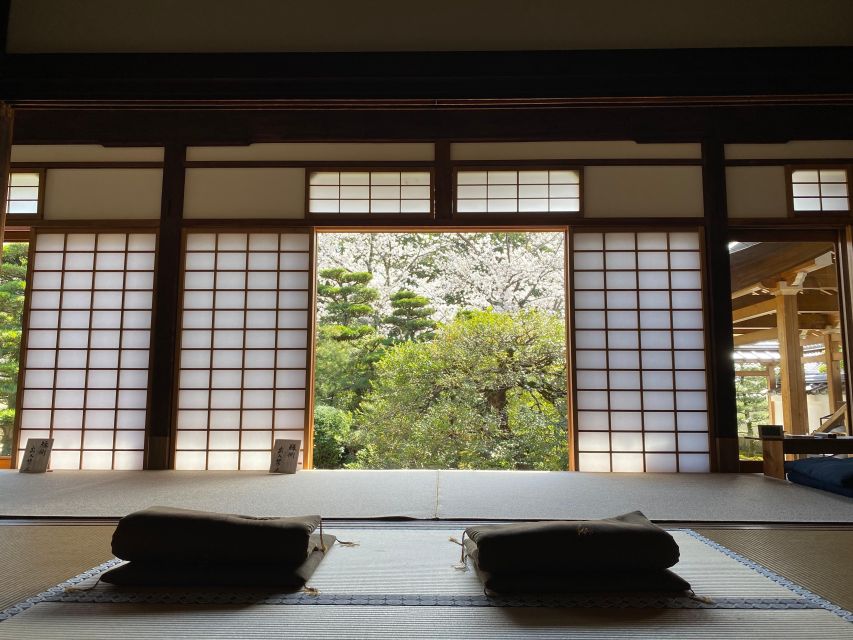
Jusho-in is a smaller temple within the Myoshin-ji complex. Its scale helps create the quiet mood that makes this experience work. You are not entering a grand hall packed with sightseeing groups. You are being welcomed into a more intimate place where the garden, the priest, and the practice receive your attention.
The host is Eitetsu Nishida, the 16th-generation abbot of Jusho-in. Before becoming a monk, he worked for 10 years as a national public servant. He later completed three and a half years of demanding monastic training.
That background gives his teaching an unusual human touch. He is described as cheerful, humorous, and fond of animals, rather than distant or severe. His friendly manner helps beginners relax, especially if you arrive worried that you will not understand the rules or will somehow meditate incorrectly.
The English interpretation is part of the experience. Guides have included Ursula and Nicolas, and the support is generally warm and helpful. One practical point is worth keeping in mind: Eitetsu’s English may be hard to catch in places because of his accent. When the interpreter translates fully, the explanations are much easier to follow. Do not hesitate to ask for clarification.
The first 20-minute zazen session
Before you sit, the temple team explains the basics of zazen. Zen is a branch of Mahayana Buddhism that gives special weight to seated meditation and direct experience. You are not expected to master a religious text or arrive with any background in Buddhism.
The first session lasts 20 minutes. That may sound short, but it can feel surprisingly long when you are trying to hold your posture and keep returning your attention to the present. The aim is not to force your mind to become perfectly blank. The practice is about noticing distraction and returning to the act of sitting.
This is a useful distinction for first-timers. Many people arrive thinking meditation means having no thoughts at all. The session quickly shows you that the mind keeps producing thoughts, plans, memories, and small complaints about your knees. The instruction gives you a practical way to meet that restless mind without turning the exercise into a test you can fail.
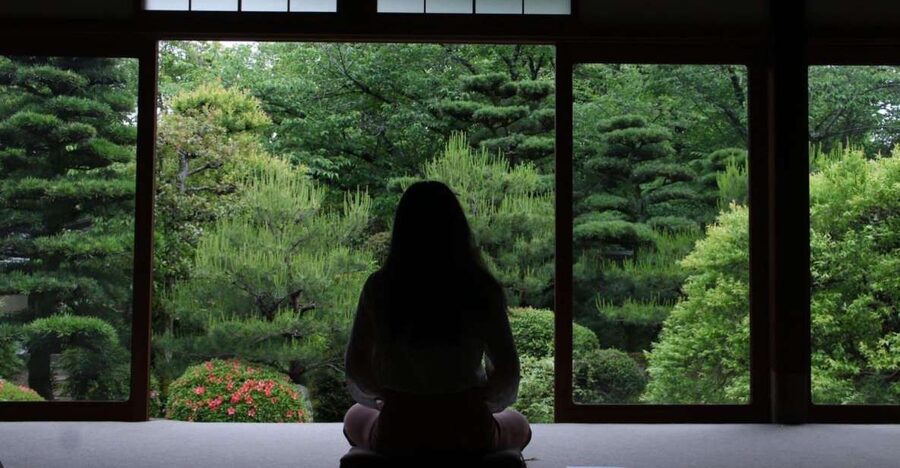
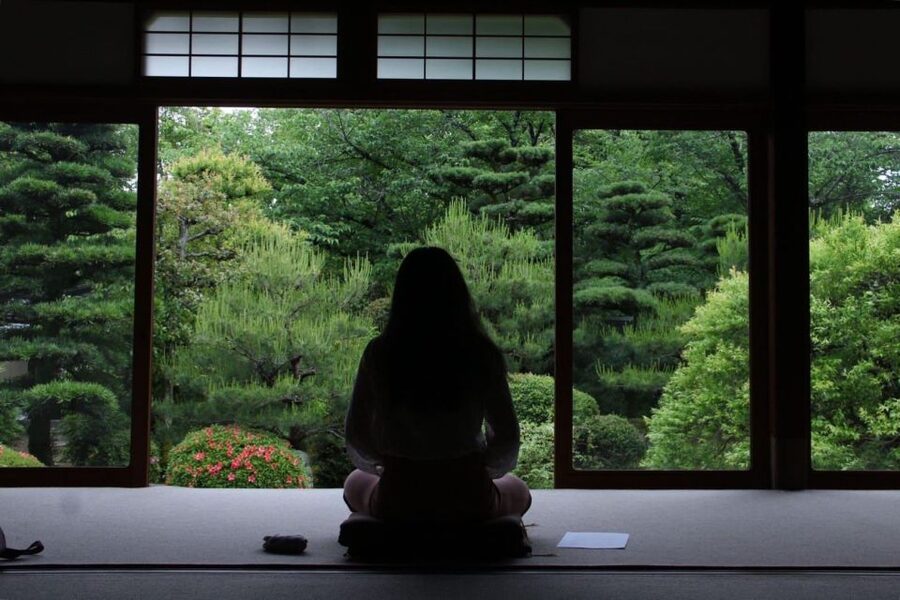
The garden view adds to the experience. Depending on the season and conditions, the doors may be open toward the garden. In colder weather, blankets can be offered, though sitting with the outside air may not suit everyone. The combination of stillness, natural light, and garden space is one of the strongest reasons this temple works better than a generic meditation room.
A completely different kind of day out in Kyoto:
- PERFECT KYOTO 1-Day Bus Tour
★ 5.0 · 13,518 reviews - Kyoto Geisha Walking Tour: Gion District & Hidden Gems
★ 4.7 · 3,273 reviews - Kyoto: Gion Magical Night Walking Tour with Geisha Trivia
★ 4.9 · 2,393 reviews - Kyoto: 45-Minute Tea Ceremony Lesson Experience
★ 4.3 · 2,378 reviews
The pause between sessions
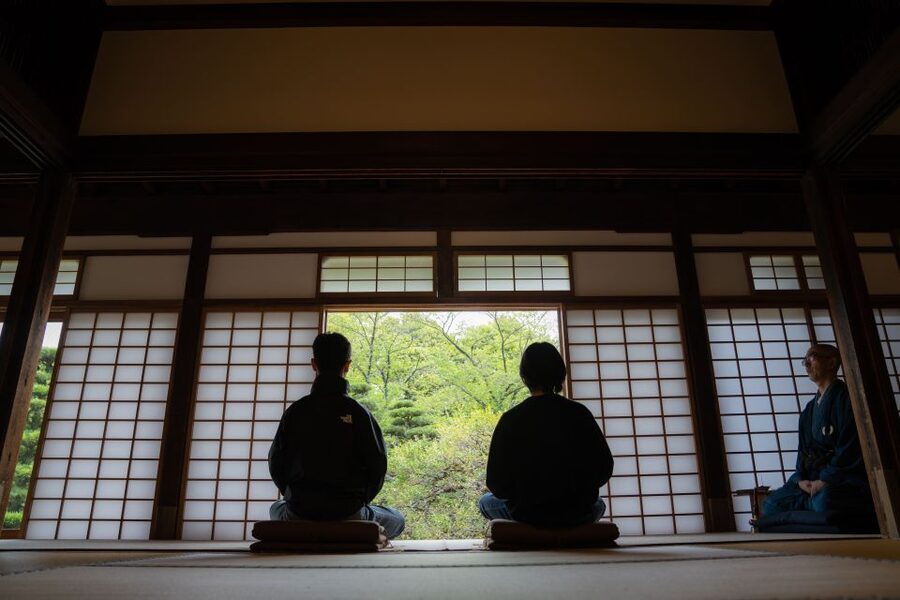
The two sessions are separated by a break. You can stretch your legs, ask questions, and absorb what just happened before returning to the cushions.
I especially like this structure because it respects the body. A single 40-minute sitting would be a poor introduction for many people. Two shorter sessions give you time to adjust your posture, notice what is difficult, and try again with better information.
Chairs are available if sitting on the floor is painful or impractical. That makes the activity more open to different ages and levels of fitness, although the temple itself is not wheelchair accessible. If you have a knee, hip, or back problem, tell the team early rather than trying to prove your toughness.
The break also gives you a chance to ask about Zen and Rinzai Buddhism. Rinzai Zen came to Japan in the 12th century and is associated with sudden awakening, often called satori, through demanding practice. The explanations are presented as an accessible introduction, not as a scholarly lecture.
The second 20-minute sitting
The second zazen session lets you use what you learned. You have already felt the physical demands and seen how quickly the mind wanders. That familiarity can make the second sitting more focused, even if it is not easier.
The chief priest sits with the group and guides the practice. His humor and calm manner help keep the mood serious without becoming stiff. You are taking part in a religious practice, but you are not expected to perform for the priest or pretend to have a profound revelation.
This is where the activity earns its value. A short meditation on your own can be pleasant, but instruction from a Zen abbot adds context. You begin to understand posture, attention, silence, and repetition as parts of a tradition rather than isolated wellness techniques.
The experience is suitable for complete beginners. You do not need previous meditation experience, and you do not need to identify as Buddhist. It can also suit people who already practice meditation or yoga and want to see how seated Zen practice differs from what they know.
Matcha, wagashi, and the garden view
After zazen, the mood shifts from silence to conversation and tea. Eitetsu explains matcha, the powdered green tea used in the experience, along with some of its history and proper etiquette.
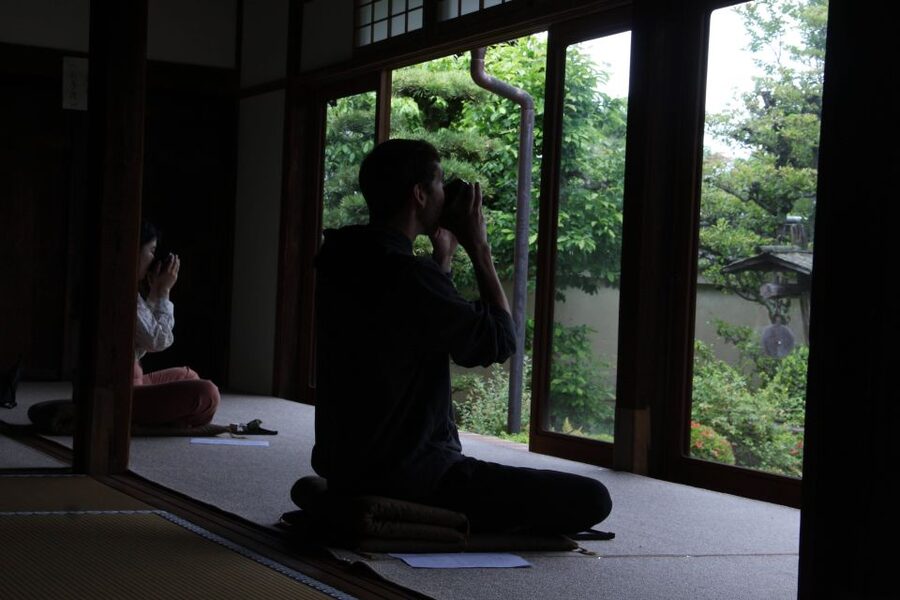
The tea is served with traditional seasonal sweets, often wagashi. These are not simply snacks added to fill out the schedule. The pairing gives you a practical way to notice how tea, sweetness, movement, and attention fit together. You learn how to receive and drink the matcha, then take time to taste the sweet and appreciate the setting.
The tea portion is one of the most memorable parts for many people because it is both elegant and easy to understand. You do not just watch a formal ceremony from a distance. You take part in a small act of hospitality, with the tea and sweet selected to suit the occasion.
The garden is the star of this section. It is attributed to Eitoku Kano, a celebrated 16th-century painter, and has remained unchanged since its creation. Spring brings cherry blossoms, summer brings fresh greenery, autumn brings colored leaves, and winter may bring snow.
Season matters here, but there is no bad time to visit. Each season changes the mood of the garden. A winter visit may feel spare and quiet, while autumn offers more color. In spring and summer, the garden can feel softer and more alive. Since the garden is viewed as part of the temple setting rather than treated like a separate attraction, the calm comes from simply sitting and looking.
A final conversation and photographs
The experience ends with a commemorative photograph. A photographer uses a single-lens reflex camera during the visit, allowing you to keep your attention on the meditation and tea rather than trying to document everything yourself.
Photo data is sent within a few days after the tour. This is a thoughtful inclusion because the most important parts of the visit are precisely the moments when you should not be reaching for a phone. The photographs also give you a record of the temple, garden, and group without interrupting the atmosphere.
There is usually time to speak with the priest and the temple team before leaving. That informal conversation can be as valuable as the formal teaching. You can ask questions about Zen, temple life, meditation, or the meaning behind the tea customs.
Staff members have been especially helpful with practical problems as well. On one occasion, a guide named Joondae went out of his way to assist with a lost phone before the activity began. That sort of care matters because it shows that the team is paying attention to the person in front of them, not just moving a group through a timetable.
What sitting in a temple is really like
Do not book this expecting instant calm. The meditation can be challenging, and that is part of its usefulness. Your back may tire, your legs may complain, and your mind may spend several minutes thinking about lunch.
The activity handles that challenge well by explaining the practice, using two sessions, allowing questions, and offering chairs when needed. Still, you should wear comfortable clothing that allows you to sit on the floor. A rented kimono may look wonderful in photographs, but it can make meditation uncomfortable and restrict your movement.
No special equipment is required. Avoid alcohol or drugs before the experience, and do not bring weapons or sharp objects. The setting calls for quiet respect, but you do not need special religious clothing or prior knowledge.
Families can take part, and the experience is open to all ages. The most important question is not age but patience. Young children who cannot sit quietly for 20 minutes may find the format difficult, while older children and adults who are curious about meditation should have plenty to engage with.
Who gets the most from the $109 price
For $109, you are paying for more than a temple entry ticket. You receive access to a historic sub-temple, instruction from its chief priest, English guidance, two meditation sessions, tea and sweets, and professional photographs.
That package makes the activity a stronger value for you if you want personal explanation and a small-group atmosphere. It is less compelling if your main goal is simply to see a garden or take a quick look inside a temple. You can visit many Kyoto temples for much less, but few offer this combination of guided practice and direct conversation with an abbot.
I would make room for it during a crowded Kyoto itinerary, especially if you have already spent days moving between major sights. The two-hour length is manageable, and the northwestern location gives you a reason to see a part of the city beyond the most heavily visited central routes.
The private and small-group options are also worth considering. A smaller setting can make it easier to ask questions and settle into the silence. Seating is assigned in reservation order, so earlier booking may give you a better chance of securing your preferred position.
Should you book the Jusho-in Zen experience?
Yes, if you want a calm, personal introduction to Zen rather than another quick temple stop. I would especially recommend it to first-time visitors who want help with meditation, couples seeking a quiet shared activity, and anyone who needs a break from Kyoto’s crowded sightseeing circuit.
Think twice if floor seating is a serious problem, if you need wheelchair access, or if you want a long and advanced retreat. The English interpretation is helpful, but the priest’s accent may require patience.
For most people, the combination of two guided zazen sessions, a warm abbot, excellent matcha, seasonal sweets, and a garden with four centuries of continuity makes the price reasonable. Book it for the chance to slow down, not for a checklist of temple sights. You may leave with more questions than answers, but you will have spent two hours paying attention, which is exactly the point.
FAQ
Where does the Kyoto Zen experience meet?
The usual meeting point is the north gate of Myoshin-ji Temple at 18 Taniguchisonomachi. The exact point may vary depending on the option booked.
How long does the experience last?
The experience lasts about two hours, including explanations of zazen, the meditation sessions, and the tea portion.
How many meditation sessions are included?
You take part in two zazen sessions, each lasting 20 minutes, with a break between them for stretching and questions.
Is the experience suitable for beginners?
Yes. The priest and guides explain the basics of zazen, and no previous meditation experience is required.
Is the experience available in English?
Yes. The live tour guide language is English, and interpretation is provided during the teaching.
Can I sit on a chair instead of the floor?
Yes. Chairs are available for people who need assistance during zazen. The temple itself is not wheelchair accessible.
What should I wear?
There are no special clothing requirements, but comfortable clothing is best for sitting and meditation. A rented kimono may make it difficult to sit comfortably.
What is included in the price?
The price includes a guide, temple entry, the chief priest’s sermon, Japanese tea and sweets, and photographs taken with a single-lens reflex camera. Hotel pickup and drop-off are not included.
Can I cancel the booking?
You can receive a full refund if you cancel up to 24 hours before the experience. Cancellations after that time are not refunded.
Just added around Kyoto
- Kyoto: Gion Night Walking Tour with Geisha Insight★ 5.0 · 39 reviews
- Kyoto: Private Customizable Day Trip by Car★ 5.0 · 38 reviews
- Kyoto: Full Day Bike Tour★ 4.9 · 39 reviews
- Private Japanese Calligraphy in Kyoto – Learn Shodō with a Master★ 5.0 · 39 reviews
- Experience a tea ceremony in an authentic tearoom, in Kyoto!★ 4.5 · 41 reviews
- Kyoto: Gion Evening Walk with Hidden Gems, Geisha & Sake★ 5.0 · 41 reviews
- Kyoto Private Photo Shoot & Tour by SnapKyoto★ 5.0 · 41 reviews
- The Way of Tea: Kyoto Crafts, Hidden Temples & Wabi-Sabi Walk★ 5.0 · 41 reviews
Temple & Shrine Tours, compared.

Fushimi Inari, Kinkakuji, Bamboo Grove 1 Day Bus Tour
Read our review →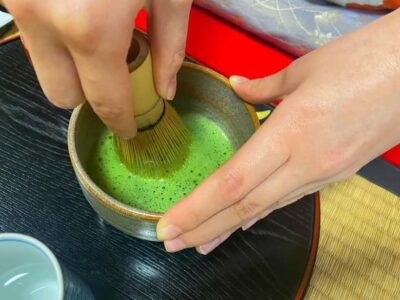
Tea Ceremony in a Traditional Tea House in Kiyomizu
Read our review →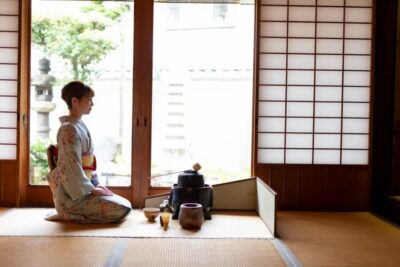

Meiji Shrine, Asakusa, Skytree Bus Tour and Cruise
Read our review →
Fushimi Inari Hidden Hiking Tour (Private Option Available)
Read our review →
Osaka/Kyoto:Kinkakuji,Arashiyama,FushimiInariShrine,NaraPark
Read our review →
Asakusa Walking Tour with Sensoji Temple Visit
Read our review →
Nikko: Kegon Falls, Lake Chuzenji & Toshogu Temple
Read our review →Browse the lists this tour appears in