
Reviewed · CYCLING TOURS
Osaka in a Nutshell: Three hour bike tour
Osaka rewards you on two wheels. This three-hour ride links famous sights with quieter river paths, parks, and old business quarters, giving you a useful first look at the city without wrestling with train maps. I like the mostly flat route and the chance to see Osaka Castle, Nakanoshima Park, the Mint Museum grounds, and Utsubo Park in one outing. The bilingual guide also adds local context and practical food tips.
The hybrid bike, helmet, and bottled water are included, so the tour is easy to arrange. I also like the small group limit of eight people, which should make stops and questions more manageable. The main consideration is the weather: Osaka can be hot and humid, and you will still ride on city streets and shared paths, even though about 90 percent of the route is flat.
In This Review
- Key points at a glance
- Why a bike is a smart way to see Osaka
- Starting near Tenma and getting oriented
- Nakanoshima Park and Osaka’s old business center
- Riverside cycling through a quieter side of Osaka
- The Mint Museum grounds and Osaka’s modern story
- Osaka Castle Park, greenery, and a major landmark
- Utsubo Park and an unexpected piece of city history
- What the pace and riding feel like
- Heat, clothing, and the practical tradeoffs
- Is $72.67 a fair price?
- Who should book this Osaka bike tour?
- Should you book it?
- FAQ
- How long does the Osaka bike tour last?
- What time does the tour start?
- Where does the tour begin?
- Where does the tour end?
- Are bikes and helmets included?
- Is bottled water included?
- How many people can join the tour?
- Do I need a high level of fitness?
- Can I enter the Mint Museum during the tour?
- What happens if bad weather cancels the tour?
Key points at a glance
- About 90 percent flat: The route suits anyone with moderate fitness who wants to cover ground without a hard workout.
- Four useful Osaka stops: You see Nakanoshima Park, the Mint Museum grounds, Osaka Castle Park, and Utsubo Park.
- A small group of up to eight: This keeps the ride more personal than a large bus or walking tour.
- Hybrid bike and helmet included: You do not need to arrange your own bicycle or carry one across the city.
- Guides add local detail: Guides named Peter, Matt, Mat, and Sam have been praised for history, culture, and practical city advice.
- Best in comfortable weather: A moving bike creates a welcome breeze, but heat, humidity, and rain can affect the experience.
Why a bike is a smart way to see Osaka
Osaka is a broad city, and its best sights are spread across different neighborhoods. You can use the train, of course, but underground stations often hide the city between major stops. On a bicycle, you connect the spaces in between: riverside paths, office streets, green parks, old buildings, and castle grounds.
That is the real value of this tour. You are not simply being delivered from one attraction to another. You get a sense of how central Osaka fits together. The route follows the city’s waterways and passes through areas that are easy to skip if you stick to the standard shopping and food districts.
The ride lasts about three to four hours and begins at 10:00 a.m. The group limit is eight people, which is small enough for a guide to keep an eye on the pace and explain what you are seeing. It also leaves room for short photo stops without the awkward delay that comes with a large group.
The route is described as 90 percent flat. That matters in Osaka, where a few hours of cycling can otherwise become tiring in warm weather. You still need moderate physical fitness, but this is not presented as a demanding cycling challenge. The emphasis is on seeing the city at a comfortable pace.
More Bike Tours in Osaka
- 5-Hour Osaka Bike Tour to the Neighborhood of Osaka Castle
★ 5.0 · 319 reviews - One-Day Osaka Bike Adventure: 5–6 Hours
★ 5.0 · 246 reviews - Eat, Drink & Cycle: Osaka Foodie Bike Tour
★ 5.0 · 224 reviews
Starting near Tenma and getting oriented
The meeting point is at 1-chōme-10-7 Tenma in Kita Ward, Osaka. It is near public transportation, and the activity returns to the same meeting point at the end. That return is useful if you have more plans afterward, since you are not left on the opposite side of the city trying to retrieve your belongings or find your way back.
The bike and helmet are supplied, along with bottled water. The bicycles are hybrid models, and the strongest practical praise has been for their light feel and good condition. A larger helmet is available, which is a small but important comfort point. You should still arrive ready to ride, with clothing suitable for warm weather and shoes that stay secure on the pedals.
Your guide provides commentary in two languages. The guides associated with this experience include Peter, Matt, Mat, and Sam. Peter has been praised for leading an easy, flat ride, while Matt and Mat are noted for combining history with a friendly, considerate manner. Sam is also praised for giving useful historical background. The exact guide can vary, so you should treat those names as examples rather than a guarantee.
Nakanoshima Park and Osaka’s old business center
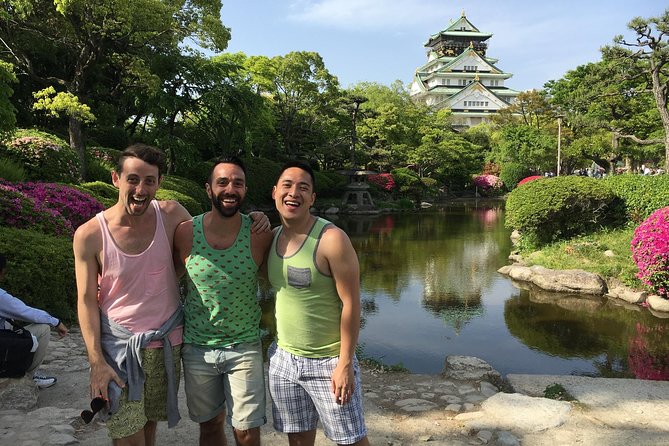
The first stop is Nakanoshima Park, where landscaped gardens sit between the rivers in central Osaka. The setting gives you an early change of pace from the city streets. You also pass old European-style buildings linked to Osaka’s former business district, an architectural reminder that the city has long looked outward toward international trade.
You have about 15 minutes here, with no admission fee. That is enough time for a short walk, photographs, and an introduction to the area. It is not enough for a slow garden visit or a detailed architectural tour, so keep your expectations in check. This is a quick orientation stop, not a full museum-style presentation.
I like this beginning because it avoids launching straight into Osaka’s loudest commercial areas. You start with water, gardens, and older buildings, then gradually build a picture of the city. The guide can explain how the river shaped Osaka’s business life, giving the ride more meaning than a simple list of landmarks.
Riverside cycling through a quieter side of Osaka
After Nakanoshima, the route follows a river running through the city. The exact stop is not specified, but the purpose is clear: you get a calmer stretch with views across a less familiar part of Osaka.
This section is one of the strongest reasons to choose a bicycle. A train can move you quickly, but it cannot give you the same view of changing neighborhoods. You may see the city shift from office blocks to open water and public paths within a short distance.
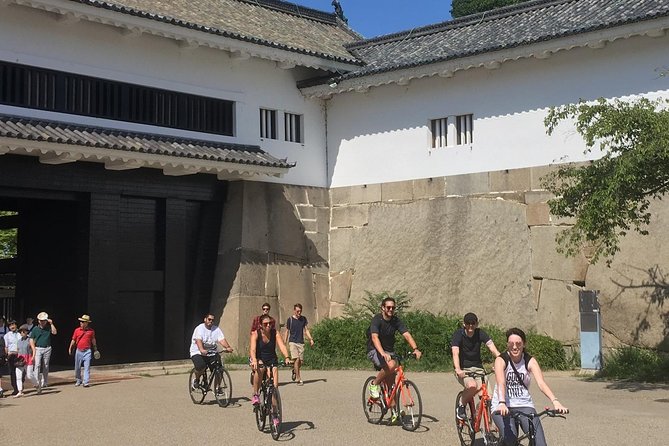
The ride is mostly on cycle paths, with only a small amount of road cycling reported. That should reassure you if you are comfortable on a bike but do not want a traffic-heavy route. Still, Osaka has many bicycles, and local riders may use sidewalks and shared areas. Pay attention when passing pedestrians or joining a street, even during an easy section.
The moving air can also help on a hot day. In August, when Osaka is especially warm and humid, the breeze from cycling can make the conditions easier than a long walk. That does not remove the need for water, sun protection, and sensible pacing, but it is a real advantage.
A completely different kind of day out in Osaka:
- Osaka Go Karting Tour with Funny Costume
★ 5.0 · 2,658 reviews - Osaka Castle: Museum and Tower Entry Ticket
★ 4.5 · 2,380 reviews - Osaka: Shinsekai Food Tour with 13-15 Dishes at 5 Eateries
★ 4.8 · 2,204 reviews - Osaka Food Tour: 13 Dishes at 5 Local Eateries
★ 5.0 · 2,149 reviews
The Mint Museum grounds and Osaka’s modern story
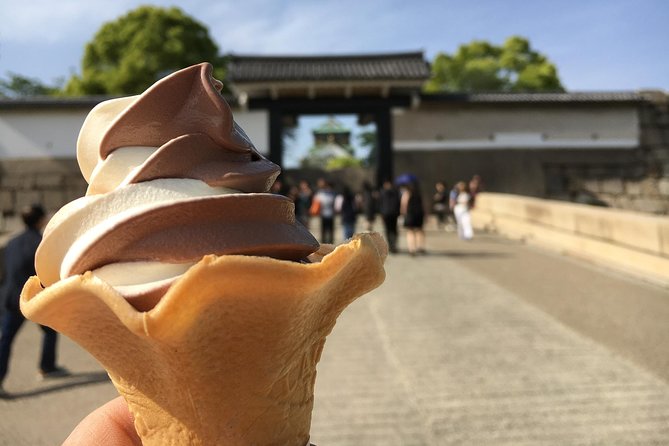
The ride next reaches the grounds of the Mint Museum. You do not enter the museum on this tour, and the stop lasts about 15 minutes. Instead, the guide explains the history of the area and its connection to Japan’s modernization.
That distinction matters. If the Mint Museum itself is a priority, you will need to visit separately. Here, the grounds function as a place to pause and understand how Osaka developed as a modern commercial and industrial center. The stop adds useful context to the older buildings and waterways seen earlier.
The short time is enough for a spoken explanation and photographs, but not for a detailed museum visit. I see this as a history stop for people who want a broad introduction rather than a specialist tour. The guide’s role is particularly important here, since the value comes less from entering a building and more from hearing how the site fits into Japan’s development.
Osaka Castle Park, greenery, and a major landmark
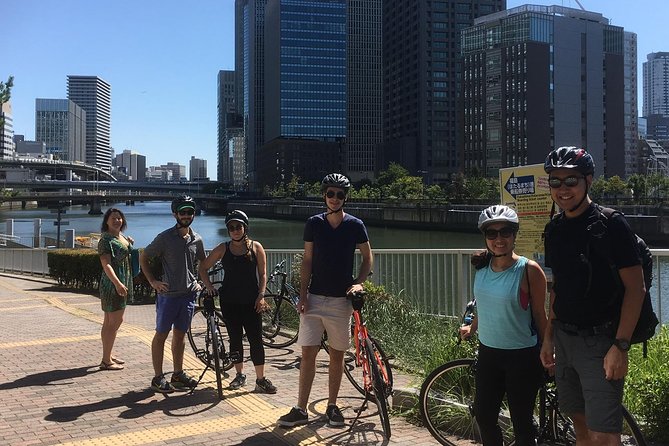
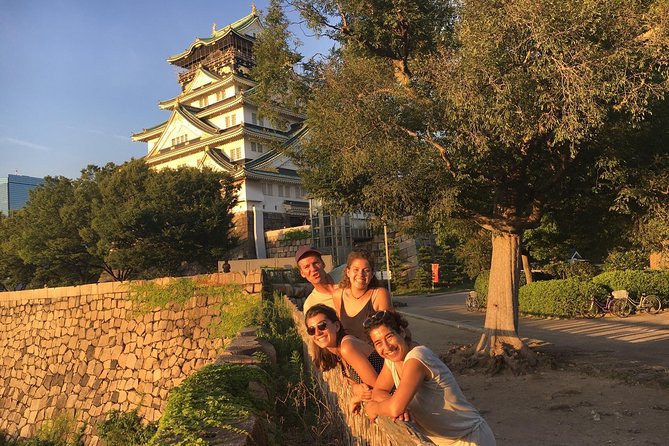
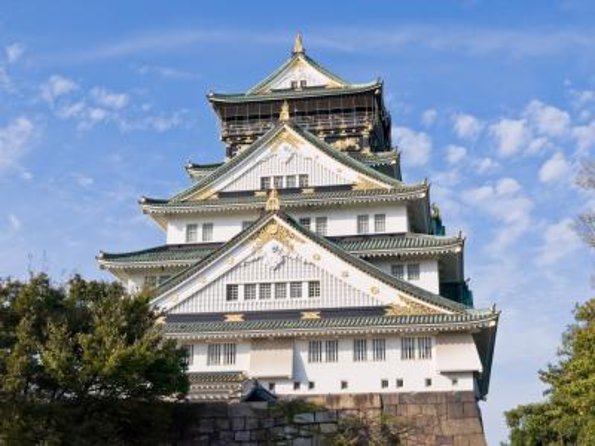
Osaka Castle is the longest listed stop, with around 30 minutes in the park. You cycle through the greenery, stop for postcard-style views, hear a short explanation of the castle’s role in Japanese history and culture, and have time for a cool drink.
This is not a full Osaka Castle visit. You do not get an extended tour of the interior, and the schedule is too short for a detailed examination of the grounds. The benefit is that you reach the castle efficiently and see it as part of a larger city route.
That approach can be especially useful if you already plan to return to the castle on foot. Some people find the park tiring when they walk every path and approach from the surrounding stations. A bicycle lets you cover more of the grounds and understand the castle’s position within central Osaka.
The stop also provides a sensible rest point. Thirty minutes gives you more breathing room than the earlier pauses. You can take photographs, get a drink, and listen without feeling that the group must leave immediately. Several guides have been praised for explaining Osaka’s past clearly, and this is likely the place where that historical background feels most relevant.
If Osaka Castle is your main goal, book a separate visit as well. The bike tour gives you the outside setting and a concise introduction, not the full castle experience.
Utsubo Park and an unexpected piece of city history
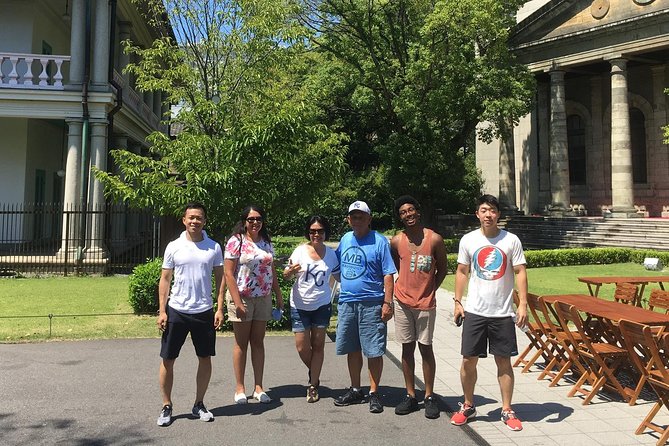
The final sightseeing stop is Utsubo Park, with about 10 minutes to look around. It is described as one of central Osaka’s most attractive parks, and its relaxed setting makes a pleasant contrast with the castle grounds and business district.
The brief stop means you will not have much time to wander. Think of it as a final green pause and photo opportunity rather than a complete park visit. Even so, Utsubo Park helps show another side of Osaka: a city where useful public open space can sit close to offices and busy streets.
The guide also covers the park’s surprising history. That is a good example of why a local guide helps. Without context, you might simply see a pleasant patch of trees. With a short explanation, the stop becomes part of Osaka’s larger story.
This is also a useful place to ask for food and drink advice. The tour specifically includes tips on good places to eat and drink around the city. You should ask for recommendations that fit your remaining schedule, since advice from someone who knows the neighborhoods can save you from choosing a random restaurant near a major station.
What the pace and riding feel like
The tour is designed as a city overview, not a race. You cover a lot of ground at a reasonable pace, with several stops for explanations and photos. The route’s flat profile and light hybrid bikes make it accessible to people who cycle occasionally, provided they have moderate fitness.
You should not mistake flat for completely effortless. Osaka’s heat can be draining, and any city ride requires attention at crossings, on shared paths, and near pedestrians. The amount of road riding is limited, but it is not absent.
The greatest praise goes to the bikes and the guides. A bike in good condition makes a major difference when you are riding for several hours. A guide who is friendly, clear, and responsive makes the city easier to read. Names such as Matt, Mat, Peter, and Sam appear in connection with strong guiding, history, and cultural explanations.
The group size also helps. With no more than eight people, the guide can usually keep the pace together without turning every stop into a head count. You still need to stay with the group and follow local riding instructions, but the format should feel more personal than a large organized outing.
Heat, clothing, and the practical tradeoffs
Osaka’s summer weather deserves serious attention. A ride can feel more comfortable than walking because of the breeze, but humidity does not disappear. Bring or wear sun protection, use the supplied water, and avoid treating the flat route as permission to ignore the conditions.
The experience requires good weather. If rain or other poor conditions cancel the tour, you are offered another date or a full refund. The tour also requires a minimum number of participants, so a cancellation is possible if that number is not met.
The cancellation terms are straightforward but strict near departure. You receive a full refund if you cancel at least 24 hours before the 10:00 a.m. start. Changes or cancellations made within 24 hours are not refunded, so check the local Osaka time before making a last-minute change.
The tour has a mobile ticket, which keeps the booking simple. You should still save the meeting point and start time somewhere easy to reach, since the activity begins promptly at 10:00 a.m. and ends back at the starting point.
Is $72.67 a fair price?
At $72.67 per person, this is not the cheapest way to see Osaka. You could walk through some of these areas for free, and public transportation costs less than a guided activity. The price makes more sense when you count what is included: a hybrid bike, helmet, bottled water, a bilingual guide, route planning, and three to four hours of city coverage.
I think the value is strongest for a first visit. You save time planning a route between several districts, and you get a useful introduction to places that are not always connected in standard sightseeing plans. The food and drink advice adds value if you use it for the rest of your stay.
The price is less attractive if you want a deep visit to Osaka Castle or the Mint Museum. Neither stop is designed as a full interior tour. You are paying for movement, context, and city orientation rather than entrance-based sightseeing.
A 4.9 rating from 121 reviews and a 99 percent recommendation rate suggest that the format is working well for most people. I would still judge the purchase by your interests: it is a strong city sampler, but not a substitute for detailed visits to the individual attractions.
Who should book this Osaka bike tour?
I would recommend it to first-time visitors who want to understand Osaka’s layout quickly. It also suits people who find long walking days tiring, anyone curious about parks and riverside areas, and visitors who prefer local explanation over following a map alone.
It is a good fit for couples, families with older children, and small groups who enjoy a moderate ride. The maximum group size of eight keeps the outing from feeling anonymous.
You may want to skip it if you dislike cycling in cities, need a fully indoor activity, or want to spend most of your time inside museums and castles. It is also not the best choice during uncertain weather unless you have flexibility for a rescheduled date.
Should you book it?
Book this tour if you want an efficient first look at Osaka, especially if you value easy cycling, local history, and practical food advice. The flat route, reliable bikes, small group, and return to the starting point make it a low-stress way to cover a lot of ground.
I would schedule it early in your Osaka stay. That lets you use the guide’s neighborhood tips for later meals and sightseeing, and you can return to Osaka Castle or the Mint Museum if one of those stops catches your interest. Just remember that the tour offers an outside introduction, not a full museum or castle visit.
FAQ
How long does the Osaka bike tour last?
The tour lasts approximately three to four hours.
What time does the tour start?
The tour starts at 10:00 a.m.
Where does the tour begin?
It begins at 1-chōme-10-7 Tenma, Kita Ward, Osaka, 530-0043, Japan.
Where does the tour end?
The activity ends back at the meeting point.
Are bikes and helmets included?
Yes. A hybrid bike and helmet are included in the experience.
Is bottled water included?
Yes. Bottled water is included.
How many people can join the tour?
The maximum group size is eight travelers.
Do I need a high level of fitness?
You should have a moderate level of physical fitness. The route is approximately 90 percent flat, but it still involves several hours of cycling.
Can I enter the Mint Museum during the tour?
No. The tour stops in the museum grounds, but there is not enough time to enter the museum.
What happens if bad weather cancels the tour?
You are offered a different date or a full refund if poor weather causes cancellation.
More 3-Hour Experiences
- 3-Hour Kyoto Insider Sake Brewery Tour with Tastings & Pairings
★ 5.0 · 917 reviews - Tokyo Top Highlights 3h Guided E-bike Tour
★ 5.0 · 714 reviews - 3h Tokyo E-Bike Tour: Hidden Gems, and Local Life with guide
★ 5.0 · 670 reviews - Tokyo: 3-Hour Bike or E-Bike City Highlights Tour
★ 4.8 · 435 reviews
Just added around Osaka
- Osaka Food Tour with 10 Classic Japanese Tastings & Drinks★ 5.0 · 38 reviews
- Osaka: Highlights & Hidden Gems Private Walking Tour★ 4.7 · 38 reviews
- Kyoto private tour (Shore excursion available from Osaka or Kobe port)★ 5.0 · 39 reviews
- Osaka Private Day Trip – Enjoy Your First-Time Visit to Osaka!★ 5.0 · 39 reviews
- Kyoto & Nara & Uji: Full Day Sightseeing Tour from Osaka or Kyoto★ 4.5 · 39 reviews
- Authentic SUSHI Course Cooking Class★ 5.0 · 39 reviews
- Osaka: Mind & Spirit Balance Temple Reiki Healing★ 5.0 · 41 reviews
- Osaka: Gluten-Free Ramen and Gyoza Cooking Class★ 5.0 · 42 reviews
Cycling Tours, compared.
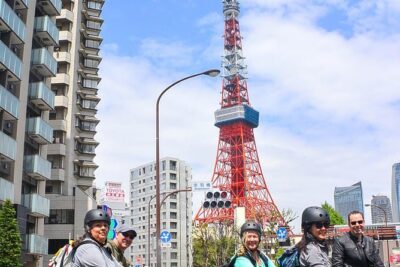
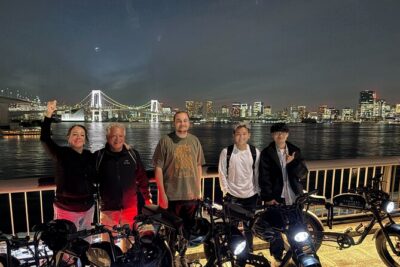
3h Tokyo E-Bike Tour: Hidden Gems, and Local Life with guide
Read our review →
Arashiyama Bamboo Forest & Hidden Gems Bike Tour (Early Bird)
Read our review →
Hiroshima in a Nutshell: Morning Bike Adventure
Read our review →Browse the lists this tour appears in