
Reviewed · FOOD
Osaka: Local Foodie Tour in Dotonbori and Shinsekai
The best Osaka memories often arrive on a skewer. This three-hour food walk links old-school Shinsekai with neon-lit Dotonbori, giving you a useful introduction to Osaka food, local customs, and the city’s colorful back streets. I especially like the mix of eight local specialties, including kushikatsu, okonomiyaki, and takoyaki, and the way the guide adds temples and neighborhood stories between meals. The main drawback is that the tour moves between Shinsekai and Dotonbori by train, with the ¥190 fare not included.
I also like the small-group format and the generous portions. Guides such as Taku, Alice, Yuma, Peco, and Tea have helped make the walk feel more like an evening with a well-informed local than a standard restaurant crawl. You should arrive hungry, though: six kushikatsu pieces, okonomiyaki, takoyaki, and three drinks add up quickly.
In This Review
- Key points to know before booking
- Why this food walk makes sense in Osaka
- Starting in Shinsekai beside Dobutsuen-mae Station
- Kushikatsu in the district that made it famous
- A 1.2-meter alley and an old Osaka atmosphere
- A quiet temple between Namba’s bright streets
- Okonomiyaki in Dotonbori
- Takoyaki and three drinks to finish
- The guide can shape the entire evening
- Who should book, and who should skip it
- Practical details that affect your choice
- Should you book this Osaka food tour?
- FAQ
- How long does the Osaka food tour last?
- Where does the tour meet?
- What food and drinks are included?
- Is transportation included?
- Can vegans or people with gluten intolerance join?
- Can vegetarians request suitable food?
Key points to know before booking
- Three major Osaka foods in one evening: You try six kushikatsu pieces, one okonomiyaki, and one box of takoyaki, along with three drinks.
- Shinsekai brings the retro atmosphere: Jan-Jan Yokocho, Tsutenkaku Tower, Billiken, old arcades, and local kushikatsu set the tone.
- Dotonbori is more than neon signs: A narrow food alley and a small temple add quieter, older layers to the famous entertainment district.
- The guide is a major part of the value: Past guides including Taku, Alice, Yuma, Tea, and Peco have been praised for food advice, transport help, and Osaka stories.
- Dietary limits matter: Vegan and gluten-free diets cannot be handled, and vegetarian requests must be made before the tour.
- Budget for the train ride: The trip from Shinsekai to Dotonbori costs ¥190 and is paid separately.
Why this food walk makes sense in Osaka
Osaka is often called Japan’s kitchen, and this tour gives you a practical taste of why. The city’s food culture is casual, social, and built around dishes that are cooked in front of you or served fresh at the counter.
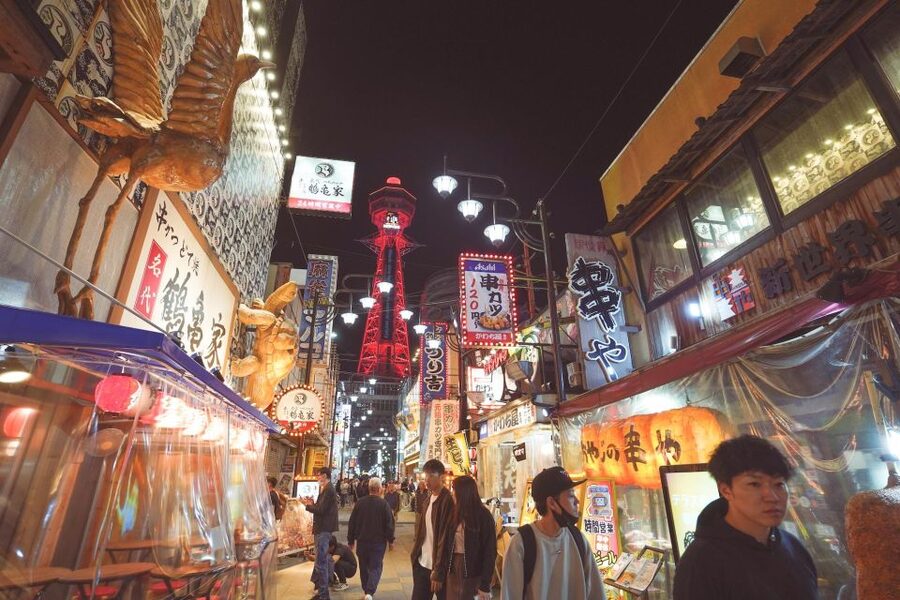
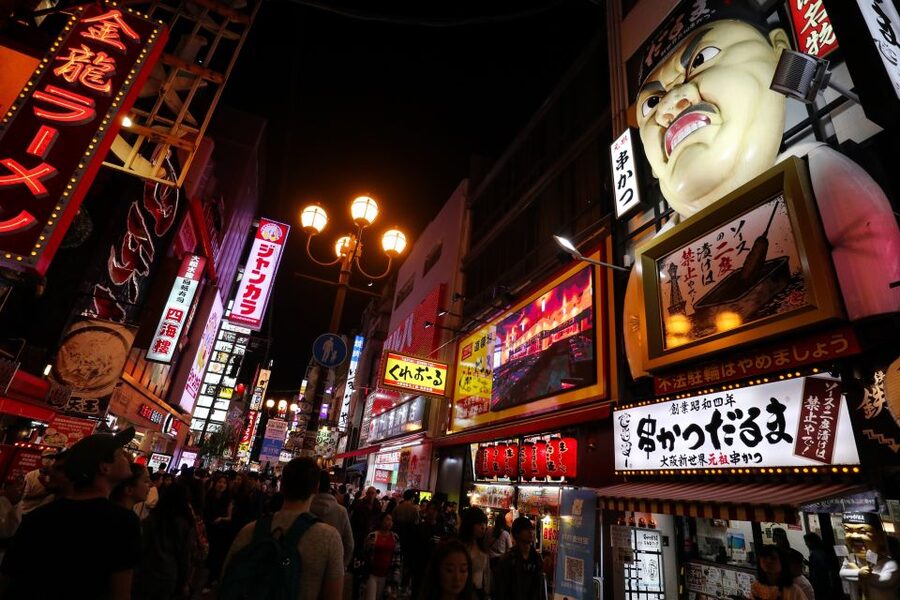
You are not simply taken from one famous restaurant to another. The route connects two very different parts of the city. Shinsekai has a retro, slightly scruffy character, with old arcades, narrow lanes, and Tsutenkaku Tower looking over the neighborhood. Dotonbori is louder and more polished, with giant signs, shopping streets, restaurants, and crowds moving along the canal area.
That contrast is one of the tour’s strongest points. You get a sense of how Osaka changes from one district to the next, and you do not need to work out the route yourself.
The cost is $108 per person. That is not a cheap dinner, but it includes a substantial amount of food, three drinks, a guide, and stops in two of Osaka’s best-known food districts. You also receive context that is difficult to get by simply ordering dishes on your own.
Still, value depends on how you travel. If you already know Osaka well and are happy choosing restaurants independently, the price may feel high. If this is your first evening in the city, the combination of orientation, food, and local advice can make the fee worthwhile.
More food tours in Osaka:
- Osaka: Shinsekai Food Tour with 13-15 Dishes at 5 Eateries
★ 4.8 · 2,204 reviews - Osaka Food Tour: 13 Dishes at 5 Local Eateries
★ 5.0 · 2,149 reviews - Hungry Osaka Street Food Tour:15 Tastings & 3 Drinks with a Local
★ 5.0 · 1,727 reviews
Starting in Shinsekai beside Dobutsuen-mae Station
The meeting point is in front of FamilyMart Sanno Dobutsuen-mae, directly outside Exit 1 of Dobutsuen-mae Station. Your guide carries a MagicalTrip sign.
Be punctual. The tour starts on time, and you cannot join later, reschedule, or receive a refund if you miss the group. That rule matters here because the route depends on a set meal schedule and restaurant reservations.
Shinsekai is a good place to begin because it feels different from the polished image many people have of Osaka. You walk through Jan-Jan Yokocho alley and pass the famous Billiken statue, a figure closely linked with the area. The shuttered arcades and older storefronts give the district a nostalgic feel.
Tsutenkaku Tower provides a clear landmark as you move through the neighborhood. It is not just a photo stop. The tower helps you understand the layout of Shinsekai, where local dining, small shops, and entertainment have long gathered around a central symbol.
Your guide may point out details you would otherwise walk past. The value is not in covering a huge distance. It is in slowing down enough to notice the tone of the neighborhood and understand why Shinsekai feels separate from nearby Namba.
Kushikatsu in the district that made it famous
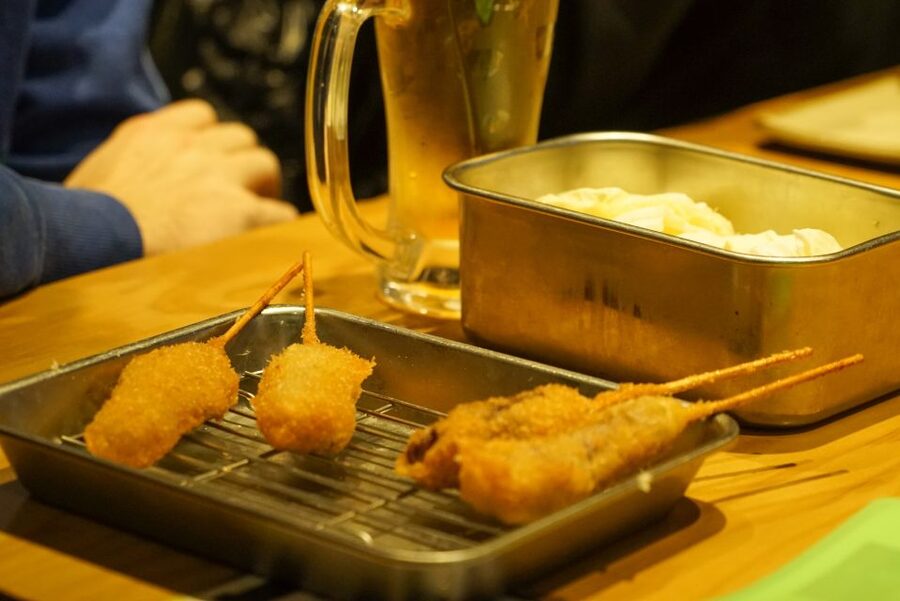
The first main meal is kushikatsu, deep-fried skewers served in the Shinsekai area. Six pieces are included, along with a drink.
Kushikatsu is straightforward food, but it is a perfect match for Shinsekai. Skewered ingredients are coated and fried until crisp, then eaten with a dipping sauce or other seasoning depending on the restaurant. The dish is filling without being formal, and it fits the neighborhood’s relaxed character.
This is one place where the guide’s help is useful. You can learn how the dish is normally eaten and what makes it different from other fried foods in Japan. The meal also gives you a chance to sit down early in the tour rather than walk continuously for three hours.
You should not treat the six pieces as a small snack. Several people have found the food far more filling than expected, especially once the later okonomiyaki and takoyaki are added. A light lunch or early meal is sensible.
Vegetarians need to pay close attention here. The vegetarian kushikatsu still uses dashi made with pork broth. If you cannot consume dashi, you must tell the operator in advance so other vegetarian dishes can be prepared. Same-day requests cannot be handled.
A 1.2-meter alley and an old Osaka atmosphere
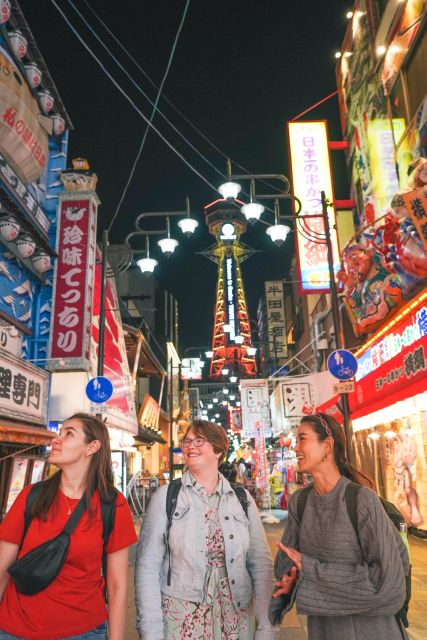
After Shinsekai, the route continues toward Dotonbori. The transportation fee between the two areas is ¥190, paid separately.
One of the more unusual stops is a very narrow food alley measuring only about 1.2 meters across. Its wall art creates a museum-like setting that recalls central Osaka as it appeared more than 80 years ago.
This is not a large museum with extensive displays. It is a brief, visual stop in a tight passageway. That is precisely why it works. You move from the open streets of Shinsekai into a compressed slice of the past, then back toward the modern restaurant district.
The alley also gives the tour a change of pace. Food walks can become a string of meals with little space to reflect. Here, the guide has a chance to explain how Osaka’s older commercial areas developed and how the city’s past remains visible among shops and signs.
Expect the passage to feel tight, especially if the group is at the larger end of the small-group range. It is worth taking your time, but you will not spend a long period there.
A few more Osaka experiences worth weighing up
- Osaka Go Karting Tour with Funny Costume
★ 5.0 · 2,658 reviews - Osaka Castle: Museum and Tower Entry Ticket
★ 4.5 · 2,380 reviews - Osaka: teamLab Botanical Garden Entry Ticket
★ 4.5 · 1,710 reviews - Osaka: Tea Ceremony Experience
★ 4.9 · 1,426 reviews
A quiet temple between Namba’s bright streets
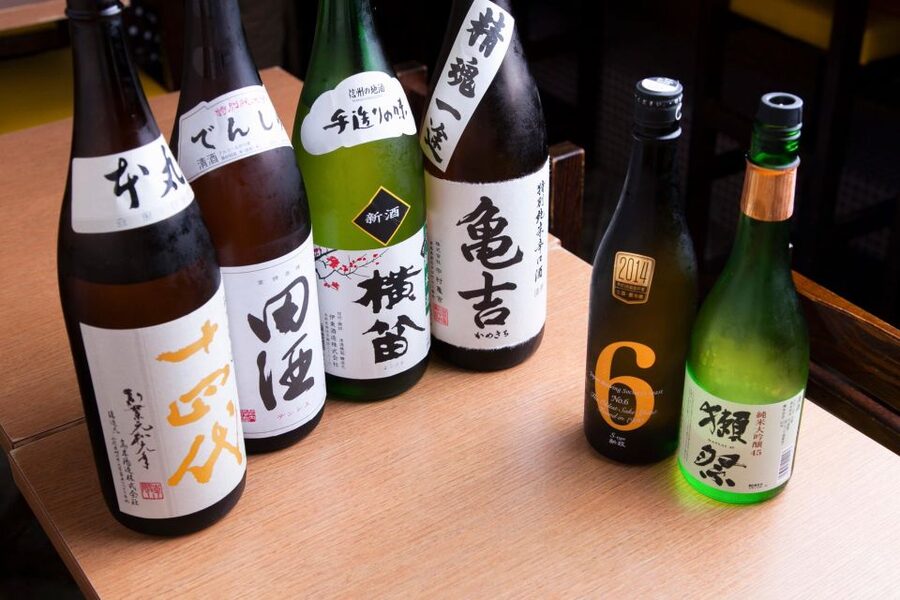
The route then pauses at a small temple tucked between Namba’s shopping streets and neon signs. This stop adds needed balance to the evening.
Osaka’s central districts can feel intense. Shops, signs, traffic, and crowds compete for your attention. A temple offers a short reset, while the guide explains basic etiquette for temples and shrines. That practical information can help you feel more comfortable during the rest of your Japan trip.
The temple is not presented as a grand sightseeing landmark. Its appeal is the setting: an older religious space surrounded by modern Namba. You get to see how traditional places remain part of daily city life rather than being separated into a historic district.
I would not book this tour solely for the temple visit. It is brief, and the food remains the main focus. But as part of the route, it makes the experience feel more rounded and less like a race between restaurants.
Okonomiyaki in Dotonbori
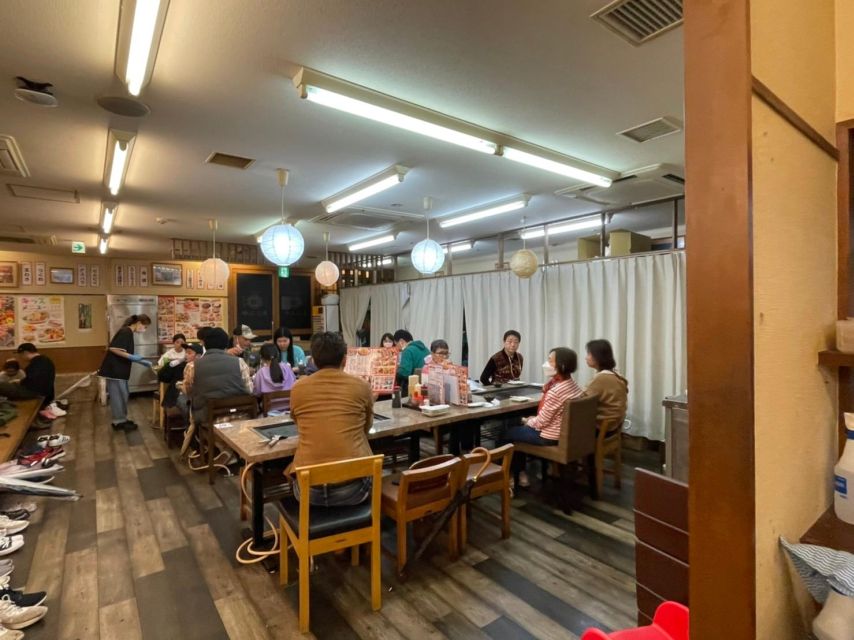
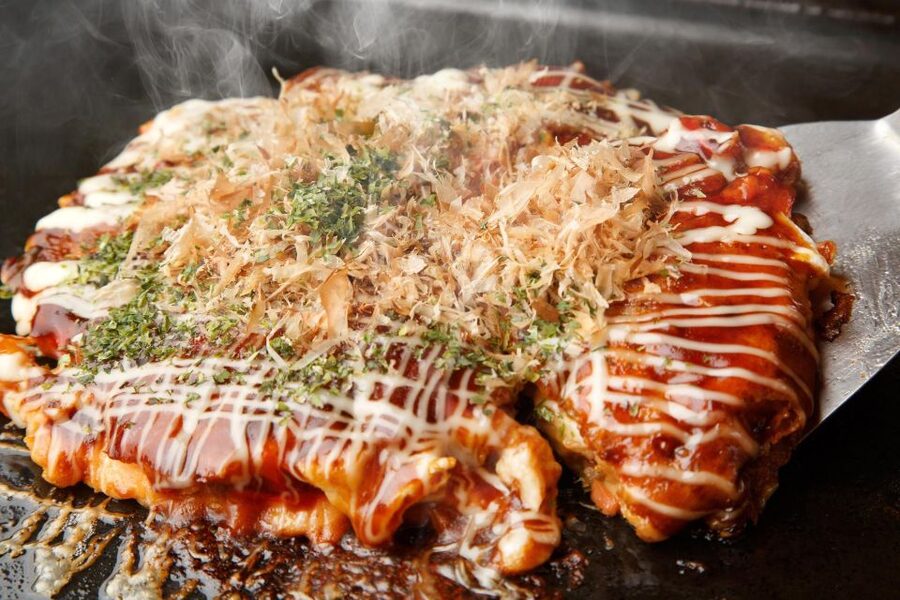
The main sit-down meal in Dotonbori is okonomiyaki, with one serving included. At some restaurants, you may cook it at the table, which has been a highlight for families and first-time visitors.
Okonomiyaki is often described as a Japanese savory pancake, but that label does not tell you much about the experience. It is a substantial dish, generally cooked on a hot surface and finished with sauces and toppings. The fun comes from watching it cook, learning how it is eaten, and sharing the moment with your group.
This is a useful stop for families with teenagers. The meal is interactive without requiring specialist cooking skills, and the guide can explain what to do if you are unfamiliar with the equipment or toppings.
Dotonbori gives the dish a fitting setting. The district has long been linked with merchants and food, and its old connection with the rice trade helped earn Osaka its kitchen-of-the-nation nickname. Today, the area is packed with restaurants and giant illuminated signs, but its identity as a place to eat remains clear.
The downside is the district’s popularity. Dotonbori can be crowded and noisy, particularly in the evening. The tour helps you find the restaurant and keeps the group moving, but it cannot remove the crowds from the streets.
Takoyaki and three drinks to finish
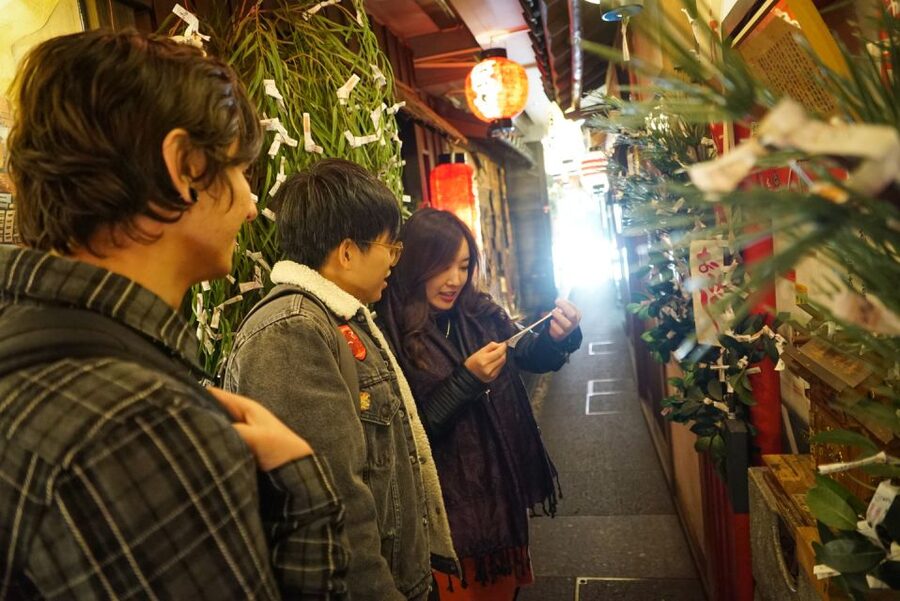
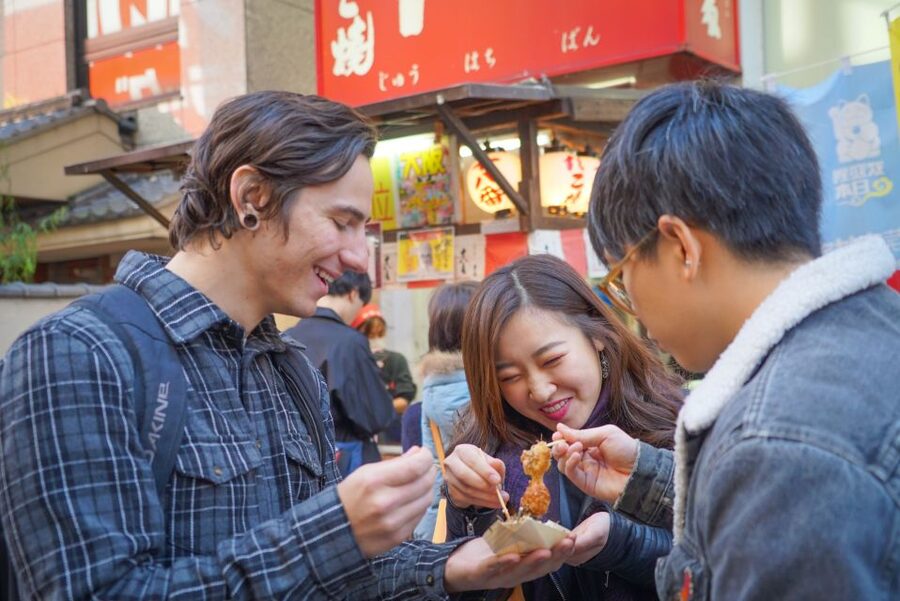
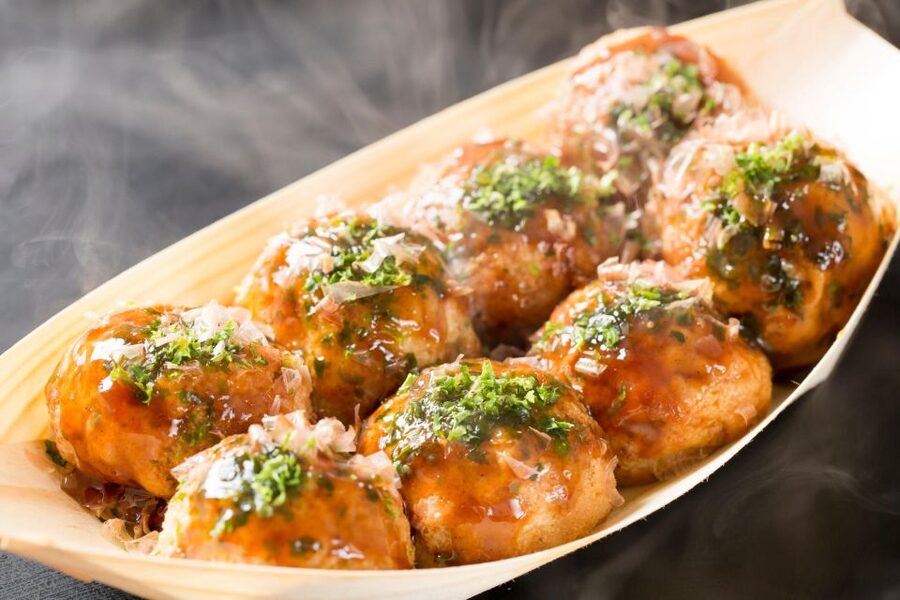
The final food stop includes one box of takoyaki. These round, hot snacks are usually filled with octopus and served with sauces and toppings. They are easy to underestimate because each piece is small, but the heat and richness make them surprisingly satisfying after the earlier dishes.
Takoyaki is a good final taste of Osaka street food because it is strongly tied to the city’s everyday food culture. You get to try it in the district where food stalls, casual restaurants, and late-night eating all meet.
Three drinks are included, with alcoholic and non-alcoholic options. This gives you flexibility, but it is worth pacing yourself. With kushikatsu, okonomiyaki, and takoyaki included, you may be full well before the tour ends.
Additional food and drinks cost extra. The included food is generous, so most people should not need to buy more during the three-hour walk. If you are a particularly enthusiastic eater, you can ask the guide for suggestions after the tour, but do not count on the included meal as a light tasting menu.
The guide can shape the entire evening
The food is important, but the guide is what turns the route into a useful introduction to Osaka.
Past guides have included Taku, Alice, Yuma, Tea, Peco, Yoshi, Shinya, and others. The strongest guide experiences combine food explanations with practical help. Tea, for example, has helped visitors understand Osaka’s transport system and suggested places to eat after the tour. Other guides have offered restaurant tips, explained temple etiquette, and pointed out areas that are easy to miss alone.
The best part is often the pace. You can walk through Shinsekai and Dotonbori without constantly checking a map or wondering which doorway leads to the right restaurant. That is especially helpful after dark, when the districts can feel confusing.
English is the tour language. Small groups and private options are available. Group size can affect the mood, but the experience appears designed to stay personal. One family of four had the tour to themselves, while another group of seven still found the evening comfortable and social.
Guide quality can vary from person to person, as it does on any walking tour. The consistent strength is the structure: the operator places you in food venues and districts where local context adds real value.
Who should book, and who should skip it
I would recommend this tour to first-time visitors who want an easy introduction to Osaka’s food culture. It is also a smart choice for your first evening because you learn where Shinsekai and Dotonbori are, how the food works, and which areas you may want to revisit.
Families with older children and teenagers should find plenty to enjoy. The cooking element at the okonomiyaki restaurant adds a bit of activity, and the food is familiar enough for cautious eaters while still offering new flavors.
It also suits people who want structure. You do not need to research restaurants, decode menus, or plan the train connection between districts. The guide handles those details while you focus on eating and looking around.
I would skip it if you are vegan or cannot eat gluten. The tour cannot accommodate either diet. Vegetarians may be able to join only with advance notice, and the dashi issue at the kushikatsu restaurant needs to be discussed before booking.
You should also skip it if you prefer a slow, unplanned evening. This is a set three-hour route with scheduled food stops, not a flexible food market visit where you decide each next move.
Practical details that affect your choice
The total duration is three hours, with starting times dependent on availability. Wear comfortable shoes because the evening includes walking through Shinsekai, the alley, temple area, and Dotonbori.
The $108 price includes six kushikatsu pieces, one okonomiyaki, one box of takoyaki, three drinks, and the English-speaking guide. It does not include the ¥190 train fare from Shinsekai to Dotonbori, extra food, or extra drinks.
Give dietary requests and allergy information at least one day before the tour. The kitchens are operated by the restaurants, so allergy-free meals cannot be guaranteed and substitutions are limited.
You can cancel up to 24 hours before the start time for a full refund, and the reserve-now, pay-later option lets you hold a place without paying immediately. Those policies are useful if your Osaka schedule is still shifting, but they do not soften the strict late-arrival rule.
Should you book this Osaka food tour?
Book it if you want a guided introduction to Osaka that combines plenty of food with neighborhood context. The strongest reasons are the Shinsekai to Dotonbori route, the range of classic dishes, and the practical help from guides who can explain food, transport, etiquette, and local places to eat afterward.
The portions are generous, the route offers more than neon streets, and the small-group setup keeps the evening personal. Just arrive on time, budget for the short train ride, and warn the operator about dietary needs before the day of the tour.
If those conditions suit you, this is a good-value way to get your Osaka bearings fast, with a full stomach as a pleasant side effect.
FAQ
How long does the Osaka food tour last?
The tour lasts three hours. Starting times depend on availability when you book.
Where does the tour meet?
The meeting point is in front of FamilyMart Sanno Dobutsuen-mae, directly outside Exit 1 of Dobutsuen-mae Station. The guide holds a sign saying MagicalTrip.
What food and drinks are included?
The tour includes six pieces of kushikatsu, one serving of okonomiyaki, one box of takoyaki, and three drinks. Alcoholic and non-alcoholic drinks are available.
Is transportation included?
Transportation is not included. The train from Shinsekai to Dotonbori costs ¥190 and is paid separately.
Can vegans or people with gluten intolerance join?
No. Vegan and gluten-free diets cannot be accommodated on this tour.
Can vegetarians request suitable food?
Vegetarian options may be available if requested in advance. The vegetarian kushikatsu still uses pork-broth dashi, so tell the operator before the tour if you cannot consume dashi. Same-day requests cannot be handled.
Just added around Osaka
- Osaka Food Tour with 10 Classic Japanese Tastings & Drinks★ 5.0 · 38 reviews
- Osaka: Highlights & Hidden Gems Private Walking Tour★ 4.7 · 38 reviews
- Kyoto private tour (Shore excursion available from Osaka or Kobe port)★ 5.0 · 39 reviews
- Osaka Private Day Trip – Enjoy Your First-Time Visit to Osaka!★ 5.0 · 39 reviews
- Kyoto & Nara & Uji: Full Day Sightseeing Tour from Osaka or Kyoto★ 4.5 · 39 reviews
- Authentic SUSHI Course Cooking Class★ 5.0 · 39 reviews
- Osaka: Mind & Spirit Balance Temple Reiki Healing★ 5.0 · 41 reviews
- Osaka Afternoon Walking Tour with Osaka River Cruise★ 3.5 · 42 reviews
Food, compared.
Shinjuku Food Tour (13 Dishes at 4 Local Eateries)
Read our review →
Tokyo Tsukiji Fish Market Food and Culture Walking Tour
Read our review →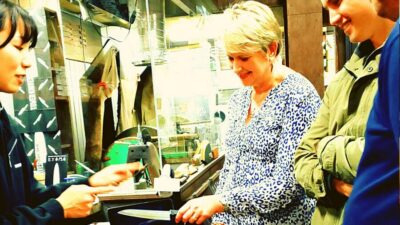
Shinsekai Food Tour with 13-15 Dishes at 5 Eateries
Read our review →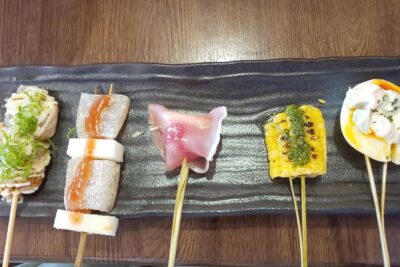
Osaka Food Tour: 13 Dishes at 5 Local Eateries
Read our review →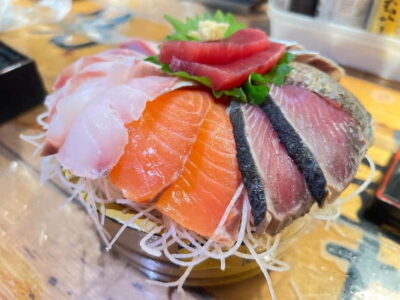
Shinjuku Food Tour (15 Dishes and 4 Eateries)
Read our review →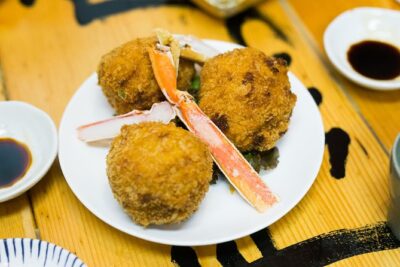
Best of Shinjuku: Izakaya Food Tour (4 Stops, 14+ Tastings)
Read our review →
Kyoto Night Foodie Tour in Gion (9+ dishes + 6 Sake tastings)
Read our review →
Hungry Osaka Street Food Tour:15 Tastings & 3 Drinks with a Local
Read our review →Browse the lists this tour appears in