
Reviewed · GOVERNMENT-LICENSED GUIDE TOURS
Private Day Tour in Tokyo with Government-Licensed Guide
Tokyo makes a first day feel like a puzzle. This private six-hour tour helps you get your bearings fast, combining major sights with practical help from a government-licensed local guide. I especially like the flexible plan and the chance to learn Tokyo’s subway system instead of simply being driven from one photo stop to another. The main drawback is that you choose only three or four sites, so the long list of possible stops can create unrealistic expectations.
Guide Hiro receives especially warm praise for his clear English, good timing, restaurant suggestions, and calm handling of family needs. I also like that you pay attraction fees only for places you enter. Still, transportation, lunch, and observation-deck tickets can add a fair amount to the $108.99 tour price.
In This Review
- Key points to know before booking
- Why this tour works well on your first day
- The route begins at Meiji Jingu Shrine
- Takeshita Street adds a dose of Harajuku
- Shibuya Sky and the famous crossing
- Tokyo Tower and Zojo-ji tell two different stories
- Tsukiji is the best stop for food and local guidance
- The Imperial Palace requires realistic expectations
- Tokyo Skytree gives you another paid view
- Asakusa and Senso-ji bring back old Tokyo
- Kappabashi Street is brief but distinctive
- What you are really paying for
- How the private format affects your day
- Who should book this Tokyo tour?
- Should you book it?
- FAQ
- How long is the private Tokyo tour?
- Where does the tour start?
- Where does the tour end?
- Is the tour private?
- How many sights can I choose?
- Is transportation included?
- Is lunch included?
- Are attraction admission fees included?
- What are the listed admission prices?
- Can I cancel for a refund?
Key points to know before booking
- A genuinely private itinerary: Only your group takes part, and the route can be shaped around your interests.
- Guide Hiro’s strongest asset: He explains Japanese customs and history clearly, helps with subway navigation, and adjusts plans during the day.
- You see Tokyo by public transport: Metro costs are extra, but learning the system can help you for the rest of your trip.
- Three or four stops in six hours: The advertised places are options, not a promise that you will visit all 12.
- Food advice adds real value: Hiro has directed families to sushi and ramen restaurants, including a favorite sushi spot in Tsukiji.
- Extra costs matter: Shibuya Sky, Tokyo Tower, Tokyo Skytree, lunch, and transit are not included.
Why this tour works well on your first day
Tokyo is not difficult because every single sight is far away. It is difficult because the city is huge, the rail network can feel like a bowl of noodles, and each district has its own mood. A good guide gives you a working map in your head.
This tour is built around that idea. You meet at Shibuya Scramble Square, then travel between selected parts of Tokyo with a private guide. Rather than follow a fixed bus route, you can focus on temples, food, fashion, city views, shopping, or a mix of all four.
I like the practical side of the experience. Hiro has helped first-time visitors use public transportation, find station elevators, understand shrine customs, and choose restaurants that suit their group. That is useful beyond the six-hour tour. Once you know how to enter a station, transfer lines, and reach a neighborhood, Tokyo becomes much easier to handle on your own.
The tour is also a good fit for families with different interests. One family wanted cultural sites for adults and shopping for younger people. Another traveled with teenagers and found room for sushi, history, and modern Tokyo. A private guide can make those compromises without asking a busload of strangers to vote.
More Licensed Guide Tours in Tokyo
- Tokyo 6hr Private Tour with Government-Licensed Guide
★ 5.0 · 3,902 reviews - Tokyo 4hr Private Tour with Government-Licensed Guide
★ 5.0 · 1,394 reviews - Tsukiji Food and Toyosu Market with Government-Licensed Guide
★ 5.0 · 158 reviews
The route begins at Meiji Jingu Shrine
Meiji Jingu gives you a quiet cultural opening near the very busy Harajuku district. The shrine honors Emperor Meiji and Empress Shoken, and its wooded setting offers a sharp change from the traffic and commercial streets nearby.
You have about 40 minutes here, with no admission charge. That timing is enough for an introduction to shrine etiquette and the basic customs involved in paying respects. Hiro’s role is valuable at a place like this because a shrine visit can otherwise become a quick walk, a few photographs, and a guess at what everyone else is doing.
The stop is especially useful for a first visit to Japan. You can ask questions as they arise, rather than trying to decode customs from a guidebook while standing in line. If you are not interested in religious sites, this is one of the stops you can replace when planning your route.
Takeshita Street adds a dose of Harajuku
Takeshita Street is only scheduled for about 20 minutes, but it changes the pace. Harajuku is associated with youth fashion, unusual styles, and shops aimed at a younger crowd. The area also gives you a look at a more commercial side of Tokyo after the calm of Meiji Jingu.
This is a sensible pairing with the shrine. You can see both sides of Harajuku without spending half a day there. Families with children or teenagers may want extra time for shopping, but that would likely mean giving up another district.
The short visit also reveals one limit of the tour. Six hours is not enough for leisurely browsing, detailed shopping, and several major landmarks. Tell Hiro before the day begins if Takeshita Street matters more to you than an observation deck or another temple.
Shibuya Sky and the famous crossing
Shibuya Sky offers a 360-degree open-air observation deck on top of Shibuya Scramble Square. The planned visit lasts about 40 minutes, and admission is not included. The adult ticket is listed at 2,700 yen.
You should think of this as a paid add-on, not an automatic part of the tour cost. The view is the attraction, and the outdoor setting gives the stop a different feel from a standard indoor viewing floor. If you already plan to visit Tokyo Skytree or Tokyo Tower, ask yourself if you need all three paid views.
Shibuya Crossing follows with a brief 10-minute stop. Seven crossroads meet here, and traffic stops in every direction while pedestrians cross together. The sight is free, easy to photograph, and more fun when you understand where you are going and why the crossing works.
The two Shibuya stops fit neatly together, but the timing is tight. You will get an introduction and a look around, not a full afternoon of shopping or cafés. That is fine if your aim is a first glimpse of the district.
A completely different kind of day out in Tokyo:
- Mt Fuji and Hakone 1-Day Bus Tour Return by Bullet Train
★ 5.0 · 26,383 reviews - 1-Day Tokyo Bus Tour
★ 5.0 · 14,250 reviews - Tokyo: TOKYO SKYTREE® Admission ticket
★ 4.5 · 11,192 reviews - Tokyo: teamLab Planets TOKYO Digital Art Museum Entry Ticket
★ 4.6 · 9,779 reviews
Tokyo Tower and Zojo-ji tell two different stories
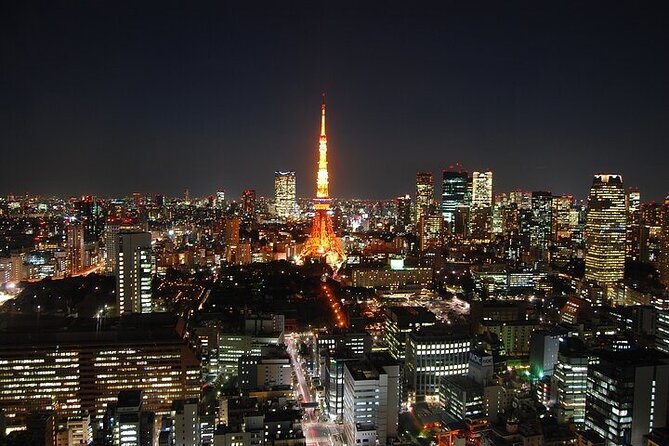
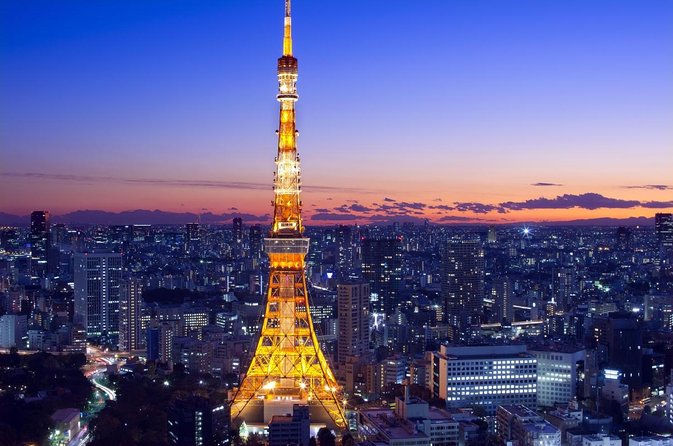
Tokyo Tower receives about 40 minutes. Built in 1958, it became a symbol of Tokyo’s postwar recovery and remains one of the city’s best-known landmarks. The observation decks cost extra, with an adult admission listed at 1,500 yen.
The tower is a strong choice if you want a classic Tokyo image and a bit of twentieth-century context. It is also close to Zojo-ji Temple, making the next 20-minute stop efficient.
Zojo-ji is a Buddhist temple beside Tokyo Tower, with a mausoleum connected to the Tokugawa family. The contrast is the point: a modern orange tower rises behind a major temple complex. You get old and new Tokyo in the same small section of the city.
Both stops together make sense, but entering Tokyo Tower could use most of the available time. If you want the observation deck, tell your guide early. If you prefer temples and street life, you may get more from Zojo-ji and use the saved time elsewhere.
Tsukiji is the best stop for food and local guidance
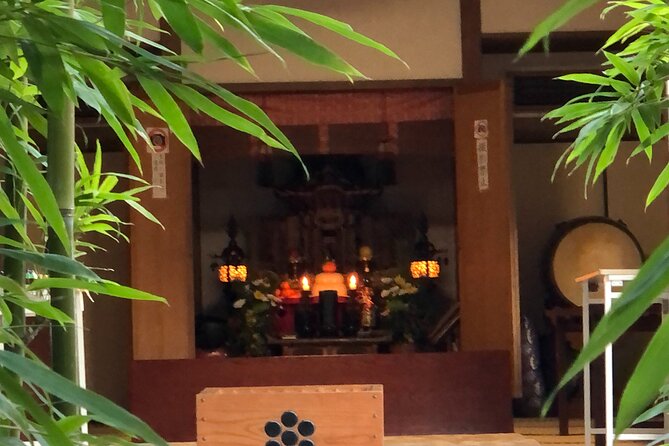
Tsukiji Fish Market receives a full hour, and this may be the most rewarding stop for many people. The outer market is known for seafood shops and food businesses serving Tokyo’s restaurants. Admission is free, though what you eat or buy is your responsibility.
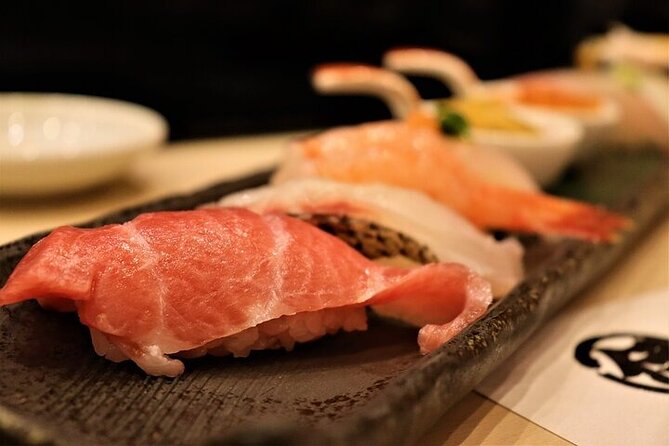
Hiro has repeatedly helped groups find sushi, including a favorite restaurant in Tsukiji. He has also directed visitors to a well-known ramen place when plans changed. That kind of advice can be worth more than a generic restaurant list, especially when you want a meal that fits your schedule and comfort level.
You should clarify whether your lunch will fit inside the six-hour plan. Lunch is not included, and a proper meal can reduce the time available at other stops. That is not a flaw, but it is an important choice. I would rather spend time eating well in Tsukiji than rush through a long list of landmarks.
The market is also a good place to ask about Japanese food customs and daily life. You are not just looking at a famous market. You are learning how to make a practical food decision in Tokyo.
The Imperial Palace requires realistic expectations
The Imperial Palace stop lasts about 40 minutes and costs nothing to visit from the outside areas described here. The present palace occupies the site of Edo Castle, but most palace grounds are closed to the public. The East Gardens are open only on selected days.
This is a place where expectations matter. You are not guaranteed a broad palace interior tour, and the accessible grounds depend on the day. Ask Hiro what is realistically open during your visit and how much walking the stop will involve.
The palace can be a good choice for people interested in Japan’s political and royal history. It is less satisfying if you expect elaborate rooms, wide public access, or a long indoor visit. On a hot day, one group specifically chose the palace grounds before heading to Tsukiji, and the guide adjusted to their needs.
Tokyo Skytree gives you another paid view
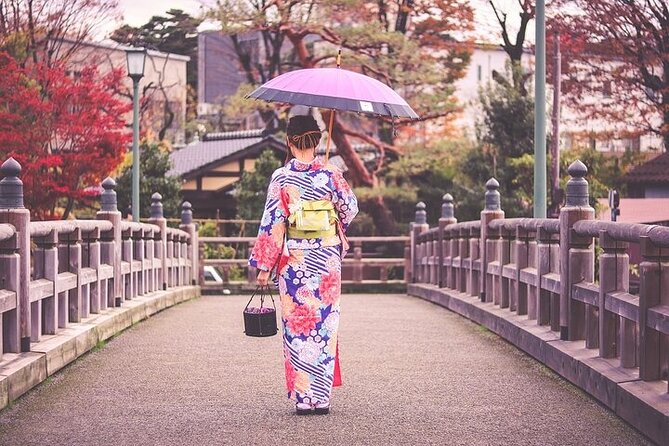
Tokyo Skytree receives about 40 minutes and offers a second major high-rise viewpoint. Admission is not included. The listed adult price is 2,100 yen on weekdays and 2,300 yen on holidays.
Skytree is in the Sumida area, not far from Asakusa, so it pairs naturally with the traditional district. Still, adding it to the same day as Shibuya Sky and Tokyo Tower would make the tour feel overly focused on observation decks.
I would choose one paid view unless seeing Tokyo from several heights is a top priority. Shibuya Sky gives you an open-air rooftop setting, Tokyo Tower gives you a classic landmark, and Skytree gives you the tallest viewpoint of the three. The right choice depends on what kind of view you want, not on trying to collect every ticket.
Asakusa and Senso-ji bring back old Tokyo
Asakusa is scheduled for about 10 minutes, followed by 30 minutes at Senso-ji Temple. The neighborhood has shops, restaurants, and one of Tokyo’s most recognizable Buddhist temples.
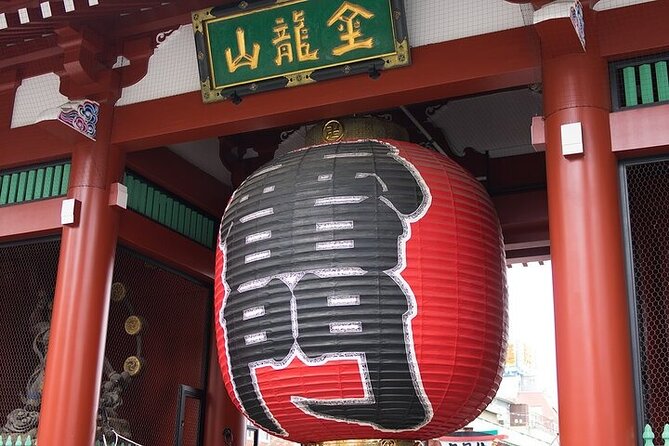
Senso-ji is colorful and popular, with a traditional story tied to two fishermen who reportedly found a statue in the river in 628. Hiro can explain the legend, the temple customs, and the proper way to behave without turning the visit into a lecture.
Thirty minutes at the temple is enough for an introduction, but not enough for slow shopping and a full neighborhood wander. If Asakusa is high on your list, you may want to ask for more time here and remove another stop.
This area is a strong pick for first-time visitors because it combines a major religious site, local shops, and a clear sense of place. It also gives you a useful contrast with Shibuya and Harajuku.
Kappabashi Street is brief but distinctive
Kappabashi Street is scheduled for 10 minutes. Its shops supply restaurant equipment, kitchen goods, paper products, and the realistic plastic food displays seen outside Japanese restaurants.
That last detail makes the street more than a shopping stop. Those plastic dishes help customers see what a restaurant serves before they enter, and they are a memorable bit of everyday Japanese commercial culture.
Ten minutes is enough to point out the area, but not enough for serious shopping. If you want knives, cookware, or food models, say so before the itinerary is finalized. This is one of the easiest stops to cut if your group prefers temples, markets, or city views.
What you are really paying for
The tour costs $108.99 per person. That price includes a licensed local guide and a private, customizable walking tour, but not transit, food, or attraction tickets.
The value depends on how much help you need. If you are comfortable with Tokyo trains, can read enough signs to manage transfers, and already have a firm plan, you may find the cost hard to justify. If this is your first day and you want to cover ground without constantly checking maps, the price is more reasonable.
A 24-hour Metro Pass is listed at 900 yen for adults and 450 yen for children, though transportation fees are separate from the tour. Add lunch and any observation deck you choose. A family that visits Shibuya Sky, for example, pays another 2,700 yen per adult before eating or riding the Metro.
The private format is the key value. You are not paying only for facts about Tokyo. You are paying for route planning, language help, subway instruction, restaurant advice, and the ability to change direction when the weather, energy level, or family mood changes.
How the private format affects your day
Only your group participates, which makes the experience far more flexible than a standard group walk. You can ask for a slower pace, focus on a certain interest, or request easier station access.
One particularly useful detail is Hiro’s attention to elevators. A visitor with physical limitations received help finding elevator routes through stations, and families with young children were able to adjust the day around heat and fatigue. The tour is still a walking experience, so you should discuss mobility needs in advance, but the guide appears willing to plan around them.
The schedule begins and ends at Shibuya Scramble Square, at 2-chome-24-12 Shibuya. Pickup is offered in the tour information, while the included details describe meeting the guide in Tokyo, so confirm the exact arrangement before booking.
You can expect confirmation within 48 hours, subject to availability. Free cancellation is available until 24 hours before the start time. Service animals are allowed, and the activity is near public transportation.
Who should book this Tokyo tour?
I would recommend it most strongly for:
- First-time visitors who want a practical introduction to Tokyo
- Families with children or teenagers who need a mixed itinerary
- People who want help using the Metro
- Visitors who value restaurant suggestions and cultural explanations
- Travelers with limited time who want a private route instead of a large group
- Anyone who wants to choose only the attractions worth paying for
I would be more cautious if you want a slow, specialist tour of one neighborhood. You may spend too much time moving between districts. I would also think twice if you expect all 12 listed stops in six hours. The tour includes a choice of three or four sites, so planning is essential.
Hiro’s strengths are clear from the experience details: strong English, cultural knowledge, patience, flexibility, and an ability to adjust plans. He has helped arrange sushi lunches, respond to parade timing, balance adult and teenage interests, and make last-minute changes. Those are practical skills, not just pleasant extras.
Should you book it?
Book this tour if you want Tokyo to make sense quickly. Choose your top three or four priorities before the day, tell Hiro what matters most, and decide in advance which paid viewpoint, if any, deserves your money.
I would not book it simply because the itinerary lists many famous places. You cannot properly experience every district, temple, market, and tower in six hours. Book it for the guide, the private planning, the subway lesson, and the chance to begin your Tokyo visit with a clear plan.
FAQ
How long is the private Tokyo tour?
The tour lasts approximately six hours.
Where does the tour start?
The meeting point is Shibuya Scramble Square, 2-chome-24-12 Shibuya, Tokyo 150-0002, Japan.
Where does the tour end?
The activity ends back at the meeting point.
Is the tour private?
Yes. Only your group participates in the activity.
How many sights can I choose?
The included tour is customizable around three or four sites from the available sightseeing options.
Is transportation included?
No. Transportation fees are separate. A 24-hour Metro Pass is listed at 900 yen for adults and 450 yen for children.
Is lunch included?
No. Lunch is not included in the tour price.
Are attraction admission fees included?
No. Admission is separate for facilities such as Shibuya Sky, Tokyo Tower observation decks, and Tokyo Skytree observation decks. You pay only for the attractions you choose to enter.
What are the listed admission prices?
Shibuya Sky is listed at 2,700 yen for adults. Tokyo Tower observation decks are listed at 1,500 yen for adults. Tokyo Skytree is listed at 2,100 yen on weekdays and 2,300 yen on holidays for adults.
Can I cancel for a refund?
Yes. You can cancel at least 24 hours before the experience start time for a full refund. Cancellations or changes made less than 24 hours before the start time are not accepted for a refund.
Just added around Tokyo
- Tokyo 6hr Instagram Highlights Private Tour with Licensed Guide★ 5.0 · 38 reviews
- Tokyo Small Group Tour with Guide★ 4.5 · 38 reviews
- Tokyo Sumo Experience with Live Show & Audience Challenge★ 5.0 · 38 reviews
- Japanese Food Cooking Class in Asakusa, Tokyo★ 5.0 · 39 reviews
- Very popular in Harajuku♡Animal petting zoo★ 4.6 · 39 reviews
- Ramen Making from Scratch with Tokyo Mom(Vegan Option Available)★ 5.0 · 39 reviews
- Tokyo JDM Night: 600hp C63s AMG Edition 1 (Private)★ 4.9 · 39 reviews
- Tokyo: Kimono Rental inside Shinjuku Gyoen National Garden★ 4.9 · 39 reviews
Government-Licensed Guide Tours, compared.
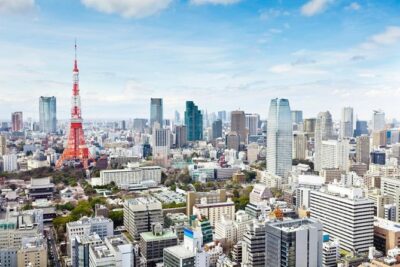
Tokyo 6hr Private Tour with Government-Licensed Guide
Read our review →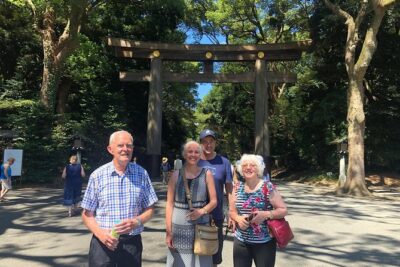
Tokyo 4hr Private Tour with Government-Licensed Guide
Read our review →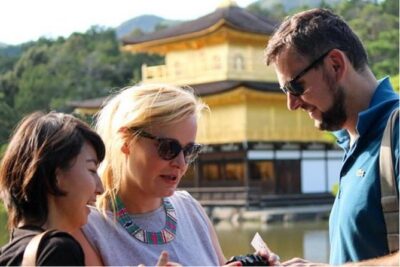
Kyoto 6hr Private Tour with Government-Licensed Guide
Read our review →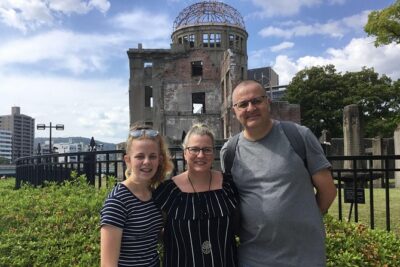
Hiroshima / Miyajima Full-day Private Tour with Government Licensed Guide
Read our review →
Kyoto 4hr Private Tour with Government-Licensed Guide
Read our review →
Hiroshima City 4hr Private Walking Tour with Licensed Guide
Read our review →
Private Kyoto Tour with Licensed Guide & Vehicle (Max 15 persons)
Read our review →Browse the lists this tour appears in