
Reviewed · COOKING CLASSES
Private Home Cooking in Yanaka – Local Flavors in a Warm Setting
Japanese home cooking beats another restaurant meal. This two-hour class in Yanaka gives you hands-on practice with everyday dishes, guided by Yuki, an English-speaking instructor from the Yanesen area. I like the private format and the chance to request dishes or explain allergies in advance. I also like the location, only about 100 meters from Yanaka Ginza, where a market-street walk fits naturally before or after class. The main drawback is the meeting point, which can be tricky to find on a side street.
This is not a formal chef school or a polished restaurant kitchen. It is a small, homey cooking space connected with the YANESEN Tourist Information & Culture Center. You prepare the food yourself, ask questions as you go, then sit down to eat what you made. At $122.23 per person, the price is not cheap, but it includes personal instruction, ingredients, a full meal, and a cultural conversation that is hard to get from a standard food tour.
In This Review
- Key points at a glance
- Why Yanaka is the right part of Tokyo for this class
- What the two-hour cooking session feels like
- Menu choices range from bento to udon
- The instructors make the difference
- Is the setting really a private home?
- What the food teaches you beyond the recipe
- The price is high, but the format explains it
- Who should book this Yanaka cooking class
- My verdict: book it for the personal touch
- FAQ
- Where does the cooking class meet?
- Where does the activity end?
- How long does the experience last?
- Is the class private?
- Can I choose the dishes?
- Can I request vegetarian or vegan food?
- How far is the cooking location from Yanaka Ginza?
- Is the class taught in English?
- What is the cancellation policy?
Key points at a glance
- Cook in small, personal surroundings: Your group participates privately, so you can ask questions and receive direct help at the cutting board and stove.
- Choose dishes before arrival: Plan A lets you choose one main dish, while Plan B lets you choose two appetizers.
- Request vegetarian and vegan food: Allergies and other menu needs can be discussed through the reservation form up to two days before the class.
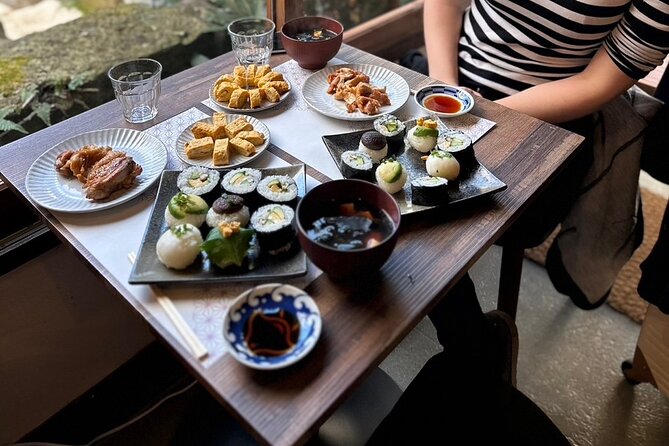
- Learn dishes you can repeat at home: Past menus have included miso soup, okonomiyaki, gyoza, sushi, tempura, udon, bento boxes, oyakodon, and nikujaga.
- Pair cooking with Yanaka Ginza: The meeting point is near one of Tokyo’s most appealing old-style shopping streets.
- Expect a generous meal: The food is prepared from scratch, and several menus produce enough to leave you comfortably full.
Why Yanaka is the right part of Tokyo for this class
Yanaka gives this activity a different feel from cooking lessons in central Tokyo hotels or commercial studios. The meeting point is the YANESEN Tourist Information & Culture Center at 3-chōme-13-7 Yanaka, Taito City. From there, the cooking space is about 100 meters from Yanaka Ginza.
That location matters. Yanaka is part of the Yanesen area, a name formed from Yanaka, Nezu, and Sendagi. The area is known for its older neighborhood character, narrow streets, small shops, and a slower pace than Tokyo’s major commercial districts. You can make the class part of a half-day outing instead of treating it as an isolated indoor activity.
I would schedule a little extra time to find the meeting point. The entrance can be confusing, and the class is reached through a side street off Yomise Street. A small coffee shop called Ko-hi-ko-jo has helped people find the right place, and staff at nearby shops have also provided directions. If you have trouble, call the operator rather than wandering around with a hungry stomach.
The class ends where it starts. That is useful if you want to continue shopping along Yanaka Ginza, visit more of Yanaka, or make your way back toward the train station after lunch or dinner.
More Cooking Classes in Tokyo
- Ramen & Gyoza Cooking Class in Tokyo with Local Supermarket Visit
★ 5.0 · 823 reviews - Tokyo: Easy Ramen Cooking Experience in Kabukicho, Shinjuku
★ 4.6 · 321 reviews - Ramen and Sushi Cooking Class with Sake Pairing Set in Tokyo
★ 5.0 · 291 reviews
What the two-hour cooking session feels like
The experience begins with an introduction to local ingredients and the menu you have arranged. The instructor then walks you through the cooking process, explaining not only what to do but why a particular step matters.
That why is one of the strongest parts of the class. You may learn how dashi gets its flavor from kombu and bonito flakes, how miso differs by region, or how to judge oil temperature for tempura. The lesson is not simply a list of instructions. It connects ingredients, tools, preparation, and everyday Japanese eating habits.
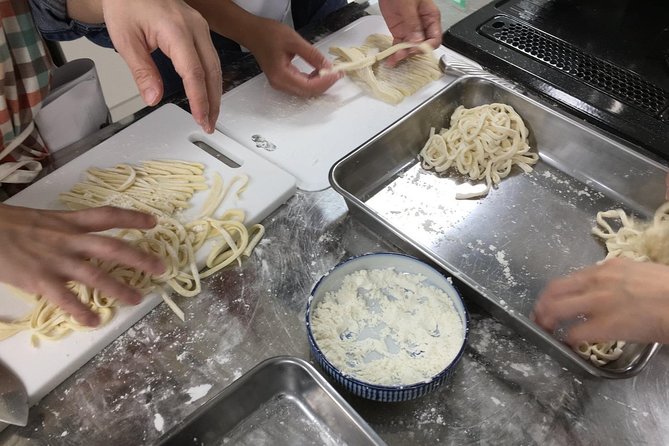
You do the practical work yourself. Past menus have involved chopping, slicing, grinding, mixing, kneading, rolling, frying, and grilling. One especially memorable method involves kneading udon dough with your feet while the dough remains inside a sealed bag. It is a traditional technique, but the plastic bag keeps the process clean and makes it easy for beginners.
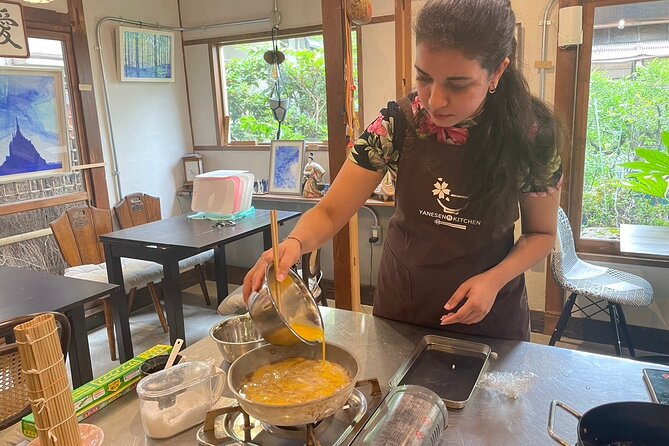
The instructor gives live corrections as you work. That is much more useful than watching a demonstration from across a large room. If you are unsure how thin to slice an ingredient, how firmly to fold gyoza, or how to handle a square pan for tamagoyaki, you can get help at the exact moment you need it.
The timing is compact. Two hours passes quickly, especially if you choose several dishes or spend time talking about Japanese food and local life. You should arrive ready to participate rather than expecting a long lecture.
Menu choices range from bento to udon
The menu is not fixed in one narrow format. You can discuss your requests in advance, and the available structure is described in two ways:
- Plan A: choose one dish from the main-dish options.
- Plan B: choose two dishes from the appetizer options.
The supplied information does not provide a complete current menu, so you should confirm your preferred dishes when booking. Still, the past menu choices show the range of the lesson.
For a classic everyday meal, oyakodon and nikujaga are strong choices. Oyakodon combines chicken and egg over rice, while nikujaga is a comforting simmered dish made with meat and potatoes. Both use ingredients that are easy to find outside Japan, making them good candidates for a home kitchen after your trip.
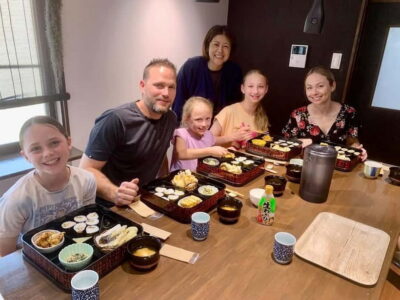
Bento classes add a playful design element. You may prepare rice balls, rolled omelet, and several small portions before arranging them in a lunch box. This is a useful lesson if you want to understand how Japanese meals balance color, shape, texture, and portion size. It is also a good pick for families, since the finished box gives the cooking session a clear goal.
The noodle options are especially hands-on. One class included udon made from scratch, with the dough kneaded by foot. Another included soba and gyoza. These dishes show how much work can sit behind food that looks simple on a restaurant menu.
You might also choose sushi, rolled sushi, tempura, tonkatsu, okonomiyaki, or nasu dengaku. Nasu dengaku, eggplant with a miso glaze, has become a favorite for several people who took the lesson. The class may prepare the dish with two different glazes and sesame seeds, giving you a useful comparison of flavors.
Miso soup can be more than a quick packet-based side dish here. You may prepare dashi from kombu and bonito flakes, then add wakame and miso. The instructor can explain regional differences, including the darker, stronger miso associated with Nagoya.
Because menus can be arranged ahead of time, this is a better choice for someone with a particular food interest than a class that assigns the same dishes to every participant. Contact the provider at least two days before the cooking date if you have allergies, follow a vegetarian or vegan diet, or want another menu request considered.
The instructors make the difference
The host is identified as Ms Yajima, and the class information also refers to her as Yuki. She was born in the Yanesen area and has cooking-instructor experience. Her English is described as excellent, which is important when a lesson involves unfamiliar tools, ingredients, and techniques.
The teaching style is warm and direct. You are put to work, but you are not left alone to guess what comes next. The instructor explains the steps clearly, answers questions, and talks about local food customs and daily life in Yanaka.
Several classes have included an assistant, and names in the class information also include Yuli, Yukiko, and Uki. Since staffing may vary, I would treat Yuki as the main named instructor rather than assume every session has the same team.
The conversation is part of the appeal. You can ask about seasonings, regional miso, Japanese kitchen tools, or how a dish fits into a normal household meal. The host may also ask about your own food traditions. That exchange helps turn the activity into a two-way cultural meeting rather than a one-sided demonstration.
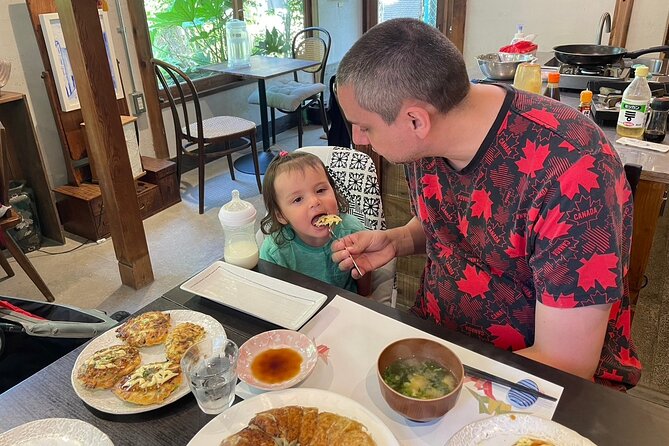
Solo participants can get especially good value from the format. A private booking may mean one-on-one instruction, allowing you to spend more time on the techniques that give you trouble. Couples and families also benefit because everyone gets a chance to handle the ingredients.
A completely different kind of day out in Tokyo:
- Mt Fuji and Hakone 1-Day Bus Tour Return by Bullet Train
★ 5.0 · 26,383 reviews - 1-Day Tokyo Bus Tour
★ 5.0 · 14,250 reviews - Tokyo: TOKYO SKYTREE® Admission ticket
★ 4.5 · 11,192 reviews - Tokyo: teamLab Planets TOKYO Digital Art Museum Entry Ticket
★ 4.6 · 9,779 reviews
Is the setting really a private home?
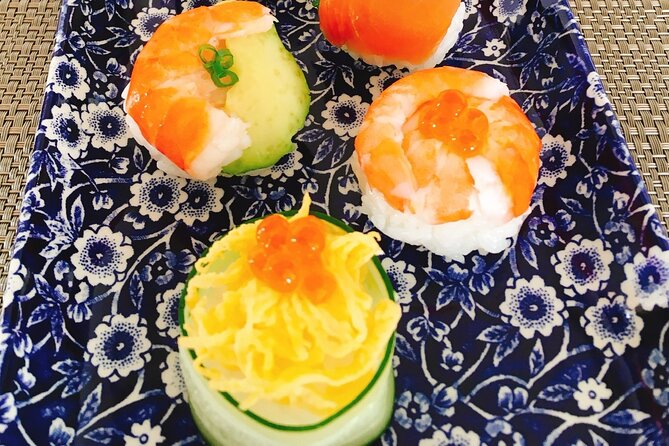
The experience is presented as cooking in a local home kitchen, with the atmosphere of a downtown Tokyo household. It is best to understand that description as home-style and personal, not necessarily as a private family apartment.
One person who took the class described the place as a homey studio rather than an actual home. That distinction may matter if you expect to sit in a local residence surrounded by family belongings. The setting is small and informal, but it operates as a cooking workshop connected to the Yanesen information center.
I see that as a minor clarification rather than a serious flaw. The value comes from the close instruction, the local host, and the ordinary dishes. You are not paying for grand décor. You are paying for time at the counter, food prepared with your own hands, and a chance to talk with someone who knows the neighborhood.
The small setting also creates the one real practical concern: the meeting point is not always obvious. Follow the directions carefully, look for the information center and nearby coffee shop, and keep the phone number available.
What the food teaches you beyond the recipe
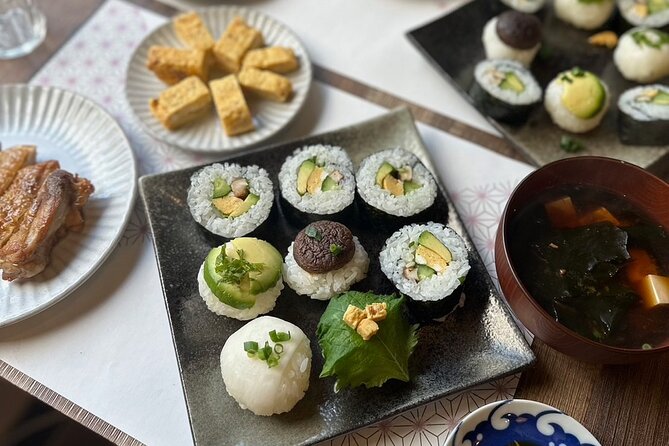
A good cooking class sends you home with more than a printed list of ingredients. This one can help you understand why Japanese food often feels balanced even when the recipes are straightforward.
Miso soup illustrates the point. The broth, seaweed, bonito, kombu, and miso each bring a separate element. Once you understand the base, you can adjust the soup at home instead of treating it as a fixed formula.
Okonomiyaki offers another lesson. The savory pancake can include several unexpected ingredients, and the instructor can explain how to change the contents according to what is fresh. That makes it practical for home cooks who need flexibility.
Tempura teaches technique rather than just ingredients. Learning how to recognize the right oil temperature can make deep frying less intimidating. Gyoza teaches folding and filling, while rolled sushi teaches pressure, placement, and portioning.
The recipes are generally built around ingredients that can be found in ordinary markets outside Japan. That is a major advantage if you want the class to continue after your holiday. You can recreate oyakodon, nikujaga, miso soup, or bento at home without hunting down rare products.
You should also expect to eat well. The portions have been described as generous, with enough food for a satisfying lunch or dinner and, in some cases, extra to save for later.
The price is high, but the format explains it
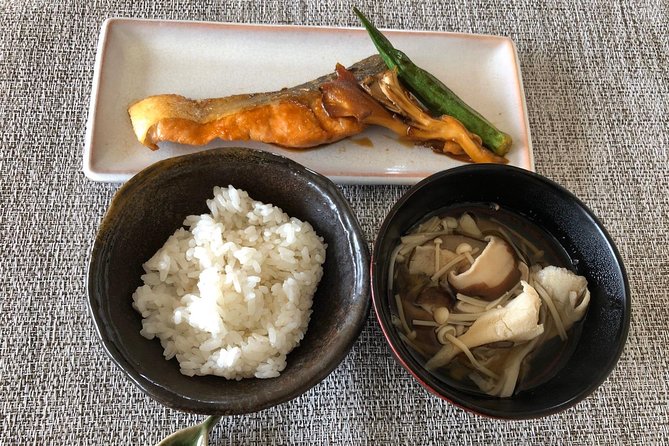
At $122.23 per person, this is a premium two-hour activity. You can find cheaper cooking lessons in Tokyo, especially large group classes or demonstrations where you watch more than you cook.
The private format changes the calculation. Your fee covers ingredients, instruction, menu planning, and a meal. You also receive direct help rather than sharing one teacher’s attention with a large room. For a solo participant, a private lesson can offer unusually strong personal attention.
For two people or a family, the price is easier to justify if everyone wants to cook. Group discounts may be available, so check the total before booking. If one person plans to watch while everyone else cooks, the value is weaker.
I would choose this class for the experience, not simply to save money on lunch. If your main goal is a cheap meal, visit Yanaka Ginza instead. If you want to learn dishes you can make again, talk with a local instructor, and spend time in a less central Tokyo neighborhood, the cost makes more sense.
Who should book this Yanaka cooking class
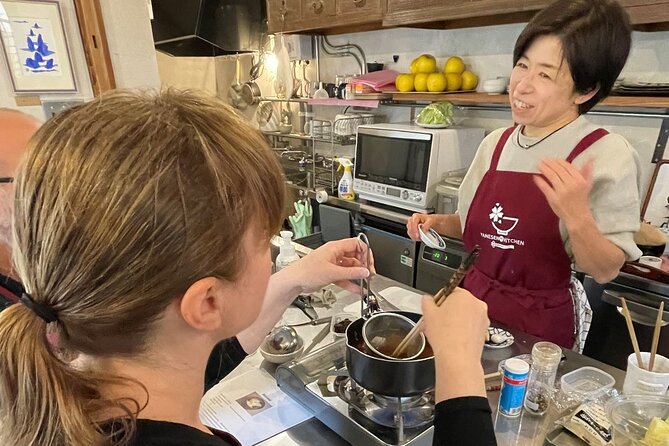
I would recommend it to:
- First-time Japan visitors who want a relaxed introduction to Japanese food.
- Solo visitors who value one-on-one instruction.
- Couples who prefer an activity with conversation and a shared meal.
- Families whose children can take part in chopping, mixing, shaping, or arranging food under supervision.
- Home cooks who want practical recipes instead of a passive food demonstration.
- People with vegetarian, vegan, allergy, or menu concerns who arrange them in advance.
- Anyone already planning to explore Yanaka Ginza.
It may not suit you if you want a large professional kitchen, a fixed fine-dining menu, or a class focused on advanced culinary training. The surroundings are modest, the meeting point takes care, and the two-hour schedule leaves little room for delay.
The activity also requires good weather according to the booking terms. If poor weather cancels the class, you can be offered another date or a full refund. A minimum number of participants may also apply, and cancellation at least 24 hours before the start time is required for a full refund.
My verdict: book it for the personal touch
I would book this class if I wanted food that connects directly with daily life in Tokyo. The strongest reasons are the private instruction, Yuki’s friendly English teaching, the flexible menu, and the chance to learn dishes that are realistic to repeat at home.
Plan your route carefully and do not leave the meeting point until the last minute. If you can spare the $122.23, this is a worthwhile choice for a personal food lesson followed by a walk through Yanaka Ginza. It is less useful for bargain hunters, but for curious cooks, first-time visitors, and families, it offers a warm and filling way to see Tokyo from the kitchen counter.
FAQ
Where does the cooking class meet?
The meeting point is the YANESEN Tourist Information & Culture Center at 3-chōme-13-7 Yanaka, Taito City, Tokyo 110-0001, Japan.
Where does the activity end?
The class ends back at the meeting point.
How long does the experience last?
The cooking session lasts approximately two hours.
Is the class private?
Yes. Only your group participates in the private activity.
Can I choose the dishes?
You can submit menu requests in advance. Plan A allows one main dish, while Plan B allows two appetizers. Confirm your preferred choices through the reservation form.
Can I request vegetarian or vegan food?
Yes. Vegetarian, vegan, allergy-related, and other food requests can be considered if you provide the details when making the reservation.
How far is the cooking location from Yanaka Ginza?
The small cooking house or workshop is about 100 meters from Yanaka Ginza.
Is the class taught in English?
The instructor, Ms Yajima, can teach in English. The class information describes her English as strong, and the experience includes explanations of recipes and techniques.
What is the cancellation policy?
You can cancel at least 24 hours before the start time for a full refund. Changes or cancellations made less than 24 hours ahead are not accepted for a refund. If the class is canceled because of poor weather or an unmet minimum, you are offered another date or a full refund.
Just added around Tokyo
- Tokyo Small Group Tour with Guide★ 4.5 · 38 reviews
- Tokyo 6hr Instagram Highlights Private Tour with Licensed Guide★ 5.0 · 38 reviews
- Tokyo Sumo Experience with Live Show & Audience Challenge★ 5.0 · 38 reviews
- Very popular in Harajuku♡Animal petting zoo★ 4.6 · 39 reviews
- Japanese Food Cooking Class in Asakusa, Tokyo★ 5.0 · 39 reviews
- Ramen Making from Scratch with Tokyo Mom(Vegan Option Available)★ 5.0 · 39 reviews
- Tokyo: Kimono Rental inside Shinjuku Gyoen National Garden★ 4.9 · 39 reviews
- Tokyo JDM Night: 600hp C63s AMG Edition 1 (Private)★ 4.9 · 39 reviews
Cooking Classes, compared.
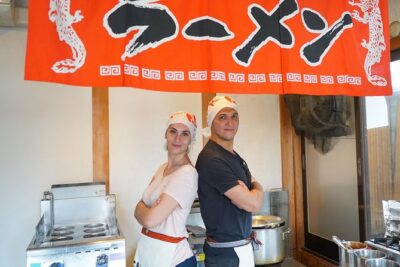
Ramen Cooking Class at Ramen Factory in Kyoto
Read our review →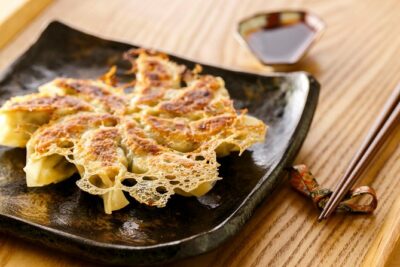
Ramen & Gyoza Cooking Class in Tokyo with Local Supermarket Visit
Read our review →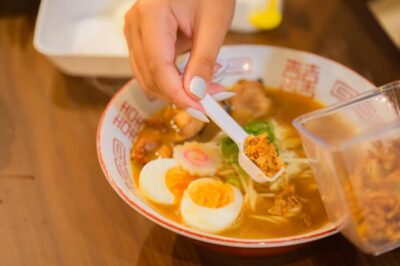
Ramen Cooking Class at a Ramen Factory with Souvenir
Read our review →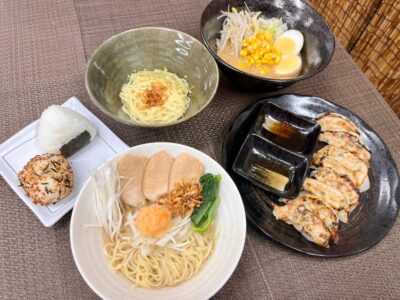
Japanese Washoku Bento Small Group Cooking Class
Read our review →
Easy Ramen Cooking Experience in Kabukicho, Shinjuku
Read our review →
Ramen and Sushi Cooking Class with Sake Pairing Set in Tokyo
Read our review →Browse the lists this tour appears in