
Reviewed · SUSHI-MAKING CLASSES
Private Sushi Making with a Sushi Master
Sushi is easier than it looks. This private Tokyo workshop gives you hands-on practice with maki, nigiri, and gunkan sushi inside a Michelin-starred sushi restaurant. I like the small private format, which gives your group direct attention from a sushi master, and I like that the class ends with a meal made by you, not just a demonstration.
The history lesson and quiz add useful context, while the photo session gives the experience a light, playful finish. The main consideration is timing: the class lasts about 1 hour and 45 minutes, and the strict no-show rule means you must arrive on time. If the staff has not heard from you within five minutes of the start, the reservation can be treated as a no-show with no refund.
In This Review
- What makes this sushi class worth considering
- Starting at A-PULSE AZABU STUDIO in Nishiazabu
- The opening lesson: sushi history and a quiz
- Watching the sushi master prepare each style
- Making nigiri, the classic sushi form
- Rolling maki with seaweed
- Shaping gunkan, the battleship-style sushi
- Eating your handmade sushi with soup and green tea
- The private format and teaching style
- Is $130.81 a fair price?
- Dietary needs, timing, and cancellation rules
- Who should book this Tokyo sushi workshop?
- Should you book it?
- FAQ
- How long does the sushi-making class last?
- Where does the activity start and finish?
- What types of sushi will I make?
- Is this a private activity?
- Can dietary restrictions be accommodated?
- What is the cancellation policy?
What makes this sushi class worth considering
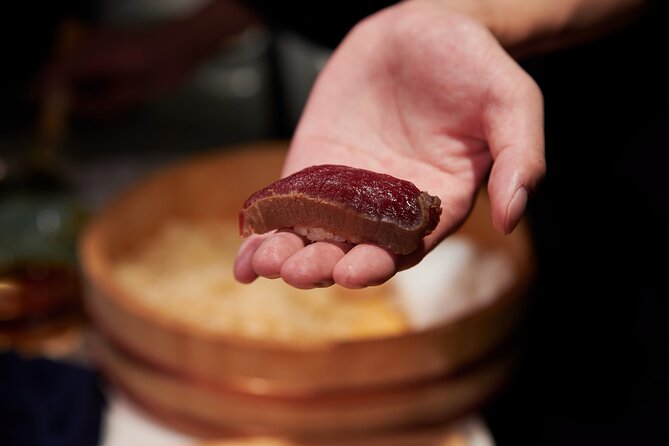
- Three sushi styles in one class: You make classic nigiri, seaweed-wrapped maki rolls, and gunkan, the battleship-shaped style topped with other ingredients.
- Private instruction: Only your group takes part, so you can ask questions and get help with technique.
- A Michelin-starred setting: The workshop takes place in a high-end sushi restaurant rather than a generic cooking room.
- More than a recipe lesson: You learn about sushi history, take a quiz, watch a chef demonstration, and then practice yourself.
- Excellent ingredients: The sushi master selects the ingredients and prepares them to a high standard, including sushi-grade fish.
- Dietary needs can be discussed: Vegetarian, vegan, gluten-free, and other restrictions can be accommodated.
Starting at A-PULSE AZABU STUDIO in Nishiazabu
Your meeting point is A-PULSE AZABU STUDIO at 3-chōme-8-18 Nishiazabu, Minato City, Tokyo 106-0031. The activity ends at the same place, which keeps the logistics simple.
The location is near public transportation, but the supplied information does not name a particular station or give walking directions. I would check the exact route before leaving your hotel, especially if your class begins soon after arrival in Tokyo. Build in extra time. The five-minute no-show rule is unusually strict, and a delayed train, wrong turn, or crowded street can quickly become a costly mistake.
The class is private, so you do not need to adjust your pace to a large group. That matters here. Sushi-making involves small movements, careful placement, and questions about ingredients. One-on-one or small-group help is far more useful than trying to copy a chef from the back of a crowded room.
The workshop provider is SUSHI MAKING CLASS in TOKYO 咲 -EMI. Staff members have been praised for speaking excellent English, which makes this a practical choice if you want clear explanations rather than a demonstration that depends on gestures.
More Sushi-Making Classes in Tokyo
- Sushi Making Tokyo Roll and Authentic Japanese Sushi Class
★ 5.0 · 3,971 reviews - Tokyo: Roll and Authentic Sushi Making Class in Asakusa
★ 4.9 · 1,957 reviews - Make Sushi and Create Unforgettable Memories in Tokyo
★ 5.0 · 1,413 reviews
The opening lesson: sushi history and a quiz
The class begins with an introduction to the history of sushi. This is a good choice because sushi is not simply raw fish placed on rice. The lesson gives you a basic frame for understanding the food before you start handling it.
You then take part in a quiz about sushi history. It is a small feature, but it gives the class some energy and breaks up the technical instruction. I like this format because it asks you to pay attention without turning the session into a formal lecture.
Do not expect a long cultural seminar. The total activity lasts about 1 hour and 45 minutes, so the history segment is part of a compact workshop. Its value is practical: you get enough background to understand what you are making, then move on to the food.
Watching the sushi master prepare each style
Next comes a sushi-making demonstration. The chef shows you the process before you try it, including the handling of the fish and the basic construction of each piece.
The ingredients are selected by the sushi master and prepared in pristine condition. The quality of the fish is especially important in a class like this. If the ingredients are ordinary, the finished sushi can taste flat even when your technique improves. Here, the use of sushi-grade fish gives you a much better final meal and lets you experience the difference good ingredients make.
The demonstration also helps with details that are hard to learn from a written recipe. Rice quantity, pressure, shape, and balance all matter. You can watch the chef’s hands, then repeat the steps with help nearby.
A chef named Riku has received especially warm praise for his precision and instruction. Rin has also been singled out for helpful support during the class. Those names are useful to know because the experience depends heavily on the people guiding it. Based on the available feedback, the teaching style is friendly rather than stiff, with plenty of room for questions and humor.
Making nigiri, the classic sushi form
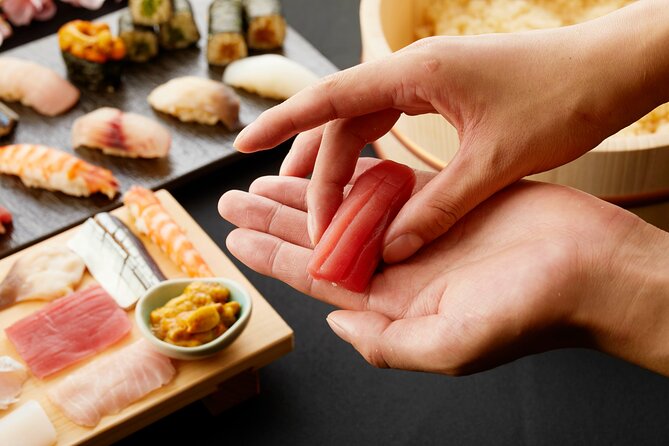
Your first style is nigiri, a small mound of sushi rice topped with a slice of fish. It looks simple, but simplicity leaves little room to hide mistakes.
You will work on shaping the rice and placing the fish neatly on top. This is where personal attention matters most. Too much pressure can compact the rice, while too little can leave the piece loose. A sushi master can correct your hand position and show you how to create a piece that holds together without becoming heavy.
Nigiri also lets you focus on the relationship between rice and fish. The fish should not be treated as a large topping that overwhelms everything else. The rice, seasoning, and slice need to work as one bite.
You should come hungry, since the sushi you make becomes your meal. That makes the class more satisfying than a short craft session where you leave with only a few samples. It also means you may want to avoid scheduling a large lunch immediately beforehand.
A completely different kind of day out in Tokyo:
- Mt Fuji and Hakone 1-Day Bus Tour Return by Bullet Train
★ 5.0 · 26,383 reviews - 1-Day Tokyo Bus Tour
★ 5.0 · 14,250 reviews - Tokyo: TOKYO SKYTREE® Admission ticket
★ 4.5 · 11,192 reviews - Tokyo: teamLab Planets TOKYO Digital Art Museum Entry Ticket
★ 4.6 · 9,779 reviews
Rolling maki with seaweed
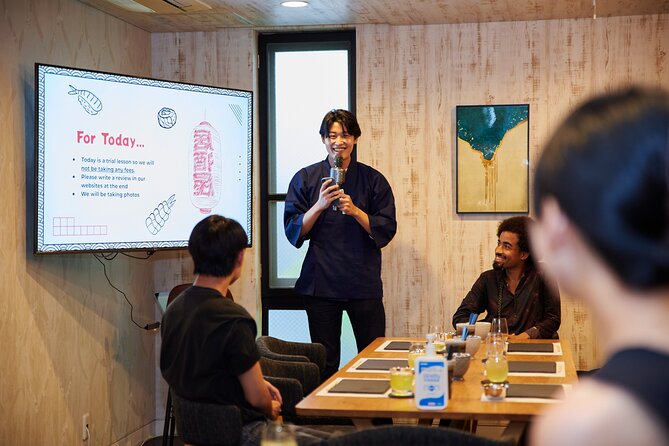
Maki is the familiar rolled sushi wrapped in seaweed. The process gives you a different set of skills from nigiri, since you must spread, fill, roll, and cut the sushi into pieces.
This is likely to be the most approachable style for many first-time students. The seaweed helps hold the roll together, and the finished pieces are easy to recognize. Still, rolling requires control. Too much filling can make the roll split, while uneven pressure can produce a loose or lopsided shape.
The private setting should help here. You can ask for assistance as you work rather than wait for a chef to finish helping several other people. I like that the class includes both the familiar roll and the more traditional hand-shaped forms. You get a broader sense of sushi technique instead of learning only the style most common outside Japan.
The class is also designed to make sushi seem manageable at home. One participant who is also a chef found the process useful for understanding the flavors and methods involved. Another person left feeling that making sushi at home no longer seemed so daunting. The instructor also sent a recipe afterward in at least one case, which may give you a way to repeat the experience later.
Shaping gunkan, the battleship-style sushi
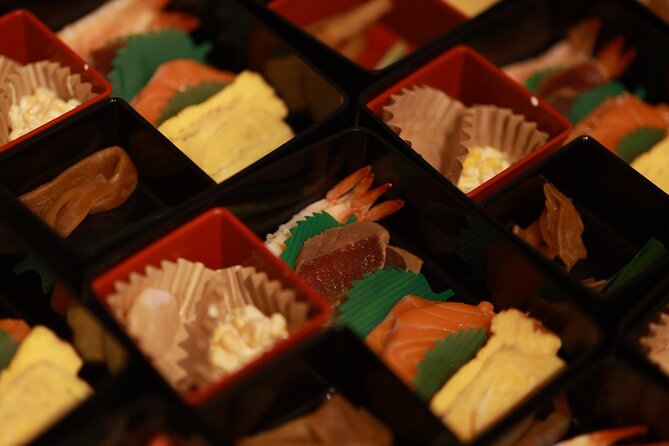
The third style is gunkan, often called battleship sushi because the seaweed forms a wall around the rice and holds toppings above it. This style looks distinctive and gives you another useful technique.
Gunkan is a good teaching choice because it shows how sushi can be built around ingredients that would not sit neatly on a flat piece of nigiri. The seaweed border creates a small container, while the rice provides the base.
You will likely find this style visually rewarding, especially during the photo session. It has a clear shape and makes a colorful plate when arranged with the other sushi. The point is not only appearance, though. Gunkan demonstrates how sushi chefs solve a practical problem: how to hold a soft or loose topping in place while keeping the bite balanced.
Eating your handmade sushi with soup and green tea
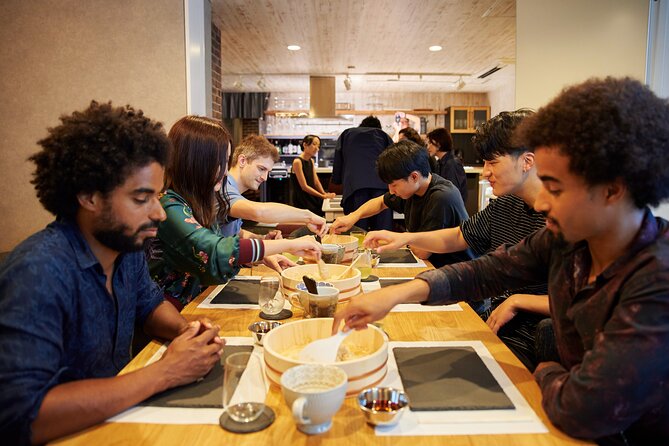
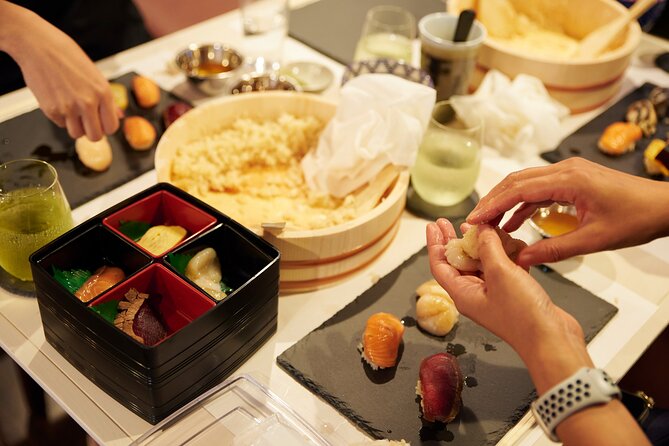
After the hands-on work, you have time to photograph your creations and eat them. This is the part that turns the workshop into a full food experience.
The meal includes the sushi you make, along with soup and green tea. The available feedback gives particular praise to the quality of the ingredients and the flavor of the finished food. That matters because making sushi can be enjoyable even when the results are uneven, but high-quality fish and careful preparation make the eating portion feel like a proper restaurant meal.
The photo time is a nice touch, especially for a private group. You can take pictures without feeling rushed by strangers waiting for the table. It also gives you a chance to see how the different forms look together: nigiri, maki, and gunkan each have a different shape and texture.
Do not expect to leave with a large quantity of sushi for later. The description presents the food as a meal to enjoy during the class. The practical advice is simple: arrive ready to eat, but do not arrive so full that you cannot appreciate the final course.
The private format and teaching style
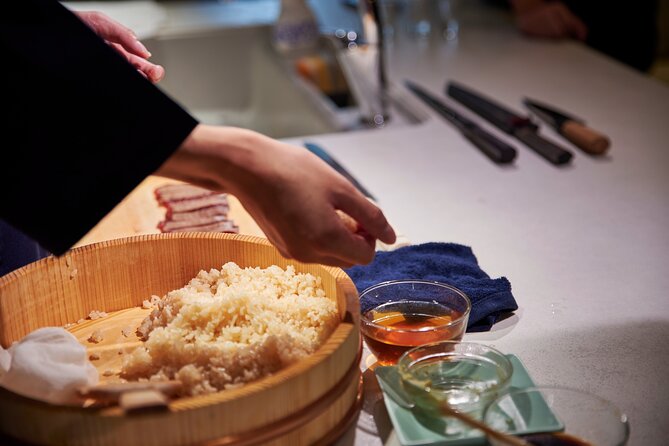
The private arrangement is the clearest reason to choose this class over a cheaper group workshop. Only your own group participates, so the chef can adjust explanations to your experience and give direct help when you need it.
That can be especially useful for a solo participant. One solo chef described the class as a highlight of a Tokyo trip and appreciated learning about the flavors behind the sushi, not just the assembly. If you are already comfortable in a kitchen, you can focus on precision and ingredient quality. If you rarely cook, you can ask for more help with each stage.
The tone also appears to be relaxed. The staff has been praised for being kind, gracious, and fun. One group arrived very late after a delayed flight and was allowed to take part, although you should not treat that as a guarantee. The formal rule remains strict, so contacting the provider is essential if a delay threatens your arrival.
This class may suit families, couples, solo visitors, and small groups who want a shared activity with something to eat at the end. It is less suited to anyone seeking a long restaurant meal with no instruction, or a large cultural tour covering several Tokyo neighborhoods.
Is $130.81 a fair price?
At $130.81 per person, this is not a budget meal. You are paying for more than the food: a private class, direct time with a sushi master, a Michelin-starred restaurant setting, a history lesson, a quiz, three sushi styles, and a prepared meal.
I think the price makes the most sense for people who value personal instruction. If you only want to eat excellent sushi, Tokyo offers many other ways to spend your money. If you want to understand how the pieces are shaped and leave with skills you can try at home, the private format gives this experience a stronger purpose.
The value also depends on your group size. A private lesson for a couple or family can feel more worthwhile than paying the same amount for a large class where the chef has little time for each person. Solo visitors should weigh the cost more carefully, but the direct attention may be exactly what makes the class rewarding.
The fact that the activity was booked more than five times in the previous week suggests steady interest, but that does not change the basic calculation. Choose it for the instruction and personal contact, not simply because it includes lunch.
Dietary needs, timing, and cancellation rules
Vegetarian, vegan, gluten-free, and other dietary restrictions can be accommodated. You should provide those details when booking so the sushi master has time to plan suitable ingredients. The supplied information does not list the exact substitutions, so ask what your menu will include before the class.
The duration is approximately 1 hour and 45 minutes. Confirmation is normally received when you book. If you book within one day of travel, confirmation may arrive as soon as possible, subject to availability.
Free cancellation is available when you cancel at least 24 hours before the local start time. Cancellations or changes made inside that period are not accepted for a refund. Most important, arrive on time or contact the provider immediately if a delay occurs. Five minutes after the scheduled start without contact can mean no refund.
Who should book this Tokyo sushi workshop?
I would choose this class if you want an activity with a clear result. You learn three styles, eat what you make, and get photos to remember the session. It works particularly well for people who enjoy food, cooking, and small-group experiences.
It is also a strong pick if you worry that sushi-making will be too technical. The chef demonstration comes first, and the private setting gives you help as you work. English-speaking staff make the lesson easier to follow.
I would skip it if your main goal is an extended fine-dining tasting menu, a market visit, or a detailed fish-filleting course. This workshop focuses on making and eating three kinds of sushi. A separate premium fish-gutting and sushi-making course is available for people seeking more advanced fish preparation.
Should you book it?
Book this private sushi class if you want more than another restaurant meal in Tokyo. The best parts are the direct teaching from Chef Riku and the team, excellent sushi-grade ingredients, the three distinct sushi styles, and the chance to eat your own work with soup and green tea.
The price is high for a short activity, and the strict arrival rule deserves attention. Still, for a couple, family, solo cook, or small group that values personal instruction, the private format gives you a useful skill and a memorable meal in one compact session.
FAQ
How long does the sushi-making class last?
The workshop lasts approximately 1 hour and 45 minutes.
Where does the activity start and finish?
It starts at A-PULSE AZABU STUDIO, 3-chōme-8-18 Nishiazabu, Minato City, Tokyo 106-0031, Japan, and ends back at the same meeting point.
What types of sushi will I make?
You will make nigiri, maki, and gunkan. Nigiri is fish over sushi rice, maki is a seaweed-wrapped roll, and gunkan is battleship-style sushi wrapped in seaweed and topped with other ingredients.
Is this a private activity?
Yes. Only your group participates, allowing personalized attention from a sushi master.
Can dietary restrictions be accommodated?
Yes. Vegetarian, vegan, gluten-free, and other dietary restrictions can be accommodated. Provide your requirements when booking.
What is the cancellation policy?
You can cancel for a full refund up to 24 hours before the experience start time. Cancellations or changes made less than 24 hours before the start are not refunded or accepted.
Just added around Tokyo
- Tokyo 6hr Instagram Highlights Private Tour with Licensed Guide★ 5.0 · 38 reviews
- Tokyo Small Group Tour with Guide★ 4.5 · 38 reviews
- Tokyo Sumo Experience with Live Show & Audience Challenge★ 5.0 · 38 reviews
- Very popular in Harajuku♡Animal petting zoo★ 4.6 · 39 reviews
- Japanese Food Cooking Class in Asakusa, Tokyo★ 5.0 · 39 reviews
- Ramen Making from Scratch with Tokyo Mom(Vegan Option Available)★ 5.0 · 39 reviews
- Tokyo: Kimono Rental inside Shinjuku Gyoen National Garden★ 4.9 · 39 reviews
- Tokyo JDM Night: 600hp C63s AMG Edition 1 (Private)★ 4.9 · 39 reviews
Sushi-Making Classes, compared.
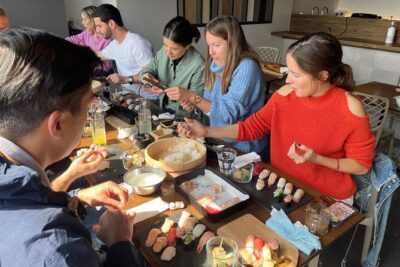
Sushi Making Tokyo Roll and Authentic Japanese Sushi Class
Read our review →
Roll and Authentic Sushi Making Class in Asakusa
Read our review →
Make Sushi and Create Unforgettable Memories in Tokyo
Read our review →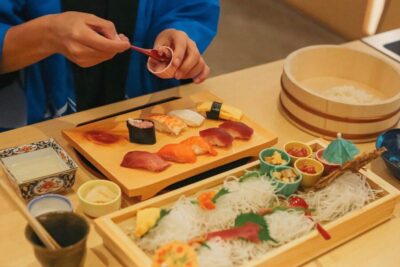
Sushi Making Class in a Happi Coat near a Famous Spot
Read our review →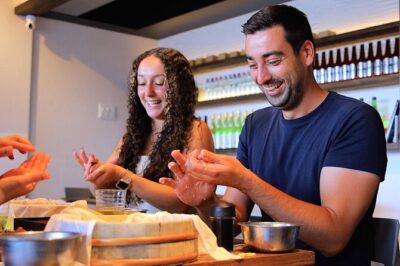
Sushi Making Osaka Roll and Authentic Japanese Sushi Class
Read our review →
Tokyo Sushi Making Class in Tsukiji with Professional Chef
Read our review →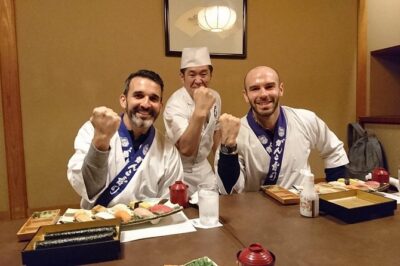
Tsukiji Fish Market Guided Tour and Sushi Making with Pro Chef
Read our review →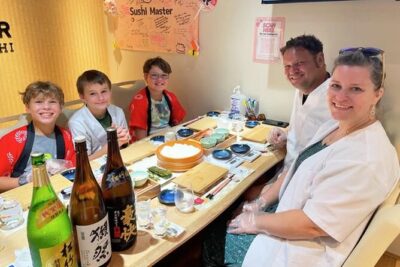
Sushi Making in Kyoto! Same-day bookings welcome!
Read our review →Browse the lists this tour appears in