Reviewed · KYOTO TOURS
Private Tour Kyoto-Nara w/Hotel Pick Up & Drop off from Kyoto
Six landmarks, one long Japanese day. I like the hotel pickup and private vehicle, which remove the hassle of Kyoto’s crowded buses and spread-out sights. I also like the freedom to adjust the pace, stop for lunch, and spend more time at places that matter to you. The main drawback is price: at $350.16 per person, this makes sense for a group that values comfort and time, but not for everyone.
This is an English-speaking driver and host experience, not automatically a licensed national guide. That distinction matters. Guides such as Ben, Dan, Yoshimura, Steven, Christine, Yui, Reo, and Loc have been praised for adding useful cultural detail, but some outings have felt more like private transportation with limited explanation.
In This Review
- Key points at a glance
- Why this Kyoto and Nara combination works
- Todai-ji and Nara Park: the day’s strongest opening
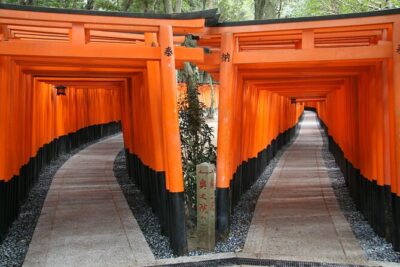
- Fushimi Inari: thousands of gates and a useful time limit
- Kinkakuji: the Golden Pavilion in one focused hour
- Arashiyama’s Kimono Forest and bamboo
- What the private vehicle adds
- Driver-host or licensed guide?
- Price, meals, and the real value
- Who should book this day?
- Should you book the Kyoto and Nara private tour?
- FAQ
- What time does the tour start?
- How long does the Kyoto and Nara tour last?
- Does the tour include hotel pickup and drop-off?
- Is the tour private?
- Are temple admission tickets included?
- Is lunch included?
- Is the guide a licensed national tour guide?
Key points at a glance
- Six major stops in one day: Combine Nara’s giant Buddha and deer with Kyoto’s best-known temples, shrine gates, and bamboo grove.
- Hotel pickup and drop-off: Start at 8:30 a.m. from your Kyoto accommodation and avoid working out several train and bus connections.
- Flexible private touring: Your group alone participates, so you can adjust walking time, photos, lunch, and the order of the day.
- Admission costs are extra: Budget ¥600 each for Kinkakuji and ¥600 each for Todai-ji, plus lunch.
- Driver-host rather than guaranteed specialist guide: Ask in advance if you want a licensed guide with detailed explanations.
- A full day on the road: The advertised duration is about six to ten hours, with a lot of ground covered.
Why this Kyoto and Nara combination works
Kyoto and Nara are close enough to visit together, yet each gives you a different view of Japan. Kyoto brings elegant temples, vermilion shrine gates, bamboo, and carefully arranged gardens. Nara feels more open and informal, with deer wandering through a large park beside some of Japan’s oldest religious buildings.
Public transportation can handle these sights, but not always quickly. The attractions sit in different parts of Kyoto, while Nara requires a separate journey south. A private air-conditioned vehicle lets you move between them without changing trains, studying bus maps, or hauling your day around in a crowd.
I especially like this arrangement for a family, a small group, or anyone visiting Kyoto for only a short time. A private day also helps if rain arrives, children tire out, or someone in your party uses a cane. One guide, Kj, was praised for adapting the outing to a participant who traveled with a cane, while another group appreciated being able to do as much or as little as they wanted in wet weather.
The tradeoff is that a private car does not magically create more hours. Six famous stops in one day means you will get a strong overview, not a slow, scholarly visit to each temple. You should expect a busy schedule and plenty of walking once you leave the vehicle.
A few more Kyoto experiences worth weighing up
- PERFECT KYOTO 1-Day Bus Tour
★ 5.0 · 13,518 reviews - Kyoto: Fushimi Inari, Kinkakuji, Bamboo Grove 1 Day Bus Tour
★ 4.8 · 4,316 reviews - Kyoto: Tea Ceremony in a Traditional Tea House in Kiyomizu
★ 4.9 · 3,519 reviews
Todai-ji and Nara Park: the day’s strongest opening
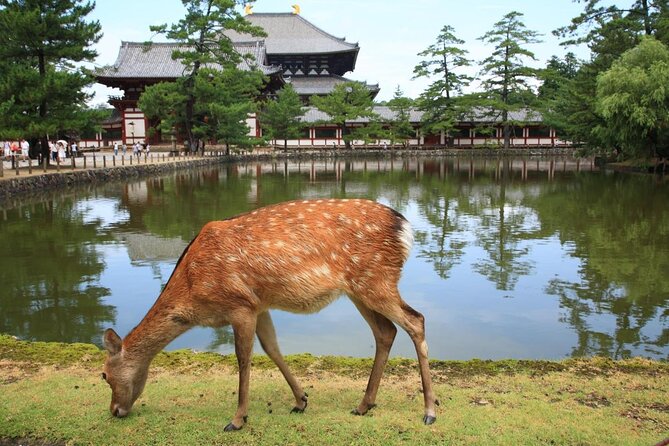
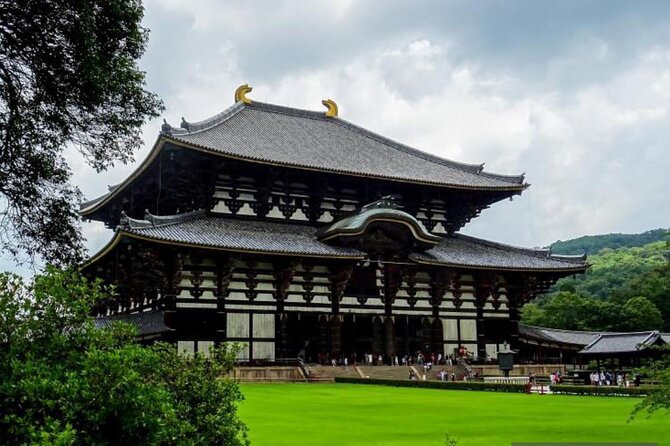
The usual first stop is Todai-ji Temple, reached after an 8:30 a.m. pickup. The temple, whose name means Eastern Great Temple, was once one of Nara’s powerful Seven Great Temples. It is part of the UNESCO-listed Historic Monuments of Ancient Nara.
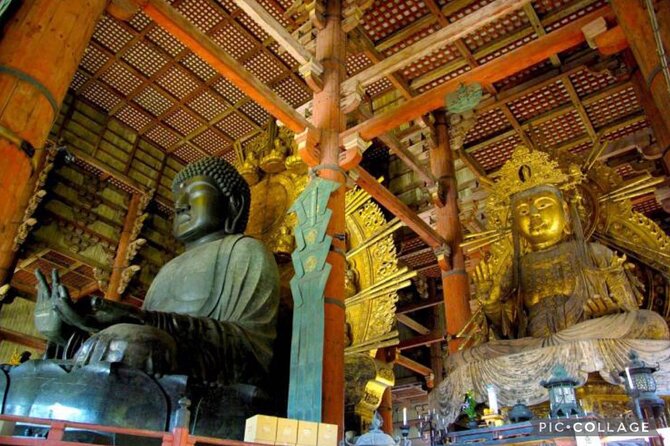
Plan on about 90 minutes here. The scale is the point. Todai-ji is not a delicate little shrine hidden behind trees. Its great wooden temple hall and huge Buddha create the sort of first impression that photographs struggle to capture.
Admission is not included. The listed cost is ¥600 per adult and ¥600 per youth, so add that to your day’s budget. The tour information also lists ¥600 for senior admission at Kinkakuji, although you should confirm the current price and category when booking.
After Todai-ji, you get about 30 minutes in Nara Park. The park covers roughly 660 hectares and is famous for its free-roaming deer. You can buy special crackers and feed them, but keep your food moving once the crackers are gone. The deer are charming, persistent, and very aware of who has snacks.
Thirty minutes is enough for a quick encounter and photographs, but it is not a long park walk. If the deer are your main reason for visiting Nara, ask your host if the schedule can give you more time here. The private format makes that request more realistic than it would be on a fixed coach outing.
The Nara section is particularly good for mixed-age groups. Children usually get an immediate thrill from the deer, while adults have Todai-ji’s art and religious setting to appreciate. You can also ask for a local lunch suggestion. Several outings included a pleasant restaurant stop, with soba singled out as a favorite meal.
Fushimi Inari: thousands of gates and a useful time limit
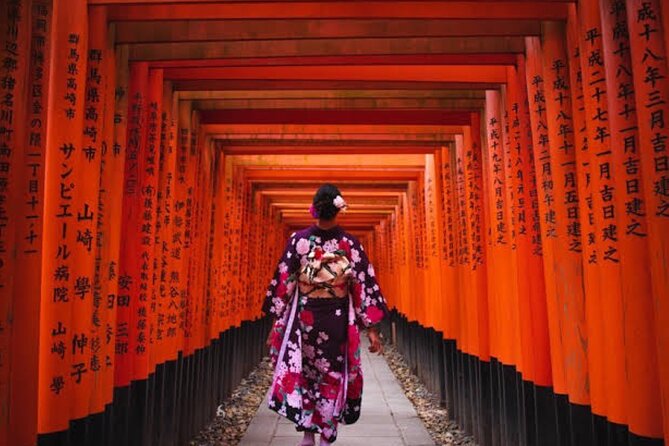
Fushimi Inari Taisha is scheduled for about 90 minutes. Its signature feature is the long procession of orange torii gates climbing the wooded hillside behind the main shrine.
The shrine is dedicated to Inari Okami, associated with rice, prosperity, and business. The main shrine building contains five shrines together, and the site is designated an Important Cultural Property. Even if you do not climb far, the first stretch of gates gives you the classic Fushimi Inari experience.
Ninety minutes sounds generous until you start walking. The gates continue uphill, and many people pause for photos. You do not need to reach the top to enjoy the place, but you should wear comfortable shoes and be realistic about your pace.
A private host can help you decide when to turn back. That is valuable because Fushimi Inari rewards a short visit, yet can also swallow half a day if you keep following the gates. The stop is free, but it is one of the busiest parts of the route, so an early start matters.
Fushimi Inari is also a good test of the guide arrangement. A driver-host may point out the basic religious meaning and meeting time, while a licensed guide can provide much more context about the shrine, its symbols, and the role of the torii donations. If that level of explanation matters to you, make the request before the tour date.
Kinkakuji: the Golden Pavilion in one focused hour
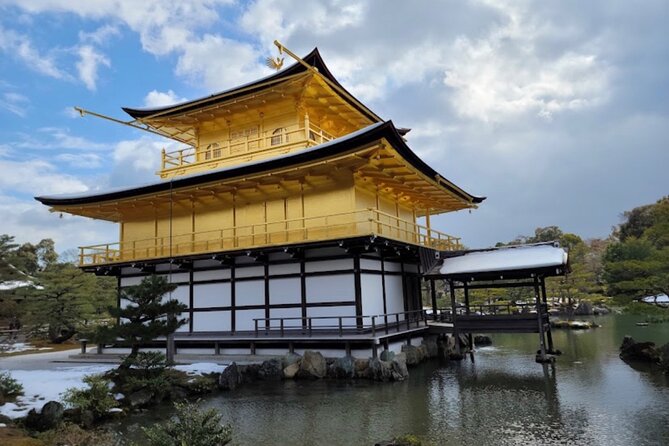
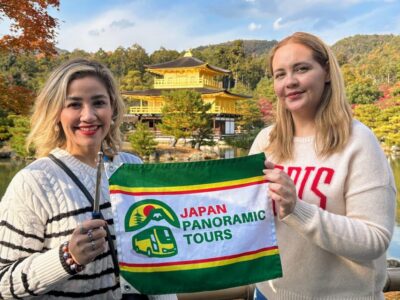
Kinkakuji, or the Golden Pavilion, receives about one hour. The pavilion is covered in gold leaf and sits beside a pond, creating the polished scene that appears in almost every Kyoto introduction.
The building was made to house sacred Buddhist relics, which explains why the pavilion itself draws so much attention. The surrounding temple grounds add gardens and views, but the main attraction is the bright gold structure reflected in the water.
Admission is extra, listed at ¥600 per adult and ¥600 for seniors. The visit is free for children only if the applicable ticket rules allow it, so check the current arrangements for your group.
One hour is enough to see the main path and take photographs. It is not enough for a leisurely garden study or a long temple visit. That is the pattern of this day: you see Kyoto’s signature places efficiently, then decide which ones deserve a longer return visit.
Kinkakuji can feel especially crowded, and the path tends to keep you moving. The private vehicle helps you reach it without a complicated bus connection, but it cannot control the crowd inside. Bring patience and do not expect a quiet private encounter with the pavilion.
A completely different kind of day out in Kyoto:
- Kyoto Geisha Walking Tour: Gion District & Hidden Gems
★ 4.7 · 3,273 reviews - Kyoto: Tea Ceremony Ju-An at Jotokuji Temple
★ 4.9 · 3,207 reviews - Kyoto: Gion Magical Night Walking Tour with Geisha Trivia
★ 4.9 · 2,393 reviews - Kyoto: 45-Minute Tea Ceremony Lesson Experience
★ 4.3 · 2,378 reviews
Arashiyama’s Kimono Forest and bamboo
Arashiyama comes later, with two separate stops: about 30 minutes at the Kimono Forest and about an hour at the bamboo area. The combination gives you both a quick design installation and Kyoto’s most photographed natural setting.
The Kimono Forest surrounds the Arashiyama terminal station for the Keifuku Randen tram line. It consists of 600 clear acrylic cylinders, each about two meters tall, containing colorful kimono-patterned fabric. The cylinders make a bright corridor near the station, and the stop is free.
Half an hour is plenty for photographs and a look around. It is not a major temple or museum, so this short pause fits the schedule well. Think of it as a visual interlude between larger cultural sites.
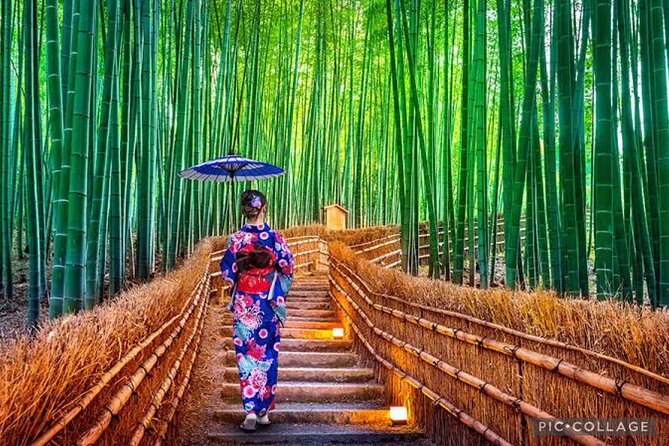
The Arashiyama Bamboo Forest gets about an hour. Tall bamboo surrounds the path, and even a short walk gives you the famous green corridor and the sound of stalks moving in the breeze.
The word forest can suggest a long wilderness walk, but the usual attraction is a defined sightseeing route. An hour gives you time to walk, take pictures, and enjoy the cooler air, though the path can be crowded. You may find that the private tour’s timing matters more here than its transportation. Your host can get you close, point out where to walk, and keep the rest of the day from slipping away.
Arashiyama is one of the places where flexibility helps. If your group is tired after Nara and Fushimi Inari, you can keep the bamboo visit short. If you are eager photographers, you can ask for a little more time, understanding that another stop may need to be shortened.
What the private vehicle adds
The package includes private transportation, an air-conditioned vehicle, parking fees, fuel surcharge, and toll fees. Pickup and drop-off at your Kyoto hotel are also part of the appeal.
This is not simply a luxury add-on. Kyoto’s main sights are spread across the city, and Nara adds another leg. A car lets you use the day for sightseeing instead of route planning. Several guides were praised for getting groups to more places than they could have reached alone by public transportation.
The vehicle quality and punctuality deserve a clear check before you book. Many outings used a comfortable car or van, but a few groups described transportation that felt like a driver’s personal vehicle, with broken features or poor communication. One group also reported a delayed start, despite agreeing to an 8:30 a.m. pickup.
That does not mean every departure has this problem, but it is a fair reason to confirm the pickup time and vehicle details in writing. A private tour is expensive partly because you are paying for dependable coordination. If the car arrives late, the tight schedule becomes even tighter.
The group size is private, meaning only your party participates. The supplied information does not specify a maximum number of people or a particular vehicle model, so ask those questions if luggage space or seating matters.
Driver-host or licensed guide?
This is the most important point to understand before paying.
The standard service includes an English-speaking driver or host. That host may offer general information about each place, help with timing, suggest lunch, assist with photos, and guide you between the vehicle and attractions. Several hosts received strong praise for exactly those qualities.
Ben was praised for planning a full day and explaining Japanese life and culture. Yoshimura was noted for helping groups avoid crowds and finding a good lunch. Dan was described as kind, flexible, and eager to make the day enjoyable. Yui received praise for detailed explanations in clear English and for helping set up photographs. Steven, Christine, Reo, Dave, Loc, Bong, and Jess were also singled out for friendly service, flexibility, humor, or useful local help.
But the service is not automatically a national licensed guide. Some participants expected detailed temple history and received mainly transportation plus basic assistance. The provider’s own explanation makes the distinction clear: an experience guide offers general information, while a national licensed guide provides in-depth professional interpretation for an additional fee.
Do not assume the words English-speaking driver and guide mean the same thing. If you want detailed explanations at every shrine and temple, request the licensed guide option before the tour. If you mainly want efficient transportation, hotel service, photo help, and a flexible schedule, the standard host may be enough.
Price, meals, and the real value
The listed price is $350.16 per person. That is a serious charge, especially because Todai-ji and Kinkakuji admission, lunch, and any extra purchases are not included.
The value improves when several people share the private service and when your time is limited. A family can avoid several public transport changes, and a group visiting during a short Kyoto stay can see Nara plus several Kyoto highlights in one day. Cruise passengers and people with a fixed departure schedule may find that time savings are worth more than the ticket price.
The value drops for solo participants or couples on a tight budget. Kyoto and Nara can be visited by train and bus, and a self-guided day costs far less. You also need to decide if you want a guide, a driver, or both. Paying private-tour prices for a basic taxi-style service will feel disappointing.
Lunch is not included, but hosts may suggest a local place. That can be one of the day’s more personal moments, especially when you are tired of eating near major attractions. Still, ask how much lunch time is planned so you know what kind of meal fits the schedule.
Who should book this day?
I would consider this tour if you:
- Have only one full day for Kyoto and Nara.
- Prefer a private group to a coach full of strangers.
- Want hotel pickup and drop-off.
- Are traveling with children, older relatives, or someone who needs a gentler pace.
- Want help with photos, lunch, and local navigation.
- Value comfort and time more than the lowest possible price.
- Want to adjust the day around your group’s interests.
I would choose public transportation or a less expensive driver service if you:
- Have several days in Kyoto.
- Enjoy planning routes and walking at your own pace.
- Want long visits at each temple.
- Need a full historical explanation at every stop but do not want to pay for a licensed guide.
- Are traveling alone and paying the full per-person cost.
The tour requires good weather. If poor weather cancels it, you can receive a different date or a full refund. Otherwise, cancellation is free up to 24 hours before the start time, while later cancellations and changes are not refunded.
Should you book the Kyoto and Nara private tour?
Book it for efficient sightseeing with personal control, not simply because it lists famous places. The route covers an impressive amount: Todai-ji, Nara Park, Fushimi Inari, Kinkakuji, the Kimono Forest, and Arashiyama’s bamboo in roughly six to ten hours.
Before booking, confirm three things: the 8:30 a.m. pickup, the type of vehicle, and whether you are receiving an experience host or a licensed guide. If those details match your expectations, this can be a comfortable, flexible way to connect Kyoto’s headline sights with Nara’s deer and giant Buddha.
If you want slow temple visits, low cost, or expert-level interpretation included by default, I would pass or upgrade the guide service. For a small group with limited time, the private car and adaptable schedule can justify the price.
FAQ
What time does the tour start?
The stated start time is 8:30 a.m.
How long does the Kyoto and Nara tour last?
The experience lasts approximately six to ten hours.
Does the tour include hotel pickup and drop-off?
Yes. Hotel pickup and drop-off from Kyoto are offered.
Is the tour private?
Yes. Only your group participates in the activity.
Are temple admission tickets included?
No. Admission is not included for Todai-ji or Kinkakuji. The listed admission price is ¥600 per person for each temple, with separate categories shown for adults, seniors, and youth.
Is lunch included?
No. Lunch is not included in the tour price.
Is the guide a licensed national tour guide?
Not automatically. The included service is an English-speaking driver or host who provides general information. A national licensed guide may be available for an additional charge.
Just added around Kyoto
- Kyoto: Private Customizable Day Trip by Car★ 5.0 · 38 reviews
- Kyoto: Gion Night Walking Tour with Geisha Insight★ 5.0 · 39 reviews
- Kyoto: Full Day Bike Tour★ 4.9 · 39 reviews
- Private Japanese Calligraphy in Kyoto – Learn Shodō with a Master★ 5.0 · 39 reviews
- Experience a tea ceremony in an authentic tearoom, in Kyoto!★ 4.5 · 41 reviews
- Kyoto: Gion Evening Walk with Hidden Gems, Geisha & Sake★ 5.0 · 41 reviews
- Kyoto Private Photo Shoot & Tour by SnapKyoto★ 5.0 · 41 reviews
- The Way of Tea: Kyoto Crafts, Hidden Temples & Wabi-Sabi Walk★ 5.0 · 41 reviews
Kyoto Tours, compared.
Fushimi Inari, Kinkakuji, Bamboo Grove 1 Day Bus Tour
Read our review →
Tea Ceremony in a Traditional Tea House in Kiyomizu
Read our review →
Kyoto Geisha Walking Tour: Gion District & Hidden Gems
Read our review →
Gion Magical Night Walking Tour with Geisha Trivia
Read our review →