
Reviewed · FOOD & DRINK
Retro Osaka Street Food Tour: Shinsekai
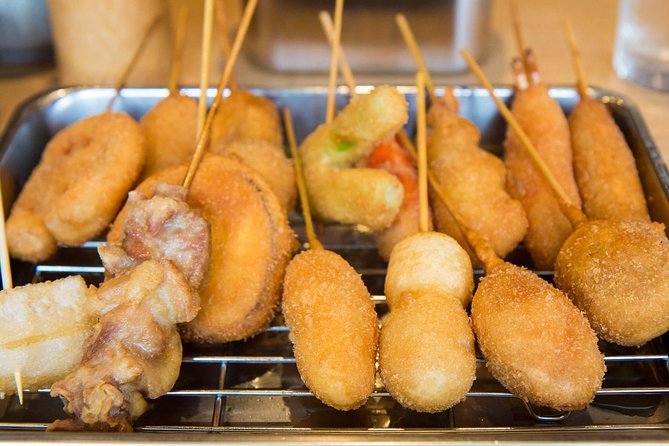
Old Osaka still knows how to eat. This three-hour evening walk through Shinsekai pairs local street food with stories about the neighborhood, including Osaka-style mixed juice, takoyaki, and dishes tied to the area’s early 1900s traditions. I like the small maximum of 10 people, and I like that the tour uses several food stops instead of parking you at one restaurant.
The local guide is the real value here. Guides such as Ike, Eki, and Hiro have earned praise for making the walk relaxed and explaining both the dishes and the district. My main caution is the price: at $217 per person, this is a costly food walk, especially since extra drinks, transportation, and some food are not included.
In This Review
- Five things to know before you book
- Why Shinsekai makes a good food tour setting
- Starting at Tsutenkaku at 5:00 p.m.
- Shinsekai food stops and old Osaka flavor
- Mixed juice, takoyaki, and hands-on eating
- Billiken shrine and Jan Jan Yokocho
- Isshin-ji and Tower Knife Osaka
- Kuromon Ichiba Market and route flexibility
- The guides are the heart of the evening
- What the $217 price really covers
- Who should book this Shinsekai walk?
- Should you book it?
- FAQ
- Where does the Retro Osaka Street Food Tour begin?
- What time does the tour start?
- How long does the tour last?
- Where does the tour end?
- How many people can join the tour?
- Is food and drink included?
- Can vegetarians join the tour?
Five things to know before you book
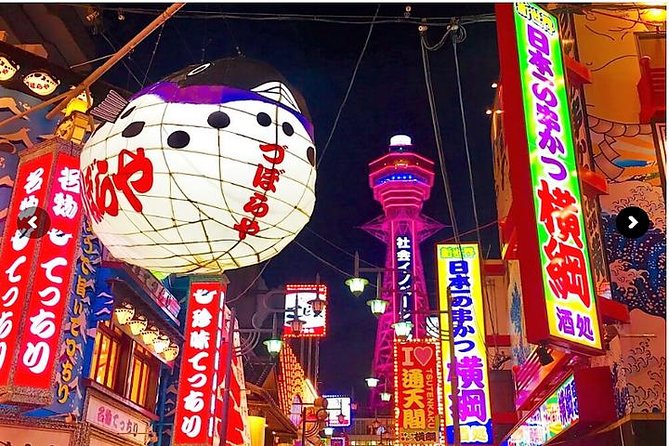
- Shinsekai after 5 p.m.: The tour begins at Tsutenkaku at 5:00 p.m., when the retro district is well suited to an evening food crawl.
- A hands-on takoyaki stop: You make your own takoyaki, turning a familiar Osaka snack into part of the experience rather than just another sample.
- Four included food stops: Dinner at a restaurant and a beverage are included, with the tour visiting several shops and tasting local and seasonal dishes.
- A small group of up to 10: This makes menu help and conversation with the guide easier than on a large bus-style food tour.
- Vegetarian-friendly, not vegan or gluten-free friendly: Vegetarian and pescetarian options are available, but the tour is not recommended for vegans or people avoiding gluten.
- A route that can change: Restaurant schedules, holidays, weather, and other conditions can lead to substitutions, so treat the food lineup as flexible.
Why Shinsekai makes a good food tour setting
Shinsekai offers a different face of Osaka from the city’s better-known shopping streets. The district is associated with old-style entertainment, local shopping, casual restaurants, and food traditions that reach back to the 1900s. You are not simply checking off famous dishes. You are seeing how food fits into a neighborhood with its own habits and personality.
Tsutenkaku gives you an easy landmark for meeting the guide. The starting point is at 1-chōme-18-6 Ebisuhigashi in Naniwa Ward, and the activity begins at 5:00 p.m. From there, the route moves through Shinsekai and nearby sights while the guide explains what you are seeing.
I like this format because food makes a district easier to understand. A guide can explain why a particular snack matters, help you read a menu, and point out the difference between a famous tourist stop and a place locals use for an ordinary meal. That help is especially useful in Japan, where menus may not always offer much English.
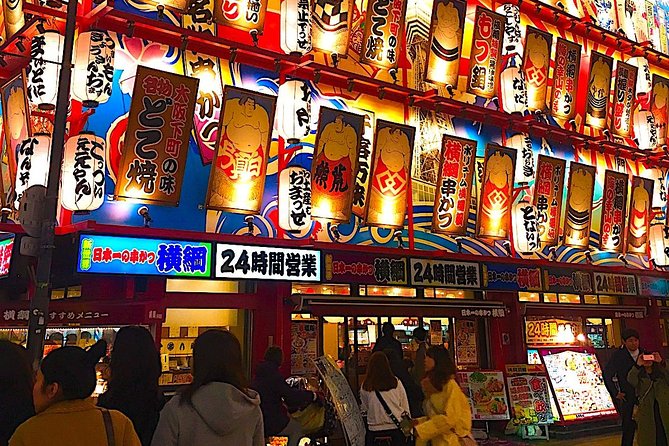
The district also gives you plenty of photo opportunities. Tsutenkaku, the narrow lanes, the Billiken shrine, and the old-school streets around Jan Jan Yokocho provide visual variety without requiring a long journey across Osaka.
More Food Tours in Osaka
- Osaka: Shinsekai Food Tour with 13-15 Dishes at 5 Eateries
★ 4.8 · 2,204 reviews - Osaka Food Tour: 13 Dishes at 5 Local Eateries
★ 5.0 · 2,149 reviews - Hungry Osaka Street Food Tour:15 Tastings & 3 Drinks with a Local
★ 5.0 · 1,727 reviews
Starting at Tsutenkaku at 5:00 p.m.
Your meeting point is Tsutenkaku, the tall tower that serves as Shinsekai’s most recognizable landmark. The tour schedule allows about five minutes at the meeting point before the main walk begins, so arrive with enough time to find the exact location.
Tsutenkaku is useful as a meeting landmark, but do not confuse this tour with a tower admission visit. Admission to Tsutenkaku is listed as free for the meeting stop, and the experience focuses on the neighborhood and its food rather than a tower visit.
The timing matters. A 5:00 p.m. start gives you an early evening meal, with food stops spread across roughly three hours. You will want comfortable shoes, since the experience is a walking tour through several streets and shops. Hotel pickup is not included, and neither are transportation costs, so you need to make your own way to Shinsekai.
Shinsekai food stops and old Osaka flavor
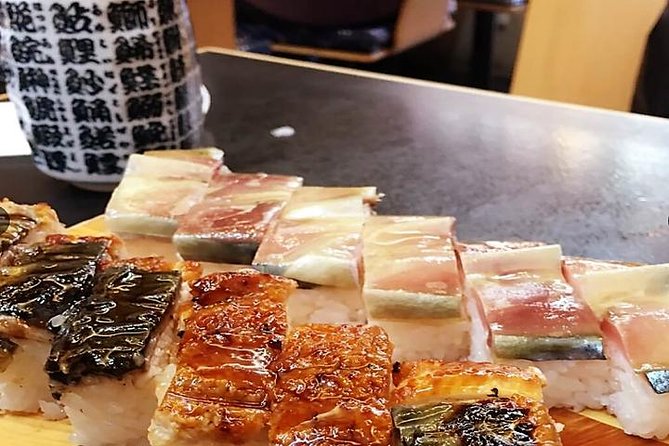
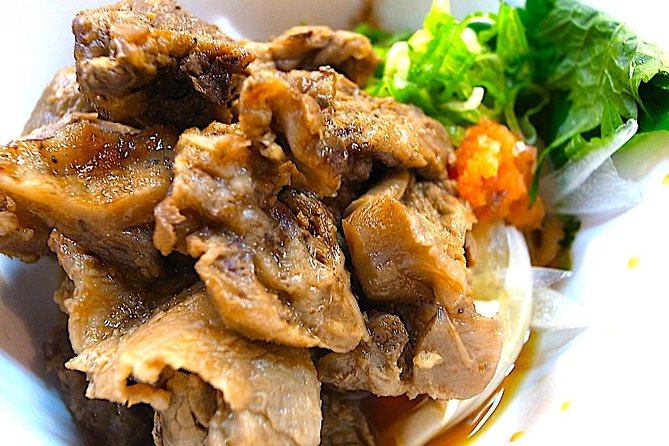
The main stop is Shinsekai itself. Here, the guide introduces food traditions connected to Osaka and takes you to several shops for local and seasonal dishes. The exact sequence can change, but the plan includes four included food stops, a restaurant dinner, and one beverage.
The description also refers to five different food stops, so there is a small difference in how the food portion is presented. I would treat four included stops as the safer expectation and see any additional tasting as dependent on the day’s route and restaurant schedule.
The tour’s appeal is variety. Instead of eating one large meal and leaving, you sample across different places. That lets you compare textures, flavors, and settings while keeping the evening moving. It also reduces the risk of ordering a full dish you do not enjoy.
A guide can be especially helpful here. Osaka food often comes with local names, preparation styles, and ordering customs that are not obvious from a quick look at a menu. The guide also helps you understand what makes an item distinctly Osakan rather than simply another Japanese snack.
Mixed juice, takoyaki, and hands-on eating
Two food traditions receive special attention: mixed juice and takoyaki.
Mixed juice is an Osaka drink made from blended fruit and other ingredients. On this tour, it is presented as part of the city’s food culture rather than a generic refreshment. It is a small but useful detail, since food tours can sometimes focus only on famous items and miss everyday local specialties.
Takoyaki is the more hands-on part of the experience. You get to make your own, which changes the pace from tasting to participation. You can expect guidance from the tour team, but the point is not to produce perfect food. It is to understand how this familiar Osaka snack is prepared and enjoyed.
For many people, this will be the most memorable stop. You get a story, a skill, and something to eat. It also suits families well, although children must be accompanied by an adult. A passport information copy is required for children age 10 and above, so families should prepare that before booking.
A completely different kind of day out in Osaka:
- Osaka Go Karting Tour with Funny Costume
★ 5.0 · 2,658 reviews - Osaka Castle: Museum and Tower Entry Ticket
★ 4.5 · 2,380 reviews - Osaka: teamLab Botanical Garden Entry Ticket
★ 4.5 · 1,710 reviews - Osaka: Tea Ceremony Experience
★ 4.9 · 1,426 reviews
Billiken shrine and Jan Jan Yokocho
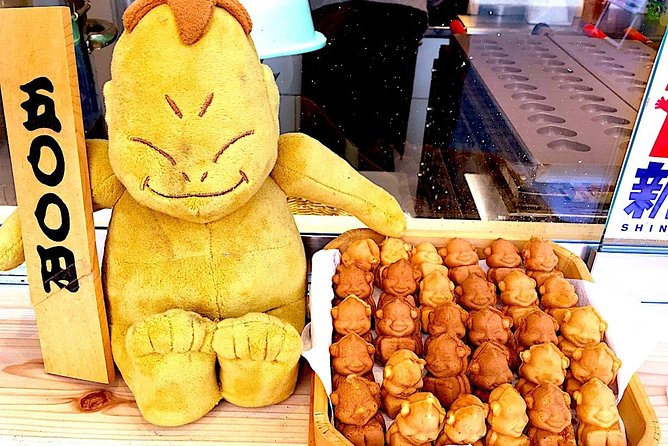
The route includes a stop at the Billiken shrine. Billiken is closely linked with Shinsekai, and the shrine adds a quick cultural pause between food stops. This is the kind of short stop that helps the neighborhood feel like more than a string of restaurants.
You also visit Jan Jan Yokocho, a covered shopping and dining lane with a distinctly old Osaka feel. The guide explains how locals use the area for shopping and entertainment, giving you context that would be easy to miss if you only wandered through with a camera.
I would not expect a long formal lecture at either location. The value comes from the guide’s running commentary and from seeing these places as part of the neighborhood’s daily life. The best approach is to stay curious and let the food, signs, streets, and stories connect.
Isshin-ji and Tower Knife Osaka
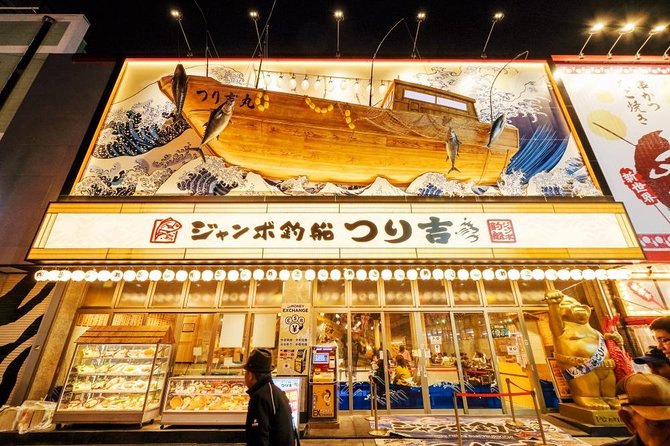
Isshin-ji is another named stop on the route. The temple adds a religious and historical note to an otherwise food-focused evening. Since the tour is only about three hours, this should be understood as a brief visit or exterior-area stop rather than an extended temple tour.
Tower Knife Osaka is also included in the listed route. Its presence fits the theme of food and cooking, though the provided details do not promise a demonstration, purchase, or specific activity there. You should see it as part of the neighborhood walk rather than a separate attraction with guaranteed hands-on instruction.
This balance is sensible. A food tour needs enough walking to make the area meaningful, but too many long sightseeing stops would reduce the time available for eating. The route seems designed to keep the historical sights concise and the food central.
Kuromon Ichiba Market and route flexibility
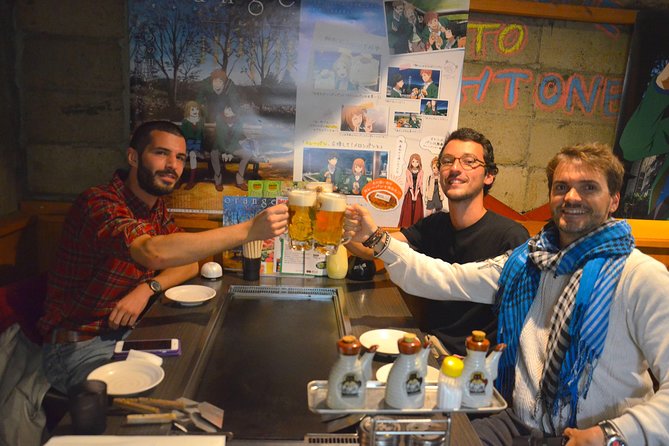
Kuromon Ichiba Market appears among the named stops, but it does not fit neatly with a short Shinsekai-only walk. The tour information also says that the route and food stops may change because of restaurant schedules, public holidays, weather, and other conditions.
For that reason, do not book this expecting a fixed checklist. The safest expectation is a guided Shinsekai food walk with the named sights serving as possible route points. If Kuromon Ichiba is important to you, confirm the day’s route with the operator rather than assuming it will be included.
This flexibility is normal for a small food tour. Restaurants close, menus change, and seasonal dishes disappear. The tradeoff is that you may receive a substitute stop instead of the exact place you had imagined. The operator says applicable substitutions will be made when needed.
The guides are the heart of the evening
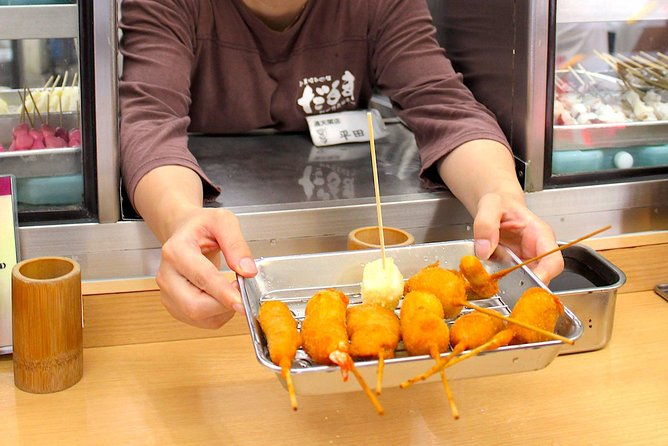
The strongest praise goes to the guides. Ike is specifically praised for sharing information about Osaka and the food being served. Eki and Hiro are also credited with creating a relaxed, enjoyable look at old-school Osaka and places that have served specialties for decades.
That tells you what to value here. The tour is not just a meal with a person walking beside you. The guide is expected to explain what you are eating, help with language barriers, and connect the dishes to the neighborhood.
A small group helps. With a maximum of 10 people, you have a better chance of asking questions, hearing the guide, and receiving help at each food stop. It also makes the walking portion less awkward than a large group moving through narrow streets.
Guide quality can vary from one departure to another, but the repeated praise for relaxed guiding is encouraging. If you enjoy learning through conversation rather than listening to a long prepared speech, this format should suit you.
What the $217 price really covers
At $217 per person, this tour sits in the expensive range for a three-hour food walk. The price includes a local guide, dinner at a restaurant, one beverage, and four food stops. You are also paying for a small group, language help, route planning, and access to places you might not select on your own.
The value depends on how you travel. If you are comfortable ordering alone, researching Shinsekai, and choosing your own restaurants, you can likely spend less by exploring independently. If you want a planned route with explanations and several tastings in one evening, the price buys convenience and structure.
Extra food and drinks cost more, and transportation is not included. The minimum drinking age is listed as 21, so do not assume that alcoholic drinks are part of the included beverage. I would also check what the included drink is if that matters to you.
For a special first evening in Osaka, the cost may be worth it. For budget-conscious visitors or people who already know the district well, it is harder to justify.
Who should book this Shinsekai walk?
I would recommend this experience to first-time Osaka visitors who want an introduction to local food without spending hours decoding menus. It also suits food-focused couples, small friend groups, and families with older children who enjoy tasting and making something.
Vegetarians and pescetarians can take part, but you should state your needs when booking. The tour is not recommended for vegans or people following a gluten-free diet, so this is not a good choice if those restrictions are firm.
The tour is family-friendly, and most people can participate. Because the experience involves walking between several stops, you should still be comfortable on your feet for about three hours. The provider says the tour is near public transportation, but getting to and from the meeting point remains your responsibility.
You should also choose your date carefully. Free cancellation is available if you cancel at least 24 hours before the 5:00 p.m. start time. Late cancellations and changes are not accepted, and poor weather or an insufficient number of bookings can lead to a new date, another experience, or a full refund.
Should you book it?
Book this tour if you want guided access to Shinsekai’s food culture, a small group, and a relaxed introduction to old Osaka. The takoyaki activity, mixed juice, local history, and multiple food stops give the evening more character than a standard restaurant dinner.
Skip it if $217 feels high for a short meal-focused walk, or if you need vegan or gluten-free food. Also skip it if Kuromon Ichiba is your main goal, since the route can change and the activity is centered on Shinsekai.
For the right person, this is a friendly, well-structured way to start exploring Osaka. Its greatest strength is not the number of stops. It is the chance to understand why these foods and streets matter, with a guide such as Ike, Eki, or Hiro helping you make sense of the experience.
FAQ
Where does the Retro Osaka Street Food Tour begin?
The tour begins at Tsutenkaku, 1-chōme-18-6 Ebisuhigashi, Naniwa Ward, Osaka, 556-0002, Japan.
What time does the tour start?
The starting time is 5:00 p.m.
How long does the tour last?
The experience lasts approximately three hours.
Where does the tour end?
The activity ends back at the meeting point.
How many people can join the tour?
The maximum group size is 10 travelers.
Is food and drink included?
The tour includes one beverage, dinner in a restaurant, and four food stops. Additional drinks or food are not included.
Can vegetarians join the tour?
Yes. The tour is vegetarian and pescetarian friendly, but it is not recommended for vegans or people following a gluten-free diet.
Just added around Osaka
- Osaka Food Tour with 10 Classic Japanese Tastings & Drinks★ 5.0 · 38 reviews
- Osaka: Highlights & Hidden Gems Private Walking Tour★ 4.7 · 38 reviews
- Kyoto private tour (Shore excursion available from Osaka or Kobe port)★ 5.0 · 39 reviews
- Osaka Private Day Trip – Enjoy Your First-Time Visit to Osaka!★ 5.0 · 39 reviews
- Kyoto & Nara & Uji: Full Day Sightseeing Tour from Osaka or Kyoto★ 4.5 · 39 reviews
- Authentic SUSHI Course Cooking Class★ 5.0 · 39 reviews
- Osaka: Mind & Spirit Balance Temple Reiki Healing★ 5.0 · 41 reviews
- Osaka Afternoon Walking Tour with Osaka River Cruise★ 3.5 · 42 reviews
Food & Drink, compared.
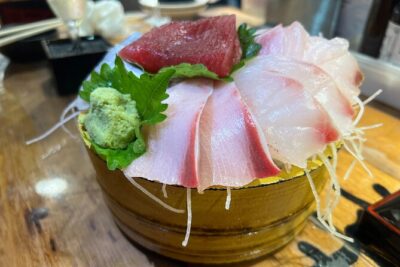
Shinjuku Food Tour (13 Dishes at 4 Local Eateries)
Read our review →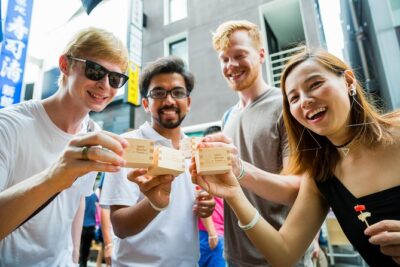
Tokyo Tsukiji Fish Market Food and Culture Walking Tour
Read our review →
Shinsekai Food Tour with 13-15 Dishes at 5 Eateries
Read our review →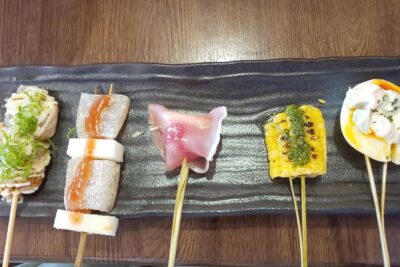
Osaka Food Tour: 13 Dishes at 5 Local Eateries
Read our review →
Shinjuku Food Tour (15 Dishes and 4 Eateries)
Read our review →
Best of Shinjuku: Izakaya Food Tour (4 Stops, 14+ Tastings)
Read our review →
Kyoto Night Foodie Tour in Gion (9+ dishes + 6 Sake tastings)
Read our review →
Hungry Osaka Street Food Tour:15 Tastings & 3 Drinks with a Local
Read our review →Browse the lists this tour appears in