
Reviewed · SAMURAI & NINJA EXPERIENCES
Samurai Experience Mugai Ryu Iaido in Tokyo
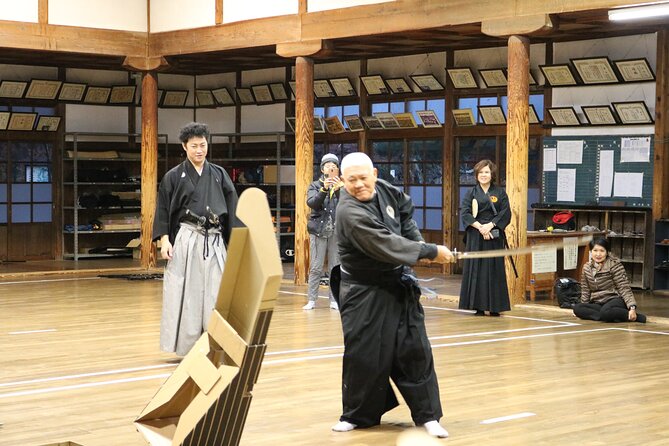
Step into Japan’s warrior tradition. This one-hour Mugai Ryu Iaido lesson gives you a rare look at samurai sword practice, with instruction from Master Takeda Hougyoku and plenty of time to handle a mock katana yourself. I like the small group of no more than eight, which means you are not lost in a crowd, and I like the chance to wear hakama rather than simply watch a staged performance.
The experience also feels more serious than a standard photo stop. You hear how Iaido works, learn basic sword movements, try tameshigiri practice, and watch formal kata performed by an experienced master. The main drawback is time: one hour goes quickly, so you should expect an introduction rather than a full martial arts course.
The class takes place in Kuramae, in Tokyo’s Taito City, and costs $151.92 per person. That is not a cheap souvenir activity, but the price includes clothing, instruction in English, sword rental, and direct attention in a very small group. You will need to make your own way there, since hotel and attraction transfers are not included.
In This Review
- Key points to know before you book
- Why this Iaido class feels different from a staged samurai show
- Changing into hakama starts the lesson
- The first explanation: what Iaido actually involves
- Handling the mock katana safely
- Tameshigiri practice adds a practical edge
- The closing kata demonstration is the strongest moment
- Is $151.92 fair for one hour?
- Kuramae location and the one-hour schedule
- Who should book this samurai experience?
- Booking, confirmation, and cancellation details
- Should you book the Mugai Ryu Iaido experience?
- FAQ
- Where does the Samurai Experience Mugai Ryu Iaido lesson begin?
- How long does the Iaido experience last?
- Are real katana swords used?
- Is samurai clothing included?
- How many people can join the activity?
- Does the activity include hotel pickup or drop-off?
Key points to know before you book
- Master Takeda Hougyoku may lead the session: He heads the International Iaido Organization Hougyoku-kai and carries on the Mugai Ryu tradition through ancient teaching scrolls.
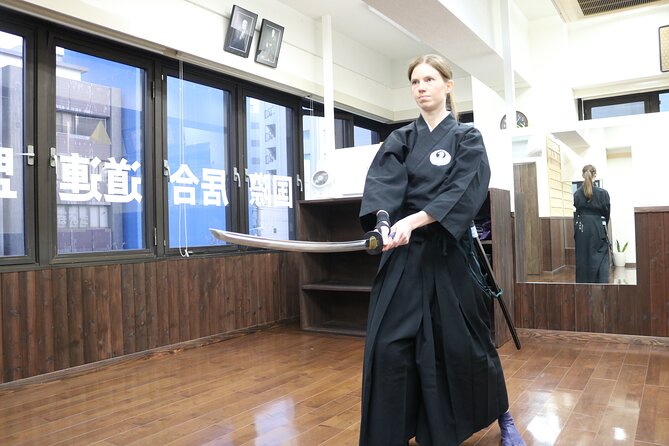
- You wear rented samurai hakama: Changing into traditional clothing makes the lesson feel like a cultural activity, not just a short sword demonstration.
- The group is capped at eight people: This gives you a better chance to ask questions and receive corrections than you would in a large class.
- Only imitation katanas are used: You can learn how to hold, draw, and sheath a sword without handling a live blade.
- You watch genuine Iaido kata: The final demonstration shows set patterns of attack and movement, giving context to the basic techniques you practice.
- The meeting point is in Kuramae: The activity begins and ends at 4-chome-20-10 Kuramae, with public transportation nearby.
Why this Iaido class feels different from a staged samurai show
Tokyo offers plenty of polished cultural performances. This experience takes a quieter route. Instead of watching actors perform a short scene for a crowd, you are introduced to Iaido, a martial art built around controlled sword movements and predetermined forms.
Mugai Ryu Iai is presented as a practical martial art. That matters because the lesson is not only about dramatic sword poses. You learn the flow of handling the weapon, including how to hold it, draw it, and return it to its sheath. These simple actions require care and control, and they help you see why Iaido is practiced as a discipline rather than a theatrical trick.
The class is led by Master Takeda Hougyoku, head of the International Iaido Organization Hougyoku-kai. He is described as the heir to ancient Mugai Ryu scrolls and as a teacher carrying on a 340-year-old tradition. You should not expect a museum lecture on every period of samurai history, but you will get a direct connection to a living school of sword practice.
That is the real value here. You are not only looking at a costume or holding a prop for a photograph. You are learning why posture, timing, and a controlled sequence matter.
More Samurai & Ninja Experiences in Tokyo
- Tokyo: Samurai Restaurant Show Ticket with 2 Drinks
★ 4.5 · 1,307 reviews - Tokyo: Samurai Ninja Museum Guided tour and Experience
★ 4.6 · 1,010 reviews - Tokyo: Samurai Sword & Archery Class from Samurai Descendant
★ 5.0 · 603 reviews
Changing into hakama starts the lesson
The experience begins with a change of clothes. Rental hakama are included, giving you the traditional wide-legged trousers associated with formal Japanese martial arts practice.
This part is useful for two reasons. First, it creates memorable photographs. Second, it changes your frame of mind. Putting on the clothing signals that you are entering a formal lesson, even if only for an hour. You are less likely to treat the sword as a toy once you are dressed for the practice.
The supplied details do not specify changing-room arrangements or what clothing you should wear underneath. For comfort, I would arrive in clothes that are easy to change out of and allow free movement. Keep the timing in mind, since changing clothes is part of a short session rather than a separate extended activity.
There are plenty of chances for photographs during the experience. Still, I would put the camera away during instruction. The most useful moments are the ones when you are watching the hand position, footwork, and movement of the blade. You can take photographs before or after the practical portion, when you are less likely to miss a correction.
The first explanation: what Iaido actually involves
After changing, Master Takeda and the instructor explain what Iaido is and outline the flow of the lesson. This introduction gives you the basic vocabulary and safety guidance needed for the rest of the class.
You learn how to handle an imitation katana safely, how to hold it, and how to draw and sheath it. You also receive an overview of the basic patterns used in the session. Those details may sound simple, but they are the foundation of the activity. A sword lesson would be confusing without them, especially if you have never handled one before.
The instructor speaks English, which makes this suitable for international visitors who want more than a visual demonstration. The provided information does not promise a full history lecture or advanced translation of every technical term. The value is practical: you can understand what you are being asked to do and follow the sequence safely.
I also like the small-group format here. With a maximum of eight people, you have a reasonable chance of receiving attention from the instructor. The experience specifically promises plenty of Master Takeda’s attention, though the exact amount will depend on the group that day.
Handling the mock katana safely
The swords used are imitations of katana, so you are not working with a live blade. That is an important point for anyone who feels nervous about trying a sword activity in Tokyo.
Safety does not mean the lesson is casual. You still learn how to hold the sword, draw it, and sheath it in the proper order. These movements demand concentration, and the small group lets the instructor watch how you perform them.
You should approach this as a beginner class, not as a chance to swing a sword freely. The purpose is controlled movement. Follow the instructor’s pace, keep your attention on the instructions, and resist the temptation to turn the session into a samurai movie scene.
For families, older visitors, or anyone with limited martial arts experience, the fact that most people can participate is reassuring. The available information does not give a detailed list of physical restrictions, so anyone with specific mobility concerns should confirm suitability before booking.
A completely different kind of day out in Tokyo:
- Mt Fuji and Hakone 1-Day Bus Tour Return by Bullet Train
★ 5.0 · 26,383 reviews - 1-Day Tokyo Bus Tour
★ 5.0 · 14,250 reviews - Tokyo: TOKYO SKYTREE® Admission ticket
★ 4.5 · 11,192 reviews - Tokyo: teamLab Planets TOKYO Digital Art Museum Entry Ticket
★ 4.6 · 9,779 reviews
Tameshigiri practice adds a practical edge
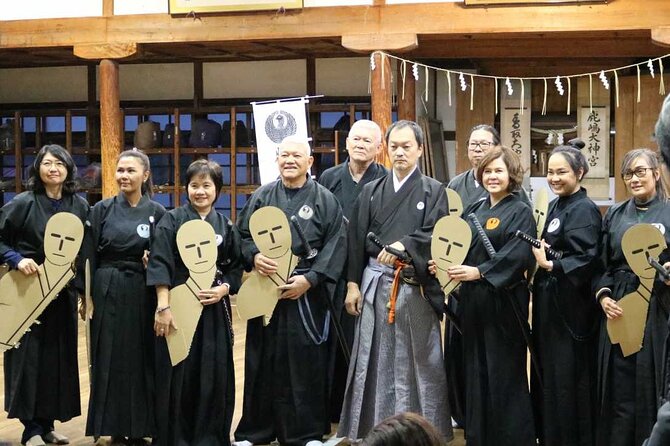
The lesson includes an opportunity to try tameshigiri. In Iaido and related sword traditions, tameshigiri refers to practicing a cut against a target.
This is one of the most distinctive parts of the experience because it connects the careful movements of the lesson with the practical use of a sword. You are not only learning a pose for a photograph. You are seeing how grip, angle, timing, and control fit together.
The details provided do not say what target is used or how much time each person receives. They also make clear that only imitation katanas are used, so you should not assume you will be cutting with a sharp historical blade. The activity is designed as a safe introduction.
That balance is helpful. You get a taste of the practical side of Mugai Ryu without the risks associated with live weapons. If tameshigiri is the main reason you are interested, ask the operator for current details before booking, since the precise setup is not specified.
The closing kata demonstration is the strongest moment
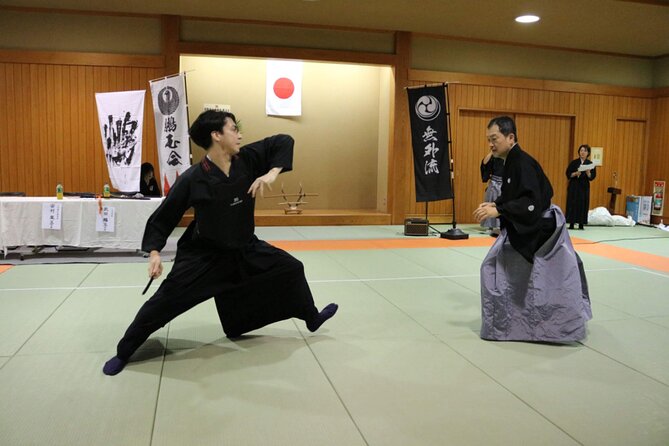
At the end, you watch a demonstration of Iaido kata. Kata are predetermined patterns of attack, and this display shows the formal structure behind the basic exercises you have just attempted.
This is where the lesson’s purpose becomes clear. Your own movements may feel slow or awkward at first. The master’s demonstration shows how much control and precision the same basic actions require when performed by an experienced practitioner.
The description places special emphasis on seeing real Iaido kata directly in front of you. The experience also highlights Master Takeda’s long connection to the Mugai Ryu tradition. One of the strongest points praised in the available feedback is the welcoming, professional attitude of the instructors and their desire to share their art. That warmth matters in a martial arts setting, where a stern atmosphere could make beginners feel out of place.
If Master Takeda is present for your session, his participation adds considerable value. The information says he was present for at least one highly praised experience, but it does not guarantee that he will personally lead every session. The class includes an English-speaking instructor, so you still receive guidance even if the master’s role varies.
Is $151.92 fair for one hour?
At $151.92 per person, this is a premium short activity. You are paying roughly for a focused cultural lesson, not a full afternoon tour.
The price includes:
- Rental samurai hakama
- An English-speaking instructor
- Japanese sword rental
- The guided lesson and demonstration
The group limit helps justify the cost. Eight people is small enough to create a more personal class, especially compared with a large cultural show where you only watch from a distance. The presence and lineage of Master Takeda also give the activity a specialist quality that a generic sword-themed photo session would not have.
Still, value depends on what you want. If you mainly want a cheap costume photograph, this is expensive. Tokyo has many lower-cost cultural activities. If you want direct instruction, a formal demonstration, and a brief introduction to a specific martial art, the price is easier to defend.
Frequent Tokyo visitors may find particularly good value here. You may already have seen temples, shrines, markets, and major museums. This class offers a different side of local culture, one that many short itineraries skip.
Kuramae location and the one-hour schedule
The meeting point is 4-chome-20-10 Kuramae, Taito City, Tokyo 111-0051. The activity begins and ends at the same location, and public transportation is nearby.
That simple arrangement makes this easy to fit into a day of sightseeing. You do not have to wait for a hotel pickup or coordinate a return transfer. On the other hand, you are responsible for reaching Kuramae on time, and no pickup from a tourist attraction or hotel is included.
The lesson lasts about 60 minutes. Allow extra time around it for getting to the meeting point, checking in, changing clothes, and leaving afterward. The official activity itself is short, so avoid scheduling a distant attraction immediately afterward unless you have allowed a comfortable buffer.
The location in Taito City may work well with other east Tokyo plans, but the available information does not provide a walking route or exact station instructions. Use the stated address and confirm the meeting details after booking.
Who should book this samurai experience?
I would recommend it to you if you want an active cultural activity rather than another sightseeing stop. It works well for first-time visitors who want a memorable introduction to Japanese tradition, and it suits frequent Tokyo visitors looking for something outside the usual route.
It is also a good match if you enjoy:
- Martial arts and traditional Japanese culture
- Small-group lessons
- Hands-on activities
- Formal demonstrations
- Costume photographs with a clear cultural setting
You do not need prior sword experience. The session begins with an explanation and basic handling instructions. Most people can participate, but the available details do not promise that every physical need can be accommodated, so contact the provider if you have a specific concern.
You may want to skip it if you need a long, detailed lesson. One hour allows for an introduction, basic practice, tameshigiri, and a kata demonstration, but not advanced training. It is also not the best choice if you dislike changing clothes, prefer self-guided sightseeing, or want to use a real katana.
Booking, confirmation, and cancellation details
Confirmation is sent within 48 hours of booking, subject to availability. Since the experience is often booked around nine days ahead, I would avoid leaving it until the last minute if your Tokyo schedule is tight.
You receive a mobile ticket, which is convenient while moving around the city. Free cancellation is available if you cancel at least 24 hours before the local start time. Changes or cancellations made within 24 hours are not accepted for a refund.
Because the activity begins and ends at the meeting point, check the address carefully before setting out. Give yourself time to find Kuramae and arrive ready for the clothing change.
Should you book the Mugai Ryu Iaido experience?
Book this if you want a personal, hands-on look at a living Japanese martial art, especially if the idea of learning from Master Takeda Hougyoku appeals to you. The small group, English instruction, rented hakama, mock sword practice, and final kata demonstration create a more meaningful experience than a quick samurai photo opportunity.
I would be more cautious if $151.92 feels high for a one-hour activity or if you expect a full training session. The price is best justified by the quality of the instruction and the access to a 340-year Mugai Ryu tradition, not by the length of the class.
For the right visitor, this is a memorable way to spend an hour in Tokyo: respectful, practical, safe, and far removed from the usual sightseeing checklist.
FAQ
Where does the Samurai Experience Mugai Ryu Iaido lesson begin?
It begins at 4-chome-20-10 Kuramae, Taito City, Tokyo 111-0051, Japan.
How long does the Iaido experience last?
The guided experience lasts approximately 60 minutes.
Are real katana swords used?
No. Only imitation katana swords are used during the experience.
Is samurai clothing included?
Yes. Rental hakama are included, along with sword rental and an English-speaking instructor.
How many people can join the activity?
The group has a maximum of eight participants.
Does the activity include hotel pickup or drop-off?
No. Pickup and drop-off at hotels and tourist attractions are not included. The activity begins and ends at the Kuramae meeting point.
Just added around Tokyo
- Tokyo 6hr Instagram Highlights Private Tour with Licensed Guide★ 5.0 · 38 reviews
- Tokyo Small Group Tour with Guide★ 4.5 · 38 reviews
- Tokyo Sumo Experience with Live Show & Audience Challenge★ 5.0 · 38 reviews
- Very popular in Harajuku♡Animal petting zoo★ 4.6 · 39 reviews
- Japanese Food Cooking Class in Asakusa, Tokyo★ 5.0 · 39 reviews
- Ramen Making from Scratch with Tokyo Mom(Vegan Option Available)★ 5.0 · 39 reviews
- Tokyo: Kimono Rental inside Shinjuku Gyoen National Garden★ 4.9 · 39 reviews
- Tokyo JDM Night: 600hp C63s AMG Edition 1 (Private)★ 4.9 · 39 reviews
Samurai & Ninja Experiences, compared.
Samurai Ninja Museum Guided tour and Experience
Read our review →
Kendo and Samurai Experience with Uniform and Gear
Read our review →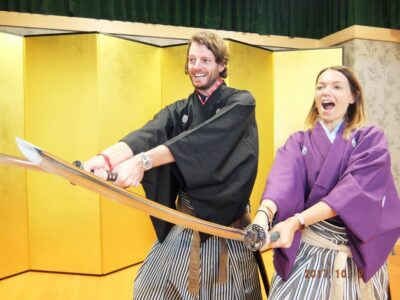
Samurai Sword Class by Experts in Traditional Arts
Read our review →
Skip the lines Basic Ticket at SAMURAI NINJA MUSEUM KYOTO
Read our review →
Samurai Sword & Archery Class from Samurai Descendant
Read our review →
Browse the lists this tour appears in