
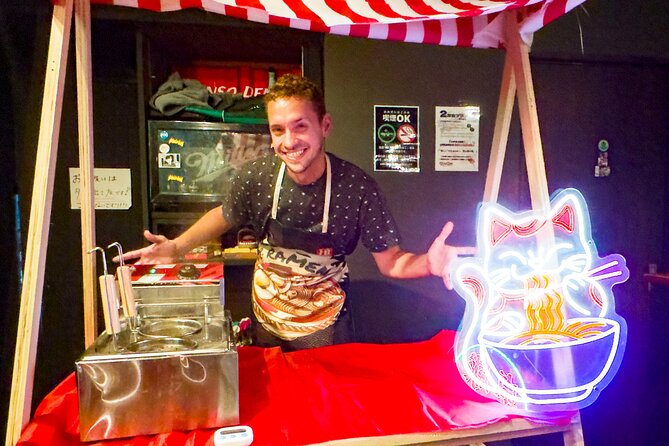
Reviewed · RAMEN & NOODLE TOURS
Shibuya: Ramen Dojo Tokyo | Make All 3 (Tonkotsu/Shoyu/Miso)
Ramen is better when your hands make it. At Ramen Dojo Tokyo, you knead dough, cut fresh noodles, prepare chicken chashu, and finish three small bowls of tonkotsu, shoyu, and miso ramen. I like the hands-on noodle making, especially the use of a professional cutter, and I like the chance to compare three soup styles in one sitting. The main consideration is that the broths are prepared ahead of time, so this is not a from-scratch stock-making class.
The 90-minute workshop costs $64 per person and takes place at a studio about a 10-minute walk from Shibuya Station. English-speaking instructors such as Kazuki, Kensei, Kai, and Arata have earned praise for clear, friendly teaching. You should arrive only 5 to 10 minutes early, since there is no waiting area, and late arrival can disrupt the class or lead to refusal.
In This Review
- Key Points at a Glance
- What You Actually Make in 90 Minutes
- The Noodle Machine Is the Main Event
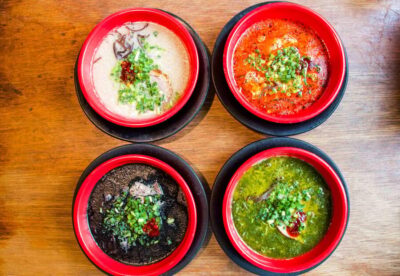
- Three Ramen Styles, Three Different Lessons
- Tonkotsu
- Shoyu
- Miso
- Chicken Chashu and Soup Adjustments Keep You Involved
- Friendly Instructors and a Small Class
- A Good Activity Near Shibuya, With One Location Detail to Note
- Is $64 Good Value?
- Dietary Limits and Family Suitability
- Who Will Enjoy Ramen Dojo Tokyo Most?
- Practical Tips Before You Book
- FAQ
- Where is Ramen Dojo Tokyo located?
- How long does the ramen class last?
- How much does the experience cost?
- Which ramen styles will I make?
- Are the ramen broths made from scratch during class?
- Is the class taught in English?
- How many people can join the class?
- Are children allowed?
- Can people with dietary restrictions participate?
- What should I wear?
- Is the studio accessible without stairs?
- What happens if I arrive late?
- Should You Book Ramen Dojo Tokyo?
Key Points at a Glance
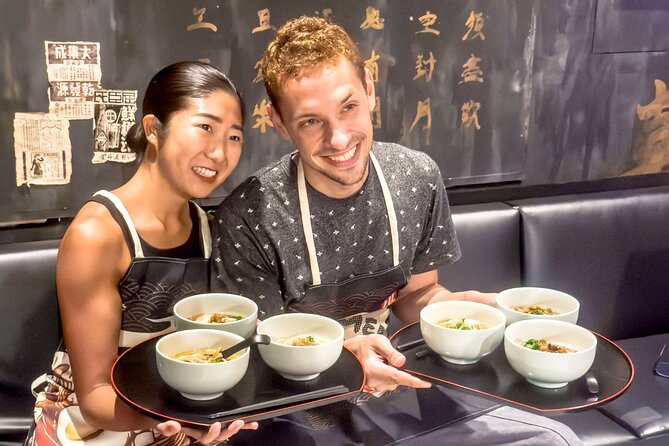
- Three bowls in one class: Taste tonkotsu, shoyu, and miso ramen side by side instead of choosing just one style.
- Fresh noodles from dough: Knead, roll, and cut your noodles with professional kitchen equipment.
- Chicken chashu included: Prepare and finish the sliced chicken topping used in your ramen.
- English guidance for beginners: Instructions are given step by step, with a maximum of eight participants.
- Useful take-home recipe: A digital recipe arrives after class, so you can try the process again at home.
- A filling Tokyo activity: The tasting portion lasts about 30 minutes, and three mini bowls can add up to a full meal.
What You Actually Make in 90 Minutes
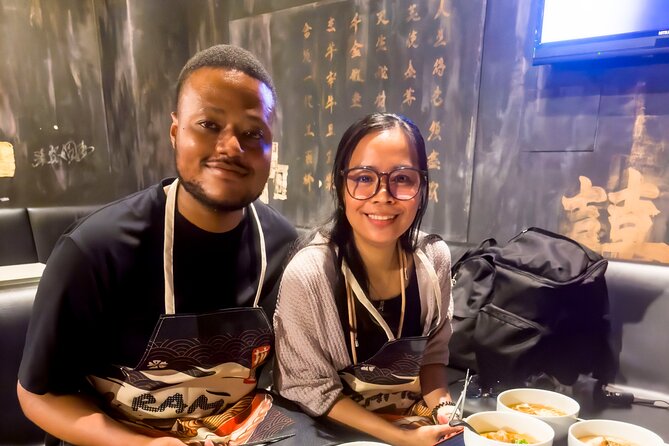
This class is carefully split between preparation, cooking, plating, and eating. You are not expected to produce every element from raw ingredients, which keeps the session manageable and lets you taste three styles within a short visit.
The class begins with a 10-minute check-in and briefing. Your instructor explains the plan, gives safety guidance, and introduces the basic differences among tonkotsu, shoyu, and miso ramen. This opening matters because the three soups are not simply three colors of the same dish. Tonkotsu is generally the richest style, shoyu brings a soy-based savory note, and miso gives the soup a fuller, more rounded flavor.
Next comes about five minutes of chicken chashu preparation. The class uses chicken rather than the more familiar pork topping, and you take part in preparing it before the final finishing stage. Later, you spend another 10 minutes completing the chashu. The work is divided into short sections, so you do not spend most of the class waiting for meat to cook.
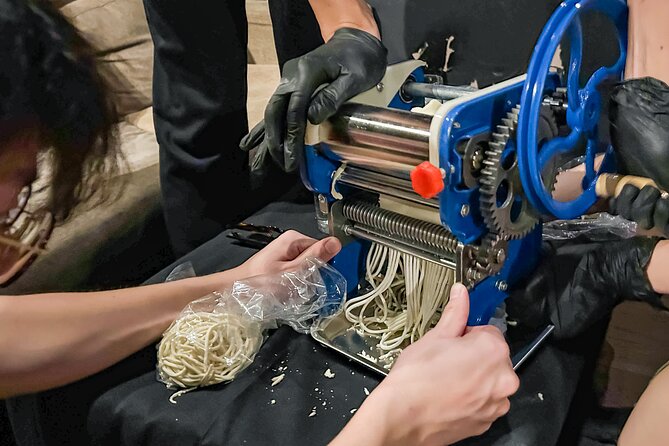
The biggest hands-on section is noodle making, which takes about 20 minutes. You work the dough, use the rolling equipment, and cut the noodles with a professional noodle machine. Some instructors also encourage hand techniques instead of relying entirely on electronic equipment. That gives you a better feel for the dough and makes the process more useful if you want to repeat it at home without special machinery.
After that, the class moves into boiling the noodles and preparing the soup, a stage that takes around 10 minutes. The broths are prepared in advance because traditional ramen stocks can take many hours. This is an important point to understand before booking: you learn how to adjust and assemble the soup, but you do not spend the afternoon simmering pork bones or building a stock from zero.
You then plate the three mini bowls in about five minutes. You can adjust the soup strength to suit your taste, add toppings, and arrange the bowls for photographs. The final 30 minutes are set aside for tasting and taking pictures. Since you make three portions, the meal can be surprisingly filling, so arriving hungry is sensible.
More Ramen Tours in Tokyo
- Eat and Drink Like a Local: Tokyo Ueno Food Tour-Taverns&Ramen
★ 5.0 · 957 reviews - Ramen & Gyoza Cooking Class in Tokyo with Local Supermarket Visit
★ 5.0 · 823 reviews - Tokyo: Ramen Tasting Tour with 6 Mini Bowls of Ramen
★ 4.9 · 432 reviews
The Noodle Machine Is the Main Event
For many people, the best part is turning a rough piece of dough into actual ramen noodles. The professional cutter gives the experience a proper kitchen feel, but the instructor keeps the steps simple enough for beginners.
You knead the dough before rolling and cutting it. This is not just a quick demonstration where you watch a chef do the work. You take part in the process and see how the texture changes as the dough is handled. The activity is practical, messy in a good way, and easy to understand even if you have never made pasta or noodles before.
Flour can end up on your clothing during this stage. Aprons are provided, but you should still wear clothes that can handle a little dusting. The studio asks participants to follow staff instructions closely, particularly around the noodle machine and hot cooking equipment.
The class also gives you a useful home-cooking lesson. One participant found that the noodle method could be repeated at home in Australia without special equipment. That is a real advantage over food activities that are fun in Japan but difficult to recreate once you return home.
Three Ramen Styles, Three Different Lessons
The tasting is not just a reward at the end. It is the reason the class feels more substantial than a basic noodle-making demonstration.
Tonkotsu
Tonkotsu is the creamy, hearty style associated with a long-cooked pork-based broth. At Ramen Dojo Tokyo, you taste a prepared tonkotsu base and adjust its strength before plating. Because pork is among the ingredients used in the class, this option is not suitable for strict vegetarian or vegan diets.
A completely different kind of day out in Tokyo:
- Mt Fuji and Hakone 1-Day Bus Tour Return by Bullet Train
★ 5.0 · 26,383 reviews - 1-Day Tokyo Bus Tour
★ 5.0 · 14,250 reviews - Tokyo: TOKYO SKYTREE® Admission ticket
★ 4.5 · 11,192 reviews - Tokyo: teamLab Planets TOKYO Digital Art Museum Entry Ticket
★ 4.6 · 9,779 reviews
Shoyu
Shoyu ramen uses soy sauce as a key flavor, giving the soup a darker color and a clear savory character. The soy ingredient also means the class is unsuitable for people with a severe soy allergy.
Miso
Miso ramen offers a deeper fermented flavor and usually feels heavier than a light shoyu bowl. Tasting it beside the other two styles lets you notice how much the soup base changes the same basic noodle-and-topping format.
The three bowls are mini portions rather than three full restaurant-sized servings. Even so, the combined meal may be enough for lunch or dinner. I would avoid eating a large meal immediately before class, especially since the workshop includes both cooking and tasting.
Chicken Chashu and Soup Adjustments Keep You Involved
The class does not leave every important component to the instructor. You prepare chicken chashu and take part in finishing it before the bowls are assembled. That gives you a better idea of how ramen toppings affect the final dish.
The soup adjustment is another small but useful touch. You can fine-tune the strength instead of receiving an identical bowl to everyone else. This is a beginner-friendly lesson in balance: noodles, soup, meat, and toppings need to work together, and a broth that tastes strong on its own may taste different once noodles are added.
Some elements are already prepared, including the long-cooking broth bases. That division of labor is sensible for a 90-minute class, but it also sets a clear limit on what you are learning. If your goal is to master traditional stock preparation, you will need a more specialized or longer cooking course. If your goal is to make a satisfying bowl at home, the format is more practical.
Friendly Instructors and a Small Class
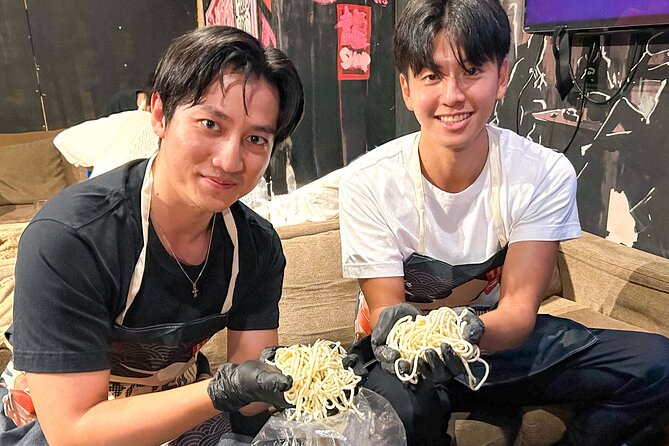
The maximum group size is eight, which keeps the workshop personal without making it a private lesson. Your instructor can usually watch each person work and step in when the dough, cutter, or cooking process needs attention.
Instruction is available in English and Japanese. English-speaking teachers including Kazuki, Kensei, Kai, Arata, and others have been praised for clear explanations, patience, humor, and quick answers to questions. Kazuki, in particular, has been noted for detailed instruction and for encouraging hand techniques during noodle making.
The class can feel almost private if fewer people book that time slot. Some sessions have had only two participants, allowing more time for questions and individual help. You should not assume that every date will be this quiet, but the eight-person limit is still modest for a practical cooking activity.
The teaching style seems to suit first-timers. Instructions are broken into small tasks, and the staff make sure each participant takes part in different activities. If you are nervous about cooking in front of strangers, this is a gentler format than a large demonstration class.
A Good Activity Near Shibuya, With One Location Detail to Note

The studio is listed at 1F, 2-16-29 Ohashi, Meguro-ku, Tokyo 153-0044. It is described as roughly a 10-minute walk from Shibuya Station, though the address is in the Ohashi area of Meguro Ward rather than in the busiest central Shibuya shopping streets.
That makes timing important. Give yourself enough time to navigate from the station and find the studio, particularly if you are unfamiliar with Tokyo’s large station area. Doors open 10 minutes before the class, but there is no early-entry or waiting area, so arriving too early will not help.
Arrive 5 to 10 minutes before your start time. If you are running late, contact the class before the scheduled beginning through the listed Instagram account, @ramendojo_japan, or by email at [email protected]. Arrivals five or more minutes late may need to join after the activity has started or may be refused, with no refund in some cases.
The class starts and ends at the same studio. That is convenient because you do not need to manage a second meeting point after cooking. Once dismissed, you can continue exploring Shibuya, though the studio itself is not right in the middle of the station complex.
The building has stairs only. If you cannot use stairs, this activity will not work for you.
Is $64 Good Value?
At $64 per person, this is not a cheap bowl of ramen. You can eat ramen for far less in Tokyo. The price makes more sense when you count the English instruction, ingredients, kitchen equipment, apron loan, noodle machine, chicken preparation, three tastings, and digital recipe.
You are also paying for an activity that fills 90 minutes and doubles as a meal. Several participants found the three bowls filling, and lunchtime bookings can effectively combine a class with lunch. That improves the value, particularly for couples or families who want a shared activity rather than another restaurant stop.
The value is strongest if you care about learning a repeatable technique. The digital recipe gives you something to use later, and the methods do not depend entirely on equipment found only in Japan. If you simply want to eat excellent ramen, a specialist ramen shop will offer more variety and probably a lower bill.
I would see this as a food experience with a meal attached, not as a restaurant replacement. You get the satisfaction of making part of the dish yourself, plus the chance to compare three soup styles at once.
Dietary Limits and Family Suitability
The class uses wheat, egg, soy, chicken, and pork. It cannot guarantee complete protection against cross-contamination, so it is not appropriate for severe wheat, egg, or soy allergies, celiac disease, or severe airborne flour sensitivity.
Partial accommodation may be possible for people avoiding chicken or pork, as well as for some vegetarian and vegan participants. You must ask in advance, and strict dietary compliance cannot be guaranteed. Do not rely on making a last-minute request at check-in.
Children aged six and older are recommended. The activity involves flour, kitchen tools, hot water, and staff safety instructions, so younger children or children who cannot follow directions may not be suited to it. Aprons are supplied, but flour on clothing is part of the deal.
Who Will Enjoy Ramen Dojo Tokyo Most?
I would recommend this class to:
- First-time visitors who want a hands-on Japanese food activity
- Couples looking for a relaxed shared experience
- Families with children aged six and older
- Ramen fans who want to compare tonkotsu, shoyu, and miso
- Home cooks who want a noodle method they can repeat
- People who prefer a small English-guided class
It is less suitable for anyone seeking a traditional broth-making course, strict dietary control, step-free access, or a full-sized restaurant meal. The class keeps the difficult long-cooking elements prepared ahead of time, which is practical but not fully from scratch.
The atmosphere also seems to suit people who enjoy a little humor while learning. In one session, a rolling machine had a brief workout of its own before everything worked out, turning a small problem into part of the fun. That gives you a sense of the tone: organized, but not stiff.
Practical Tips Before You Book
Book a lunch or early dinner time if you want the ramen to serve as a meal. Three mini bowls can be filling, and eating shortly before class may leave you too full to enjoy the tasting.
Wear washable clothes. An apron helps, but flour can still reach your sleeves or trousers during kneading and rolling.
Plan to arrive at the studio only 5 to 10 minutes early. Since there is no waiting space, arriving 20 or 30 minutes ahead may leave you standing outside.
Contact the provider ahead of time about dietary requests. The class includes several common allergens, and strict vegan, vegetarian, religious, or medical requirements may not be possible.
Take photographs during the plating and tasting period. The trio of bowls is designed to be attractive, and photography is welcome. The provider appreciates posts using #RamenDojoTokyo.
Free cancellation is available up to 24 hours before the activity for a full refund, and reserve-now-pay-later booking is offered. Check the available start times when you book, since the activity lasts 90 minutes and has a firm arrival policy.
FAQ
Where is Ramen Dojo Tokyo located?
The studio is at 1F, 2-16-29 Ohashi, Meguro-ku, Tokyo 153-0044, Japan. It is about a 10-minute walk from Shibuya Station.
How long does the ramen class last?
The workshop lasts 90 minutes, including check-in, cooking, plating, tasting, and photo time.
How much does the experience cost?
The listed price is $64 per person.
Which ramen styles will I make?
You will prepare and taste three mini bowls: tonkotsu, shoyu, and miso ramen.
Are the ramen broths made from scratch during class?
No. The broth bases are prepared ahead of time because traditional ramen stocks take a long time to cook. You adjust the soup strength and prepare the bowls during the workshop.
Is the class taught in English?
Yes. The class is conducted in English, and Japanese is also available. The instructors provide step-by-step guidance for beginners.
How many people can join the class?
The maximum group size is eight participants.
Are children allowed?
Children aged six and older are recommended for the activity.
Can people with dietary restrictions participate?
Some accommodation may be possible for no chicken or pork, vegetarian, and vegan requests if you ask in advance. Wheat, egg, soy, chicken, and pork are used, and strict dietary compliance or complete prevention of cross-contamination cannot be guaranteed.
What should I wear?
Aprons are provided, but flour may get on your clothes during noodle making. Wear something washable and comfortable.
Is the studio accessible without stairs?
No. The studio has stairs only.
What happens if I arrive late?
You should arrive 5 to 10 minutes before the start. Arrivals five or more minutes late may join in progress or be refused, and a refund may not be available. If you are delayed, contact the provider before the class begins.
Should You Book Ramen Dojo Tokyo?
Book it if you want to do more than sit down and order ramen. The fresh noodle work, chicken chashu preparation, three soup comparison, friendly English guidance, and take-home recipe create a useful 90-minute activity near Shibuya.
I especially like the balance between real participation and sensible preparation. You make the parts that fit the time, while the long-cooking broths are ready when you arrive. That keeps the class lively and gives you enough time to eat.
Skip it if you need a fully scratch-made broth lesson, strict allergen control, step-free access, or the lowest-cost meal in Tokyo. For everyone else, particularly couples, families, and curious home cooks, $64 is a fair price for a fun lesson and a filling ramen trio.
Just added around Tokyo
- Tokyo 6hr Instagram Highlights Private Tour with Licensed Guide★ 5.0 · 38 reviews
- Tokyo Small Group Tour with Guide★ 4.5 · 38 reviews
- Tokyo Sumo Experience with Live Show & Audience Challenge★ 5.0 · 38 reviews
- Japanese Food Cooking Class in Asakusa, Tokyo★ 5.0 · 39 reviews
- Very popular in Harajuku♡Animal petting zoo★ 4.6 · 39 reviews
- Ramen Making from Scratch with Tokyo Mom(Vegan Option Available)★ 5.0 · 39 reviews
- Tokyo JDM Night: 600hp C63s AMG Edition 1 (Private)★ 4.9 · 39 reviews
- Tokyo: Kimono Rental inside Shinjuku Gyoen National Garden★ 4.9 · 39 reviews
Ramen & Noodle Tours, compared.
Ramen Cooking Class at Ramen Factory in Kyoto
Read our review →
Eat and Drink Like a Local: Tokyo Ueno Food Tour-Taverns&Ramen
Read our review →
Ramen & Gyoza Cooking Class in Tokyo with Local Supermarket Visit
Read our review →
Ramen Cooking Class at a Ramen Factory with Souvenir
Read our review →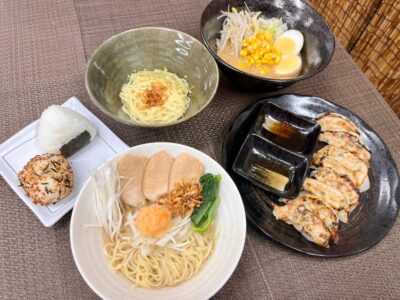
Five Must-See Highlights Walking Tour & Ramen Lunch
Read our review →
Browse the lists this tour appears in