
Reviewed · CYCLING TOURS
Slow Cycling Tour at Uji’s Matcha Green Tea Fields and Heritage
Uji rewards a slower look. This four-and-a-half-hour ride pairs matcha culture with old shrines, a Zen temple, and quiet paths along the Uji River. I like the small group size, capped at six, and the friendly local guidance from Takashi, who helps connect Uji’s tea trade with its religious sites and daily life. I also like the BROMPTON bicycles: stylish, compact, and easy to handle at a relaxed pace. The main consideration is that the tour depends on good weather, and the optional admissions, insurance, food, and drinks add to the advertised price.
You begin at Uji Station at 10 a.m. and return to the same meeting point. The pace is designed for people who want to ride without treating the morning like a fitness test, but you should still be comfortable cycling for several hours, including a longer stretch near Amagase Dam.
In This Review
- Key points to know before you book
- Why Uji works so well by bicycle
- Starting at Uji Station with a BROMPTON
- Chazuna: begin with Uji tea culture
- Uji Shrine and Ujigami Shrine
- Asagiri Bridge and the Uji River
- Koshoji Temple and the Kotosaka slope
- The ride to Amagase Dam
- Returning through Byodo-in Omotesando
- What the $130.46 price really covers
- The guide can make or break the day
- Who should book this Uji cycling tour
- Should you book the Uji Slow Cycling Tour?
- FAQ
- Where does the tour start?
- What time does the tour begin?
- Where does the tour end?
- How long does the experience last?
- How many people can join?
- Is bicycle equipment included?
- Is an English guide provided?
- Are the Chazuna and Byodo-in entrance fees included?
- What happens if the weather is poor?
Key points to know before you book
- Six-person maximum: A small group gives the navigator room to adjust the route and answer questions.
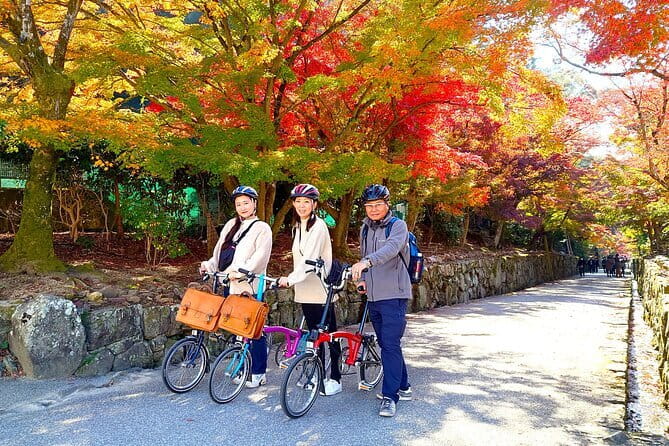
- BROMPTON bicycle included: Bike rental, helmet, bags for wheeled transport, and other riding equipment are provided.
- Tea and temples in one outing: Chazuna introduces Uji’s tea culture, while Uji Shrine, Ujigami Shrine, and Koshoji show another side of the town.
- A scenic river ride: The route reaches Asagiri Bridge and continues toward Amagase Dam, with time for photos and quiet views.
- Flexible food planning: The navigator can suggest restaurants based on your wishes, including options such as vegan and gluten-free food.
- Plan for extra costs: Chazuna, Byodo-in Phoenix Hall, insurance, snacks, and drinks are not included in the $130.46 price.
Why Uji works so well by bicycle
Uji is close enough to Kyoto for an easy day out, yet it has its own identity. It is known across Japan for matcha and other tea products, but the town is not only a place for tea shopping. Shrines, temple paths, river views, and old cultural traditions all sit within the same compact area.
A bicycle helps you connect those pieces. On foot, you can reach the main sights, but the route between them can feel scattered. With a bike, you can cover more ground while keeping the outing calm. The word slow matters here. This is not a race through Uji’s highlights. The idea is to stop often, listen to explanations, take pictures, and enjoy the change from town streets to river paths.
The small maximum of six is important. A large cycling group can turn a quiet route into a procession, especially near temples and bridges. Here, the navigator can make the experience more personal and may be able to adjust the course to your interests. The tour description also says the route can be arranged according to your wishes, though the exact changes will depend on time and conditions.
More Bike Tours in Kyoto
- Hidden Kyoto E-Biking tour
★ 5.0 · 1,843 reviews - Bike Tour Exploring North Kyoto plus Lunch
★ 5.0 · 1,087 reviews - Arashiyama Bamboo Forest & Hidden Gems Bike Tour (Early Bird)
★ 5.0 · 613 reviews
Starting at Uji Station with a BROMPTON
The meeting point is at Chatsubo Postbox Japan, near Uji Station, at 10 a.m. Since the tour ends back at the same place, you do not need to arrange a separate pickup at another part of town. That is useful if you are visiting Uji as a day trip from Kyoto or staying nearby.
Your bicycle rental and riding equipment are included. That covers the BROMPTON bike, helmet, and bags for wheeled transport. You do not need to bring cycling equipment, which makes this easier to add to a Japan itinerary without special planning.
BROMPTON bicycles are part of the experience’s appeal. They are compact and distinctive, and they make for good photographs. More important, the tour is built around an easy pace rather than speed. If you are not confident about your fitness, this format should feel more approachable than a long-distance cycling excursion. Still, four and a half hours is a substantial half-day. You should be ready to pedal between stops and spend time outdoors.
The tour has received a five-star rating from 25 submitted ratings, with 100 percent recommending it. That is a small sample, but the praise is consistent in the useful ways: good guiding, a pleasant pace, a mix of museums and historic sites, scenic cycling, and enjoyable food stops.
Chazuna: begin with Uji tea culture
The first planned stop is Tea and Uji Community Center Chazuna, also called the Tea and Uji Town Exchange Center. You have about 45 minutes here, and the entrance fee is not included. Admission is listed at 600 yen.
This is a smart opening stop because it gives context to everything that follows. Uji’s tea reputation is easy to reduce to green tea sweets and matcha drinks. Chazuna offers a way to understand the wider tea culture and the town’s place in it before you start looking at specialty shops and tea products.
If you are a serious matcha fan, this part may be one of the main reasons to book. One particularly enthusiastic account described the tea museum as a highlight and appreciated learning why Uji matters in the world of tea. Even if you are less interested in tea, the visit provides a useful cultural frame for the rest of the day.
The tradeoff is simple: the admission costs extra, and museum time means less time for unplanned wandering. I would pay the 600 yen if you want more than a quick matcha tasting or souvenir stop. If you already have a strong understanding of Uji tea culture, you may prefer to ask whether the route can give you more outdoor time.
Uji Shrine and Ujigami Shrine
Next come two important shrines, each with about 30 minutes. Entry is free, so there is no added admission here.
Uji Shrine is said to have a history of more than 1,700 years and is associated with academic and childbirth success. That gives the visit a personal quality beyond architecture. You may notice people approaching the shrine with very specific hopes, rather than simply treating it as a photo stop.
Nearby Ujigami Shrine is paired with Uji Shrine. Its grounds include Kirihara Water, described as one of the seven famous waters of Uji. This detail helps explain why water matters so much in a tea-producing town. Tea depends on more than leaves and technique, and Uji’s springs and rivers are part of the area’s cultural character.
The two shrines work well together because you can compare them without spending much time in transit. The guide’s explanations are especially valuable here. A shrine can look quiet and simple if you do not know what you are seeing. With context, the visit becomes a lesson in local belief, water, place, and tradition.
More History Tours in Kyoto
- Kyoto Gion: 2-Hour Geisha Culture & History Walking Tour
★ 5.0 · 1,186 reviews - Kyoto Gion Historical Walking Tour
★ 5.0 · 188 reviews - Historical Kyoto E-Bike Tour
★ 5.0 · 181 reviews - Kyoto: Nijo Castle World Heritage Guided Tour with Admission
★ 5.0 · 128 reviews
Asagiri Bridge and the Uji River
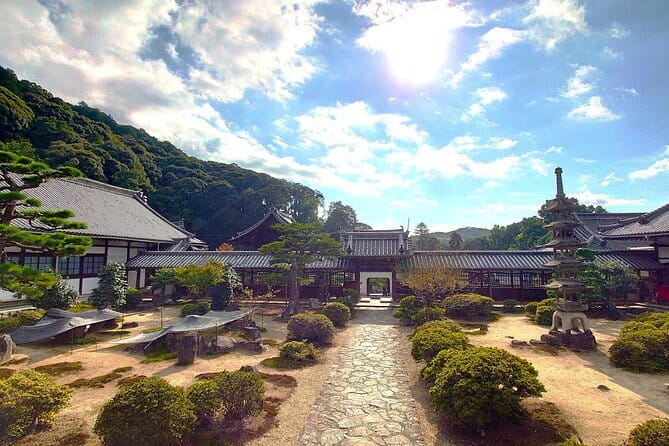
Asagiri Bridge gets a shorter stop of about 15 minutes. That may sound brief, but it is enough for photographs and a pause above the Uji River.
This is one of those stops where the bicycle makes sense. You can arrive, take in the view, and continue without dealing with a formal attraction or admission line. The bridge also provides a change of rhythm after the shrines.
The river is more than scenery on this tour. It becomes the route’s natural thread, linking central Uji with quieter areas. The ride beside it is one of the most praised parts of the experience. One summer outing was described as pleasant even in hot weather because shaded paths along the river made the cycling more comfortable. Since conditions vary, do not count on shade or cool temperatures every day, but the route does include calmer riverside sections.
Koshoji Temple and the Kotosaka slope
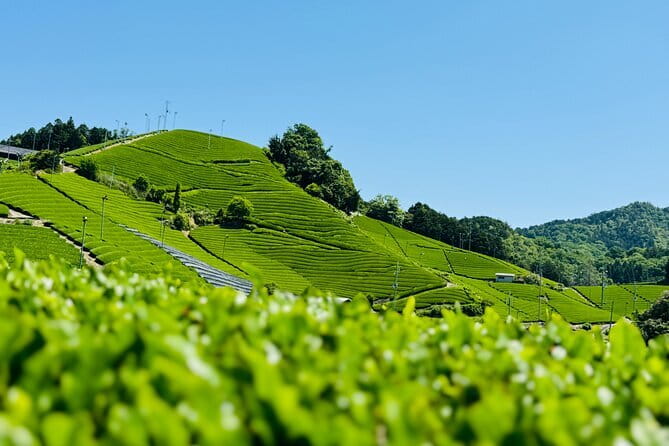
Koshoji is a Zen temple with about 800 years of history. You have roughly 30 minutes to see it, and entry is listed as free.
The approach is a major part of the stop. Kotosaka, the slope leading from the stone gate to the temple grounds, is made with stone walls and is described as a beautiful path. It gives you a gradual transition from the road into the temple setting.
This is not a visit built around rushing from one famous building to the next. The path itself deserves attention. Look at the way the stonework shapes the approach and notice how the atmosphere changes as you move away from the town.
Thirty minutes is enough for a taste, not a full temple study. If you like spending an hour at one temple, you may find the schedule a little quick. On the other hand, the shorter stop lets you see more of Uji without turning the day into a long temple circuit.
The ride to Amagase Dam
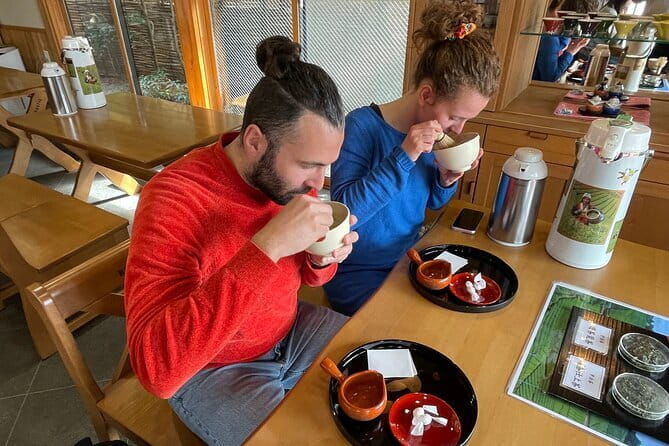
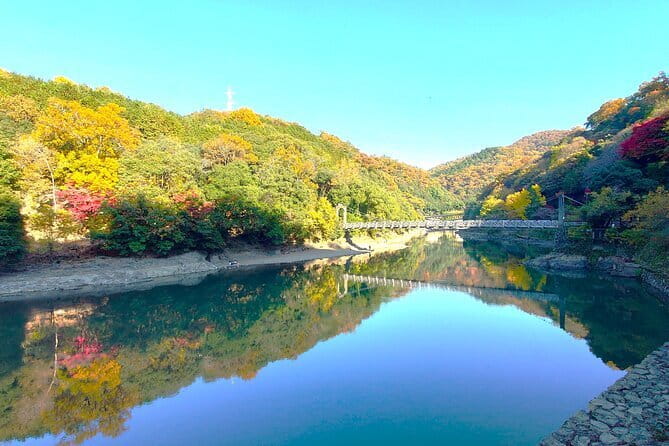
The longest part of the outing is the one-hour visit to Amagase Dam. A nature trail follows the Uji River toward the wooden Amagase Bridge, where the valley becomes quiet and removed from Kyoto’s city noise.
This is likely the tour’s best argument for cycling rather than taking a standard sightseeing walk. The route reaches a less central part of Uji, where the attraction is the ride itself as much as the destination. You get trees, water, a valley, and a slower view of the area.
The route is not described as a demanding cycling challenge, and the experience is specifically presented as suitable for people who are not confident about their fitness. Even so, you should not mistake easy pace for no effort. The full activity lasts around four and a half hours, and the Amagase section is the longest continuous portion. Ask about the day’s conditions if you have concerns about distance or heat.
This stop also offers a welcome break from Uji’s cultural sights. Tea museums and shrines tell you what the town means. The river path shows you where that town sits. The contrast makes the day feel less like a checklist.
Returning through Byodo-in Omotesando
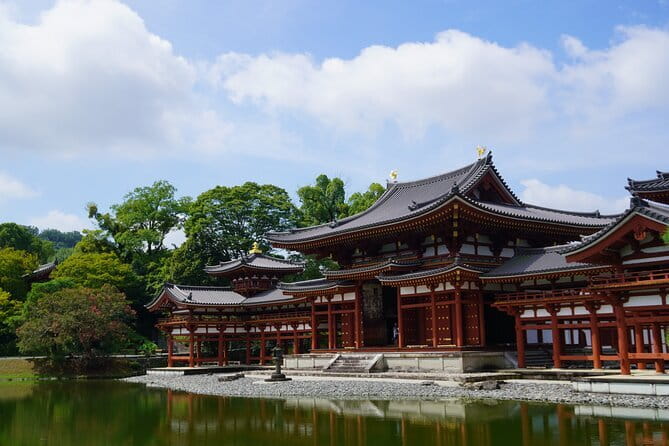
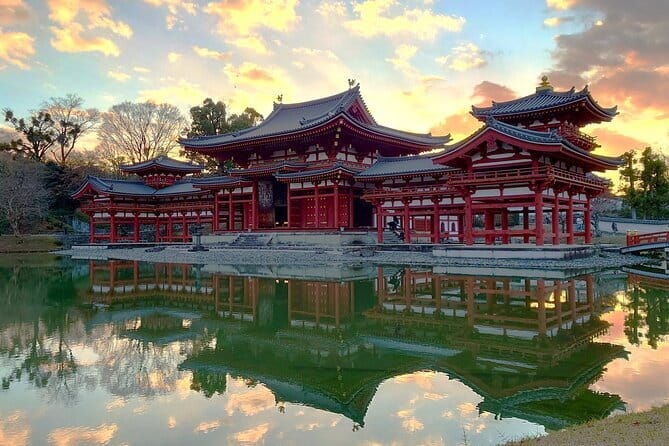
The final hour brings you back toward central Uji and Byodo-in Omotesando, the street leading toward Byodo-in Temple. You can choose to visit Byodo-in Phoenix Hall, a UNESCO World Heritage Site, or stop at one of Uji’s tea shops. The Phoenix Hall admission is not included and is listed at 700 yen.
This flexible ending is useful because people have different priorities. If you have never seen Byodo-in, paying the additional entrance fee may be worthwhile. The temple is one of Uji’s defining sights, and the tour places it at the end, after you have gained some understanding of the town.
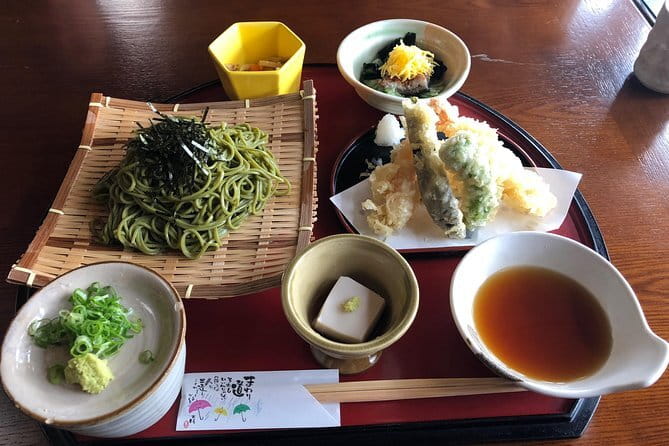
If you have already visited Byodo-in, or if tea is your main interest, a shop stop may suit you better. You can finish with a matcha drink or browse local tea products. Several accounts praised ending the ride with matcha, and one food stop included vegan and gluten-free choices. The navigator can suggest restaurants based on what you want, but meals and refreshments are your responsibility.
Do not assume the Phoenix Hall visit is automatically included simply because it appears in the route. Check the day’s plan and budget the extra 700 yen if you want to enter.
What the $130.46 price really covers
At $130.46 per person, this is not the cheapest way to see Uji. You are paying for more than transport between sights, though. The price includes the bicycle, helmet, wheeled-transport bags, other cycling equipment, an English guide, and an exclusive navigator. In a group of no more than six, that personal guidance has real value.
I would compare the price with what you would spend renting a bicycle, finding the route yourself, researching the shrines, and working out how to reach the river and dam. A self-guided day can cost less, especially if you only want Byodo-in and central Uji. It will not provide the same local navigation or the same easy link between tea culture, shrines, temple paths, and the river.
The price is strongest for couples and small groups who want a guided experience without a busload of people. Group discounts are available, but the specific discount is not stated, so check the final booking price rather than assuming a set reduction.
Add-ons matter. Insurance is optional at 500 yen. Chazuna costs 600 yen, and Byodo-in Phoenix Hall costs 700 yen. Food, snacks, and drinks are separate. If you choose every listed option, the day costs 2,300 yen more per person before lunch or other refreshments.
The guide can make or break the day
The guide named most often in the supplied feedback is Takashi. The praise focuses on his friendliness, clear explanations, and ability to make the day fun as well as informative. That combination matters on a tour with several short stops. You need someone who can explain enough without turning every shrine into a lecture.
Takashi has also handled private outings for couples, and the small-group format gives the navigator room to respond to questions and preferences. One account praised the way he explained the history of the places visited and selected scenic spots. Another appreciated help finding vegan and gluten-free food.
The experience is offered with an English guide, but the exact guide may vary. Confirmation arrives within 48 hours of booking, subject to availability. Since the tour is capped at six, early booking is sensible, especially because it is booked on average 49 days ahead.
Who should book this Uji cycling tour
I would choose this experience if you want to see more than the central temple area and prefer a calm, guided day. It suits:
- Matcha fans who want cultural background, not only tea shopping
- Couples and small groups seeking a personal outing
- Visitors who like mixing history, nature, food, and light exercise
- People who are comfortable cycling but do not want a fast or strenuous ride
- Anyone who has already seen Kyoto’s major sights and wants a different side of the region
I would hesitate if you dislike bicycles, need a fully indoor activity, or want to spend most of the day at one temple. The tour also may not suit you if four and a half hours outdoors feels too long. The route can be adjusted according to your wishes, but that does not guarantee a shorter ride or a particular set of stops.
You also need to accept weather uncertainty. Poor weather can cancel the experience, in which case you are offered another date or a full refund. Normal cancellation is free up to 24 hours before the start time, but cancellations or changes made inside that window are not refunded or accepted.
Should you book the Uji Slow Cycling Tour?
Book it if you want Uji to feel like a real town rather than a single famous temple. The best parts are the small group, the relaxed BROMPTON ride, the river route to Amagase Dam, and the chance to hear how tea culture fits with Uji’s shrines and old temple paths.
I would especially recommend it for a first visit to Uji when you have half a day and want help using your time well. Budget for the optional fees and food, and ask about the route if you have limits on cycling distance. If you do that, this is a thoughtful way to see Uji at ground level, with enough structure to make the day easy and enough flexibility to keep it personal.
FAQ
Where does the tour start?
It starts at Chatsubo Postbox Japan near Uji Station, at 611-0021 Kyoto, Uji, Umonji 1716.
What time does the tour begin?
The scheduled start time is 10 a.m.
Where does the tour end?
The tour ends back at the meeting point near Uji Station.
How long does the experience last?
It lasts approximately four hours and 30 minutes.
How many people can join?
The activity has a maximum of six travelers.
Is bicycle equipment included?
Yes. The price includes the BROMPTON bicycle, bicycle rental, helmet, bags for wheeled transport, and other bicycle equipment.
Is an English guide provided?
Yes. An English guide and an exclusive navigator are included.
Are the Chazuna and Byodo-in entrance fees included?
No. Chazuna admission is listed as an optional 600 yen, and Byodo-in Phoenix Hall admission is listed as an optional 700 yen.
What happens if the weather is poor?
The experience may be canceled because it requires good weather. You will then be offered a different date or a full refund.
Just added around Kyoto
- Tea Ceremony in 150 Years Old Townhouse with Tables and Chairs★ 5.0 · 22 reviews
- Kyoto to Arashiyama Day Trip – Private & Personalized★ 4.3 · 22 reviews
- Private Tour to Monkey Park and Arashiyama Highlights★ 5.0 · 22 reviews
- Kyoto Ramen Tour★ 5.0 · 22 reviews
- Kyoto Japanese Tea Ceremony Experience in Ankoan★ 5.0 · 22 reviews
- Kyoto: Arashiyama Walking Tour with Local Guide★ 4.9 · 22 reviews
- Private & Custom KYOTO Walking Tour – your Travel Companion★ 4.0 · 23 reviews
- Kyoto Railway Museum Admission Ticket★ 4.3 · 23 reviews
Cycling Tours, compared.
3h Tokyo E-Bike Tour: Hidden Gems, and Local Life with guide
Read our review →
Arashiyama Bamboo Forest & Hidden Gems Bike Tour (Early Bird)
Read our review →
Hiroshima in a Nutshell: Morning Bike Adventure
Read our review →Browse the lists this tour appears in