
Reviewed · TEA CEREMONY EXPERIENCES
Kyoto Japanese Tea Ceremony Experience in Ankoan
Slow down with a bowl of matcha. This Kyoto tea ceremony is interesting because it moves beyond watching a formal ritual: you learn the manners, see the tea prepared, make your own matcha, and offer it to someone else. I like the warm, conversational host and the chance to take part rather than sit quietly as an observer. I also like the small maximum group of eight, which should make instruction easier. The main consideration is location and timing: the session is advertised at about one hour, while the fuller description and several accounts suggest it may run 90 minutes to two hours.
The ceremony takes place at Ankoan in Kyoto’s Kita Ward, near public transportation and close to temples that you can visit before or after. The price is $32.84 per person, a fair amount for a guided cultural activity that includes tea, wagashi, instruction, and hands-on practice. Still, the studio is not recommended for people with knee pain, and getting there may take some planning from central Kyoto.
In This Review
- Key Points at a Glance
- What the Ankoan Tea Ceremony Is Really About
- Arriving in Kyoto’s Kita Ward
- Welcome Tea and Easy Conversation
- Watching the Tea Master’s Demonstration
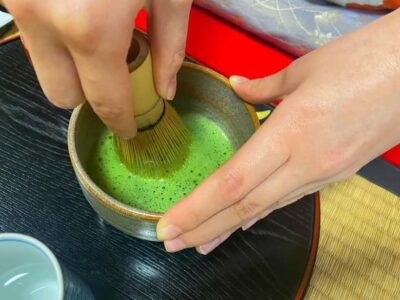
- Making Matcha Yourself
- Wagashi, Matcha, and the Meaning of Hospitality
- How Long Does It Take?
- Group Size and Language
- Comfort, Clothing, and Photos
- Is $32.84 Good Value?
- Who Should Book This Experience?
- Practical Booking Advice
- Should You Book Ankoan?
- FAQ
- Where does the tea ceremony take place?
- How much does the experience cost?
- How long does the tea ceremony last?
- What is included?
- Is transportation included?
- How many people can join?
- Is the experience suitable for people with knee pain?
- Can I cancel for a full refund?
Key Points at a Glance
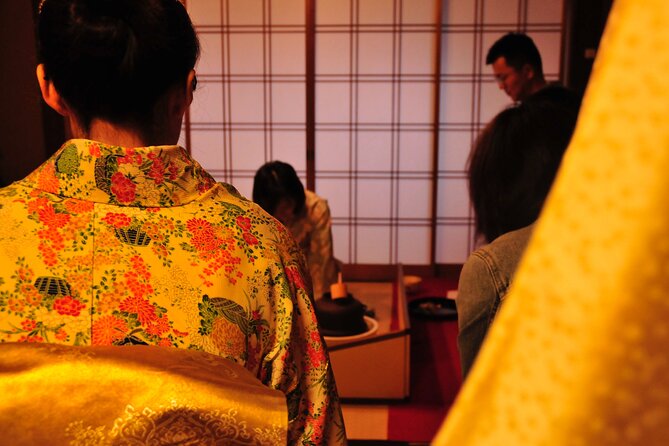
- You make your own matcha: The hands-on portion lets you copy the tea master’s movements and prepare tea under guidance.
- A welcome tea starts the visit: You can settle in with a cup of tea and informal conversation before the formal portion begins.
- The host teaches more than procedure: Explanations cover tea manners, symbols, phrases, Japanese customs, and everyday cultural questions.
- You offer tea to another person: This gives the ritual a social purpose and helps you understand the courtesy at its heart.
- Groups are capped at eight: The small format should leave room for questions and individual help.
- Indoor photography is allowed: You may take pictures inside during the session.
What the Ankoan Tea Ceremony Is Really About
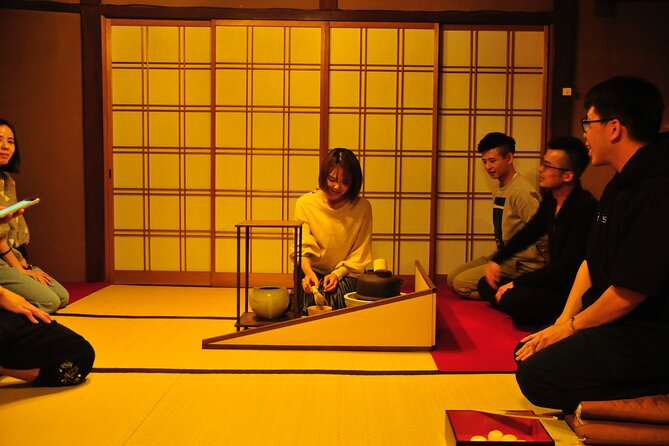
A Japanese tea ceremony is not simply a lesson in whisking green tea. The movements are deliberate, but the point is also attention, hospitality, respect, and the shared moment between host and guest.
At Ankoan, you get a friendly introduction before the formal demonstration. That matters because the ritual can feel mysterious if you arrive with no idea what to do. The welcome tea gives you time to relax after the journey and ask questions in a less formal setting.
The host also uses the ceremony as a doorway into broader cultural discussion. You may talk about how Japanese people live, how customs developed, and why certain gestures matter. That conversational element is one of the strongest reasons to choose this activity over a purely visual tea performance.
The tone appears approachable rather than severe. You are expected to pay attention, but you are not left to guess your way through every movement. The instructor demonstrates, explains, and then lets you try.
More Tea Ceremonies in Kyoto
- Kyoto: Tea Ceremony in a Traditional Tea House in Kiyomizu
★ 4.9 · 3,519 reviews - Kyoto: Tea Ceremony Ju-An at Jotokuji Temple
★ 4.9 · 3,207 reviews - Kyoto: 45-Minute Tea Ceremony Lesson Experience
★ 4.3 · 2,378 reviews
Arriving in Kyoto’s Kita Ward
The meeting point is Tea ceremony Japan at Ankoan, 63 Murasakino Monzenchō, Kita Ward, Kyoto, postal code 603-8216. The studio is near public transportation, though the provided details do not specify a particular station or route.
I would allow extra time to find the address, especially if you are coming from central Kyoto. One useful plan is to pair the ceremony with nearby temple visits. One person who attended the session visited temples around the corner beforehand, making the tea activity part of a broader Kita Ward outing rather than a single isolated stop.
The setting is described as beautiful, with an atmosphere that helps create a calm mood. Since this is a studio experience, you should not expect a large sightseeing site or a tour through several Kyoto districts. Its appeal is the quiet change of pace and the chance to meet your host in a dedicated tea room.
The meeting point is also the end point. No private transportation is included, so you arrange your own way there and back. A mobile ticket is provided, which is useful when you are moving around Kyoto with a phone rather than printed paperwork.
Welcome Tea and Easy Conversation
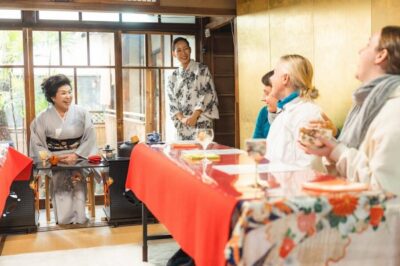
The session begins with a welcome cup of tea prepared by the host, Yuka. This opening is more than a courtesy. It gives you a chance to sit down, recover from the trip across Kyoto, and talk about tea ceremony customs before the formal lesson starts.
The informal conversation is a major part of the appeal. If you know very little about matcha, this is the time to ask basic questions without feeling out of place. The host is praised for her friendly manner and strong English, which makes the activity suitable for people who want cultural context without relying on a translator.
You can also ask about topics beyond tea. The discussion may turn toward Japanese customs, daily life, and the meaning behind the ritual. That makes the session feel less like memorizing rules and more like understanding why the rules exist.
For some people, this relaxed introduction may be the best part of the hour. It eases you into a formal setting while keeping the mood human and welcoming.
Watching the Tea Master’s Demonstration
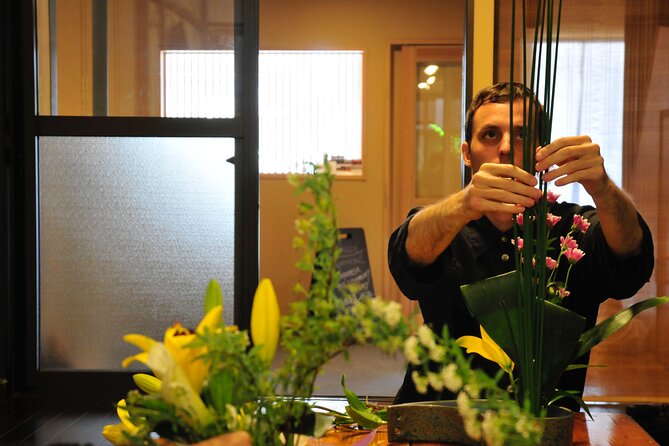
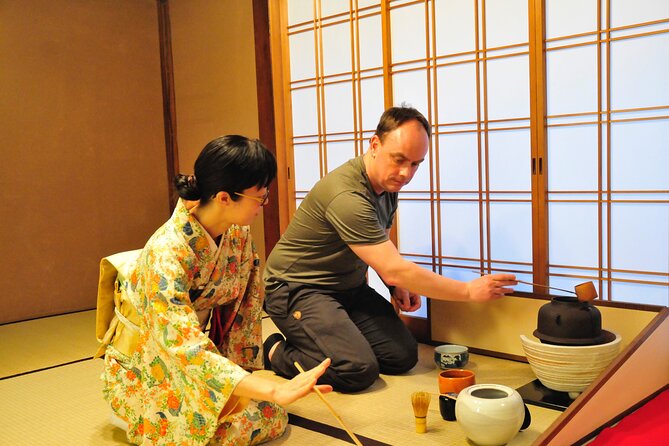
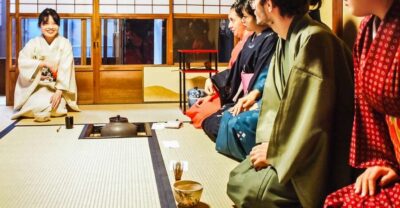
After the welcome tea, you move to another matcha tea room. Here, the instructor demonstrates how to prepare and serve matcha.
Pay attention to the small actions. The way the tea is offered, the way the bowl is handled, and the phrases used during the process all carry meaning. The ceremony is built from simple movements, but each one asks you to slow down and show care to the person sharing the tea.
The instructor explains the procedure as she goes, including the manners and key ideas behind the ceremony. This makes the demonstration useful even if you do not feel ready to participate yet.
The session also introduces tea from Japan and other areas, according to the description. The emphasis remains on Japanese matcha, but the broader explanation helps place the drink in context.
I like this watch-first approach. You see the complete process before being asked to reproduce it. That is especially helpful for families, first-time participants, and anyone worried about making a mistake in front of a group.
A completely different kind of day out in Kyoto:
- PERFECT KYOTO 1-Day Bus Tour
★ 5.0 · 13,518 reviews - Kyoto: Fushimi Inari, Kinkakuji, Bamboo Grove 1 Day Bus Tour
★ 4.8 · 4,316 reviews - Kyoto Geisha Walking Tour: Gion District & Hidden Gems
★ 4.7 · 3,273 reviews - Kyoto: Gion Magical Night Walking Tour with Geisha Trivia
★ 4.9 · 2,393 reviews
Making Matcha Yourself
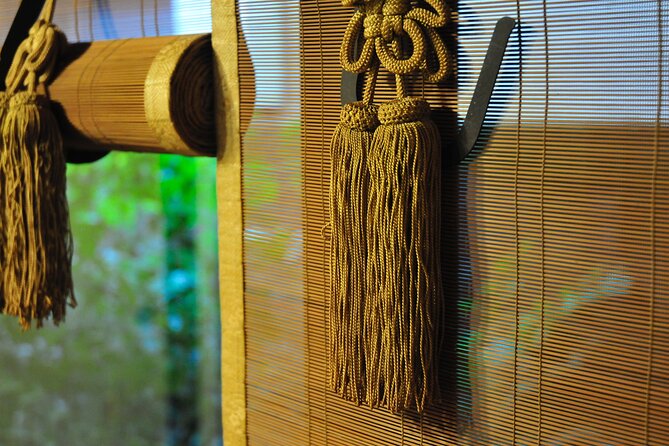
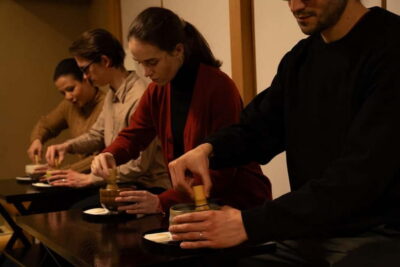
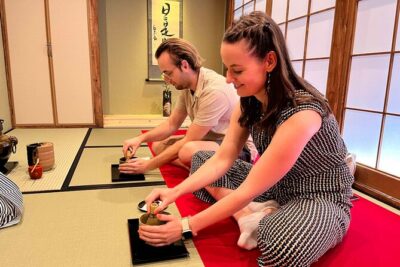
The hands-on portion is where this activity earns its price. You prepare matcha yourself, following the instructor’s example while she stays nearby to explain and correct your technique.
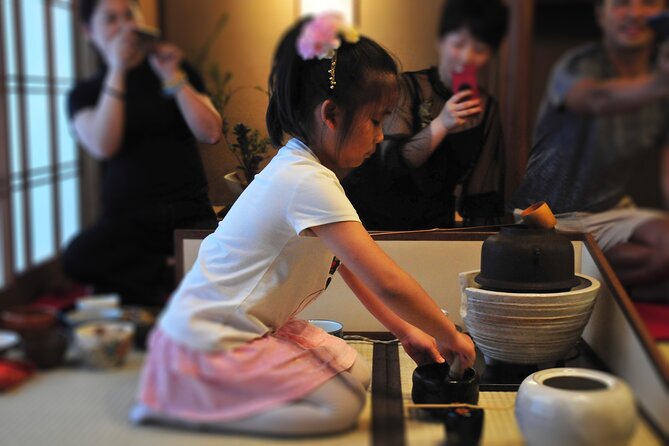
You are not simply handed a whisk and left alone. The teacher guides you step by step, making the process accessible even if you have never handled matcha before. This approach was especially appreciated by families, including one with two young children and another with an eight-year-old who was allowed to make tea.
The activity is interactive without losing the calm character of the ceremony. You get something to do with your hands, but the focus remains on patience and care rather than speed.
Once your tea is ready, you taste it. More importantly, you offer it to another person, following the spirit of the tradition. That exchange helps you understand that the ceremony is not only about making a good drink. It is about preparing something thoughtfully for someone else.
The description also indicates that your tea may be tasted by other participants. This creates a shared moment within the group and gives the act of preparation a clear purpose.
Wagashi, Matcha, and the Meaning of Hospitality
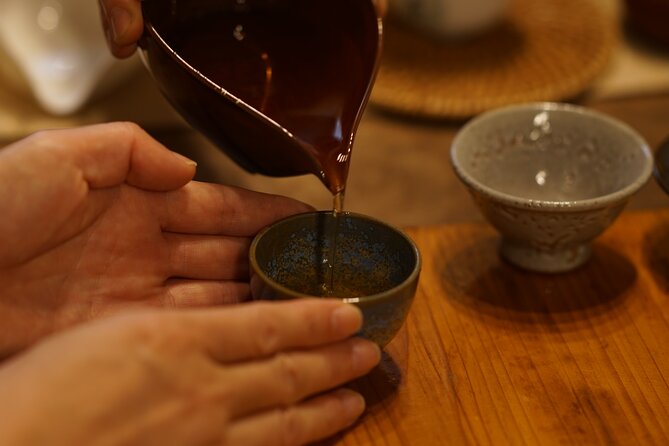
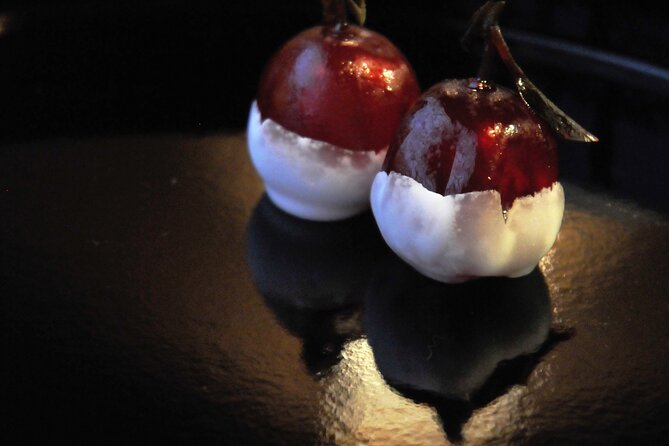
The matcha is served with wagashi, a traditional Japanese sweet. The sweet and slightly bitter combination is an important part of the tea setting, giving you a better sense of how the food supports the tea rather than competing with it.
The experience includes coffee and/or tea, though the description centers on matcha and the welcome tea. Wagashi is specifically mentioned as part of the matcha tea room portion.
The ceremony’s social side is worth noticing. You are not only learning how to whisk powder into water. You are learning how hospitality is expressed through preparation, presentation, and exchange.
The host also explains symbols and phrases connected with the ceremony. These details give the ritual more depth. Without explanation, a bow or bowl movement can seem like decoration. With context, you begin to see it as a form of communication.
How Long Does It Take?
The headline duration is approximately one hour. The detailed description calls the service 90 minutes, and one account says the activity lasted around two hours.
You should treat the schedule as flexible rather than counting on a strict 60-minute visit. The difference may depend on the group, the pace of questions, and how much time each person receives to make tea.
That flexibility can be a benefit if you want a relaxed lesson. It can be a problem if you have a tightly packed temple schedule or a train to catch. I would avoid booking this directly before an important timed reservation.
The activity is most enjoyable when you leave room for conversation. Rushing through the demonstration and hands-on portion would work against the calm purpose of the ceremony.
Group Size and Language
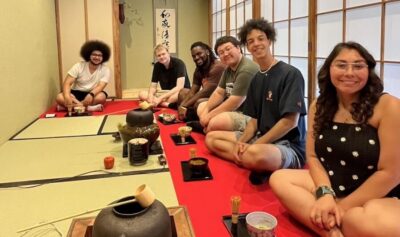
The maximum group size is eight people. That is small enough for the host to watch each person’s technique and answer questions without turning the activity into a crowded presentation.
The host’s English is described as very good, and the explanations are available in English. The provider information also indicates that Chinese and English are supported.
This language access is valuable because tea ceremony manners can be hard to understand through gestures alone. You will get more from the experience if you understand not just what to do, but why you are doing it.
The friendly teaching style also helps families. Children can take part rather than being expected to sit still through a long formal performance. Still, the ceremony involves manners and careful movements, so parents should be ready to guide younger children.
Comfort, Clothing, and Photos
The activity is not recommended for people with knee pain. Traditional tea rooms may require kneeling or sitting in a position that puts pressure on the knees, and the provided information gives no alternative seating arrangement.
If you have mobility concerns, ask the provider before booking. Do not assume that a quiet studio setting means the physical demands will be minor.
Indoor photography is allowed, which is a welcome feature for anyone who wants a record of the bowl, room, or tea-making process. Be considerate during the formal demonstration and follow the host’s direction about when to take pictures.
The atmosphere is described as serene and beautiful, so photos may capture more than a souvenir. They can also help you remember the sequence of the ceremony and the tools used.
Is $32.84 Good Value?
At $32.84 per person, this is reasonably priced for a small-group cultural activity in Kyoto. The cost covers instruction, tea, wagashi, and the chance to prepare matcha yourself.
You are paying for access to a host who explains the cultural meaning behind the ceremony, not merely for a bowl of tea. The value is strongest if you ask questions, take part fully, and use the session to understand Japanese hospitality.
The price may feel less attractive if you only want to watch a short performance. In that case, a hands-on class is more than you need. But if you have been curious about tea ceremony and want to learn the basic procedure, the personal instruction makes the fee easier to justify.
The small group also matters. An eight-person limit gives the host more time to help each person, and the activity is designed around participation rather than a large audience.
Who Should Book This Experience?
I would recommend Ankoan to first-time visitors who want a gentle introduction to Japanese culture. You do not need prior knowledge of matcha or tea ceremony, and the instructor’s step-by-step teaching keeps the process approachable.
It is also a good choice for couples. The host’s conversation style gives the session a social feel, and you can share the tea with another person in the group.
Families should consider it too. Children have been able to participate, including an eight-year-old and two small children. The experience offers a hands-on activity that may hold their attention better than a long, silent demonstration.
You may want to skip it if your knees make floor-based sitting uncomfortable, if you dislike structured cultural activities, or if your Kyoto schedule has no spare time. The location also requires a trip to Kita Ward, so it is best combined with nearby sights.
Practical Booking Advice
The experience is booked an average of 12 days in advance, so I would reserve ahead if your Kyoto dates are fixed. Confirmation arrives within 48 hours, subject to availability.
Free cancellation is available up to 24 hours before the start time for a full refund. Changes or cancellations made less than 24 hours before the start time are not accepted for a refund.
The activity requires good weather. If poor weather causes cancellation, you are offered another date or a full refund. Since the ceremony takes place indoors, this condition may relate to access or operating arrangements rather than the tea room itself.
Keep your schedule loose, confirm the exact meeting details, and allow time for transportation. The session ends where it begins, so you will need to plan your next stop from Ankoan.
Should You Book Ankoan?
Yes, if you want to do more than take a picture of a tea ceremony. Ankoan gives you a welcome tea, a clear demonstration, cultural explanation, wagashi, and the chance to prepare and offer your own matcha.
The strongest reason to book is the host’s teaching style. Yuka is described as warm, fun, gracious, and easy to understand in English. That personal connection turns a formal ritual into something you can appreciate and remember.
I would choose this activity for a relaxed morning or afternoon near the temples of Kita Ward. I would not choose it for a rushed day, or if kneeling is difficult. For most first-time visitors who want a small, friendly, hands-on cultural lesson, $32.84 is a sensible Kyoto expense.
FAQ
Where does the tea ceremony take place?
It takes place at Tea ceremony Japan, Ankoan, 63 Murasakino Monzenchō, Kita Ward, Kyoto, 603-8216.
How much does the experience cost?
The listed price is $32.84 per person.
How long does the tea ceremony last?
The approximate duration is listed as one hour. The detailed description gives 90 minutes, and the session may last around two hours depending on the pace and discussion.
What is included?
Tea is included, along with the matcha activity and wagashi described during the session. The inclusions list also states coffee and/or tea.
Is transportation included?
No. Private transportation is not included. You make your own way to the meeting point and return from there after the activity.
How many people can join?
The activity has a maximum of eight participants.
Is the experience suitable for people with knee pain?
It is not recommended for people with knee pain.
Can I cancel for a full refund?
Yes. You can cancel at least 24 hours before the start time for a full refund. If poor weather causes cancellation, you are offered another date or a full refund.
Just added around Kyoto
- Tea Ceremony in 150 Years Old Townhouse with Tables and Chairs★ 5.0 · 22 reviews
- Kyoto to Arashiyama Day Trip – Private & Personalized★ 4.3 · 22 reviews
- Kyoto Ramen Tour★ 5.0 · 22 reviews
- Private Tour to Monkey Park and Arashiyama Highlights★ 5.0 · 22 reviews
- Kyoto: Arashiyama Walking Tour with Local Guide★ 4.9 · 22 reviews
- Private & Custom KYOTO Walking Tour – your Travel Companion★ 4.0 · 23 reviews
- Kyoto Railway Museum Admission Ticket★ 4.3 · 23 reviews
- Kyoto Matcha Green Tea Tour★ 4.5 · 23 reviews
Tea Ceremony Experiences, compared.
Tea Ceremony in a Traditional Tea House in Kiyomizu
Read our review →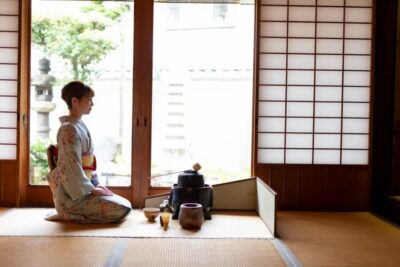
Browse the lists this tour appears in