
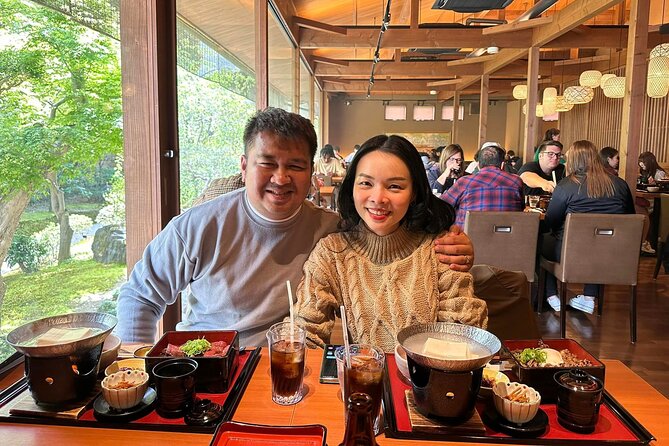
Reviewed · WALKING TOURS
Private & Custom KYOTO Walking Tour – your Travel Companion
Kyoto rewards travelers who plan smart. This private eight-hour tour is interesting because you can shape the day around temples, shrines, food, shopping, or traditional neighborhoods instead of following a fixed route. I like the one-guide-for-your-group format, and I like having help with directions, restaurant calls, photos, and ticket arrangements. The main concern is simple: the long list of possible sights is far too large for one relaxed day.
The advertised price is $265.82 per group of up to five, not per person. That can be fair for a family or small group, especially if you use the guide well. But entrance fees, meals, and transportation come separately, and the quality of the day depends heavily on which guide you receive. Some guides, including Jinshi, Dalivanh, Femín, Karl, Rio, and others, earned warm praise for patience, flexibility, and help with public transportation. Other accounts describe guides with limited local knowledge or weak preparation.
In This Review
- Key Points Before You Book
- What This Kyoto Day Is Really Offering
- Kinkakuji and Kiyomizudera: Two Big Temple Choices
- Yasaka Shrine, Gion, and the Old Streets
- Fushimi Inari and Its Endless Vermilion Gates
- Arashiyama: Bamboo, Tenryuji, and a Western Kyoto Day
- Nishiki Market and Kyoto’s Food Culture
- The Imperial Palace and Nijo Castle
- Ginkakuji, Sanjusangendo, and Eikando
- The Guide Can Make or Break the Day
- Price, Group Size, and Real Value
- Timing, Tickets, and Cancellation
- Should You Book This Private Kyoto Tour?
- FAQ
- How long is the private Kyoto tour?
- How many people can join the private tour?
- Is pickup available?
- Does the tour include private transportation?
- Are entrance fees included?
- Are meals included?
- Can I choose the places I visit?
- Is the tour refundable if I cancel?
Key Points Before You Book
- A custom route matters in Kyoto: Choose a focused eastern, western, northern, or central Kyoto day rather than trying to collect every famous sight.
- The group price can work well: At $265.82 for up to five people, the cost becomes more reasonable when shared by a family or small party.
- Your guide handles the practical work: Help may include navigation, ticket arrangements, restaurant communication, photos, and itinerary decisions.
- Public transportation is part of the likely experience: Private transportation is not included, and one praised guide helped a group use Kyoto’s buses and trains.
- Admission fees are extra: Kinkakuji, Kiyomizudera, Nijo Castle, Ginkakuji, Sanjusangendo, Eikando, and Tenryuji require separate payment where applicable.
- Guide quality is the biggest variable: Confirm the guide’s experience, language ability, and planned route before the day begins.
What This Kyoto Day Is Really Offering
This is not a standard walking tour with a locked route and a fixed script. It is better understood as hiring a local companion for roughly eight hours, then deciding how to spend that time together.
That flexibility is useful in Kyoto, where famous sights are scattered across the city. Kinkakuji sits in the northwest. Fushimi Inari is in the southeast. Arashiyama is farther west. Kiyomizudera, Gion, Nishiki Market, and Sanjusangendo occupy different parts of the central and eastern areas.
A guide can help you avoid wasting the morning on a confusing bus connection or a badly timed crossing of town. You can also ask for a day that matches your pace. Families may want fewer temples and more food stops. First-time visitors may prefer two major temple areas and one traditional district. A repeat visitor may want Eikando, the Imperial Palace, or a less hurried look at Gion.
The words walking tour should not make you expect eight straight hours on foot. The service does not include a private vehicle. You may use public transportation or arrange your own taxis, and transportation costs are not included. One especially positive account praised Dalivanh for meeting the group at its Airbnb and helping with buses and trains. That is the kind of practical support that can make this format worthwhile.
More Walking Tours in Kyoto
- Kyoto Geisha Walking Tour: Gion District & Hidden Gems
★ 4.7 · 3,273 reviews - Kyoto: Gion Magical Night Walking Tour with Geisha Trivia
★ 4.9 · 2,393 reviews - Kyoto: Gion Geisha District Walking Tour – Stories of Geisha
★ 4.7 · 2,187 reviews
Kinkakuji and Kiyomizudera: Two Big Temple Choices
Kinkakuji, the Golden Pavilion, is one of Kyoto’s instantly recognizable sights. The gold-covered structure reflects in the pond, and the surrounding garden gives you a clear sense of why the site is so popular. The building began as the retirement villa of shogun Ashikaga Yoshimitsu before becoming a Zen temple.
The scheduled visit is only 30 minutes, with admission extra. That is enough for the main view and a quick walk through the grounds, but not a leisurely temple visit. If Kinkakuji is a priority, tell your guide you want time for photographs and the garden rather than treating it as a quick checkbox.
Kiyomizudera offers a different setting. Its famous wooden stage projects from the main hall above the hillside, supported by traditional construction. The temple grounds include broad views and several religious features, so 45 minutes gives you a useful first look but may feel short at busy times.
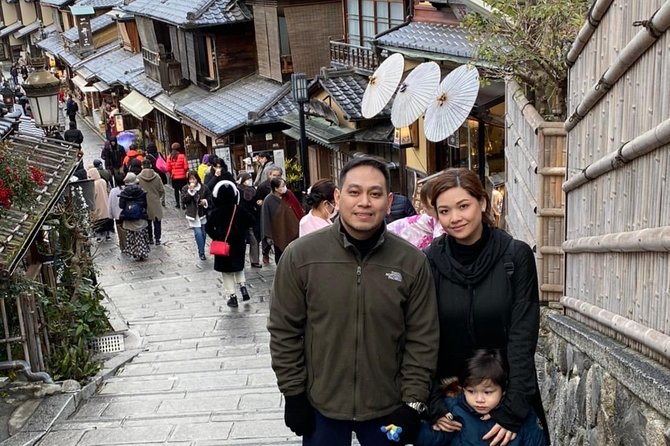
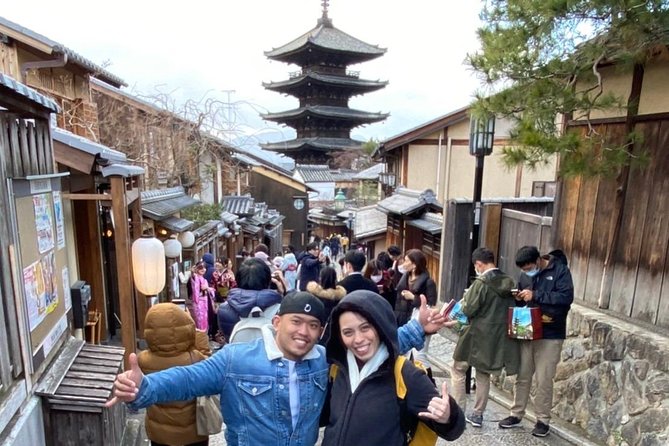
The approach through the preserved Sannenzaka and Ninenzaka streets is part of the experience. These sloping lanes are lined with traditional-looking buildings, shops, sweets, souvenirs, and small food stalls. Your guide can help you understand what is worth stopping for, though purchases and food are your responsibility.
A practical point: Kinkakuji and Kiyomizudera are on opposite sides of Kyoto. Visiting both in one day is possible with careful planning, but adding Arashiyama and Fushimi Inari can turn the day into a race.
Yasaka Shrine, Gion, and the Old Streets
Yasaka Shrine sits at the eastern end of Shijo Avenue and connects naturally with Gion. The shrine is known for the Gion Matsuri, Kyoto’s major festival held each July. Even outside festival season, the grounds give you a useful introduction to Shinto worship in a central location.
The suggested stop is 30 minutes, and admission is listed as not included. The shrine is a sensible pairing with Gion and the Ninenzaka area because you reduce backtracking.
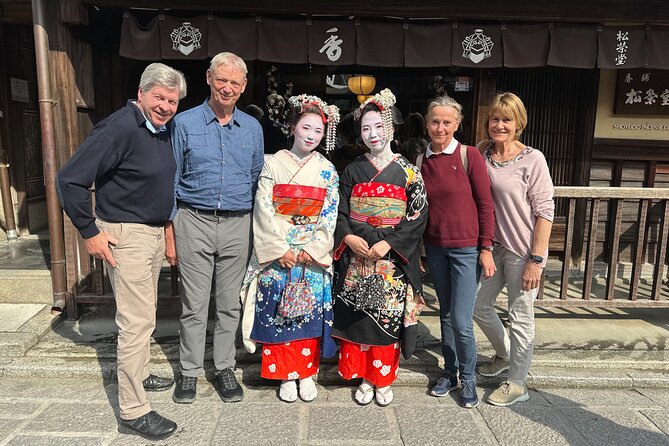
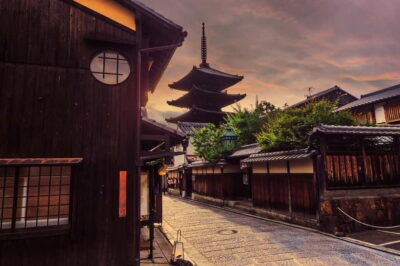
Gion is Kyoto’s best-known geisha district, with traditional streets and teahouse architecture. A guide can explain the difference between seeing a historic entertainment quarter and expecting a staged performance. Keep your visit respectful, especially around private entrances and people going about their work.
This part of the city suits anyone who wants atmosphere without spending the whole day inside temples. It also gives your guide a chance to help with photographs, food choices, or communication at local businesses.
Fushimi Inari and Its Endless Vermilion Gates
Fushimi Inari Taisha is famous for its long rows of vermilion torii gates climbing behind the main shrine buildings. The gates form trails through the wooded hillside, and the site is one of Kyoto’s most distinctive religious places.
The proposed visit is only 15 minutes, which is enough to see the lower gates but not enough to walk far up the mountain. If Fushimi Inari is one of your main reasons for booking, ask for a longer visit and remove other stops.
The shrine is listed with free admission, but getting there still takes time and may involve public transportation. Its location in southeastern Kyoto makes it difficult to combine efficiently with Arashiyama on a short schedule. A focused southern and eastern route would make more sense than adding every other location on the menu.
A completely different kind of day out in Kyoto:
- PERFECT KYOTO 1-Day Bus Tour
★ 5.0 · 13,518 reviews - Kyoto: Fushimi Inari, Kinkakuji, Bamboo Grove 1 Day Bus Tour
★ 4.8 · 4,316 reviews - Kyoto: Tea Ceremony in a Traditional Tea House in Kiyomizu
★ 4.9 · 3,519 reviews - Kyoto: Tea Ceremony Ju-An at Jotokuji Temple
★ 4.9 · 3,207 reviews
Arashiyama: Bamboo, Tenryuji, and a Western Kyoto Day
Arashiyama is described as Kyoto’s second major sightseeing area and is known for temples, shrines, and its bamboo grove. The famous Bamboo Forest offers a short, photogenic walk, though the one-hour allocation also includes Tenryuji and the wider area.
Tenryuji is one of Kyoto’s important Zen temples, founded in 1339. It gives you both temple architecture and garden scenery, making it a stronger use of time than simply rushing through the bamboo path.
Arashiyama deserves its own half-day in many plans. The area is across the city from Fushimi Inari and Kiyomizudera, so combining all three can leave you spending too much of your day in transit.
Ask your guide to choose between a proper Arashiyama visit and a broader city sampler. If bamboo and Tenryuji are priorities, give them more than the suggested hour. Admission to Tenryuji is extra.
Nishiki Market and Kyoto’s Food Culture
Nishiki Market is a narrow, five-block shopping street often called Kyoto’s kitchen. More than 100 shops and restaurants line the market, selling food, kitchen goods, sweets, pickles, and local specialties.
The planned visit is 40 minutes, with no admission charge. That is enough for a walk through the market, but not much time for tasting several items or browsing carefully. The passage can be crowded, so move at the pace of the people around you and avoid eating while walking unless the vendor clearly permits it.
This is one of the best places to tell your guide what you actually like to eat. The service specifically includes help communicating with local vendors, which may be useful if you do not speak Japanese. Food costs are not included.
Nishiki also pairs well with Gion, Yasaka Shrine, and the central shopping streets. It does not pair naturally with Arashiyama unless you accept a very busy day.
The Imperial Palace and Nijo Castle
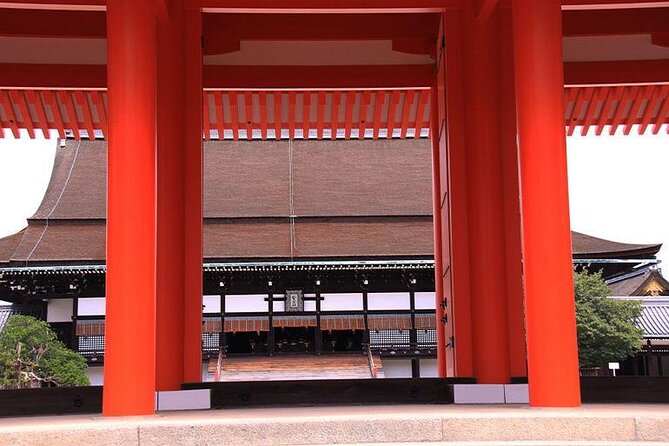
The Kyoto Imperial Palace was the residence of Japan’s Imperial Family until 1868, when the capital moved to Tokyo. It sits within spacious Kyoto Imperial Park and offers a change of pace from dense shopping lanes and packed temple approaches.
The proposed visit lasts 30 minutes and has no admission charge listed. That is enough for a look at the grounds, but the palace area can reward a slower visit if architecture and imperial traditions interest you.
Nijo Castle was built in 1603 as the Kyoto residence of Tokugawa Ieyasu, the first shogun of the Edo period. Its palace buildings were completed by his grandson 23 years later. The castle is known for its connection to shogunal power and its distinctive interior features, including famed nightingale floors designed to sound underfoot.
The suggested time is 45 minutes, and admission costs extra. Nijo Castle fits well with the Imperial Palace and central Kyoto. It is a poor match for a day already packed with Kinkakuji, Fushimi Inari, and Arashiyama.
Ginkakuji, Sanjusangendo, and Eikando
Ginkakuji, the Silver Pavilion, was built by Ashikaga Yoshimitsu’s grandson, Ashikaga Yoshima, a few decades after Kinkakuji. Despite its name, the pavilion is not covered in silver. The temple grounds and gardens are the main attraction, and the 30-minute suggestion gives you a brief introduction.
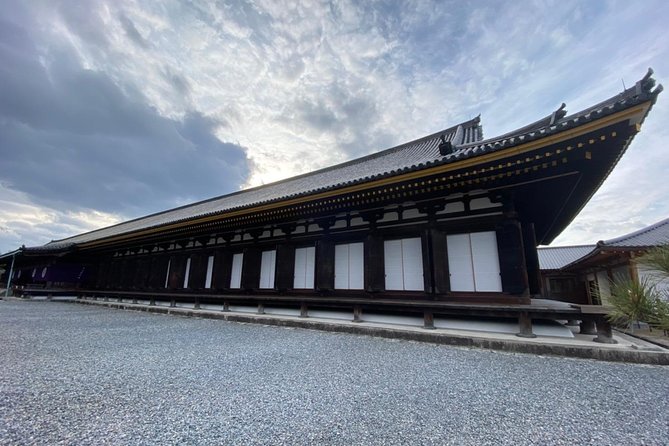
Sanjusangendo is famous for its 1,001 statues of Kannon, the Buddhist figure associated with mercy. The long temple hall creates a powerful interior experience, though the planned 30 minutes leaves little room for lingering. Admission is extra.
Eikando, formally Zenrinji, belongs to the Jodo sect of Buddhism and is known especially for its autumn colors. The proposed visit is 45 minutes, with admission extra. It is a strong choice for a seasonal garden-focused day, particularly if you want something quieter than the most famous Kyoto stops.
These three sites are not a sensible add-on to every other location. Pick one or two based on your interests. A guide who listens carefully should help you make that decision before the morning begins.
The Guide Can Make or Break the Day
The strongest accounts praise guides who were patient, flexible, cheerful, and willing to answer questions. Femín was praised for handling a child’s questions and keeping the day pleasant. Karl helped create a mix of temples, shrines, and local interests. Rio was described as patient with older participants, and Dalivanh received especially warm praise for managing public transportation and adapting to a group’s list.
Jinshi also received strong appreciation for helping a group see major Kyoto sights, food, gardens, temples, and shrines. These details point to the service’s best use: a guide who treats your group’s interests as the day’s organizing principle.
But the experience is not uniform. One guide became ill the night before, and the replacement was described as a college student with limited experience. Other accounts describe guides who struggled with directions or lacked useful information about Kyoto and Japan. Another complaint called the experience poor value after a guide seemed unprepared.
That makes communication before the tour important. Send a short list of priorities and ask who will guide you, how the route will work, and which admissions or transportation costs you should expect. You can also ask the guide to identify two or three stops that will be dropped if the schedule becomes tight.
Price, Group Size, and Real Value
At $265.82 for up to five people, the base price works out to about $53 per person for a full group. For two people, it is roughly $133 each before transportation and admissions. That is not automatically cheap, but private planning and navigation can justify it if you use the guide for decisions, communication, and local context.
The value falls if you expect a fully escorted vehicle, included tickets, meals, or a guaranteed expert historian. None of those are part of the stated package. You receive a travel companion, a personalized itinerary, and assistance throughout the trip.
For a family with mixed interests, the price may make good sense. Parents can ask for fewer stops, children can get help with food choices, and nobody has to manage the route alone. A group of five also gets the best per-person rate.
For a couple seeking detailed temple interpretation, confirm the guide’s background first. If you mainly want transportation and a polished sightseeing program, this may not be the right product.
Timing, Tickets, and Cancellation
The operating hours are listed as 6:00 AM to 10:00 PM daily, with an approximate duration of eight hours. Early starts may help with popular temples, but the exact meeting arrangement needs to be confirmed with the provider.
Pickup is offered, and the activity ends back at the meeting point. The meeting point itself should be clarified before booking. The tour is private, so only your group participates.
Entrance fees are not included. The same applies to private transportation, accommodation, and all meals. Confirmation is provided at booking, and the activity is near public transportation. The stated policy is strict: the experience is non-refundable and cannot be changed for any reason, so book only when your date and group plans are firm.
Should You Book This Private Kyoto Tour?
Book it if you want a flexible day, have a small group, and value help with navigation and local communication. It can be particularly useful for first-time visitors, families, older adults, or anyone arriving with a long wish list and no desire to organize Kyoto’s buses and trains alone.
I would not book it without first confirming the guide and narrowing the route. Choose a sensible cluster of sights, budget for tickets and transit, and make your top two priorities clear. If you do that, this can be a useful private day at a fair group price. If you expect guaranteed expert commentary or a car-based tour, choose another service.
FAQ
How long is the private Kyoto tour?
The tour lasts approximately eight hours.
How many people can join the private tour?
The price covers one private group of up to five people.
Is pickup available?
Yes. Pickup is offered, but you should confirm the exact pickup details and meeting point after booking.
Does the tour include private transportation?
No. Private transportation is not included. Public transportation may be used, and transportation costs are separate.
Are entrance fees included?
No. Entrance fees are not included. Several suggested stops, including Kinkakuji, Kiyomizudera, Nijo Castle, Ginkakuji, Sanjusangendo, Eikando, and Tenryuji, require separate payment where applicable.
Are meals included?
No. Breakfast, lunch, dinner, and other meals are not included.
Can I choose the places I visit?
Yes. The tour offers a personalized itinerary, and the route can be adjusted around your interests.
Is the tour refundable if I cancel?
No. The stated cancellation policy says the experience is non-refundable and cannot be changed for any reason.
Just added around Kyoto
- Tea Ceremony in 150 Years Old Townhouse with Tables and Chairs★ 5.0 · 22 reviews
- Kyoto to Arashiyama Day Trip – Private & Personalized★ 4.3 · 22 reviews
- Kyoto Ramen Tour★ 5.0 · 22 reviews
- Private Tour to Monkey Park and Arashiyama Highlights★ 5.0 · 22 reviews
- Kyoto Japanese Tea Ceremony Experience in Ankoan★ 5.0 · 22 reviews
- Kyoto: Arashiyama Walking Tour with Local Guide★ 4.9 · 22 reviews
- Kyoto Railway Museum Admission Ticket★ 4.3 · 23 reviews
- Private Cooking Class Udon in Kyoto Japan★ 5.0 · 23 reviews
Walking Tours, compared.
Kyoto Geisha Walking Tour: Gion District & Hidden Gems
Read our review →
Tokyo Tsukiji Fish Market Food and Culture Walking Tour
Read our review →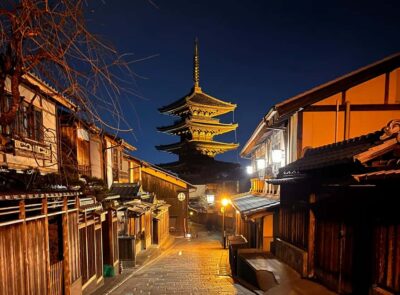
Gion Magical Night Walking Tour with Geisha Trivia
Read our review →
Imperial Palace and Shogun Historical Walking Tour
Read our review →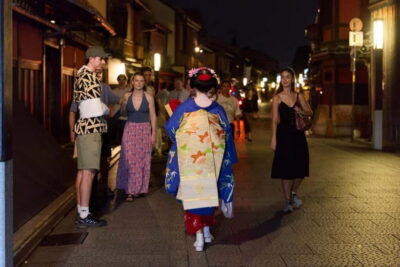
Gion Geisha District Walking Tour – Stories of Geisha
Read our review →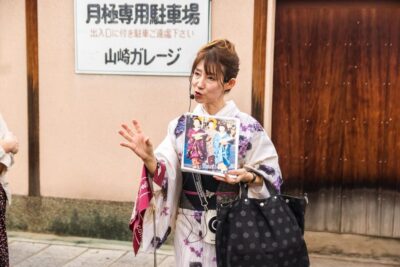

Shinjuku Local Bar and Izakaya Guided Walking Tour
Read our review →
Browse the lists this tour appears in