
Reviewed · RAMEN & NOODLE TOURS
Private Cooking Class Udon in Kyoto Japan
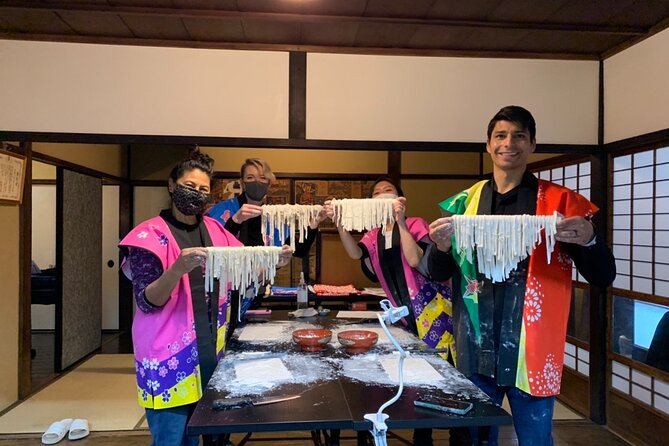
Fresh noodles taste better when you make them yourself. This Kyoto class combines hands-on udon making with a meal in a 120-year-old traditional townhouse, only a short walk from Kyoto Station. Local teachers, including the warmly praised Tanaka-san, guide you through each step in English.
I like the setting best: antique furniture, old wooden rooms, and traditional Japanese music give the class a real sense of place. I also like the friendly teaching style, which works well for children, teenagers, parents, and older family members. The main consideration is that the listed class lasts about one hour, but the full visit can run closer to 1.5 to 2 hours once you eat your meal.
This is not a full Japanese cooking course. You make the udon noodles, but the staff handle boiling and prepare the broth and tempura. That keeps the activity simple and safe, though anyone hoping to prepare an entire lunch from scratch may find the cooking portion limited.
In This Review
- Key points to know before booking
- Arriving near Kyoto Station and Nishi Honganji
- Stepping into a 130-year-old Kyoto townhouse
- Following the eight steps to handmade udon
- Why families find the class easy to enjoy
- Eating your udon with tempura and dipping broth
- What the $60.43 price includes in practical terms
- The private format and teacher-led pace
- Planning the rest of your Kyoto day
- Who should book this udon class?
- Should you book the Kyoto udon experience?
- FAQ
- Where does the udon class take place?
- How far is the class from Kyoto Station?
- How close is the class to Nishi Honganji Temple?
- What time does the class start?
- How long does the class last?
- What parts of the meal do I make?
- Is the activity private?
- Are children allowed to participate?
- Can I cancel for a full refund?
Key points to know before booking
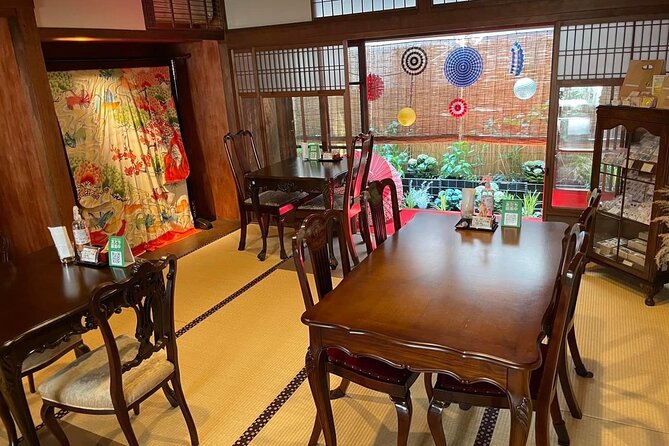
- A 120-year-old Kyomachiya setting: Make noodles inside a restored traditional Kyoto house filled with antique furniture and objects.
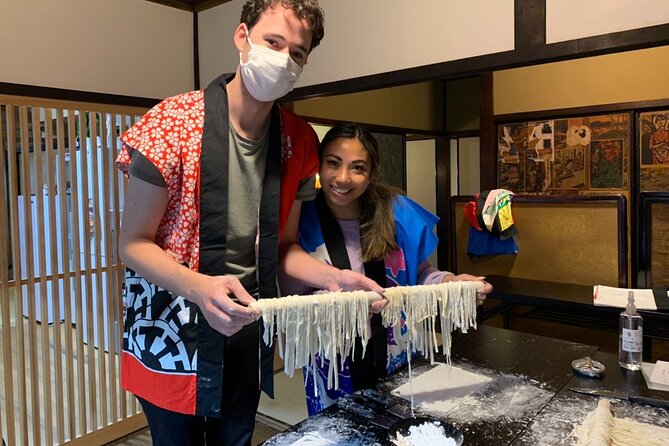
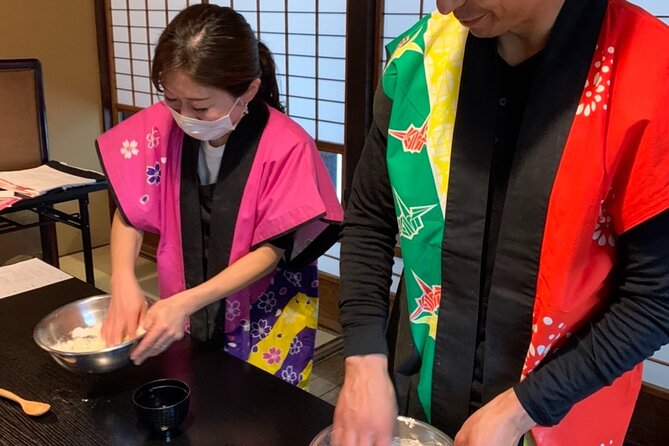
- A clear eight-step udon process: Mix saltwater, combine the dough, knead it with your feet, let it rest, stretch it, cut it, and cook it.
- Excellent for families: Children as young as four can take part because the staff handle the boiling.
- Lunch is included in the experience: Eat your handmade udon with dipping broth, ginger, green onion, and vegetable tempura.
- A private group activity: Only your group participates, making it easier to ask questions and work at your own pace.
- Convenient midday location: The meeting point is about a 12-minute walk from Kyoto Station and two minutes from Nishi Honganji Temple.
Arriving near Kyoto Station and Nishi Honganji
The class begins at 364 Momijicho in Kyoto’s Shimogyo Ward. From Kyoto Station, the walk takes about 12 minutes, and Nishi Honganji Temple is only two minutes away. That makes this a useful activity for a day when you are already exploring the area around the station and temple district.
The start time is noon, which fits naturally into a Kyoto sightseeing day. You can visit Nishi Honganji before class, make your way to the townhouse, then finish with lunch. Since the activity ends where it begins, you do not need to arrange a separate return transfer or find a restaurant afterward.
The meeting point is in a traditional house rather than a large modern cooking studio. Give yourself enough time to find the address, especially if you are arriving from Kyoto Station with luggage or children. Mobile tickets are accepted, and the booking confirmation is sent within 48 hours, subject to availability.
More Cooking Classes in Kyoto
- Ramen Cooking Class at Ramen Factory in Kyoto
★ 5.0 · 1,937 reviews - Kyoto: Ramen Cooking Class at a Ramen Factory with Souvenir
★ 4.9 · 532 reviews - Kyoto: Ramen, Gyoza, and Onigiri Cooking Class
★ 5.0 · 445 reviews
Stepping into a 130-year-old Kyoto townhouse
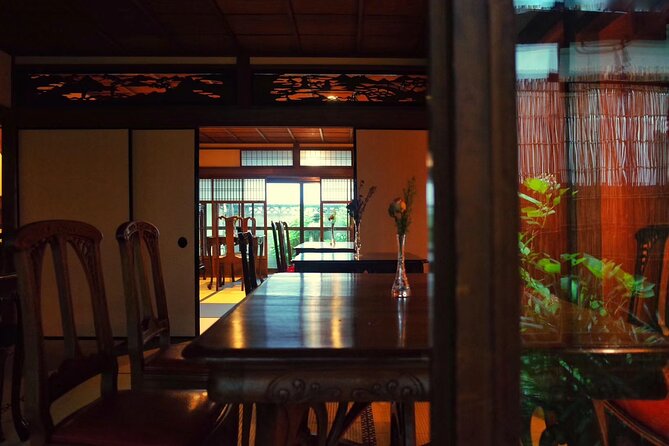
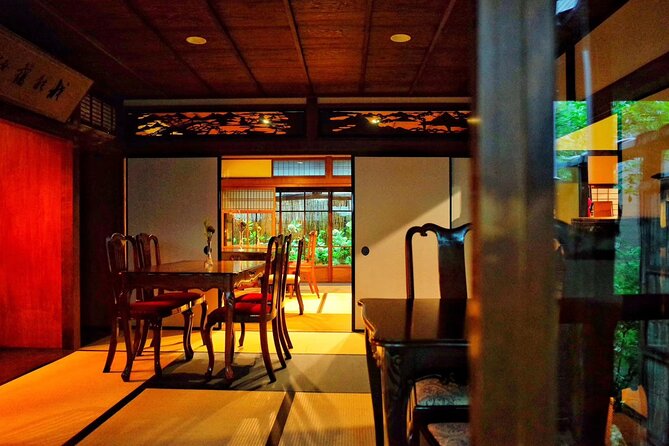
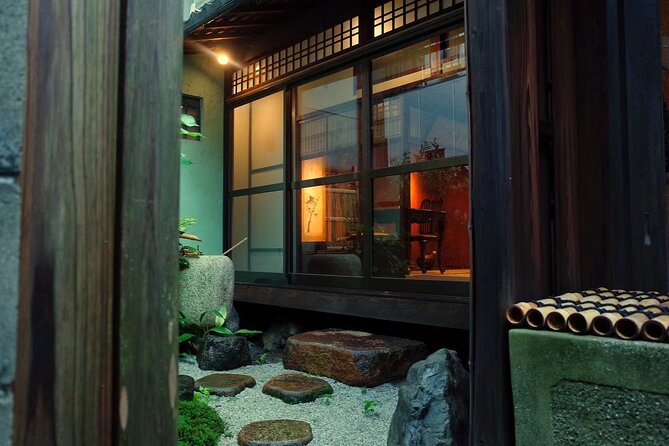
The building is one of the main reasons to choose this class. It is a beautifully renovated Japanese house dating back about 130 years, with much of its antique furniture and decorative objects preserved. The interior gives the lesson a cultural setting that a standard cooking room cannot match.
Traditional Japanese music plays in the house, adding to the old-Kyoto atmosphere. You are not simply mixing flour at a worktable. You are learning a familiar Japanese food in a building that helps explain how domestic life once looked in the city.
The space is also part of the meal experience. After making the noodles, you can look around the wooden house while the staff boil the udon and arrange lunch. This pause is useful because it lets you enjoy the building without trying to cook and sightsee at the same time.
The setting may matter less to a child who is focused on the dough, but the friendly staff keep the activity moving. For adults, the house adds a strong cultural layer to what could otherwise be a short food lesson.
Following the eight steps to handmade udon
The class follows a straightforward sequence. Ingredients are prepared in advance, and the instructions are demonstrated in English. You do not need previous cooking skill, and the recipe is provided so you can try the noodles again at home.
The process includes:
- Making the saltwater
- Rinsing or working the water into the flour
- Combining the dough
- Kneading it with your feet
- Letting the dough mature or rest
- Stretching the dough
- Cutting the noodles with a knife
- Boiling the finished udon
The foot-kneading step is the part many people remember. The dough is worked underfoot, turning a basic cooking lesson into something physical and playful. Children can participate fully, and adults usually find it just as entertaining.
Tanaka-san is praised for being patient, upbeat, and encouraging. Her young adult daughter may assist during the class, helping keep the work tables organized and making instructions easier to follow. Another instructor, Hisayu, is also described as friendly and clear.
The teaching style appears to be light rather than formal. One class includes a playful udon dance, and the teachers use humor to keep the group involved. That is a good fit if you want a cultural activity that feels relaxed instead of stiff.
Why families find the class easy to enjoy
This is one of the better Kyoto food activities for a mixed-age group. Children aged four and ten have been able to participate, and teenagers have also enjoyed the hands-on work. An 83-year-old family member was able to take part as well, suggesting that the activity can suit several generations.
The staff do not ask you to handle boiling water. You make and cut the noodles, then the instructors cook them. That removes the riskiest kitchen task and lets younger children focus on the fun parts.
The work is also divided into small steps. Instead of facing a complicated recipe, you follow one demonstration at a time. The pre-measured ingredients and spacious worktables make the process less stressful for first-time cooks.
Still, the class does involve dough, flour, standing, and foot-kneading. If anyone in your group has trouble standing or handling the dough, it is sensible to ask the provider about arrangements before booking. The available information confirms that service animals are allowed and that the activity is near public transportation, but it does not give detailed mobility information.
More Ramen Tours in Kyoto
- Kyoto Ramen and Gyoza Cooking Class with Professional Chefs
★ 5.0 · 282 reviews - Home style Ramen and Homemade Gyoza in Kyoto
★ 5.0 · 152 reviews - Kyoto Ramen & Gyoza Cooking Class with Professional Chefs
★ 4.8 · 100 reviews - Kyoto Michelin Ramen Workshop or Painting Ramen Essentials
★ 4.9 · 100 reviews
Eating your udon with tempura and dipping broth
The reward comes after the noodles are made. Staff boil the udon and serve it with a separate tempura set, so you do not need to prepare tempura yourself.
The meal includes the noodles you made, vegetable tempura, dashi dipping broth, freshly grated ginger, and minced green onion. Some descriptions also note the udon arriving in a bubbling container, adding a pleasing bit of theater to lunch.
This arrangement keeps the class focused. You learn the part that is most satisfying to make at home, the noodles, while the staff take care of the broth, frying, and boiling. The meal is more than a snack, so the noon start works well.
The udon itself is a useful souvenir in the best sense. The recipe is provided, and one participant was able to recreate the dish at home successfully. If you enjoy bringing cooking ideas back from Japan, this gives the class more lasting value than a meal you simply eat and forget.
The limitation is clear: this is not an all-from-scratch tempura and soup workshop. You are paying for handmade noodles, instruction, the historic setting, and the meal, not a complete lesson in Japanese lunch preparation.
What the $60.43 price includes in practical terms
At $60.43 per person, the price is reasonable if you value the full package. You receive a private cooking activity, local instruction, the use of a historic townhouse, your handmade udon, and a tempura lunch. The class is short, but the meal and time in the house extend the visit.
The private format is important. Only your group participates, so the teacher can focus on your family or friends rather than managing a large public class. That can make the cost easier to justify for a small group that wants personal attention.
The value is strongest for people who would otherwise book both a cultural activity and lunch. Here, the two are combined. You also leave with a recipe and a practical skill that you can repeat at home.
The value is weaker if you want a long, technical cooking course. The official duration is about one hour, and the main work is concentrated on udon. Plan for more time overall because eating and relaxing afterward can add another 30 minutes to an hour, but do not book this expecting an entire afternoon workshop.
The private format and teacher-led pace
A private activity gives this class a different feel from a large group cooking lesson. Your party can work together, ask questions, and enjoy the jokes and explanations without competing for the instructor’s attention.
The teachers are local to Kyoto and explain aspects of Japanese culture along with the recipe. The class can include some background on udon, including its connection to China, while keeping the main focus on making and eating the noodles.
The pace is social and encouraging. Tanaka-san is repeatedly singled out for her patience and energy, and the staff are described as a family-run team. That matters when children are involved, since a teacher who can adjust the mood is often more valuable than a technically complex recipe.
English instruction is available, though the supplied information does not promise a particular language level for every session. Demonstrations and the simple sequence of steps should help, but you can contact the provider if your group has specific communication needs.
Planning the rest of your Kyoto day
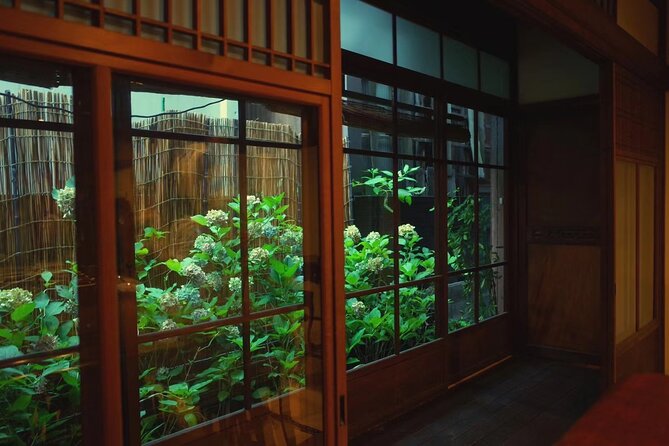
The noon start lets you build a compact itinerary around the class. Nishi Honganji is the obvious nearby stop, only a two-minute walk from the meeting point. You can pair the temple with the cooking lesson without spending much time crossing the city.
Kyoto Station is also close enough to make the class practical on an arrival or departure day, provided your luggage and train schedule allow enough time. I would not cut the timing too tightly. The lesson may last an hour, and lunch can keep you there for another 1.5 to 2 hours in total.
The activity ends back at the meeting point. From there, you can continue sightseeing or return toward Kyoto Station. Since there is no transportation between stops, the class is easiest for people comfortable walking through central Kyoto.
The experience requires good weather. If poor weather causes a cancellation, you are offered another date or a full refund. For your own plans, keep the cancellation deadline in mind: you can receive a full refund if you cancel at least 24 hours before the local start time. Changes made within 24 hours are not accepted.
Who should book this udon class?
I would recommend it most strongly to families, couples, and small private groups who want an activity with a clear result. Children can help, adults get a taste of local culture, and everyone sits down to eat the finished dish.
It also suits anyone who prefers participation over passive sightseeing. You will make something with your hands, learn a recipe, and spend time inside an old Kyoto home. The food is familiar enough to appeal to cautious eaters, while the preparation still feels new.
This is a good choice for a rainy-day plan only when the provider confirms that the class will run, since poor weather can lead to a cancellation. It is also useful for a midday schedule near Kyoto Station or Nishi Honganji.
I would hesitate to recommend it to someone seeking a serious culinary course. You will not make the tempura or broth, and the class centers on one noodle recipe. For a relaxed cultural lunch with a hands-on activity, though, the limits are part of what keeps it accessible.
Should you book the Kyoto udon experience?
Book it if you want friendly instruction, a historic Kyoto setting, and a meal you help create. The strongest reasons are the patient teachers, especially Tanaka-san, the child-friendly format, and the chance to repeat the recipe at home.
Skip it if you want to prepare every part of a Japanese meal or spend several hours on advanced technique. At $60.43, the experience earns its price through the private format, townhouse setting, lunch, and personal attention rather than through a long cooking syllabus.
For most families and small groups, this is a warm, practical addition to a Kyoto visit. It gives you something to do, something to eat, and something useful to remember after the temples blur together.
FAQ
Where does the udon class take place?
The meeting point is 364 Momijicho, Shimogyo Ward, Kyoto, 600-8345, Japan. The class takes place in a renovated traditional Japanese house dating back about 130 years.
How far is the class from Kyoto Station?
The facility is about a 12-minute walk from Kyoto Station.
How close is the class to Nishi Honganji Temple?
The meeting point is about a two-minute walk from Nishi Honganji Temple.
What time does the class start?
The activity starts at 12:00 pm.
How long does the class last?
The listed duration is approximately one hour. The full visit may take longer because you eat the udon afterward, and some participants have stayed 1.5 to 2 hours in total.
What parts of the meal do I make?
You make the udon noodles. The staff prepare the tempura and broth, and they boil the noodles for you.
Is the activity private?
Yes. Only your group participates in the private activity.
Are children allowed to participate?
Yes. The class is described as child-friendly, and children aged four and ten have been able to take part fully. The instructors handle the boiling.
Can I cancel for a full refund?
Yes. You can cancel at least 24 hours before the start time for a full refund. Cancellations or changes made less than 24 hours before the start are not refunded or accepted.
Just added around Kyoto
- Tea Ceremony in 150 Years Old Townhouse with Tables and Chairs★ 5.0 · 22 reviews
- Kyoto to Arashiyama Day Trip – Private & Personalized★ 4.3 · 22 reviews
- Kyoto Ramen Tour★ 5.0 · 22 reviews
- Private Tour to Monkey Park and Arashiyama Highlights★ 5.0 · 22 reviews
- Kyoto: Arashiyama Walking Tour with Local Guide★ 4.9 · 22 reviews
- Kyoto Japanese Tea Ceremony Experience in Ankoan★ 5.0 · 22 reviews
- Private & Custom KYOTO Walking Tour – your Travel Companion★ 4.0 · 23 reviews
- Kyoto Railway Museum Admission Ticket★ 4.3 · 23 reviews
Ramen & Noodle Tours, compared.

Ramen Cooking Class at Ramen Factory in Kyoto
Read our review →
Eat and Drink Like a Local: Tokyo Ueno Food Tour-Taverns&Ramen
Read our review →
Ramen & Gyoza Cooking Class in Tokyo with Local Supermarket Visit
Read our review →
Ramen Cooking Class at a Ramen Factory with Souvenir
Read our review →
Five Must-See Highlights Walking Tour & Ramen Lunch
Read our review →
Browse the lists this tour appears in