
Reviewed · COOKING CLASSES
Small-Group Wagyu Beef and 7 Japanese Dishes Tokyo Cooking Class
Good food is the best souvenir. This three-hour Tokyo cooking class turns a morning into a full Japanese meal, with Wagyu beef, dashi, seasonal vegetables, traditional seasonings, and several small dishes prepared by you. I especially like the maximum group size of eight, which keeps you involved, and the friendly English-speaking instructors, including Aya, Hidemi, Kaori, Megumi, and Yoko, who explain both technique and culture. The main drawback is practical: the studio can be tricky to locate, so you should allow extra time before the 9:30 a.m. start.
I also like that this is not just a demonstration followed by a token taste. You chop, mix, season, cook, plate, and then sit down to eat a substantial lunch. The class is suited to beginners, but experienced home cooks can still pick up useful Japanese methods, especially the preparation of dashi and careful food presentation.
In This Review
- What makes this Tokyo cooking class worth your morning
- A home-style cooking studio near Shinanomachi
- Why the eight-person limit matters
- The first lesson: dashi and Japanese seasonings
- Seven dishes, one full-course lunch
- Wagyu beef is the main attraction
- Eating what you made
- What you can take home
- Who should book this experience
- Timing, transport, and the small practical details
- My call: a strong value for food-minded visitors
- FAQ
- How long does the cooking class last?
- Where does the class meet?
- How many people can join the class?
- Is the class taught in English?
- Is a vegetarian option available?
- What is included in the price?
What makes this Tokyo cooking class worth your morning
- Start with dashi: Learn the basic soup stock used throughout Japanese cooking, then see how it supports several dishes.
- Cook up to eight dishes: The menu moves from appetizers to dessert and includes a Wagyu beef main course.
- Work in a group of eight or fewer: You will not spend the class watching from the edge of the room.
- Take home practical recipes: Recipes are included, giving you a way to repeat the meal after Japan.
- Learn from local English-speaking instructors: The teachers explain ingredients, history, cutting methods, and home-cooking tips.
- Finish with a shared meal: The cooking ends with Itadakimasu, sake, and green tea, according to the experience details.
A home-style cooking studio near Shinanomachi
The class meets at Cooking Sun Tokyo, at 18-39 Shinanomachi in Shinjuku City. It ends at the same location, and hotel pickup is not included, so you need to make your own way there using Tokyo’s public transportation.
This part of Tokyo offers a calmer setting than the huge commercial centers. One useful local clue is the nearby park and tree-lined surroundings. The area is quiet, but the entrance itself has caused confusion for some people. I would not arrive at the last minute. Put the address into your map app, check the route before leaving, and build in a little extra time for the final approach.
The studio is described as clean and homey, which matters for a cooking lesson. You receive an apron and towel, and the class supplies the ingredients and cooking equipment. That means you can come straight from sightseeing without packing special gear.
The official start time is 9:30 a.m. The class lasts about three hours, though one account describes the meal being ready in closer to two hours. Treat three hours as the safe planning figure, particularly if the group asks questions or spends extra time on presentation.
More Cooking Classes in Tokyo
- Ramen & Gyoza Cooking Class in Tokyo with Local Supermarket Visit
★ 5.0 · 823 reviews - Tokyo: Easy Ramen Cooking Experience in Kabukicho, Shinjuku
★ 4.6 · 321 reviews - Ramen and Sushi Cooking Class with Sake Pairing Set in Tokyo
★ 5.0 · 291 reviews
Why the eight-person limit matters
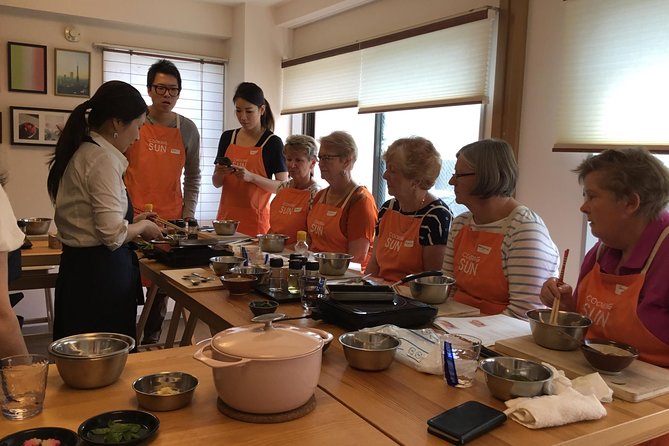
A small cooking class can be either genuinely hands-on or merely small enough to look personal. Here, the maximum of eight people and the presence of instructors allow for direct help at the counter.
You can ask about knife work, seasoning, ingredient substitutions, and presentation as you go. That is especially useful if Japanese cooking is new to you. The instructors are described as patient, clear, and relaxed, with English strong enough to explain both the steps and the reasons behind them.
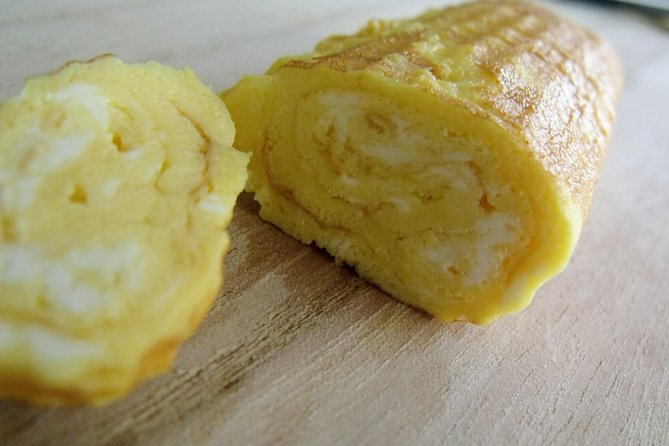
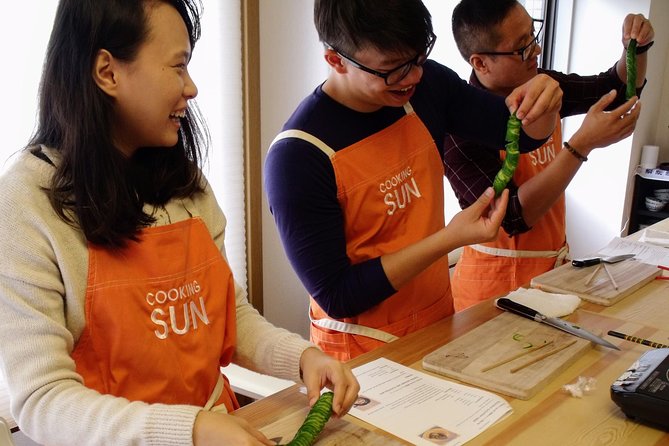
I would still keep expectations sensible. One detailed account says that much of the work involved chopping and mixing dressings, while the staff prepared some items such as miso soup, rice, and potatoes. Participants cooked an egg and seared a lotus root filled with minced chicken, but not every part of every dish was prepared entirely from scratch by the class.
That is not a flaw for most people. Preparing eight dishes in a short session requires some advance work. The important point is that this is a guided cooking lesson, not a professional kitchen apprenticeship. You get plenty of useful participation, but you will not personally carry every dish from raw ingredients to finished plate.
The first lesson: dashi and Japanese seasonings
The class begins with dashi, the foundational stock of Japanese cooking. This is one of the most useful parts of the session because dashi appears in many everyday dishes, not only formal cuisine.
Your instructor explains typical Japanese seasonings as you work. This gives the cooking a helpful framework instead of turning the lesson into a list of recipes. You learn how basic ingredients support the flavor of soups, vegetables, sauces, and other parts of the meal.
For anyone hoping to cook Japanese food at home, this foundation is more valuable than learning one flashy dish. Once you understand the role of dashi and common seasonings, you have a better chance of adapting recipes instead of simply copying them.
The class also introduces Japanese ingredients and cutting methods. The emphasis on elaborate cuts and presentation connects the cooking to kaiseki ryouri, Japan’s formal haute cuisine tradition. You should not expect a restaurant kitchen or a long ceremonial meal, but you do get a taste of the care Japanese cooks give to shape, color, balance, and arrangement.
Seven dishes, one full-course lunch
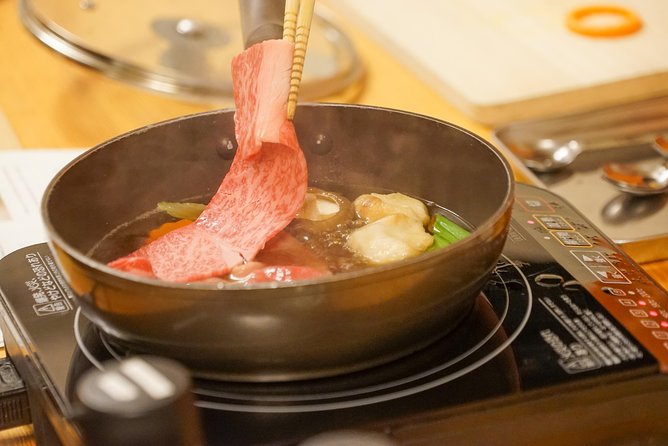
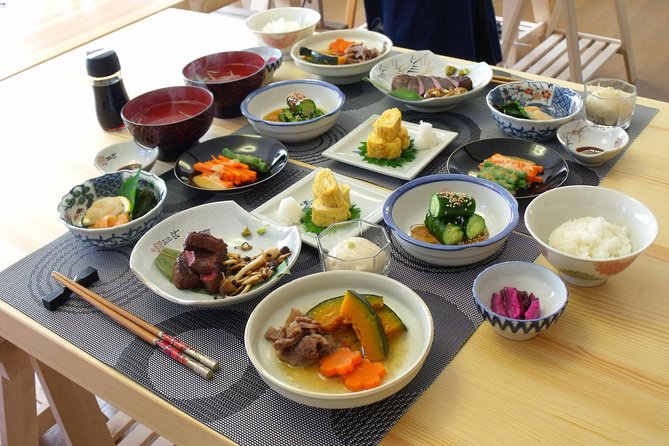
After the dashi, the group prepares seven more dishes, making up to eight dishes in total. The menu is described as a full course, moving from appetizers through the main dish and dessert.
The precise menu may vary, so I would avoid booking this class for one particular recipe unless Wagyu beef is your main priority. The information confirms Japanese vegetables, traditional seasonings, dashi, and a Wagyu beef main course. Individual accounts also refer to sukiyaki, cucumber salad, ramen, miso soup, rice, potatoes, and lotus root filled with minced chicken.
Sukiyaki receives especially warm praise for its tender beef and satisfying flavor. The cucumber salad also earns attention as the kind of simple dish you may actually repeat at home. This is a good sign for a cooking class: the lesson is not only about expensive ingredients, but also about everyday Japanese food that fits into a home kitchen.
You may work on several components at once while instructors handle timing and heat. This keeps the meal moving and lets you see how a Japanese table combines different textures and flavors. One dish may be light and crisp, another savory, another soup-based, and the Wagyu provides the rich centerpiece.
The benefit is variety. The trade-off is pace. Eight dishes in three hours means short explanations and efficient preparation. If you like long, slow instruction on one recipe, this will feel busy. If you want a broad introduction to Japanese cooking, the packed schedule works well.
A completely different kind of day out in Tokyo:
- Mt Fuji and Hakone 1-Day Bus Tour Return by Bullet Train
★ 5.0 · 26,383 reviews - 1-Day Tokyo Bus Tour
★ 5.0 · 14,250 reviews - Tokyo: TOKYO SKYTREE® Admission ticket
★ 4.5 · 11,192 reviews - Tokyo: teamLab Planets TOKYO Digital Art Museum Entry Ticket
★ 4.6 · 9,779 reviews
Wagyu beef is the main attraction
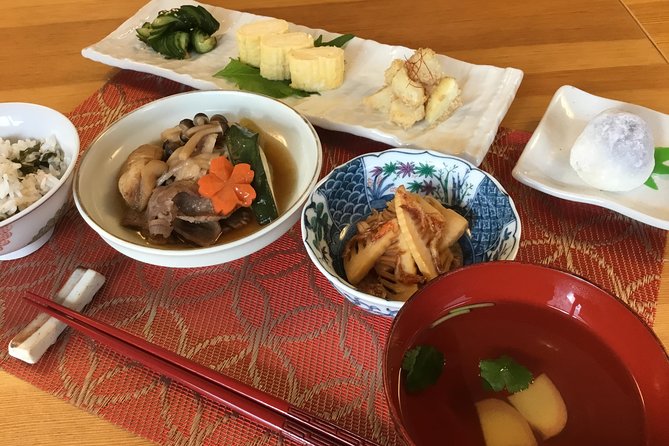
Wagyu means Japanese beef, with wa referring to Japan or Japanese and gyu meaning beef. The term has become familiar around the world, but cooking it yourself gives the ingredient more context than simply ordering it in a restaurant.
The beef is used as the main dish, with sukiyaki specifically praised in the class feedback. You learn how the meat fits into a larger Japanese meal rather than treating it as an isolated luxury item.
The class price is $72.96 per person. For that amount, you receive instruction, ingredients, recipes, apron and towel rental, a small group setting, and a prepared meal. The value is strongest if you want both lunch and a practical lesson. A Wagyu-centered restaurant meal could easily cost a good portion of the class price without teaching you anything to take home.
I would not choose this activity solely because it is a cheap way to eat Wagyu. The portion and cut are not specified, and the class is designed around several dishes rather than a large steak. You are paying for the cooking experience, the instruction, and the chance to understand Japanese food from the inside.
Eating what you made
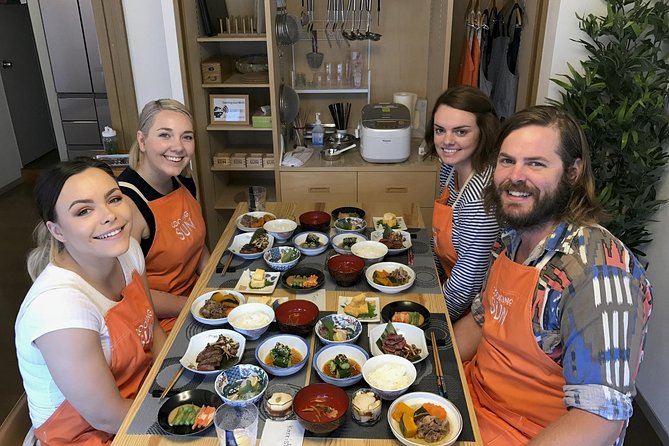
Once the cooking is finished, everyone sits down to eat. The meal is introduced with Itadakimasu, a customary phrase said before eating, and the experience information says the meal is accompanied by sake and green tea.
The shared meal is an important part of the class. You can see how the separate preparations work together, and you get a chance to ask final questions while tasting the food. The setting is casual and homey rather than formal, which helps beginners relax.
One comment wished for a small cup of sake with lunch, so I would not assume the drink service will feel like a full tasting. Sake and green tea are listed as accompaniments, but the exact quantity and style are not given. If alcohol is important to you, treat it as a small part of the experience, not its main purpose.
The amount of food appears generous. Several accounts describe a feast or a substantial multi-course meal. That makes the class useful on a sightseeing day, particularly if you want lunch taken care of before heading back into central Tokyo.
What you can take home
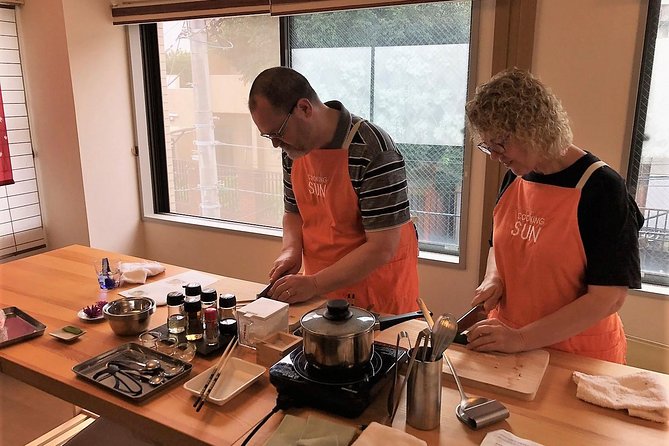
Recipes are included, which gives this experience lasting value. You can try the cucumber salad, dashi-based dishes, sukiyaki, or other recipes after returning home.
The most useful lessons are likely to be the ones that fit normal routines. Dashi, simple vegetable preparations, seasoning combinations, and presentation tips can influence many meals. You do not need to reproduce the whole eight-dish menu to benefit.
The instructors also share stories and occasional special techniques. Their explanations cover ingredients, cooking methods, and Japanese food culture. I like this balance because food in Japan is not only about following measurements. It is also about using the right stock, handling ingredients carefully, and knowing how a dish belongs on the table.
Who should book this experience
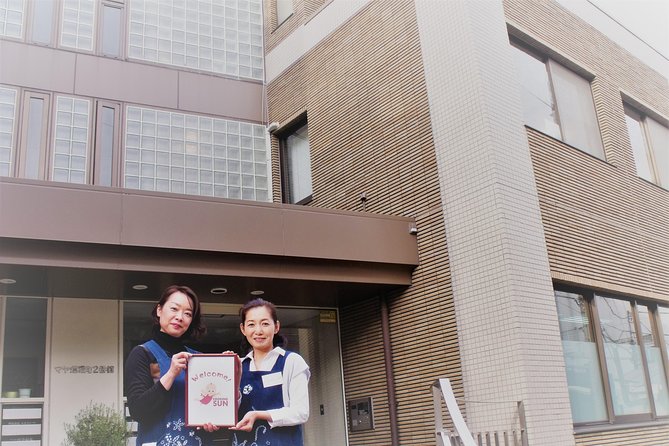
This class suits first-time visitors who want a cultural activity with something filling at the end. It also works well for couples, families, and solo participants who enjoy meeting a few other people in a relaxed setting.
You do not need professional cooking skills. The instructions are designed to be approachable, and the small group makes it easier to ask for help. Several accounts describe the class as welcoming for people with little cooking experience.
It is also a good choice for people who already cook. The lesson covers several dishes, traditional ingredients, cutting techniques, and food presentation, so you can gather ideas even if you know your way around a kitchen.
Vegetarian participation is available if requested at booking. You should also report allergies and other dietary needs in advance. The class can accommodate some needs, but the supplied information does not promise that every allergy or diet can be handled, so early notice is essential.
You may want to skip it if you dislike group activities, want a private chef, or prefer spending three hours on one carefully developed recipe. It is also not ideal for anyone who expects every dish to be cooked entirely by their own hands. Some preparation is handled by the staff to keep the large menu manageable.
Timing, transport, and the small practical details
The class begins at 9:30 a.m. and meets at the studio. Since there is no hotel transportation, public transit and walking are part of your plan. The location is near public transportation, but the building can be hard to identify, so check the route and address before setting out.
All instructions are in English. Ingredients, supplies, an apron, and a towel are provided. The activity uses a mobile ticket, and confirmation is issued when you book.
The class is limited to eight people. That cap is more important than it may first appear. With several dishes moving at once, a larger crowd could turn the session into a demonstration. Here, you have a reasonable chance to chop, season, mix, and ask questions.
Free cancellation is available if you cancel at least 24 hours before the 9:30 a.m. start. Cancellations or changes inside that window are not refunded or accepted. Keep the local Tokyo time in mind when making changes.
My call: a strong value for food-minded visitors
I would book this class if I wanted a practical introduction to Japanese cuisine rather than another passive sightseeing stop. The combination of dashi, Wagyu, Japanese vegetables, several recipes, English instruction, and a shared lunch gives you a lot for $72.96.
The strongest reasons to choose it are the small group, the warm teaching style, and the number of dishes covered. The main cautions are the hard-to-find building, the quick pace, and the fact that some cooking is prepared in advance.
Arrive early, tell the instructors about dietary needs, and expect a guided class rather than a completely independent kitchen session. If that sounds right, this is a smart Tokyo morning that feeds both your appetite and your understanding of Japanese home cooking.
FAQ
How long does the cooking class last?
The class lasts approximately three hours. It begins at 9:30 a.m.
Where does the class meet?
It meets at Cooking Sun Tokyo, 18-39 Shinanomachi, Shinjuku City, Tokyo 160-0016, Japan. The class ends back at the same meeting point.
How many people can join the class?
The class has a maximum of eight participants.
Is the class taught in English?
Yes. The local instructors speak English and provide explanations throughout the cooking session.
Is a vegetarian option available?
Yes. A vegetarian option is available, but you must request it when booking. You should also report any specific dietary requirements in advance.
What is included in the price?
The price includes a local cooking instructor, recipes, ingredients, an apron, and a towel rental. Hotel pickup and drop-off are not included.
Just added around Tokyo
- Tokyo Small Group Tour with Guide★ 4.5 · 38 reviews
- Tokyo 6hr Instagram Highlights Private Tour with Licensed Guide★ 5.0 · 38 reviews
- Tokyo Sumo Experience with Live Show & Audience Challenge★ 5.0 · 38 reviews
- Very popular in Harajuku♡Animal petting zoo★ 4.6 · 39 reviews
- Japanese Food Cooking Class in Asakusa, Tokyo★ 5.0 · 39 reviews
- Ramen Making from Scratch with Tokyo Mom(Vegan Option Available)★ 5.0 · 39 reviews
- Tokyo: Kimono Rental inside Shinjuku Gyoen National Garden★ 4.9 · 39 reviews
- Tokyo JDM Night: 600hp C63s AMG Edition 1 (Private)★ 4.9 · 39 reviews
Cooking Classes, compared.
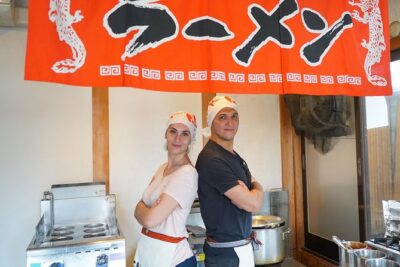
Ramen Cooking Class at Ramen Factory in Kyoto
Read our review →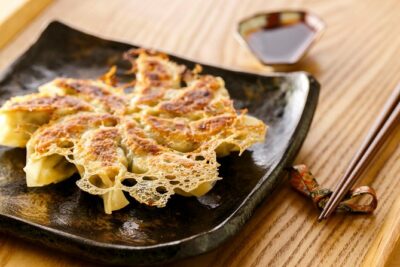
Ramen & Gyoza Cooking Class in Tokyo with Local Supermarket Visit
Read our review →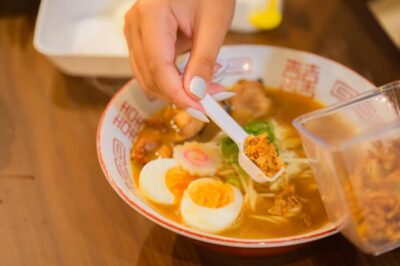
Ramen Cooking Class at a Ramen Factory with Souvenir
Read our review →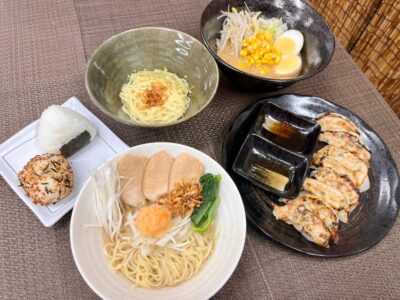
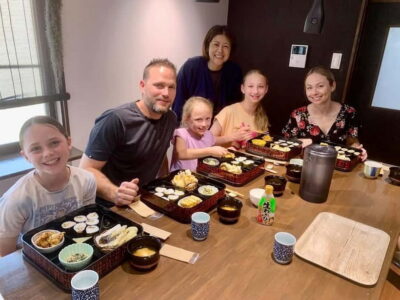
Japanese Washoku Bento Small Group Cooking Class
Read our review →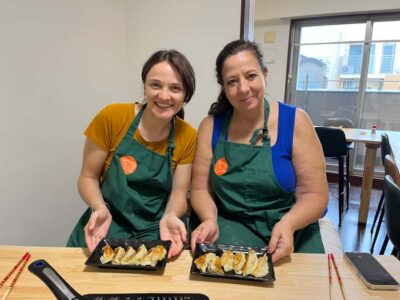

Easy Ramen Cooking Experience in Kabukicho, Shinjuku
Read our review →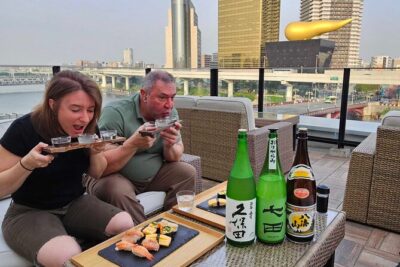
Ramen and Sushi Cooking Class with Sake Pairing Set in Tokyo
Read our review →Browse the lists this tour appears in