
Reviewed · COOKING CLASSES
Sushi Cooking Class: AKEMI’s SUSHiKiTCHEN in Tokyo
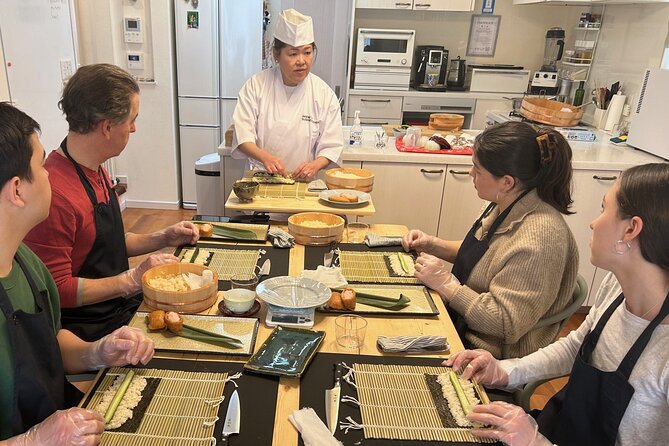
Sushi tastes better when you make it. At Akemi’s Sushi Kitchen, you step into a quiet Tokyo home in Sasazuka and learn four types of sushi from Akemi, a chef with seven years of restaurant experience in Japan. I like the personal teaching in a group capped at six, and I like the care given to the ingredients, including rice ordered from Kyoto and fish sourced from Toyosu and Tsukiji.
The 2.5-hour class also explains sushi terms, food customs, and proper eating etiquette, so you gain more than a recipe. The main point to consider is the price, about $105.68 per person, which is a fair sum for a cooking class, though budget-minded visitors may find it high compared with a simple meal.
The setting is part of the appeal. This is not a formal restaurant or a large demonstration kitchen. You meet at Tamanosato Sasazukaten, 1-chōme-56-18 Sasazuka, in Shibuya, then return to the same meeting point after eating the sushi you prepared.
In This Review
- Key details before you book
- Arriving in Sasazuka for a home kitchen lesson
- Meeting Akemi and learning from her restaurant background
- Four types of sushi, not just a quick roll
- Why the ingredients matter
- Sushi culture beyond the cutting board
- A quiet home atmosphere instead of a restaurant counter
- Is $105.68 a good value?
- Who will enjoy this sushi class most?
- Timing, tickets, and practical planning
- The final meal makes the lesson memorable
- Should you book Akemi’s Sushi Kitchen?
- FAQ
- Where does the sushi class begin?
- Where does the activity end?
- How long does the sushi class last?
- How many people can join the class?
- Do I need previous sushi-making experience?
- What ingredients are used?
- Can I cancel for a full refund?
Key details before you book
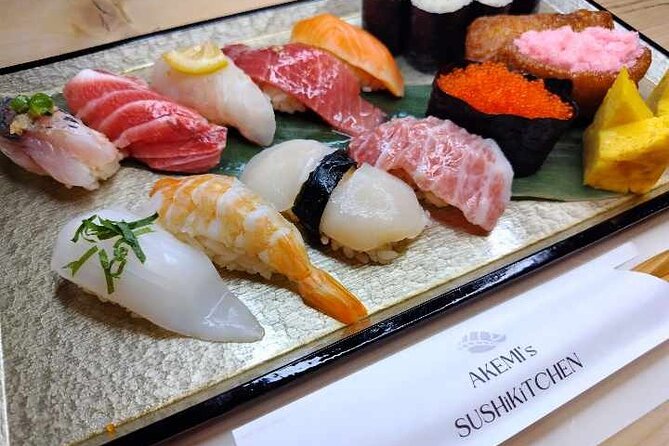
- Four sushi styles in one 2.5-hour class: You learn several preparations rather than repeating one basic roll.
- A real Tokyo home setting: The lesson takes place in a quiet residential area, giving the class a more personal feel than a busy cooking school.
- Small groups of no more than six: The limited size allows Akemi to correct your technique and answer questions.
- Ingredients with a clear pedigree: The sushi rice comes from Hachidaime Gihey in Kyoto, established in 1787, while fresh fish comes from Toyosu and Tsukiji markets.
- Food culture included: Akemi covers sushi history, key vocabulary, and Japanese eating manners alongside the practical work.
- Easy cancellation terms: You can receive a full refund if you cancel at least 24 hours before the start time.
Arriving in Sasazuka for a home kitchen lesson
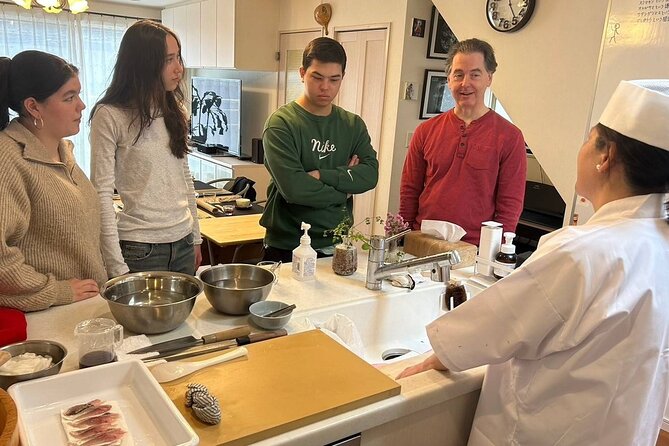
The class begins at Tamanosato Sasazukaten in Sasazuka, a neighborhood within Shibuya, Tokyo. The experience ends at that same meeting point, so you do not need to arrange a separate return transfer or navigate to a second location after the meal.
That simple route matters in a city as large as Tokyo. You can plan the class as a focused half-day activity rather than worrying about a restaurant reservation, a market visit, and a cooking school in separate parts of town. The meeting point is near public transportation, another useful feature when you are working around Tokyo’s busy rail network.
Still, allow yourself time to find the exact address. This is a residential home class, not a famous public attraction with a large entrance sign. Keep the meeting details available on your mobile ticket, and avoid arriving at the last second.
Sasazuka also gives the class a different mood from central Tokyo. You are not sitting in a bright tourist district. You are entering a home in a quieter part of the city, which helps the lesson feel like a visit with a local cook rather than a performance designed for a crowd.
More Cooking Classes in Tokyo
- Ramen & Gyoza Cooking Class in Tokyo with Local Supermarket Visit
★ 5.0 · 823 reviews - Tokyo: Easy Ramen Cooking Experience in Kabukicho, Shinjuku
★ 4.6 · 321 reviews - Ramen and Sushi Cooking Class with Sake Pairing Set in Tokyo
★ 5.0 · 291 reviews
Meeting Akemi and learning from her restaurant background
Akemi has seven years of experience in Japan’s restaurant industry and completed the Edomae Sushi Technique Acquisition Course at Tokyo Sushi School. That training gives the class a useful foundation: you are not simply following a casual home recipe, but learning from someone who has studied a recognized sushi method.
Her English ability is also part of the experience. The lesson is designed to explain both the physical work of making sushi and the language around it. If you have never handled sushi rice, prepared a piece, or heard terms used by sushi chefs, the instruction is meant to keep the process approachable.
The small group makes a real difference here. With a maximum of six people, you should have room to ask questions and receive direct help. A group of this size is especially valuable during shaping, where a quick correction can make the difference between neat sushi and a loose handful of rice and fish.
Akemi’s husband or co-host Dan may also help create the welcoming home atmosphere. The hosts are described as friendly, and the setting is part of the lesson’s warmth. You are not only being shown a technique from across a counter. You are spending time in a private home with people who want you to understand the food.
Four types of sushi, not just a quick roll
The practical center of the class is learning to make four types of sushi. The available information does not specify the exact names or styles, so you should not book expecting a particular variety such as nigiri or makizushi unless Akemi confirms it beforehand.
What you can expect is variety in technique. Making more than one style helps you see that sushi is not a single dish with one fixed method. Rice handling, filling, shaping, and presentation all require care, and each preparation can call for a slightly different approach.
The hands-on format is important. A demonstration can look easy because a trained cook moves quickly and confidently. When you make the food yourself, you notice the small details: how much rice to use, how firmly to shape it, and how to keep the finished piece balanced.
I like that the class ends with a meal made by the participants. That gives the lesson a clear payoff. You do not simply leave with notes or a recipe card. You sit down and eat the results of your own work, with the satisfaction and occasional unevenness that comes from making it yourself.
For first-time sushi makers, that is a strong reason to choose this class. You do not need prior sushi experience, and the instruction is intended to help beginners produce an enjoyable meal. More experienced home cooks may appreciate the chance to refine their technique and ask about Japanese methods.
Why the ingredients matter
Sushi has nowhere to hide. A complicated sauce can cover weaknesses in many dishes, but sushi depends on the quality of its rice, fish, seasoning, and handling. Akemi’s choice of ingredients is one of the strongest reasons the price can make sense.
The rice is a special blend ordered from Hachidaime Gihey in Kyoto, a rice specialist established in 1787. That detail connects the meal to a long Japanese food tradition, but it also has a practical effect: rice texture is central to good sushi. If the rice is too wet, too dry, too loose, or poorly seasoned, the whole piece suffers.
The fish, called neta in sushi terminology, comes directly from the Toyosu and Tsukiji markets. These are important Tokyo food-market names, and the sourcing gives the class a stronger connection to the city’s sushi culture than an ordinary supermarket-based cooking lesson.
You should keep expectations sensible. Market sourcing does not mean the menu is customized to every preference, and the available details do not list the exact fish or provide substitutions. If you have allergies, dietary restrictions, or strong dislikes, ask about them before booking rather than assuming the class can adjust.
A completely different kind of day out in Tokyo:
- Mt Fuji and Hakone 1-Day Bus Tour Return by Bullet Train
★ 5.0 · 26,383 reviews - 1-Day Tokyo Bus Tour
★ 5.0 · 14,250 reviews - Tokyo: TOKYO SKYTREE® Admission ticket
★ 4.5 · 11,192 reviews - Tokyo: teamLab Planets TOKYO Digital Art Museum Entry Ticket
★ 4.6 · 9,779 reviews
Sushi culture beyond the cutting board
The lesson includes sushi history, essential terminology, and Japanese eating etiquette. This cultural material adds value because sushi can seem simple from the outside. Rice and fish may be all you see, but the names, methods, and customs help explain why small differences matter.
Learning the vocabulary gives you a better footing for future meals in Japan. You may recognize terms for ingredients, preparation, or types of sushi more easily after hearing them in a practical setting. The class can also make a restaurant menu feel less mysterious later in your trip.
The etiquette portion is useful without needing to become stiff or intimidating. Japanese dining customs can feel confusing when you are trying to be polite, especially in a traditional sushi setting. A short explanation from someone who works with the food can help you enjoy the meal with more confidence.
This teaching is not limited to international visitors. Japanese participants have also found the class educational, which suggests that the food-culture section goes beyond basic tourist trivia. That is a nice touch. You are not simply being told a few colorful facts to fill time between recipes.
A quiet home atmosphere instead of a restaurant counter
The home setting is the clearest difference between this class and an ordinary sushi meal. At a restaurant, you can taste a finished product, perhaps while watching a chef work. Here, you learn how the food comes together and share the meal in a domestic setting.
I like the sense of scale. A small class in a Tokyo home can feel calmer than a large cooking studio with multiple groups working at once. The residential location also offers a glimpse of everyday surroundings, though the activity is still centered on the kitchen rather than on sightseeing.
The trade-off is that a home class may feel less polished than a purpose-built culinary venue. You should choose it for personal attention, conversation, and hands-on learning, not for theatrical presentation or a long list of facilities. The focus is the food and the hosts.
The experience has earned a perfect five-star rating from 48 published ratings, with 100 percent recommending it. That strong record fits the main strengths here: friendly hosts, fresh sushi, a pleasant home, and teaching that combines cooking with culture. I would still treat the rating as a helpful signal rather than a promise that every visitor will have the same experience.
Is $105.68 a good value?
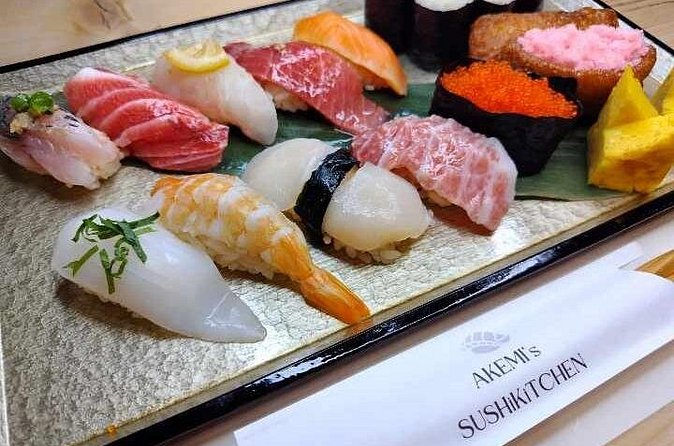
At about $105.68 per person, this is not a bargain meal. If your only goal is to eat sushi, you can spend less at many Tokyo restaurants. The price makes more sense when you count the instruction, the use of high-quality ingredients, the small group, and the meal at the end.
You are paying for access to a chef’s home and for direct teaching. With no more than six participants, your fee supports a fairly personal format rather than a large class where you may spend much of the time watching someone else work.
The ingredients also strengthen the value. Rice sourced from a Kyoto specialist and fish purchased through Toyosu and Tsukiji give the class a more serious culinary base than an inexpensive cooking activity built around generic supplies. That does not guarantee that every piece will match a top Tokyo sushi restaurant, but it does show that the meal is treated with care.
I would recommend the class more readily for someone who values food culture than for someone chasing the lowest possible cost. It is especially worthwhile early in a Japan trip, when the techniques and etiquette can improve later meals. If your schedule is tight and you want only a quick introduction, the 2.5-hour commitment and price may feel harder to justify.
Who will enjoy this sushi class most?
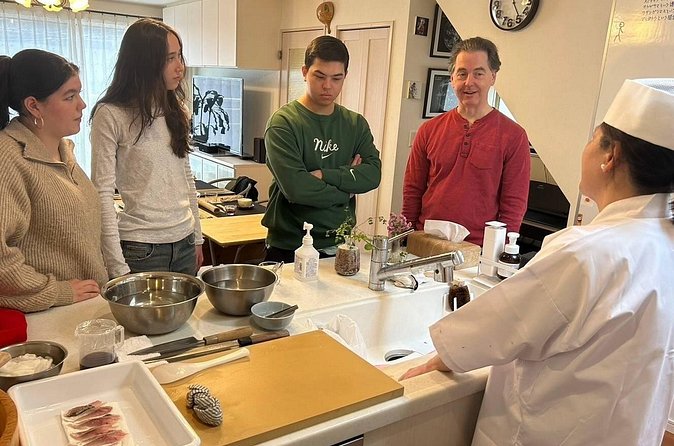
This activity suits first-time sushi makers who want patient instruction and a finished meal they can feel proud of. You do not need prior experience, and the small class size gives beginners a better chance to get help before a small mistake becomes a plate-wide problem.
It also works well for food-focused visitors, couples, and small groups who prefer conversation and personal contact over a formal sightseeing stop. The home atmosphere gives the experience a social quality, especially when Akemi and Dan are hosting.
Families or groups with children should check the age suitability directly before booking, since no age policy is provided. The same advice applies to anyone with seafood allergies, dietary restrictions, or specific ingredient concerns.
The class is less suitable if you want to visit a fish market, tour several Tokyo neighborhoods, or watch an advanced sushi chef work without participating. It is a cooking lesson first. The cultural explanations support the food, but this is not a general Tokyo sightseeing tour.
Timing, tickets, and practical planning
The class lasts about two hours and 30 minutes. That is long enough for instruction, preparation, cultural discussion, and the final meal, but short enough to fit into a day of exploring Tokyo if you plan your rail connections carefully.
Your mobile ticket is useful for keeping the meeting information close at hand. Confirmation arrives at booking, and the activity begins and ends at the same Sasazuka meeting point. Since the exact home setting may not look like a conventional attraction, use the address rather than relying only on a broad neighborhood name.
The activity is near public transportation, but the data does not provide a travel time from major stations or a detailed route. Check your route before leaving and allow a little spare time for finding the address.
Service animals are allowed. The maximum group size is listed as six people, while the class is also described as being limited to five students, so the exact number may depend on whether a host or co-host is counted. Either way, this is a small-format lesson rather than a crowded class.
Cancellation is free up to 24 hours before the local start time. If you cancel or request changes within that final 24-hour period, you should expect no refund and no changes to be accepted.
The final meal makes the lesson memorable
The best part of the format is the hand-prepared meal at the end. You have seen the ingredients, practiced the techniques, and handled the food yourself. Eating the finished sushi gives the class a natural finish instead of ending as soon as the last demonstration is over.
That meal may also change how you judge sushi afterward. Once you have tried to make a neat piece yourself, you gain more respect for the balance of rice, fish, shape, and portion. Even a piece that is not perfectly formed can be delicious, and the process helps you understand why skilled sushi preparation takes practice.
The fresh ingredients and home atmosphere help keep the ending relaxed. You can enjoy the food while continuing the conversation about Japanese cuisine, terminology, or etiquette. It is a modest but satisfying way to spend part of a Tokyo day.
Should you book Akemi’s Sushi Kitchen?
Book it if you want to make four types of sushi, learn from an English-speaking chef, and eat the results in a quiet Tokyo home. The small group, careful ingredients, and cultural instruction give it more substance than a quick tourist cooking demonstration.
Think twice if $105.68 feels high for a meal, if you need a strictly customized menu, or if you are looking for a broader Tokyo tour. For food lovers, beginners, and anyone curious about how sushi works beyond the restaurant counter, this is a strong choice. The perfect rating from 48 ratings and the full recommendation rate support that judgment, while the home setting and personal teaching are the main reasons to choose it.
FAQ
Where does the sushi class begin?
It begins at Tamanosato Sasazukaten, 1-chōme-56-18 Sasazuka, Shibuya, Tokyo 151-0073, Japan.
Where does the activity end?
The class ends back at the meeting point in Sasazuka.
How long does the sushi class last?
The activity lasts approximately two hours and 30 minutes.
How many people can join the class?
The activity has a maximum of six travelers, and the lesson is also described as being limited to five students.
Do I need previous sushi-making experience?
No. The class is designed so that even people who have never tried making sushi can prepare a meal with guidance.
What ingredients are used?
The rice is a special blend ordered from Hachidaime Gihey in Kyoto, established in 1787. Fresh fish, called neta, is sourced from the Toyosu and Tsukiji markets.
Can I cancel for a full refund?
Yes. You can cancel at least 24 hours before the local start time for a full refund. Cancellations and changes made less than 24 hours before the start are not accepted for a refund.
Just added around Tokyo
- Tokyo 6hr Instagram Highlights Private Tour with Licensed Guide★ 5.0 · 38 reviews
- Tokyo Small Group Tour with Guide★ 4.5 · 38 reviews
- Tokyo Sumo Experience with Live Show & Audience Challenge★ 5.0 · 38 reviews
- Japanese Food Cooking Class in Asakusa, Tokyo★ 5.0 · 39 reviews
- Very popular in Harajuku♡Animal petting zoo★ 4.6 · 39 reviews
- Ramen Making from Scratch with Tokyo Mom(Vegan Option Available)★ 5.0 · 39 reviews
- Tokyo JDM Night: 600hp C63s AMG Edition 1 (Private)★ 4.9 · 39 reviews
- Tokyo: Kimono Rental inside Shinjuku Gyoen National Garden★ 4.9 · 39 reviews
Cooking Classes, compared.
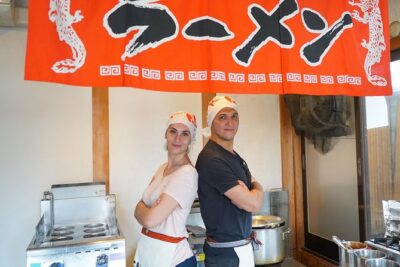
Ramen Cooking Class at Ramen Factory in Kyoto
Read our review →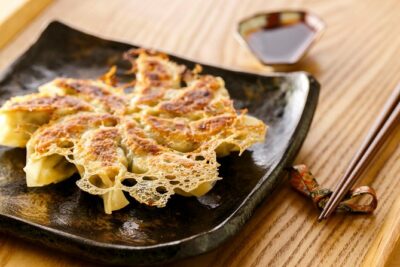
Ramen & Gyoza Cooking Class in Tokyo with Local Supermarket Visit
Read our review →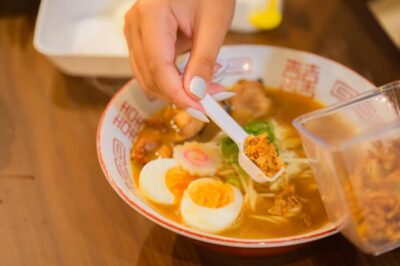
Ramen Cooking Class at a Ramen Factory with Souvenir
Read our review →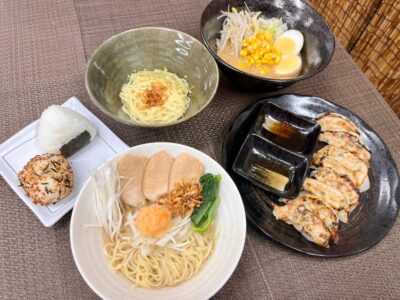
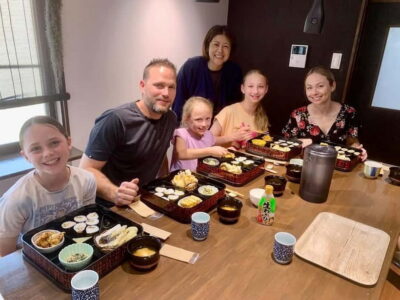
Japanese Washoku Bento Small Group Cooking Class
Read our review →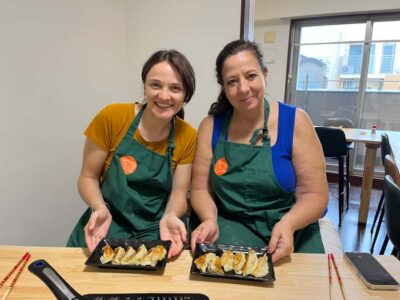

Easy Ramen Cooking Experience in Kabukicho, Shinjuku
Read our review →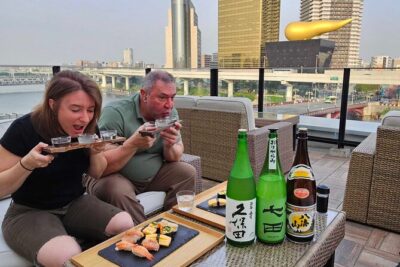
Ramen and Sushi Cooking Class with Sake Pairing Set in Tokyo
Read our review →Browse the lists this tour appears in