
Reviewed · SUSHI-MAKING CLASSES
Taisho Sushi Making Class in Tokyo
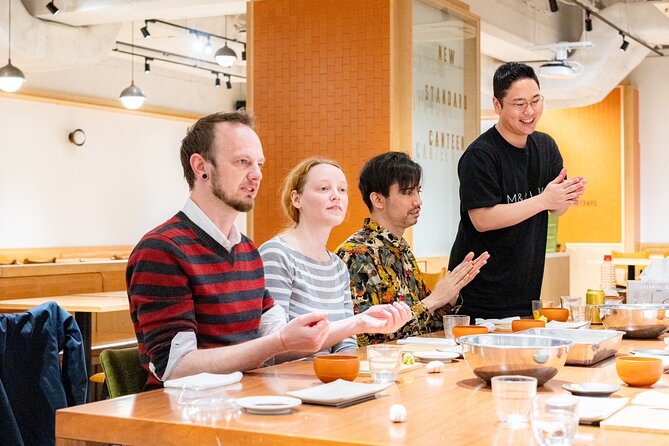
Sushi class, dinner, and a Tokyo memory. Taisho Sushi Making turns a favorite Japanese meal into a hands-on lesson, with practice models, real fish and rice, and guidance on how to eat your finished pieces. I like the practice-first format, and I also like that the class welcomes vegan and vegetarian participants. The main thing to check is the timing: the booking details list about one hour, while the class description calls it a 90-minute experience.
This is a useful choice if your Tokyo schedule is tight but you still want more than a restaurant meal. You get all equipment and ingredients, and a previous participant especially praised the generous amount of fish and the time provided. The possible drawback is the group size, which can reach 50 people, so this may feel more like a lively workshop than a quiet lesson with one chef at your side.
In This Review
- Key points at a glance
- Why a sushi class makes sense in Tokyo
- Arriving at 1-chōme-4-4 Kōjimachi
- The model practice that makes the class useful
- Making nigiri with real fish and rice
- Rolling maki and learning the right side of nori
- Building gunkan sushi, the warship-shaped piece
- Finishing the meal with sushi etiquette
- Vegetarian and vegan participation
- Is $109.01 a fair price?
- Who will enjoy this class most?
- Booking, timing, and cancellation advice
- My take: book it for the hands-on meal
- FAQ
- Where does the Taisho Sushi Making Class meet?
- How long does the sushi class last?
- Are ingredients and equipment provided?
- Can vegetarians and vegans join?
- What types of sushi will I learn to make?
- Can I cancel for a full refund?
Key points at a glance

- Practice models come first: You repeat the hand movements before working with real rice and fish.
- Three sushi styles are covered: The lesson includes nigiri, maki, and gunkan sushi.
- You eat what you make: The class ends with a chance to enjoy your own sushi and learn proper eating etiquette.
- Vegetarian and vegan choices are available: Non-fish eaters can take part, though you may want to confirm the exact ingredients before booking.
- The location is central and practical: Meet at 1-chōme-4-4 Kōjimachi in Chiyoda City, near public transportation.
- It suits groups and families: The class can accept up to 50 participants, and a past participant found it particularly good for larger groups.
Why a sushi class makes sense in Tokyo
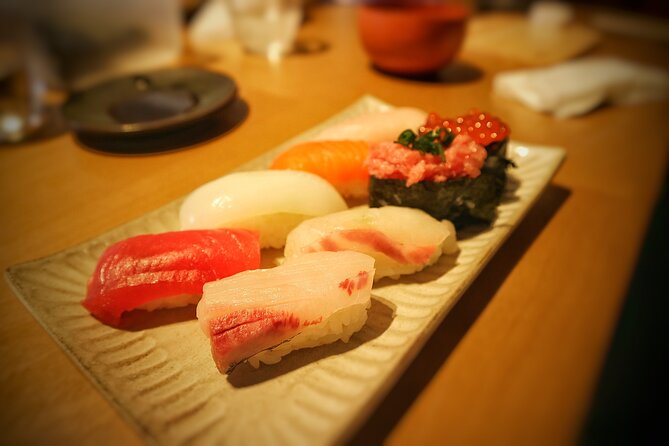
Tokyo gives you endless chances to eat sushi, but a meal usually ends when the last plate leaves the counter. A class gives you a skill to take home. You learn how rice, seaweed, fillings, and fish come together, then you get to eat the results instead of simply watching a chef work.
Taisho Sushi Making is aimed at people who want the basics without giving up half a day. The published timing is short, making this easier to fit between sightseeing stops. Still, pay attention when you book because the general tour summary says approximately one hour, while the detailed description promises 90 minutes.
I see the class as a practical middle ground. It is more active than a standard sushi meal, but much less demanding than a full cooking course. You do not need to bring equipment or ingredients, which removes much of the fuss for a first attempt.
More Sushi-Making Classes in Tokyo
- Sushi Making Tokyo Roll and Authentic Japanese Sushi Class
★ 5.0 · 3,971 reviews - Tokyo: Roll and Authentic Sushi Making Class in Asakusa
★ 4.9 · 1,957 reviews - Make Sushi and Create Unforgettable Memories in Tokyo
★ 5.0 · 1,413 reviews
Arriving at 1-chōme-4-4 Kōjimachi
Your meeting point is 1-chōme-4-4 Kōjimachi, Chiyoda City, Tokyo 102-0083. The location is near public transportation, a useful detail in a city where a short address can still involve several train and subway choices.
You will need to plan your route before class rather than rely on a last-minute search. Tokyo addresses can be hard to read at street level, and the experience information does not provide a station name or walking time. Use the full address in your map app and allow a little extra time, especially if you are arriving with children or a larger group.
The activity ends back at the meeting point. That makes planning easier because you do not need to arrange a pickup or figure out a second location after eating your sushi.
A mobile ticket keeps things simple. You can keep the booking on your phone and avoid carrying printed paperwork. Confirmation is sent within 48 hours, subject to availability, so do not leave a last-minute reservation until the day before if your schedule is fixed.
The model practice that makes the class useful
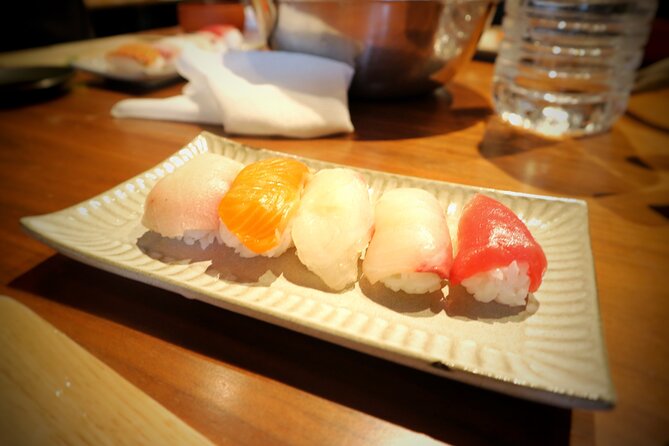
The class does not put you in front of real fish and rice without preparation. You first practice the grip and shaping procedures with models. This is one of the strongest parts of the experience because sushi-making depends on small hand movements that are difficult to copy after only one demonstration.
Nigiri looks simple on the plate, but the shape matters. You need to handle the rice without crushing it, place the topping correctly, and form the piece with enough pressure to hold together without making it dense. Repeating the motion with a model gives you room to make mistakes before ingredients are involved.
I appreciate this teaching choice. A rushed class might hand you rice, fish, and seaweed, then call the result a lesson. Here, the practice step gives the activity a more structured feel, similar to the repetitive training used in sushi instruction schools.
You should still keep your expectations realistic. This is a short introduction, not professional chef training. By the end, you can expect to understand the basic movements and make your own pieces, but not master the craft of a Tokyo sushi chef in one sitting.
Making nigiri with real fish and rice
After practicing, you try nigirizushi with real ingredients. The fish selection changes with the season, so the exact pieces available on your date are not fixed. That is a good feature for the food experience, since seasonal seafood is part of the way sushi is enjoyed in Japan.
The class description promises a substantial variety and quantity of sushi, enough to leave you full. One especially positive comment praised both the amount of fish and the time available for the lesson. That matters because some food workshops provide a token tasting, while this one aims to make the meal a real part of the experience.
You will work under guidance rather than simply receive a prepared plate. The point is to learn how to shape the rice and place the fish, then eat the finished nigiri. For someone who normally orders sushi but has never considered how each piece is formed, this changes the way you look at the meal.
The fish is the main reason to ask questions if you have dietary restrictions. The menu varies by season, and the published information does not name specific fish or identify every possible allergen. If you need to avoid a particular ingredient, confirm your options before the class.
A completely different kind of day out in Tokyo:
- Mt Fuji and Hakone 1-Day Bus Tour Return by Bullet Train
★ 5.0 · 26,383 reviews - 1-Day Tokyo Bus Tour
★ 5.0 · 14,250 reviews - Tokyo: TOKYO SKYTREE® Admission ticket
★ 4.5 · 11,192 reviews - Tokyo: teamLab Planets TOKYO Digital Art Museum Entry Ticket
★ 4.6 · 9,779 reviews
Rolling maki and learning the right side of nori
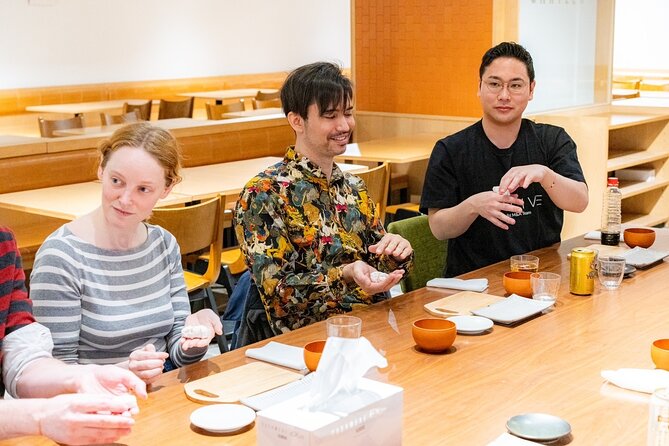
Maki sushi introduces a different set of skills. Instead of shaping rice around a topping, you work with nori and fillings, then roll the ingredients into a neat cylinder. The class gives you hands-on guidance rather than expecting you to know how tightly to roll or how much filling to use.
The information provided does not spell out every filling or cutting step, so you should think of maki as part of the practical introduction rather than a detailed specialist lesson. You will get the basic idea of how the roll is assembled and how the seaweed holds the ingredients together.
A small but useful point is the lesson on the front and back of nori. That detail is easy to miss when you first make sushi. Learning which side to use helps explain why the sheet has a different texture on each surface and gives your homemade rolls a better chance of holding together.
For families, this part may be especially engaging because rolling feels more like a small project than a formal cooking drill. The group size can reach 50, though, so individual attention may vary. If you prefer a quiet, highly personal lesson, ask about the expected class size before confirming.
Building gunkan sushi, the warship-shaped piece
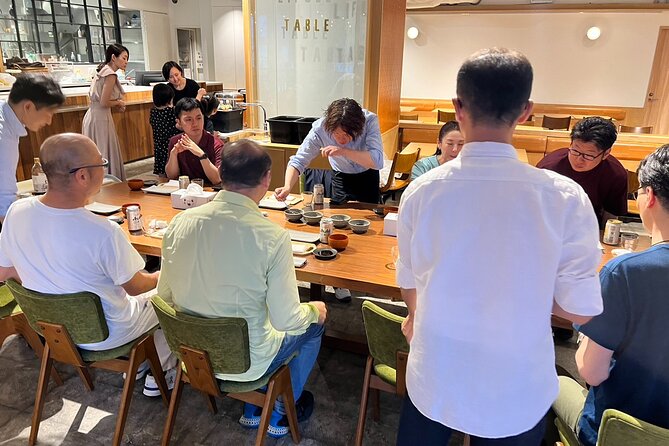
The final technique is gunkan sushi, whose name refers to its warship-like shape. A strip of nori wraps around a small mound of rice, creating a raised edge that can hold loose toppings.
The lesson includes examples such as salmon roe and negitoro, described as crushed tuna, along with other similar toppings. You learn how to build the seaweed wall and how to handle the front and back of the nori. This gives the class a wider range than a simple nigiri demonstration.
Gunkan is a good addition because it shows how sushi responds to different textures. Firm fish works well on top of rice, while loose ingredients need support. Once you see that basic principle, the different sushi shapes make more sense.
As with the nigiri, the exact toppings may vary. Seasonal supply can affect what you make, and the description does not promise one fixed menu. That is normal for seafood, but it is worth remembering if you are booking because you want one particular fish or topping.
Finishing the meal with sushi etiquette
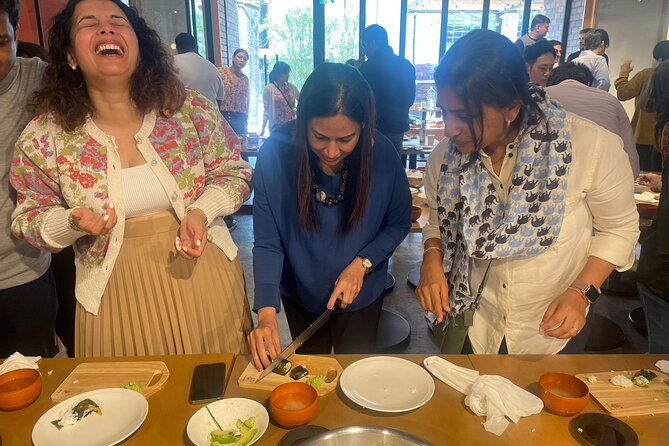
The activity ends with a chance to eat what you have prepared. The lesson also covers proper sushi-eating etiquette, so you get guidance on more than the mechanics of rolling and shaping.
This is a smart finish. You can make food at home by following a recipe, but eating sushi well in Japan includes questions of handling, dipping, and presentation. The class gives you a simple introduction to those customs without turning lunch into a formal exam.
I would arrive hungry. The class is designed to provide a generous amount of sushi, and the food is part of the value, not just a sample after the demonstration. You also get the satisfaction of tasting pieces that you shaped yourself, even if some look more polished than others.
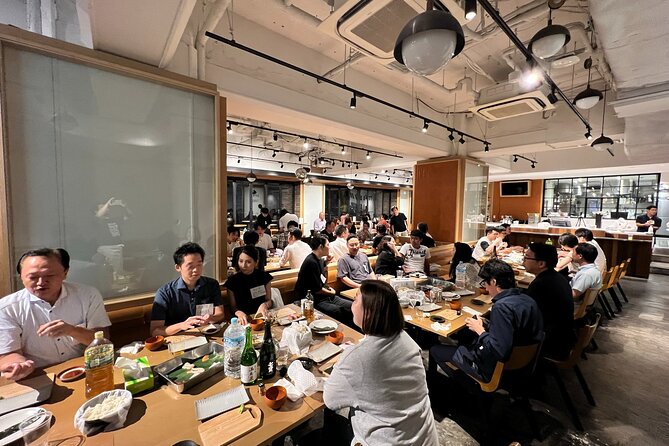
The social side matters here too. You mingle with other people who want to learn about sushi, which can make the workshop lively and friendly. A group of up to 50 is not ideal for everyone, but it can work well for families, couples, and larger parties who want a shared activity.
Vegetarian and vegan participation
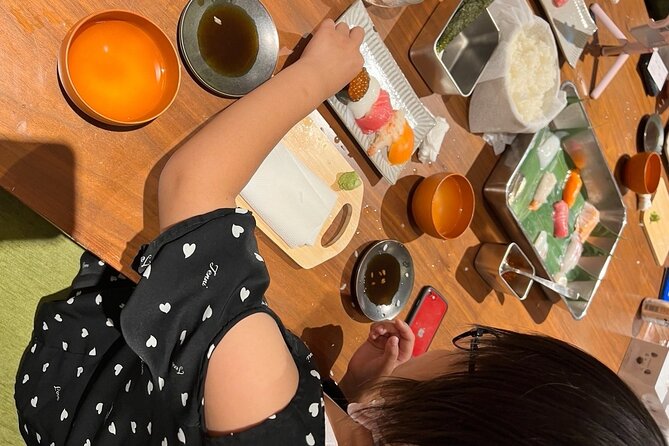
Vegan and vegetarian options are available, making this class more inclusive than a fish-only sushi lesson. If someone in your party does not eat seafood, they can still take part in the preparation and rolling activities.
The details do not list the exact plant-based ingredients or explain whether the vegan and vegetarian versions cover every technique. I would contact the provider before booking if you have strict dietary requirements, allergies, or concerns about shared ingredients.
For a mixed group, this flexibility is valuable. The fish eaters can work with seasonal seafood while non-fish eaters take part with suitable alternatives. Nobody has to sit out while the rest of the group prepares dinner.
Is $109.01 a fair price?
At $109.01 per person, this is not a cheap meal. The value comes from combining instruction, ingredients, equipment, a hands-on activity, and a filling sushi meal in one short session.
I would compare it with what you want from your Tokyo food budget. If you only want the lowest-cost way to eat sushi, a casual restaurant will usually make more sense. If you want to learn the basic methods and have an activity you can talk about afterward, the price is easier to justify.
The generous fish portions improve the value. You are not paying only for a demonstration where someone else prepares the food. You practice the techniques, use real ingredients, and eat your work at the end.
The class also saves time. A 60 to 90-minute workshop can fit into a packed Tokyo day more easily than a long cooking course. Just confirm the exact duration so you can plan trains, meals, and nearby sightseeing without cutting things close.
Who will enjoy this class most?
I would recommend Taisho Sushi Making to:
- First-time sushi makers who want clear, guided practice
- Food lovers with limited time in Tokyo
- Families and larger groups looking for a shared activity
- People who want to eat a substantial amount of sushi after learning
- Mixed-diet groups that need vegetarian or vegan choices
- Visitors curious about sushi etiquette as well as preparation
I would be more cautious if you want a tiny class, private coaching, or a highly advanced lesson. A maximum of 50 participants means the atmosphere may be social and active, but personal instruction could be limited compared with a small workshop.
Service animals are allowed, and the meeting point is near public transportation. Those details make the activity easier for some visitors, though the available information does not provide further accessibility details.
Booking, timing, and cancellation advice
The experience is often reserved about 23 days ahead, so booking a few weeks early is sensible if you need a particular date. Confirmation arrives within 48 hours, subject to availability.
Free cancellation is available if you cancel at least 24 hours before the local start time. Cancellations or changes made inside that window are not refunded or accepted. The class also requires a minimum number of participants, so if the provider cancels for that reason, you can choose another date or receive a full refund.
My take: book it for the hands-on meal
I would book Taisho Sushi Making if you want a short, practical Tokyo food experience rather than another restaurant reservation. The model practice, real fish and rice, gunkan lesson, etiquette advice, and generous portions create a well-rounded introduction.
The two questions I would settle before paying are the actual class length and the exact vegetarian or vegan menu. I would also consider the possible 50-person group size. If those points fit your plans, the class offers good value for an active meal and a skill you can try again at home.
FAQ
Where does the Taisho Sushi Making Class meet?
The meeting point is 1-chōme-4-4 Kōjimachi, Chiyoda City, Tokyo 102-0083, Japan. The activity ends back at the same meeting point.
How long does the sushi class last?
The booking information lists the experience as approximately one hour, while the detailed class description calls it a 90-minute experience. Confirm the exact timing when you book.
Are ingredients and equipment provided?
Yes. You come empty-handed because all equipment and materials are provided.
Can vegetarians and vegans join?
Yes. Vegetarian and vegan options are available for people who do not eat fish. The exact ingredients are not specified, so confirm the details if you have strict dietary needs.
What types of sushi will I learn to make?
The class covers nigiri, maki, and gunkan sushi. You practice with models first, then work with real fish and rice for nigiri, and learn about nori and toppings for gunkan.
Can I cancel for a full refund?
Yes, if you cancel at least 24 hours before the experience start time. Cancellations made less than 24 hours before the start are not refunded.
Just added around Tokyo
- Tokyo 6hr Instagram Highlights Private Tour with Licensed Guide★ 5.0 · 38 reviews
- Tokyo Small Group Tour with Guide★ 4.5 · 38 reviews
- Tokyo Sumo Experience with Live Show & Audience Challenge★ 5.0 · 38 reviews
- Japanese Food Cooking Class in Asakusa, Tokyo★ 5.0 · 39 reviews
- Very popular in Harajuku♡Animal petting zoo★ 4.6 · 39 reviews
- Ramen Making from Scratch with Tokyo Mom(Vegan Option Available)★ 5.0 · 39 reviews
- Tokyo: Kimono Rental inside Shinjuku Gyoen National Garden★ 4.9 · 39 reviews
- Tokyo JDM Night: 600hp C63s AMG Edition 1 (Private)★ 4.9 · 39 reviews
Sushi-Making Classes, compared.
Sushi Making Tokyo Roll and Authentic Japanese Sushi Class
Read our review →
Roll and Authentic Sushi Making Class in Asakusa
Read our review →
Make Sushi and Create Unforgettable Memories in Tokyo
Read our review →
Sushi Making Class in a Happi Coat near a Famous Spot
Read our review →
Sushi Making Osaka Roll and Authentic Japanese Sushi Class
Read our review →
Tokyo Sushi Making Class in Tsukiji with Professional Chef
Read our review →
Tsukiji Fish Market Guided Tour and Sushi Making with Pro Chef
Read our review →
Sushi Making in Kyoto! Same-day bookings welcome!
Read our review →Browse the lists this tour appears in