
Reviewed · GOVERNMENT-LICENSED GUIDE TOURS
Tokyo 8hr Private Tour with Government-Licensed Guide
Tokyo rewards a plan. This private eight-hour tour helps you fit a lot into one day while keeping the route shaped around your interests. I like the hotel pickup on foot and the chance to choose four to six places, especially for a first visit. The main catch is simple: it is a walking tour, and using Tokyo’s trains still requires energy, extra fares, and some planning.
I also like the human touch. Guides such as Koba, Taka, An, Nori, and Kenji have helped visitors learn the subway, adjust routes for rain or heat, find suitable restaurants, and take family photos. You should expect a useful orientation to Tokyo, not a private car and not a leisurely stop at every sight.
In This Review
- Key points to know before booking
- Why this tour works well on a first day
- How the eight hours are actually used
- Asakusa and Senso-ji, Tokyo’s classic opening
- Imperial Palace and Tokyo’s former Edo center
- Meiji Jingu, Harajuku, and Yoyogi Park
- Shibuya Crossing and the modern city
- Gardens for a slower and greener Tokyo
- Museums, markets, and specialty districts
- Old neighborhoods and Tokyo Bay
- Getting around, meals, and the walking load
- What the $201.51 price buys you
- Who should book this private Tokyo day
- Should you book it?
- FAQ
- How long is the Tokyo private tour?
- Is hotel pickup included?
- Is this a private activity?
- How many sights can I choose?
- Is transportation included?
- Is a private vehicle provided?
- Are entrance fees included?
- Can I enter the Imperial Palace?
- Does Tokyo Tower admission include the top deck?
- Is lunch included?
- Can the tour date be changed?
- What is the cancellation policy?
Key points to know before booking
- You choose four to six sights: Build a classic route with Asakusa, Meiji Shrine, Shibuya, and the Imperial Palace, or focus on gardens, museums, old neighborhoods, and food.
- The pickup is on foot: Your guide meets you at your hotel, but there is no private vehicle included.
- Public transport is part of the day: Train and subway fares are extra, yet guides can show you how to use Tokyo’s complicated station system.
- Expect a serious walking day: Several people have covered roughly 22,000 steps, while others found the pace difficult for older companions or anyone with knee trouble.
- Entry fees are usually extra: Shinjuku Gyoen, Tokyo National Museum, Koishikawa Korakuen, Hama Rikyu, Rikugien, and Tokyo Tower charge admission.
- The strongest value is personal guidance: You pay $201.51 per person for a private experience, which makes the most sense for families or small groups that want a tailored introduction.
Why this tour works well on a first day
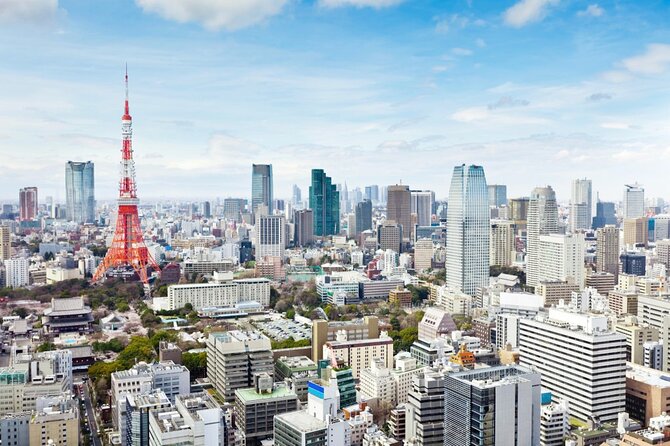
Tokyo can feel like several cities stitched together by train lines. Asakusa is old Tokyo, Shibuya is modern Tokyo, Meiji Jingu offers a forested shrine setting, and the Imperial Palace gives you a glimpse of the city’s political center. Seeing even four of these in one day is easier with someone who understands the routes.
The guide’s role is not only to point at famous buildings. A good guide can explain how to purify yourself before entering a shrine, show you how to use a Suica transit card, help you read station signs, and explain everyday customs. One guide even helped with souvenir shopping and translated for a visitor in local shops.
That kind of practical help can pay off for the rest of your trip. After one guided day, you may feel more comfortable ordering lunch, changing trains, and deciding which areas deserve another visit.
The experience is private, so only your group participates. That matters if you are traveling with children, older relatives, or friends with very different interests. You can slow down, change a stop, or replace one district with another without waiting for strangers.
Still, the tour is not a magic way to avoid Tokyo’s size. You may spend a good part of the day walking between stations, through parks, and across busy neighborhoods. The city rewards speed and good shoes, but a flexible guide can adjust the plan when rain, heat, illness, or fatigue gets in the way.
More Licensed Guide Tours in Tokyo
- Tokyo 6hr Private Tour with Government-Licensed Guide
★ 5.0 · 3,902 reviews - Tokyo 4hr Private Tour with Government-Licensed Guide
★ 5.0 · 1,394 reviews - Tsukiji Food and Toyosu Market with Government-Licensed Guide
★ 5.0 · 158 reviews
How the eight hours are actually used
The supplied timing suggests short visits at many stops, but the tour description says you should choose four to six sites. That distinction is important. The listed stops are a menu, not a promise that you will visit all 19 places.
A route covering Asakusa, the Imperial Palace, Harajuku, and Shibuya is possible with efficient train travel. A day built around gardens and museums will feel slower. If you add Tokyo Tower, a museum visit, or several paid gardens, entrance lines and transit time will reduce the time available for other areas.
Contact with your guide before the tour is useful. Several guides have reached out early to agree on a plan, and this is the moment to name your priorities. Tell the guide if you care most about temples, gardens, food, anime, shopping, photography, history, or helping children enjoy the day.
Asakusa and Senso-ji, Tokyo’s classic opening
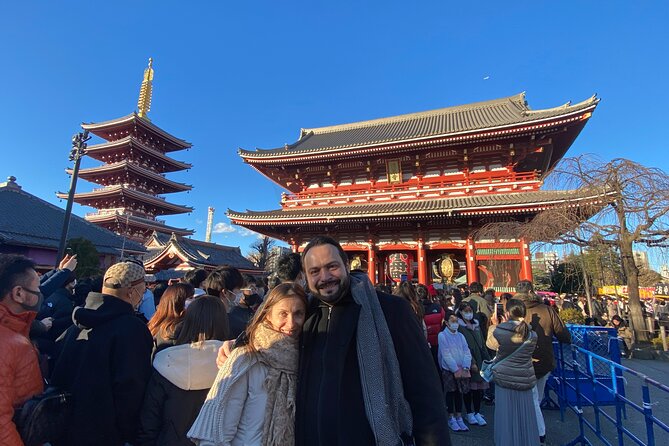
Asakusa is one of the best choices for a first stop. Senso-ji, Tokyo’s famous Buddhist temple, gives you a clear introduction to Japanese religious customs and traditional streets. The area has plenty of visual drama, yet it is also a place where a guide can explain what you are seeing instead of leaving you to guess.
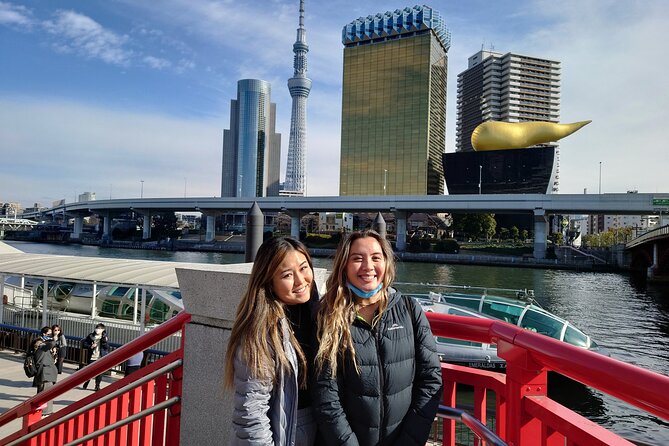
The tour lists both Asakusa and Senso-ji separately, but they are part of the same general area. You can also view Tokyo Skytree from around Asakusa, although the tower itself is not listed as an included stop.
Allow more than the five-minute sample timing if the temple matters to you. That short estimate is best understood as a quick visit. If you want time for the approach, temple grounds, nearby shopping, and lunch, make Asakusa one of your main four or five selections.
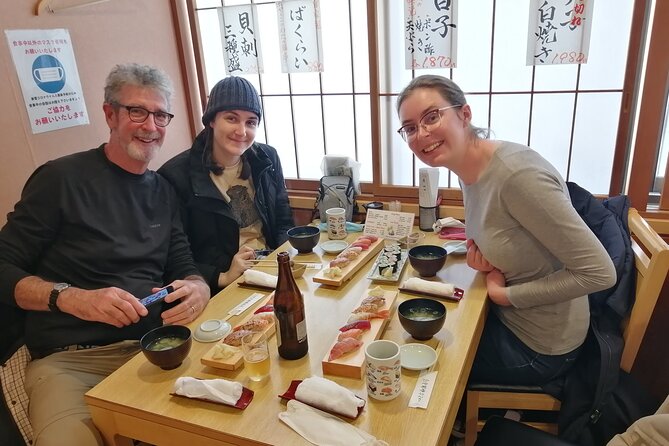
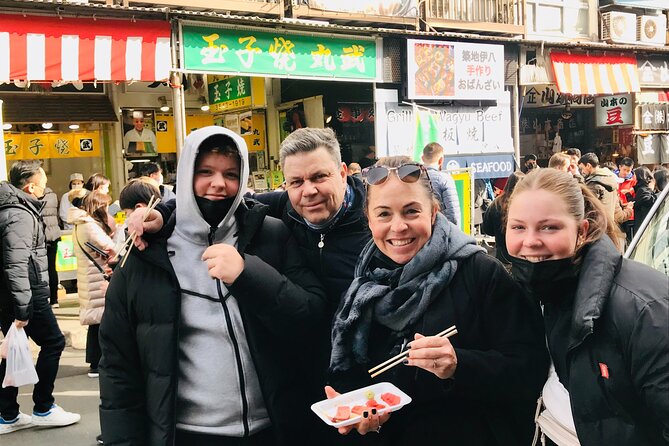
Several itineraries have included a local Japanese meal in this area, including sushi and tempura. Lunch is not included in the price, so you pay separately, but your guide can help you choose a place that matches your budget and tastes.
Imperial Palace and Tokyo’s former Edo center
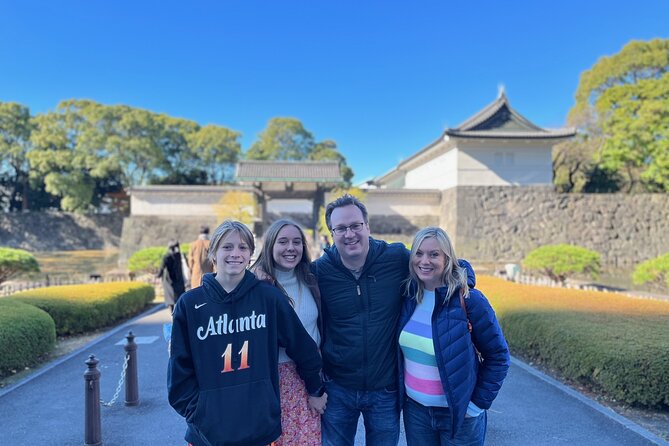
The Imperial Palace occupies the former site of Edo Castle. You can see the surrounding park area, moats, and large stone walls, and some routes include the East Gardens. The tour does not include access to the inside of the Imperial Palace, so set your expectations correctly.
This stop works well for visitors who want history without spending hours in a museum. The open grounds offer a change from Tokyo’s dense streets, and guides can connect the site to the city’s period as Edo and to the Tokugawa shogunate.
The sample timing is only 30 minutes, so you will not cover every corner. If gardens or Japanese history are central to your interests, ask for more time here and remove one of the quick photo stops.
A completely different kind of day out in Tokyo:
- Mt Fuji and Hakone 1-Day Bus Tour Return by Bullet Train
★ 5.0 · 26,383 reviews - 1-Day Tokyo Bus Tour
★ 5.0 · 14,250 reviews - Tokyo: TOKYO SKYTREE® Admission ticket
★ 4.5 · 11,192 reviews - Tokyo: teamLab Planets TOKYO Digital Art Museum Entry Ticket
★ 4.6 · 9,779 reviews
Meiji Jingu, Harajuku, and Yoyogi Park
Meiji Jingu Shrine sits beside Harajuku Station, yet the setting feels removed from the traffic and shops. It is dedicated to the deified spirits of Emperor Meiji and Empress Shoken. Your guide can explain shrine etiquette, including purification before you enter.
The sample itinerary gives Meiji Jingu only five minutes, which is far too brief for anyone wanting a calm visit. Treat that figure as a quick stop within a larger route, not as the ideal amount of time.
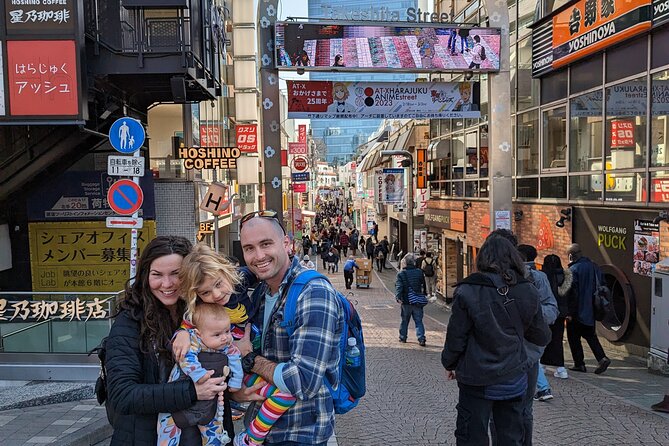
Takeshita Street offers the opposite mood. It is associated with youth fashion, unusual shops, sweets, and Tokyo’s teenage culture. One family paired it with Tokyo Tower, Asakusa, and Shibuya, while another guide adjusted the plan to show both historic and modern sides of the city.
Yoyogi Park can add a quieter stretch of walking. It has broad lawns, ponds, and wooded areas, with room for outdoor activities. Choose it if you want a break from shops and train stations, but remember that every extra park adds walking time.
Shibuya Crossing and the modern city
Shibuya Crossing is a natural final stop because it delivers an instant picture of modern Tokyo. The crossing itself is free, but the experience is mostly about timing, people-watching, and finding a useful viewpoint.
A guide can help you reach an overhead view or the best practical place for photos. One guide also took photographs throughout the day, which is valuable if you are traveling as a couple or family and want pictures of everyone together.
Shibuya pairs well with Harajuku because the two areas connect naturally by train and on foot. It does not pair as neatly with far eastern Tokyo stops such as Shibamata unless you are willing to spend more of the day in transit.
Gardens for a slower and greener Tokyo
Tokyo’s gardens are a strong choice if you want beauty and quiet instead of constant shopping. Shinjuku Gyoen National Garden has broad lawns, winding paths, and a break from the dense Shinjuku district. Admission is not included.
Koishikawa Korakuen is one of Tokyo’s oldest Japanese gardens. It was built in the early Edo period for the Mito branch of the ruling Tokugawa family. Rikugien, created around 1700 for the fifth Tokugawa shogun, is another major garden and is often considered one of the city’s finest.
Hama Rikyu offers a different setting beside Tokyo Bay. Its seawater ponds change with the tides, and the garden includes a teahouse. Admission is extra here as well.
Do not try to visit all three gardens in one day unless gardens are your only priority. Each deserves time, and the train transfers between districts can eat into your eight hours. Shinjuku Gyoen is the easiest choice for a first visit if you also want Shibuya or Harajuku.
Museums, markets, and specialty districts
The Tokyo National Museum in Ueno is the oldest and largest of Japan’s top-level national museums. A 35-minute sample visit gives you an introduction, not a full museum day. If you love Japanese art and history, make this a main stop and accept fewer neighborhoods.
Tsukiji Fish Market is useful for food and atmosphere. It is the old fish market area, and guides have included sushi stops nearby. The market visit itself is free, but you pay for anything you eat.
Akihabara is known for electronics shops and has become a center for anime, games, and related popular culture. The suggested timing is only five minutes, so that is enough for a look, not serious shopping. Ask for more time if electronics or anime are your main reason for visiting.
Shinjuku Golden Gai has a dense collection of small eating and drinking establishments with roots in the postwar period. A brief visit lets you see the narrow streets, but the tour does not include dinner or drinks. You should also be clear about your comfort level before making this a major stop.
Old neighborhoods and Tokyo Bay
Nezu and nearby Yanaka retain elements of old downtown Tokyo. These districts avoided major damage from wars and natural disasters, and they offer a less polished side of the city. They are good choices if you have already seen the major landmarks or prefer local neighborhoods to famous photo stops.
Shibamata, at Tokyo’s eastern edge near the Edogawa River, also keeps an old-fashioned character. Its location makes it a poor match for a west Tokyo route, so choose it only if this quieter side of the city matters to you.
Odaiba is a shopping and entertainment district on a man-made island in Tokyo Bay. The area began as a group of fortified islands, and it now has a very different purpose. The listed five-minute stop is a quick look, not enough for shopping or entertainment.
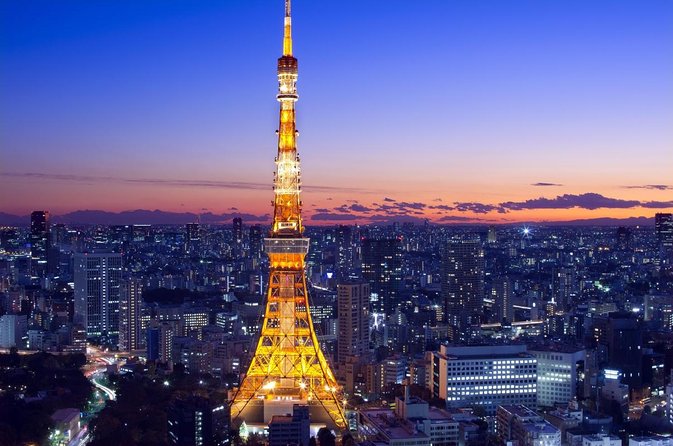
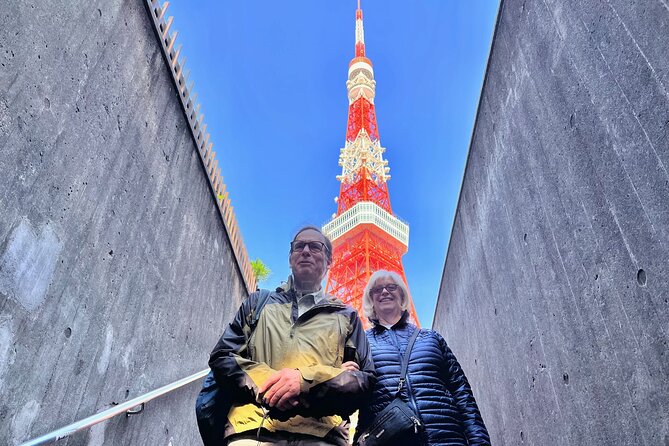
Tokyo Tower is another brief stop in the suggested plan. The tour includes access only up to the main deck, and the top deck is not included. Admission is extra. If city views are important, ask your guide to make the tower a central stop rather than squeezing it between several neighborhoods.
Getting around, meals, and the walking load
This tour includes no private vehicle. Your guide meets you at your hotel on foot, and you continue by walking and public transport. Train, subway, and bus fares are not included, so budget for those separately.
Tokyo’s rail system is one of the tour’s practical advantages. Guides such as Taka, Nori, and Koba have helped people understand stations, transfers, and transit cards. Nori was especially careful with train and bus timing, while Taka checked on a visitor with an injured foot throughout the day.
That does not remove the physical demands. One full day reached about 22,000 steps, and another family found the walking difficult for an older person with bad knees. Tell the guide about mobility limits before the tour and ask for a slower route with fewer districts.
Weather matters too. A guide adjusted one itinerary during heavy rain, and another visitor found the cool winter weather ideal for a full day outdoors. Summer heat can change the experience, so you may prefer two separate half-day tours if you know long walks are hard for you in hot weather.
Lunch and personal expenses are extra. The guides have helped arrange ramen, tempura, sushi, and small local restaurant meals, but you should not assume a meal is part of the $201.51 price.
What the $201.51 price buys you
At $201.51 per person, this is not the cheapest way to see Tokyo. You are paying for a private licensed English-speaking guide, hotel pickup on foot, itinerary planning, and personal help with a city that can take time to understand.
The value improves with a small group. A family of four gets individual attention without joining a large coach group, and the guide can shape the day around children, shopping, history, or food. Group discounts may also be available, though the exact savings are not provided.
The price is harder to justify if you only want a few famous photo stops. You can reach Shibuya Crossing, Senso-ji, or Meiji Jingu independently using public transport. The stronger reason to book is the combination of explanations, route planning, local advice, and confidence using the trains.
The guide quality appears to be a major part of the experience. Specific guides praised for warmth, flexibility, and practical help include Yuri, Kenji, Taka, Koba, Koji, Kazu, Yoshii, An, Nori, Tani, Izumi, and Masa. Your assigned guide may differ, so think of the company’s broad range of guide strengths rather than expecting one particular person.
Who should book this private Tokyo day
I would recommend it most strongly to first-time visitors who want orientation fast. It also suits families, couples, and small groups that disagree about what to see. If you want help with trains, shrine customs, food choices, or photography, the private format can be worth the cost.
It is a good fit for visitors staying only a short time. You can see traditional, modern, and historic parts of Tokyo in one day, then return to the areas you liked best later.
I would be more cautious if you dislike walking, want a slow museum visit, or expect a private car. This is not a sightseeing ride. It is an active day using the same streets and railways that make Tokyo work.
Free cancellation is available up to 24 hours before the start time. Date changes made less than 24 hours before the tour are not accepted, and changes made earlier can still lead to a different guide or no availability.
Should you book it?
Book this tour if you want a personal Tokyo orientation and are ready to walk. Before the day, choose your top four priorities and tell the guide what you do not care about. A strong plan might pair Asakusa, the Imperial Palace, Meiji Jingu, and Shibuya, while a history-focused day could favor Ueno, gardens, Nezu, and Asakusa.
Skip it if you prefer to explore independently or want to spend most of the day in one museum or garden. For everyone else, the tour’s real value is not the number of stops. It is having a local guide help you make sensible choices in a very large city.
FAQ
How long is the Tokyo private tour?
The tour lasts approximately eight hours.
Is hotel pickup included?
Yes. The guide meets you at your hotel, but pickup is on foot rather than by private vehicle.
Is this a private activity?
Yes. Only your group participates, and multiple tour groups cannot be combined.
How many sights can I choose?
The tour includes a customizable walking route featuring four to six sites from the provided list.
Is transportation included?
No. Transportation fees are not included. You use public transportation and walk between locations.
Is a private vehicle provided?
No. The tour does not include a private vehicle.
Are entrance fees included?
Most entrance fees are not included. Admission is specifically listed as extra for places such as Shinjuku Gyoen, Koishikawa Korakuen, Hama Rikyu, Tokyo National Museum, Rikugien, and Tokyo Tower.
Can I enter the Imperial Palace?
No. The tour does not include access inside the Imperial Palace.
Does Tokyo Tower admission include the top deck?
No. Access is limited to the main deck. The top deck is not included.
Is lunch included?
No. Lunch and personal expenses are extra.
Can the tour date be changed?
Tour dates can be changed up to two days before the tour, but a change may result in a different guide or no availability.
What is the cancellation policy?
You can cancel at least 24 hours before the start time for a full refund. Cancellations made less than 24 hours before the start time are not refunded.
Just added around Tokyo
- Tokyo 6hr Instagram Highlights Private Tour with Licensed Guide★ 5.0 · 38 reviews
- Tokyo Small Group Tour with Guide★ 4.5 · 38 reviews
- Tokyo Sumo Experience with Live Show & Audience Challenge★ 5.0 · 38 reviews
- Japanese Food Cooking Class in Asakusa, Tokyo★ 5.0 · 39 reviews
- Very popular in Harajuku♡Animal petting zoo★ 4.6 · 39 reviews
- Ramen Making from Scratch with Tokyo Mom(Vegan Option Available)★ 5.0 · 39 reviews
- Tokyo JDM Night: 600hp C63s AMG Edition 1 (Private)★ 4.9 · 39 reviews
- Tokyo: Kimono Rental inside Shinjuku Gyoen National Garden★ 4.9 · 39 reviews
Government-Licensed Guide Tours, compared.
Tokyo 6hr Private Tour with Government-Licensed Guide
Read our review →
Tokyo 4hr Private Tour with Government-Licensed Guide
Read our review →
Kyoto 6hr Private Tour with Government-Licensed Guide
Read our review →
Hiroshima / Miyajima Full-day Private Tour with Government Licensed Guide
Read our review →
Kyoto 4hr Private Tour with Government-Licensed Guide
Read our review →
Hiroshima City 4hr Private Walking Tour with Licensed Guide
Read our review →
Private Kyoto Tour with Licensed Guide & Vehicle (Max 15 persons)
Read our review →Browse the lists this tour appears in