
Reviewed · HISTORICAL TOURS
Tokyo: Imperial Palace, the history of Japan (ENGLISH GUIDE)
History hides in the garden. This $40 walking tour leads you from Tokyo Station or Otemachi Station into the eastern grounds of the former Edo Palace, where stone walls, gardens, barracks, trees, and a special breed of koi help explain how Japan changed from a feudal society into the country you see today. I like that the tour uses the palace grounds as a living classroom rather than treating the site as a quick photo stop.
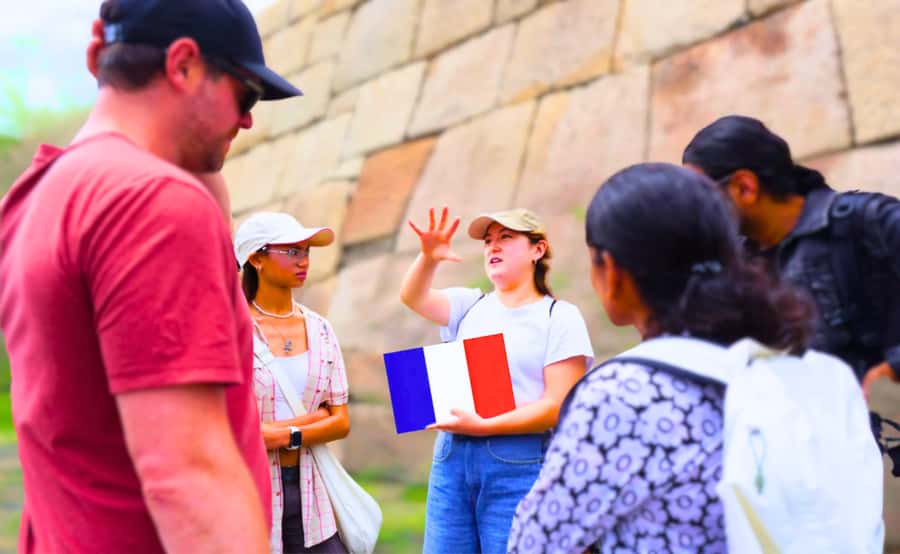
I especially like the chance to see the former base of Edo Castle, more than 350 years old, and the small details that are easy to miss alone, including the palace model, regional trees, and unusual koi. The small-group feel can also make a difference. One guest described a group of five with guide Nicolas, a Franco-Japanese guide who answered questions about Japanese mythology, language, the imperial family, and Japan in general. The main consideration is the language: the experience title refers to an English guide, but the detailed information lists a French guide and French as the available language, so confirm this before paying.
In This Review
- Key Details At a Glance
- Meeting Near Tokyo Station and Otemachi
- Passing Through Otemon Gate
- The Former Edo Castle Base
- Gardens, Trees, and the Palace’s Quiet Side
- Meeting the Palace Koi
- Japan’s Past, Explained Through One Site
- What the $40 Price Buys You
- Who Will Enjoy This Palace Walk
- Practical Tips Before You Go
- Should You Book This Imperial Palace Tour?
- FAQ
- How much does the Imperial Palace history tour cost?
- Where does the tour start?
- How do I find the guide?
- Is the inner palace included?
- What language is the tour offered in?
- Does the tour operate in bad weather?
- Can I cancel for a full refund?
Key Details At a Glance
- Former Edo Castle grounds: Walk across the site where Edo Castle once anchored the political power of Japan.
- Eastern garden setting: See ornamental gardens, palace ruins, stonework, and trees representing different prefectures.
- Special koi: Look for a distinctive breed of koi found only here.
- Guide-led context: The visit connects the palace, samurai-era government, the imperial family, and modern Japan.
- Central Tokyo meeting point: Meet near the fountain by Starbucks in Wadakuramon Fountain Park, a 5 to 10 minute walk from Tokyo or Otemachi Station.
- Outdoor in all weather: Wear suitable clothing because the tour operates in good weather and bad.
Meeting Near Tokyo Station and Otemachi
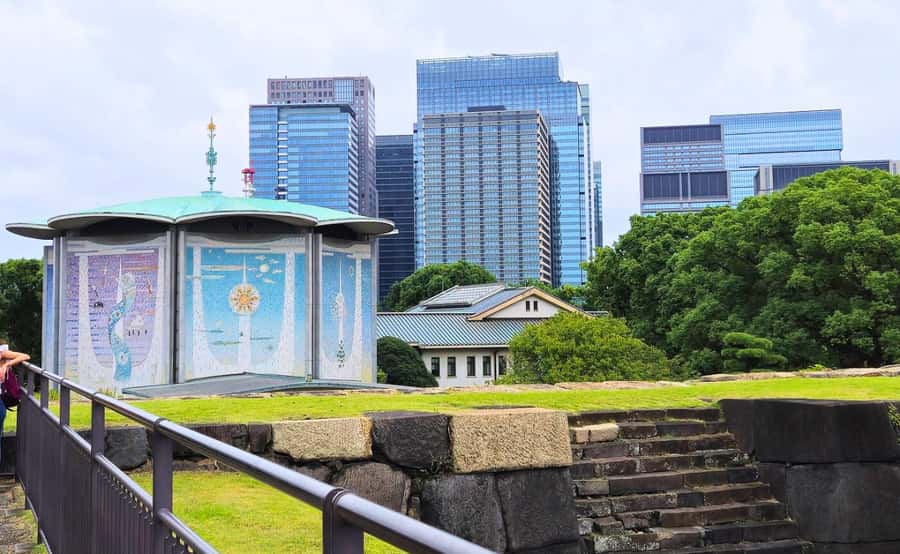
The tour begins at Wadakuramon Fountain Park, close to the Imperial Palace and within a short walk of two major stations. From Tokyo Station or Otemachi Station, allow about 5 to 10 minutes to reach the park and find the Starbucks near the fountain.
Your guide waits near the fountain holding a sign marked SUNRISE ADVENTURE. This is a useful detail in a large city where meeting points can blur together. I would arrive early rather than cutting it close, since the group leaves after 10 minutes if you have not appeared. A central meeting point also makes the tour easy to fit around other Tokyo plans.
The outing ends back at the same meeting point. That helps if you want to continue around Marunouchi, return to Tokyo Station, or make your way elsewhere without arranging a separate pickup.
More History Tours in Tokyo
- Tokyo: Imperial Palace and Shogun Historical Walking Tour
★ 5.0 · 2,251 reviews - Tokyo: Imperial Palace Japanese History Walking Tour
★ 4.9 · 987 reviews - Tokyo: Shinjuku Historical Walking Tour & Secret Backstreets
★ 5.0 · 530 reviews
Passing Through Otemon Gate
From the fountain, you walk together to Otemon, the large main gate of the Imperial Palace grounds. This transition matters. You leave the modern office district and enter a place shaped by military power, court life, and centuries of political change.
The guide uses the gate and surrounding grounds to set the scene for Edo Castle. You are not simply entering a park. You are entering the former political center of the Tokugawa shogunate, the military government that ruled Japan for more than 250 years.
The exact route and order of stops can vary with conditions, but the main focus is the eastern gardens of the former palace. You should expect an outdoor walking visit rather than an indoor palace tour. There is no access to the inner palace, so anyone hoping to see private imperial rooms or ceremonial interiors will need a different experience.
The Former Edo Castle Base
One of the strongest parts of the walk is the chance to see the former base of Edo Castle. The main castle no longer survives, but the remaining foundations and ruins help you understand the scale and importance of the site.
This is where a good guide adds real value. Stone walls and empty spaces can be hard to read on your own. With an explanation of what once stood there, the ruins become evidence of a vanished castle rather than just attractive masonry.
The reason the main castle disappeared is part of the tour’s story. The supplied information does not give the exact explanation, so I will not spoil or invent it here. What matters is that the missing structure is not treated as a disappointment. Its absence becomes a useful way to discuss fire, change, and the shifting meaning of the palace over time.
You also get to see a miniature structure representing the former palace. That model can help you picture the buildings that no longer dominate the grounds. If you enjoy connecting a physical site with an older plan or reconstruction, this should be one of the more useful stops.
Gardens, Trees, and the Palace’s Quiet Side
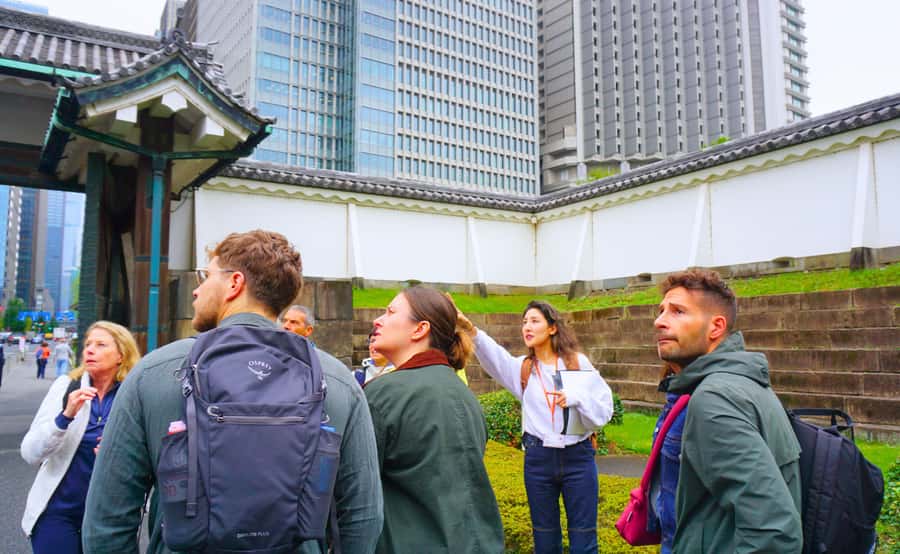
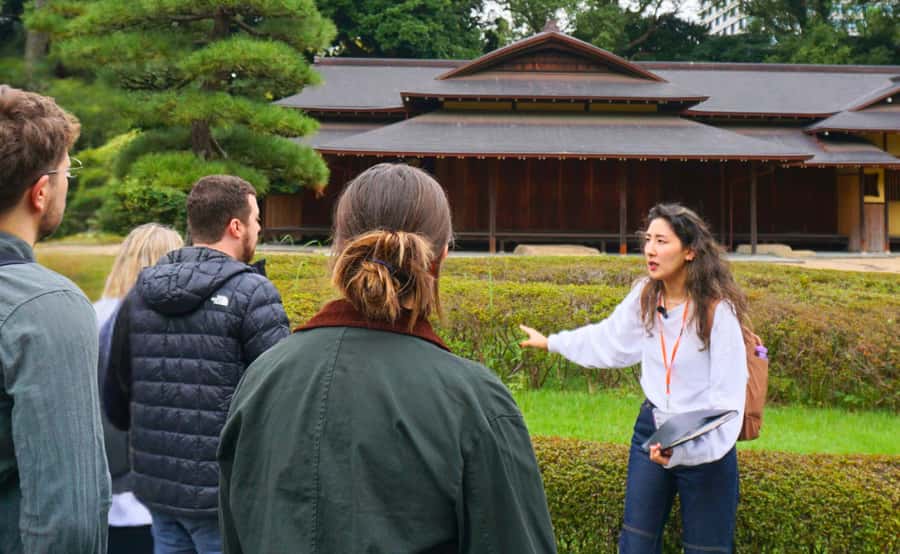
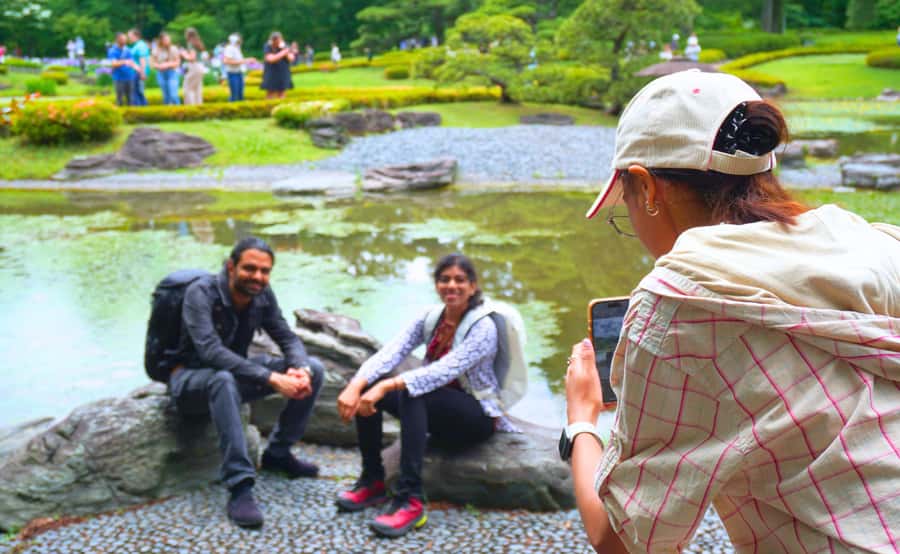
The eastern gardens provide a calmer setting than the traffic and office towers just outside the gates. You walk among ornamental plantings and open spaces while the guide points out features connected to the palace grounds.
The tour also includes trees from different prefectures of Japan. This is a small detail, but it gives the garden a wider national connection. You are not only looking at landscaping around a former castle. You are also seeing how the palace grounds can represent different parts of Japan.
I like this kind of stop because it slows the tour down. A palace visit can become a rush from one famous structure to another. Trees, garden paths, and quieter corners give you time to notice the setting and take photographs without treating every minute as a lecture.
The gardens are also the main reason to dress for the weather. The tour takes place outdoors in good weather or bad. Wear clothing suited to the forecast and shoes you can walk in comfortably. The information does not specify a tour duration, so it is sensible to plan for a proper walking visit rather than a brief look around.
A completely different kind of day out in Tokyo:
- Mt Fuji and Hakone 1-Day Bus Tour Return by Bullet Train
★ 5.0 · 26,383 reviews - 1-Day Tokyo Bus Tour
★ 5.0 · 14,250 reviews - Tokyo: TOKYO SKYTREE® Admission ticket
★ 4.5 · 11,192 reviews - Tokyo: teamLab Planets TOKYO Digital Art Museum Entry Ticket
★ 4.6 · 9,779 reviews
Meeting the Palace Koi
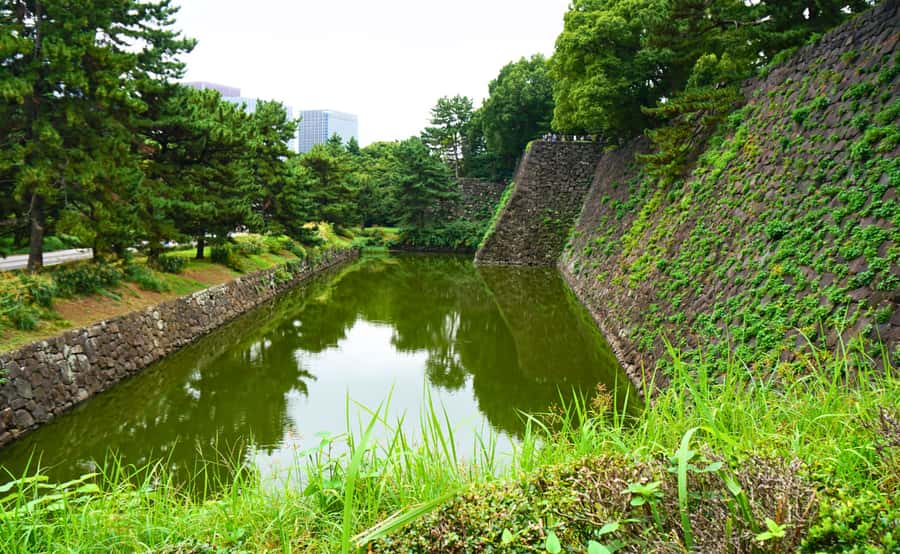
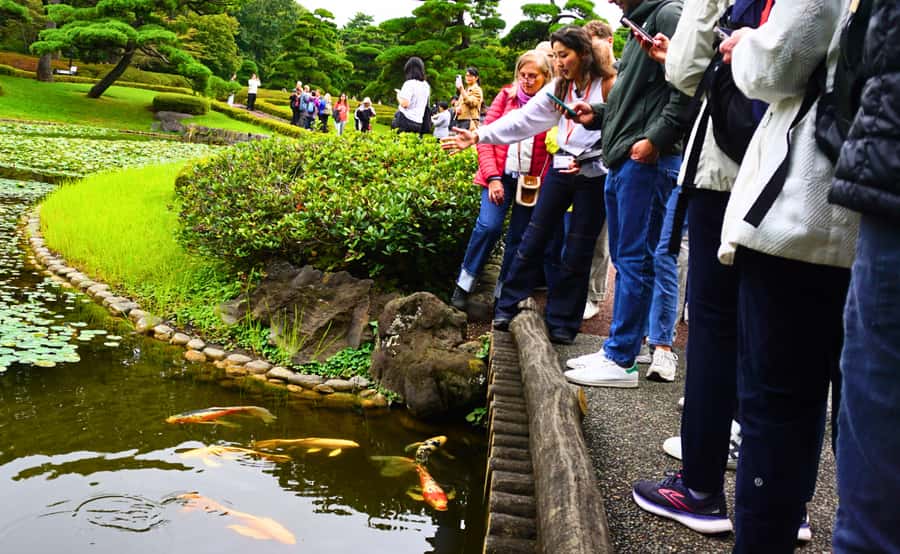
The koi pond adds a lighter moment to the historical route. You have the chance to see a special breed of koi that can only be found at this site.
That detail gives the tour a local character. You could walk through a formal garden and notice fish, but you might not know why they matter. The guide turns an ordinary-looking pond into another small piece of palace history.
This is also a good photo stop. The tour is designed to include attractive places for pictures, and the gardens, stonework, water, and trees offer more variety than a single palace facade would. Keep in mind that photography is part of the experience, not the whole point. The value comes from understanding what you are seeing, then taking home a few images that mean more than a standard Tokyo snapshot.
Japan’s Past, Explained Through One Site

The tour’s larger promise is to show how Japan became the country it is today. That is a broad subject, and one palace walk cannot cover every period or viewpoint. Still, the former Edo Palace gives the guide a strong starting point.
The conversation can connect the samurai government, the imperial family, the former castle, Japanese mythology, language, and modern national identity. Nicolas, identified in the experience information as a Franco-Japanese guide, was praised for explaining the palace and imperial family clearly and for answering a wide range of questions.
That flexibility is important. If you want only dates and architectural facts, a self-guided visit may be enough. If you want to ask why a certain place matters, how the imperial family fits into Japan’s story, or how Japanese ideas changed over time, a guide can make the grounds much easier to understand.
The small-group setting may also help. A group of five allowed for plenty of conversation and made the visit feel friendly. Group size is not guaranteed for every departure, so do not assume every tour will be that intimate. Still, the experience appears best suited to people who enjoy asking questions rather than walking silently behind a flag.
What the $40 Price Buys You
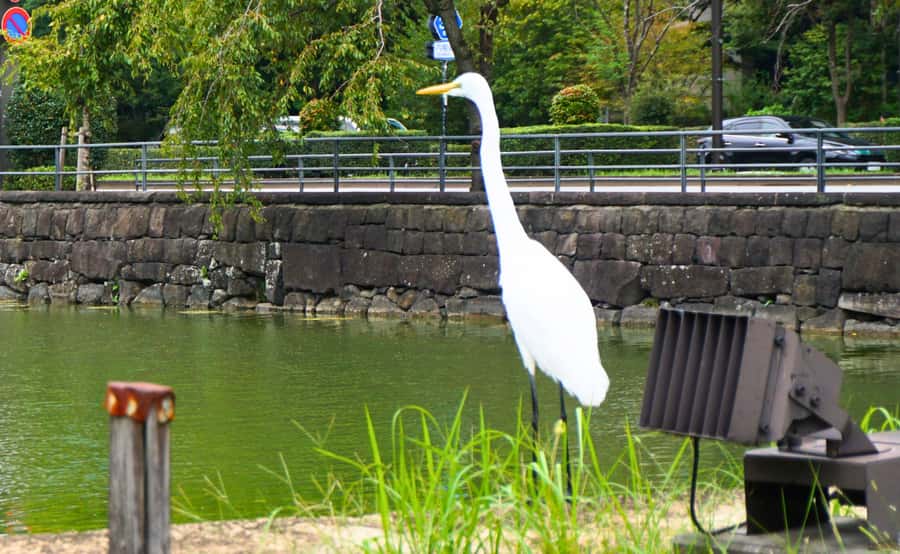
At $40 per person, this is not the cheapest way to enter a Tokyo park. The eastern gardens themselves are not the same as paying for access to a grand indoor palace, and the inner palace is not included.
The value comes from interpretation. You are paying for a historical walking tour, a guide, and a route that brings together castle ruins, gardens, koi, trees, and imperial history. If you arrive with little background on Edo Castle or the shogunate, the explanation can turn a pleasant garden walk into a useful introduction to Japan.
I would book it if you want a guided cultural experience in central Tokyo and prefer learning through conversation. I would skip it if you mainly want access to the inner palace, a private imperial residence, or a long list of grand interiors. The price makes the most sense for someone who values context more than admission to a major building.
The language issue needs special attention. The heading describes an English-speaking guide, but the detailed tour information says French guide and lists French as the language. One included experience describes Nicolas as Franco-Japanese, but that does not guarantee English service on every departure. Confirm the guide language before booking, especially if you do not speak French.
Who Will Enjoy This Palace Walk
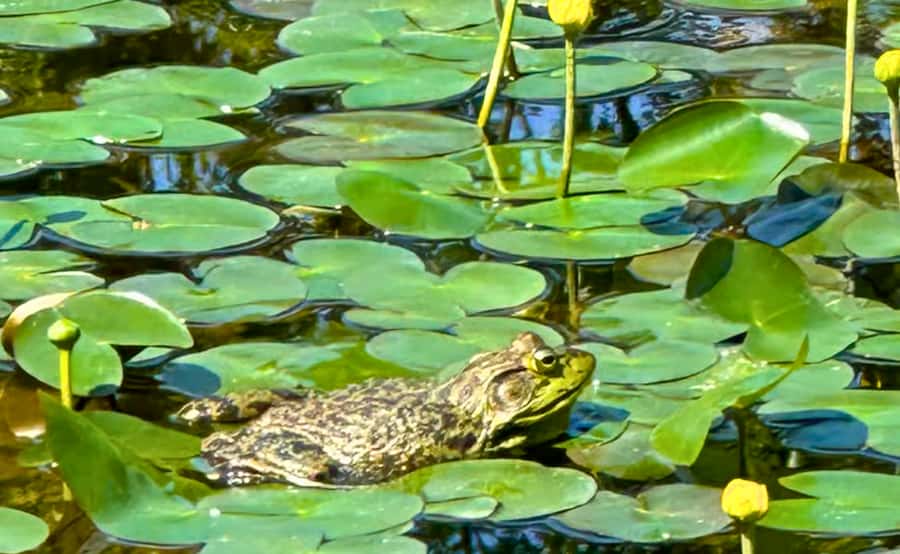
I would recommend this experience to first-time visitors who want a manageable introduction to Japanese history without leaving central Tokyo. It also suits returning visitors who have seen the city’s modern districts and want a quieter place with a clear connection to the past.
Families and curious older children could enjoy the koi, model structure, gardens, and castle ruins, though the outdoor format means everyone should be ready to walk in the weather. History fans will get the most from the explanations of Edo Castle, the soldiers’ barracks, and the imperial grounds.
The tour may be less suitable if you want a private experience or a fixed, highly detailed architectural route. The supplied information does not promise private guiding, a set duration, or inner-palace access. You should also avoid booking it as a rainproof activity. The tour continues in poor weather, and there is no suggestion of an indoor replacement.
Practical Tips Before You Go
Arrive at the fountain before the meeting time. Tokyo Station and Otemachi Station are large, and a 5 to 10 minute walk can take longer if you exit at the wrong point.
Look for the Starbucks near the fountain in Wadakuramon Fountain Park and the SUNRISE ADVENTURE sign. Do not wait at an unrelated palace entrance.
Dress for the forecast. The tour operates in good weather and bad, and much of the experience takes place outdoors in gardens and open palace grounds.
Bring questions. The strongest part of the experience is the guide’s ability to connect the site with broader subjects. Nicolas was praised for discussing mythology, language, Japan in general, and the imperial family, so this is a good place to ask rather than simply listen.
Respect the grounds. Smoking, drones, alcohol, drugs, littering, and skateboards are not allowed. The rules are simple, but they matter in a formal historic site.
The booking terms offer flexibility: you can reserve and pay later, and cancellation up to 24 hours in advance qualifies for a full refund. That is useful when Tokyo plans depend on weather and energy levels.
Should You Book This Imperial Palace Tour?
Book this tour if you want the former Edo Castle grounds explained by a guide, enjoy asking questions, and value gardens and ruins as much as famous buildings. The koi, model palace, regional trees, and quiet paths give the visit character, while the larger story helps you place Japan’s political past in context.
Do not book it expecting to enter the inner palace or see a complete castle. You will be walking through the eastern gardens and former castle grounds, not touring private imperial rooms.
My biggest advice is to confirm the language before booking. If the guide is available in the language you need, $40 is a fair price for a central Tokyo history walk with a personal guide. If not, the site may be better visited independently or with another language option.
FAQ
How much does the Imperial Palace history tour cost?
The tour costs $40 per person.
Where does the tour start?
It starts at Wadakuramon Fountain Park, near the Starbucks by the fountain. The park is about a 5 to 10 minute walk from Tokyo Station or Otemachi Station.
How do I find the guide?
Look for a guide near the fountain holding a sign with the SUNRISE ADVENTURE logo.
Is the inner palace included?
No. The tour visits the eastern gardens and former Edo Castle grounds, but it does not include access to the inner palace.
What language is the tour offered in?
The detailed tour information lists French as the language and says the guide is French-speaking. The experience title refers to English, so confirm the available language before booking.
Does the tour operate in bad weather?
Yes. The tour takes place in good weather or bad, so you should wear clothing appropriate for the forecast.
Can I cancel for a full refund?
Yes. You can cancel up to 24 hours in advance for a full refund. You can also reserve the experience and pay later.
Just added around Tokyo
- Tokyo 6hr Instagram Highlights Private Tour with Licensed Guide★ 5.0 · 38 reviews
- Tokyo Small Group Tour with Guide★ 4.5 · 38 reviews
- Tokyo Sumo Experience with Live Show & Audience Challenge★ 5.0 · 38 reviews
- Very popular in Harajuku♡Animal petting zoo★ 4.6 · 39 reviews
- Japanese Food Cooking Class in Asakusa, Tokyo★ 5.0 · 39 reviews
- Ramen Making from Scratch with Tokyo Mom(Vegan Option Available)★ 5.0 · 39 reviews
- Tokyo: Kimono Rental inside Shinjuku Gyoen National Garden★ 4.9 · 39 reviews
- Tokyo JDM Night: 600hp C63s AMG Edition 1 (Private)★ 4.9 · 39 reviews
Historical Tours, compared.
World Heritage Shirakawa-go and Experience Tours from Kanazawa
Read our review →
Imperial Palace and Shogun Historical Walking Tour
Read our review →
World Heritage Kyoto & Nara Uji Authentic Matcha Experience
Read our review →
Kyoto Gion: 2-Hour Geisha Culture & History Walking Tour
Read our review →
World Heritage Shirakawa-go Morning Guided Tour
Read our review →
Hiroshima Historical Walking Tour – Why A-Bomb was Dropped
Read our review →
Hiroshima Peace (Heiwa) Walking Tour at World Heritage Sites
Read our review →Browse the lists this tour appears in