
Reviewed · FISH MARKET TOURS
Tokyo: Tsukiji Fish Market Tour with 6 Stops & Seafood Lunch
Tsukiji rewards curious eaters. This three-hour Tokyo tour combines five or more market tastings with a Buddhist temple, a Shinto shrine, and a seafood donburi lunch. I like that it connects food with everyday Japanese customs rather than treating the market as a simple eating stop. I also like the small group size, limited to seven people, which makes it easier to ask questions and keep together in crowded lanes. The main drawback is that this is a tour of the Tsukiji Outer Market, not the wholesale fish market that moved to Toyosu, and the market can feel rushed when crowds are thick.
The $94 price is fair if you want help choosing unfamiliar foods and value the included lunch, guide, tastings, and photos. Guides such as Mai, Meg, Kiyo, Ken, and Tsubasa have helped people understand Japanese food and find their way around Tokyo afterward. Still, you should bring cash for extra snacks and drinks, and do not assume beer or sake is included. You buy those separately.
In This Review
- Key points at a glance
- Why Tsukiji still matters after the fish market moved
- Tsukiji Hongan-ji sets the cultural tone
- Five tastings through the Outer Market
- Namiyoke Inari Jinja adds a second view of worship
- Donburi lunch gives you time to sit
- Shiodome provides the citywide finale
- Guides make the biggest difference
- Is $94 a good value?
- Who should book this morning tour?
- FAQ
- Where does the tour meet?
- Is the meeting point Tsukiji Station or Tsukijishijo Station?
- How long does the tour last?
- What language is the tour conducted in?
- How large is the group?
- Is lunch included?
- How many food tastings are included?
- Are beer and sake included?
- Are vegetarian or vegan meals available?
- Can I cancel for a full refund?
- Is the tour suitable for wheelchairs and strollers?
- Should you book the Tsukiji tour?
Key points at a glance
- Tsukiji is the Outer Market: You explore the old neighborhood of food stalls and shops, not the relocated wholesale auction area at Toyosu.
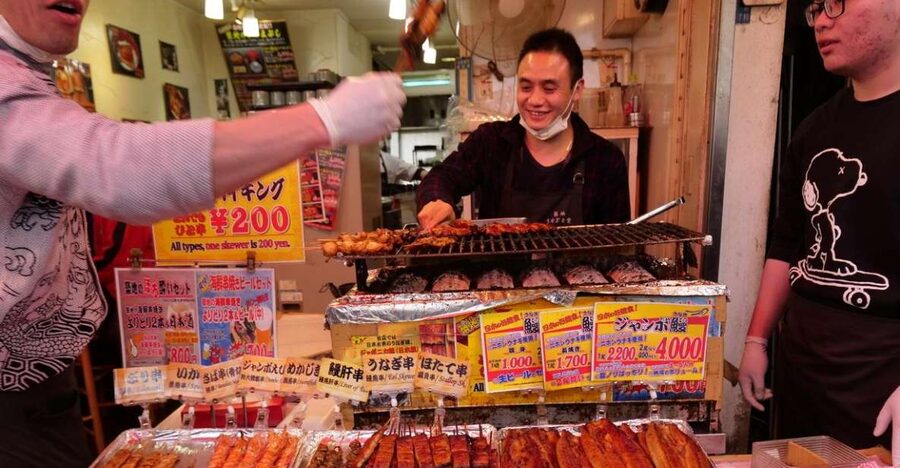
- Five or more tastings are included: Depending on the day, food may include tuna sushi, oysters, eel, tamagoyaki, yakitori, taiyaki, mochi, or other seasonal items.
- The temple comes first: A guided visit to 300-year-old Tsukiji Hongan-ji introduces Japanese worship customs before the food stops begin.
- Lunch is a seafood donburi: The included restaurant meal has a maximum allowance of 1,500 yen.
- The final view is high above Tokyo: Shiodome Media Tower, including the Caretta Shiodome observation area mentioned by several participants, provides a broad look over the market and harbor area.
- Small groups help in tight lanes: With no more than seven people, you get more personal guidance, though you still need to stay close and move at the group’s pace.
Why Tsukiji still matters after the fish market moved
Tsukiji’s wholesale fish market moved to Toyosu, but the Outer Market remains a working food district. Its narrow lanes are lined with seafood sellers, kitchen shops, prepared-food counters, and small restaurants. This is the place to see how seafood fits into daily eating in Tokyo, not just how it appears on a sushi plate.
The tour description sometimes uses broad language about the fish market, so set your expectations carefully. You will not be touring the famous wholesale auction floor. Instead, you will walk through Tsukiji’s public market streets, where you can taste food, shop for seasonings, and watch shopkeepers serve a steady stream of customers.
That distinction matters. If you want wholesale auctions, Toyosu is the relevant destination. If you want a guide to help you eat your way through Tsukiji and understand the district’s older character, this outing makes more sense.
The market is especially difficult to read on your first visit. Signs may not be clear to you, queues can form quickly, and some foods are sold in small portions that are easy to miss. A guide can point out what is worth trying, explain unfamiliar ingredients, and help you avoid ordering blindly.
More Market Tours in Tokyo
- Tokyo Tsukiji Fish Market Food and Culture Walking Tour
★ 5.0 · 3,184 reviews - Tokyo: Tsukiji Fish Market Food and Walking tour
★ 5.0 · 1,724 reviews - Tokyo: Tsukiji Fish Market Guided Walking Tour
★ 4.9 · 1,397 reviews
Tsukiji Hongan-ji sets the cultural tone
You meet at the main gate of Tsukiji Hongan-ji, near Tsukiji Station. Be careful here: Tsukiji Station and Tsukijishijo Station are different stations. The guide holds a red or orange MagicalTrip sign, which should make the meeting point easier to spot.
The first stop is Tsukiji Hongan-ji, a Buddhist temple with roughly 300 years of local history. The visit lasts about 20 minutes. Rather than rushing straight toward food, the guide explains Japanese worship customs and how people use temples and shrines in daily life.
That opening gives the market a better context. Japanese food culture is not separate from religious and seasonal traditions, and the tour makes that connection in a simple, accessible way. You can ask about proper behavior, offerings, and the differences between Buddhist and Shinto sites.
This is a short visit, not a full temple study. If you want a long architectural tour or extended quiet time, you may find it brief. But as an introduction to local customs, it is a useful start, especially if this is your first morning in Tokyo.
Five tastings through the Outer Market
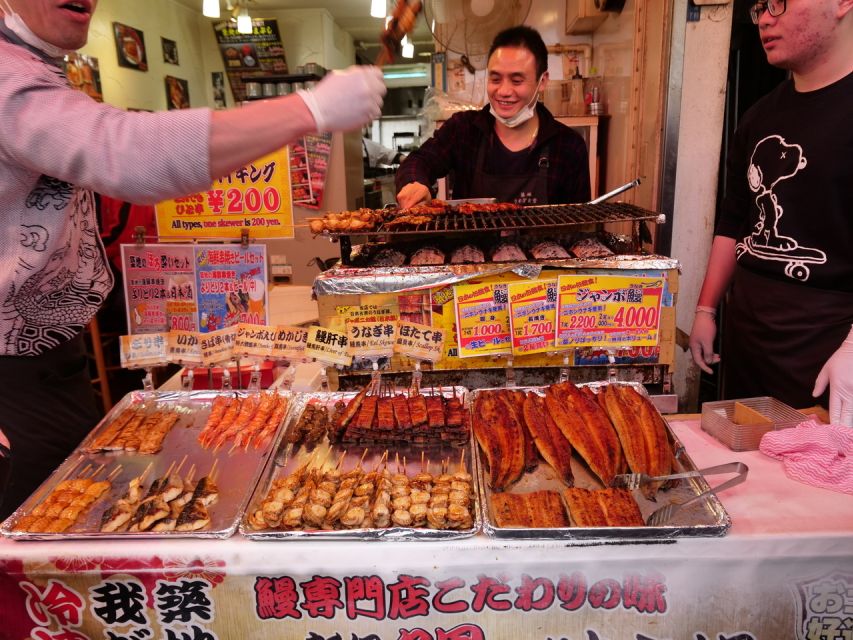
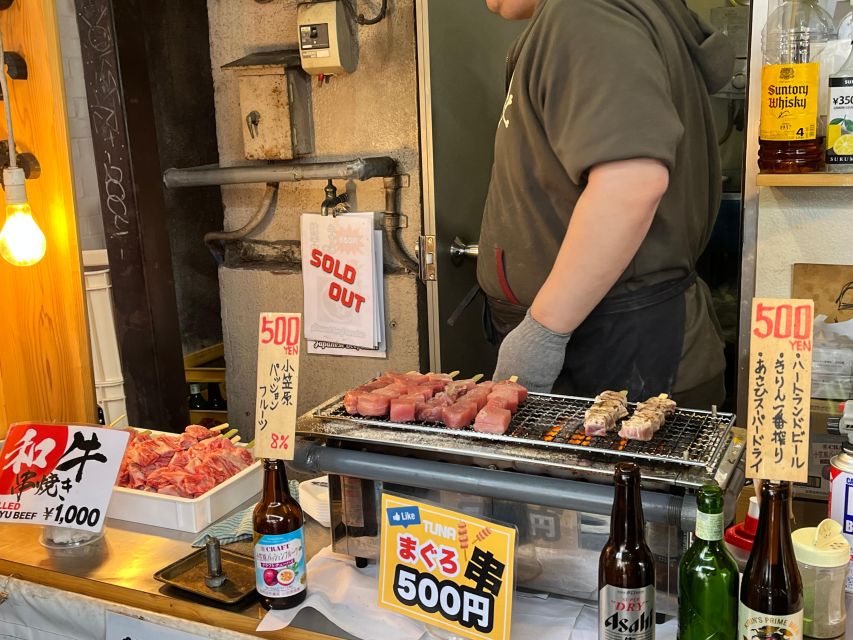
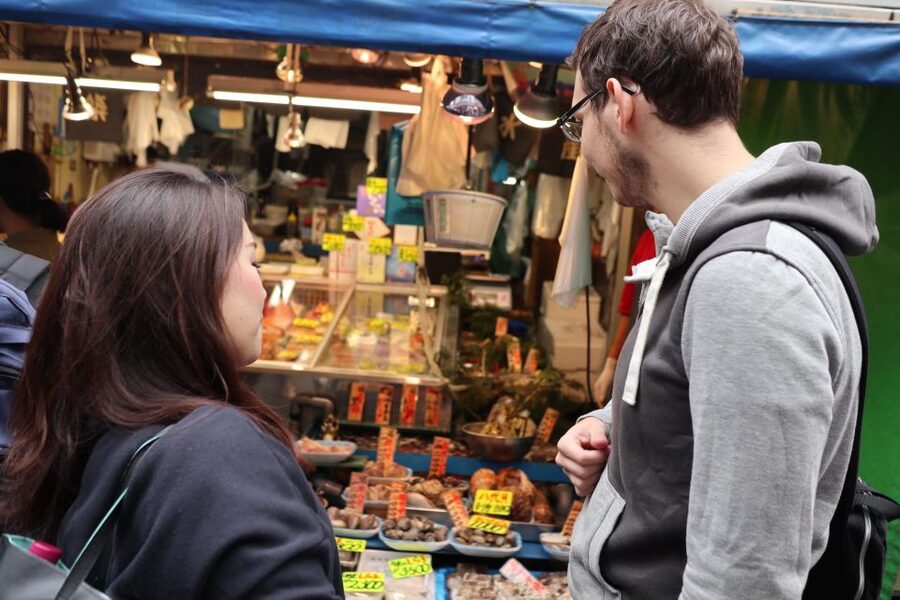
The main market walk takes about an hour. You follow the guide through Tsukiji’s lanes, stopping at food stalls and shops for at least five tastings. The exact lineup can change, which is a good thing in a market where seasonal stock and daily supply matter.
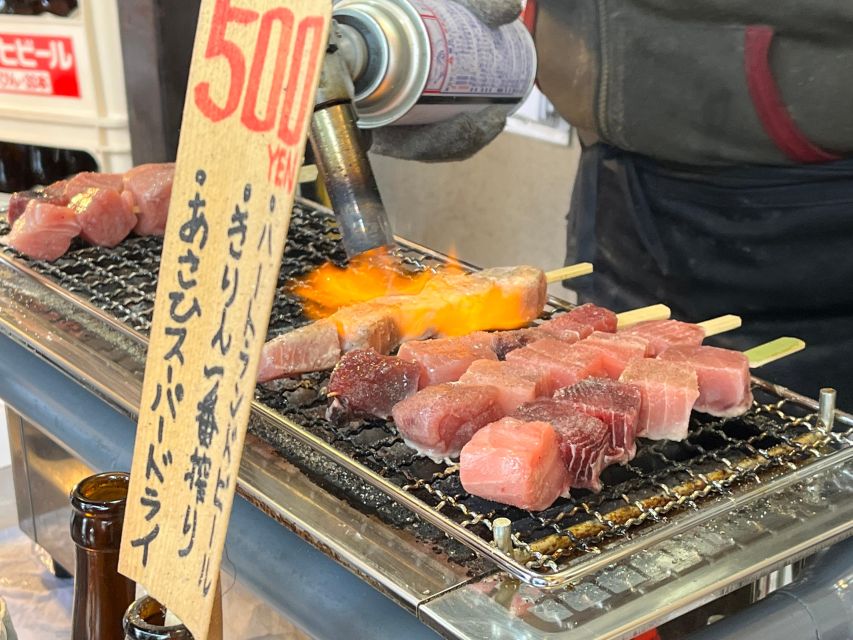
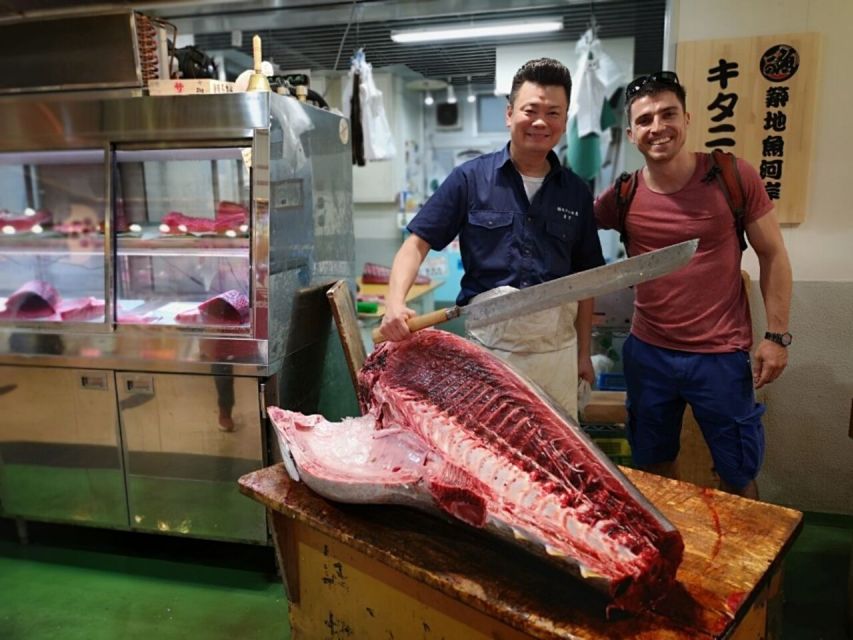
The foods named in the supplied details and customer comments give you a clear idea of the range. You might try fresh tuna sushi, grilled eel, oysters, rolled omelet, yakitori, tuna-shaped taiyaki, custard-filled mochi, or other seafood and traditional snacks. One particularly praised combination included fat oysters, unagi, yakitori, and taiyaki.
This variety is one of the tour’s strongest features. You are not simply eating several versions of the same sushi. You get to compare raw seafood, grilled food, sweet snacks, and familiar Japanese street foods in one compact morning.
The guide also helps with shopping. People have used the tour to find seasonings, flavorings, and other market products they would not have known how to choose alone. If you have something specific in mind, ask early. The description says the guide will try to help you find items you want to see or buy.
Expect a real market, not a staged food hall. Saturday mornings can be especially crowded, and one account described the movement through the lanes as slow. You may need to walk close behind the guide, wait for space at a stall, and accept that taking photographs is sometimes difficult.
That is also where the tradeoff appears. A guide keeps you from getting lost and makes ordering easier, but the group must keep moving. One person found the market section too rushed for browsing and photos, while another felt the pace was relaxed. Your experience will depend on crowd levels, group size, and how many stalls are serving food that day.
The limited group size helps. With a maximum of seven participants, your guide can explain foods without shouting across a large crowd. Some dates have ended up with only one couple or a very small group, creating an almost private experience, though you should not book expecting that every time.
Namiyoke Inari Jinja adds a second view of worship
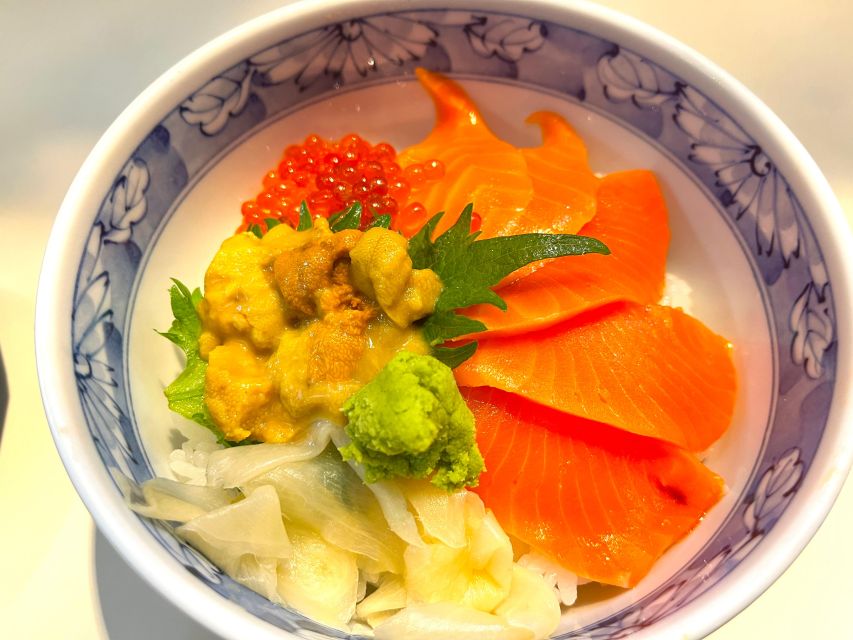
The next cultural stop is Namiyoke Inari Jinja, a Shinto shrine visited for about 20 minutes. Placing the shrine between the market walk and lunch gives you a useful contrast with the Buddhist temple at the start.
Your guide explains Japanese religious customs and the role of shrines. This is not a long formal service. It is a chance to notice how a shrine fits into the same neighborhood as seafood counters, restaurants, and kitchen shops.
I like this part because it keeps the tour from becoming a simple food crawl. You see two kinds of religious spaces, then return to the market with a better sense of how food, work, tradition, and neighborhood life sit side by side.
The shrine visit does require walking and standing. The itinerary includes locations that may not be accessible to a wheelchair or stroller, so this is not the best choice if everyone in your party needs step-free access.
More fish market tours in Tokyo:
- Tokyo Sushi Making Class in Tsukiji with Professional Chef
★ 5.0 · 1,177 reviews - Tsukiji Fish Market Guided Tour and Sushi Making with Pro Chef
★ 5.0 · 775 reviews - Tokyo: Tsukiji Fish Market Food and Culture Walking Tour
★ 4.7 · 757 reviews - Tsukiji Fish Market: Street Food & Culture Walking Tour
★ 5.0 · 669 reviews
Donburi lunch gives you time to sit
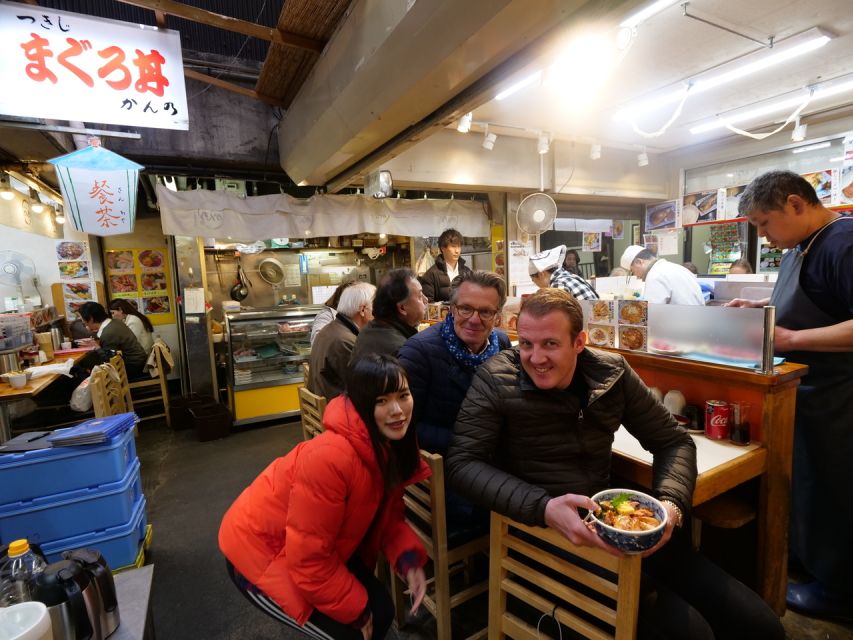
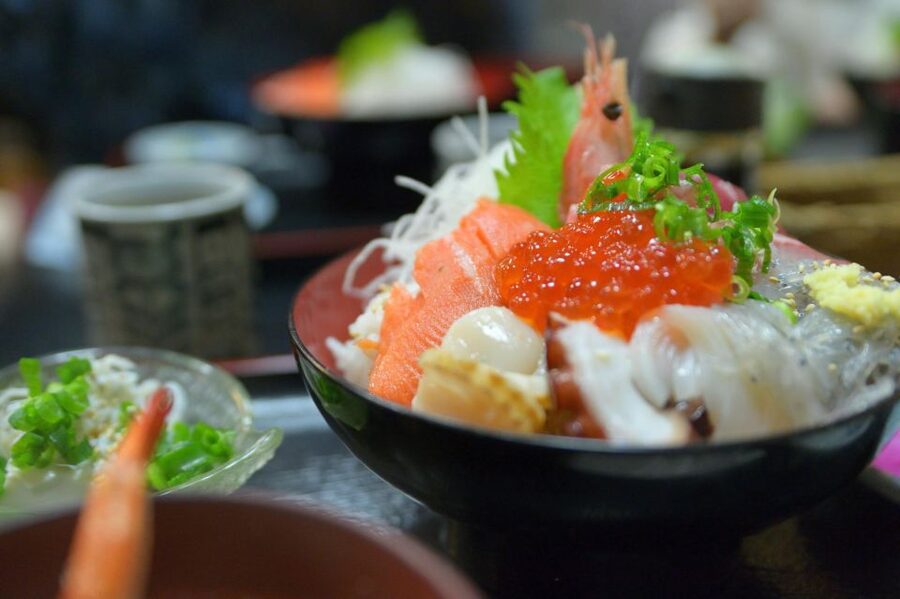
After the tastings, you sit down for lunch at a seafood restaurant in the Outer Market. The meal is a donburi bowl, usually built around seafood served over rice. The lunch allowance is included up to 1,500 yen.
This is an important part of the schedule. Market tasting means standing, sharing space, and eating small portions. Lunch gives you a chance to rest and enjoy a proper meal without having to decide where to go in a crowded district.
The seafood quality receives especially strong praise. One person called the raw fish the best they had eaten, while others highlighted fresh sashimi and ikura. That does not guarantee every bowl will suit every palate, but the meal is more than an afterthought.
Drinks are separate. Japanese beer or sake can be ordered with the meal or with market snacks, but you pay for them yourself. The wording of the experience can make the drinks sound included, so budget accordingly.
There is conflicting information about vegetarian food. The main description says the restaurant serves vegetarian meals, but the important information later says vegan and vegetarian options are not available. The safest advice is to assume you cannot rely on a vegetarian or vegan meal unless the operator confirms it before booking.
Allergy concerns also need care. The food is prepared in kitchens that do not belong to the tour company, and allergy-free preparation cannot be guaranteed. Substitutions may not be possible at every stop. Tell the operator about restrictions, but do not treat that as a guarantee.
Shiodome provides the citywide finale
The last sightseeing stop is Shiodome Media Tower, reached after the market portion. The scheduled visit lasts about 20 minutes. Several participants specifically enjoyed the view from the 46th floor of the Caretta Shiodome observation area, looking over Tokyo, the harbor, and the market district.
This is a smart ending. After spending the morning at eye level among stalls and crowds, you get a broad view that helps you understand the area’s place in Tokyo. It also gives you a quieter pause before returning to the starting point at Tsukiji Hongan-ji.
The observation stop is not the main reason to book the tour, but it adds value. It costs little time and makes the three-hour route feel more varied. One guide even provided commentary about the city while showing the view.
At the end, the guide returns you to the Tsukiji Hongan-ji gate. Some guides have gone beyond the formal route by helping people find train stations, buy tickets, or get on the correct train. That kind of help is useful if you are still learning Tokyo’s rail system, though it should be viewed as a kindness rather than a promised tour feature.
Guides make the biggest difference
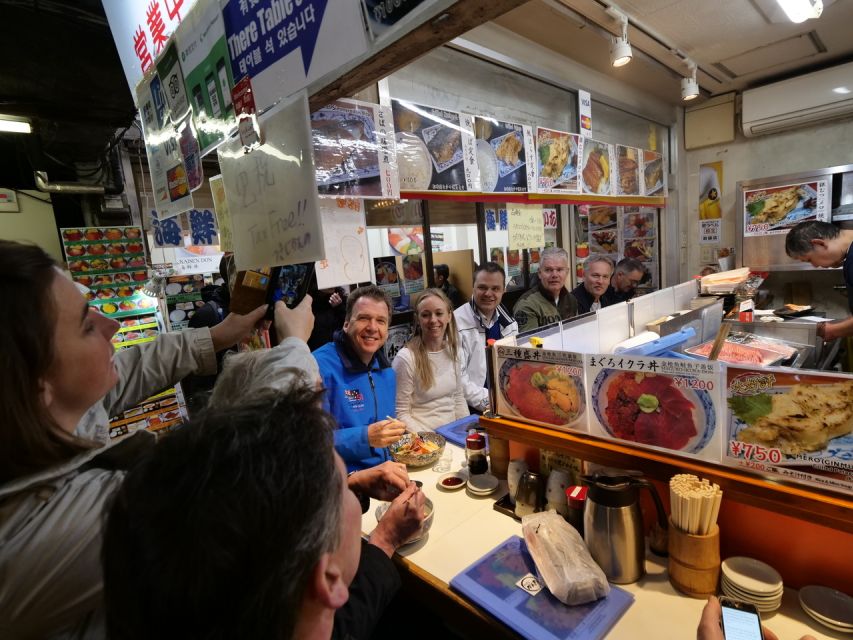
The tour is conducted in English by a certified live guide. The strongest part of the experience is the human help: explaining food, managing the group in crowded lanes, and answering the small questions that make a first market visit easier.
The guides named in the feedback include Mai, Meg, Naoki, Kentake, Kiyo, Tsubasa, Taka, Maiko, Ken, Nao, Hina, Momo, Yoko, Yoichi, Lily, and others. Their individual styles will vary, but the recurring strengths are clear: friendly introductions, clear English, food advice, cultural explanations, and help with navigation.
Kiyo, for example, was praised for keeping a good pace while explaining the shrine, market, and observation view. Meg helped identify local places to eat and made a lunch reservation. Ken was repeatedly praised for food suggestions and for helping people find their way by train after the tour.
You should still ask questions. Tell the guide what you like to eat, what you hope to buy, and how comfortable you are with raw seafood. The more specific you are, the more useful the market stops can become.
Is $94 a good value?
At $94 per person, this is not the cheapest way to visit Tsukiji. You can walk through the Outer Market without a guide, buy your own snacks, and choose a restaurant independently.
The price makes more sense when you count what is bundled together: a certified English-speaking guide, five or more tastings, a seafood lunch worth up to 1,500 yen, temple and shrine explanations, the Shiodome view, and tour photos. You also save the trial and error of choosing stalls in a crowded market.
I consider it good value for a first visit, families, couples, and solo visitors who want an easy introduction. It is less compelling for confident Tokyo repeat visitors who already know Tsukiji, speak Japanese, and prefer to browse at their own speed.
The 4.5 rating from 165 pieces of customer feedback supports the idea that the format works well for most people. The consistent praise goes to the guides, food tastings, lunch, and city view. The repeated cautions are just as useful: the market can be crowded, the title may create confusion about Toyosu and Tsukiji, and drinks cost extra.
Who should book this morning tour?
I would choose this for a first or early Tokyo day. It gives you food, culture, neighborhood orientation, and practical rail help in one compact outing. Families have also found the food and cultural explanations easy for children to enjoy.
It suits you especially well if you:
- Want to try seafood but need help choosing
- Prefer a small group to a large bus tour
- Enjoy learning customs alongside eating
- Want a guided introduction to Tsukiji’s Outer Market
- Have only a few hours available
- Appreciate restaurant and shopping suggestions for later in your trip
You may want another plan if you need a fully vegetarian or vegan meal, have serious food allergies, use a wheelchair or stroller, or want a leisurely photography session. You should also skip it if your main goal is the wholesale fish auction at Toyosu.
Book only after checking the meeting station and arriving early. The tour starts on time, and late arrivals who miss the group cannot join, reschedule, or receive a refund. Bring cash for extra food, wear comfortable shoes, and keep your hands free in the crowded lanes.
FAQ
Where does the tour meet?
It meets at Tsukiji Station, near the main gate of Tsukiji Hongan-ji. The guide holds a red or orange sign marked MagicalTrip.
Is the meeting point Tsukiji Station or Tsukijishijo Station?
The meeting point is Tsukiji Station. Do not go to Tsukijishijo Station by mistake.
How long does the tour last?
The tour lasts three hours.
What language is the tour conducted in?
The live tour guide conducts the tour in English.
How large is the group?
The group is limited to seven participants.
Is lunch included?
Yes. Seafood lunch is included, with a maximum allowance of 1,500 yen.
How many food tastings are included?
The tour includes five or more food tastings at the market.
Are beer and sake included?
No. You can buy Japanese beer or sake separately, but drinks are not included in the tour fee.
Are vegetarian or vegan meals available?
The information is conflicting. The main description refers to vegetarian choices, but the important information says vegan and vegetarian options are not available. Confirm directly before booking, and do not rely on a substitution.
Can I cancel for a full refund?
You can cancel up to 24 hours in advance for a full refund.
Is the tour suitable for wheelchairs and strollers?
Some locations on the route are not accessible by wheelchair or stroller, so full accessibility is not guaranteed.
Should you book the Tsukiji tour?
Book it if you want a friendly, food-focused introduction to Tsukiji with cultural context and a proper lunch. The combination of market tastings, Tsukiji Hongan-ji, Namiyoke Inari Jinja, and the Shiodome view gives you more than a basic snack walk.
Skip it if you want the Toyosu wholesale market, complete control over your pace, or dependable vegetarian and allergy-safe dining. For most first-time visitors who want to taste widely without getting lost, the $94 cost is reasonable, provided you understand that Tsukiji means the Outer Market and that drinks, extra purchases, and dietary substitutions require separate planning.
More Shopping Tours in Tokyo
- Tsukiji Fish Market Small-Group Food Walking Tour
★ 5.0 · 621 reviews - Tokyo: Tsukiji Fish Market Sushi Making Class with Pro Chef
★ 4.9 · 506 reviews - Tokyo Food Tour Taste Fresh Delights at Tsukiji Market
★ 5.0 · 429 reviews - Tokyo Tsukiji Fish Market Tour and Sushi Making Lesson
★ 5.0 · 390 reviews
More Lunch Experiences
- Tokyo: Mt.Fuji & Lake Kawaguchiko 1-Day Bus Tour w/Optional Lunch
★ 4.5 · 839 reviews - Tokyo: Sumo Experience and Chanko Nabe Lunch
★ 4.8 · 257 reviews - Tokyo: 1 Day Bus Tour with Meiji-Jingu,Odaiba,lunch&Skytree
★ 4.6 · 156 reviews - Mt. Fuji, Oishi Park & Arakurayama Pagoda Bus Tour with Lunch
★ 5.0 · 128 reviews
Just added around Tokyo
- Tokyo 6hr Instagram Highlights Private Tour with Licensed Guide★ 5.0 · 38 reviews
- Tokyo Small Group Tour with Guide★ 4.5 · 38 reviews
- Tokyo Sumo Experience with Live Show & Audience Challenge★ 5.0 · 38 reviews
- Very popular in Harajuku♡Animal petting zoo★ 4.6 · 39 reviews
- Japanese Food Cooking Class in Asakusa, Tokyo★ 5.0 · 39 reviews
- Ramen Making from Scratch with Tokyo Mom(Vegan Option Available)★ 5.0 · 39 reviews
- Tokyo: Kimono Rental inside Shinjuku Gyoen National Garden★ 4.9 · 39 reviews
- Tokyo JDM Night: 600hp C63s AMG Edition 1 (Private)★ 4.9 · 39 reviews
Fish Market Tours, compared.
Tokyo Tsukiji Fish Market Food and Culture Walking Tour
Read our review →

Tokyo Sushi Making Class in Tsukiji with Professional Chef
Read our review →
Tsukiji Fish Market Guided Tour and Sushi Making with Pro Chef
Read our review →Tsukiji Fish Market Food and Culture Walking Tour
Read our review →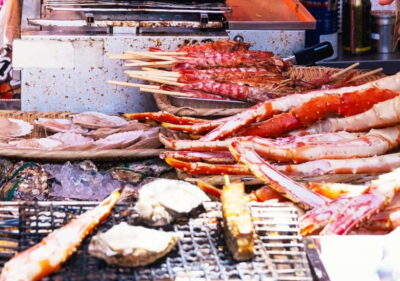
Tsukiji Fish Market: Street Food & Culture Walking Tour
Read our review →
Tsukiji Fish Market Small-Group Food Walking Tour
Read our review →Browse the lists this tour appears in