Reviewed · SHOW
Traditional Japanese Music ZAKURO SHOW in Tokyo
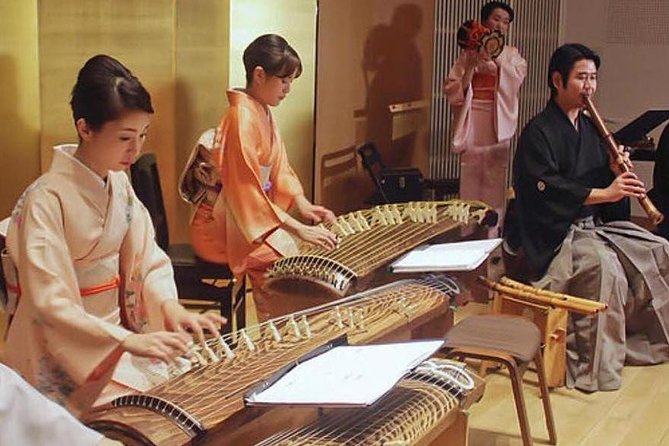
Music can explain Japan without a museum label. The Zakuro Show brings koto, shamisen, shakuhachi, and taiko close to the audience in a cozy Omotesando setting, with musicians in kimono explaining the instruments as they play. I like the clear English interpretation and the mix of old Japanese music, modern pieces, and a surprising Western cover. The main drawback is time: at about one hour, the performance may leave you wishing for a longer concert.
This is a smart pick if you want a cultural activity that fits between sightseeing stops. The presentation is designed for international audiences, so you do not need prior knowledge of Japanese music. It is also a fairly easy commitment at $39.64 per person, though music lovers seeking a full evening concert may find it brief.
In This Review
- Five things to know before you book
- A gentle introduction to Japanese sound
- What happens during the one-hour Zakuro Show
- Why the explanations matter
- Kimono, close-up instruments, and a relaxed setting
- Is $39.64 a fair price?
- Who will enjoy this most?
- Timing, tickets, and cancellation
- Final decision: should you book the Zakuro Show?
- FAQ
- Where does the Traditional Japanese Music ZAKURO SHOW take place?
- How long does the performance last?
- How much does the Zakuro Show cost?
- Which traditional Japanese instruments are featured?
- Is the show suitable for people who do not speak Japanese?
- Is transportation available near the venue?
- Is a mobile ticket available?
- Can I cancel for a full refund?
Five things to know before you book
- The musicians explain each instrument: You learn how the koto, shamisen, shakuhachi, and taiko work instead of simply watching a performance without context.
- English interpretation is built into the show: Commentary and dialogue help you follow the musical and cultural points.
- The program mixes centuries of sound: Ancient and modern traditional pieces appear alongside a Western hit arranged for Japanese instruments.
- Omotesando makes the location convenient: The show is near public transportation and can fit neatly into a day in Tokyo.
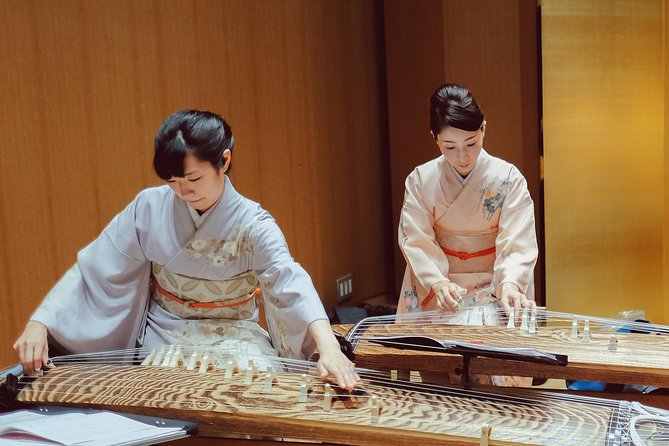
- The setting is intimate and colorful: Performers wear kimono, and the instruments are placed right in front of you.
- The format suits first-time listeners: You get a friendly introduction rather than a formal concert that expects specialist knowledge.
A gentle introduction to Japanese sound
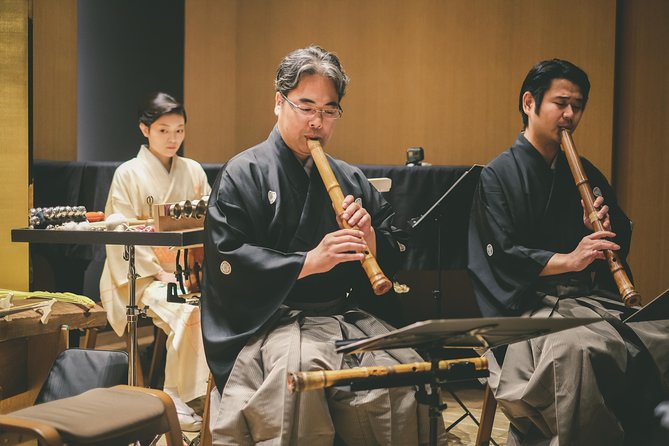
The best feature of the Zakuro Show is its balance between performance and explanation. You are not asked to sit quietly while unfamiliar instruments pass by in a blur. Between musical numbers, the performers discuss the instruments, their techniques, and their place in Japanese culture.
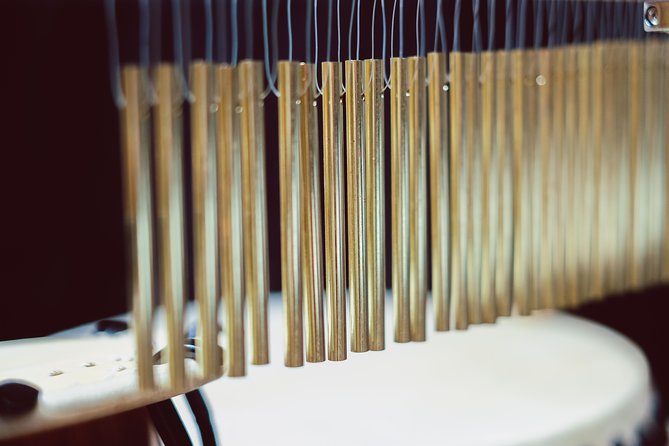
That matters because traditional Japanese music can sound very different from Western music. The koto may produce delicate, ringing notes, while the shamisen has a sharper, more percussive tone. The shakuhachi brings the breath and tone of a bamboo flute, and taiko drums add force and physical energy.
The format gives your ears a chance to adjust. After hearing an instrument explained, you can listen for its particular sound in the next piece. I find this makes the performance more rewarding than a concert with no commentary, especially if this is your first contact with wagakki, the broad Japanese term for traditional instruments.
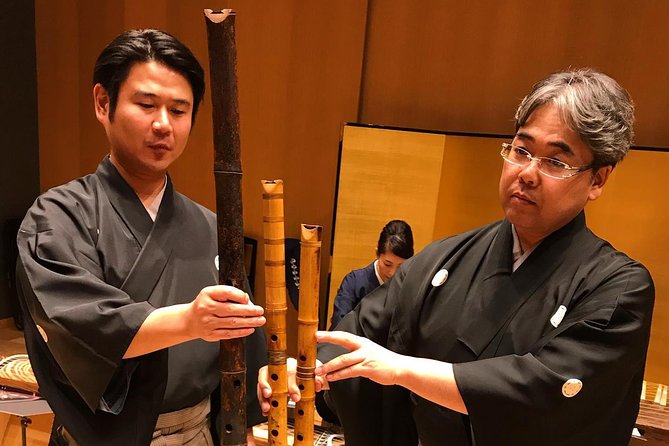
The musicians also discuss the secrets of their craft and share historical information. The teaching is not presented as a long lecture. It is folded into the show, keeping the pace lively and giving each tune a reason for being there.
A few more Tokyo experiences worth weighing up
- Mt Fuji & Hakone Cruise, Drum Show Bullet Train 1 Day from Tokyo
★ 4.0 · 7,413 reviews - Tokyo: Sumo Show Experience with Chicken Hot Pot and a Photo
★ 4.8 · 6,678 reviews - Tokyo: Sumo Show and Dining Experience
★ 4.8 · 2,742 reviews
What happens during the one-hour Zakuro Show
The experience takes place at the Zakuro Show in Omotesando. The venue is described as beautiful and cozy, which points to a more intimate concert atmosphere rather than a huge theater production. The musicians and instruments are right in front of you, making it easier to notice hand movements, posture, and playing technique.
The performance begins with the ensemble presenting traditional Japanese instruments and setting the tone for the hour. You can expect introductions to the main instruments used in the program, including the koto, shamisen, shakuhachi, and taiko.
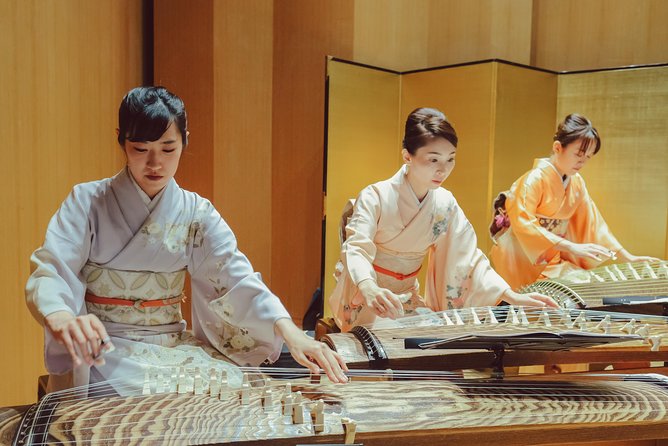
The koto is a Japanese stringed instrument often compared with a harp because of its long body and plucked strings. The comparison is useful, but the koto has its own sound and playing style. Listening after its introduction lets you hear how the performer creates both gentle melodies and sharper accents.
The shamisen is a three-stringed instrument with a distinct, bright tone. Its sound can feel more direct and rhythmic than the koto. The show uses explanation to help you understand what you are hearing, rather than leaving you to guess which instrument is producing each phrase.
The shakuhachi is a bamboo flute. Its breathy tone gives the concert a different color, and the demonstration helps explain why the player’s breath and control matter so much. Bamboo flutes are also part of the program, adding another layer to the sound.
Then come the taiko drums, which bring a stronger physical presence. Their low thump and sharp strikes can change the mood of the entire room. If you enjoy rhythm, this part may be your favorite, though the show is not only a drum performance. Its appeal comes from the contrast between strings, flute, and percussion.
The program includes both older and newer traditional music. That is a useful choice. A show made only of ancient pieces might feel distant to some people, while a program built only around modern arrangements could lose its cultural focus. Here, the contrast helps you hear how these instruments can serve different styles.
A Western hit is also included to show how Japanese instruments sound outside their usual setting. One person specifically noted a version of a Nirvana song. That unusual choice gives the audience a familiar musical reference and shows that the instruments are not limited to one narrow tradition.
Why the explanations matter
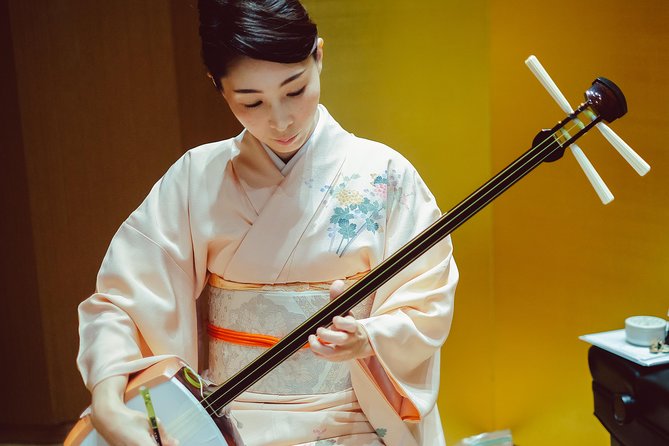
I especially like the educational side of this experience. The strongest praise centers on the way each instrument is introduced, with musical, technical, and cultural information shared between songs. That turns the hour into more than background entertainment.
A good explanation can change how you hear a piece. Before the koto is introduced, you may simply notice plucked strings. Afterward, you may pay attention to the way notes are shaped. The same is true of the shakuhachi, where breath and tone are part of the instrument’s character, or the taiko, where movement and timing affect the sound.
The English interpreter also plays an important role. The interpretation is described as clear and well handled, which is vital for an international audience. Without it, the historical comments and dialogue would be lost. With it, you can follow the show even if you know little about Japanese culture or music.
The performers interact with the audience as well. The exact amount of participation is not specified, so I would not book this expecting a hands-on lesson. Think of it as a concert with conversation and audience connection, not as a full music class.
That distinction helps set the right expectations. You are there to watch skilled musicians perform, but you also receive enough background to understand the instruments and their place in Japanese life.
Kimono, close-up instruments, and a relaxed setting
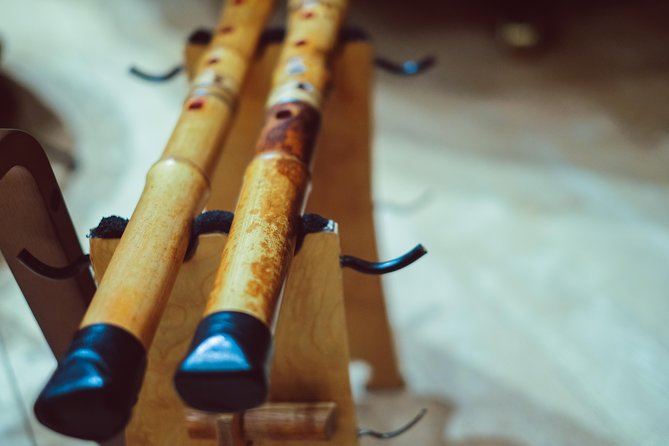
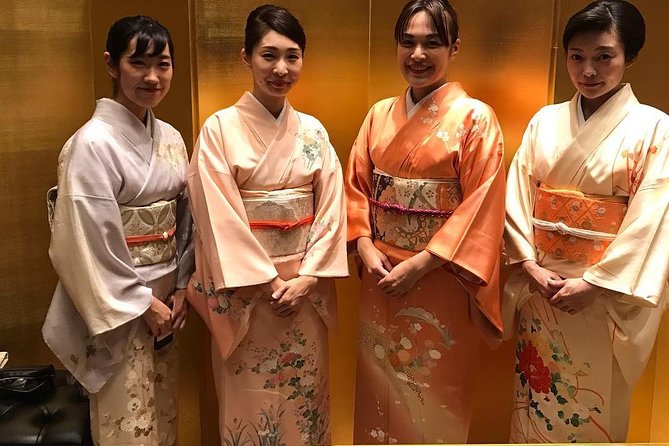
The visual side of the show adds to its appeal. The musicians wear colorful kimono, giving the performance a clear Japanese identity without turning it into a costume spectacle. The instruments are displayed through use, not simply placed on a stage as decoration.
A cozy venue can be a real advantage for this type of event. Traditional instruments often have subtle sounds that benefit from a closer setting. You may notice the texture of a plucked string or the control behind a flute note more easily than you would in a large hall.
The setting in Omotesando also gives you a useful location for a short cultural stop. The area is near public transportation, so you can add the concert to a day of Tokyo sightseeing without arranging a separate excursion. A one-hour performance is long enough to feel worthwhile but short enough to leave room for meals, shopping, or another appointment.
The trade-off is that a short concert cannot cover everything. You receive an overview, not a full study of Japanese musical traditions. If you already know the instruments well, the introductory explanations may feel basic. For a first visit, though, that simplicity is a strength.
A completely different kind of day out in Tokyo:
- Mt Fuji and Hakone 1-Day Bus Tour Return by Bullet Train
★ 5.0 · 26,383 reviews - 1-Day Tokyo Bus Tour
★ 5.0 · 14,250 reviews - Tokyo: TOKYO SKYTREE® Admission ticket
★ 4.5 · 11,192 reviews - Tokyo: teamLab Planets TOKYO Digital Art Museum Entry Ticket
★ 4.6 · 9,779 reviews
Is $39.64 a fair price?
At $39.64 per person, the Zakuro Show is priced as a focused cultural experience rather than a major evening production. I think the value depends on what you want from the hour.
If you want an accessible introduction to several Japanese instruments, the price is reasonable. You receive a live ensemble performance, English interpretation, cultural context, and a central Tokyo location. Buying separate tickets for several types of traditional music would usually be less convenient, even if this one-hour format cannot provide the same depth.
The price is also easier to justify if you are building a packed Tokyo itinerary. You do not need to give up half a day for the experience. You can place it between other plans and still get a meaningful cultural stop.
The value is weaker for someone who wants a long, formal concert with an extensive program. The performance lasts about one hour, and the educational commentary takes part of that time. That is exactly what makes it friendly for beginners, but it also means less uninterrupted music.
One useful sign of audience satisfaction is the 4.9 rating from 67 reviews, with 97 percent recommending the experience. The most praised elements are consistent: skilled musicians, clear explanations, strong interpretation, and the chance to learn about the instruments while hearing them performed.
There is also a small souvenir angle. One attendee bought the CD after the performance because the music made such an impression. A CD is not listed as an included feature, so treat that as a possible purchase rather than part of the ticket.
Who will enjoy this most?
I would recommend this show to several types of visitors:
- You are visiting Japan for the first time and want an easy cultural introduction.
- You enjoy music but do not know much about Japanese instruments.
- You want an activity that works for adults, families, or mixed-interest groups.
- You have limited time and need a one-hour event near public transportation.
- You prefer a performance where explanations are available in English.
- You like seeing cultural traditions presented in a friendly, modern format.
It may be less suitable if you want a quiet concert with no speaking between pieces. It may also feel short if your main goal is extended listening rather than cultural orientation.
The show is not limited to serious music fans. Its structure is made for people who want to understand what they are hearing. You can enjoy the melodies, the costumes, and the energy of the drums without knowing the names of the instruments in advance.
Timing, tickets, and cancellation
Your confirmation is provided when you book, and the experience uses a mobile ticket. Keep the ticket ready on your phone, especially if you are moving through Tokyo on a tight schedule.
The show is near public transportation, but the supplied details do not give a specific station, walking time, seating arrangement, or group size. Check the booking information for the exact meeting and entry instructions before you set out.
Most people can participate. No special fitness requirement is stated, and the activity is centered on sitting and watching a performance. If you have particular mobility or access needs, confirm the venue details before booking because the available information does not describe them.
Free cancellation is available up to 24 hours before the start time for a full refund. Changes or cancellations made less than 24 hours before the start time are not accepted for a refund, and the cut-off follows local Tokyo time.
Final decision: should you book the Zakuro Show?
I would book this if you want a compact, well-explained introduction to Japanese music. The combination of koto, shamisen, shakuhachi, taiko, kimono, English interpretation, and live dialogue gives you far more context than a simple stage performance.
The strongest reason to go is the teaching. You hear the instruments, learn what makes them different, and then hear them used in a varied program that includes older music, modern traditional pieces, and a Western cover. That makes the experience memorable without requiring a full evening.
I would skip it only if you want a long concert with little commentary or if your schedule cannot allow any fixed one-hour stop. For most first-time visitors, though, the price, central setting, short duration, and accessible explanations make the Zakuro Show a sound cultural choice in Tokyo.
FAQ
Where does the Traditional Japanese Music ZAKURO SHOW take place?
The show takes place in Omotesando, Tokyo, in a beautiful and cozy setting.
How long does the performance last?
The experience lasts approximately one hour.
How much does the Zakuro Show cost?
The listed price is $39.64 per person.
Which traditional Japanese instruments are featured?
The program features instruments including the koto, shamisen, shakuhachi flute, bamboo flutes, and taiko drums.
Is the show suitable for people who do not speak Japanese?
Yes. The musicians provide explanations and dialogue with English translations, making the show suitable for an international audience.
Is transportation available near the venue?
The show is near public transportation.
Is a mobile ticket available?
Yes. The experience includes a mobile ticket.
Can I cancel for a full refund?
Yes. You can cancel at least 24 hours before the experience start time for a full refund. Cancellations or changes made less than 24 hours before the start time are not accepted for a refund.
Just added around Tokyo
- Tokyo 6hr Instagram Highlights Private Tour with Licensed Guide★ 5.0 · 38 reviews
- Tokyo Small Group Tour with Guide★ 4.5 · 38 reviews
- Tokyo Sumo Experience with Live Show & Audience Challenge★ 5.0 · 38 reviews
- Japanese Food Cooking Class in Asakusa, Tokyo★ 5.0 · 39 reviews
- Very popular in Harajuku♡Animal petting zoo★ 4.6 · 39 reviews
- Ramen Making from Scratch with Tokyo Mom(Vegan Option Available)★ 5.0 · 39 reviews
- Tokyo JDM Night: 600hp C63s AMG Edition 1 (Private)★ 4.9 · 39 reviews
- Tokyo: Kimono Rental inside Shinjuku Gyoen National Garden★ 4.9 · 39 reviews
Show, compared.

Mt Fuji & Hakone Cruise, Drum Show Bullet Train 1 Day from Tokyo
Read our review →

Tokyo Shinjuku Sumo Show & Experience with Photo
Read our review →

Mt Fuji & Hakone Cruise, Drum Show Bus 1 Day from Tokyo
Read our review →