
Reviewed · HISTORICAL TOURS
Asakusa: 1400-year history exploration
Asakusa rewards curious walkers. This three-and-a-half-hour tour connects the Sumida River, Kaminarimon Gate, Sensoji Temple, Asakusa Shrine, and the old Rokku entertainment district. I like the way it explains both famous sights and everyday customs, and I especially like the included Japanese sweets, such as melon pan, rice dumplings, rice crackers, and sweet puffed rice. The group is capped at eight people, which gives you room to ask questions.
The main drawback is the pace. This is an in-depth history walk, not a quick photo stop at Sensoji. One part of the route can take more than two hours before reaching the temple gate, and Asakusa can be noisy and packed, making the guide harder to hear. The earphone system helps, but this tour suits you best if you enjoy patient explanations and moderate walking.
In This Review
- Key points before you book
- Why Asakusa makes a good first history walk
- Starting at the Sumida River and Azumabashi
- A useful view from the Culture Tourist Information Center
- Kaminarimon Gate and the first taste of Asakusa
- Nakamise Street: snacks, gifts, and tourist energy
- Hozomon and the approach to Sensoji’s main hall
- Sensoji Temple and the story behind its survival
- Asakusa Shrine and the Buddhist-Shinto connection
- Denboin Street and the Rokku entertainment district
- The guides and how much the experience depends on them
- Is $91.17 a fair price?
- Timing, walking, and who should book
- My verdict on this Asakusa walking tour
- FAQ
- How long does the Asakusa history tour last?
- What time does the tour start?
- Where does the tour meet?
- What sights are included?
- Are food and drinks included?
- How large is the group?
- Can I cancel for a full refund?
Key points before you book
- The tour begins beside the Sumida River, with views of Tokyo Skytree and the golden flame sculpture atop Asahi Breweries’ headquarters.
- The group never exceeds eight people, a useful size for questions, photos, and personal guidance.
- Sensoji is treated as more than a sightseeing stop, with discussion of its founding, repeated destruction, rebuilding, and role in Tokyo’s development.
- Traditional snacks are included, with examples such as melon pan, ningyo-yaki, rice dumplings, rice crackers, and sweet puffed rice.
- The route covers both Buddhism and Shinto, including Sensoji Temple and nearby Asakusa Shrine.
- Rokku adds a local, old-town finish, with advice on places to eat, drink, shop, and explore after the tour.
Why Asakusa makes a good first history walk
Asakusa is one of Tokyo’s easiest districts to visit and one of its most layered. You can see a famous temple, shop for souvenirs, watch people pass beneath an enormous red lantern, and then turn down a quieter street lined with older buildings and small businesses.
The area’s story begins with the Sumida River. According to the traditional account, two fishermen found a statue of Kannon in the river in the seventh century. That discovery led to the founding of Sensoji, now regarded as Tokyo’s oldest temple, with a history reaching back about 1,400 years.
The value of a guide here is not simply knowing the names of the gates. A good guide helps you understand why the temple matters, how Buddhism and Shinto developed side by side, and why Asakusa remains important even after earthquakes, war, fires, and major changes to Tokyo.
This tour has earned a 4.8 rating from 155 ratings, with 95 percent recommending it. The strongest praise goes to the guides’ warmth, clear interest in Japanese culture, and willingness to answer questions. Guides named Amy, Emiko, Sachi, Aki, Yasu, Yoko, and Taka have all received strong personal praise.
More History Tours in Tokyo
- Tokyo: Imperial Palace and Shogun Historical Walking Tour
★ 5.0 · 2,251 reviews - Tokyo: Imperial Palace Japanese History Walking Tour
★ 4.9 · 987 reviews - Yanaka Walking Tour: Historic and Traditional District of Tokyo
★ 5.0 · 530 reviews
Starting at the Sumida River and Azumabashi
The meeting point is at Burger King Asakusa Azumabashi, near Kaminarimon in Taito City. The tour starts at 1:30 p.m., and the first walk heads toward the Sumida River and across Azumabashi Bridge.
This is a smart opening. Rather than dropping you straight into the crowded temple grounds, the route begins with the setting that shaped Asakusa’s earliest story. From the bridge, you can see Tokyo Skytree and the Asahi Breweries headquarters, famous for the golden flame sculpture on top.
The stop lasts about 15 minutes. Admission is free, and the purpose is orientation as much as sightseeing. You begin to see how the river, temple, commercial streets, and entertainment quarter fit together.
Bring water, especially in warm weather. Vending machines are available, but a bottle in your bag is easier. Comfortable shoes matter from the first few minutes because the route includes several hours on foot.
A useful view from the Culture Tourist Information Center
The next stop is the Asakusa Culture Tourist Information Center, where you spend about 30 minutes. This building is useful for maps and sightseeing help, but it is also a modern architectural feature in the district.
That contrast is part of Asakusa’s appeal. Traditional gates and temple buildings sit near contemporary Tokyo, and the center gives you a chance to see the neighborhood from a newer point of view before entering the older streets.
I would pay attention here to the guide’s local advice. The center is a practical place to get your bearings, but the larger benefit is learning how to use Asakusa after the tour. The guide can point out places for food, drinks, shopping, and further sightseeing.
Kaminarimon Gate and the first taste of Asakusa
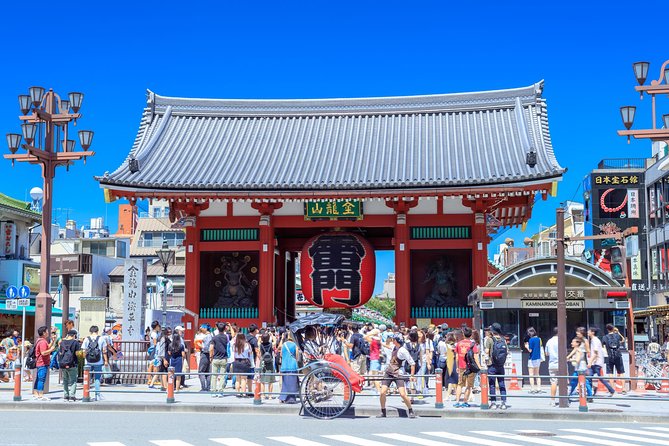
Kaminarimon means Thunder Gate. Its giant red lantern is one of Tokyo’s most recognizable sights, and the gate marks the outer entrance to the approach leading toward Sensoji.
You will likely find crowds gathered here for photographs. The guide helps you understand what you are looking at, including the guardian statues placed at the gate and the role the entrance plays in the temple approach.
This is also where crowd control becomes a real issue. Asakusa is popular every day, and the gate can be loud and slow-moving. Keep close to the group, listen through the provided earphone system, and save some photo time for later if the entrance is too crowded.
The earphones are a helpful feature. Each person receives the guide’s voice directly, allowing the guide to stand at a useful viewing point without shouting. Still, one rating specifically noted that the area noise made listening difficult, so the system is not a complete fix.
A completely different kind of day out in Tokyo:
- Mt Fuji and Hakone 1-Day Bus Tour Return by Bullet Train
★ 5.0 · 26,383 reviews - 1-Day Tokyo Bus Tour
★ 5.0 · 14,250 reviews - Tokyo: TOKYO SKYTREE® Admission ticket
★ 4.5 · 11,192 reviews - Tokyo: teamLab Planets TOKYO Digital Art Museum Entry Ticket
★ 4.6 · 9,779 reviews
Nakamise Street: snacks, gifts, and tourist energy
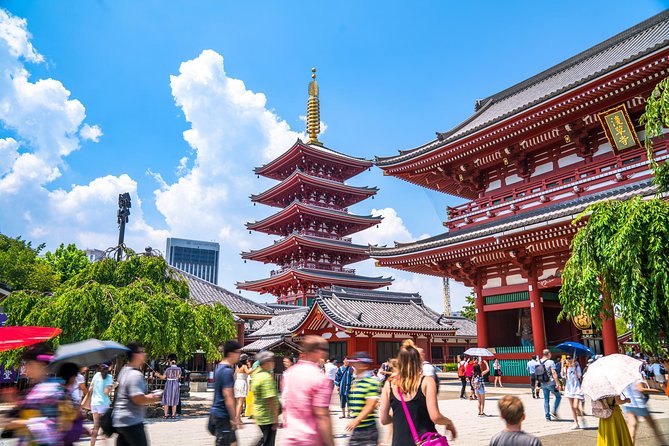
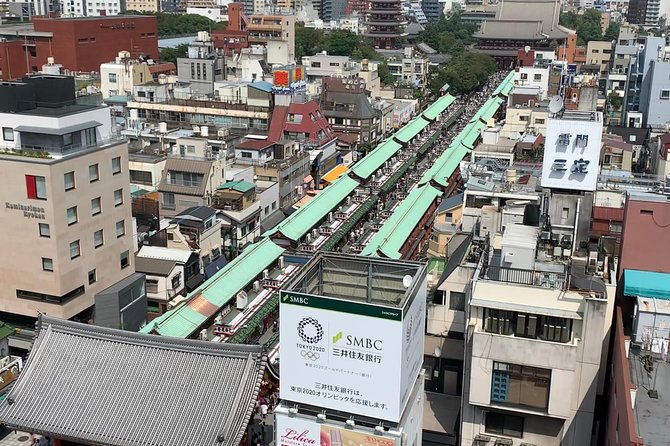
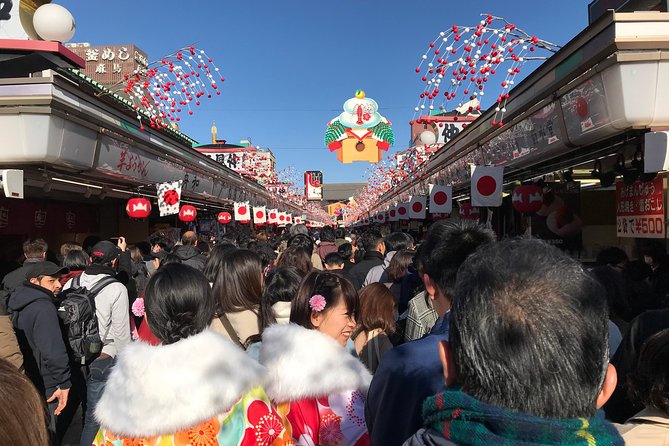
From Kaminarimon, you walk along Nakamise-dori, the approximately 250-meter shopping street leading toward Sensoji’s inner gate. Shops sell souvenirs, small gifts, traditional goods, and food.
This is the most commercial stretch of the route, and it can feel busy and tourist-focused. That is not necessarily a problem. Nakamise has long served people approaching the temple, and the street gives you a window into how religious sites and commerce have grown together in Japan.
The guide points out good places to buy souvenirs and introduces traditional treats. The included snack selection may include melon pan, rice dumplings, rice crackers, sweet puffed rice, ningyo-yaki, and other Japanese sweets. The exact choices can vary, but the tasting adds something useful to the walk: you are not only hearing about local food, you are trying it in the district where you find it.
If you want larger meals, plan to pay separately. Food and drinks beyond the specified sweets are not included. The guide can suggest restaurants and izakaya-style places, along with advice on what to look for later.
Hozomon and the approach to Sensoji’s main hall
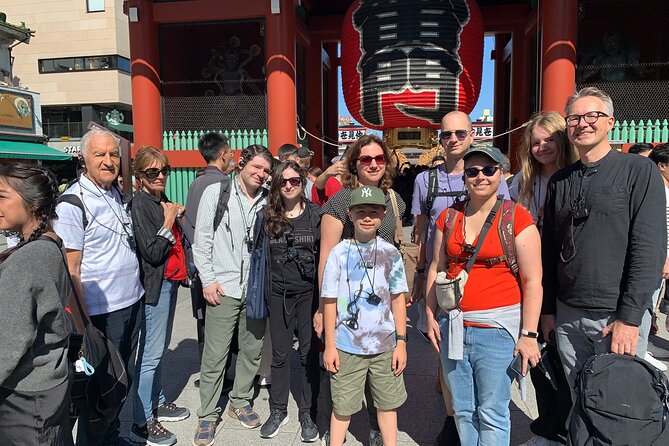
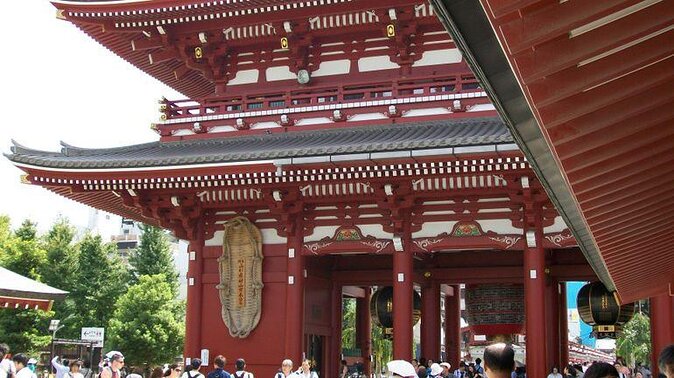
At the end of Nakamise-dori, you reach Hozomon, the Treasure House Gate. It is the inner gate of Sensoji and is much larger and more imposing than many first-time visitors expect.
The gate has two stories, with the upper level holding temple treasures. The guide may also explain the huge details that are easy to miss when you are focused on getting through the crowd.
This section is where the tour’s slow pace can either become its strength or its weakness. If you want a quick visit, the route may feel drawn out. If you want to understand why each gate, statue, pagoda, and ritual matters, the extra time gives you space to look instead of simply passing through.
Sensoji Temple and the story behind its survival
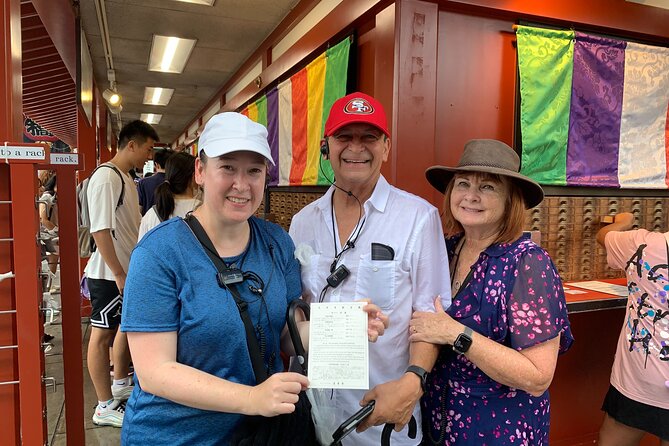
You spend about 45 minutes around Sensoji Temple and the main hall. This is the heart of the tour.
Sensoji’s traditional founding story begins with two fisherman brothers who found the Kannon statue in the Sumida River. The temple grew around that event and later became a major religious center.
The buildings you see today are not ancient in the simple sense. Asakusa has suffered repeated earthquakes, fires, wartime destruction, and air raids. Sensoji was rebuilt again and again, often through donations from ordinary people. That fact changes how you look at the temple. Its importance comes not only from age, but also from the community effort that kept bringing it back.
The guide also explains how Sensoji helped shape Asakusa’s later development. The temple became a foundation for an area that absorbed new entertainment, trade, food, and cultural trends while keeping older customs alive.
The Five-storied Pagoda is one of the major sights here. It is about 53 meters high and is described as Japan’s second-highest pagoda. The first pagoda was built in 942, although the current structure reflects the repeated rebuilding that has shaped the whole temple complex. The pagoda holds Buddha’s ashes on its upper level.
You will have time to take photographs, observe the main hall, and ask questions. The guide can also explain Buddhist customs and the correct way to approach and worship at the temple. The tour’s strongest guides, including Sachi, Aki, Taka, and Yasu, have been praised for making this section approachable rather than turning it into a lecture.
Asakusa Shrine and the Buddhist-Shinto connection
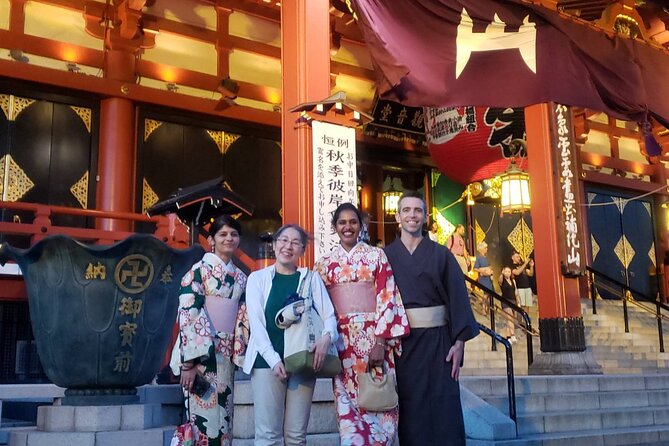
Asakusa Shrine sits on the same grounds as Sensoji, and that makes it one of the most useful stops for understanding Japanese religious life.
To many visitors, a Buddhist temple and Shinto shrine sharing the same area can seem confusing. The guide explains how the two traditions have overlapped in Japan, sharing locations, stories, and worshippers while keeping different rituals and identities.
This short 15-minute stop is not as visually overwhelming as the main temple, but it adds needed context. You begin to see that Asakusa is not simply a collection of old buildings. It is a place where different layers of Japanese belief developed together.
The guide’s explanation matters here because the distinction between Buddhism and Shinto is easy to reduce to a few rules about bows and hand washing. The tour gives you a larger picture without requiring prior religious knowledge.
Denboin Street and the Rokku entertainment district
After the temple grounds, the route turns toward Denboin Street and the Rokku area. You spend about 45 minutes here, walking through Asakusa’s traditional entertainment district.
This change of mood is welcome. Sensoji is grand and ceremonial. Rokku feels more informal, with old entertainment traditions, restaurants, shops, and streets that connect the Meiji period to modern Tokyo.
The tour description calls Rokku always active but rarely overwhelming. That is a useful distinction. It is still part of a popular district, yet it can feel less concentrated than the temple approach.
This is also the most practical part of the tour for your evening plans. The guide can suggest where to eat, drink, and shop, and can explain which areas suit different interests. Several strong ratings praised the mix of history, shopping, food, and local advice.
One caveat: two lower ratings found that too much time was spent discussing shopping or side details. If you have little interest in shops, tell the guide early. In a group of eight or fewer, it is easier to signal that you would prefer more temple history, food advice, or questions about daily life.
The guides and how much the experience depends on them
This tour depends heavily on the person leading it. The best moments come from a guide who can adjust the amount of detail, speak clearly, and make room for questions.
Amy was praised for blending history, customs, and temple life while becoming especially friendly with the group. Emiko was described as warm and engaging. Sachi received repeated praise for detailed explanations of Asakusa’s past. Aki was noted for patience, cultural explanations, snacks, and help with photographs. Yasu was praised for local advice and even helping one group find luggage lockers. Taka was described as a wonderful host, and the provider identifies him as a nationally licensed guide.
The feedback is not uniformly positive. One person found the guide’s English difficult to follow. Another felt the guide spoke too quickly and softly, while a separate rating described the presentation as too detailed. One guest left early after finding the tour too slow.
These comments point to the same practical lesson: tell your guide what you need. Ask for repetition if the street noise gets in the way. Say if you prefer a broad overview instead of fine historical details. The small group makes that possible.
Is $91.17 a fair price?
At $91.17 per person, this is not the cheapest way to see Sensoji. You can enter the temple grounds and walk Nakamise-dori without paying an admission fee.
You are paying for interpretation, structure, snack samples, a small group, and local recommendations. The earphone system also has value in a crowded district, and a group limit of eight is much more personal than a large coach tour.
The price makes sense if you want to understand what you are seeing and use the guide’s food and shopping advice later. It is less convincing if you only want photographs of Kaminarimon and Sensoji, or if you prefer moving quickly.
The tour is often reserved 47 days ahead, suggesting that you should not leave it until the final day of a short Tokyo stay. Last-minute reservations are accepted up to two hours before the 1:30 p.m. start when space remains, but advance booking is the safer plan.
Timing, walking, and who should book
The tour ends back at the Burger King meeting point after about three and a half hours. Hotel pickup and drop-off are not included, so you need to reach the starting point independently.
A moderate amount of walking is involved. Wear supportive shoes, carry water, and dress for the weather because the tour operates in rain or shine. The afternoon start gives you time for a relaxed morning elsewhere in Tokyo, but summer heat and crowded streets can make the pace tiring.
Adults interested in history and culture are the natural audience. Families can join, and teenagers have enjoyed the mix of stories, food, and real streets. Children under six may participate free, but they do not receive the included items.
The tour can accommodate most people, but anyone with dietary or accessibility needs should contact the provider before booking. The company says it will try to help with special requirements, though no specific arrangements are guaranteed.
My verdict on this Asakusa walking tour
I would book this tour if you want Asakusa to make sense, not just appear in your camera roll. The route gives you a clear story from river, to gate, to temple, to shrine, to old entertainment quarter, and the snack stops keep the history grounded in daily life.
I would skip it if you want a fast two-hour overview or dislike long explanations. Crowds and occasional sound problems are real concerns, and the experience depends on receiving a guide who matches your preferred pace.
For most first visits, the small group, strong guide record, temple context, and useful evening recommendations justify the price. Ask questions, wear good shoes, and let the tour take its time. That is where its value lies.
FAQ
How long does the Asakusa history tour last?
The tour lasts approximately 3 hours and 30 minutes and ends back at the original meeting point.
What time does the tour start?
The scheduled start time is 1:30 p.m.
Where does the tour meet?
The meeting point is Burger King Asakusa Azumabashi in Taito City, Tokyo, near Kaminarimon.
What sights are included?
The route includes the Sumida River, Azumabashi Bridge, Asakusa Culture Tourist Information Center, Kaminarimon Gate, Nakamise Shopping Street, Hozomon, Sensoji Temple, Asakusa Shrine, and Denboin Street in the Rokku area.
Are food and drinks included?
A selection of Japanese sweet snacks is included. Other food and drinks are not included, although the guide provides advice on places to eat and drink.
How large is the group?
The maximum group size is eight people.
Can I cancel for a full refund?
You can cancel at least 24 hours before the experience start time for a full refund. Cancellations or changes made less than 24 hours before the start time are not refunded or accepted.
Just added around Tokyo
- Tokyo 6hr Instagram Highlights Private Tour with Licensed Guide★ 5.0 · 38 reviews
- Tokyo Small Group Tour with Guide★ 4.5 · 38 reviews
- Tokyo Sumo Experience with Live Show & Audience Challenge★ 5.0 · 38 reviews
- Japanese Food Cooking Class in Asakusa, Tokyo★ 5.0 · 39 reviews
- Very popular in Harajuku♡Animal petting zoo★ 4.6 · 39 reviews
- Ramen Making from Scratch with Tokyo Mom(Vegan Option Available)★ 5.0 · 39 reviews
- Tokyo JDM Night: 600hp C63s AMG Edition 1 (Private)★ 4.9 · 39 reviews
- Tokyo: Kimono Rental inside Shinjuku Gyoen National Garden★ 4.9 · 39 reviews
Historical Tours, compared.
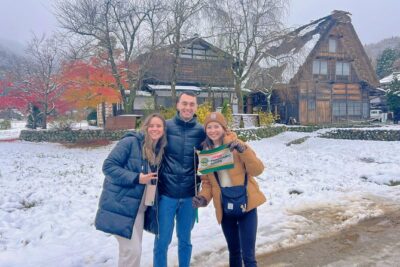
World Heritage Shirakawa-go and Experience Tours from Kanazawa
Read our review →
Imperial Palace and Shogun Historical Walking Tour
Read our review →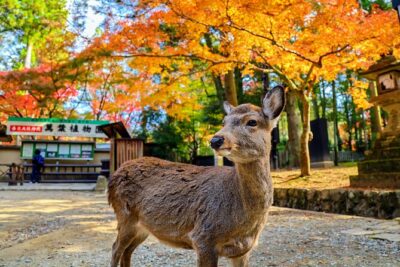
World Heritage Kyoto & Nara Uji Authentic Matcha Experience
Read our review →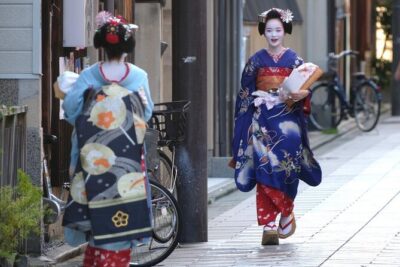
Kyoto Gion: 2-Hour Geisha Culture & History Walking Tour
Read our review →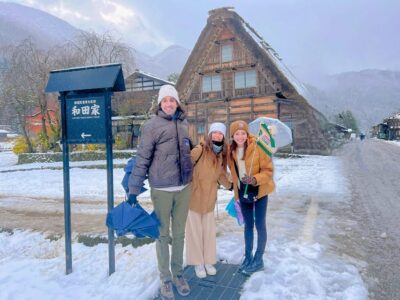
World Heritage Shirakawa-go Morning Guided Tour
Read our review →
Hiroshima Historical Walking Tour – Why A-Bomb was Dropped
Read our review →
Hiroshima Peace (Heiwa) Walking Tour at World Heritage Sites
Read our review →Browse the lists this tour appears in