
Reviewed · HISTORICAL TOURS
Asakusa: Tokyo Skytree Exploration and History Tour
Old Tokyo explains new Tokyo. This 210-minute experience links Asakusa’s temples, gates, riverfront, and market street with Tokyo Skytree, so you get more than a series of nice photographs. I especially like the way the guide explains Japan’s move from isolation to international power, and I like the small group size, limited to eight people, which makes questions and personal help easier.
The second strong point is the carefully planned change of pace. You walk through historic Asakusa, take a short train ride across the Sumida River, then rise to 350 and 450 meters above the city. The main consideration is physical: there is a fair amount of walking, stairs, and time on your feet, and one visitor found a guide difficult to hear unless standing close.
In This Review
- Key points at a glance
- Starting beside Asakusa Station
- The Sumida River and Asakusa’s wider story
- Kaminarimon Gate and the first big symbol
- Nakamise Street, where the route gets lively
- Hōzōmon, Senso-ji, and the meaning of the temple grounds
- The short train ride from old Tokyo to Skytree
- Tokyo Skytree at 350 meters
- The Tembo Galleria at 450 meters
- Time to shop after the tower
- What the $116 price gets you
- Guide quality and group comfort
- Who should book this experience?
- Should you book the Asakusa and Skytree tour?
- FAQ
- How long does the Asakusa and Tokyo Skytree tour last?
- Where does the tour meet?
- Where does the tour finish?
- Is hotel pickup included?
- Is the train fare included?
- Which languages are available?
- How many people are in the group?
- Are Tokyo Skytree tickets included?
- Can I skip the ticket line?
- Is the tour refundable?
Key points at a glance
- Japan’s history told through real places: The Sumida River, Kaminarimon Gate, Senso-ji Temple, and Asakusa Shrine help explain how Japan changed over time.
- A small English-speaking group: With no more than eight participants, the guide can answer questions, help with photographs, and adjust the pace more easily.
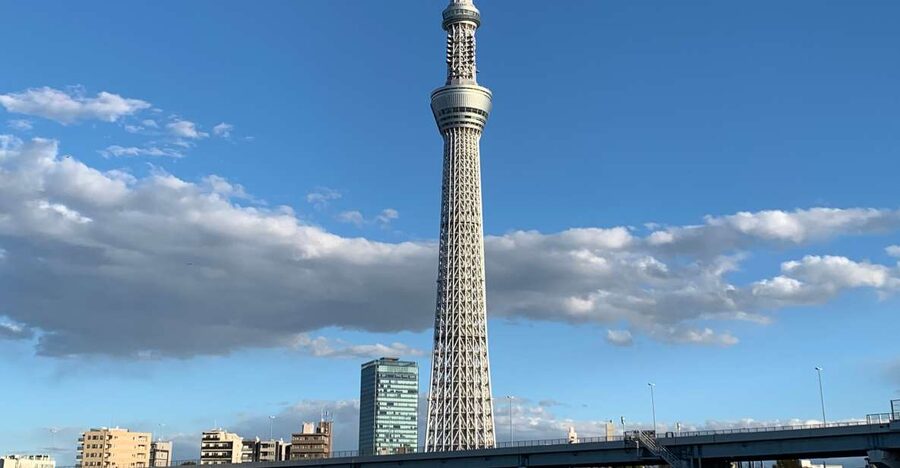
- Two Tokyo Skytree levels included: Your ticket covers the Tembo Deck at 350 meters and the Tembo Galleria at 450 meters.
- A useful old-to-new route: The tour moves from traditional Asakusa to one of Tokyo’s most modern landmarks by a two-minute train ride.
- Helpful touches at the tower: You can ask the guide to identify distant sights, try the glass floor, take a commemorative photo, and send a Skytree postcard.
- A thoughtful choice for first-time visitors: The history walk gives the tower view a clearer meaning, instead of treating Skytree as an isolated attraction.
Starting beside Asakusa Station
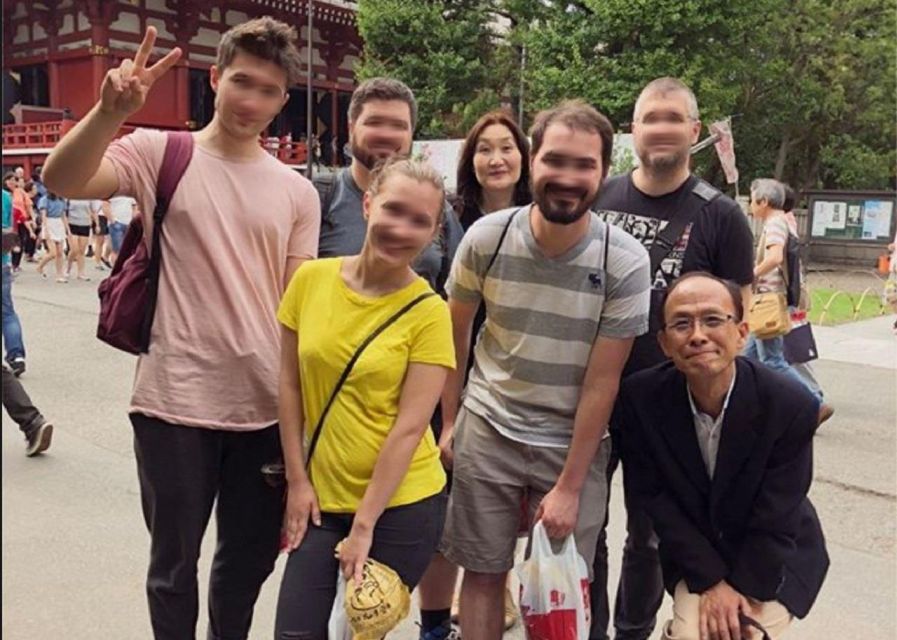
The meeting point is in front of the Burger King beside Exit 4 of Asakusa subway station on the Ginza Line, station G19. Step outside Exit 4 rather than waiting inside the station, then look for the guide near the restaurant.
This is a practical meeting place, but Asakusa has several railway and subway entrances, so check the station signs carefully. The tour does not include hotel pickup. You also pay the JPY160 train fare from Asakusa Station to Tokyo Skytree Station, a small extra cost that is easy to overlook.
Your guide speaks English, and an English audio guide is also included. The live guide matters most during the walking portion, when the meaning of a gate, shrine, or riverfront view depends on explanation rather than sight alone.
More History Tours in Tokyo
- Tokyo: Imperial Palace and Shogun Historical Walking Tour
★ 5.0 · 2,251 reviews - Tokyo: Imperial Palace Japanese History Walking Tour
★ 4.9 · 987 reviews - Yanaka Walking Tour: Historic and Traditional District of Tokyo
★ 5.0 · 530 reviews
The Sumida River and Asakusa’s wider story
The first stop is the Tokyo Cruise Asakusa Pier, where the route begins placing the district beside the Sumida River. You are not simply looking at water and bridges. The guide uses this area to discuss the period when Japan closed itself off from much of the world, followed by the pressure that eventually forced the country to reopen.
That broad subject gives the walk a useful frame. Instead of receiving disconnected facts about temples and shopping streets, you can follow a larger story about Japan moving from a feudal society toward the modern nation represented by Tokyo Skytree.
The Asakusa Culture Tourist Information Center is next. This is a good orientation point for the district, especially if this is your first visit. The stop helps you understand how the old neighborhood fits into present-day Tokyo before you enter its most famous streets.
Kaminarimon Gate and the first big symbol
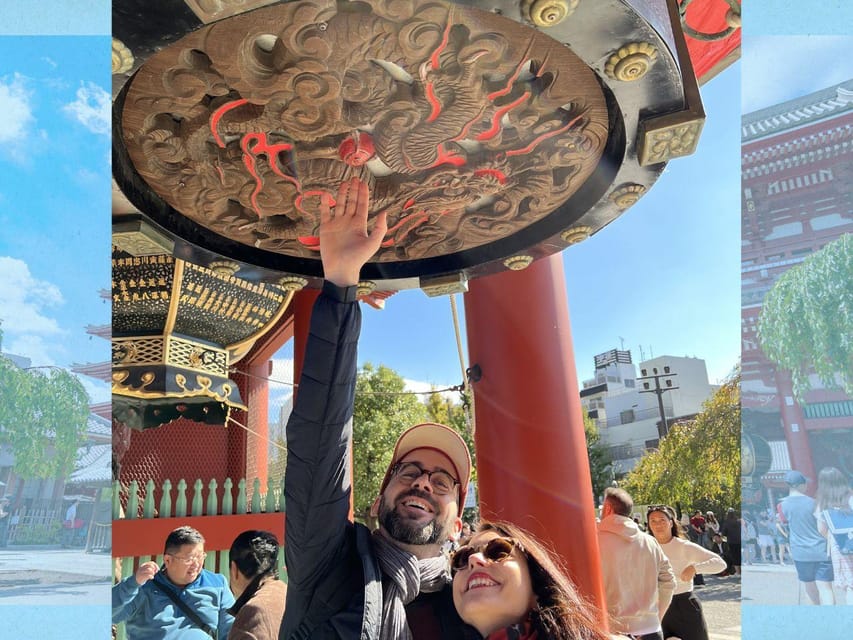
Kaminarimon, or the Thunder Gate, is one of Asakusa’s most recognizable sights. Its huge lantern creates an obvious photo stop, but the guide adds the symbolism that a quick independent visit can miss.
You will have time to look, take pictures, and ask questions rather than being hurried straight through. That matters here because the gate is often crowded, and a guide can help you focus on the details that give the landmark meaning.
Do not expect a quiet introduction. Kaminarimon is a major arrival point for visitors, and the surrounding space can be busy. The small group helps, but you still need to stay close to your guide, particularly if the group is using an audio device or headset.
Nakamise Street, where the route gets lively
From Kaminarimon, the walk continues along Nakamise Shopping Street for about 30 minutes. This is the longest stop on the route and one of the best places to combine history with everyday sightseeing.
Nakamise leads toward Senso-ji and is lined with shops selling souvenirs, snacks, and traditional-style goods. The guide can explain how the street fits into the approach to the temple, while you get a chance to browse and perhaps sample local treats. One past participant particularly enjoyed tasting treats in the market area.
I like this part because it gives you room to do more than listen. You can ask about popular attractions for local people and visitors, take photographs, and make a few purchases without turning the entire tour into a shopping trip. The balance is useful: you get context first, then a short chance to explore.
Crowds are the main drawback. Nakamise can be hard to navigate, and one guide, Keiko, was praised for working hard to keep a group together in heavy foot traffic. Stay near the guide and avoid assuming you can pause anywhere without losing sight of the group.
A completely different kind of day out in Tokyo:
- Mt Fuji and Hakone 1-Day Bus Tour Return by Bullet Train
★ 5.0 · 26,383 reviews - 1-Day Tokyo Bus Tour
★ 5.0 · 14,250 reviews - Tokyo: TOKYO SKYTREE® Admission ticket
★ 4.5 · 11,192 reviews - Tokyo: teamLab Planets TOKYO Digital Art Museum Entry Ticket
★ 4.6 · 9,779 reviews
Hōzōmon, Senso-ji, and the meaning of the temple grounds
The route then reaches Hōzōmon Gate, the inner gate of the temple approach. It is another place where the guide’s explanation adds value, since the gates and buildings are connected by religious purpose and symbolism.
At Senso-ji Temple, you get the tour’s clearest look at Asakusa’s spiritual center. The guide discusses Japanese culture and the role of the temple, helping you see the grounds as more than a famous backdrop.
The timing allows roughly 15 minutes at the temple, so this is an introduction rather than a full study of every building or practice. That is an important expectation to set. If you want a long, independent temple visit, you will likely want to return later on your own.
The route continues to Asakusa Shrine. Seeing the shrine after Senso-ji gives you another chance to compare the religious places within this compact district. The guide connects the sites to the area’s wider story, rather than treating each stop as an unrelated monument.
The walking section takes about two hours when the listed stops are added together. One visitor described the pace as relaxed and informative, while another, in their 60s, felt that a short seated drink break would have helped. You should wear comfortable shoes and plan for stairs, crowds, and warm weather. On a sunny 30 C day, guide Machiko made a point of offering rest and drinking opportunities, but conditions will still affect how tiring the route feels.
The short train ride from old Tokyo to Skytree
After Asakusa, you take a train across the Sumida River to Tokyo Skytree Station. The ride takes about two minutes, and the JPY160 fare is not included.
This brief transfer is one of the clever parts of the experience. You move from temple roofs, lanterns, and market stalls to a vast modern tower without spending time on a complicated transfer. The change makes the day feel like a visual lesson in Tokyo itself.
The guide continues with you to Skytree, rather than simply leaving you at the station. That is useful because the tower can feel large and impersonal, especially when you are trying to understand where to go next.
Tokyo Skytree at 350 meters
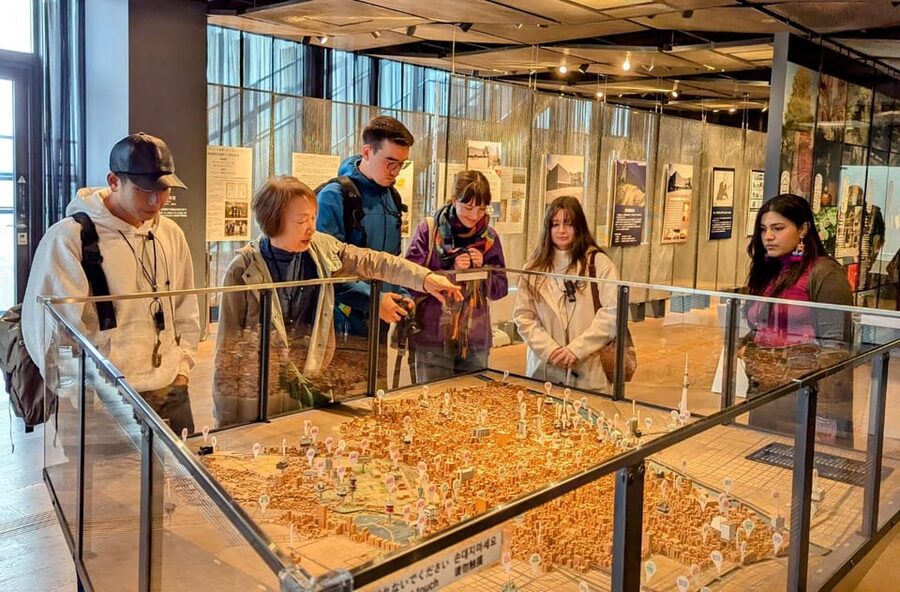
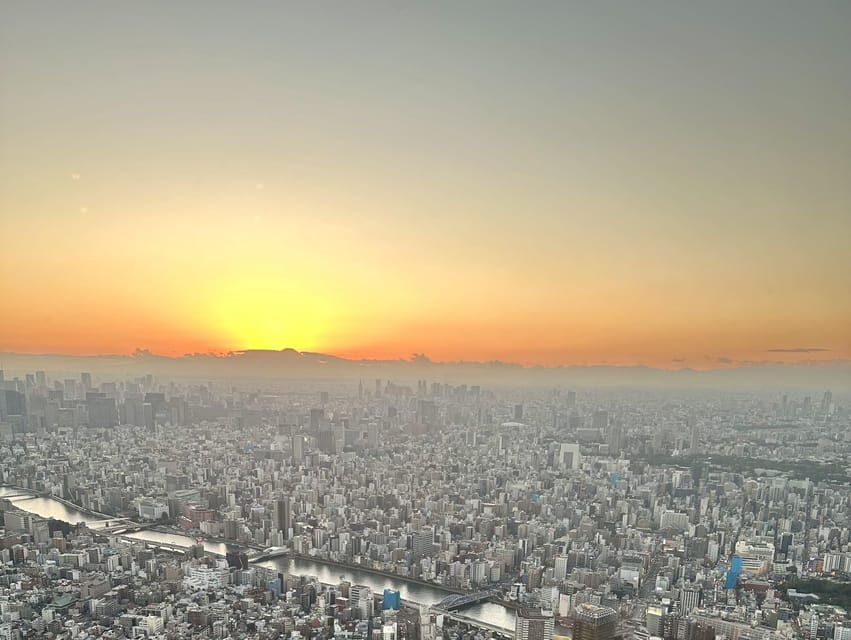
Your included ticket takes you to the Tembo Deck at 350 meters. From here, the guide helps identify major sights spread across Tokyo. That assistance is more valuable than it sounds. From this height, the city can become a huge pattern of roads and buildings, and distant landmarks are not always obvious.
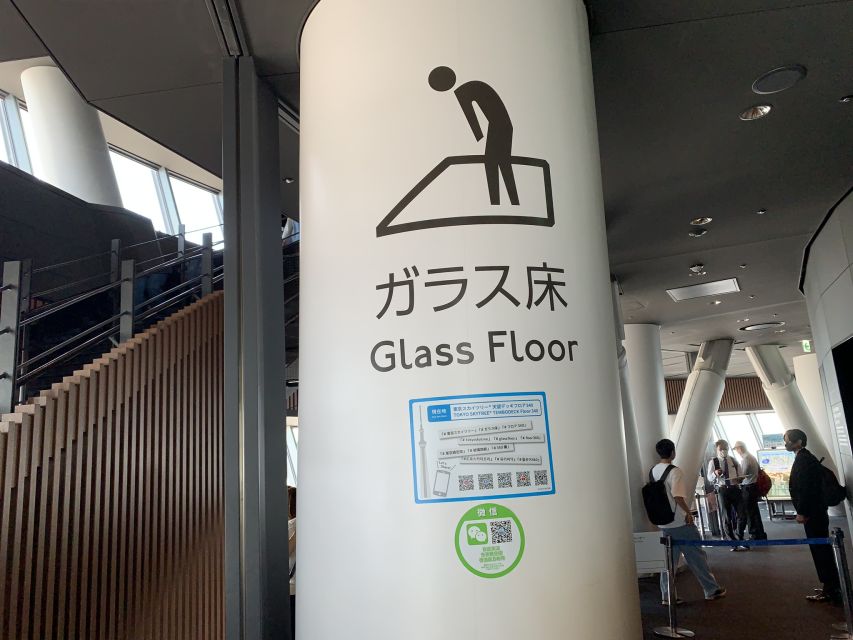
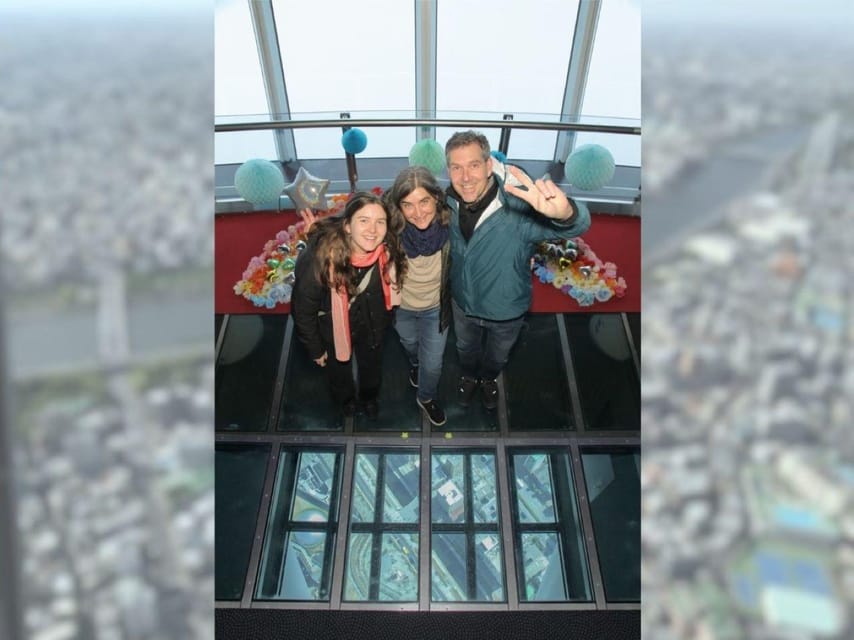
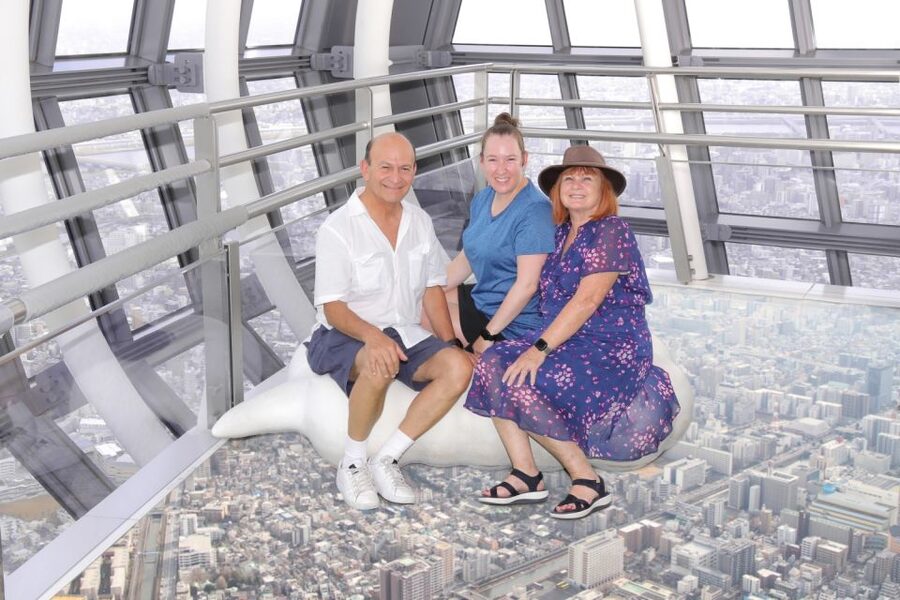
The first observation level gives you broad views in every direction and time to take photographs. You can also step onto the glass floor for a direct view down toward the streets below. It is a simple attraction, but the height makes it memorable, especially if you prefer a little controlled excitement with your city view.
A commemorative photo is available, with the option to purchase a downloadable copy. You can also send a Skytree-exclusive postcard anywhere in the world. These extras are optional, so you can enjoy the tower without buying anything beyond the tour itself.
Clear weather will make a major difference. The tour includes the admission, but it cannot control visibility. On a hazy or rainy day, the experience still gives you the height and the tower interiors, but the far-reaching views may be less impressive.
The Tembo Galleria at 450 meters
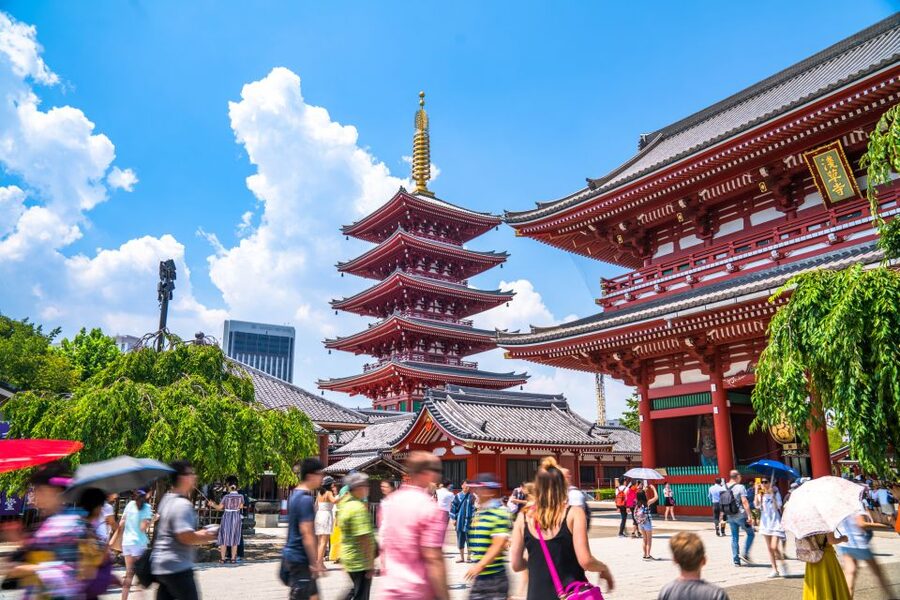
The upper level, the Tembo Galleria, rises to 450 meters. This is the highest point included in the experience and gives you another way to understand Tokyo’s scale.
The guide can point out landmarks from above and answer questions while you take in the view. You will have about 30 minutes listed for each Skytree observation area, so this is enough time for the main sights and photographs, but not an open-ended stay at every window.
The two-deck format improves the value of the admission. You are not paying to rush up, snap one picture, and leave. You see the city from two different heights, with the higher level providing a stronger sense of Tokyo’s enormous reach.
Still, the Skytree portion is not a private viewing session. The tower is a major attraction, and lines or crowded viewing areas can affect the pace. The tour includes skip-the-ticket-line access, which helps with entry, but it does not mean every window will be quiet or empty.
Time to shop after the tower
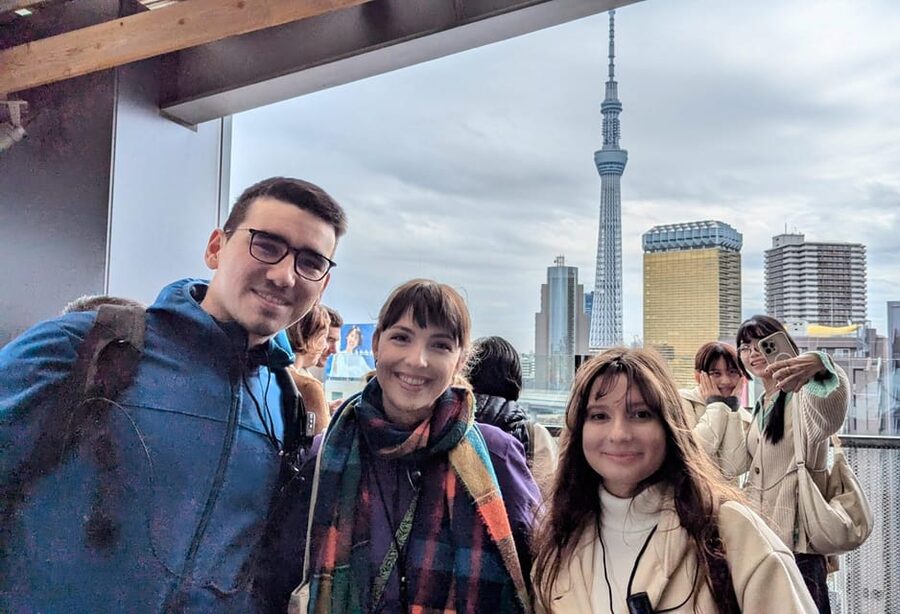
The tour finishes at Tokyo Skytree, with free time to explore the large shopping complex at the base. This is a practical ending because you can continue at your own pace after the guided portion.
You might use the time for souvenirs, local treats, or a slower look around the complex. Families and first-time visitors may appreciate having shopping options right after the observation decks, while people with evening plans can leave when ready.
There is no hotel drop-off, and the experience ends at Skytree. Plan your next step before you arrive if you need to reach another district on a strict schedule.
What the $116 price gets you
At $116 per person, this is not a cheap orientation walk. The value rests on the combination of services: a 210-minute guided English tour, a small group capped at eight, the full Asakusa history walk, help at the Skytree, and admission to both the 350-meter and 450-meter observation areas.
The included tower tickets are important. Tokyo Skytree is a major paid attraction, and the experience removes the need to arrange those admissions separately. Skip-the-ticket-line access also saves planning time, although busy conditions can still create delays inside the complex.
You should add the JPY160 train fare. Food, shopping, hotel pickup, and the optional downloadable photo are also outside the price. If you only want to ride up Skytree, arranging the tower visit yourself may cost less. If you want the history of Asakusa explained in clear English and prefer a guide to connect the two districts, the package makes more sense.
The non-refundable policy requires care. The operator may buy the Skytree tickets after the free cancellation period ends, or may ask you to waive that cancellation privilege so tickets can be purchased earlier. Read the exact booking conditions before paying, especially if your Tokyo plans could change.
Guide quality and group comfort
The strongest part of the experience is the human guidance. Machiko was praised for careful attention to comfort, including helping vegan participants with restaurant guides and offering rest and water during hot weather. Keiko received praise for explaining the district in detail, helping with photographs, and managing crowds.
Yasu was described as friendly, passionate, and well informed about the historical sites. Aki also earned warm praise for making the walk enjoyable, taking pictures, and continuing with the group despite wet and cold weather.
The feedback is not entirely perfect. One person found a guide too softly spoken, while another felt the route needed a short seated break. These are useful warnings rather than reasons to reject the tour. Keep near the guide, mention hearing concerns at the start, and tell the guide if you need a pause.
Who should book this experience?
I would choose this tour if you are visiting Tokyo for the first time and want Asakusa to make sense quickly. It suits you especially well if you like history, prefer a guide at major sights, and want both traditional streets and a modern skyline view in one half-day.
It is also a good fit for families and small groups who value help with photographs, directions, and landmark identification. The limited group size gives the guide a better chance to respond to individual needs.
You may prefer a different plan if you dislike structured walks, have limited stamina, or want extensive time inside Senso-ji and the shopping streets. The route is relaxed by tour standards, but it still involves substantial walking, stairs, crowds, and standing.
Should you book the Asakusa and Skytree tour?
Book it if you want meaning behind the sights, not just a checklist of gates and temple buildings. The best feature is the connection between Asakusa’s past and Skytree’s modern view, supported by guides such as Machiko, Keiko, Aki, and Yasu who are praised for care and clear explanations.
Think twice if the $116 price feels high for a half-day outing or if your schedule cannot handle a fixed, non-refundable booking. For most first-time visitors who want an efficient introduction to eastern Tokyo, the history walk plus two Skytree decks gives you a useful, well-shaped day.
FAQ
How long does the Asakusa and Tokyo Skytree tour last?
The experience lasts 210 minutes, or three and a half hours.
Where does the tour meet?
It meets in front of the Burger King next to Exit 4 of Asakusa subway station, station G19, on the Ginza Line.
Where does the tour finish?
The tour finishes at Tokyo Skytree.
Is hotel pickup included?
No. Hotel pickup and drop-off are not included.
Is the train fare included?
No. You pay the JPY160 fare from Asakusa Station to Tokyo Skytree Station.
Which languages are available?
The live tour guide speaks English, and an English audio guide is included.
How many people are in the group?
The group is limited to eight participants.
Are Tokyo Skytree tickets included?
Yes. Admission to the Tembo Deck at 350 meters and the Tembo Galleria at 450 meters is included.
Can I skip the ticket line?
Skip-the-ticket-line access is included for the Tokyo Skytree entry.
Is the tour refundable?
The activity is non-refundable. The Skytree tickets bought online in advance cannot be canceled or changed, so read the booking conditions carefully before confirming.
Just added around Tokyo
- Tokyo 6hr Instagram Highlights Private Tour with Licensed Guide★ 5.0 · 38 reviews
- Tokyo Small Group Tour with Guide★ 4.5 · 38 reviews
- Tokyo Sumo Experience with Live Show & Audience Challenge★ 5.0 · 38 reviews
- Japanese Food Cooking Class in Asakusa, Tokyo★ 5.0 · 39 reviews
- Very popular in Harajuku♡Animal petting zoo★ 4.6 · 39 reviews
- Ramen Making from Scratch with Tokyo Mom(Vegan Option Available)★ 5.0 · 39 reviews
- Tokyo JDM Night: 600hp C63s AMG Edition 1 (Private)★ 4.9 · 39 reviews
- Tokyo: Kimono Rental inside Shinjuku Gyoen National Garden★ 4.9 · 39 reviews
Historical Tours, compared.
World Heritage Shirakawa-go and Experience Tours from Kanazawa
Read our review →
Imperial Palace and Shogun Historical Walking Tour
Read our review →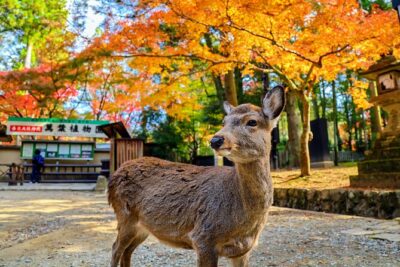
World Heritage Kyoto & Nara Uji Authentic Matcha Experience
Read our review →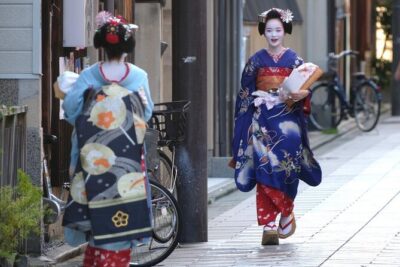
Kyoto Gion: 2-Hour Geisha Culture & History Walking Tour
Read our review →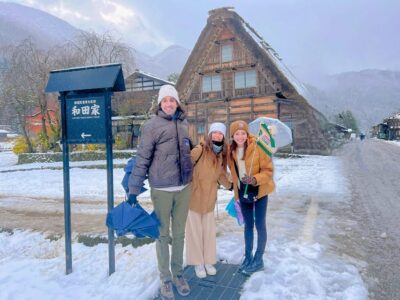
World Heritage Shirakawa-go Morning Guided Tour
Read our review →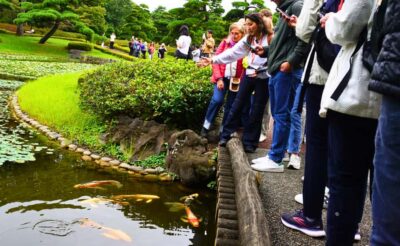
Hiroshima Historical Walking Tour – Why A-Bomb was Dropped
Read our review →
Hiroshima Peace (Heiwa) Walking Tour at World Heritage Sites
Read our review →Browse the lists this tour appears in