
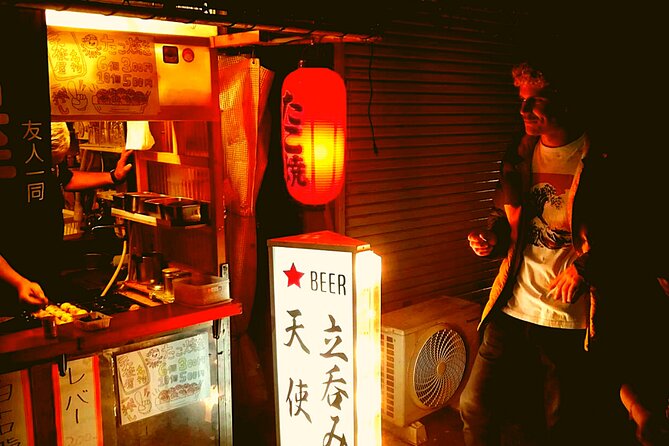
Reviewed · DINNER EXPERIENCES
Deep Backstreet Osaka Tours (Option to add Dinner)
Osaka has more stories than neon signs. This evening walk leads you through narrow lanes, old neighborhoods, family-run food stalls, an unusual red-light district, and places tied to the city’s difficult social history. It is not a standard sightseeing circuit, and that is exactly the point.
I like the way the tour joins local food with serious history, rather than treating Osaka as one big eating arcade. I also like the small-group limit of 15 people, which gives guides such as Mari, Knox, Josh, Bennett, and Rudy and Alex room to answer questions and keep the walk personable. The main consideration is its subject matter: you will hear about homelessness, sex work, class discrimination, mental health, gangs, and abandoned homes. This is not the right evening outing if you want only cheerful photos and bright lights.
- Two family-run food stops provide a taste of Osaka beyond restaurant chains.
- The route enters old alleys and abandoned-home areas that are difficult to understand without local context.
- The red-light district and former ghetto are discussed as part of Osaka’s social history, not treated as a sideshow.
- A traditional izakaya dinner upgrade includes Osaka comfort food such as tonpeiyaki, karaage, nikudofu, yakitori, and dessert.
- The three-hour walk begins at 5:30 pm near Daikokucho Station and returns to the starting point.
- The tour is highly rated and capped at 15 people, with after-tour help available for bars, shopping, or entertainment areas.
In This Review
- Why This Osaka Walk Feels Different
- Meeting at Daikokucho for a 5:30 pm Start
- Family Food Stalls and Osaka’s Everyday Cooking
- Osaka’s Retro Zone and Narrow Back Alleys
- Abandoned Homes and the Weight of a Family Name
- A Place of Worship Most Visitors Miss
- The Red-Light District and Its Difficult Context
- The Former Ghetto and Osaka’s Social History
- Choosing the Dinner Upgrade
- Who Will Get the Most From This Tour
- Is Deep Backstreet Osaka Tours Worth Booking?
- FAQ
- How long does Deep Backstreet Osaka Tours last?
- What time does the tour begin?
- Where does the tour start?
- Where does the tour end?
- Is dinner included?
- What food is served with the dinner option?
- Are drinks included with dinner?
- How many people can join the tour?
- Can I cancel for a full refund?
Why This Osaka Walk Feels Different
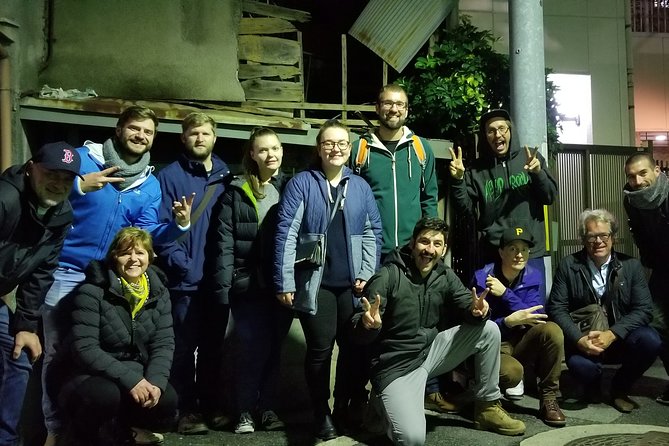
Many Osaka tours focus on Dotonbori, Osaka Castle, Kuromon Market, and the familiar glow of Namba. Those places have their charms, but they show only the city’s polished public face.
This tour heads into districts that most visitors pass without understanding. You are not simply shown an old lane or a closed house. The guide explains why these places look as they do, and how religion, class, work, poverty, family names, and local politics have shaped the city.
That context is the real value. Osaka becomes more than a food capital. You begin to see how ordinary streets can carry memories that are rarely printed in standard guidebooks.
The tone also matters. The strongest guides appear to mix plain speaking with humor, without softening every difficult subject. Knox is praised for being funny and direct, while Mari is described as patient and thoughtful. Josh is especially appreciated for explaining religion, class, gangs, and politics in a lively way. Your guide will vary, but the experience depends heavily on that person’s skill and sensitivity.
Meeting at Daikokucho for a 5:30 pm Start
The tour starts at the FamilyMart MYS Daikokucho Station, at 2-chōme-5-16 Shikitsuhigashi in Naniwa Ward. Since the meeting point is near public transportation, it is practical to reach before sunset, when the evening route begins to change character.
I would arrive a little early. A convenience store meeting point is easy to recognize, but city streets can still be confusing when you are watching station exits, signs, and map pins. Keep your mobile ticket ready, and wear shoes that are comfortable for about three hours of walking.
The walk is described as manageable, with pauses along the way. Still, this is a walking tour rather than a series of short vehicle transfers. One person found the pace easy because of regular breaks, while another stressed that it is a lot of walking over three hours. Both points can be true. You do not need athletic fitness, but you should be happy on your feet.
The activity ends back at the same meeting point. That makes it simpler to plan your evening, especially if you choose the dinner option afterward.
A few more Osaka experiences worth weighing up
- Osaka: Deep Backstreets Walking Tour with Dinner Option
★ 4.9 · 902 reviews - Osaka Umeda: PICCADILLY DINNER SHOW & NIGHTCLUB with Tasting
★ 4.8 · 49 reviews - Tokyo Bar Hopping Tour in Shinjuku (All-You-Can-Drink + Dinner)
★ 5.0 · 3,587 reviews
Family Food Stalls and Osaka’s Everyday Cooking
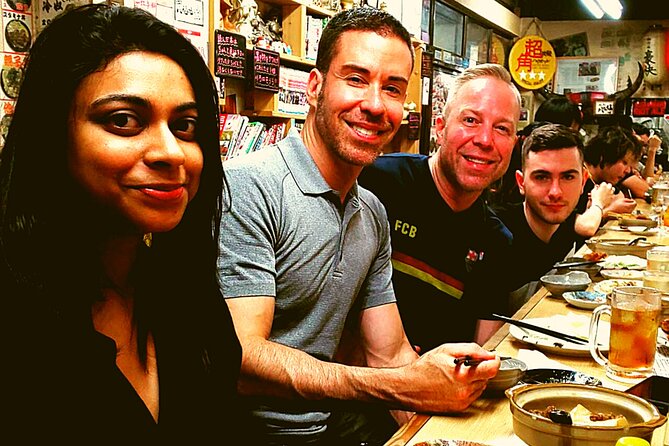
Food is used here as a doorway into local life. During the walk, you stop at two street-run family stalls and taste Osakan food. The experience is less about a large meal and more about seeing how small food businesses fit into neighborhood life.
That distinction is useful. Osaka is famous for food, but a guided tasting can easily turn into a checklist of famous dishes. This route appears to focus instead on modest, local stops that you might not notice while walking alone.
The food stall tasting is included, while the optional dinner is separate. If you choose the dinner upgrade, expect a meal at an izakaya with Osaka comfort food including tonpeiyaki, karaage, nikudofu, yakitori, and dessert. Alcohol is not included, though drinks are described as reasonably priced.
The dinner has received especially warm praise. One person singled out motsunabe and yakitori, while another enjoyed the meal after working up an appetite during the walk. That is an important practical point: dinner comes after several hours outside, so the upgrade may feel like a proper meal rather than another small sample.
Vegetarian visitors are also specifically accommodated according to the tour information. You should still communicate your needs when booking or joining, since the listed dishes include plenty of meat.
Osaka’s Retro Zone and Narrow Back Alleys
The route includes a retro area filled with unusual shops and old-fashioned streets. You might find the shops more interesting than conventionally beautiful. The appeal lies in the odd details and the sense that these streets were built for local life, not for sightseeing.
From there, the walk moves through old, twisting alleys. This is where a guide earns the fee. A narrow lane can look like a shortcut, but its layout, buildings, and quiet corners may reflect decades of changing use. Without explanation, you see a quirky street. With explanation, you begin to understand how Osaka grew in layers.
The group size helps here. A maximum of 15 people is small enough for a guide to pause without creating a large crowd in a tight passage. It also gives you a chance to ask questions, though larger groups can still feel a bit crowded in narrow spaces.
Bring curiosity rather than a rigid sightseeing checklist. Some stops are likely short explanations in public spaces, not formal attractions with signs and exhibits. The reward is the story attached to the place.
Abandoned Homes and the Weight of a Family Name
One of the most striking parts of the route is an area of abandoned houses. This could easily be handled badly, with visitors gawking at decay and taking thoughtless photographs.
The useful purpose of this stop is social context. The guide explains how family reputation and class can affect the fate of a home, and why some properties are not simply passed down from one generation to the next. The subject can be sad, but it helps explain why empty houses appear in a city where land is valuable and old neighborhoods remain inhabited.
This is also a good example of the tour’s wider approach. It does not present Japan as a perfectly ordered society with no rough edges. You are asked to consider the people and systems behind what you see.
Use restraint here. The information supplied for the tour does not set out a photography policy, so follow your guide’s instructions and avoid photographing people or private property. This is someone’s home, even when it is empty.
A completely different kind of day out in Osaka:
- Osaka Go Karting Tour with Funny Costume
★ 5.0 · 2,658 reviews - Osaka Castle: Museum and Tower Entry Ticket
★ 4.5 · 2,380 reviews - Osaka: Shinsekai Food Tour with 13-15 Dishes at 5 Eateries
★ 4.8 · 2,204 reviews - Osaka Food Tour: 13 Dishes at 5 Local Eateries
★ 5.0 · 2,149 reviews
A Place of Worship Most Visitors Miss
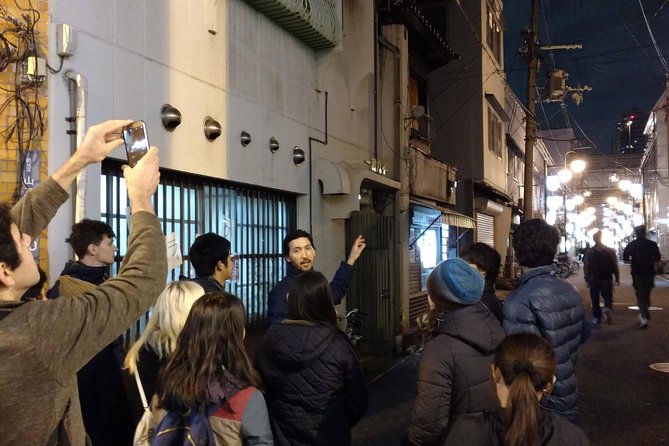
The walk also enters one of Osaka’s important but little-known places of worship. Along with a temple and shrine, this stop offers a chance to look at present-day religious practice and the meaning of construction and upkeep.
The value is not just architectural. A guide can explain what a shrine or temple represents, how people use it now, and how it fits into the neighborhood. One particularly useful detail from the tour is attention to how religious construction is funded. That turns a quick stop at a sacred site into a lesson about community, money, and continuity.
Because this is an evening walk, the atmosphere may be quieter than during the day. Be prepared to behave respectfully: keep voices down, follow local signs, and let the guide set the pace. The tour’s willingness to include religion alongside food and social history gives it more range than a simple backstreet stroll.
The Red-Light District and Its Difficult Context
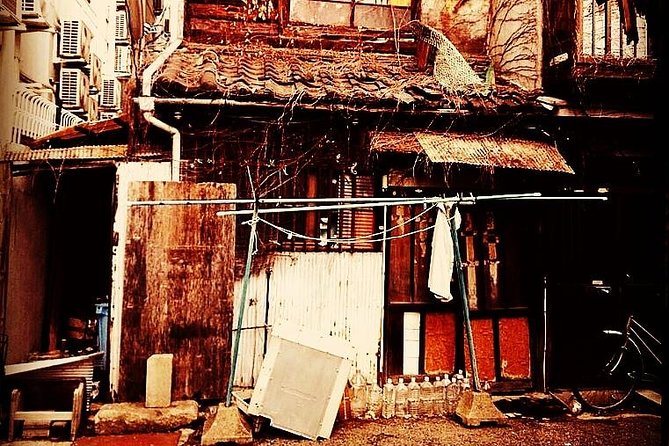
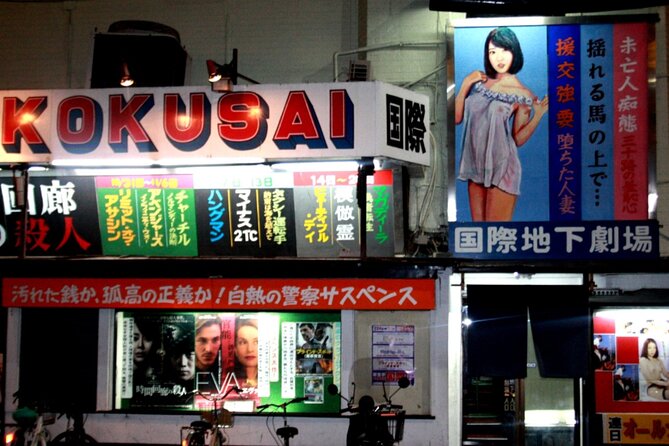
The red-light district is one of the tour’s most sensitive stops. It has historical links to the yakuza and to the sex trade, and the route uses it to discuss parts of Osaka that are often left out of tidy city narratives.
This can be informative, but it calls for an adult attitude. You are not visiting a theme park. People may live and work in these areas, and the guide’s job is to explain the setting without turning residents or workers into scenery.
The best accounts of the experience praise guides for being honest while keeping the walk safe. That balance is important. You hear about sex work, gangs, and social divisions, yet the tone is not presented as reckless or sensational. One guide was appreciated for making clear that the route felt safe even while covering the city’s darker side.
The district may be uncomfortable for some people. That is not necessarily a flaw, but it should be part of your decision. If your interest is in how cities handle hidden or stigmatized work, this stop may be one of the most valuable parts. If you prefer light entertainment, it may feel too heavy.
The Former Ghetto and Osaka’s Social History
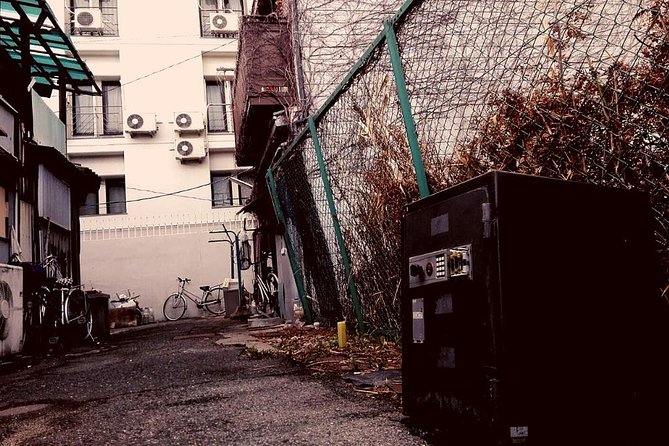
The route continues into an area with a controversial past, described as a former ghetto. This is where the tour addresses class structure, discrimination, homelessness, and the ways certain communities have been pushed to the margins.
The subject deserves care, and the guide makes a big difference. Reports of the experience praise Mari, Thomi, Bennett, and others for answering questions patiently and explaining difficult topics without turning the walk into a lecture. You are encouraged to think about why these divisions lasted and how they continue to affect places in the city.
One useful insight concerns homelessness. Rather than treating unhoused people as an anonymous problem, the tour explains some of the reasons people may lose stable housing. That gives you a more grounded view of the streets you are walking through.
The route is not designed to make you feel superior or shocked. Its strongest purpose is to show that a modern city contains many forms of life at once. Osaka’s warmth and humor are still there, but they sit beside hardship, exclusion, and unresolved questions.
Choosing the Dinner Upgrade
At around three hours, the basic walking tour may be enough for you. You get food tastings, local explanations, and a route through districts you would be unlikely to understand on your own.
The dinner option adds a more social finish. The izakaya meal includes several classic dishes and dessert, and it creates more time to talk with the guide and other people in the group. Solo visitors may especially appreciate this, since the walk naturally brings together people from different countries and backgrounds.
I would choose dinner if you want a full evening plan and enjoy Japanese small-plate dining. I would skip it if you already have a restaurant reservation, have a limited appetite, or want to explore Namba independently after the walk.
Alcohol costs extra. That is normal for an izakaya, but remember it when comparing the total price. The dinner is described as vegetarian friendly, yet you should make your dietary needs clear before food is served.
The listed price is $53.06 per person. For the walking portion, that is reasonable if you value a guide’s interpretation more than a long list of major sights. You are paying for access to local knowledge, two food tastings, a small group, and a route that is hard to piece together alone. The dinner upgrade may improve the value for anyone who wants food and company after the walk, but the final cost depends on the selected option and any drinks.
Who Will Get the Most From This Tour
This experience suits you if you:
- Have already seen Osaka’s main postcard sights and want a different angle.
- Care about social history, religion, class, work, and local customs.
- Enjoy walking through ordinary neighborhoods more than ticking off monuments.
- Want a guide who can explain sensitive topics in clear, direct language.
- Like meeting other people in a small group.
- Prefer local food stalls and an izakaya to a formal tasting menu.
It may not suit you if you want a relaxed food crawl with no difficult discussion. It is also less suitable if you dislike walking, though breaks are provided. The route passes through places connected with poverty, sex work, gangs, and abandoned homes, so consider your comfort level before booking.
The tour is near public transportation, and most people can participate. It requires good weather. If poor weather cancels the outing, you are offered another date or a full refund.
Free cancellation is available up to 24 hours before the 5:30 pm start. Changes or cancellations inside that window are not refunded, so keep the local cut-off time in mind.
Is Deep Backstreet Osaka Tours Worth Booking?
I would book this tour if you want to understand Osaka beyond its food reputation and neon districts. Its best feature is not a single stop. It is the way food, religion, old housing, class, homelessness, and nightlife are placed in the same city story.
Choose the dinner upgrade if you want a complete evening and enjoy a casual shared meal. Choose the walking tour alone if you prefer flexibility afterward.
The experience is most worthwhile with a guide who is engaging and respectful. Names such as Mari, Knox, Josh, Bennett, Thomi, and Rudy and Alex appear among the guides praised for humor, patience, and clear explanations, but your assigned guide may differ. For visitors willing to look past Osaka’s polished surface, this is a thoughtful, unusual, and fairly priced way to spend three hours.
FAQ
How long does Deep Backstreet Osaka Tours last?
The tour lasts approximately three hours.
What time does the tour begin?
The tour begins at 5:30 pm.
Where does the tour start?
It starts at the FamilyMart MYS Daikokucho Station, 2-chōme-5-16 Shikitsuhigashi, Naniwa Ward, Osaka, 556-0012, Japan.
Where does the tour end?
The activity ends back at the meeting point.
Is dinner included?
Dinner is available as an option. The walking tour includes food tasting at a stall, while the dinner upgrade takes you to a traditional izakaya.
What food is served with the dinner option?
The listed dishes include tonpeiyaki, karaage, nikudofu, yakitori, and dessert. Motsunabe is also mentioned in the tour information.
Are drinks included with dinner?
Alcoholic drinks are not included. Drinks are described as available at reasonable prices.
How many people can join the tour?
The maximum group size is 15 people.
Can I cancel for a full refund?
Yes. You can cancel at least 24 hours before the experience start time for a full refund. If poor weather causes the tour to be canceled, you are offered a different date or a full refund.
Just added around Osaka
- Osaka Food Tour with 10 Classic Japanese Tastings & Drinks★ 5.0 · 38 reviews
- Osaka: Highlights & Hidden Gems Private Walking Tour★ 4.7 · 38 reviews
- Kyoto private tour (Shore excursion available from Osaka or Kobe port)★ 5.0 · 39 reviews
- Osaka Private Day Trip – Enjoy Your First-Time Visit to Osaka!★ 5.0 · 39 reviews
- Kyoto & Nara & Uji: Full Day Sightseeing Tour from Osaka or Kyoto★ 4.5 · 39 reviews
- Authentic SUSHI Course Cooking Class★ 5.0 · 39 reviews
- Osaka: Mind & Spirit Balance Temple Reiki Healing★ 5.0 · 41 reviews
- Osaka: Gluten-Free Ramen and Gyoza Cooking Class★ 5.0 · 42 reviews
Dinner Experiences, compared.
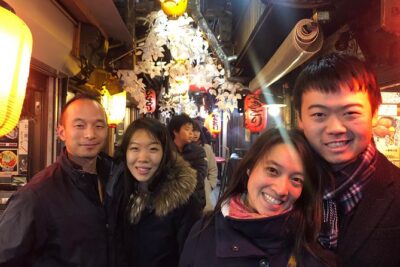
Tokyo Bar Hopping Tour in Shinjuku (All-You-Can-Drink + Dinner)
Read our review →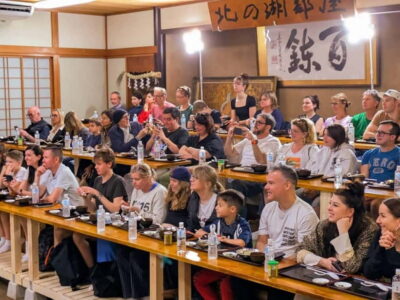
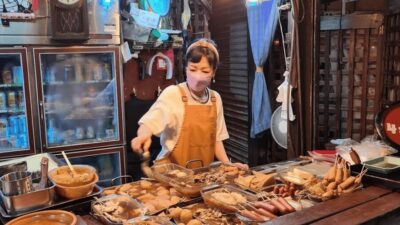
Deep Backstreets Walking Tour with Dinner Option
Read our review →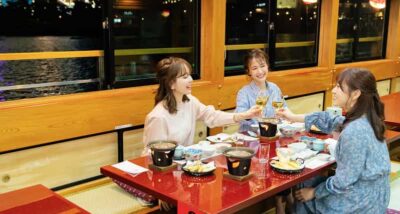
Sumida River: Japanese Traditional Yakatabune Dinner Cruise
Read our review →
Kyoto Gion Cultural Walk & Geisha Show with Dining Options
Read our review →Kyoto Gion Cultural Walk & Geisha Show with Dining Options
Read our review →
Tokyo Bay Yakatabune Dinner/Day Cruise with Japan Show and Drinks
Read our review →
Shinjuku Bar Hopping with All-You-Can-Drink & Dinner
Read our review →Browse the lists this tour appears in