
Reviewed · CYCLING TOURS
Hiroshima 2hr Peace Cycling Tour with Local Guide
History feels closer on two wheels. This two-hour Hiroshima bike tour links the city’s major peace memorials with quieter streets and viewpoints that are easy to miss on foot. I like the electric bicycles, which make the flat route manageable, and I like the local guides, including Shin and Kana, who add personal family stories to the historical record. The main drawback is the short running time: you cover a lot, but some stops receive only a brief explanation.
This is not a thrill-seeking bike ride. It is a gentle, thoughtful tour through Hiroshima Peace Memorial Park and the rebuilt city around it. The subject is painful, but the tone is focused on memory, survival, and peace rather than shock. If you want a broader sense of Hiroshima than the museum alone provides, this is a strong choice.
In This Review
- Key points at a glance
- Starting at the Peace Park Rest House
- Why the electric bikes matter
- Hiroshima Peace Memorial Park in about 55 minutes
- The A-Bomb Dome from a different angle
- Hiroshima’s rebuilt city after the bombing
- What the two-hour schedule really allows
- A serious subject handled with care
- Weather, winter rides, and the rain route
- Is $59.69 good value?
- Who should book this Hiroshima bike tour?
- Final verdict: an active and personal way to remember Hiroshima
- FAQ
- Where does the Hiroshima cycling tour begin?
- Where does the tour finish?
- How long does the tour last?
- What sites are included?
- Is the tour suitable for people who are not regular cyclists?
- What are the bicycle height requirements?
- Are child seats available?
- What happens if it rains?
- Can I get a refund if bad weather cancels the tour?
- Is luggage storage available at the meeting point?
Key points at a glance
- Personal stories from Hiroshima guides: Guides such as Shin have family connections to survivors, giving the tour a human voice beyond dates and facts.
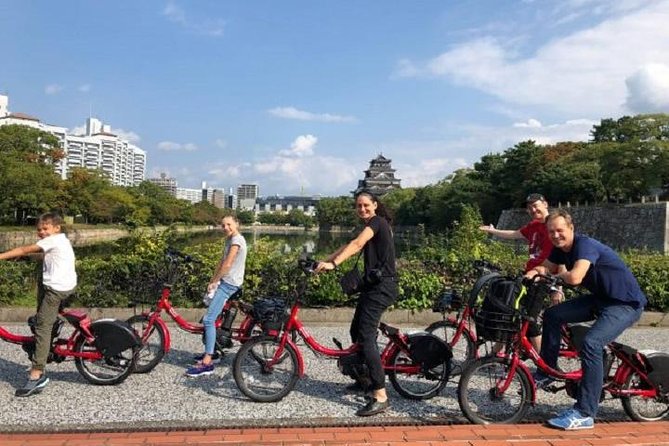
- Electric bikes on a mostly easy route: The bikes help you cover more ground without needing to be a regular cyclist.
- Major memorials in one compact ride: You visit the A-Bomb Dome, Cenotaph, Children’s Peace Monument, and Peace Bell.
- Views beyond the standard park route: The ride includes city streets, suburban townscape, and less obvious views of the A-Bomb Dome.
- Small shared group: The maximum is 10 people, though the pace may slow when children or inexperienced cyclists join.
- Rain plan included: Poor weather may bring a walking route focused on the hypocenter, or you can choose a refund.
Starting at the Peace Park Rest House
The tour begins at the Hiroshima Peace Memorial Park Rest House at 11:00 or 15:00. This is also where the tour ends, so the arrangement is simple. You do not need to work out a second pickup point across town.
Arrive early. If you are late without prior notice, the tour can be canceled with no refund. The Rest House does not offer luggage storage, so leave large bags at your hotel or use coin lockers at the International Conference Center Hiroshima or the Hiroshima Peace Memorial Museum, about a six-minute walk away.
The meeting point puts you right in the middle of Hiroshima’s most important memorial area. That saves time and lets the guide begin with the setting instead of spending the first part of the tour on transport.
The group can include up to 10 people. That is small enough for questions and conversation, but it is still a shared tour. The guide may adjust the pace if someone is new to cycling, especially a child. You should expect a relaxed ride, not a race through the city.
More Bike Tours in Hiroshima
- Hiroshima in a Nutshell: Morning Bike Adventure
★ 5.0 · 524 reviews - Hiroshima: Peace Cycling Tour with Local Guide
★ 4.8 · 286 reviews - Hiroshima and Miyajima by Bike and Boat
★ 5.0 · 172 reviews
Why the electric bikes matter
The electric bikes are one of the tour’s biggest practical strengths. Hiroshima is relatively flat, and the ride is described as easy, but an e-bike still makes a difference when you are stopping often, riding in cold weather, or trying to pay attention to the guide.
Several participants found the bikes easy to operate, including people who did not consider themselves cyclists. One older rider, age 64, found the route manageable with help from the staff. That makes this a good option if you are interested in cycling but do not want a demanding physical outing.
You still need basic bike confidence. The tour moves through public streets and around the park, so you should be comfortable steering, braking, and following the group. The bicycles include accident insurance, which is included in the price.
Adult electric bikes are available for people at least 145 centimeters tall. Children between 110 and 145 centimeters can use one of two children’s cross bikes available for each booking, or an adult bike at the child rate. Child seats are available for children under 22 kilograms and under 115 centimeters.
Hiroshima Peace Memorial Park in about 55 minutes
After a short five-minute meeting period, the group spends roughly 55 minutes in Peace Memorial Park. This is the heart of the experience, and the guide explains what the park’s monuments mean and what happened in Hiroshima during the atomic bombing.
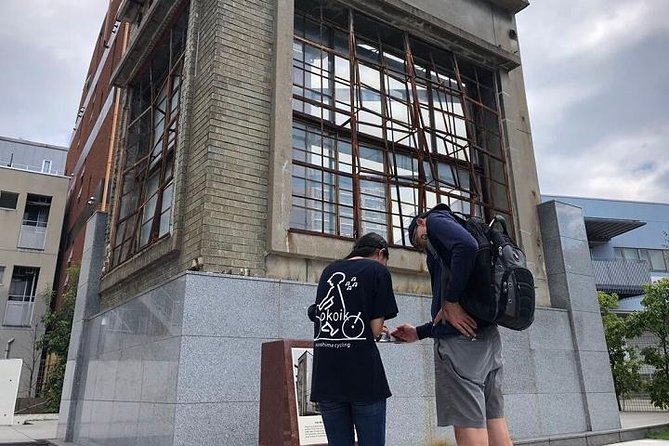
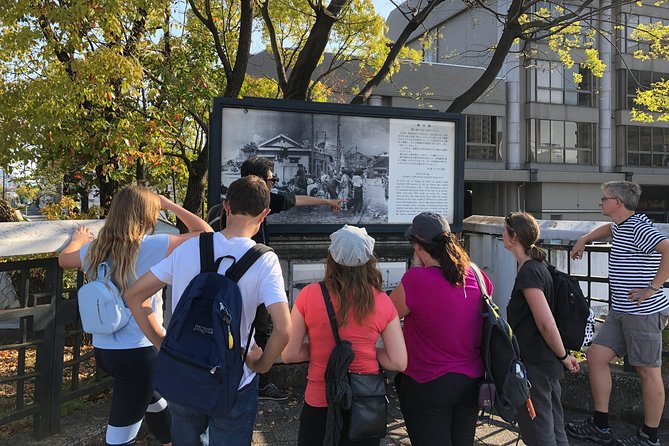
You will see the Atomic Bomb Dome, also called the A-Bomb Dome, along with the Cenotaph for the victims, the Children’s Peace Monument, and the Peace Bell. These sites are not simply photo stops. The guide connects them to the people remembered there and to Hiroshima’s continuing focus on peace.
The Children’s Peace Monument is especially moving because it reflects the suffering of children after the bombing, including those affected by radiation-related illness. The Peace Bell offers a different feeling, inviting reflection through a symbol of peace rather than a detailed account of destruction.
A guide can help you understand how these monuments relate to one another. The Peace Memorial Museum presents a large amount of evidence and testimony, while this ride gives you a physical sense of where events occurred and how the memorial area fits into the present city.
The tour does not replace the museum. If you have time, I would pair the cycling tour with a museum visit, either before or after. The bike tour gives you setting and human context, while the museum provides a more detailed record of the bombing and its effects.
The A-Bomb Dome from a different angle
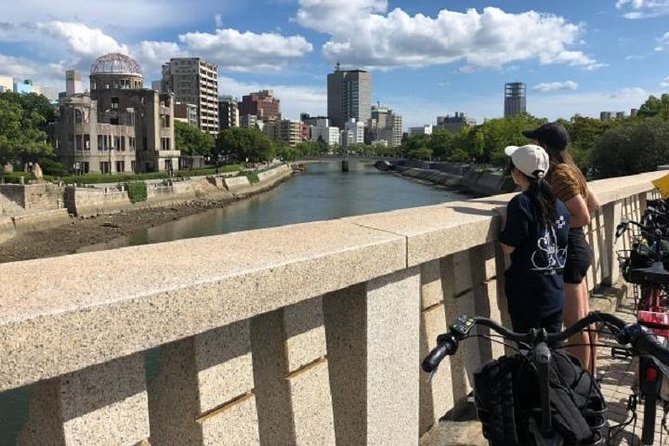
One appealing feature is the effort to show the A-Bomb Dome from city viewpoints away from the most familiar paths. You still see the building at close range, but the guide also takes you through parts of Hiroshima that many people skip when they stay inside the main park.
That change in viewpoint matters. The dome is often photographed as an isolated ruin, but cycling through the surrounding city shows how it sits within a functioning, rebuilt community. You see Hiroshima not only as a memorial site but also as a living city.
The route may include streets and areas beyond the central park, with the guide pointing out details connected to wartime Hiroshima and its recovery. The supplied tour information also highlights the A-Bombed Streetcars, trains that survived the bombing and still run today. The guide shows the actual city setting rather than presenting Hiroshima only through monuments.
This is one reason the bike works better than a strictly walking route. You can move from memorial grounds into ordinary streets without losing the thread of the story. The ride gives you a sense of distance and transition.
A completely different kind of day out in Hiroshima:
- Peaceful Hiroshima & Miyajima UNESCO 1 Day Bus Tour
★ 5.0 · 5,309 reviews - Hiroshima: Hiroshima and Miyajima UNESCO Sites 1-Day Tour
★ 4.9 · 2,330 reviews - Hiroshima / Miyajima Full-day Private Tour with Government Licensed Guide
★ 5.0 · 1,298 reviews - Hiroshima Historical Walking Tour – Why A-Bomb was Dropped
★ 4.8 · 893 reviews
Hiroshima’s rebuilt city after the bombing
The final hour is devoted to Hiroshima beyond the central memorial area. The guide uses the present-day city to explain wartime damage and postwar recovery. You are not only looking backward. You are also seeing how Hiroshima rebuilt itself.
The tone varies by guide, but the best moments combine historical facts with family memories. Shin has spoken about relatives connected to the bombing, including a grandmother who survived and a mother who was in utero when the bomb was dropped. Those details can make the history feel immediate without turning the tour into a performance.
Other guides bring their own strengths. Kana is praised for clear English, steady pacing, and detailed explanations at each site. She has also helped with rainy-day walking tours and local dining suggestions. Bella is described as warm and passionate, and she takes riders to places around the city that are easy to miss after a standard visit to the park.
The guide’s background may differ depending on the day. The tour description emphasizes guides raised in Hiroshima, but one account specifically noted that a guide did not have a family connection to the bombing. That is worth understanding before booking. A personal survivor connection can be powerful, but a guide without that connection may still offer a useful account based on local knowledge and research.
What the two-hour schedule really allows
The tour runs from 11:00 to 13:00 or from 15:00 to 17:00. Two hours is enough for a focused introduction, not a full study of Hiroshima.
You can expect a compact route with the major Peace Park monuments, some city cycling, and an explanation of Hiroshima’s wartime and postwar story. The electric bikes help the group cover more ground than it could on foot in the same time.
The tradeoff is depth. One participant wished the tour lasted longer, and that is easy to understand. The subject invites questions, and a moving conversation with a guide can make two hours pass quickly. If you want to include Hiroshima Castle and spend more time talking with your guide, the separate three-hour version is the better fit.
The three-hour route adds places such as Hiroshima Castle and gives more attention to prewar Hiroshima and postwar recovery. Choose the two-hour tour if you want the essential peace sites and a taste of the modern city. Choose three hours if Hiroshima is a major purpose of your trip and you want a slower, fuller account.
A serious subject handled with care
This tour deals with death, illness, war, and the destruction of a city. That requires a careful guide, and the strongest experiences here seem to come from guides who balance facts with compassion.
The personal stories from Shin were especially important for some people. Hearing about family members who lived through the bombing can add a human layer that a display panel cannot provide. At the same time, the tour is not presented as a survivor testimony session. The guide’s role is to place individual stories within the larger history of Hiroshima.
You may find the experience emotional. Some participants described crying during the tour, while others valued the sense of hope and peace that followed. The tone is not light, but the cycling keeps the experience active and connected to the city around you.
That combination is useful. You are not shut inside a room for two hours absorbing difficult material. You pause at memorials, ride through Hiroshima, and see a city that has continued. The movement does not soften the history. It helps you understand its place in daily life.
Weather, winter rides, and the rain route
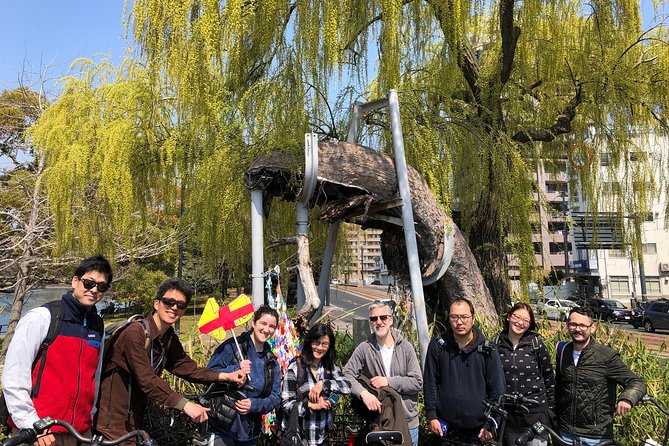
The tour requires suitable weather for cycling. Rain, snow, cold wind, or other unsafe conditions can lead to a change of plan. Some people have taken the tour in cold weather and even snowfall, while others switched to a walking route during heavy rain.
The rainy-day option follows a different route through the Peace Memorial Park, the A-Bomb Dome, the hypocenter, the Former Bank of Japan, Fukuromachi Elementary School, and the main street. It is scheduled to finish at the same time as the cycling version.
The walking route focuses on the hypocenter, the area that was reduced to scorched ground in an instant, and sites within roughly 0.5 to 1 kilometer of it. If the weather prevents the bike ride, you can accept the walking tour or request a refund.
Check the forecast and dress for the season. Hiroshima can be cold enough in winter to make an otherwise easy bike ride uncomfortable. The tour may still operate, but you should not assume that an e-bike replaces warm clothing or rain protection.
Is $59.69 good value?
At $59.69 per person, this is not the cheapest way to see the Peace Park. You can walk through the park independently, and the major memorials are publicly accessible. The value comes from the guide, the bicycles, the route beyond the main sights, and the chance to ask questions as you go.
The electric bike lets you see more in two hours. That matters if your Hiroshima visit is short, if you are arriving by cruise ship, or if you want to fit the Peace Park around other plans. The small group also makes the experience more personal than a large bus tour.
The price includes bicycle accident insurance. It does not include admission to the Peace Memorial Park, though the main outdoor memorial area itself is free. The listing does not state that museum admission is included, so plan to pay separately if you visit the museum.
I think the price is fair for a visitor who wants interpretation rather than simple transport. It is less compelling if you are happy to read the memorial signs yourself, walk at your own pace, and spend several hours exploring independently.
Who should book this Hiroshima bike tour?
I would choose this tour for first-time visitors who want an organized introduction to Hiroshima without being confined to a bus. It suits families, older adults who can manage a bicycle, and people who want to see the park and nearby streets in one outing.
It also works well for anyone who has already visited the Peace Museum. The ride adds viewpoints and city context that you might otherwise miss. The guides can point out places beyond the usual A-Bomb Dome and Cenotaph circuit.
You should think twice if you dislike group pacing, need a completely private experience, or want a long, detailed historical lecture at every stop. The maximum group is 10, but the pace belongs to the whole group.
Book at least 24 hours ahead if you need the option of a full refund. Cancellations made less than 24 hours before the start are not refunded, and late arrival can cost you the entire booking. The tour is offered by Attractive JAPAN, and a mobile ticket is provided.
Final verdict: an active and personal way to remember Hiroshima
I recommend the Hiroshima 2hr Peace Cycling Tour if you want to connect the major memorials with the city that surrounds them. The e-bikes are easy, the route is efficient, and the best guides bring real feeling to a difficult subject.
The two-hour format has limits. You will not see everything, and the depth of the personal storytelling depends on which guide leads your group. Still, the mix of Peace Park monuments, A-Bomb Dome viewpoints, surviving city references, and postwar Hiroshima gives you much more than a quick photo stop.
Choose it early in your Hiroshima stay so you can use the guide’s advice for the rest of your visit. If you have only a short time, it is a practical introduction. If you have a full day, combine it with the Peace Memorial Museum and consider the three-hour version.
FAQ
Where does the Hiroshima cycling tour begin?
It begins at the Hiroshima Peace Memorial Park Rest House in Nakajimacho, Naka Ward, Hiroshima.
Where does the tour finish?
The tour ends back at the same meeting point, the Hiroshima Peace Memorial Park Rest House.
How long does the tour last?
The cycling tour lasts approximately two hours. Departures are scheduled for 11:00 and 15:00.
What sites are included?
The route includes Hiroshima Peace Memorial Park, the Atomic Bomb Dome, the Cenotaph, the Children’s Peace Monument, and the Peace Bell. It also includes areas of the city beyond the park.
Is the tour suitable for people who are not regular cyclists?
The route is described as an easy ride, and electric bicycles are provided. The city is flat, but you still need to be able to operate a bicycle safely.
What are the bicycle height requirements?
Adults using electric bicycles must be at least 145 centimeters tall. Children between 110 and 145 centimeters can use children’s cross bikes or an adult bicycle at the child rate.
Are child seats available?
Yes. Electric bicycles with child seats are available for children under 22 kilograms and under 115 centimeters.
What happens if it rains?
The cycling tour may change to a walking Peace Route. This can include the Peace Memorial Park, Atomic Bomb Dome, hypocenter, Former Bank of Japan, Fukuromachi Elementary School, and the main street.
Can I get a refund if bad weather cancels the tour?
If poor weather makes the tour unsafe and the activity cannot be held, you can choose another date or receive a full refund. You may also choose the rainy-day walking route when offered.
Is luggage storage available at the meeting point?
There is no luggage storage at the Rest House. Coin lockers are available at the International Conference Center Hiroshima and Hiroshima Peace Memorial Museum, about a six-minute walk away.
Just added around Hiroshima
- Hiroshima & Miyajima: Private Full-Day Tour with a Local Guide★ 5.0 · 39 reviews
- Hiroshima and Miyajima 1 Day Walking Tour★ 5.0 · 43 reviews
- Hiroshima History Tour : A-Bomb Dome, Peace Memorial & City★ 5.0 · 43 reviews
- The Journey of Hiroshima from Tragedy to Peace★ 4.8 · 44 reviews
- Cultural Activities :Kimono, tea ceremony, Calligraphy and Amulet★ 5.0 · 44 reviews
- Miyajima: Private Rickshaw Tour to Itsukushima Shrine★ 4.9 · 45 reviews
- Hiroshima Private Tour: Best Highlights in a Day★ 5.0 · 49 reviews
- Hiroshima & Miyajima All-Inclusive Tour w/Licensed guide Pancho★ 5.0 · 54 reviews
Cycling Tours, compared.
3h Tokyo E-Bike Tour: Hidden Gems, and Local Life with guide
Read our review →
Arashiyama Bamboo Forest & Hidden Gems Bike Tour (Early Bird)
Read our review →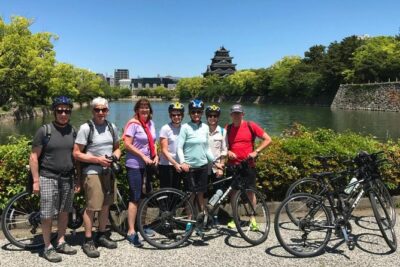
Hiroshima in a Nutshell: Morning Bike Adventure
Read our review →Browse the lists this tour appears in