
Reviewed · CYCLING TOURS
Hiroshima 3hr Peace Cycling Tour with Local Guide
Hiroshima’s story reaches beyond the Peace Park. This three-hour ride connects famous sights with quieter places that show how the city was destroyed, remembered, and rebuilt. I like the small group of up to 10 and the mostly gentle route, which lets you cover far more ground than a walking tour without turning the morning into a workout. I also like that the guide explains postwar recovery, not only the bombing itself. The main consideration is that the schedule is tight, and some stops may feel brief if you want long, silent visits.
The $85.89 price is fair if you want an introduction to Hiroshima with transportation between sites, an electric bicycle, bicycle accident insurance, and included entrance fees. Guides such as Shin, Moe, Kana, Toma, and Thomas have been praised for clear explanations and personal family connections to August 6, 1945. Still, you should be comfortable riding in a shared group, since the pace may slow for children or anyone new to cycling.
In This Review
- Key points at a glance
- Why a bicycle works so well in Hiroshima
- Starting at the Peace Park Rest House
- Hiroshima Castle and Gokoku Shrine: the city before and after the blast
- Central Park, Aioi Bridge, and the Atomic Bomb Dome
- Along the Motoyasu River to Higashisenda Park
- The Red Cross hospital window and the hard evidence
- Surviving trains and Miyuki Bridge
- The surviving weeping willow and Peace Boulevard
- What makes the guides important
- Weather, bicycles, and who should book
- My verdict: book it for context, not speed
- FAQ
- Where does the Hiroshima Peace Cycling Tour begin?
- Where does the tour end?
- How long is the cycling tour?
- How many people can join the tour?
- Is an electric bicycle included?
- What height is required for an adult bicycle?
- Can children join the tour?
- What happens if it rains?
- Can I cancel for a refund?
Key points at a glance
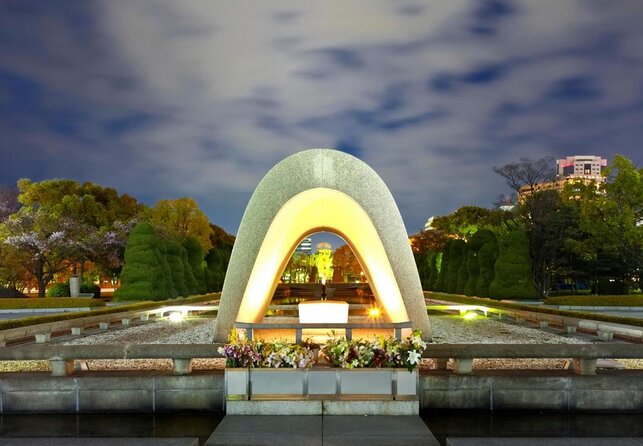
- A 14-stop route in three hours: You travel from Hiroshima Castle and Gokoku Shrine to the Atomic Bomb Dome, riverbanks, surviving trees, monuments, and railway history.
- Electric bicycles keep the ride gentle: The route is described as relatively flat, and the bikes help in hot weather or when you are not a confident cyclist.
- Small groups make the history personal: With no more than 10 people, it is easier to hear the guide and ask questions.
- The strongest guides add family stories: Shin and Moe have shared personal connections to survivors, giving the historical account an intimate human voice.
- Rain does not always cancel the day: You may switch to a walking route focused on the Peace Park, hypocenter, former Bank of Japan, and Fukuromachi Elementary School, or choose a refund.
- The tour begins and ends at the Peace Park Rest House: Plan to store luggage elsewhere, since no luggage storage is available at the meeting point.
Why a bicycle works so well in Hiroshima
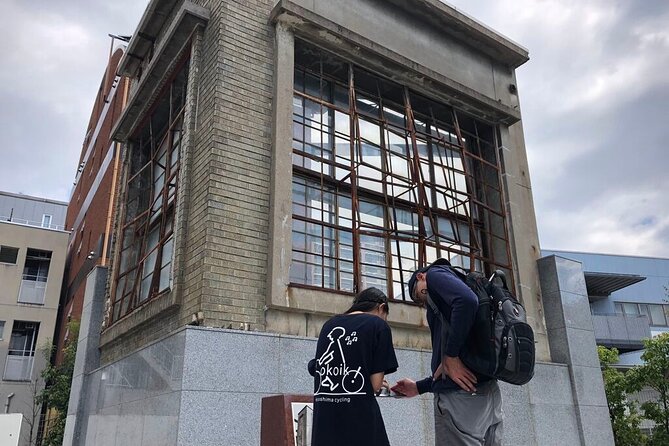
Hiroshima’s main peace sites are spread across a wider area than many first-time visitors expect. The Atomic Bomb Dome, Hiroshima Castle, central parks, surviving buildings, bridges, trees, and railway sites do not all sit within one compact square.
A bicycle gives you a practical link between them. You stop often, listen, walk around a monument or building, then ride again. The movement keeps the morning from becoming a long series of indoor explanations, while the stops provide time to face the subject with proper seriousness.
The route is generally flat and the electric bicycles are easy to use. Several riders have specifically praised the e-bikes in summer heat. You still need basic bicycle control, attention near roads, and enough confidence to ride as part of a group. The guide adjusts the speed when children or less experienced cyclists are present, so a strong cyclist should expect a relaxed pace rather than a sporty outing.
At $85.89 per person, you are paying for more than bicycle rental. The price includes the guide, the planned route, entrance fees, and bicycle accident insurance. It is good value if you want an organized first look at Hiroshima and would otherwise spend time figuring out how to move between distant sites. It is less compelling if you prefer to spend most of your time inside the Peace Memorial Museum or to explore each monument independently.
More Bike Tours in Hiroshima
- Hiroshima in a Nutshell: Morning Bike Adventure
★ 5.0 · 524 reviews - Hiroshima 2hr Peace Cycling Tour with Local Guide
★ 5.0 · 321 reviews - Hiroshima: Peace Cycling Tour with Local Guide
★ 4.8 · 286 reviews
Starting at the Peace Park Rest House
The meeting point is the Hiroshima Peace Memorial Park Rest House. The morning departure is scheduled for 10:00, with an afternoon option at 14:00 that returns around 17:00.
Allow time to arrive early. The opening includes greetings, a route explanation, bicycle instructions, and health and safety procedures such as temperature checks. If you arrive late without notice, the tour can be canceled with a full same-day charge. Even advance contact does not guarantee that the group will wait, so this is not an activity to squeeze between a late train and a quick breakfast.
There is no luggage storage at the Rest House. Coin lockers are available at the International Conference Center Hiroshima and the Hiroshima Peace Memorial Museum, about a six-minute walk away. That small detail matters if you are checking out of a hotel with bags.
Hiroshima Castle and Gokoku Shrine: the city before and after the blast
The first ride takes you to Hiroshima Castle, scheduled for roughly 20 minutes. The site is important because the military headquarters there was among the first places to report the atomic bombing.
This stop helps correct a common misunderstanding. Hiroshima was not simply a museum city created after 1945. It had military, civic, religious, and commercial life before the bombing. The guide uses the castle area to explain the city’s wartime role and the immediate confusion after the blast.
Next comes Hiroshima Gokoku Shrine and its gate, with about 15 minutes planned. The Guardian Dog statue and shrine gate offer less familiar points of reference. The gate survived the atomic bombing, making it a physical link between the older city and the one you see today.
You should not expect a long shrine visit here. The value is the explanation and the contrast. A short stop can make a surviving object feel more meaningful than another general statement about destruction.
Central Park, Aioi Bridge, and the Atomic Bomb Dome
Hiroshima Central Park provides a change of mood. You walk through a broad green area for about 20 minutes, seeing the city’s trees and open spaces. The ride is not only about ruins and monuments. It also shows the ordinary public places that form present-day Hiroshima.
At Aioi Bridge, the tour turns back toward the best-known memorial area. The bridge was the intended target for the bomb, and both the bridge and river remain. Your guide explains the geography and helps you understand how the intended aim related to the actual blast area.
The Atomic Bomb Dome follows, with roughly 15 minutes scheduled. This is the tour’s most recognizable site, but recognition does not make it simple. The damaged structure is surrounded by a functioning city, riverside paths, trees, and daily life. Your guide adds local memories and stories that a quick photograph cannot provide.
The short timing is the one drawback here. If you want a long look at the Dome, photographs, and the nearby park, return later on your own. This cycling tour gives you context and orientation rather than a full afternoon at one site.
A completely different kind of day out in Hiroshima:
- Peaceful Hiroshima & Miyajima UNESCO 1 Day Bus Tour
★ 5.0 · 5,309 reviews - Hiroshima: Hiroshima and Miyajima UNESCO Sites 1-Day Tour
★ 4.9 · 2,330 reviews - Hiroshima / Miyajima Full-day Private Tour with Government Licensed Guide
★ 5.0 · 1,298 reviews - Hiroshima Historical Walking Tour – Why A-Bomb was Dropped
★ 4.8 · 893 reviews
Along the Motoyasu River to Higashisenda Park
From the Dome, you follow the Motoyasu River and cross by the Peace Bridge. The river route offers a quieter ride and shows how close natural spaces are to the memorial core.
Higashisenda Park is about one kilometer from the center of the blast. Trees sent from countries around the world grow here, creating a living record of international remembrance. The guide explains the stories connected with the site, so this stop adds a wider view of Hiroshima’s message.
The tour gives the park 20 minutes. That is enough to walk around and listen, though not enough for a slow personal visit. I would treat the guided stop as an introduction, then return later if a particular tree, monument, or story stays with you.
The Red Cross hospital window and the hard evidence
The Atomic Bomb Window Frame Monument at Hiroshima Red Cross Hospital is one of the most difficult stops because it presents damage in a direct, physical way. The remains are about 1.5 kilometers from the blast center.
The point here is not visual drama. It is scale. As you move farther from the center, the surviving window frame and building remains help explain the force of the explosion and the distance over which it caused destruction.
The schedule allows about 20 minutes, including the guide’s explanation. This is a place where the personal stories shared by some guides can carry special weight. Shin, for example, has spoken about his family connection to the bombing, while Moe has shared that all four of her grandparents lived through it. The exact guide varies, and you should not assume a particular family story will be part of every departure, but the possibility adds a personal layer to the factual account.
Surviving trains and Miyuki Bridge
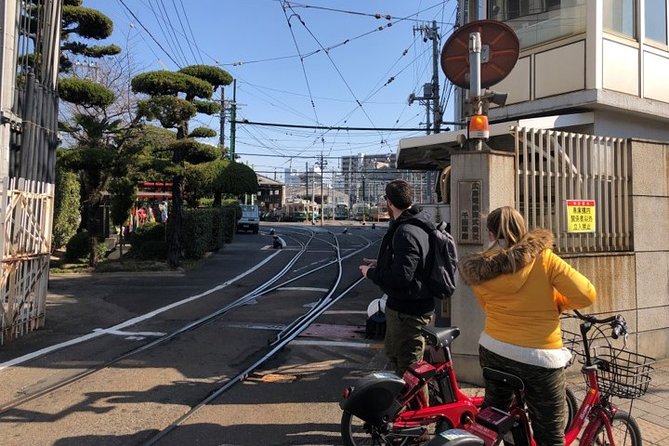
The next stop is Hiroshima Railway, about two to two and a half kilometers from the blast center. Two trains survived the atomic bombing and continued running. That detail connects the event to the city’s transport system and to the practical work of keeping Hiroshima alive.
You have about 10 minutes here. It is a quick stop, but it breaks up the memorial narrative with an example of continuity. The city was not frozen on August 6. People repaired, rebuilt, traveled, worked, and carried on amid enormous loss.
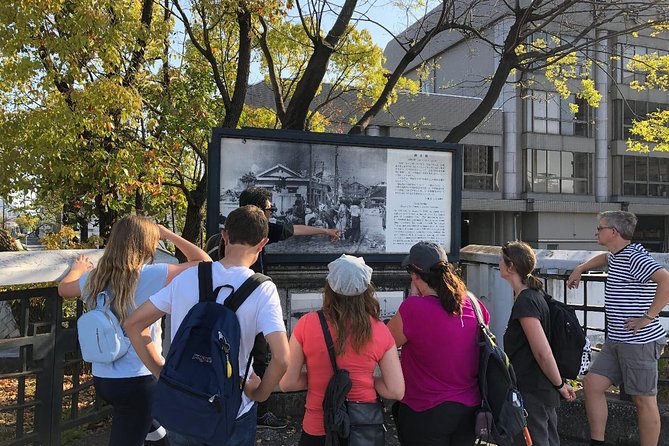
At Miyuki Bridge and Kobayashi River, the tour reaches a point where the bomb’s effects ended. A photograph displayed there shows the difference between the devastated area and the city as it exists now. The stop lasts about 10 minutes.
This is where the ride’s structure becomes clear. You are not seeing isolated curiosities. You are tracing distance from the center of the blast and watching the evidence change as the route moves through Hiroshima.
The surviving weeping willow and Peace Boulevard
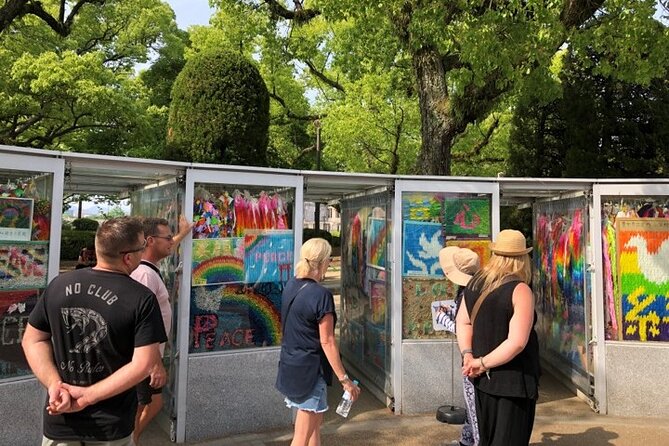
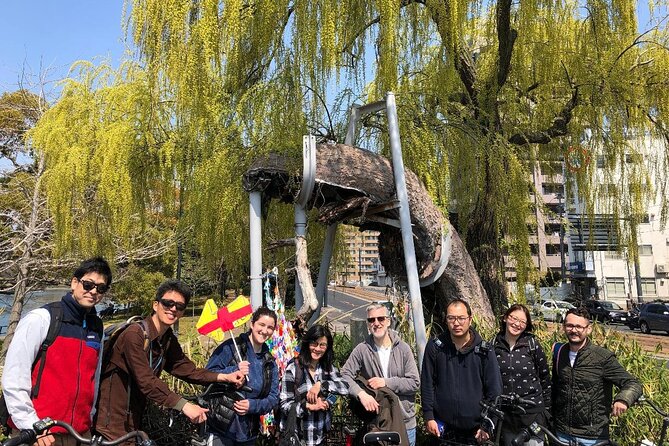
The surviving weeping willow tree near the Hiroshima City Children’s Museum is described as a highlight. It continued growing despite the belief that plants would not return naturally for many decades.
The tree represents endurance, but the guide also places it within a wider story of recovery. Hiroshima’s rebuilding was physical and social. Parks, roads, public transport, homes, and memorials all became part of a city determined to live forward without forgetting what happened.
The final ride follows Peace Boulevard back toward the Peace Memorial Park. You pass other monuments and significant trees while seeing the present-day city around them. This last section is useful because it prevents the tour from ending only in destruction. You see Hiroshima as a working, thriving place, not just a site of tragedy.
The group returns to the Peace Park Rest House at about 13:00. That leaves your afternoon open for the Peace Memorial Museum, lunch, Miyajima, or a second look at any site that deserves more time.
What makes the guides important
The guide is the heart of this experience. The route is useful, but a bicycle and map alone cannot explain why each place matters.
Shin has been praised for a lively manner, clear English, and family stories connected to Hiroshima survivors. Moe has been described as kind, careful, and especially moving when discussing her grandparents. Kana has been appreciated for a clear speaking voice and thoughtful answers. Toma and Thomas have also been praised for connecting the past to Hiroshima’s present and future.
Those names come from particular departures, not a promise that you will receive one of them. Guide assignments can change. Still, the repeated emphasis on personal stories tells you what kind of tour this is meant to be: factual, local, and human rather than a simple ride between photo stops.
The subject can be painful. A good guide needs to balance horror with respect and hope. The strongest accounts described by participants did exactly that, making room for sadness, questions, family memory, and the city’s recovery.
Weather, bicycles, and who should book
The activity requires good weather for cycling. If rain makes the ride unsafe, you may be offered another date, a refund, or a limited rainy-day walking route. That route includes the Peace Memorial Park, Atomic Bomb Dome, hypocenter, former Bank of Japan, Fukuromachi Elementary School, and the main street, with a return around 13:00 or 17:00.
The rainy-day option is not the same experience. You lose the longer bicycle route and several outlying sites, but you gain a closer walk through the central area and the hypocenter, the place reduced to scorched ground in an instant.
Adult electric bicycles require a height of at least 145 centimeters. Children between 110 and 145 centimeters may use one of two available children’s cross bikes per booking. Child-rate riders under 15 may use either children’s or adult bicycles. Child seats are available for children under 22 kilograms and under 115 centimeters.
This tour suits adults, families with cycling-ready children, and anyone who wants a guided introduction before exploring alone. It is not ideal if you cannot ride a bicycle, need a private pace, or want to spend hours at each major memorial. The group can include up to 10 people, and the pace may be set by the least experienced cyclist.
My verdict: book it for context, not speed
I would book this tour if I had three hours in Hiroshima and wanted to understand how the memorial sites fit together. The e-bike makes the route manageable, the small group keeps it personal, and the mix of famous and lesser-known places gives you more than a standard Peace Park walk.
I would also book it early in my stay. The ride gives you a map of the city’s story, then leaves time to return to the Peace Memorial Museum or revisit the Atomic Bomb Dome with a better sense of place.
Skip it if your main goal is an unhurried museum visit, a private guide, or a fast athletic ride. For most visitors who can cycle comfortably, though, the $85.89 fee buys a thoughtful route, useful local explanation, and a powerful look at both Hiroshima’s suffering and its recovery.
FAQ
Where does the Hiroshima Peace Cycling Tour begin?
It begins at the Hiroshima Peace Memorial Park Rest House in Nakajima-cho, Naka Ward, Hiroshima.
Where does the tour end?
The activity returns to the Hiroshima Peace Memorial Park Rest House.
How long is the cycling tour?
The tour lasts about three hours. The morning departure is scheduled from 10:00 to 13:00, and the afternoon departure from 14:00 to 17:00.
How many people can join the tour?
The shared tour has a maximum of 10 people.
Is an electric bicycle included?
Yes. Adult participants use electric bicycles, and bicycle accident insurance is included in the price.
What height is required for an adult bicycle?
Adult electric bicycles are for participants at least 145 centimeters tall.
Can children join the tour?
Yes. Children from 110 to 145 centimeters can use children’s cross bikes, with two children’s bicycles available for one booking. Child seats are available for children under 22 kilograms and under 115 centimeters.
What happens if it rains?
The cycling plan may be changed to a rainy-day walking route, moved to another date, or refunded. The walking route includes the Peace Memorial Park, Atomic Bomb Dome, hypocenter, former Bank of Japan, Fukuromachi Elementary School, and the main street.
Can I cancel for a refund?
You can cancel at least 24 hours before the experience starts for a full refund. Cancellations or changes made less than 24 hours before the start time are not refunded or accepted.
Just added around Hiroshima
- Hiroshima & Miyajima: Private Full-Day Tour with a Local Guide★ 5.0 · 39 reviews
- Hiroshima and Miyajima 1 Day Walking Tour★ 5.0 · 43 reviews
- Hiroshima History Tour : A-Bomb Dome, Peace Memorial & City★ 5.0 · 43 reviews
- The Journey of Hiroshima from Tragedy to Peace★ 4.8 · 44 reviews
- Cultural Activities :Kimono, tea ceremony, Calligraphy and Amulet★ 5.0 · 44 reviews
- Miyajima: Private Rickshaw Tour to Itsukushima Shrine★ 4.9 · 45 reviews
- Hiroshima Private Tour: Best Highlights in a Day★ 5.0 · 49 reviews
- Hiroshima & Miyajima All-Inclusive Tour w/Licensed guide Pancho★ 5.0 · 54 reviews
Cycling Tours, compared.
3h Tokyo E-Bike Tour: Hidden Gems, and Local Life with guide
Read our review →
Arashiyama Bamboo Forest & Hidden Gems Bike Tour (Early Bird)
Read our review →
Hiroshima in a Nutshell: Morning Bike Adventure
Read our review →Browse the lists this tour appears in