
Reviewed · TRADITIONAL CRAFT WORKSHOPS
Japanese flower arranging (Ikebana) Experience/Workshop in Tokyo
Flowers can slow Tokyo down. This 90-minute ikebana workshop gives you a quiet, hands-on break from the city, with flowers, tools, and personal guidance included. I like the relaxed approach: you learn the ideas behind Japanese flower arranging without being boxed in by strict rules. I also like the small-group setting, where instructors such as Aki and Ruby can offer useful advice as your arrangement takes shape.
The main consideration is the extra cost if you want to keep your vase or kenzan. At $100 per person, this is not a bargain craft class, but the price covers the flowers, equipment, instruction, and shared photos. You should also allow a little room in your schedule, since a delicate arrangement is not something to rush through.
In This Review
- Key details before you book
- A calm hour and a half at Hanadouraku
- Choosing flowers and finding your own style
- Learning asymmetry with a kenzan
- Instructors who make beginners feel at ease
- What you take home from the class
- Why the $100 price can make sense
- Fitting Kojimachi into your Tokyo plans
- Who will enjoy this most
- Small practical points that matter
- Should you book the ikebana workshop?
- FAQ
- How long does the ikebana workshop last?
- Where does the workshop meet?
- Are flowers and tools included?
- Are the vase and kenzan included?
- Is the workshop suitable for children and families?
- Can I cancel for a full refund?
Key details before you book
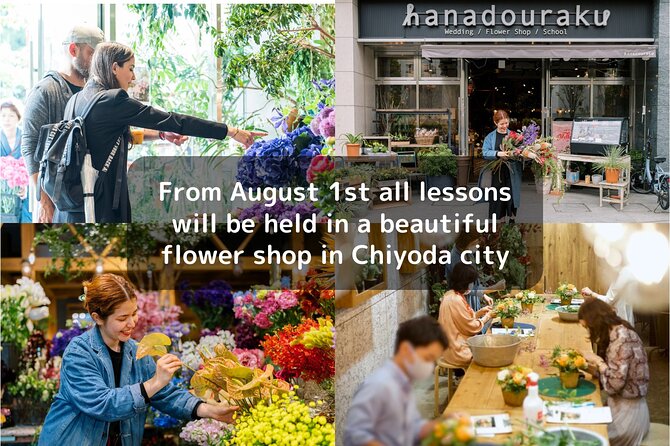
- You arrange real flowers yourself: This is a hands-on class, not a demonstration where you simply watch.
- Aki and Ruby receive especially warm praise: Both instructors are described as friendly, clear in English, and generous with practical help.
- The class takes about 90 minutes: It fits neatly into a Tokyo itinerary and ends at the same place where it begins.
- The style is creative rather than rigid: You learn about ikebana, asymmetry, flower symbolism, and technique while making your own choices.
- Flowers and tools are included: Containers and kenzan are available to buy separately if you want to continue at home.
- Families and pets are welcome: Most people can participate, and service animals are allowed.
A calm hour and a half at Hanadouraku
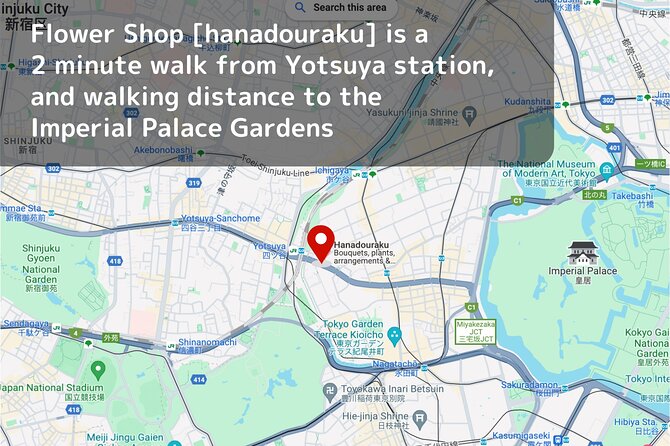
The workshop takes place at Hanadouraku, a Tokyo florist at 6-chome 46 Kojimachi, in Chiyoda City. The setting matters. Instead of entering a bare classroom, you begin among flowers and foliage, which gives the session an immediate sense of place.
Your host starts with an introduction to ikebana and the place flowers have held in human life. You learn that this is not simply a matter of placing attractive stems in a container. The class touches on the meaning of flowers, the value of space, and the visual tension created by uneven lines.
That opening is brief enough to keep the activity moving. You do not spend the entire 90 minutes listening to a lecture. The useful context gives your arranging a purpose, then the real work begins.
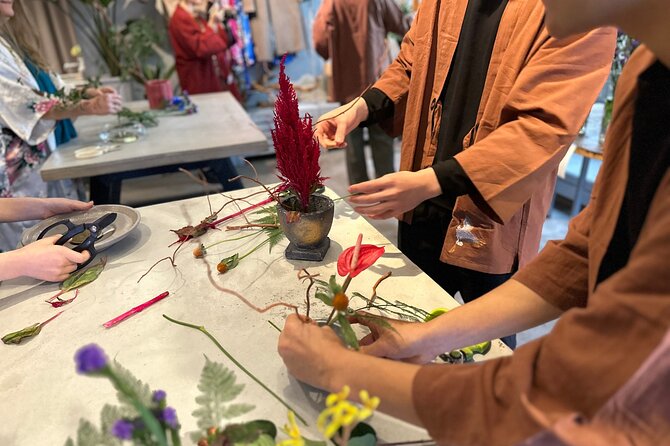
All the necessary ikebana tools and flowers are provided. That makes this easy to add to a Tokyo trip, since you do not need to bring supplies or prepare anything in advance. You can arrive, choose your materials, and begin working with the instructor’s help.
More Craft Workshops in Tokyo
- Tokyo Shinjuku Chopsticks Making Class
★ 5.0 · 1,763 reviews - Kintsugi Experience: Art of Golden Joinery in Tokyo
★ 5.0 · 467 reviews - Authentic Pure Gold Kintsugi Workshop with Master Taku in Tokyo
★ 5.0 · 217 reviews
Choosing flowers and finding your own style
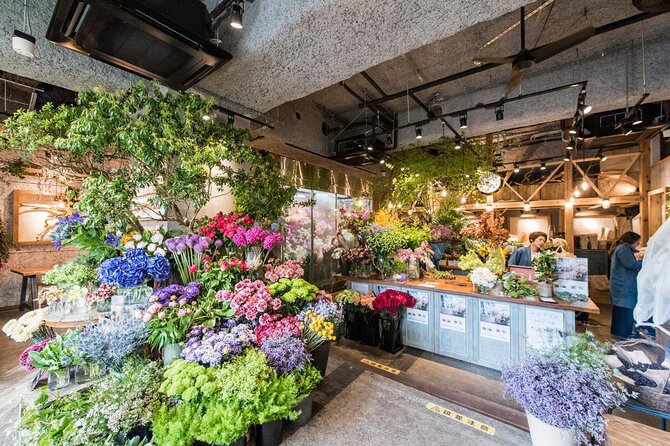
The heart of the experience is the creative process. You work with the flowers supplied at the florist and decide how to shape your arrangement. The exact selection can vary, but the class is designed around choice, not a single model that everyone must copy.
This is where the workshop differs from a strict traditional lesson. The instructor explains the principles of ikebana, but the emphasis is on self-expression in a free and playful way. You still learn how to handle the flowers and use the equipment, but you are encouraged to make an arrangement that feels like your own.
I like that balance. A beginner can follow clear advice without feeling tested. At the same time, you are not reduced to assembling a fixed pattern step by step.
The flowers also provide a natural way to talk about symbolism. One part of the instruction focuses on what different flowers represent, giving you another way to make choices. You may select a stem not only because of its color or shape, but also because of the feeling or idea connected with it.
Learning asymmetry with a kenzan
The kenzan is one of the key tools used in the arrangement. It is the spiked base that holds stems in place, allowing you to set flowers at different angles rather than simply bunching them together.
A particularly useful part of the class is learning to work with asymmetry. This can be harder than it looks. A balanced arrangement does not always mean a symmetrical one, and you may need to adjust the height, angle, and spacing of each stem several times.
The instructor can guide you through those choices without taking over. Aki is praised for explaining how to use the flowers and equipment, while Ruby is described as offering plenty of coaching when you want it. If you prefer to experiment first, you have room to do that too.
That flexibility makes the workshop suitable for different personalities. You can ask for close direction, or you can make a first attempt and then request suggestions. Either way, the goal is not perfect imitation. It is learning to see the relationships between line, space, color, and form.
Instructors who make beginners feel at ease
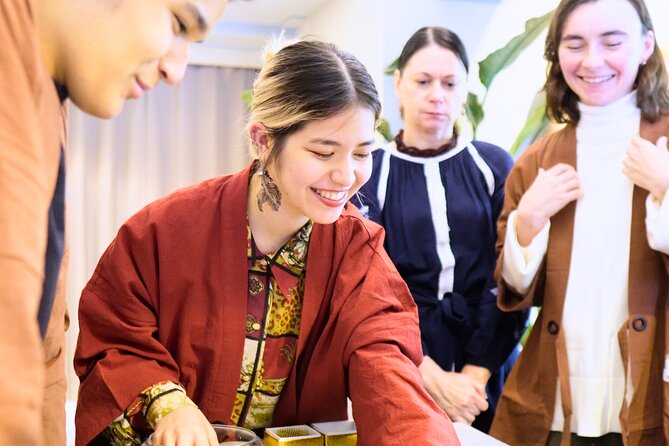
The quality of the host is central to an activity like this. Ruby is described as an accomplished florist with strong English communication skills, and Aki is praised for her clear explanations, patience, and warm manner.
Those details matter if you are new to ikebana. Flower arranging can feel intimidating when you do not know the vocabulary or the proper way to handle the tools. A friendly instructor helps turn that uncertainty into part of the fun.
Aki’s teaching includes the history of ikebana, flower types, and ways to connect with each bloom used in the design. Ruby’s approach appears similarly encouraging, with coaching available but plenty of freedom for your own ideas.
The experience is also suitable for children and families. That does not mean every child will want to concentrate on angles and spacing for 90 minutes, but the relaxed format gives families a creative activity to share. Pets are welcome as well, and service animals are allowed.
The maximum group size is 15 people. That is not a private lesson, but it is still small enough for the instructor to move around and provide individual advice. If you want one-on-one attention for the entire session, this may feel less personal than a private booking.
A completely different kind of day out in Tokyo:
- Mt Fuji and Hakone 1-Day Bus Tour Return by Bullet Train
★ 5.0 · 26,383 reviews - 1-Day Tokyo Bus Tour
★ 5.0 · 14,250 reviews - Tokyo: TOKYO SKYTREE® Admission ticket
★ 4.5 · 11,192 reviews - Tokyo: teamLab Planets TOKYO Digital Art Museum Entry Ticket
★ 4.6 · 9,779 reviews
What you take home from the class
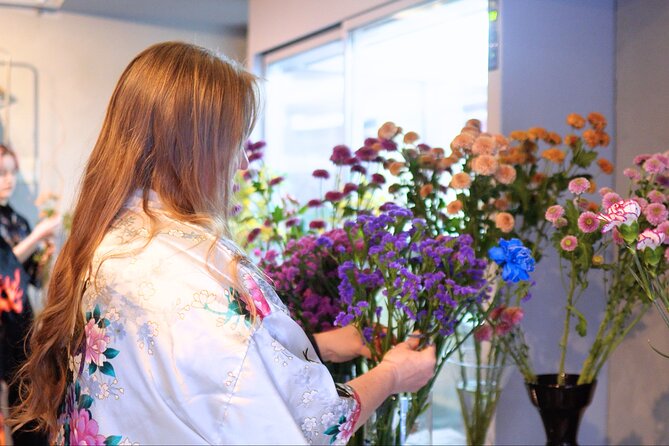
Your main souvenir is the arrangement you create. The flowers used in the activity are included in the price, so you do not need to leave empty-handed after the lesson.
The container is a separate matter. Vases are not included, but they can be purchased if you want to keep your arrangement and enjoy it for the rest of your stay. One useful option is to buy a vase at the workshop, then transport the arrangement back to your accommodation.
You can also purchase the kenzan separately. That is worth considering if you expect to practice again at home. Without the right base, it is difficult to recreate the same kind of arrangement, so the additional purchase turns a one-time activity into the beginning of a hobby.
Be realistic about flower longevity and transport. The provided information confirms that a participant successfully carried an arrangement back to an Airbnb, but it does not promise a special shipping service or long-term preservation. If you are near the end of your trip, flowers may be less practical than a vase and kenzan that you can reuse later.
Photos are shared after the activity. These capture you and your group while you are working, not just the finished arrangement. That is a nice extra, especially if you are busy concentrating on the flowers and forget to take pictures yourself.
Why the $100 price can make sense
At $100 per person, this workshop sits in the higher-priced range for a 90-minute activity. The value depends on what you want from your Tokyo schedule.
You are paying for more than a flower display. The fee includes the flowers, use of ikebana tools, instruction from a florist, historical and cultural context, and photos from the session. You also receive a creative experience that is difficult to reproduce on your own without buying supplies and learning the basics first.
For me, the strongest value is the personal guidance. A book or video can explain asymmetry and flower symbolism, but it cannot look at your arrangement and suggest a better angle or a more pleasing use of empty space. The small-group format gives the class an interactive quality that a self-guided activity lacks.
The value is lower if you only want a cheap souvenir or a quick floral craft. You may also spend more if you decide to buy both a container and a kenzan. Add those purchases only if you truly want to continue the practice.
The high rating of 4.9 from 52 ratings and a 98 percent recommendation rate point to a consistently positive experience. The praise centers on the teaching, the welcoming atmosphere, the quality of the flowers, and the freedom to create. Those are exactly the areas that matter most for this type of workshop.
Fitting Kojimachi into your Tokyo plans
The meeting point is in Kojimachi, in Chiyoda City, and the activity ends back there. It is near public transportation, which makes it practical to combine with other parts of central Tokyo.
The class lasts approximately one hour and 30 minutes. In real planning terms, you should allow extra time to reach 6-chome 46 Kojimachi, check in, and leave afterward. The workshop itself is compact, but you do not want to arrive late and lose the calm beginning of the session.
This is especially useful early in a trip. One participant found the class a lovely first activity after arriving in Japan, and I can see why. It offers a gentle introduction to a Japanese art form without requiring a full day, a long train ride, or a high level of prior knowledge.
It also works well as a change of pace between major sights. Tokyo can fill a day with stations, department stores, temples, towers, and crowds. An hour and a half among flowers gives your eyes and mind something different to do.
Who will enjoy this most
I would recommend this workshop to anyone who wants a cultural activity with a practical result. You learn about a Japanese tradition, make something with your hands, and leave with photos and possibly a living arrangement.
It is a good fit for:
- Couples looking for a quieter shared activity
- Families who want something creative and different
- Solo visitors who appreciate patient instruction
- First-time ikebana students
- Flower lovers and aspiring home arrangers
- Anyone needing a break from sightseeing
You do not need previous experience. The class is built for beginners, and the instructors explain the process as you work.
I would hesitate only if you dislike guided creative activities or want a fully traditional, rule-heavy ikebana lesson. This workshop uses ikebana ideas in a more relaxed and playful way. That is a strength for many people, but it may not satisfy someone seeking formal training in a specific school or discipline.
Small practical points that matter
Your booking confirmation is issued at the time of booking, and the experience uses a mobile ticket. Keep the ticket accessible on your phone so you are not searching through email at the meeting point.
Most people can participate, and the activity is near public transportation. Pets are welcome, while service animals are specifically allowed. The maximum group size is 15, so ask yourself how much individual help you want before booking.
Free cancellation is available if you cancel at least 24 hours before the start time. Canceling or changing the booking inside that window is not accepted for a refund. The cut-off follows local Tokyo time, and the experience requires a minimum number of participants, so a cancellation by the operator can result in another date, another experience, or a full refund.
The class returns to its starting point. That makes it easy to plan the rest of your day without arranging a separate end location.
Should you book the ikebana workshop?
Yes, if you want a short, thoughtful Tokyo activity that gives you more than a photograph. The instructors, especially Aki and Ruby, appear to be the main reason the session works so well. Their role is not just to explain flowers, but to help you make decisions and gain confidence in your own arrangement.
Book it if you value calm, personal instruction, and a hands-on souvenir. The $100 price is fair when you count the materials, florist host, photos, and cultural explanation, but remember that a vase and kenzan cost extra.
Skip it if your schedule is packed minute by minute, if you want a formal masterclass, or if you are not interested in taking time away from major sights. For everyone else, this is a rewarding way to see a quieter side of Tokyo, one stem and one careful angle at a time.
FAQ
How long does the ikebana workshop last?
The activity lasts approximately one hour and 30 minutes.
Where does the workshop meet?
It begins at Japan, 102-0083 Tokyo, Chiyoda City, Kojimachi, 6-chome 46. The activity ends back at the same meeting point.
Are flowers and tools included?
Yes. The experience includes the flowers used in your arrangement and use of ikebana tools.
Are the vase and kenzan included?
No. Containers and kenzan are not included in the price, but both are available to purchase separately.
Is the workshop suitable for children and families?
Yes. Children and families are welcome, and most people can participate.
Can I cancel for a full refund?
Yes, if you cancel at least 24 hours before the experience start time. Cancellations or changes made less than 24 hours before the start time are not eligible for a refund.
Just added around Tokyo
- Tokyo 6hr Instagram Highlights Private Tour with Licensed Guide★ 5.0 · 38 reviews
- Tokyo Small Group Tour with Guide★ 4.5 · 38 reviews
- Tokyo Sumo Experience with Live Show & Audience Challenge★ 5.0 · 38 reviews
- Very popular in Harajuku♡Animal petting zoo★ 4.6 · 39 reviews
- Japanese Food Cooking Class in Asakusa, Tokyo★ 5.0 · 39 reviews
- Ramen Making from Scratch with Tokyo Mom(Vegan Option Available)★ 5.0 · 39 reviews
- Tokyo: Kimono Rental inside Shinjuku Gyoen National Garden★ 4.9 · 39 reviews
- Tokyo JDM Night: 600hp C63s AMG Edition 1 (Private)★ 4.9 · 39 reviews
Traditional Craft Workshops, compared.
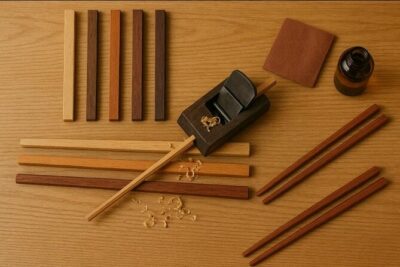
Chopsticks Making Workshop in Gion with Engraving Option
Read our review →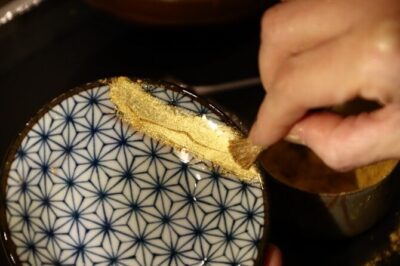
Kintsugi Experience: Art of Golden Joinery in Tokyo
Read our review →
Authentic knife making experience at a blacksmith in Kyoto
Read our review →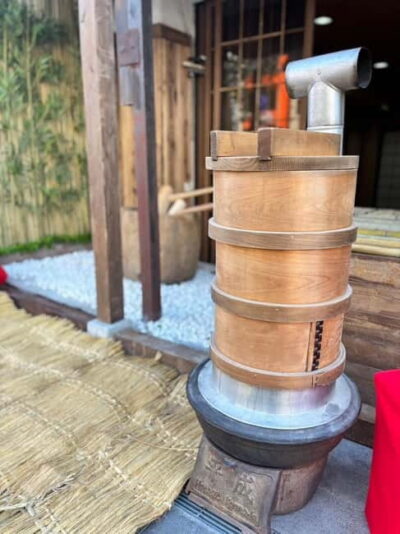
Traditional Mochi Pounding Experience with Tasting
Read our review →
Authentic Pure Gold Kintsugi Workshop with Master Taku in Tokyo
Read our review →
Roketsu dyeing experience: M course Roketsu Dyeing Experience
Read our review →Browse the lists this tour appears in