
Reviewed · GEISHA & GION DISTRICT TOURS
Kyoto 5-Star Geisha Night Walk: Small-Group Authentic Experience
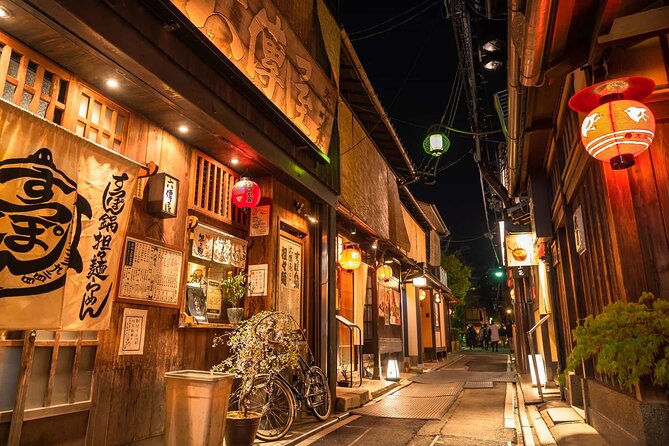
Kyoto reveals itself after sunset. This 3.5-hour walking tour pairs Gion’s lantern-lit streets with thoughtful explanations of geisha culture, Japanese history, Shinto traditions, temples, shrines, and Kyoto life. I especially like the small maximum of eight people and the chance to see Gion when daytime crowds have thinned. I also like that the tour includes a local snack, a welcome pause during a long evening on foot.
The guide, Richard, receives especially warm praise for his storytelling, clear English, cultural insight, and ability to answer detailed questions. One useful tip is to take this tour early in your Kyoto stay, since Richard also offers restaurant and sightseeing suggestions that can help shape the rest of your visit.
The main drawback is the walking. You will cover historic streets, steps, rocky paths, and some unpaved areas over several hours, so this is not a good choice if you have walking difficulties. You should also remember that the tour introduces you to geisha districts and their traditions, but it does not promise a private geisha performance or guaranteed sightings.
In This Review
- Key points to know before booking
- Starting at Shijo-Kawaramachi at 5:20 p.m.
- Kabuki theater and the doorway into traditional Kyoto
- Hanamikoji Street and the working side of Gion
- Gion Corner and the quieter geisha streets
- Yasui-Konpiragu and Kyoto’s religious traditions
- Yasaka Pagoda and Ninenzaka after sunset
- Nene-no-Michi and the included Kyoto snack
- Yasaka Shrine and the evening route toward Pontocho
- Pontocho’s narrow lanes and nightlife
- What Richard adds to the experience
- Is $98 a fair price?
- Practical details that affect your choice
- Who should book this Kyoto night walk?
- Should you book the Geisha Night Walk?
- FAQ
- How long does the Kyoto Geisha Night Walk last?
- What time does the tour begin?
- Where does the tour meet?
- Where does the tour end?
- How many people can join the tour?
- Is food included?
- Is the walking route suitable for people with mobility issues?
- Can I cancel for a full refund?
Key points to know before booking
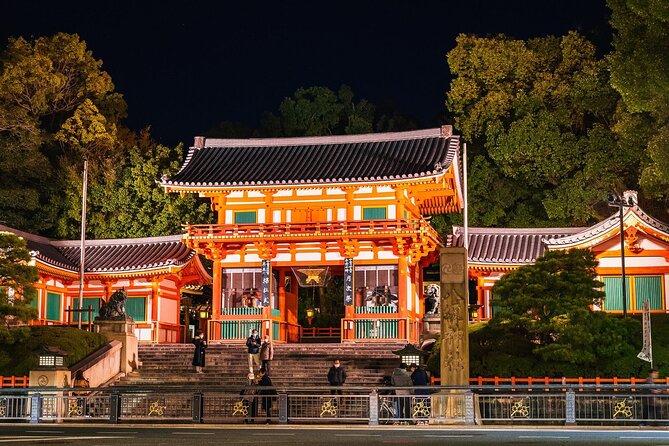
- Gion after dark: See Hanamikoji Street, narrow lanes, working geisha houses, and traditional architecture at a quieter time of day.
- Small group of eight: The limited size gives you a better chance to ask questions and hear Richard’s explanations.
- Several historic districts: The route links Gion, Higashiyama, Yasaka Shrine, and Pontocho rather than focusing on one street.
- A cultural, not theatrical, experience: The emphasis is on history, training, clothing, customs, religion, and daily life.
- Included Kyoto snack: A local treat provides a short break at Nene-no-Michi.
- Long evening walk: The tour lasts about three and a half hours and includes steps and uneven surfaces.
Starting at Shijo-Kawaramachi at 5:20 p.m.
The meeting point is outside the Disney Store at Kyoto Shijo-Kawaramachi, near the northeast corner of Shijo Street and Kawaramachi Street. This is a central spot near public transportation, but give yourself enough time to find the correct corner and locate the guide before the 5:20 p.m. start.
The timing is one of the tour’s strongest features. You begin in the early evening, then move into Gion as the light fades. That transition matters in Kyoto. The wooden facades, narrow lanes, and small signs of traditional businesses take on a different mood after dark, while the worst daytime congestion may have eased.
This is a walking tour from the first minute, not a sightseeing trip with vehicle transfers. Wear comfortable shoes and bring water. The included snack helps, but it is not a meal, so eat beforehand if you know you need more than a light refreshment during the evening.
More Walking Tours in Kyoto
- Kyoto Geisha Walking Tour: Gion District & Hidden Gems
★ 4.7 · 3,273 reviews - Kyoto: Gion Magical Night Walking Tour with Geisha Trivia
★ 4.9 · 2,393 reviews - Kyoto: Gion Geisha District Walking Tour – Stories of Geisha
★ 4.7 · 2,187 reviews
Kabuki theater and the doorway into traditional Kyoto
An early stop near the Kabuki theater gives Richard a chance to explain this traditional form of Japanese entertainment. This is a useful introduction because the evening is not only about geisha. It is also about the wider world of performance, apprenticeship, costume, custom, and carefully preserved arts.
The theater stop helps place geisha culture in context. Instead of treating Gion as a pretty photo setting, the guide explains how performance traditions fit into Kyoto’s social and cultural life. Richard’s strength, according to the many comments about his guiding, is connecting small visual details with broader ideas about Japan.
Do not expect to enter the theater as part of this walk. The stop is for exterior viewing and explanation, and no admission ticket is listed.
Hanamikoji Street and the working side of Gion
Hanamikoji Street is the heart of the geisha portion of the walk. You will explore the main street and nearby alleys while learning about geisha arts, training, clothing, and traditions. The route passes geisha living quarters and working geisha houses, giving you a look at the places connected with this old profession.
This part of Gion requires good manners. These are not movie sets. Some buildings are homes and workplaces, and you should follow Richard’s guidance about where to stand and when photography is appropriate. The value here is not simply spotting someone in traditional dress. It is understanding the demanding preparation behind the role and the difference between geisha, maiko, and other forms of kimono presentation.
Several people who joined the walk were fortunate enough to see geisha or new trainees heading out. That can happen, but it should be treated as luck rather than a promise. The tour’s real strength is the explanation, which remains worthwhile even if the streets are quiet.
The one-hour Hanamikoji section is the longest single portion of the listed route. That gives you time to notice details you might miss alone, including entrances, signs, architecture, and the way the district changes from public street to private lane.
Gion Corner and the quieter geisha streets
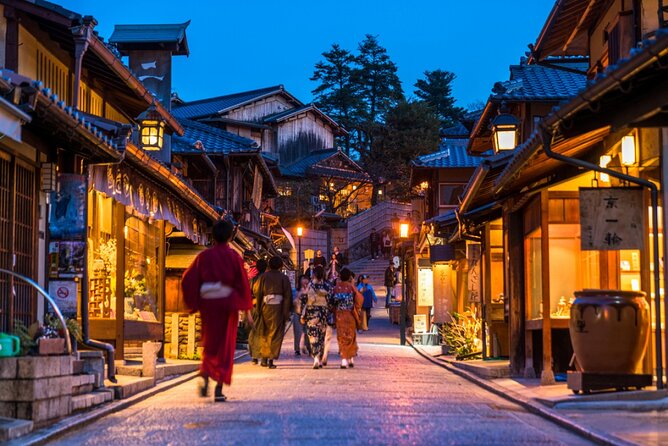
The route passes Gion Corner, associated with the study and training of geisha. Richard explains more about the training process and the traditions connected with the district, then takes the group through a lesser-known geisha street.
This change of pace is important. Hanamikoji is the name most people know, but the smaller lanes help you understand that Gion is a working neighborhood rather than one single attraction. At night, the quieter streets can be especially atmospheric, though you should keep your voice low and avoid blocking doorways.
The group size matters here. With no more than eight people, the guide can usually keep the group together without turning the walk into a noisy procession. You also have a better chance to ask about details that interest you, from kimono design to the steps involved in becoming a geisha.
More geisha district walks in Kyoto:
- Best of Kyoto: Gion, Geisha, Pagodas & Cobblestones
★ 4.9 · 2,058 reviews - Night Walk in Gion: Kyoto’s Geisha District
★ 4.5 · 2,003 reviews - Kyoto Night Foodie Tour in Gion (9+ dishes + 6 Sake tastings)
★ 5.0 · 1,762 reviews - Kyoto Gion Geisha District Walking Tour – The Stories of Geisha
★ 5.0 · 1,441 reviews
Yasui-Konpiragu and Kyoto’s religious traditions
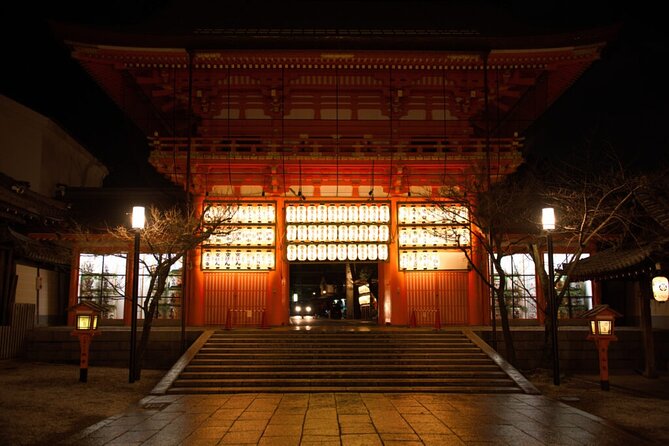
At Yasui-Konpiragu, the focus shifts from geisha culture to Shinto tradition. The stop lasts about 30 minutes, giving Richard time to explain the shrine and the customs connected with it.
This is one of the tour’s useful features. Kyoto’s historic districts are filled with temples and shrines, but their meaning can be hard to understand if you only stop for photographs. Richard also explains Japanese Zen while the group passes the oldest temple in Kyoto, adding another layer to the evening.
You do not need a background in Japanese religion to enjoy this section. The explanations are aimed at helping you understand what you are seeing, rather than testing what you already know. If you enjoy architecture, ritual, philosophy, or local history, this portion may be as rewarding as the geisha material.
Yasaka Pagoda and Ninenzaka after sunset
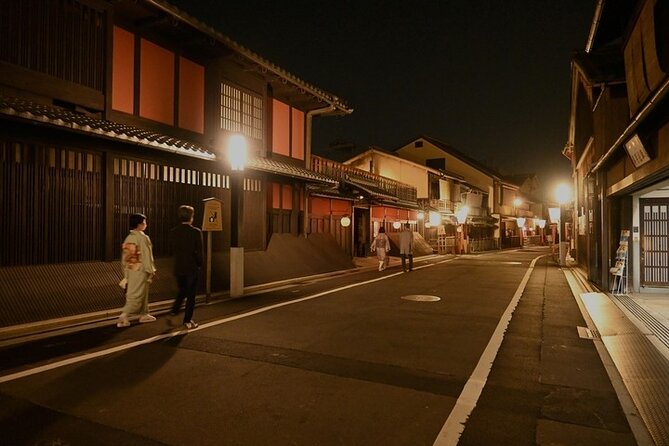
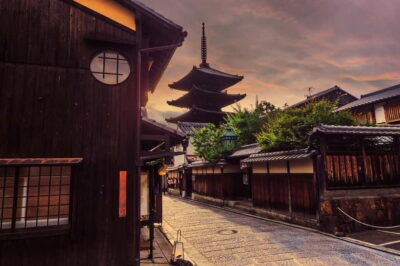
Hōkan-ji Temple, better known for its Yasaka Pagoda, is one of the most recognizable sights in Kyoto. The 15-minute stop is presented as a strong night photography location, and the surrounding historic area is particularly attractive once the daylight crowds have gone.
The pagoda is a visual high point, but the short stop means you should not expect an extended temple visit. You will see the area, hear its background, and have time for photographs before continuing.
The walk then moves through Ninenzaka, a historic alleyway known for its traditional streetscape. At night, the lane can feel more subdued and atmospheric than during the day. That said, reduced crowds do not mean complete solitude. Kyoto’s famous lanes remain popular, and the narrow paths require patience when people are taking photographs.
Steps and uneven surfaces are part of this section. Anyone using a stroller will need to manage some steps and rocky paths, and the activity information makes clear that the route is not suitable for people with walking issues.
Nene-no-Michi and the included Kyoto snack
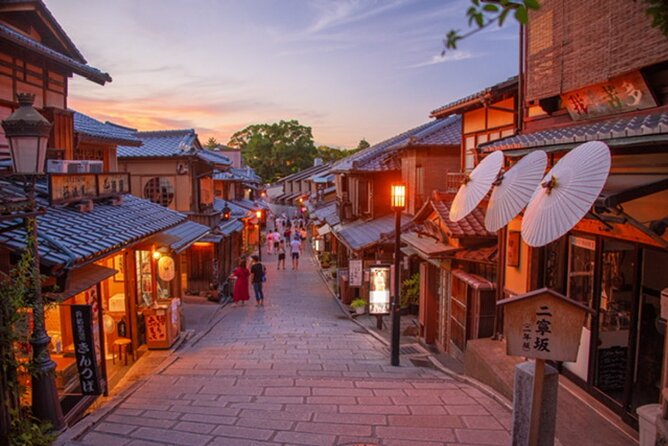
At Nene-no-Michi, the group takes a 30-minute break and enjoys a local Kyoto snack included in the price. This is a small feature, but it improves the rhythm of the evening. A three-and-a-half-hour walk needs a pause, especially after the earlier streets and shrine visits.
The snack is more than a quick bite. Richard explains the different parts of the treat and its local character, turning the break into another cultural lesson. Taste is personal, and the food may not suit everyone, but it gives you a chance to try something connected with Kyoto rather than stopping for a generic packaged snack.
The break is also a practical chance to rest your feet, ask questions, and compare notes with the small group. Do not count on it as dinner. Personal expenses are not included, and the tour ends in the Pontocho area, where you can make your own plans afterward.
Yasaka Shrine and the evening route toward Pontocho
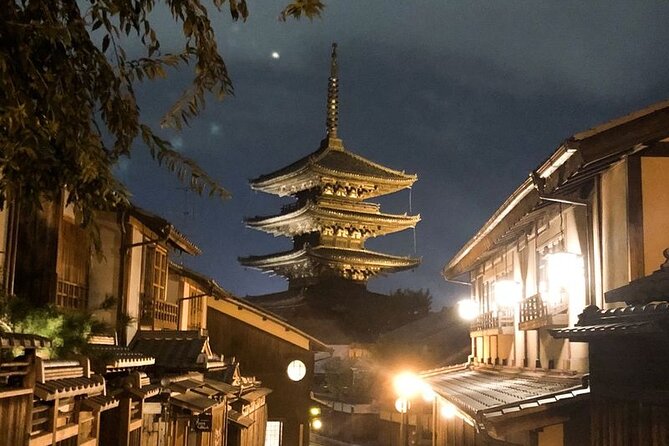
Yasaka Shrine is the next major stop, with about 30 minutes devoted to its important features and traditions. It is one of Japan’s best-known shrines, and seeing it at night gives the visit a different character from a daytime sightseeing stop.
Richard’s explanations about Shinto help you read the space with more care. Rather than rushing through the gates, you can pay attention to the relationship between the shrine, local customs, and the surrounding geisha districts.
The route then takes you through another picturesque area before continuing to Pontocho. This connecting section is part of the appeal, since the experience is not built around isolated attractions. You are walking through old Kyoto, moving between districts that still carry different moods and uses.
Expect some flexibility in the pace. Richard has been praised for adjusting the walk to the group’s interests and answering questions thoroughly. The tour may also run a little longer if the discussion continues, so avoid scheduling a tightly timed dinner immediately after the listed end.
Pontocho’s narrow lanes and nightlife
The tour ends in the Pontocho District, near the north end of Pontocho alley at Sanjo Ohashi Bridge. The listed stop lasts about 30 minutes and introduces you to a narrow, lively area lined with geisha houses, bars, and nightlife.
Pontocho feels different from Gion. Gion is associated with broad historic streets, temple approaches, and famous geisha lanes. Pontocho is tighter and more nocturnal, with a mix of old-style buildings, restaurants, bars, and entertainment venues.
Ending here is convenient if you want dinner or drinks afterward, though those costs are your responsibility. The guide can also offer restaurant suggestions if you ask. The Sanjo area has public transportation nearby, making it a practical place to continue your evening.
What Richard adds to the experience
The guide is central to the value of this walk. Richard is repeatedly praised for explaining geisha culture, Japanese history, architecture, kimono, Shinto beliefs, Zen, and everyday life in a clear, engaging way. He is described as American and Japanese, with an understanding of both cultures that helps him explain unfamiliar customs to an English-speaking audience.
That background seems especially useful when a subject could easily be reduced to stereotypes. Richard presents geisha culture as a demanding artistic and professional tradition, not as a costume show. He also connects the district to wider Japanese history, which gives the buildings and religious sites more meaning.
His style appears to suit families, couples, and curious first-time visitors. The group format still allows questions, and several accounts highlight his patience, humor, and willingness to tailor the discussion. If you prefer a silent photo walk or a quick checklist of sights, this may feel too talkative. If you want context, the explanations are the reason to book.
Is $98 a fair price?
At $98 per person, this is not the cheapest way to walk through Gion. You can visit the streets, shrines, Yasaka Pagoda, Ninenzaka, and Pontocho on your own without paying admission for the listed stops.
The price pays for something different: a three-and-a-half-hour route, a maximum group size of eight, a native English-speaking guide, detailed cultural interpretation, and a local snack. I consider that fair if you value explanation and want to cover several districts without planning the route yourself.
The small group is particularly important. A large group would make narrow lanes harder to manage and would reduce the chance to ask questions. Here, the limited size supports a more personal evening, though the tour is still not a private experience.
You should compare the price with your interests. If you mainly want photos, a self-guided walk may be enough. If you want to understand what geisha training involves, why the districts look as they do, and how Shinto and Zen fit into Kyoto’s daily life, the cost is easier to justify.
Practical details that affect your choice
The tour begins at 5:20 p.m. and ends at Sanjo Ohashi Bridge, close to the northern end of Pontocho. The duration is approximately three hours and 30 minutes, and the maximum group size is eight.
A mobile ticket is provided, and confirmation arrives when you book. The tour is near public transportation, but the route itself is on foot. You should wear shoes suited to steps and rocky paths, and plan for a sustained walk.
Most people can participate, but the activity specifically warns that it is not suitable for anyone with walking issues. Strollers face some steps and unpaved rocky paths, so families should consider that before booking.
The tour requires good weather. If poor weather causes cancellation, you receive the choice of another date or a full refund. You can cancel for a full refund up to 24 hours before the start time. Cancellations or changes made within 24 hours are not refunded or accepted.
Tips are not included. Gratuities are appreciated, particularly if Richard’s explanations and local advice add real value to your evening.
Who should book this Kyoto night walk?
I would recommend this tour to you if you want more than a quick look at Gion. It suits first-time Kyoto visitors, people interested in traditional arts, families who enjoy storytelling, and anyone who prefers seeing historic streets after dark.
It is also a smart early-Kyoto activity. Richard’s restaurant recommendations and broader advice may help you plan the rest of your stay, while the walk gives you a useful introduction to several important districts.
I would skip it if you dislike walking, need a fully accessible route, or expect a guaranteed geisha performance. You should also choose a self-guided visit if your main goal is moving quickly between photo spots.
Should you book the Geisha Night Walk?
Yes, if you want a small-group cultural walk led by a guide who can explain what you are seeing. The most highly praised features are Richard’s detailed storytelling, the quieter nighttime setting, the broad route from Gion to Pontocho, and the chance to ask questions in a group of no more than eight.
Book it near the start of your Kyoto stay if possible. Wear good shoes, arrive early at the Disney Store meeting point, keep your expectations realistic about seeing geisha, and leave room for dinner after the walk. At $98, it is best viewed as a guided introduction to Kyoto’s traditional districts, not simply a paid stroll through streets you could visit alone.
FAQ
How long does the Kyoto Geisha Night Walk last?
The experience lasts approximately three hours and 30 minutes.
What time does the tour begin?
The tour starts at 5:20 p.m.
Where does the tour meet?
The meeting point is the Disney Store at Kyoto Shijo-Kawaramachi, at the northeast corner of Shijo Street and Kawaramachi Street.
Where does the tour end?
The tour ends at Sanjo Ohashi Bridge, at the northern end of Pontocho alley.
How many people can join the tour?
The group has a maximum of eight travelers.
Is food included?
Yes. A refreshing local Kyoto snack is included during a short break at Nene-no-Michi.
Is the walking route suitable for people with mobility issues?
No. The route includes steps, rocky paths, and some unpaved surfaces, and the activity is not suitable for anyone with walking issues.
Can I cancel for a full refund?
Yes. You can cancel at least 24 hours before the start time for a full refund. Cancellations within 24 hours are not refunded.
Just added around Kyoto
- Kyoto: Private Customizable Day Trip by Car★ 5.0 · 38 reviews
- Kyoto: Gion Night Walking Tour with Geisha Insight★ 5.0 · 39 reviews
- Kyoto: Full Day Bike Tour★ 4.9 · 39 reviews
- Private Japanese Calligraphy in Kyoto – Learn Shodō with a Master★ 5.0 · 39 reviews
- Experience a tea ceremony in an authentic tearoom, in Kyoto!★ 4.5 · 41 reviews
- Kyoto: Gion Evening Walk with Hidden Gems, Geisha & Sake★ 5.0 · 41 reviews
- Kyoto Private Photo Shoot & Tour by SnapKyoto★ 5.0 · 41 reviews
- The Way of Tea: Kyoto Crafts, Hidden Temples & Wabi-Sabi Walk★ 5.0 · 41 reviews
Geisha & Gion District Tours, compared.
Kyoto Geisha Walking Tour: Gion District & Hidden Gems
Read our review →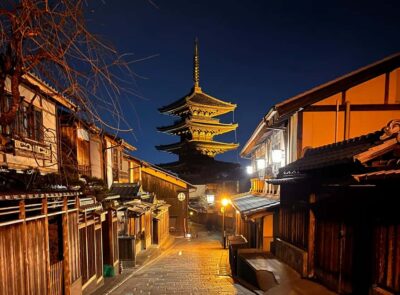
Gion Magical Night Walking Tour with Geisha Trivia
Read our review →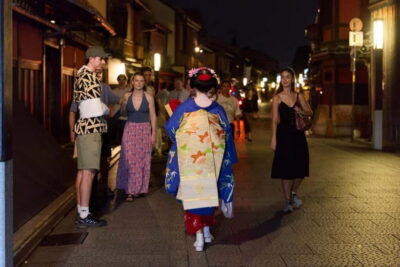
Gion Geisha District Walking Tour – Stories of Geisha
Read our review →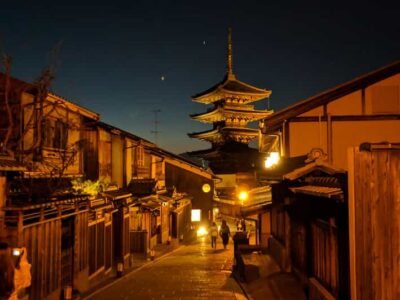
Best of Kyoto: Gion, Geisha, Pagodas & Cobblestones
Read our review →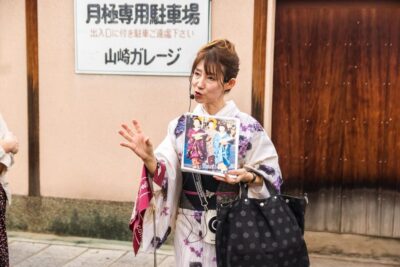
Kyoto Night Foodie Tour in Gion (9+ dishes + 6 Sake tastings)
Read our review →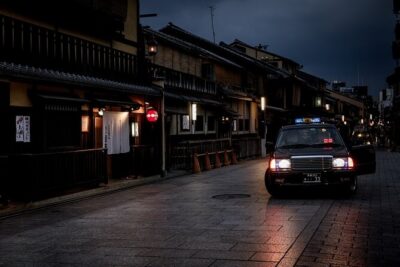
Kyoto Gion Geisha District Walking Tour – The Stories of Geisha
Read our review →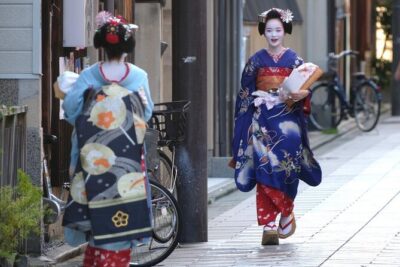
Kyoto Gion: 2-Hour Geisha Culture & History Walking Tour
Read our review →Browse the lists this tour appears in