
Reviewed · ARASHIYAMA & BAMBOO GROVE TOURS
Kyoto: Arashiyama Customized Rickshaw Tour & Bamboo Forest
Bamboo, temples, and a very strong pair of legs. This private rickshaw ride gives you a relaxed way to see Arashiyama, combining its famous bamboo grove with quiet neighborhood lanes, gardens, shrines, and lesser-seen temple approaches. I especially like the private format, which lets you shape the route around your interests, and the guides’ habit of stopping for excellent photographs. The main consideration is the price: at $51 per person, this costs more than simply walking through the district.
I also like how the ride solves Arashiyama’s biggest problem: crowds. The rickshaw uses an exclusive path through part of the bamboo forest, offering a calmer view than the busy pedestrian route. On the other hand, the short 45-minute option moves quickly, and the narrow 74-centimeter-wide seat may feel snug for two adults.
The tour is run by Ebisuya Rickshaw and has a perfect 5.0 rating from 432 reviews. Guides such as Koki, Aki, Shin, Lucas, Yuya, and Yoshi are repeatedly praised for their English, local knowledge, kindness, and photography. If you want more than a quick bamboo-forest photo, the longer routes offer the better value.
In This Review
- Key points to know before you book
- Starting at Togetsu-kyo Bridge in Arashiyama
- Entering the bamboo forest on a private path
- Nonomiya Shrine and the shorter 45-minute route
- Rakushisya and the poetry of old Arashiyama
- Nison-in, shrines, and quieter temple lanes
- What the guide adds to the ride
- How much value do you get for $51?
- Seating, weather, and family considerations
- Choosing the right tour length
- Should you book the Arashiyama rickshaw tour?
- FAQ
- Where does the Arashiyama rickshaw tour meet?
- How long is the tour?
- Is the rickshaw tour private?
- Does the tour enter the bamboo forest?
- How many people fit in one rickshaw?
- Are photographs included?
- Is the tour suitable for people using wheelchairs or strollers?
Key points to know before you book
- A private ride begins near Togetsu-kyo Bridge: Your guide and rickshaw meet you at one of Arashiyama’s best-known landmarks, though the exact meeting point depends on the option you choose.
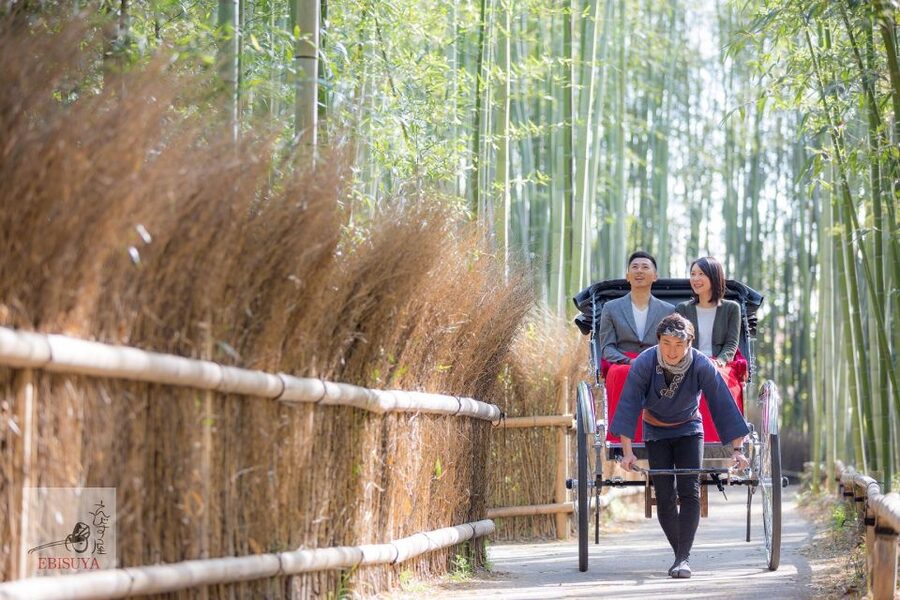
- The bamboo forest has a quieter rickshaw route: You are not limited to the main walking path, where foot traffic can make photographs and quiet moments difficult.
- Four durations create four different experiences: Choose 45 minutes, 70 minutes, 130 minutes, or 190 minutes, depending on whether you want a quick introduction or a fuller tour of western Kyoto.
- The guide is part storyteller, part photographer: Guides regularly stop at scenic places and take photos for you, often offering useful advice about food, matcha, coffee, and nearby sights.
- Longer tours reach quieter cultural sites: The extended routes can include Rakushisya, Nison-in, more shrines, Buddhist temples, gardens, and lanes that many people miss.
- The rickshaw is compact: Two adults fit, but the seat is only 74 centimeters wide. Booking separate rickshaws can be more comfortable for some couples or friends.
Starting at Togetsu-kyo Bridge in Arashiyama
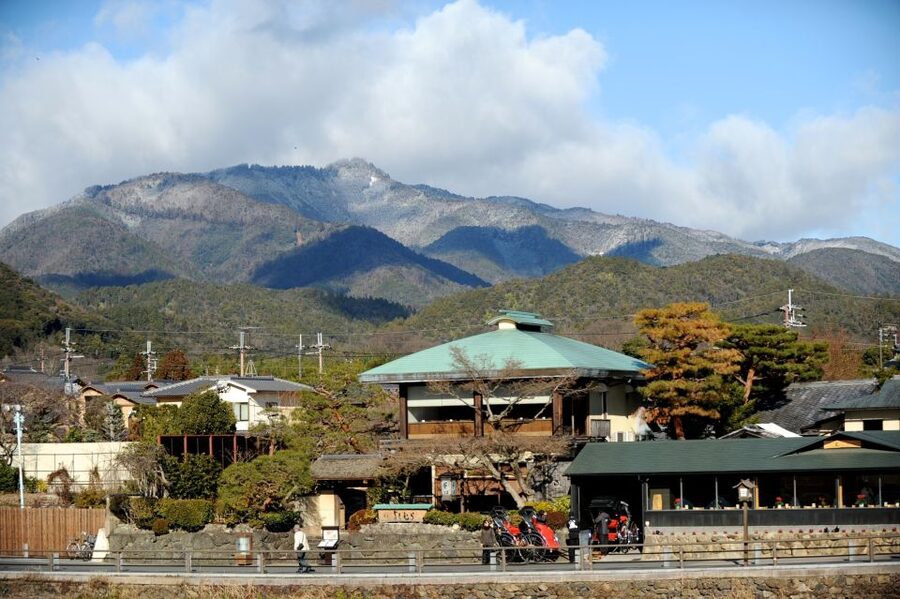
Your ride begins at Togetsu-kyo Bridge, a scenic and historic landmark on Kyoto’s western edge. This is a sensible meeting point because the bridge puts you close to the river, the main shopping streets, the bamboo grove, and the temples of northern Arashiyama.
Your guide takes you through the plan before setting off. Since this is a private tour, you can discuss what interests you most. You might prefer photographs in the bamboo, local stories, temples, gardens, or quieter streets away from the busiest footpaths.
That personal approach matters in Arashiyama. The district has a compact core filled with major attractions, but the mood changes quickly once you leave the central shopping area. A good guide can help you spend less time following the crowd and more time seeing how the neighborhood connects its natural setting with its religious sites and traditional homes.
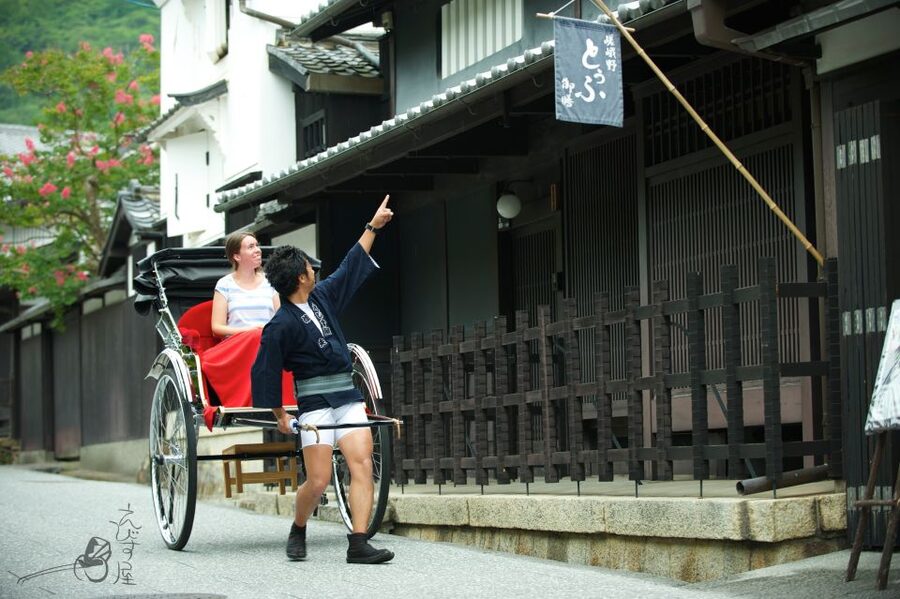
The rickshaw itself is open to the air, with a seat for up to two adults. Guides pull the vehicle by hand, including uphill sections. Several guides receive warm praise for their strength and energy, but the ride is not a passive taxi trip. You are relying on a skilled driver who must handle narrow paths, pedestrians, traffic, and changing weather.
More Arashiyama and bamboo grove walks:
- Kyoto: Fushimi Inari, Kinkakuji, Bamboo Grove 1 Day Bus Tour
★ 4.8 · 4,316 reviews - Osaka/Kyoto:Kinkakuji,Arashiyama,FushimiInariShrine,NaraPark
★ 4.1 · 1,596 reviews - Kyoto/Osaka: Nara, Fushimi Inari Taisha, Arashiyama Bus Tour
★ 4.7 · 1,275 reviews
Entering the bamboo forest on a private path
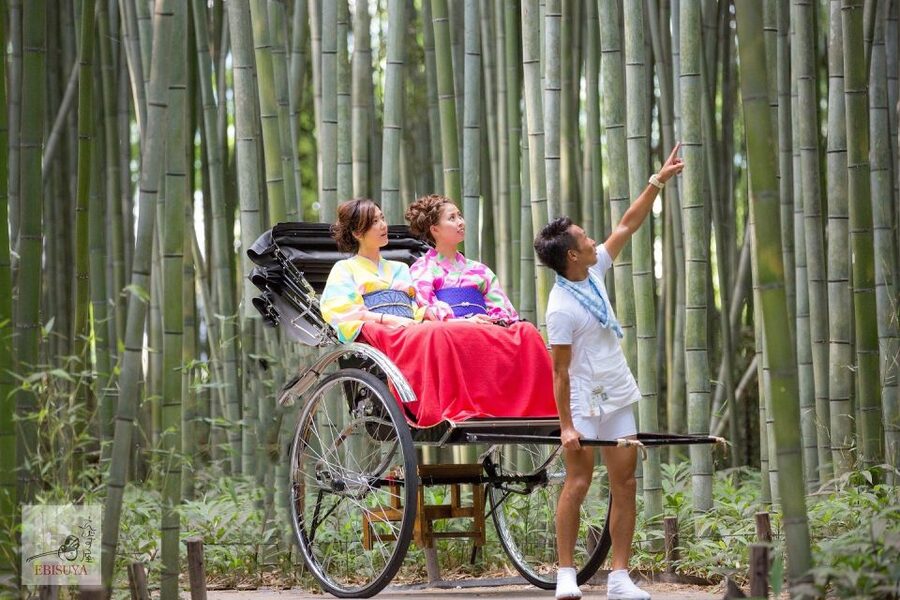
The bamboo grove is the tour’s headline attraction, and you will soon enter the tall stand of thick bamboo that made Arashiyama famous. The stalks rise on both sides of the path, creating a cool, shaded corridor even when the surrounding streets feel busy.
Walking through the grove can be beautiful, but the main pedestrian route often fills with people. The rickshaw’s separate path is the real practical advantage here. It can take you through quieter parts of the forest and gives your guide more room to stop for pictures without placing you in the middle of a solid stream of pedestrians.
Do not expect the entire bamboo forest to be empty. Arashiyama is one of Kyoto’s most popular areas, and the tour cannot erase that fact. Still, the rickshaw route offers a more peaceful way to experience the grove, especially if you dislike standing in a crowd while trying to frame a photograph.
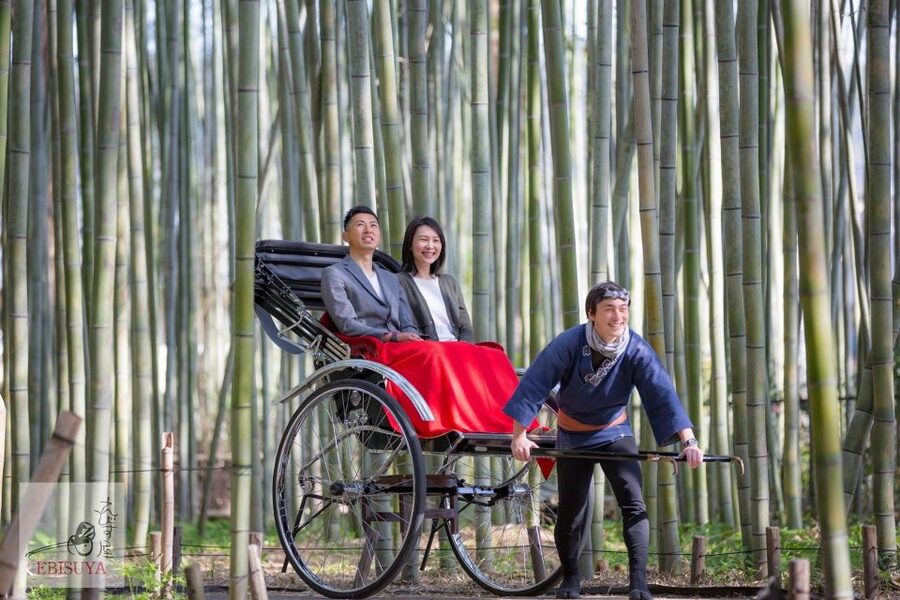
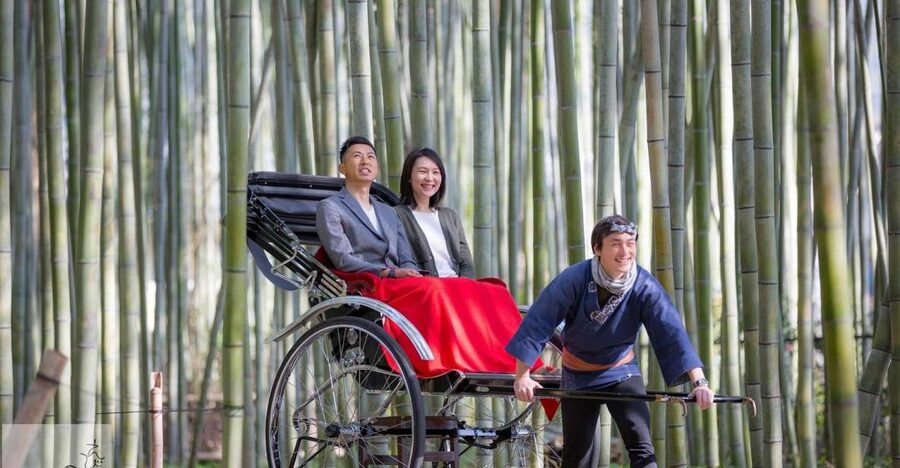
Photography is a major part of the experience. Guides such as Shin, Koki, Aki, Yoshi, and Lucas are praised for finding good angles and taking polished pictures of couples and families. You can put your phone away for a while and let the guide handle the camera. That is particularly useful in the bamboo grove, where it is easy to take dozens of nearly identical pictures and still miss the best viewpoint.
The ride also gives you time to look upward. From a rickshaw, you are seated low and moving slowly, so the bamboo feels more enclosing than it does during a hurried walk. Blankets and leg covers are available in wet or cold weather, according to the experience of people who rode in rain, snow, and winter temperatures.
Nonomiya Shrine and the shorter 45-minute route
One of the first important stops is Nonomiya Shrine, a Shinto site closely tied to the traditional character of Arashiyama. The shrine adds a cultural layer to the bamboo visit. Instead of seeing the grove as a stand-alone photo location, you begin to understand how nature, worship, and carefully maintained gardens fit together in Kyoto.
The 45-minute tour returns to the starting area after Nonomiya Shrine. This option works best if you have limited time, want a comfortable introduction to Arashiyama, or mainly want the bamboo grove without committing to a longer sightseeing session.
I would choose 45 minutes if you are fitting the ride between other plans. It is also useful for families who want to test whether children enjoy the rickshaw format. Several people found the short route worthwhile even in heavy rain because the vehicle provided blankets and a rain cover for the legs.
The drawback is simple: 45 minutes does not leave much room for a relaxed look at several sites. You will get the main bamboo experience, a glimpse of the local streets, Nonomiya Shrine, and photo stops, but not the fuller temple-and-garden circuit. If this is your only visit to Arashiyama, I would strongly consider a longer choice.
Rakushisya and the poetry of old Arashiyama
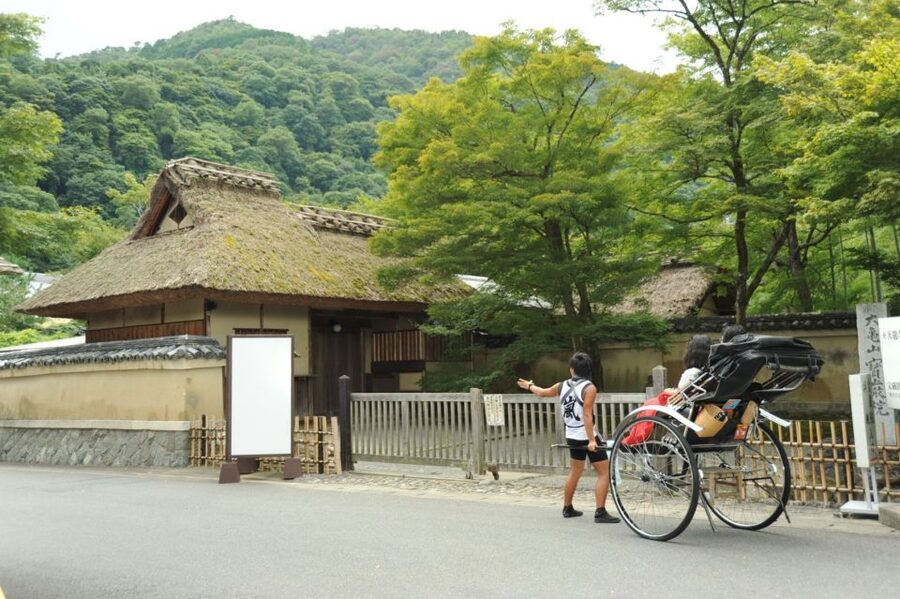
The longer tours continue to Rakushisya, a small thatched-roof cottage once associated with one of Japan’s respected poets and haiku masters. This stop shifts the mood from famous scenery to a quieter sense of place.
Rakushisya is valuable because it shows a more modest side of Japanese cultural life. The bamboo grove is grand and instantly recognizable. A rustic cottage tells a smaller story, one rooted in writing, retreat, and the rural character that once shaped Arashiyama.
The guide’s explanation makes the difference here. Without context, a small thatched building might seem easy to pass by. With a local guide, you can better understand why this kind of place matters and how poetry and nature have long been linked in Japanese culture.
The 70-minute route may include more than the shortest tour, but the 130-minute and 190-minute options are better suited to travelers who want Rakushisya plus additional temples and back lanes. The exact route is customizable, so ask your guide early what can fit into your chosen time.
A few more Kyoto experiences worth weighing up
- PERFECT KYOTO 1-Day Bus Tour
★ 5.0 · 13,518 reviews - Kyoto: Tea Ceremony in a Traditional Tea House in Kiyomizu
★ 4.9 · 3,519 reviews - Kyoto Geisha Walking Tour: Gion District & Hidden Gems
★ 4.7 · 3,273 reviews - Kyoto: Tea Ceremony Ju-An at Jotokuji Temple
★ 4.9 · 3,207 reviews
Nison-in, shrines, and quieter temple lanes
The 130-minute and 190-minute routes open up the fuller Arashiyama experience. You may visit Nison-in, a Buddhist temple, along with other ancient temples, Shinto shrines, gardens, and residential lanes that do not receive the same attention as the bamboo grove.
Nison-in is especially appealing if you want a more reflective temple visit. The name refers to its two principal Buddhist images, and the temple forms part of the quieter northern Arashiyama area. The supplied tour details do not promise a fixed stop at every site for every booking, so think of this as a possible part of the extended route rather than a guaranteed checklist.
This flexibility is one of the tour’s strengths. A guide can adjust the ride according to your interests, energy, and time. You might ask for more temples, more local streets, extra photo stops, or a greater focus on gardens and nature.
The longer routes also offer the best chance of reaching places that you would not naturally find while following the main tourist flow. Guides have taken people through less crowded approaches and special paths that are not part of the usual walking circuit. Access depends on the route and conditions, so it is wise to ask what is available on the day.
The 190-minute option is nearly three hours and ten minutes. That is a serious sightseeing commitment, but it can make sense if Arashiyama is a major part of your Kyoto day. You will see more than one famous image and have time for conversation, questions, and slower stops.
What the guide adds to the ride
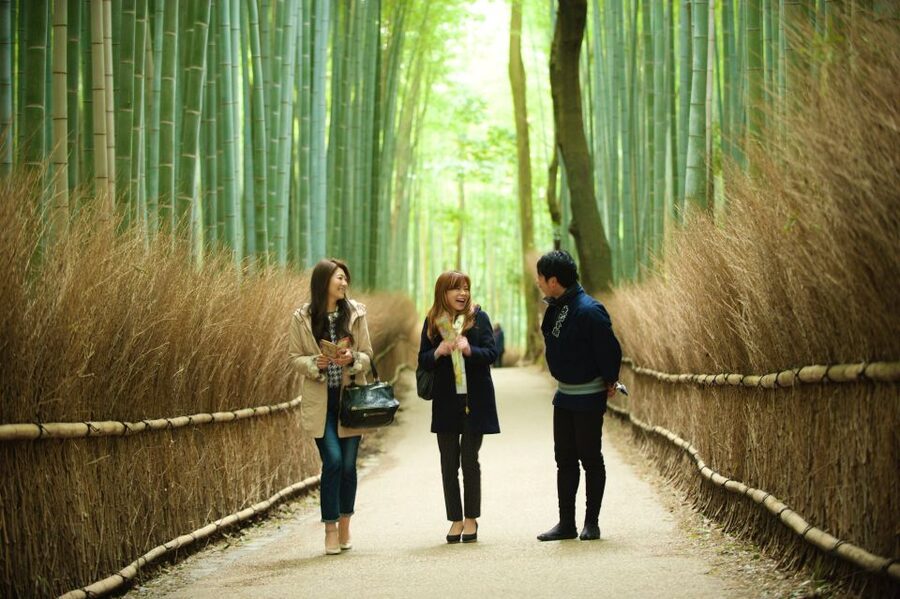
The rickshaw is memorable on its own, but the guide determines how much you gain from it. The strongest part of this experience is the personal attention.
Guides speak English and Japanese. Many have been praised for clear English, friendly conversation, cultural explanations, and practical recommendations. Koki was noted for being a good communicator and an excellent photographer. Aki was praised for local suggestions, including food and places to buy matcha. Shin received repeated praise for his explanations and photographs, while Lucas was appreciated for his cheerful manner and local information.
That does not mean every guide will have the same personality or language level. It does mean the operation has a large team of guides with a strong record of warm service. If a particular guide is available for your date, you may request them, but the provided booking information does not promise a specific person.
Your guide can also make the ride more comfortable. They help with the route, watch the path, answer questions, and suggest where to stop. Some guides have gone out of their way to accommodate late arrivals, special occasions, or specific interests.
The photography is not a minor extra. For couples, it may be the best reason to pay for the ride. You can both appear in the picture instead of taking turns behind the camera. For families, it creates a record of the day without asking a stranger to take hurried shots.
How much value do you get for $51?
At $51 per person, this is not the cheapest way to see Arashiyama. You can walk through much of the area for little or no cost, and the main bamboo path does not require a rickshaw ticket.
The value comes from what walking does not provide. You receive a private vehicle, a local guide, a customized route, access to a quieter rickshaw path, cultural explanations, and photographs taken during the ride. You also save physical effort on uphill sections and avoid some of the stress of navigating crowded paths.
For two people, the price buys a shared experience rather than simple transportation. I think the value is strongest on the 130-minute tour, which gives you enough time for the bamboo grove, a shrine, quieter streets, and additional temple or garden stops without taking most of the day.
The 45-minute option is a better value for a tight schedule, while the 190-minute tour suits people who want Arashiyama to be a major focus. If you are mainly interested in one quick ride and a few pictures, the short option keeps the cost under control.
Remember that snacks and drinks are not included, and hotel pickup is not included. Plan your own way to the meeting point and leave time to explore the area before or after the ride. One guide recommended nearby coffee, and another pointed people toward local food and matcha, but those purchases are separate.
Seating, weather, and family considerations
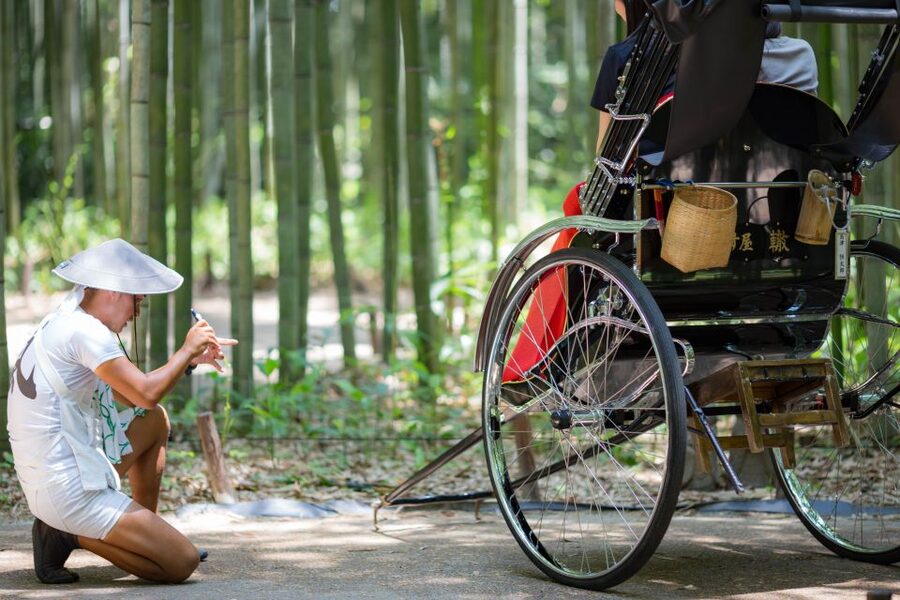
Each rickshaw can carry a maximum of two adults. Up to two children aged five and under can ride with two adults if they sit on an adult’s lap.
A five-year-old using one of the two seats must be booked as an adult and pay the full fare. This rule is easy to miss, so check your passenger arrangement before booking.
The seat is 74 centimeters wide. Two average-sized adults can fit, but it may feel close, especially on a longer ride. If you want more space, booking one rickshaw per passenger may be more comfortable, though that changes the cost.
The experience is wheelchair and stroller friendly. Selfie sticks are not allowed. The tour is not suitable for people with back problems, and it is not recommended for pregnant women in their first 16 weeks. The general booking information also lists pregnant women among those for whom the activity is not suitable, so check with the operator if this applies to you.
Weather does not necessarily ruin the experience. Rain covers, blankets, and leg protection have helped people stay fairly dry and warm during wet and cold rides. You should still dress for the conditions, since the vehicle is open and the ride takes place outdoors.
Choosing the right tour length
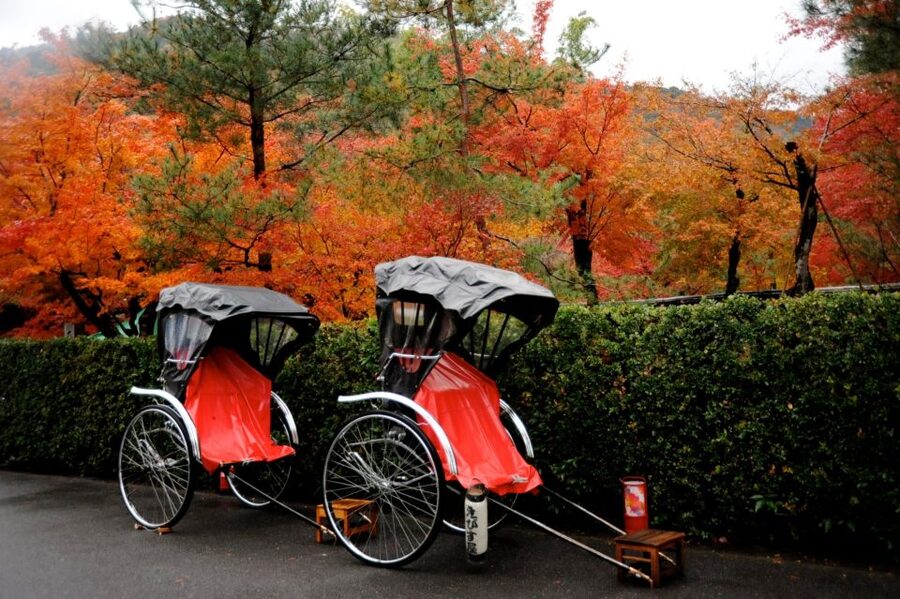
The four options have distinct uses:
- 45 minutes: Best for the bamboo grove, Nonomiya Shrine, and a quick introduction to Arashiyama.
- 1 hour 10 minutes: A useful middle choice if you want more neighborhood scenery and photo stops without a long commitment.
- 2 hours 10 minutes: The strongest all-around option for temples, gardens, local lanes, and a slower pace.
- 3 hours 10 minutes: Best if you want a broad, customized tour with more time for Nison-in, Rakushisya, shrines, and less familiar parts of Arashiyama.
If you are visiting Kyoto for the first time and Arashiyama is high on your list, I would avoid squeezing the experience into the shortest possible slot unless your schedule demands it. The grove takes only part of the district’s appeal.
Book the longer ride if you enjoy asking questions and want your guide to shape the outing around you. Choose 45 minutes if you are already planning temple visits on foot and simply want a comfortable way through the bamboo.
Should you book the Arashiyama rickshaw tour?
You should book this tour if you want a personal introduction to Arashiyama, dislike crowded walking paths, or value having a guide take photographs. It suits couples, families, first-time visitors, and anyone who wants to connect the bamboo grove with shrines, temples, gardens, and local streets.
I would be less eager to recommend it if you prefer exploring independently, have a strict budget, or feel uncomfortable in a compact seat. Walking gives you more control and costs less.
For most people, the 70-minute or 130-minute option offers the best balance. The short ride covers the headline sights, while the longer route gives you a fuller picture of Arashiyama. If you can spare nearly three hours, the longest tour is the clearest choice for a customized cultural outing rather than a quick photo stop.
FAQ
Where does the Arashiyama rickshaw tour meet?
The guide and rickshaw await near Kyoto’s Togetsu-kyo Bridge in Arashiyama. The exact meeting point may vary depending on the tour option you book.
How long is the tour?
You can choose from four durations: 45 minutes, 1 hour and 10 minutes, 2 hours and 10 minutes, or 3 hours and 10 minutes.
Is the rickshaw tour private?
Yes. The tour is arranged for a private group, and the route can be customized around your interests.
Does the tour enter the bamboo forest?
Yes. The ride includes the Arashiyama bamboo forest and provides access to a rickshaw path that is separate from the main pedestrian route.
How many people fit in one rickshaw?
A maximum of two adults can ride in one rickshaw. Up to two children aged five and under can ride with two adults if they sit on an adult’s lap.
Are photographs included?
Yes. Photo stops at scenic locations are included, and the guide takes photographs for you during the tour.
Is the tour suitable for people using wheelchairs or strollers?
The activity is wheelchair and stroller friendly. It is not recommended for people with back problems or for pregnant women, particularly during the first 16 weeks of pregnancy.
Just added around Kyoto
- Kyoto: Gion Night Walking Tour with Geisha Insight★ 5.0 · 39 reviews
- Kyoto: Private Customizable Day Trip by Car★ 5.0 · 38 reviews
- Kyoto: Full Day Bike Tour★ 4.9 · 39 reviews
- Private Japanese Calligraphy in Kyoto – Learn Shodō with a Master★ 5.0 · 39 reviews
- Experience a tea ceremony in an authentic tearoom, in Kyoto!★ 4.5 · 41 reviews
- Kyoto: Gion Evening Walk with Hidden Gems, Geisha & Sake★ 5.0 · 41 reviews
- Kyoto Private Photo Shoot & Tour by SnapKyoto★ 5.0 · 41 reviews
- The Way of Tea: Kyoto Crafts, Hidden Temples & Wabi-Sabi Walk★ 5.0 · 41 reviews
Arashiyama & Bamboo Grove Tours, compared.
Fushimi Inari, Kinkakuji, Bamboo Grove 1 Day Bus Tour
Read our review →
Osaka/Kyoto:Kinkakuji,Arashiyama,FushimiInariShrine,NaraPark
Read our review →
Kyoto/Osaka: Nara, Fushimi Inari Taisha, Arashiyama Bus Tour
Read our review →
Kyoto Arashiyama Walking Tour: Bamboo, Monkeys, Gardens & Secrets
Read our review →
Arashiyama Bamboo, Temple, Monkeys, or Secret Sake Brewery
Read our review →
Arashiyama Bamboo Forest, Monkeys, Matcha & Temple Tour
Read our review →
Osaka/Kyoto: Arashiyama, Nara & Fushimi Inari Shrine w/Lunch
Read our review →
Nijo, Kinkaku-ji, Arashiyama, Kiyomizu & Fushimi Inari
Read our review →Browse the lists this tour appears in