
Reviewed · GEISHA & GION DISTRICT TOURS
Kyoto Geisha District Walking Tour in Gion
Kyoto’s old lanes reward a slower pace. This two-hour walk gives you a guide, a small group capped at 10 people, and a focused look at Gion’s shrines, canals, wooden houses, and geiko culture. I especially like the mix of cultural explanation and quiet street scenes, plus the chance to ask questions instead of simply taking photos and moving on.
I also like that the route includes Yasaka Shrine, Tatsumi Bridge, Gion Shirakawa, and Hanamikoji Street, all without admission fees. The main caution is that the quality depends heavily on your guide. Most guides, including Yuko, Takuma, Tom, Yoko, Yuji, and Hide, receive warm praise, but a few visitors found the commentary too basic or the walk poorly organized.
In This Review
- Four things to know before you book
- Starting at Yasaka Shrine in eastern Gion
- Reading Gion’s narrow streets and wooden houses
- Tatsumi Daimyojin Shrine and a quieter side of Gion
- Tatsumi Bridge and Gion Shirakawa
- Hanamikoji Street and Gion Corner
- What the guide adds to the $29.85 price
- Daylight or evening, which works better?
- Walking conditions, weather, and who should book
- How to get the best experience
- Should you book the Gion walk?
- FAQ
- How long does the Kyoto Geisha District Walking Tour last?
- How much does the tour cost?
- How many people can join the tour?
- Where does the tour begin and end?
- Are admission tickets included?
- Does the tour run in bad weather?
- Can I cancel for a refund?
Four things to know before you book
- The group is limited to 10 people: That is small enough for questions and easier movement through Gion’s narrow lanes.
- Yasaka Shrine anchors the route: You get context on Shinto customs before moving into the geisha district.
- The most atmospheric section is around Gion Shirakawa: The canal, machiya houses, and traditional bridge make excellent photo stops.
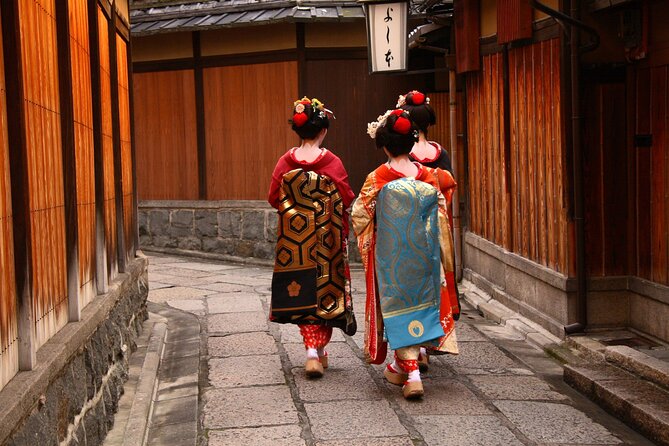
- Seeing a geiko or maiko is never guaranteed: Some tours have spotted several, while others focus on the district itself.
- The price is $29.85 per person: With two hours of guiding and no paid admissions, this is a reasonable introduction to Gion.
- Wear proper walking shoes: The tour runs in rain or shine and includes streets, lanes, and stairs.
Starting at Yasaka Shrine in eastern Gion
The tour begins at Gion Kōbu Kaburenjō, at 570-2 Gionmachi Minamigawa. The guide meets you there and finishes at the same place, which makes the outing easy to pair with dinner or another evening plan in Gion.
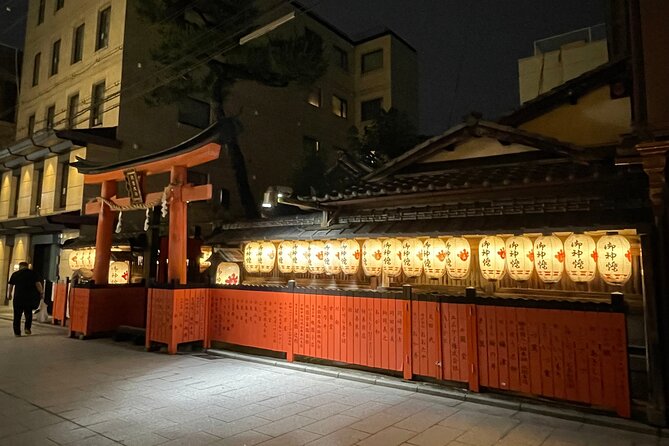
Your first major stop is Yasaka Shrine, where you spend about 40 minutes. This is a smart opening point because the shrine gives you a clear introduction to Shinto practice before the walk turns toward geiko culture. You can look at the architecture, lanterns, and shrine grounds while your guide explains what you are seeing.
The admission price is free, so you are paying for the explanations, route planning, and local perspective rather than entry tickets. That matters here. Gion can look like a collection of attractive old buildings if you do not know what you are looking at, and the shrine sets up useful context for the rest of the walk.
A guide may also help you notice the difference between simply visiting a shrine and taking part in its customs. The supplied comments repeatedly praise guides for explaining both shrine traditions and the background of geiko life. That combination is more useful than a tour focused only on costumes and photo stops.
More Walking Tours in Kyoto
- Kyoto Geisha Walking Tour: Gion District & Hidden Gems
★ 4.7 · 3,273 reviews - Kyoto: Gion Magical Night Walking Tour with Geisha Trivia
★ 4.9 · 2,393 reviews - Kyoto: Gion Geisha District Walking Tour – Stories of Geisha
★ 4.7 · 2,187 reviews
Reading Gion’s narrow streets and wooden houses
After Yasaka Shrine, the walk moves through Gion itself. One listed Gion stop lasts about 20 minutes, followed by another section of the district later in the route. That split is practical because Gion is not one single attraction. It is a broad area of lanes, tea houses, restaurants, shrines, waterways, and traditional wooden homes.
Gion is famous for its machiya houses and tea houses, but the district is also a working neighborhood. You should expect to walk past places where people live and work, not through an open-air stage set. The best guides help you understand that geiko and maiko are professional entertainers with demanding training, not costumed characters placed on the street for photographs.
This is where the guide’s manner matters. Takuma receives especially strong praise for being friendly, funny, and clear when discussing geisha customs. Yuji is described as warm, patient, and helpful, while Tom is praised for explaining shrines, religions, and the places where geiko live and work.
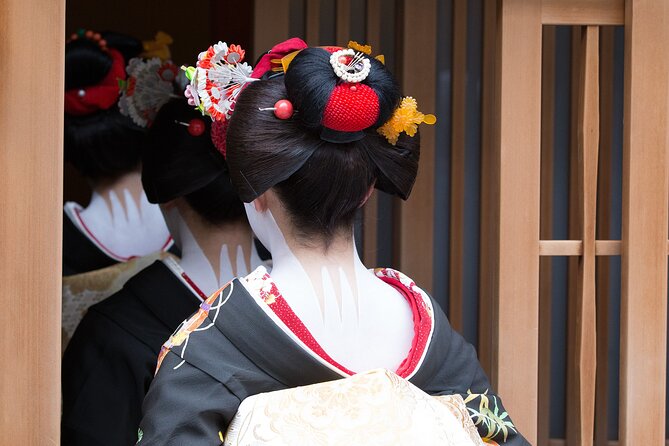
The walk can also introduce you to the terms used in Kyoto. A geiko is Kyoto’s preferred term for a geisha, while a maiko is an apprentice. The distinction is important, and a good explanation helps you avoid treating every person in traditional dress as the same.
You may also learn why chance encounters should remain chance encounters. Several tours have happened to see maiko or geiko heading to evening engagements, including one outing where three were spotted and another where four were seen. That is a lucky bonus, not the product being sold. Do not book this walk expecting a guaranteed sighting.
Tatsumi Daimyojin Shrine and a quieter side of Gion
The route then reaches Tatsumi Daimyojin Shrine, with about five minutes scheduled there. It is a brief stop, but it adds another layer to the walk. The shrine is associated with protection, good fortune, and safety, especially for travelers and warriors, and its origins reach back to the Heian period.
Five minutes will not allow for a long visit, so think of this as a compact point of interest rather than a full shrine tour. Its value comes from the guide’s explanation and from the way it fits into the streets around it.
This part of the route can feel calmer than Gion’s better-known streets. One particularly positive account praised the quiet back lanes as a welcome break from the city’s busy areas. That contrast is one of the strongest reasons to take a walking tour instead of simply going to the most photographed street, taking a few pictures, and leaving.
I would pay close attention here to how your guide handles the neighborhood. The best approach is respectful and observant. You want to learn why the area looks the way it does, while remembering that the lanes are not merely a backdrop for group selfies.
Tatsumi Bridge and Gion Shirakawa
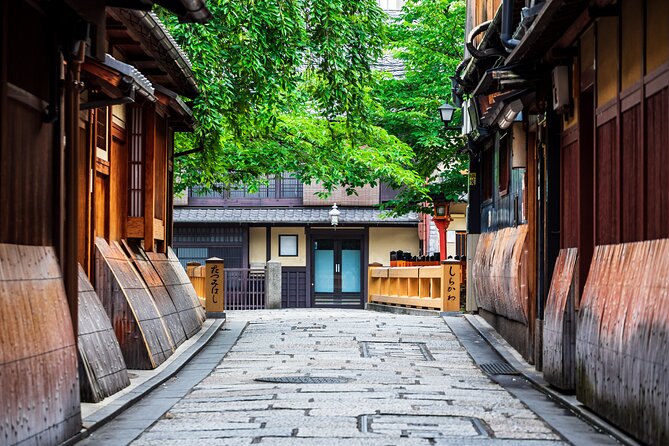
Tatsumi Bridge is a small traditional bridge surrounded by machiya houses and tea houses. The stop is scheduled for about 10 minutes, which should be enough to hear the guide’s explanation and take photographs without turning the visit into a long pause.
This is one of the prettiest sections of the walk. The bridge feels intimate, and the surrounding buildings offer the kind of old Kyoto atmosphere many people hope to find in Gion. It is also a useful place to ask questions because the setting brings together architecture, waterways, and the traditional entertainment quarter.
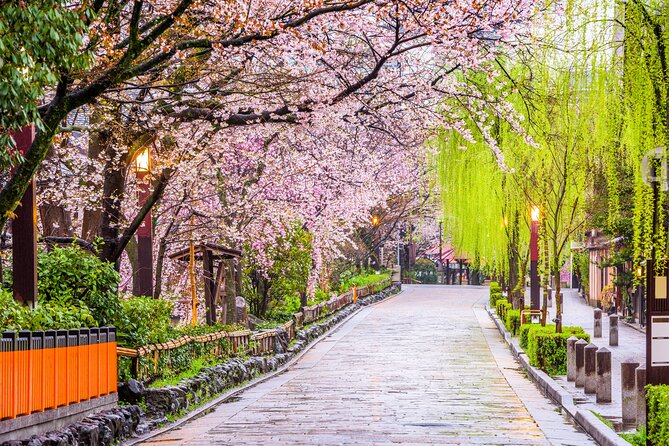
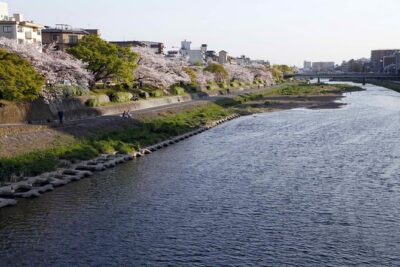
Nearby, Gion Shirakawa, also called the Shirakawa Canal, adds a peaceful waterway to the route. The canal is lined with preserved wooden machiya houses and weeping cherry trees. In blossom season, this area can be especially photogenic, though the tour is not limited to spring.
The canal section is one of the walk’s real strengths because it slows the pace. You get a chance to look closely at the buildings and water rather than rushing from one famous point to the next. If you bring a camera, this is a good place to have it ready, but remember that the district can be narrow and busy, so keep your equipment and movement considerate.
More geisha district walks in Kyoto:
- Best of Kyoto: Gion, Geisha, Pagodas & Cobblestones
★ 4.9 · 2,058 reviews - Night Walk in Gion: Kyoto’s Geisha District
★ 4.5 · 2,003 reviews - Kyoto Night Foodie Tour in Gion (9+ dishes + 6 Sake tastings)
★ 5.0 · 1,762 reviews - Kyoto Gion Geisha District Walking Tour – The Stories of Geisha
★ 5.0 · 1,441 reviews
Hanamikoji Street and Gion Corner
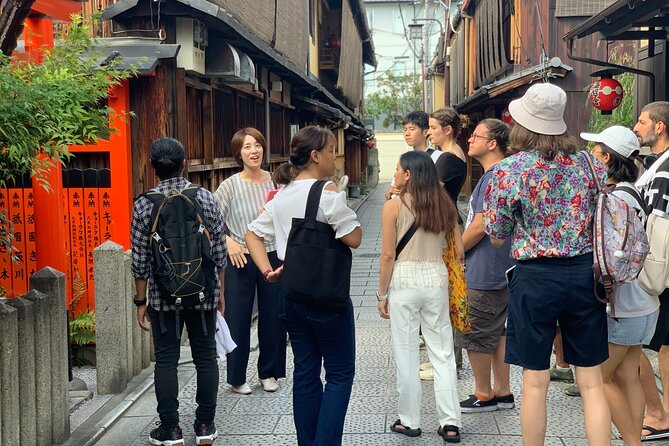
The later part of the tour includes another section of Gion and Hanamikoji Street, with about 10 minutes scheduled there. Hanamikoji is a main street lined with traditional machiya houses, tea houses, shops, and restaurants.
It is likely to feel more prominent and public than the smaller lanes near Tatsumi Bridge. That makes it useful for understanding how Gion functions as both a historic district and a modern part of Kyoto. You can see the old facades, but you should not assume every traditional-looking building is open to casual visitors.
The route also points out Gion Corner, a cultural venue featuring several traditional art performances. The walking tour does not include a performance ticket, so you should treat this as an orientation point rather than part of the included entertainment. If you want to attend a show, plan that separately and confirm the schedule.
The itinerary lists several short stops, and the times do not add up neatly to the full two hours. That is not unusual for a neighborhood walk. The guide will spend time moving between locations, answering questions, and adjusting the pace for the group. Still, if you prefer long visits inside museums or formal performances, this experience may feel light on structured activities.
What the guide adds to the $29.85 price
At $29.85 per person, this is priced as an affordable introduction to Gion. There are no admission charges at the listed stops, and transport, food, drinks, hotel pickup, and hotel drop-off are not included.
You are paying mainly for three things: the route, the explanation, and the chance to see less obvious parts of Gion without getting lost. I think that is fair value if this is your first visit to Kyoto or your first serious look at the geiko district.
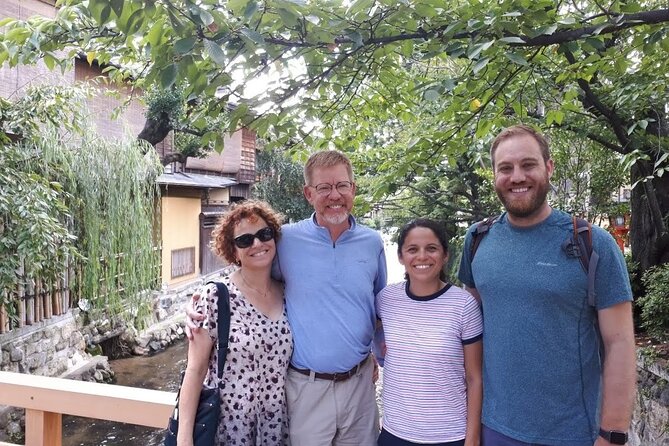
The small group makes the price more attractive. With no more than 10 people, you should have a better chance to hear the guide and ask questions than you would on a large coach outing. One family of four, including children aged 10 and 13, found the group size and itinerary worked well.
The main value risk is guide performance. Several comments praise clear English, good humor, and strong subject knowledge. One person found the guide difficult to understand and felt the information was aimed at young children. Another felt the guide spent too much time taking pictures and not enough time explaining the district.
That does not make the tour a bad buy, but it does mean you should set your expectations correctly. This is an inexpensive guided orientation, not a private scholar-led examination of Kyoto’s entertainment quarters.
Daylight or evening, which works better?
The supplied experience details do not fix one universal atmosphere for every departure, but several accounts describe an evening walk as especially enjoyable. One person called it a perfect evening tour, and another found Gion magical at night.
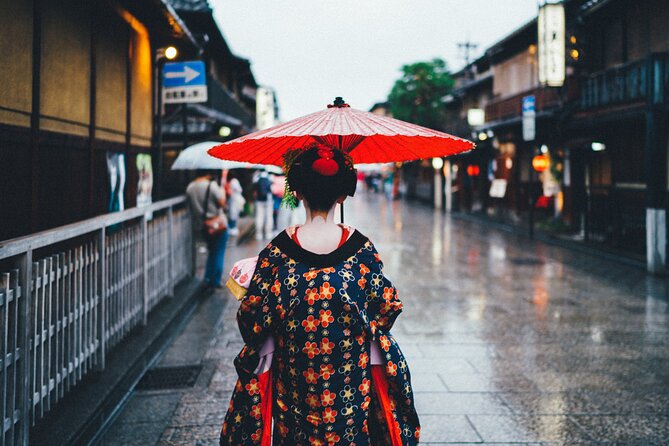
Evening has an obvious advantage: paper lanterns and traditional streets can create a more atmospheric setting. It may also increase your chance of seeing geiko or maiko heading to appointments, though again, there is no promise of that.
Daytime gives you clearer views of the architecture, shrine details, and waterways. If photography is your priority, daylight may be easier. If mood and the possibility of seeing the district preparing for its evening work appeal to you, choose a later departure when available.
Do not confuse a night walk with a nightlife tour. The focus remains on history, customs, shrines, architecture, and local streets. You will not receive transportation between stops, and the tour ends back at the starting point.
Walking conditions, weather, and who should book
You should wear comfortable walking shoes. The experience lasts around two hours, takes place outdoors, and runs rain or shine. Bring suitable protection for the forecast, since there is no indication that the walk moves indoors when conditions turn poor.
Most people can participate, but the tour is not suitable for people who cannot manage stairs. Children must be accompanied by an adult. The route is near public transport, though getting to and from the meeting point is your responsibility.
I think this walk suits:
- First-time visitors who want a clear introduction to Gion
- Couples seeking an easy cultural activity before dinner
- Families with older children who enjoy stories and short walks
- Photographers interested in canals, shrines, bridges, and machiya houses
- Visitors who want context before attending a traditional performance
You may want something else if you dislike group walks, need guaranteed access to indoor attractions, or expect a formal lecture with advanced academic detail. You should also reconsider if taking posed group photos feels intrusive. One negative account raised concerns about repeated selfies and photo consent. The operator clarified that photo permission is optional, but you should still speak up if you do not want to be photographed.
How to get the best experience
Arrive ready to listen, not just to hunt for a geisha sighting. The strongest part of the tour is learning how the shrine, street layout, tea houses, waterways, and entertainment traditions fit together.
Ask questions. Yuko, Yoko, Takuma, Yuji, Tom, Hide, and other guides have received praise for making the walk conversational. A good question can turn a short stop at a shrine or bridge into the part you remember.
Keep your camera ready around Tatsumi Bridge and Gion Shirakawa, but do not block lanes or photograph people without permission. If you happen to see a maiko or geiko, give them room and avoid treating the encounter as a public performance.
If you choose a kimono plan, note the extra instructions. After changing, you must walk about five minutes from the rental shop to the Japan Kanji Museum and Library. After the tour, the kimono must be returned by 5:30 p.m. Those details matter when planning the rest of your day.
Cancellation is free up to 24 hours before the start time for a full refund. Cancellations or changes made within 24 hours are not refunded or accepted.
Should you book the Gion walk?
I would book this tour if you want a short, low-cost introduction to Gion with shrine visits, photo stops, and a chance to ask a local guide about geiko culture. The 98 percent recommendation rate and 4.8 rating indicate strong overall satisfaction, and the repeated praise for guides such as Takuma, Yuko, Yoko, Tom, Yuji, and Hide is encouraging.
I would not book it solely to see a geisha. That may happen, especially on an evening walk, but it is luck. Book it for the streets, stories, shrine customs, canal views, and help finding the quieter corners of a district that is easy to misunderstand on your own.
For $29.85, the value is good when the guide is clear and engaged. Check your meeting details, wear shoes suited to two hours outside, and treat the walk as a respectful introduction rather than a guaranteed spectacle.
FAQ
How long does the Kyoto Geisha District Walking Tour last?
The tour lasts approximately two hours.
How much does the tour cost?
The listed price is $29.85 per person.
How many people can join the tour?
The group is capped at a maximum of 10 participants.
Where does the tour begin and end?
The tour begins and ends at Gion Kōbu Kaburenjō, 570-2 Gionmachi Minamigawa, Higashiyama Ward, Kyoto, 605-0074, Japan.
Are admission tickets included?
The listed stops, including Yasaka Shrine, have no admission charge. Entry to services not listed, such as performances, is not included.
Does the tour run in bad weather?
Yes. The tour takes place rain or shine.
Can I cancel for a refund?
You can cancel at least 24 hours before the experience start time for a full refund. Cancellations made within 24 hours are not refunded.
Just added around Kyoto
- Kyoto: Gion Night Walking Tour with Geisha Insight★ 5.0 · 39 reviews
- Kyoto: Private Customizable Day Trip by Car★ 5.0 · 38 reviews
- Kyoto: Full Day Bike Tour★ 4.9 · 39 reviews
- Private Japanese Calligraphy in Kyoto – Learn Shodō with a Master★ 5.0 · 39 reviews
- Kyoto: Gion Evening Walk with Hidden Gems, Geisha & Sake★ 5.0 · 41 reviews
- Experience a tea ceremony in an authentic tearoom, in Kyoto!★ 4.5 · 41 reviews
- Kyoto Private Photo Shoot & Tour by SnapKyoto★ 5.0 · 41 reviews
- The Way of Tea: Kyoto Crafts, Hidden Temples & Wabi-Sabi Walk★ 5.0 · 41 reviews
Geisha & Gion District Tours, compared.
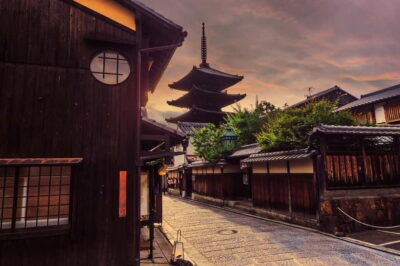
Kyoto Geisha Walking Tour: Gion District & Hidden Gems
Read our review →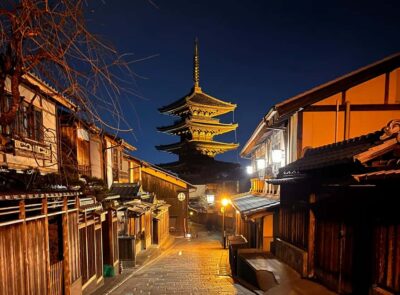
Gion Magical Night Walking Tour with Geisha Trivia
Read our review →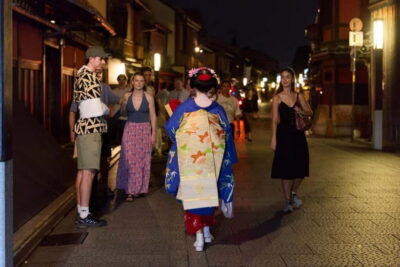
Gion Geisha District Walking Tour – Stories of Geisha
Read our review →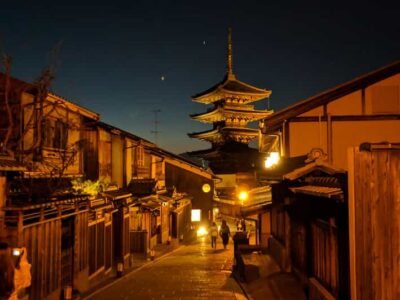
Best of Kyoto: Gion, Geisha, Pagodas & Cobblestones
Read our review →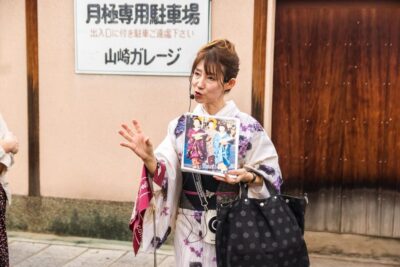
Kyoto Night Foodie Tour in Gion (9+ dishes + 6 Sake tastings)
Read our review →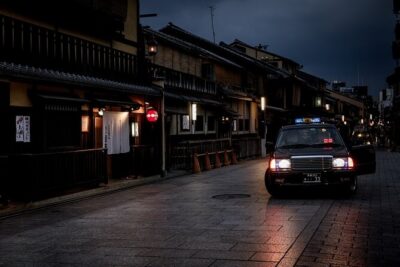
Kyoto Gion Geisha District Walking Tour – The Stories of Geisha
Read our review →
Kyoto Gion: 2-Hour Geisha Culture & History Walking Tour
Read our review →Browse the lists this tour appears in