
Reviewed · GEISHA & GION DISTRICT TOURS
Kyoto: Gion Magical Night Walking Tour
The quiet streets tell a different story. This Kyoto night walk gives you a calm look at Gion, with small groups and stops at shrines, pagodas, and old lanes that are easy to miss alone. I especially like the chance to learn about geisha life from guides such as Karen, Hina, May, and Ricky, and I like the route’s mix of famous sights and less obvious corners. The main drawback is the walking: slopes, stairs, and roughly 90 to 100 minutes on foot can feel tiring after a full day in Kyoto.
At $29.60 per person, this is a modest price for a guided introduction to Gion. You get local context that signs and guidebooks cannot provide, plus a more peaceful evening atmosphere than you will find in the daytime. Still, the experience depends on clear weather, and the meeting point at Minamiza Theater requires careful attention.
In This Review
- Key things to know before you book
- Why Gion feels better at night
- Meeting at Minamiza Theater
- Gionmachi Minamigawa and the chance of seeing Maiko
- Yasui-Konpiragu and the meaning of cutting ties
- Sannenzaka, Ninenzaka, and the Yasaka Pagoda view
- The large Kannon statue and a quiet memorial setting
- Yasaka Shrine, or Gion-san
- What the guides add to the experience
- Is $29.60 good value?
- Who should book this Gion walk?
- Cancellation and practical details
- Should you book the Kyoto Gion Magical Night Walking Tour?
- FAQ
- How long does the Kyoto Gion Magical Night Walking Tour last?
- Where does the tour begin?
- Where does the tour end?
- How large is the group?
- Is the tour suitable for people who do not like stairs or hills?
- Can I cancel for a full refund?
Key things to know before you book
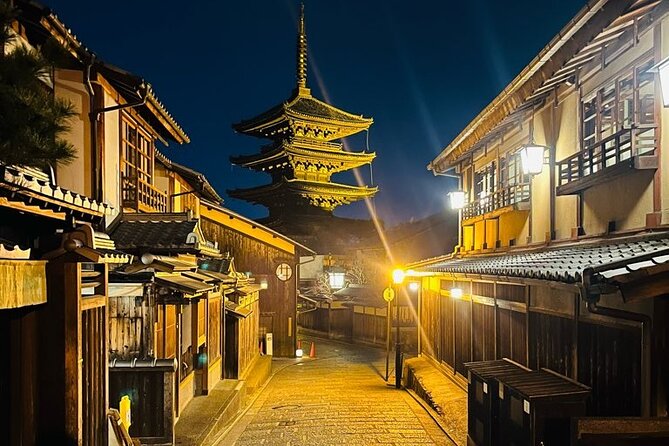
- Gion after dark: Lantern-lit shrines, quiet streets, and traditional lanes give the district a more peaceful feel than during the day.
- Small-group format: The tour is advertised for a maximum of eight people, while the additional information lists a maximum of 10. Either way, it is far smaller than a large bus group.
- Geisha culture explained with care: Guides cover Maiko and Geiko traditions, daily life, social customs, and proper etiquette if you see one on the street.
- A route beyond the main lanes: You visit Gionmachi Minamigawa, Yasui-Konpiragu, Sannenzaka and Ninenzaka, Yasaka Shrine, and several atmospheric temple or shrine areas.
- Comfortable shoes matter: The walk includes hills and stairs, and one review specifically noted that the route felt like a lot of walking.
- Flexible cancellation: You can cancel up to 24 hours before the start time for a full refund, subject to the stated weather and minimum-group conditions.
Why Gion feels better at night
Gion is one of Kyoto’s most famous districts, known for wooden townhouses, tea houses, shrines, and its connection to geisha culture. During daylight, the narrow streets can feel crowded and hurried. In the evening, the same lanes take on a quieter mood, with warm street lighting and fewer people pressing through the best photo spots.
That change in pace is the real reason to book this experience. You are not simply checking off Gion landmarks. You are walking slowly enough to notice the buildings, small religious sites, and streets that can blur together when you explore on your own.
The tour lasts about one hour and 40 minutes, though one participant expected a one-hour walk and found it closer to two hours. Plan for the longer estimate. The pace includes stops for explanations and photographs, but this is still a walking tour rather than a short sightseeing loop.
I like that the experience is designed for a small group. A cap of eight is highlighted in the tour description, while the additional information allows up to 10 people. That is still an intimate size, and it makes it easier to hear the guide, ask questions, and avoid turning a traditional neighborhood into a moving crowd.
More Walking Tours in Kyoto
- Kyoto Geisha Walking Tour: Gion District & Hidden Gems
★ 4.7 · 3,273 reviews - Kyoto: Gion Magical Night Walking Tour with Geisha Trivia
★ 4.9 · 2,393 reviews - Kyoto: Gion Geisha District Walking Tour – Stories of Geisha
★ 4.7 · 2,187 reviews
Meeting at Minamiza Theater
The meeting point is Minamiza Theater, at 198 Nakanocho in Kyoto’s Higashiyama Ward. It is on the east end of Shijo Bridge, near Gion, and the listed meeting location is on the second-floor west lobby.
You should allow extra time to find the exact lobby. The tour ends at 625 Gionmachi Kitagawa, so you do not return to the theater. That is useful if you want to continue exploring Gion afterward, but less convenient if you need to collect belongings or return to a hotel near the starting point.
The mobile ticket makes entry simple, but you still need to arrive at the correct place. One serious complaint involved a missed meeting caused by confusion and failed communication. The operator stated that the group met and departed as planned, but the issue is a useful warning: check the meeting address carefully, arrive early, and do not rely on last-minute messages receiving a response.
Gionmachi Minamigawa and the chance of seeing Maiko
The first main stop is Gionmachi Minamigawa, one of Kyoto’s best-known streets. This is the part of Gion most people picture: traditional facades, narrow lanes, and the possibility of seeing a Maiko or Geiko heading to an appointment.
The key word is possibility. A sighting is never guaranteed, and you should not treat the walk as a geisha-spotting hunt. The better purpose is learning how to behave in this setting. If you happen to see a Maiko or Geiko, the guidance is simple: greet her with a smile and say Konnichiwa. Give her space, avoid blocking the street, and do not turn a working person into a photo prop.
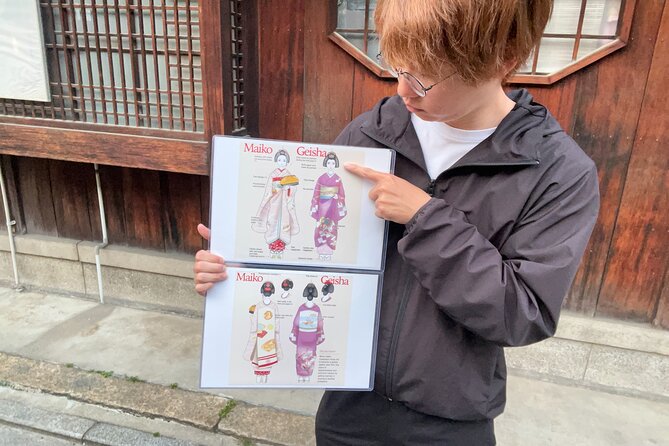
This is one of the tour’s strongest cultural points. The guides explain the difference between Maiko and Geiko and discuss their place in Kyoto society, both in the past and today. One guide even shared family connections to geisha life and showed personal photographs, offering a rare perspective that a general sightseeing map cannot provide.
The quality of the evening depends heavily on the guide. Karen received repeated praise for her humor, patience, and willingness to answer questions. Hina was described as engaging and able to add personal family insight. May and Pam were also praised for their warmth and clear explanations, while Ricky earned strong marks for his stories about Kyoto’s culture.
Yasui-Konpiragu and the meaning of cutting ties
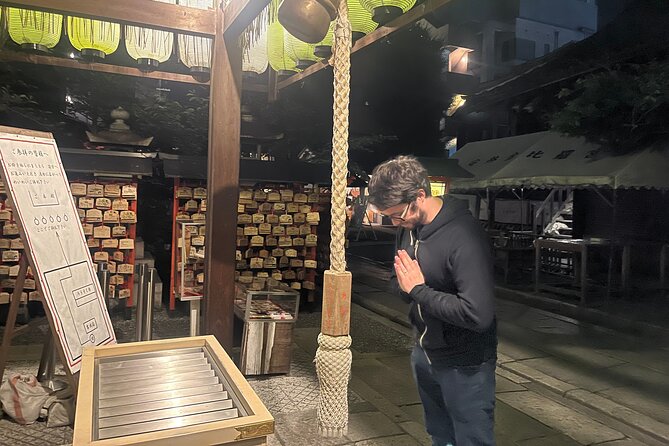
Yasui-Konpiragu is a small shrine with an unusual purpose. It is associated with strengthening good relationships and breaking harmful ones. The shrine is said to help people meet, strengthen a marriage or partnership, or cut ties with an unwanted relationship.
That idea gives the stop more meaning than a quick photograph. Your guide can explain how Japanese religious sites often connect everyday hopes with ritual acts. Here, the focus is not simply beauty. People visit with personal wishes, and the shrine’s symbolism gives you a window into how faith and daily life overlap.
The stop lasts about 10 minutes and admission is free. It is a compact visit, but it adds variety to the route. You are not spending the whole evening looking at grand buildings. Some stops are modest and personal, which makes the walk feel more connected to local customs.
More geisha district walks in Kyoto:
- Best of Kyoto: Gion, Geisha, Pagodas & Cobblestones
★ 4.9 · 2,058 reviews - Night Walk in Gion: Kyoto’s Geisha District
★ 4.5 · 2,003 reviews - Kyoto Night Foodie Tour in Gion (9+ dishes + 6 Sake tastings)
★ 5.0 · 1,762 reviews - Kyoto Gion Geisha District Walking Tour – The Stories of Geisha
★ 5.0 · 1,441 reviews
Sannenzaka, Ninenzaka, and the Yasaka Pagoda view
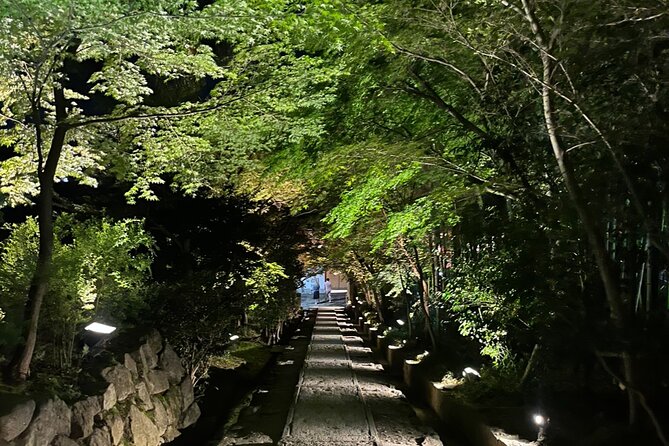
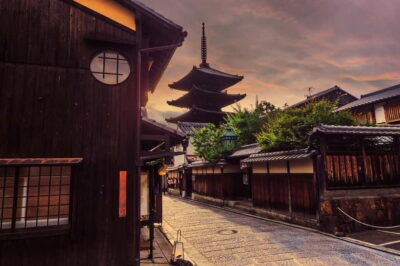
The route then moves toward Sannenzaka and Ninenzaka, streets leading toward Kiyomizu-dera Temple. Their traditional Kyoto townscape is one of the main visual rewards of the tour, especially around Yasaka-no-to, the familiar five-story Yasaka Pagoda.
This section lasts about 20 minutes, the longest listed stop. It is also one of the more demanding parts physically. The lanes include slopes and stairs, and the stone surfaces can be tiring if you have already spent the day walking around Kyoto.
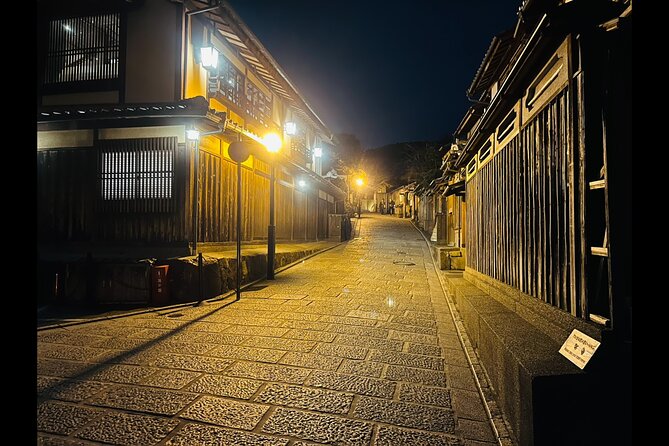
At night, these streets can feel far calmer than they do at peak daytime hours. Streetlights and illuminated religious buildings create strong photo opportunities, but darkness also means you should watch your footing. A little rain may make the stones more slippery, so sensible shoes are a better choice than fashionable but fragile footwear.
The tour does not include admission to Kiyomizu-dera, and the listed stops are free. That keeps the price low, but it also means you are seeing the surrounding streets and cultural setting rather than taking a full temple tour. If Kiyomizu-dera is a priority, plan a separate visit.
The large Kannon statue and a quiet memorial setting
Two additional stops are described in the route without full names. One was built in 1955 to pray for the souls of those who died in World War II and includes a very large statue of Kannon.
This stop adds a solemn note to the evening. Kannon is associated with compassion, and the site’s purpose is remembrance rather than spectacle. It gives the guide a chance to discuss how memorial spaces fit into Kyoto’s religious life and how a city known for beauty also carries difficult memories.
The other site was built about 400 years ago by a shogun’s wife to mourn her husband. It includes a garden, a 400-year-old tea ceremony house, and a bamboo grove. These details make it one of the most appealing parts of the route for anyone interested in gardens, tea culture, or quiet architectural spaces.
Because the supplied route does not identify these places by name, you should not book the tour expecting a specific famous temple unless the operator confirms it. The appeal is the combination of garden, tea house, bamboo, and evening atmosphere. The exact experience may also depend on access and lighting at the time of the visit.
Yasaka Shrine, or Gion-san
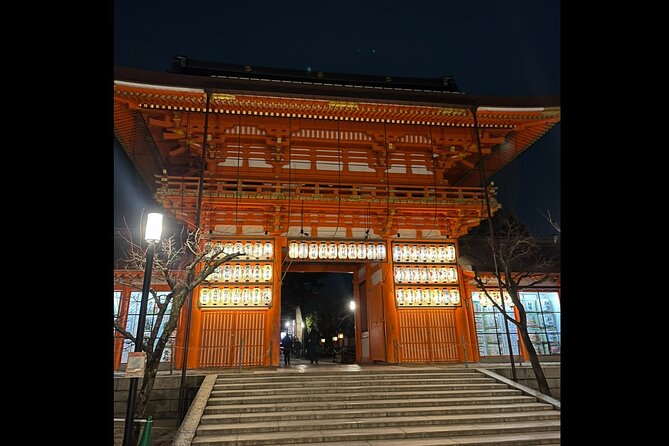
The walk ends at Yasaka Shrine, the head shrine of roughly 2,300 related shrines across Japan. Locally, it is known as Gion-san and is linked with protection from bad luck, good fortune, and beauty.
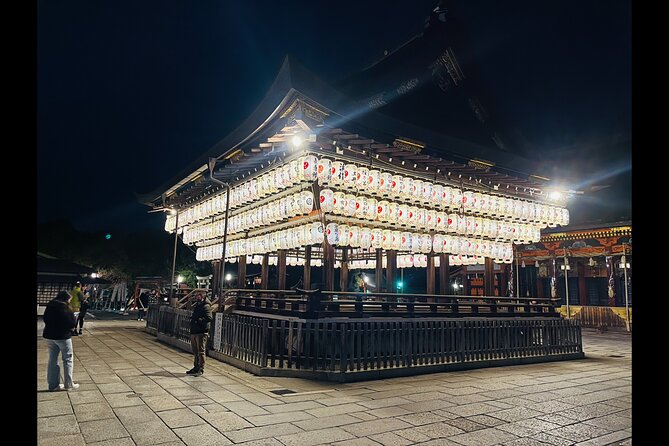
At night, the shrine’s lanterns and open grounds provide a fitting finish. After the narrower streets of Gion, the shrine gives you room to pause and take in a larger religious complex. It is also a practical ending point, since you remain in central Gion rather than being carried away from the district.
The stop is listed as about 10 minutes and has no admission charge. That is enough for an explanation and photographs, but not enough for a detailed examination of every building. Think of it as the final chapter of a neighborhood walk, not a full shrine visit.
What the guides add to the experience
A good guide is essential here because the sights alone are easy to find. The value comes from knowing what you are looking at and how to behave around it.
Several guides received strong praise for being friendly, entertaining, and willing to answer questions. Karen was noted for handling questions from children aged 12 and 14 with patience. Hina brought family stories, and Ricky explained the changing relationship between Maiko, Geiko, and wider Kyoto society.
May and Pam were praised for their enthusiasm and local detail. Sho was also described as warm and passionate about Kyoto, though one person found that his English was still developing and that some questions were not always understood. That is a fair reminder that guide quality and communication can vary.
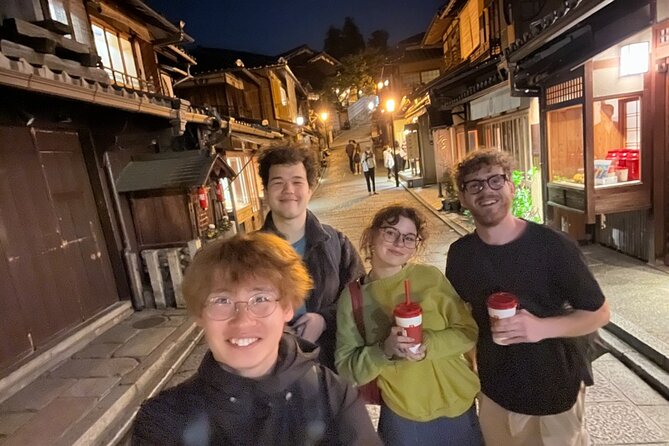
The best part of the format is the chance to stop and ask about details that catch your attention. In a large group, you might keep quiet because the guide is hard to hear. Here, the smaller size makes conversation much easier.
Is $29.60 good value?
At $29.60, I consider this a good-value introduction to Gion. You receive about 90 to 100 minutes of guiding, several free cultural sites, explanations of geisha traditions, and a route that links the district’s main areas without requiring you to plan every turn.
The tour does not include paid temple admissions, food, transport, or a long formal performance. That matters if you are comparing it with an elaborate cultural evening. You are paying for interpretation, orientation, and company on a carefully planned walk.
It is especially good value early in a Kyoto visit. After the tour, you will recognize Gion’s streets and religious sites more easily, and you may feel more confident exploring the area on your own. It also suits families who want cultural context without committing to a long lecture.
The price is less appealing if you already know Gion well or have researched every shrine in the area. In that case, the guide’s stories and access to local knowledge are the main reason to go.
Who should book this Gion walk?
I would choose this tour if you want a gentle introduction to Kyoto’s geisha culture without booking a formal show. It works well for first-time visitors, couples, families with older children, and photographers who want evening views with fewer people in the frame.
You should be comfortable walking uphill and climbing stairs. The tour is not recommended for anyone who is uncomfortable with slopes or extended walking. Wear supportive shoes and bring an umbrella if rain is possible, since the experience requires good weather.
The route also suits anyone who prefers cultural explanation over a simple photo stop. You will learn about religious customs, relationships, memorial sites, gardens, and the social world of Maiko and Geiko.
It is less suitable if you need a fully accessible route, want guaranteed geisha sightings, or prefer to spend most of an evening seated indoors. The tour’s charm comes from being outside and moving through the district.
Cancellation and practical details
You receive confirmation when booking, and the mobile ticket is accepted. Service animals are allowed, and the tour is near public transportation.
Free cancellation is available up to 24 hours before the start time for a full refund. Changes or cancellations within 24 hours are not accepted for a refund. If poor weather cancels the walk, you will be offered another date or a full refund. The same applies if the minimum number of participants is not reached.
The listed duration is approximately one hour and 40 minutes, but allow close to two hours. The group is advertised as no more than eight people, with a separate maximum of 10 in the additional details.
Should you book the Kyoto Gion Magical Night Walking Tour?
I would book it if you want a reasonably priced, small-group way to understand Gion instead of simply passing through for photographs. The strongest reasons are the evening setting, the range of shrines and old streets, and the guides’ focus on geisha etiquette and local customs.
Book early in your Kyoto stay so the route helps you make sense of later visits. Arrive at Minamiza Theater with time to spare, wear good shoes, and treat any Maiko or Geiko sighting as a privilege rather than the main goal.
Skip it if hills and stairs are a problem, if you need guaranteed access to named temples, or if you already have a strong personal knowledge of Gion. For most first-time visitors, though, $29.60 buys a useful orientation, a peaceful walk, and cultural context you would be unlikely to gather from the streets alone.
FAQ
How long does the Kyoto Gion Magical Night Walking Tour last?
The tour lasts approximately one hour and 40 minutes. Because the route includes walking, stops, and photo breaks, you should allow close to two hours.
Where does the tour begin?
The tour begins at Minamiza Theater, at 198 Nakanocho in Kyoto’s Higashiyama Ward. The listed meeting location is on the second-floor west lobby.
Where does the tour end?
The tour ends at 625 Gionmachi Kitagawa in Kyoto’s Higashiyama Ward. It does not return to the Minamiza Theater meeting point.
How large is the group?
The tour description lists a maximum of eight people. The additional information lists a maximum of 10 participants, so the exact group size may vary within that limit.
Is the tour suitable for people who do not like stairs or hills?
No. Because the route includes slopes and stairs, it is not recommended for people who are uncomfortable with extended walking, hills, or steps.
Can I cancel for a full refund?
Yes. You can cancel at least 24 hours before the local start time for a full refund. Cancellations or changes made within 24 hours are not refunded. If poor weather or an insufficient number of participants causes the operator to cancel, you will be offered another date or a full refund.
Just added around Kyoto
- Kyoto: Gion Night Walking Tour with Geisha Insight★ 5.0 · 39 reviews
- Kyoto: Private Customizable Day Trip by Car★ 5.0 · 38 reviews
- Kyoto: Full Day Bike Tour★ 4.9 · 39 reviews
- Private Japanese Calligraphy in Kyoto – Learn Shodō with a Master★ 5.0 · 39 reviews
- Experience a tea ceremony in an authentic tearoom, in Kyoto!★ 4.5 · 41 reviews
- Kyoto: Gion Evening Walk with Hidden Gems, Geisha & Sake★ 5.0 · 41 reviews
- Kyoto Private Photo Shoot & Tour by SnapKyoto★ 5.0 · 41 reviews
- The Way of Tea: Kyoto Crafts, Hidden Temples & Wabi-Sabi Walk★ 5.0 · 41 reviews
Geisha & Gion District Tours, compared.
Kyoto Geisha Walking Tour: Gion District & Hidden Gems
Read our review →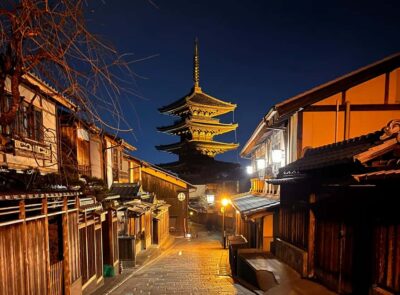
Gion Magical Night Walking Tour with Geisha Trivia
Read our review →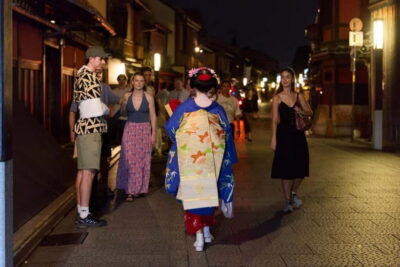
Gion Geisha District Walking Tour – Stories of Geisha
Read our review →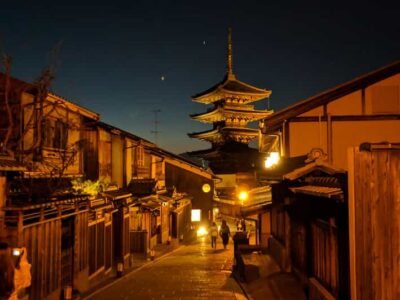
Best of Kyoto: Gion, Geisha, Pagodas & Cobblestones
Read our review →
Kyoto Night Foodie Tour in Gion (9+ dishes + 6 Sake tastings)
Read our review →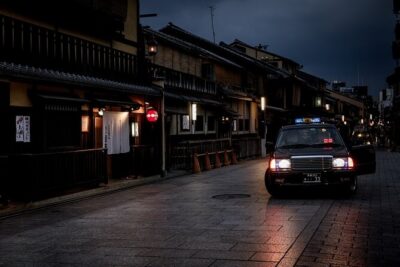
Kyoto Gion Geisha District Walking Tour – The Stories of Geisha
Read our review →
Kyoto Gion: 2-Hour Geisha Culture & History Walking Tour
Read our review →Browse the lists this tour appears in