
Reviewed · GEISHA & GION DISTRICT TOURS
Kyoto: Gion Walking Tour
Gion rewards a slower, sharper look. This two-hour walk brings you through three Kyoto hanamachi, including Pontocho, Gion-Kobu, and Gion-Higashi, while guides Jose and Saskia explain the district’s history, architecture, and geisha traditions. I especially like the small maximum of six people and the open question-and-answer format. You can stop often, study old photographs and maps, and ask about anything from Japanese customs to daily life in Kyoto.
I also like that the route skips the over-familiar Hanamikoji-dori and instead shows quieter streets and overlooked historic sites. The main consideration is that a maiko or geiko sighting is not promised, and the route covers about 3.3 kilometers, so comfortable shoes and water matter.
In This Review
- Key things to know before you book
- Why this Gion walk is different from a quick photo stop
- Starting at Pontocho Alley and the Kamo River
- Yamato-dori and the preserved streets of Gion-Kobu
- Tatsumi Jinja and the small details that make Gion readable
- Gion-Higashi and an honest look at geisha culture
- Yasaka Shrine and the origins of Gion
- How Jose and Saskia shape the experience
- Is two hours and $35 good value?
- Timing, footwear, weather, and group size
- Who should book this Gion experience?
- Should you book the Kyoto Gion Walking Tour?
- FAQ
- How long is the Kyoto Gion Walking Tour?
- How far does the tour walk?
- How many people can join the tour?
- Which parts of Kyoto does the route visit?
- Is Hanamikoji-dori included?
- Can I see a maiko or geiko?
- What languages are available?
- What should I bring?
Key things to know before you book
- Three hanamachi in two hours: See Pontocho, Gion-Kobu, and Gion-Higashi rather than focusing on only one famous street.
- A maximum of six people: The small group makes it easier to hear the guide and ask personal questions.
- Guides who bring lived experience: Jose and Saskia share their understanding of Kyoto and their own years of life in Japan.
- A history lesson with street-level details: Look at wooden machiya houses, bridges, statues, shrines, and changes in the city over time.
- Hanamikoji-dori is not included: This is useful to know if that famous street is your main target.
- A 3.3-kilometer walking route: Expect a steady city walk with frequent stops, not a long museum-style lecture.
Why this Gion walk is different from a quick photo stop
Gion is easy to visit badly. You can stroll past wooden buildings, snap a few pictures, and leave without understanding what you saw. This tour gives the streets a framework, linking Kyoto’s past with the places still used today.
The focus is not only geisha culture. You learn about the Maiko and Geiko way of life, their routines, training, customs, and place within Kyoto’s entertainment districts. The guides also explain how the hanamachi work as neighborhoods, rather than treating them as a stage set made for photographs.
That broader view is important. Gion is a living district, and the best parts of the walk appear in small details. A guide may point out an architectural feature on a machiya, explain why a bridge matters, or show an old image that changes how you read the modern street in front of you.
The style is conversational. Jose and Saskia are often praised for their warmth, humor, and energy, but the practical advantage is simple: you can ask questions as you go. If your group wants to know about Japanese schools, food, religion, etiquette, football, or daily life, the tour is built to allow those detours.
More Walking Tours in Kyoto
- Kyoto Geisha Walking Tour: Gion District & Hidden Gems
★ 4.7 · 3,273 reviews - Kyoto: Gion Magical Night Walking Tour with Geisha Trivia
★ 4.9 · 2,393 reviews - Kyoto: Gion Geisha District Walking Tour – Stories of Geisha
★ 4.7 · 2,187 reviews
Starting at Pontocho Alley and the Kamo River
Meet in front of the Disney Store at Kyoto Shijo-Kawaramachi. The guide sits nearby with an iPad displaying the GetYourGuide image and the tour time. Kyoto has only one Disney Store, but still allow a few minutes to identify the meeting spot in this busy downtown area.
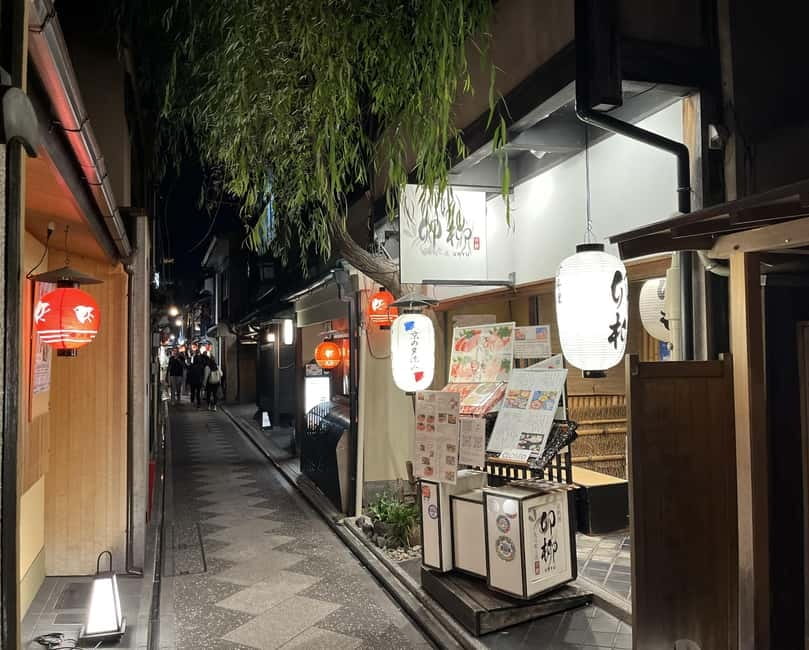
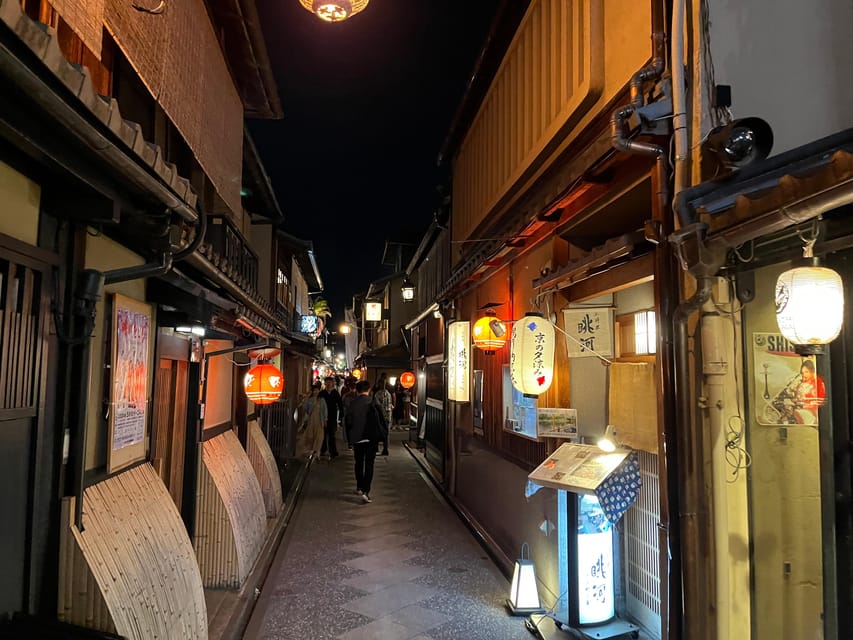
The walk begins with Pontocho Alley, one of Kyoto’s best-known traditional entertainment areas. Its narrow character sets the tone for the rest of the tour. Rather than simply walking through, you get context about the hanamachi system and the role these districts have played in Kyoto’s social and cultural life.
From Pontocho, the route reaches Pontocho Kaburenjo, associated with performances and training connected to the district. The stop helps explain that geiko and maiko culture involves disciplined artistic work, not just elaborate clothing and makeup.
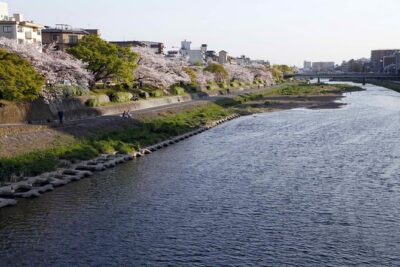
The route then moves toward the Kamo River. Bridges and rivers are not filler stops here. They help you understand how Kyoto’s neighborhoods connect and why the area around the river became such an important part of city life.
You may also see the Yagi-san and Kita-san statues, followed by Sanjo Ohashi. The bridge is a useful place for the guide to connect Kyoto’s past to its present streets, routes, and neighborhoods. The guides often use photographs, maps, and visual material on an iPad, which helps when a historical change is hard to picture from the pavement alone.
This early section has a good balance of walking and short explanations. You are not held in one place for a long speech, and the small group means you can usually see the guide’s screen when images are used.
Yamato-dori and the preserved streets of Gion-Kobu
After the river section, the route continues along Yamato-dori and into Gion-Kobu. This is where the walk becomes especially useful for anyone interested in traditional Kyoto architecture.
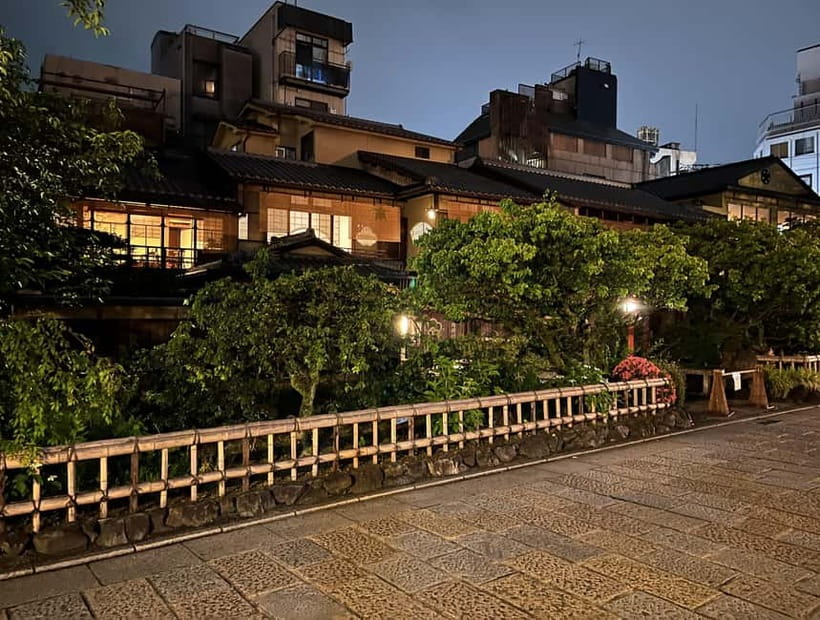
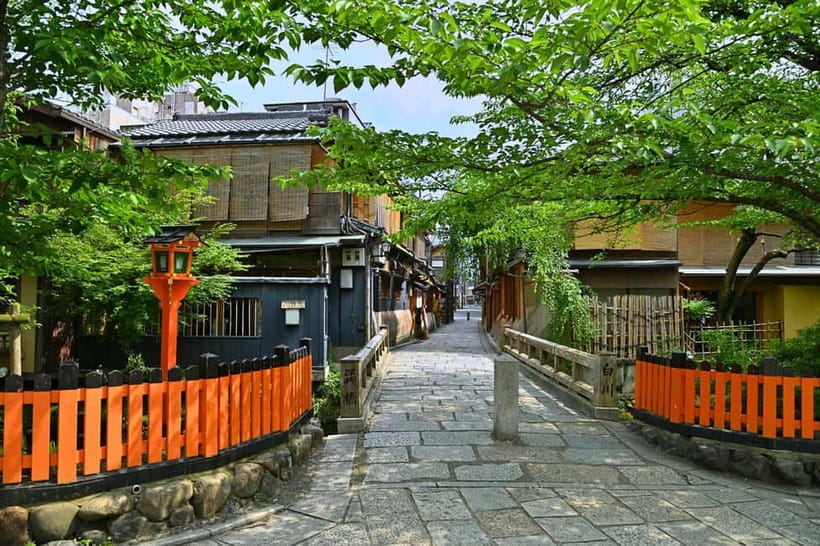
Gion-Kobu includes Gion-Shinbashi-dori and Gion Shirakawa, areas known for preserved streetscapes and wooden machiya buildings. These houses are more than attractive backdrops. Their design reflects the narrow plots, business life, and social patterns of older Kyoto.
The guide points out details you might otherwise pass without noticing. A doorway, wall, roofline, sign, or carefully maintained facade can reveal how the neighborhood developed and how it is protected today.
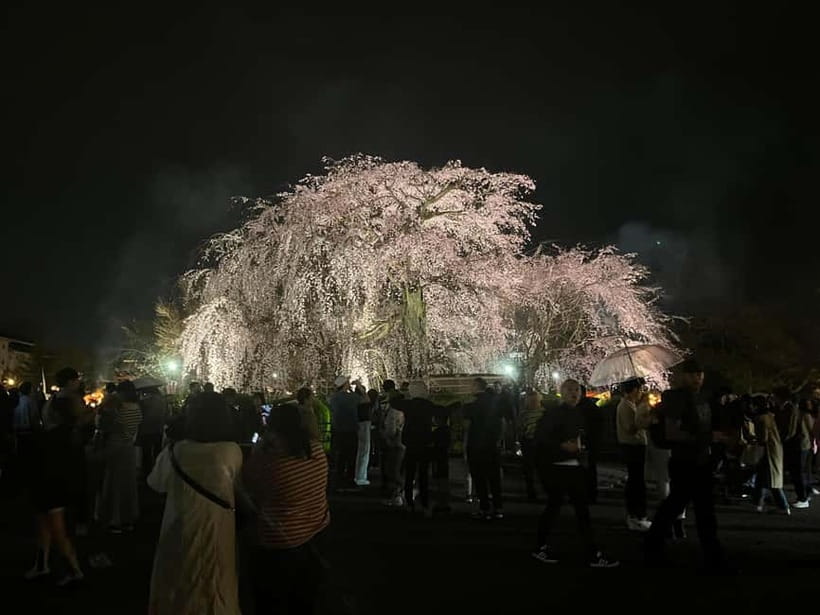
Gion Shirakawa is also one of the most picturesque parts of the route. During the cherry blossom period, roughly late March to early April, the path may be adjusted to show better sakura views around Gion. That is a welcome seasonal change, though blossom timing depends on the year.
The route does not include Hanamikoji-dori. This is not a flaw if you want a less predictable walk, but it is a real planning point. If Hanamikoji is high on your list, you will need to visit it separately before or after the tour.
Tatsumi Jinja and the small details that make Gion readable
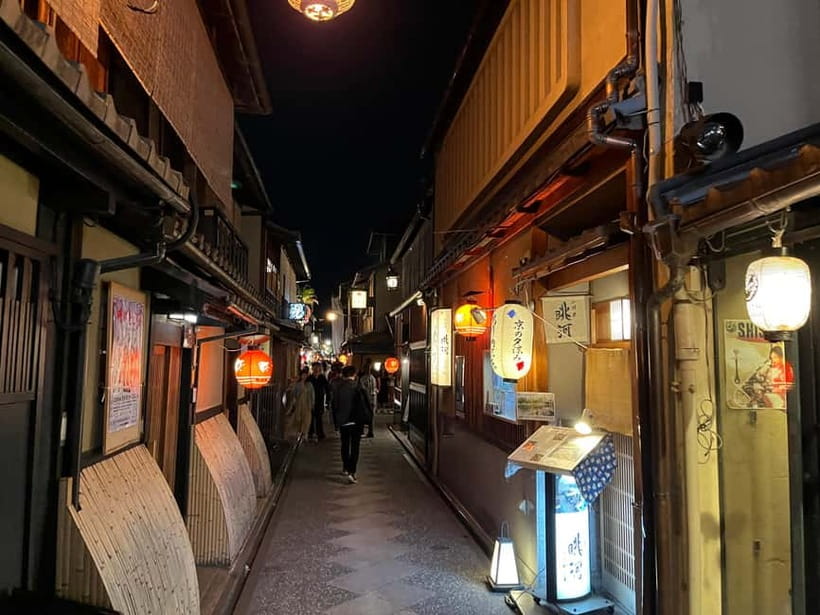
Tatsumi Jinja and Tatsumi Bridge offer a more focused look at the visual language of Gion. These are the sorts of locations that can feel ordinary without explanation, then become memorable once you understand their role.
The guides are particularly strong at pointing out details that are easy to miss. One person may notice the appearance of a small shrine, another may be curious about a building, and the guide can shape the conversation around those interests.
That flexibility comes through in the way Jose and Saskia lead. They do not simply recite a fixed script and hurry the group along. The walk includes frequent pauses, short talks, questions, and stories. For some people, this makes the two hours feel full and lively. If you prefer to walk silently and take pictures at your own pace, it may feel more structured than an independent stroll.
The personal approach is also useful for families. A family can ask questions at its own level, and the guide can explain unfamiliar ideas without assuming prior knowledge. One family described the experience as engaging because the guide connected the discussion to its interests.
More geisha district walks in Kyoto:
- Best of Kyoto: Gion, Geisha, Pagodas & Cobblestones
★ 4.9 · 2,058 reviews - Night Walk in Gion: Kyoto’s Geisha District
★ 4.5 · 2,003 reviews - Kyoto Night Foodie Tour in Gion (9+ dishes + 6 Sake tastings)
★ 5.0 · 1,762 reviews - Kyoto Gion Geisha District Walking Tour – The Stories of Geisha
★ 5.0 · 1,441 reviews
Gion-Higashi and an honest look at geisha culture
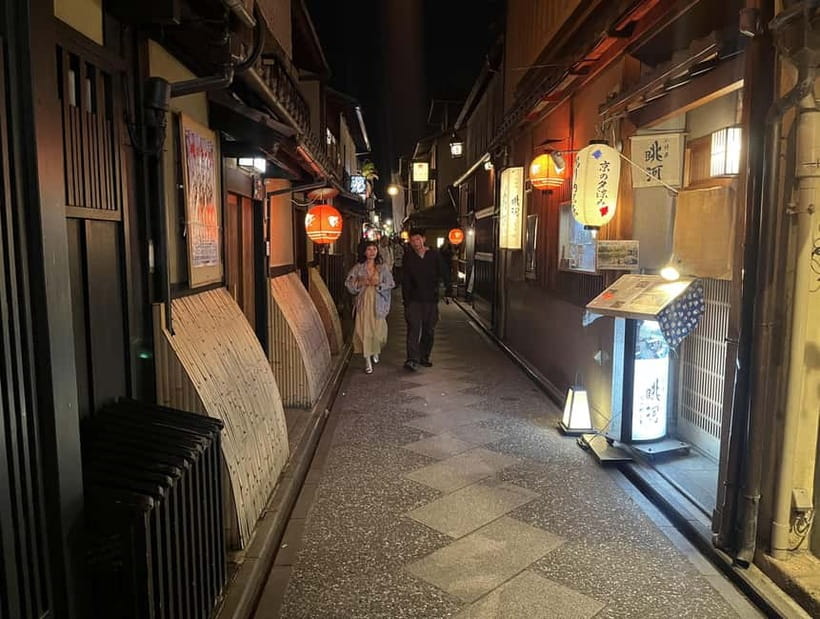
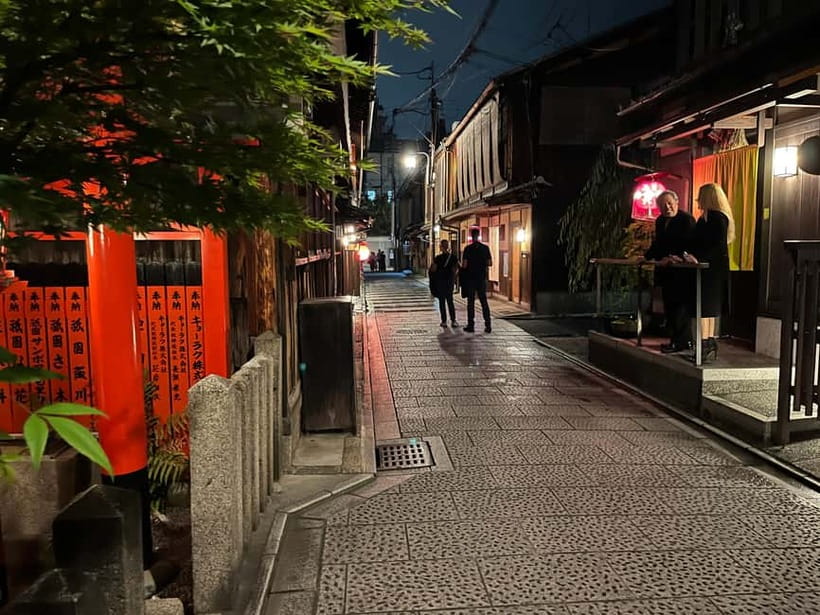
The third hanamachi is Gion-Higashi. Visiting three districts in one tour gives you a wider sense of Kyoto’s entertainment quarters and prevents Gion from being reduced to one postcard street.
You learn the difference between maiko and geiko, how their work and training fit into the district, and what their routines involve. The discussion is grounded in local history and culture rather than relying only on popular images of geisha.
That distinction matters. Many first-time visitors arrive with a simplified idea of geisha life. A good guide can replace guesswork with a more respectful and accurate picture, while still keeping the subject interesting and accessible.
A maiko or geiko sighting cannot be guaranteed. Several people were fortunate enough to spot maiko during their walks, but you should treat that as luck, not as the product being sold. More important, the tour helps you recognize the difference between a maiko and geiko if you happen to see one later in Kyoto.
Please remember that Gion is a working neighborhood. The most valuable part of this tour is learning how to look without treating residents or performers as scenery. The supplied information does not describe a formal photography policy, so follow the guide’s instructions and use ordinary courtesy.
Yasaka Shrine and the origins of Gion
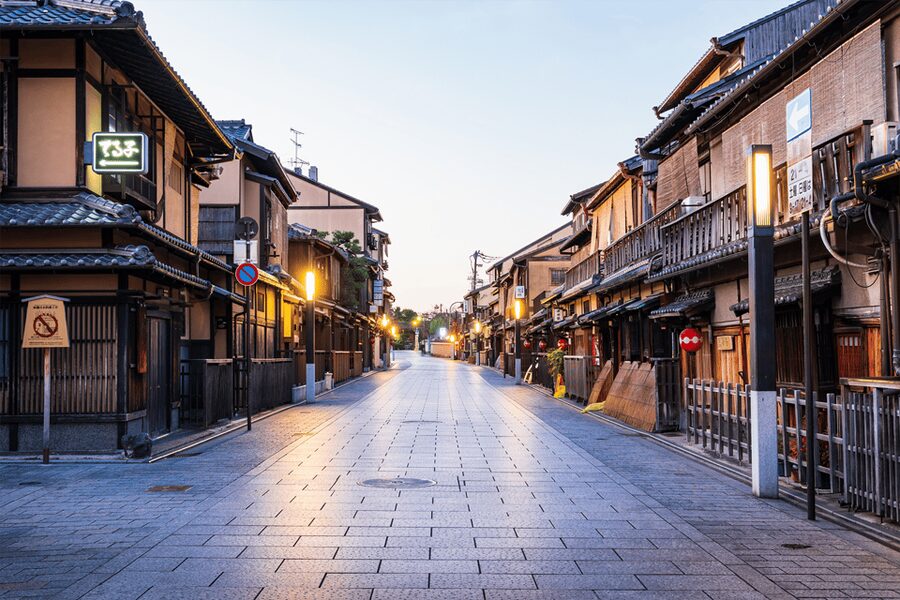
The route finishes around Yasaka Jinja, formerly known as Gion Shrine. This is where the district gets its name, and the shrine adds a religious and historical layer to a walk that could otherwise focus only on entertainment culture.
If time allows, the guide explains the Gion Festival. Its origins reach back more than 1,100 years, and it is counted among Japan’s three most important and famous festivals. That short phrase can sound abstract, but seeing the shrine connected to the district makes the festival’s place in Kyoto easier to understand.
Yasaka Shrine can be especially appealing in the evening, when the setting takes on a different mood. One evening group also enjoyed visits to the shrine of beauty and the shrine of love. These smaller points of interest show how the tour can include personal questions and specific curiosities, not just the major historical stops.
The tour’s exact finish point is not specified, so do not plan a tight onward reservation immediately afterward. You may want to continue exploring Gion, find dinner, or walk toward another central Kyoto sight.
How Jose and Saskia shape the experience
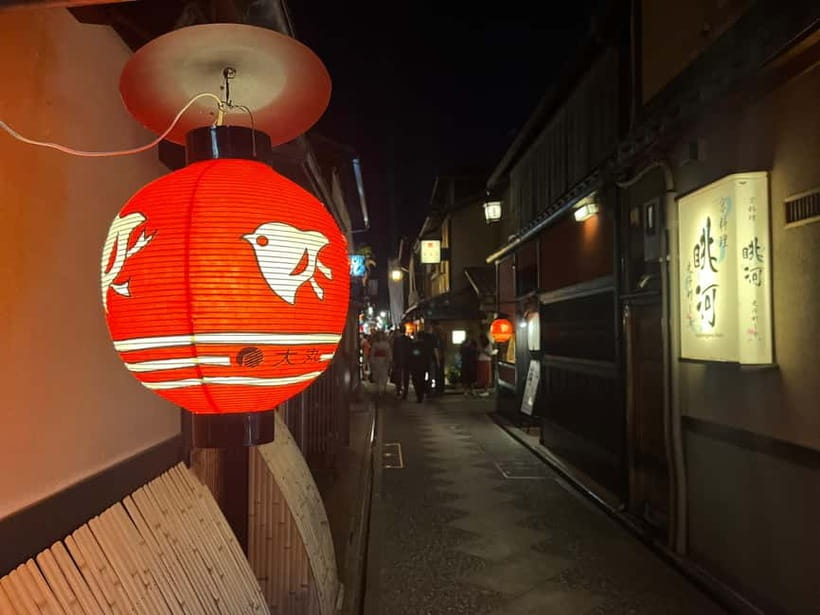
The strongest praise centers on the guides. Jose is repeatedly described as warm, funny, prepared, and passionate about Kyoto. Saskia is praised for her enthusiasm, clear explanations, and ability to lead in Dutch. The tour also offers English, Spanish, French, and Dutch.
Their backgrounds as foreign residents of Japan are part of the appeal for some people. You can ask how daily life feels from the perspective of someone who has built a life in Japan, while still receiving detailed explanations of Kyoto’s history and customs.
That does not make the tour a substitute for every kind of local guide. Some people may prefer a Japanese guide with a family connection to Gion or a highly formal academic presentation. Here, the strength is communication, approachability, and the ability to answer questions in clear English and other listed languages.
The guides also use technology well. Maps, current and historical photographs, and images on an iPad help show how Kyoto has changed. This is especially helpful when the modern streetscape hides the older layout.
Is two hours and $35 good value?
At $35 per person, this is a reasonable price for a two-hour guided walk, especially with a maximum of six participants. You are paying for interpretation, route planning, language support, and access to a guide who can answer questions in real time.
The value improves if this is your first visit to Kyoto or your first full look at Gion. You will leave with a better sense of what to notice when you return on your own. It is also a useful first-day activity because the route can help you get your bearings in central Kyoto.
There are limits. No food, drinks, entrance tickets, or other amenities are provided. This is a walking and explanation experience, not a tea ceremony, meal, performance, or paid entrance tour.
A larger family or group may need to book more than one place, since the limit is six participants. When only one or two people book, the experience can feel almost private, but that depends on how many other places are reserved.
The 9:45 and 12:30 departures may include a free visit to the Gion Gallery if you want to extend your time. That option is not stated for every departure, so ask the guide about it when booking or meeting.
Timing, footwear, weather, and group size
The route covers about two miles, or 3.3 kilometers, in two hours. That is not a strenuous distance for most people, but the frequent stops and city streets mean you should wear comfortable shoes.
Bring water, sunscreen, a sun hat, and an umbrella. Kyoto can be hot, bright, or wet, and the tour does not provide amenities. The route may also be adjusted during cherry blossom season, so do not expect every departure to follow precisely the same streets at that time.
Small groups make a clear difference here. You can hear explanations more easily, stand close enough to see photos and maps, and ask questions without interrupting a large crowd. A small group also reduces the stop-and-start problem that can make busy-area walking tours tiring.
Cancellation is flexible, with a full refund available when you cancel at least 24 hours ahead. You can also reserve now and pay later, which helps if your Kyoto schedule is still changing.
Who should book this Gion experience?
I would choose this tour for you if you want more than attractive lanes and a few geisha photographs. It suits first-time Kyoto visitors, curious families, couples, solo visitors, and anyone who likes history explained through real streets.
It is also a strong choice if you have questions about Japan beyond the advertised route. The guides encourage questions, and several people found the discussion of everyday life as useful as the formal history.
You may want something else if you are mainly seeking a maiko sighting, a visit inside a tea house, a meal, or a walk centered on Hanamikoji-dori. None of those is guaranteed or included. You also need to be comfortable walking 3.3 kilometers outdoors.
Should you book the Kyoto Gion Walking Tour?
Yes, if you want a personal introduction to Gion with clear explanations and plenty of room for questions. The combination of three hanamachi, preserved neighborhoods, Yasaka Shrine, visual material, and a six-person limit gives this walk more substance than a quick district orientation.
Book it early in your Kyoto stay so you can use the guide’s suggestions during the rest of your visit. If you are hoping to see a maiko or geiko, keep your expectations sensible and enjoy the history, architecture, and daily-life context as the main event.
FAQ
How long is the Kyoto Gion Walking Tour?
The tour lasts two hours.
How far does the tour walk?
The route covers about 3.3 kilometers, or two miles.
How many people can join the tour?
The tour is limited to six participants.
Which parts of Kyoto does the route visit?
The route visits Pontocho, Gion-Kobu, and Gion-Higashi. It also includes locations such as Pontocho Alley, Pontocho Kaburenjo, the Kamo River, Sanjo Ohashi, Gion Shirakawa, Tatsumi Jinja, Tatsumi Bridge, and Yasaka Shrine.
Is Hanamikoji-dori included?
No. Hanamikoji-dori is not included in the itinerary.
Can I see a maiko or geiko?
A maiko or geiko sighting cannot be guaranteed.
What languages are available?
The live guide service is available in English, Spanish, French, and Dutch.
What should I bring?
Bring comfortable shoes, water, sunscreen, a sun hat, and an umbrella. No amenities are provided by the tour.
Just added around Kyoto
- Kyoto: Private Customizable Day Trip by Car★ 5.0 · 38 reviews
- Kyoto: Gion Night Walking Tour with Geisha Insight★ 5.0 · 39 reviews
- Kyoto: Full Day Bike Tour★ 4.9 · 39 reviews
- Private Japanese Calligraphy in Kyoto – Learn Shodō with a Master★ 5.0 · 39 reviews
- Experience a tea ceremony in an authentic tearoom, in Kyoto!★ 4.5 · 41 reviews
- Kyoto: Gion Evening Walk with Hidden Gems, Geisha & Sake★ 5.0 · 41 reviews
- Kyoto Private Photo Shoot & Tour by SnapKyoto★ 5.0 · 41 reviews
- The Way of Tea: Kyoto Crafts, Hidden Temples & Wabi-Sabi Walk★ 5.0 · 41 reviews
Geisha & Gion District Tours, compared.
Kyoto Geisha Walking Tour: Gion District & Hidden Gems
Read our review →
Gion Magical Night Walking Tour with Geisha Trivia
Read our review →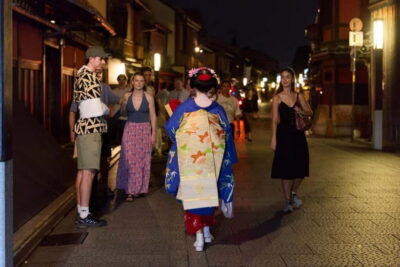
Gion Geisha District Walking Tour – Stories of Geisha
Read our review →
Best of Kyoto: Gion, Geisha, Pagodas & Cobblestones
Read our review →
Kyoto Night Foodie Tour in Gion (9+ dishes + 6 Sake tastings)
Read our review →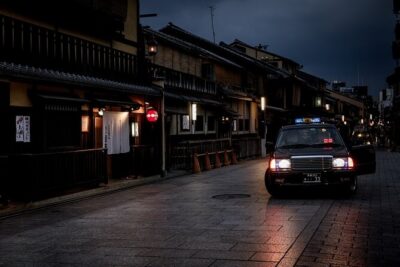
Kyoto Gion Geisha District Walking Tour – The Stories of Geisha
Read our review →
Kyoto Gion: 2-Hour Geisha Culture & History Walking Tour
Read our review →Browse the lists this tour appears in