
Reviewed · GEISHA & GION DISTRICT TOURS
Kyoto night walk tour (Gion district)
Kyoto feels different after dark. This private 90-minute walk through Gion and the Yasaka area is appealing because it trades big sightseeing crowds for quiet lanes, shrine views, local stories, and a guide who often doubles as your photographer. I especially like the small private format and the chance to see familiar Kyoto sights under evening light. The main consideration is that the walk covers a lot of ground, and one serious service complaint involved a substitute guide arriving late and lacking basic answers.
At $35 per person, the tour offers good value if you want a friendly introduction rather than a long lecture on Japanese history. Guide Hiro receives especially warm praise for his English, easy conversation, restaurant suggestions, and family photos. Just keep in mind that the standard visit to Kiyomizu-dera is a brief exterior stop, and admission is not included.
In This Review
- At a glance: what makes this Gion walk useful
- Meeting Hiro in front of Minamiza
- Yasaka Shrine: a strong first stop
- The stone-wall district requires quiet
- Yasakanoto pagoda and the best photo opportunity
- Yasaka’s famous slope and the walk toward Kiyomizu-dera
- Kiyomizu-dera: a short final look
- Why the private format matters
- Hiro’s local help beyond the landmarks
- Price, timing, and who gets good value
- Practical advice before you go
- Should you book this Kyoto night walk?
- FAQ
- Where does the Kyoto night walk begin?
- Where does the tour end?
- How long does the tour last?
- How much does the tour cost?
- Is the tour private?
- Which main sights are included?
- Is admission to the sights included?
- Does the tour include a mobile ticket?
- What happens if the weather is poor?
At a glance: what makes this Gion walk useful
- Quiet Gion lanes after sunset: The route uses narrow streets and less obvious corners where the mood can be calmer than during the day.
- A private tour for your group: You do not share the walk with unrelated participants.
- Hiro’s photography: He frequently takes family, couple, and solo photos at attractive night locations.
- Three major Kyoto landmarks: The route includes Yasaka Shrine, Yasakanoto pagoda, and a view or stop near Kiyomizu-dera.
- Local food help: Hiro has directed participants toward ramen, gyoza, Japanese barbecue, and Kobe beef restaurants.
- A compact introduction: The 90-minute length works well on your first evening in Kyoto, though it is not enough for a full temple visit.
Meeting Hiro in front of Minamiza
The walk begins at the Minamiza Kabuki Theatre, at 194 Kawabatacho in Kyoto’s Higashiyama Ward. This is a useful central meeting point, but you should allow a little time to identify the theater and gather your group before the start.
The tour ends back at the same meeting point according to the stated route. Some past arrangements included help finding a restaurant or an extra walk toward a hotel, but you should treat that as personal assistance rather than a guaranteed part of the 90-minute tour.
The activity uses a mobile ticket, which is handy when you are already moving around Kyoto. Confirmation is sent within 48 hours, subject to availability. Since the tour is often booked about 32 days ahead, I would not leave it until the last night of a short Kyoto visit.
Hiro is the guide most often associated with this experience. His approach seems informal and social. He explains customs, answers questions, shares small facts, and talks with families, couples, and solo visitors without making the evening feel like a classroom.
That style suits you if you want context in manageable portions. If you prefer a formal academic lecture, this may feel light. The route itself is the main event, with the guide adding meaning as you walk.
More Walking Tours in Kyoto
- Kyoto Geisha Walking Tour: Gion District & Hidden Gems
★ 4.7 · 3,273 reviews - Kyoto: Gion Magical Night Walking Tour with Geisha Trivia
★ 4.9 · 2,393 reviews - Kyoto: Gion Geisha District Walking Tour – Stories of Geisha
★ 4.7 · 2,187 reviews
Yasaka Shrine: a strong first stop
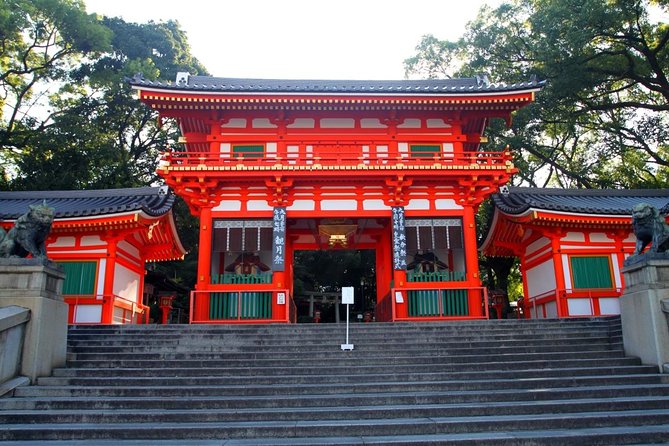
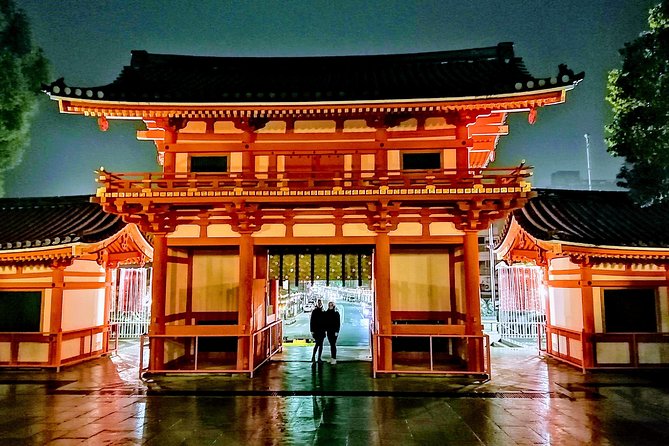
The first planned stop is Yasaka Shrine, with about 15 minutes set aside for an introduction. Admission is free, so there is no extra ticket cost at this point.
A shrine visit at night can be more atmospheric than a midday stop. The lighting, open space, and movement from one narrow street to another give you a different sense of Gion. The guide’s role matters here because a quick look at a shrine gate tells you little on its own. Hiro explains the shrine’s past and offers local context, helping you understand why this area remains important to Kyoto.
The 15-minute stop is brief. You will not receive an exhaustive account of every building or religious practice. Instead, you get enough background to make the rest of the walk more meaningful.
Take care with your expectations. This is a walking tour, not an evening shrine ceremony or a guided indoor visit. The value comes from the setting, the explanation, and the transition into the surrounding streets.
The stone-wall district requires quiet
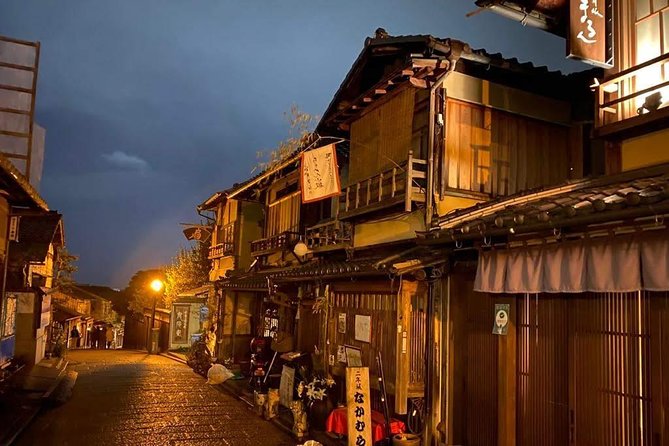
After Yasaka Shrine, the walk passes through a stone-wall district where the guide asks the group to remain quiet. That detail is easy to overlook, but it is one of the most respectful parts of the route.
Here, silence is not a lack of guiding. It is the point. The guide does not explain much because residents and businesses deserve peace, and the streets are best appreciated without a running commentary.
You should be comfortable following that rule. This part will appeal to you if you enjoy observing architecture, entrances, walls, and evening streets without turning every corner into a photo stop. It may disappoint you if you expect constant narration.
The quiet passage also gives the walk a more authentic feel. You are not being led through a staged attraction. You are moving through a real neighborhood where your behavior matters.
Yasakanoto pagoda and the best photo opportunity
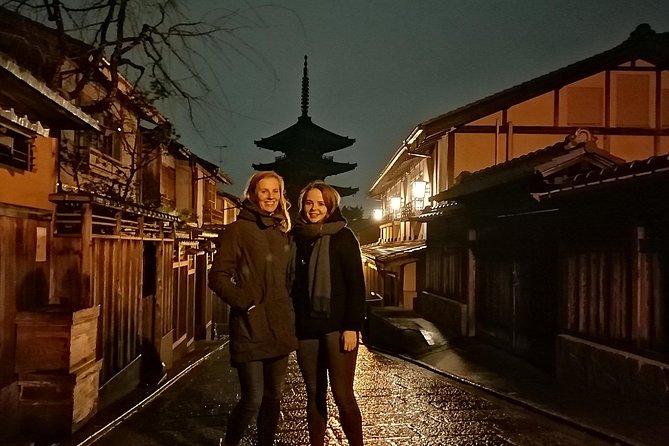
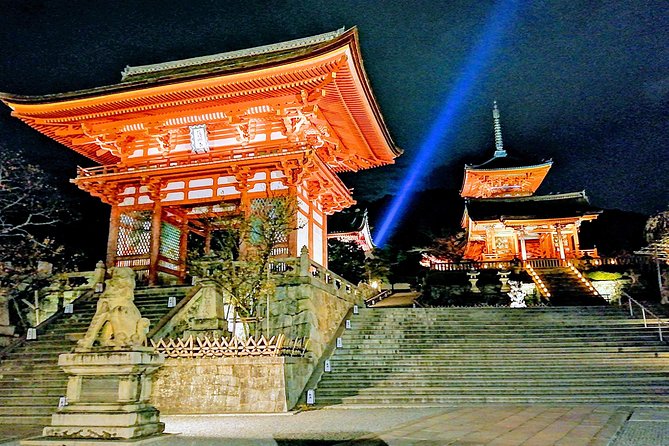
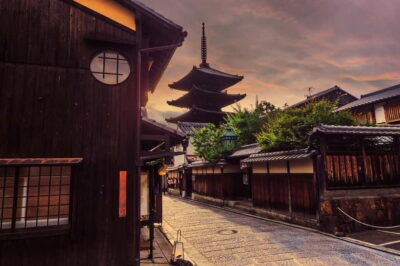
The next major stop is Yasakanoto, the tall pagoda that provides one of Kyoto’s most recognizable street views. Around 20 minutes are allotted here, including an explanation of the pagoda’s past and time for photographs.
This is likely the visual highlight of the evening. The pagoda gives the group a clear focal point, and the night setting can make your photos feel more special than a rushed daytime snapshot. Hiro is repeatedly praised for taking attractive pictures of families, couples, and solo visitors, then sending them promptly.
That service adds real value. Kyoto is full of places where one person in a group ends up missing from every photograph. A guide who knows where to position you and is willing to take several pictures solves a common holiday problem.
Still, photography is not a formal professional shoot. The available information does not promise edited images, a set number of pictures, or a particular delivery method. You should see it as a generous extra that improves the experience, not as the main product.
The stop also gives Hiro a chance to explain how the pagoda fits into the surrounding Yasaka area. His best work seems to come through conversation rather than long speeches. Ask questions if you have them, especially about customs, architecture, or local food.
More geisha district walks in Kyoto:
- Best of Kyoto: Gion, Geisha, Pagodas & Cobblestones
★ 4.9 · 2,058 reviews - Night Walk in Gion: Kyoto’s Geisha District
★ 4.5 · 2,003 reviews - Kyoto Night Foodie Tour in Gion (9+ dishes + 6 Sake tastings)
★ 5.0 · 1,762 reviews - Kyoto Gion Geisha District Walking Tour – The Stories of Geisha
★ 5.0 · 1,441 reviews
Yasaka’s famous slope and the walk toward Kiyomizu-dera
The route continues up a well-known slope in the Yasaka area before reaching Kiyomizu-dera. This means the evening includes uphill walking and uneven city surfaces, so comfortable shoes are a smart choice.
Past participants have described the walk as substantial for a short tour. That may sound surprising, but Gion’s sights are spread across lanes, slopes, shrines, and temple approaches. A 90-minute route can cover more ground than the clock suggests.
The slope is part of the experience. It connects the pagoda area with the Kiyomizu-dera district and gives you a sense of how the old streets fit together. At night, the route can feel quieter and more intimate, though conditions will vary by season and evening.
You should not expect a leisurely stroll with frequent seating. There is no mention of a rest break, and the route’s appeal depends on walking from one place to the next. Families managed it successfully, including groups with children, but anyone with mobility concerns should ask for more details before booking.
Kiyomizu-dera: a short final look
The last major stop is Kiyomizu-dera Temple, with about 10 minutes planned. The temple may be lit up depending on the season. Admission is not included, and the tour description does not promise a full entry visit.
This is important when judging the price. You are paying for the route, private guiding, local interpretation, and personal attention, not for a complete Kiyomizu-dera tour. The stop works best as a night view and orientation point.
If you want to explore the temple grounds in detail, plan a separate daytime or evening visit and purchase admission as needed. Ten minutes is enough to see the setting and take in the illuminated exterior when lighting is available. It is not enough to study the complex at leisure.
The seasonal lighting also means the final impression can change. Some dates may offer a striking illuminated view, while others may provide only the surrounding streets and temple approach. I would book this tour for its complete Gion walk, not solely for the temple lighting.
Why the private format matters
Because the activity is private, only your own group participates. That changes the pace. You can ask about a restaurant, pause for a family photograph, or shorten the explanation if children are tired.
Hiro’s flexibility is one of the strongest reasons to consider this tour. In one case, he adjusted the route for a group that arrived worn out after a long day, creating a shorter version while still offering photos and cultural information. That does not guarantee every request can be met, but it shows the advantage of booking a private walk.
Solo visitors can also benefit. A private guide gives you company in unfamiliar lanes without forcing you into a large group. Couples and families receive more direct attention, especially for photographs.
The downside is that private guiding can depend heavily on the individual assigned. Nearly all available feedback is highly positive, with a 4.9 rating from 91 reviews and a 99 percent recommendation rate. But one account described a 15-minute late arrival, map-led walking, and a substitute guide who could not answer basic questions.
The provider apologized and said it would prevent a repeat. That response is encouraging, but the incident is worth noting. When you book, confirm the guide’s name and meeting details, especially if the experience is important to your trip.
Hiro’s local help beyond the landmarks
This tour’s strongest theme is not simply getting from shrine to pagoda. It is the extra conversation around Kyoto life.
Hiro has helped participants find ramen, gyoza, Japanese barbecue, and Kobe beef restaurants. He has also offered help with restaurant reservations and, in some cases, walked people toward a chosen restaurant so they could find it more easily.
Do not assume dinner is included. It is not. Restaurant help is an added courtesy, and the places available will depend on opening hours and reservations. Still, an evening walk ending with a good meal is a practical pairing, especially on your first night.
The conversations can also range widely. Families have discussed Japanese customs, food, travel, and life abroad with Hiro. Solo visitors have appreciated the easy company, while children enjoyed the relaxed pace and photography.
I like this human element. Kyoto is not only a collection of temples. A good guide helps you notice how the old districts work as lived-in neighborhoods, and a friendly exchange can make the city easier to understand.
Price, timing, and who gets good value
At $35 per person, the tour is reasonably priced for a private 90-minute walk with a guide and informal photography. For a couple, the total remains manageable. For a larger family, the cost rises, but private attention and group photos may still make it worthwhile.
The tour is particularly good value during your first evening in Kyoto. You get an orientation to Gion, learn how Yasaka Shrine, Yasakanoto, the slopes, and Kiyomizu-dera connect, and finish with a better sense of where to eat or return later.
It is less suitable if you want full access to every landmark. Yasaka Shrine is free, but Kiyomizu-dera admission is not included. The route also does not provide enough time for a thorough temple visit.
The 90-minute duration is another advantage. It fits before dinner and does not consume a whole day. On the other hand, the walk may feel fast if you want long pauses at each site.
Book ahead if your dates are fixed. This experience is often reserved more than a month in advance. Free cancellation is available until 24 hours before the start time. Cancellations or changes inside that window are not accepted for a refund, and poor weather may lead to a new date or a full refund.
Practical advice before you go
Wear shoes you can walk uphill in. The route includes narrow streets and a famous slope, and comfort matters more than looking dressed up for dinner.
Arrive at the Minamiza meeting point with your mobile ticket ready. Since the guide has occasionally sent reminders and meeting instructions soon after booking, check your messages and confirm the details before setting out.
Respect the quiet section near the stone walls. Keep voices low and avoid treating residential lanes as a performance space. That courtesy is part of what makes the walk worthwhile.
Ask about food early in the evening if you want a restaurant recommendation. Hiro has helped with several types of Japanese meals, but the tour itself does not include dinner or guarantee a reservation.
If you hope for seasonal illumination at Kiyomizu-dera, ask about the date before booking. The lighting depends on the season, so it should be considered a bonus rather than a certainty.
Should you book this Kyoto night walk?
I would book it if you want a friendly, private introduction to Gion, especially on your first Kyoto evening. The strongest reasons are the quiet side streets, Hiro’s personal approach, useful food advice, and the chance to return home with photographs that include everyone in your group.
I would skip it if your priority is entering and studying major temples in depth. You will need separate time for Kiyomizu-dera, and the walking can feel demanding for anyone who needs frequent rests.
For most couples, families, and solo visitors who value conversation over a formal lecture, this is a strong $35 experience. Confirm that Hiro is guiding your tour, wear comfortable shoes, and treat the pagoda photographs and restaurant help as welcome extras. With those expectations, the evening offers a pleasant way to see old Kyoto after the daytime crowds thin out.
FAQ
Where does the Kyoto night walk begin?
The meeting point is in front of the Minamiza Kabuki Theatre at 194 Kawabatacho, Higashiyama Ward, Kyoto, 605-0075, Japan.
Where does the tour end?
The stated end point is back at the meeting point.
How long does the tour last?
The walk lasts approximately 1 hour and 30 minutes.
How much does the tour cost?
The listed price is $35 per person.
Is the tour private?
Yes. Only your group participates in the activity.
Which main sights are included?
The route includes Yasaka Shrine, the stone-wall district, Yasakanoto pagoda, a famous slope in the Yasaka area, and Kiyomizu-dera Temple.
Is admission to the sights included?
Admission to Yasaka Shrine and Yasakanoto is free. Admission to Kiyomizu-dera is not included.
Does the tour include a mobile ticket?
Yes. The experience provides a mobile ticket.
What happens if the weather is poor?
The activity requires good weather. If it is canceled because of poor weather, you are offered another date or a full refund.
Just added around Kyoto
- Kyoto: Gion Night Walking Tour with Geisha Insight★ 5.0 · 39 reviews
- Kyoto: Private Customizable Day Trip by Car★ 5.0 · 38 reviews
- Kyoto: Full Day Bike Tour★ 4.9 · 39 reviews
- Private Japanese Calligraphy in Kyoto – Learn Shodō with a Master★ 5.0 · 39 reviews
- Kyoto: Gion Evening Walk with Hidden Gems, Geisha & Sake★ 5.0 · 41 reviews
- Experience a tea ceremony in an authentic tearoom, in Kyoto!★ 4.5 · 41 reviews
- Kyoto Private Photo Shoot & Tour by SnapKyoto★ 5.0 · 41 reviews
- The Way of Tea: Kyoto Crafts, Hidden Temples & Wabi-Sabi Walk★ 5.0 · 41 reviews
Geisha & Gion District Tours, compared.
Kyoto Geisha Walking Tour: Gion District & Hidden Gems
Read our review →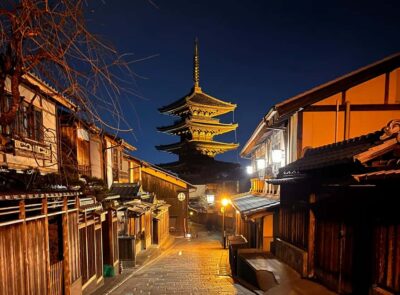
Gion Magical Night Walking Tour with Geisha Trivia
Read our review →
Gion Geisha District Walking Tour – Stories of Geisha
Read our review →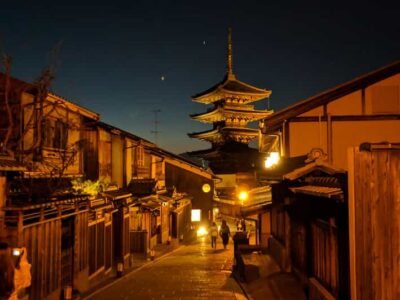
Best of Kyoto: Gion, Geisha, Pagodas & Cobblestones
Read our review →
Kyoto Night Foodie Tour in Gion (9+ dishes + 6 Sake tastings)
Read our review →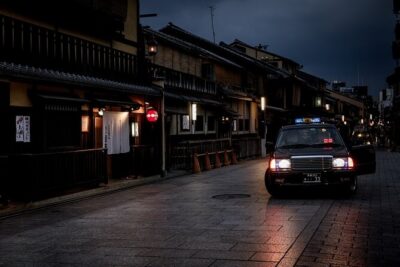
Kyoto Gion Geisha District Walking Tour – The Stories of Geisha
Read our review →
Kyoto Gion: 2-Hour Geisha Culture & History Walking Tour
Read our review →Browse the lists this tour appears in