
Reviewed · CASTLE TOURS
Kyoto: Nijo Castle and Kyoto Imperial Palace Guided Tour
Kyoto’s power story fits into one morning. This three-hour walking tour links Nijo Castle, built for Tokugawa Ieyasu, with the Kyoto Imperial Palace, giving you two very different views of Japan’s former capital. I like the clear contrast between shogun authority and imperial tradition, and I like the small group limit of nine people, which makes it easier to ask questions and hear the guide.
The strongest part is the guiding. Goku, Kayo, Nene, and Taku have each earned praise for making history easy to follow, answering unusual questions, and sharing useful Kyoto tips. The main drawback is at the Imperial Palace, where you may see the exterior of some buildings rather than enter them. If you want a tour centered on detailed history, architecture, and gardens, this is a good use of three hours. If you want long interior visits at every stop, keep your expectations in check.
In This Review
- Key points to know before booking
- Why these two Kyoto sights belong together
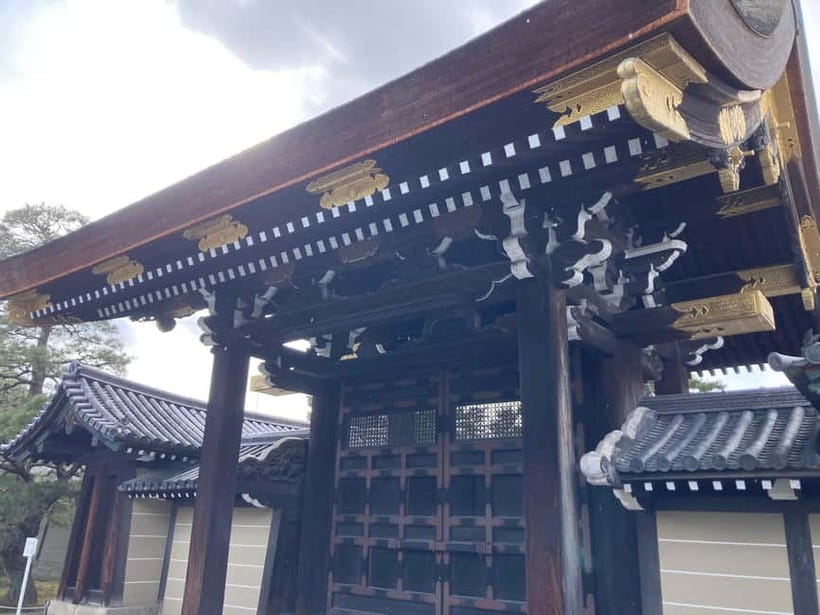
- Starting at Nakadachiuri Gate
- Nijo Castle: power in polished wood and painted rooms
- The Imperial Palace: gardens, ceremony, and seasonal beauty
- What the walk adds to the experience
- The guide can make or break the morning
- Is $63 a fair price?
- Who should book this Kyoto tour?
- My verdict: a smart history lesson with one clear limitation
- FAQ
- How long does the tour last?
- How much does the tour cost?
- Where does the tour meet?
- Which attractions are included?
- What languages are available?
- How large is the group?
- What should I bring?
- Are shorts allowed?
- Can pregnant women join the tour?
Key points to know before booking
- Two sides of old Kyoto: Nijo Castle presents the shogun’s political power, while the Imperial Palace reflects the emperor’s courtly world.
- A genuinely small group: The tour is limited to nine participants, so you are not lost in a crowd.
- Guide quality matters: Goku is praised for detailed historical explanations, while Kayo, Nene, and Taku are noted for warmth, humor, flexibility, and local advice.
- A walking-focused morning: You move through castle grounds, palace gardens, and Kyoto streets rather than simply riding between sights.
- Strong value at $63: Admission to Nijo Castle, Ninomaru Palace, and the Art Gallery is included, along with a professional guide.
- Mostly an outdoor experience: Bring a camera, cash, and suitable clothing. Shorts are not allowed, and the tour is not suitable for pregnant women.
Why these two Kyoto sights belong together
Nijo Castle and the Kyoto Imperial Palace tell related stories, but they speak in very different architectural languages.
Nijo Castle was built by Tokugawa Ieyasu, the founder of the Tokugawa shogunate. It was not simply a grand residence. It projected control. The castle represented the authority of the military government and its relationship with the imperial court.
The Imperial Palace, by contrast, was the home of Japan’s emperors. Its design reflects a more restrained court culture, with carefully arranged buildings, gardens, and open spaces. Seeing both in one tour helps you understand that Japanese political power did not come from one place or one institution.
I like this pairing because it gives your guide a clear story to tell. You are not looking at two unrelated monuments and collecting dates. You are comparing the shoguns and emperors, military rule and court tradition, public authority and refined ceremony.
That comparison also makes the walking time useful. One guest particularly enjoyed the discussion during the roughly 20-minute walk between the Imperial Palace and Nijo Castle, including differences between Western and Japanese culture. The route is not dead time. It gives you a chance to connect the two sites and ask the questions that come up after the first visit.
More Castle Tours in Kyoto
- Kyoto: Nijo-jo Castle and Ninomaru Palace Guided Tour
★ 4.7 · 1,020 reviews - Kyoto: Nijo Castle, Kiyomizu & Fushimi Inari Guided Tour
★ 4.7 · 700 reviews - Kyoto: Imperial Palace & Nijo Castle Guided Walking Tour
★ 4.7 · 453 reviews
Starting at Nakadachiuri Gate
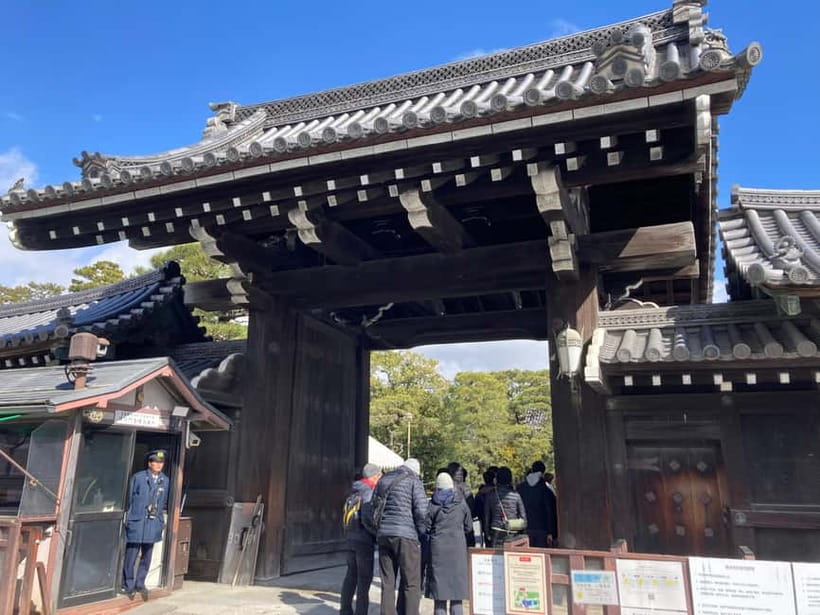
The meeting point is the Nakadachiuri Gate of the Kyoto Imperial Palace. This is worth noting carefully because the palace grounds are large, and arriving at the wrong gate can cost you time before the tour even begins.
The operator sends information in advance describing what your guide looks like and what the guide will be wearing. That is useful at a busy meeting point, especially if you are unfamiliar with the palace grounds.
Your guide may be Goku, Kayo, Nene, Taku, or another member of the team. Based on the strong feedback attached to this experience, the guide can shape the whole morning. Goku is often praised for detailed explanations of shoguns, emperors, politics, and Japanese culture. Kayo is noted for humor and a lively teaching style. Nene receives praise for being kind, patient, and clear, while Taku is often appreciated for answering questions and offering local food suggestions.
The language options are English, French, Spanish, Japanese, Portuguese, and Russian. The booking information identifies the tour as a live guided experience, so you are not relying on an audio recording or printed notes.
Nijo Castle: power in polished wood and painted rooms
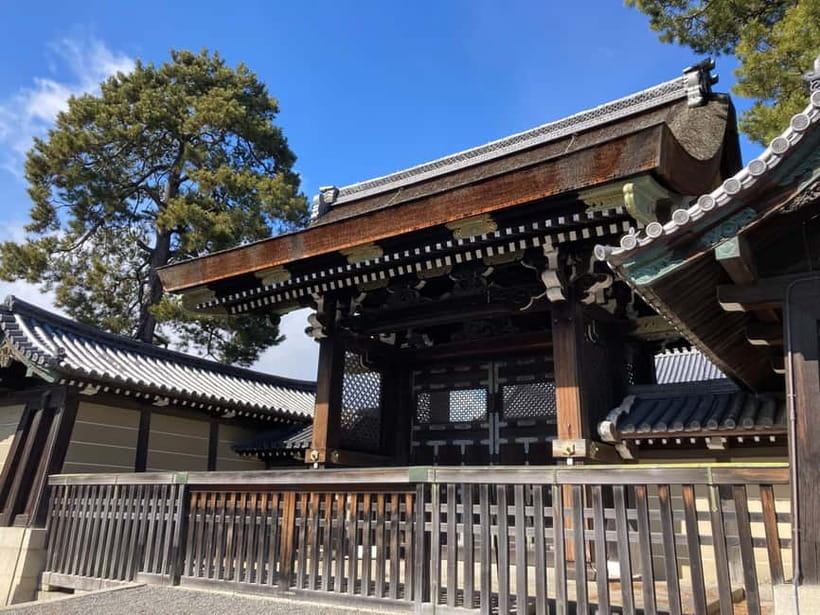
Nijo Castle is the tour’s most politically charged stop. Tokugawa Ieyasu built it as a sign of shogunal strength, and your guide explains how the castle fits into the political climate of its period.
The setting combines defensive authority with lavish design. Inside Ninomaru Palace, intricate details and carefully planned rooms show how power could be expressed through architecture. The included admission covers Nijo Castle, Ninomaru Palace, and the Art Gallery, so you get more than a quick walk around the outer grounds.
Your guide can help you read the rooms rather than simply admire them. Pay attention to how scale, ornament, and layout affect your sense of rank. These details are easier to appreciate when someone explains why they mattered.
A good guide also gives you context for the people connected with the castle. Goku was singled out for explaining the political events surrounding shoguns and emperors in detail, and one family found that this approach kept both adults and teenagers interested. That is an important strength for mixed groups. You can ask for political background, architectural details, or broader cultural context without turning the entire visit into a lecture.
Nijo Castle also offers a useful lesson in how a place can feel both powerful and calm. The gardens and quiet pathways soften the military message, while the palace interiors remind you that this was a working center of authority.
One practical point: the tour involves walking through historic spaces and outdoor grounds. Wear comfortable shoes and expect to spend much of the morning on your feet. The supplied information does not give a detailed accessibility description, so anyone with mobility concerns should confirm arrangements before booking.
The Imperial Palace: gardens, ceremony, and seasonal beauty
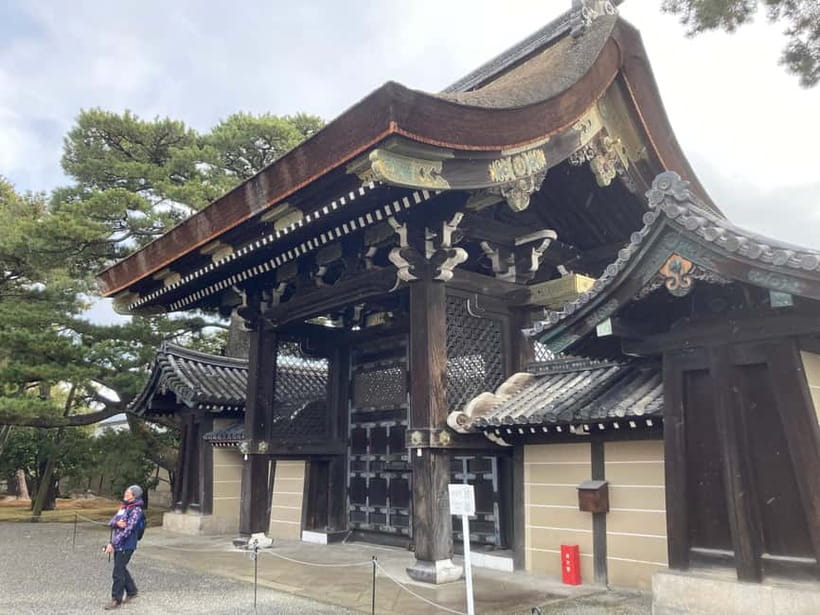
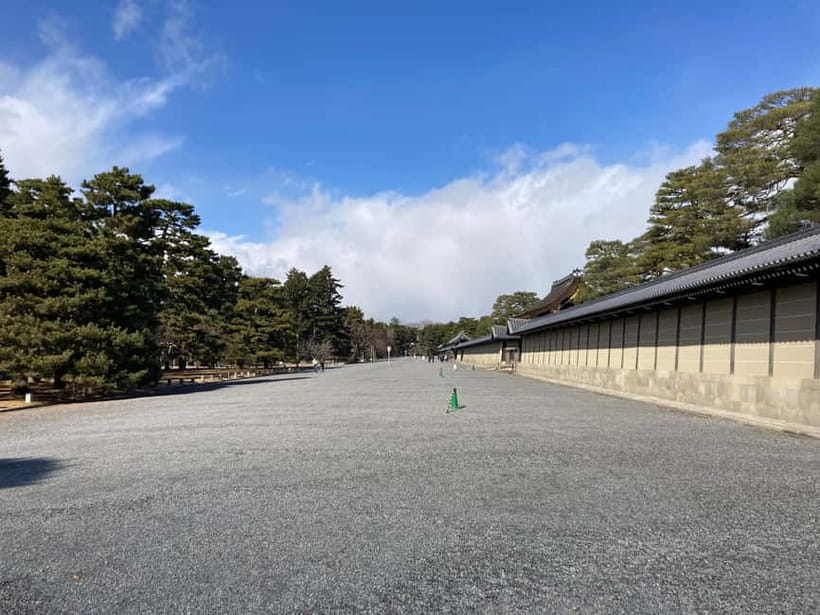
The Imperial Palace provides a clear contrast with Nijo Castle. It was the residence of Japan’s emperors, and its architecture reflects the formal traditions of the imperial court.
The gardens are a major reason to include this stop. Their design highlights seasonal change, so the mood shifts with the time of year. Spring is especially appealing, with cherry blossoms adding color to the palace grounds. One guest who visited in spring felt the gardens were particularly beautiful and noted that the experience was mainly outdoors.
That seasonal quality makes timing matter. You will not get the same visit in every month, but the gardens remain important to the experience because they are designed around changing natural beauty rather than a single fixed display.
The main limitation is that you may only see the exterior of some palace buildings. This can feel disappointing if you expect rooms as detailed as those at Ninomaru Palace. The Imperial Palace stop is better understood as a walk through an important ceremonial setting, its gardens, and its architectural exterior, not as a full interior palace tour.
I still like the pairing. The Imperial Palace makes more sense after Nijo Castle because you have already seen the shogun’s world. Here, the quieter design and spacious grounds give you another way to think about status, ritual, and Japanese aesthetics.
A completely different kind of day out in Kyoto:
- PERFECT KYOTO 1-Day Bus Tour
★ 5.0 · 13,518 reviews - Kyoto: Fushimi Inari, Kinkakuji, Bamboo Grove 1 Day Bus Tour
★ 4.8 · 4,316 reviews - Kyoto: Tea Ceremony in a Traditional Tea House in Kiyomizu
★ 4.9 · 3,519 reviews - Kyoto Geisha Walking Tour: Gion District & Hidden Gems
★ 4.7 · 3,273 reviews
What the walk adds to the experience
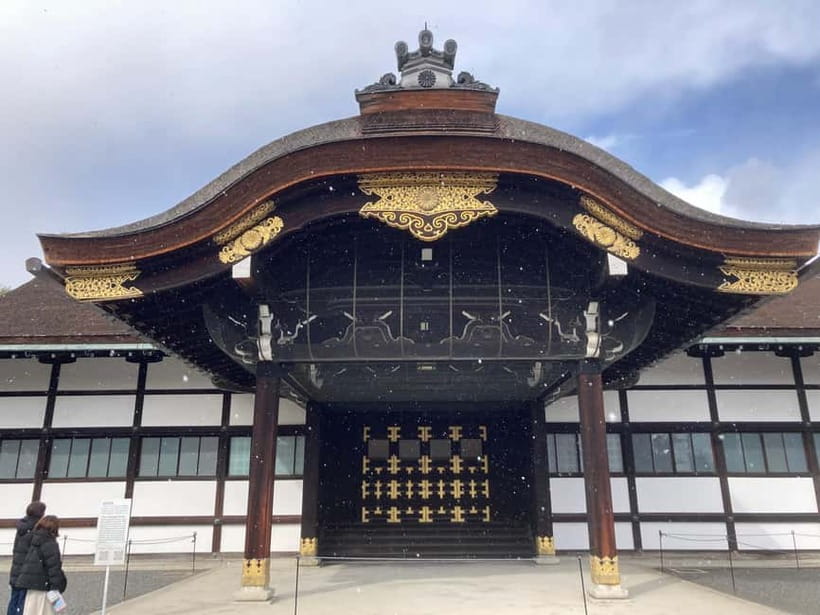
This is not a bus tour with two quick photo stops. It is described as a walking tour, and the route through Kyoto is part of the appeal.
Between the major sights, you may pass traditional Kyoto townhouses and a spot known for cherry blossoms. These details help you see how historic Kyoto extends beyond famous ticketed attractions. The streets provide a change of pace after the formal palace grounds and give your guide room to point out local features.
The walking connection also keeps the two landmarks from feeling like separate museum visits. You are moving through the former capital while discussing what you have just seen. That makes it easier to ask about daily life, politics, architecture, and modern Japan.
One solo participant appreciated that Taku took photographs during the tour. That is a small but useful kindness if you are traveling alone. Taku was also praised for sending ramen recommendations near the guest’s hotel, which suggests that the guide may be helpful beyond the formal route. Do not assume every guide will provide the same extras, but it is worth asking for local suggestions before you part ways.
The guide can make or break the morning
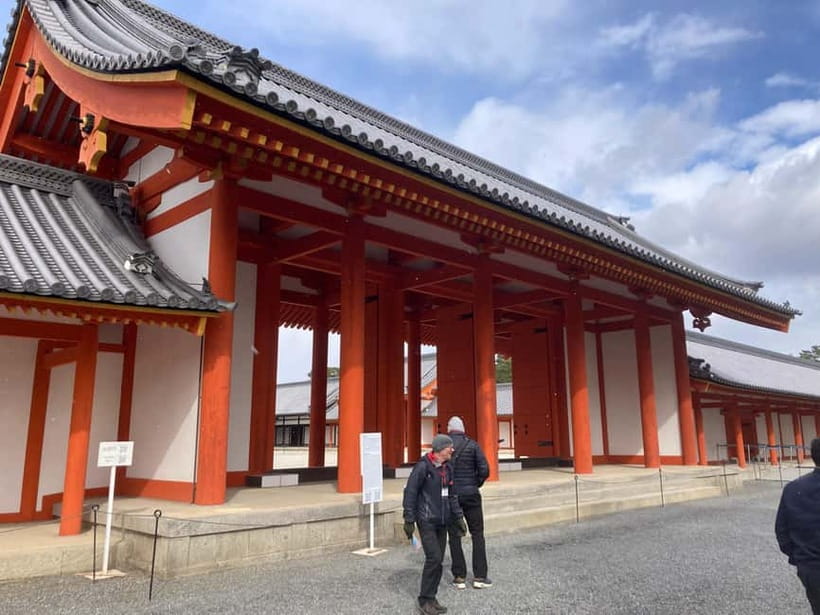
The experience has received a 4.6 rating from 98 reviews, with repeated praise for the guides rather than only the sights. That distinction matters. Nijo Castle and the Imperial Palace are worthwhile on their own, but the value of this tour lies in understanding what you are seeing.
Goku receives especially strong praise for his command of Japanese history, his ability to answer difficult questions, and his friendly energy. Several people appreciated his flexibility, including adjusting the balance between history and photography. One family wanted a detailed explanation of shoguns and emperors, and Goku adapted the visit to suit them.
Kayo is praised for making three hours pass quickly through humor and conversation. Nene is described as clear, kind, patient, and accommodating, including when she took over at short notice. Taku is appreciated for his historical explanations, friendly manner, photography help, and food tips.
That range is encouraging, but it also means the exact tone may vary depending on who leads your tour. The shared strengths are clear communication, historical background, and willingness to answer questions. If you want the most from the visit, arrive with a few questions of your own. Ask about the relationship between the shoguns and the emperor, the purpose of a particular room, or the design of the gardens.
The multilingual format is useful, though the supplied information does not explain whether every language is available on every departure. Check the available language when you select a time.
Is $63 a fair price?
At $63 per person, I see reasonable value if you want a structured introduction to both sites.
The price includes a professional guide, admission to Nijo Castle, Ninomaru Palace, and the Art Gallery, plus the walking experience. You are paying not only for entry but also for the historical connection between places that can be confusing when visited alone.
A self-guided visit could cost less in guiding fees, but you would need to organize the route, interpret the architecture, and build the political story yourself. For first-time visitors with limited time, the guide can save effort and help you focus on what matters.
The value is strongest for people who enjoy context. If you are mainly interested in taking photographs, you may find the explanations slow at times, though the guides have shown flexibility with groups that have different interests. If you want extensive access inside the Imperial Palace, the price may feel less satisfying because some buildings are viewed only from outside.
The small group limit of nine is another point in the tour’s favor. You get a more personal setting than a large coach excursion, and it should be easier to hear the guide and ask questions.
Who should book this Kyoto tour?
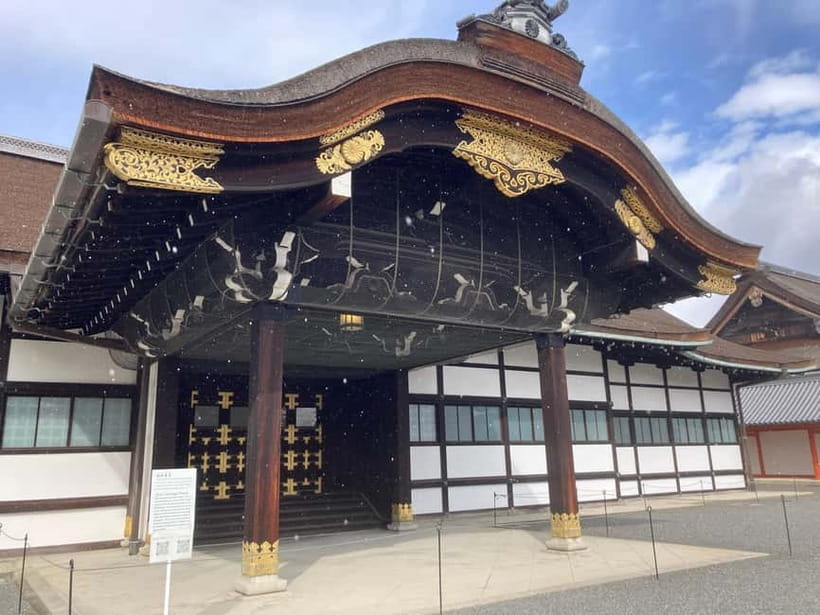
I would recommend it to first-time Kyoto visitors who want a clear introduction to political and imperial history. It also suits couples, solo visitors, and families with older children or teenagers who are willing to walk and listen.
History fans should ask for extra detail. Goku, in particular, has been praised for discussing the events surrounding shoguns, emperors, and Japan’s relationship with the United States after World War II. The guides appear comfortable handling both standard questions and more difficult subjects.
The tour also works for people who want local advice. Taku has offered restaurant suggestions, and Goku has shared ideas after the tour. Treat this as a possible bonus, not a guaranteed part of the service.
You may want to skip it if you dislike guided sightseeing, cannot manage a mostly outdoor walking route, or need extensive interior access at the Imperial Palace. Pregnant women are specifically listed as unsuitable for this activity, and shorts are not allowed.
Bring a camera and cash. Dress for a morning of walking, and check the starting time carefully because the three-hour duration does not include extra sightseeing before or after the tour.
My verdict: a smart history lesson with one clear limitation
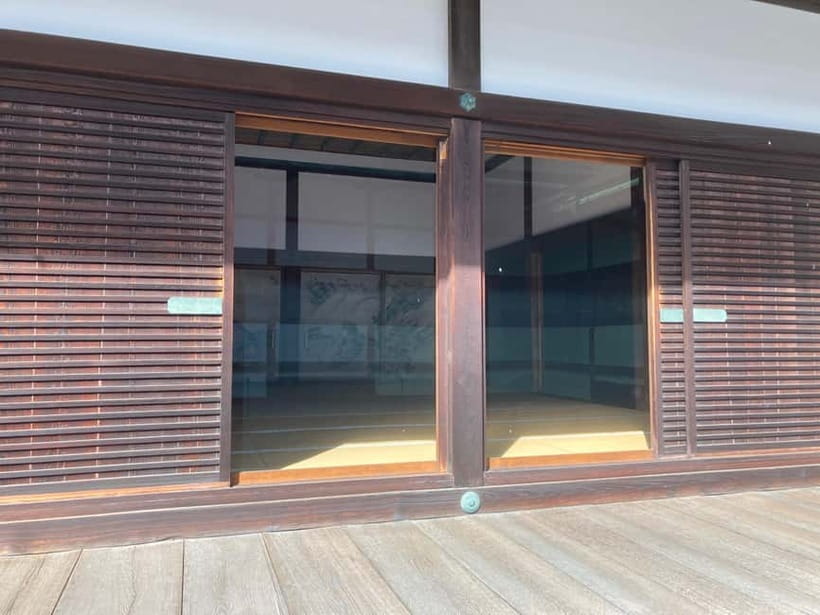
I would book this tour if I had three hours and wanted to understand Kyoto’s political past rather than simply photograph famous buildings.
The best feature is the relationship between the two stops. Nijo Castle shows the confidence of the shogunate, while the Imperial Palace offers a quieter view of imperial tradition, gardens, and ceremony. The guides add the meaning that can be easy to miss when you wander alone.
The main caution is simple: the Imperial Palace may be viewed largely from the outside. If that is acceptable, $63 buys a small-group route, several included admissions, and a guide who can connect architecture with politics and culture.
For the strongest chance of a memorable morning, book when the language and time suit you, arrive at Nakadachiuri Gate early, and take an active part in the conversation. Ask questions. The guide is the part of this experience that can turn two attractive sites into a coherent picture of Kyoto.
FAQ
How long does the tour last?
The tour lasts three hours.
How much does the tour cost?
The listed price is $63 per person.
Where does the tour meet?
The meeting point is the Nakadachiuri Gate of the Kyoto Imperial Palace.
Which attractions are included?
The tour includes visits to Nijo Castle and the Kyoto Imperial Palace. Admission is included for Nijo Castle, Ninomaru Palace, and the Art Gallery.
What languages are available?
Live guiding is available in English, French, Spanish, Japanese, Portuguese, and Russian. Check the selected departure for the language offered.
How large is the group?
The tour is limited to nine participants.
What should I bring?
Bring a camera and cash.
Are shorts allowed?
No. Shorts are listed among the items not allowed on the tour.
Can pregnant women join the tour?
No. The activity is listed as unsuitable for pregnant women.
Just added around Kyoto
- Kyoto: Gion Night Walking Tour with Geisha Insight★ 5.0 · 39 reviews
- Kyoto: Private Customizable Day Trip by Car★ 5.0 · 38 reviews
- Kyoto: Full Day Bike Tour★ 4.9 · 39 reviews
- Private Japanese Calligraphy in Kyoto – Learn Shodō with a Master★ 5.0 · 39 reviews
- Kyoto: Gion Evening Walk with Hidden Gems, Geisha & Sake★ 5.0 · 41 reviews
- Experience a tea ceremony in an authentic tearoom, in Kyoto!★ 4.5 · 41 reviews
- Kyoto Private Photo Shoot & Tour by SnapKyoto★ 5.0 · 41 reviews
- The Way of Tea: Kyoto Crafts, Hidden Temples & Wabi-Sabi Walk★ 5.0 · 41 reviews
Castle Tours, compared.
Tokyo Castle & Imperial PalaceーShogun Walking Tour
Read our review →
Nijo-jo Castle and Ninomaru Palace Guided Tour
Read our review →
Ultimate Osaka Walking Tour: Castle, Dotonbori & Hidden Gems
Read our review →Tokyo Castle & Imperial PalaceーShogun Walking Tour
Read our review →
Nijo Castle, Kiyomizu & Fushimi Inari Guided Tour
Read our review →
Osaka Castle Walking Tour and Castle Tower Admission
Read our review →
Imperial Palace East Garden and Edo Castle Walking Tour in Tokyo
Read our review →Browse the lists this tour appears in