
Reviewed · JAPANESE CALLIGRAPHY CLASSES
Kyoto Ninenzaka : Japanese Calligraphy Class in Townhouse
Turn ink, paper, and patience into a souvenir. This 50-minute Japanese calligraphy class takes place near Kiyomizu Temple, at the end of an alley beside the Starbucks on Ninenzaka. I like the calm setting and the chance to make something by hand rather than simply buy another Kyoto memento.
I also like that beginners receive careful instruction in brush handling, basic strokes, and simple kanji. The main consideration is the short class length. You will learn and practice a lot in 50 minutes, but you should not expect advanced calligraphy training.
- A townhouse setting near Ninenzaka: Pair the class with a visit to Kiyomizu Temple and Kyoto’s famous stone-paved streets.
- A real introduction to shodō: Learn about brushes, ink, paper, balance, and the cultural meaning behind the craft.
- Patient instruction for beginners: No Japanese language or art background is required.
- A handmade kanji keepsake: Your finished work gives you a personal souvenir rather than a shop-bought trinket.
- Small-class feel: The available feedback points to a close setting where you can ask questions and receive guidance.
- A few practical limits: The class lasts 50 minutes, children under 10 cannot join, and socks are required.
In This Review
- A Quiet Craft Beside Kyoto’s Most Famous Temple
- The First Minutes: History, Tools, and Preparation
- Brush Handling Comes Before Beautiful Characters
- Writing Kanji With Balance and Space
- Seasonal Ideas Add Cultural Meaning
- What You Take Home From the Townhouse
- Is $49 a Fair Price?
- Who Will Enjoy This Experience Most?
- Planning Your Visit Near Ninenzaka
- Should You Book the Calligraphy Class?
- FAQ
- Where is the Japanese calligraphy class held?
- How long does the class last?
- Is the class suitable for beginners?
- What language is used during the class?
- What should I bring?
- Are children allowed to join?
A Quiet Craft Beside Kyoto’s Most Famous Temple
The location does much of the work before the class begins. You meet near Kiyomizu Temple, at the end of the alley next to the Starbucks on Ninenzaka. This puts you within one of Kyoto’s most visited sightseeing areas, so the class fits neatly into a morning or afternoon around Kiyomizu-dera and the Ninenzaka streets.
That location is useful, but it also means you should allow time to find the exact meeting point. Ninenzaka is a popular area, and the venue is described by its position at the end of an alley rather than by a large street-front entrance. Have the meeting details ready on your phone and avoid arriving with a large bag, since luggage and large bags are not allowed inside.
The class takes place in a traditional townhouse setting. You are not just sitting in a modern activity room with a few brushes placed on a table. The townhouse atmosphere helps connect the craft with Kyoto’s older ways of life, even though the lesson itself is made for first-time participants.
You will need to remove your shoes in the traditional setting, which explains the sock requirement. Bring clean socks, and wear clothes that can get dirty. Ink can stain fabric, so this is not the place for your best white shirt.
The First Minutes: History, Tools, and Preparation
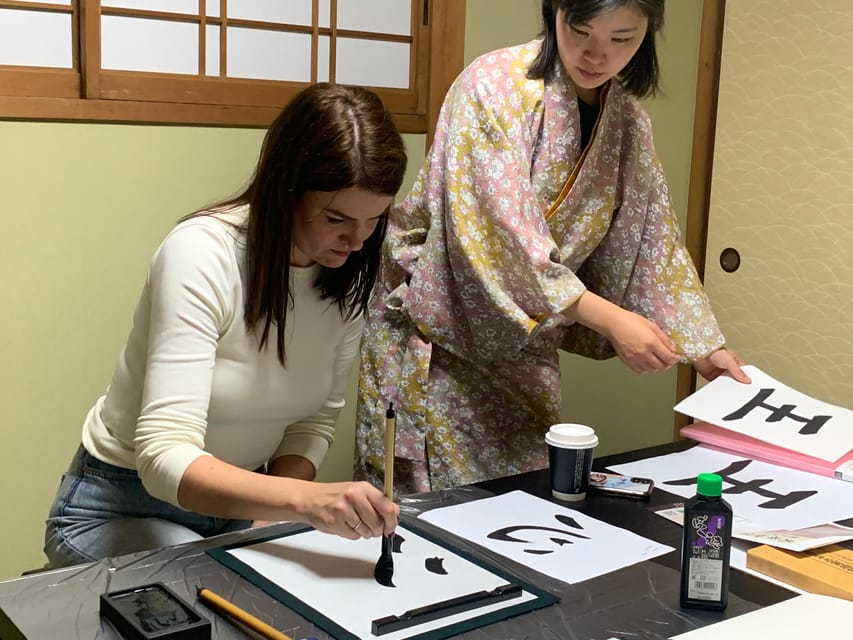
The opening part introduces Japanese calligraphy, known as shodō, and explains its connection with Japanese traditions. You learn that calligraphy is not only about making a character readable. The lesson focuses on line quality, spacing, brush pressure, and the balance of the whole character.
This cultural background matters because it changes how you look at the practice. A simple kanji character can appear easy when printed on a sign, but writing it with a brush requires attention to every movement. The teacher’s introduction gives you a reason to slow down and notice the shape of each stroke.
Next comes the equipment. You learn about the brush, ink stick, inkstone, paper, and paperweight. These are not disposable props. Each tool has a role, and learning how to use and care for them makes the class feel like an introduction to a working craft rather than a quick art project.
The inkstone and ink stick are especially important to the traditional feel of the lesson. You are shown how the tools fit together and how the writing surface is prepared. The supplied calligraphy booklet gives you something useful to keep after the session, particularly if you want to remember the terms and basic ideas later.
Preparation is part of the lesson, not dead time. You place the paper correctly, use the paperweight, and settle into the task. This quiet routine helps you shift from sightseeing mode to concentration mode. After a morning of Kyoto streets and temple crowds, that change of pace can be welcome.
More Calligraphy Classes in Kyoto
- Kyoto: Calligraphy class at Buddhist temple in city center
★ 5.0 · 167 reviews - Kyoto: Japanese Calligraphy Class
★ 4.8 · 89 reviews - Kyoto: Japanese Calligraphy Workshop
★ 4.7 · 84 reviews
Brush Handling Comes Before Beautiful Characters
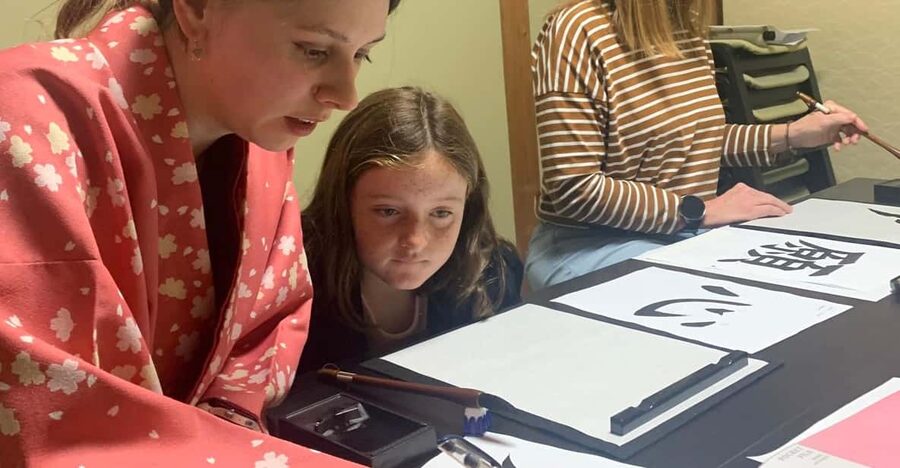
The brush is not held like a ballpoint pen. The instructor shows you how to hold it and how to adjust pressure as the tip moves across the paper. This is one of the most useful parts for a beginner because the brush responds very differently to a light touch and a firm one.
You practice basic lines, strokes, dots, and sweeps before attempting kanji. This order is sensible. If you start with a complete character, you may worry about getting the symbol right and miss the movement that creates it. Repeating simple marks lets you feel how the brush starts, turns, widens, and finishes.
The teacher also helps you think about speed and control. Calligraphy is not improved by rushing. A stroke can be bold or delicate, but it needs intention. The class gives you a short period to practice that control without expecting you to produce professional work.
This is where the reported teaching style matters. The master and assistant are described as kind and patient, with plenty of individual guidance in a small class. That is a meaningful advantage. A large group activity can leave you copying a demonstration from a distance, while a smaller setting gives you more chances to ask why a stroke went wrong or how to adjust your grip.
The class is conducted in English. If you book on the day before or the same day, the provider may not be able to arrange another language, so the lesson will be in English in those cases. The activity information lists English as the available language, making this a practical option for English-speaking visitors.
Writing Kanji With Balance and Space
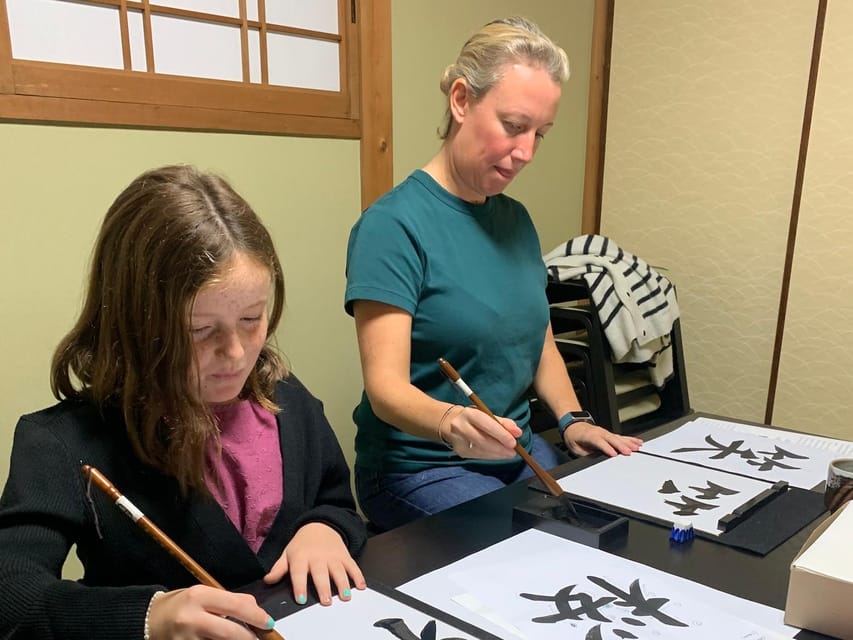
After the basic exercises, you move on to simple kanji characters. The goal is not just to copy a symbol line by line. You work on vertical and horizontal balance, the placement of each part, and the way the character occupies the paper.
That focus gives the activity more substance than simply writing your name in Japanese. Kanji characters have structure, and a small shift in one stroke can make the whole shape feel uneven. The instructor’s guidance helps you see the character as a complete design.
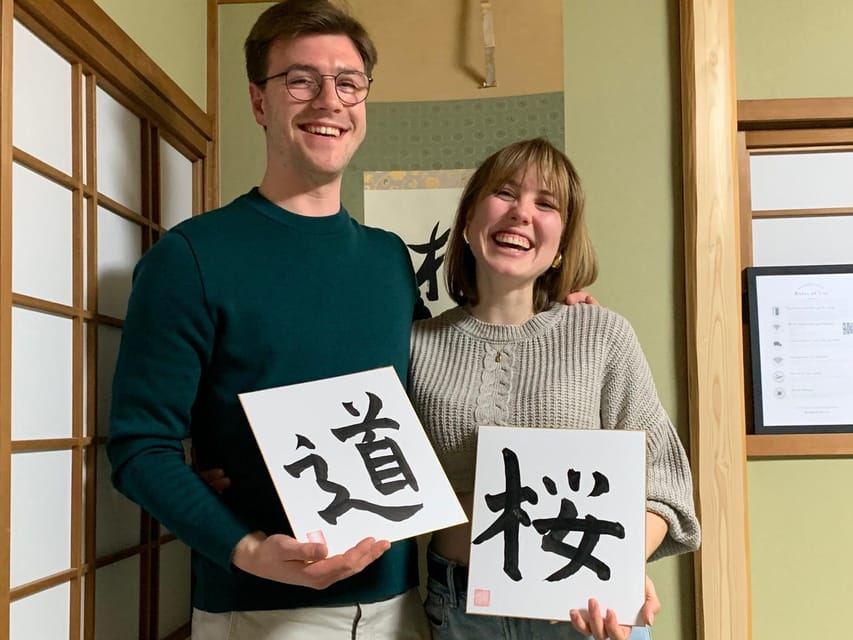
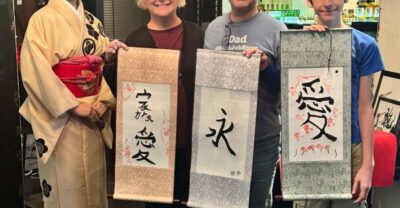
You will likely make several attempts before producing a version you want to keep. That is part of the appeal. The finished sheet has the marks of your own hand, including the small imperfections that prove it was made during your visit. One participant described leaving with a handmade kanji symbol, which captures the practical reward of the class.
The pace is the main limitation. Fifty minutes is long enough for an introduction, tool explanation, practice strokes, and a basic character. It is not long enough to master several complex characters or explore advanced styles. If you want a serious multi-session course, this is not the right format.
For a first meeting with Japanese calligraphy, the length is reasonable. You get a clear taste of the discipline without giving up half a day of sightseeing. I would see it as a cultural lesson with a creative souvenir, not as a full art course.
Seasonal Ideas Add Cultural Meaning
The class also connects calligraphy with seasonal themes and expressions. This gives the writing a place in Japanese culture instead of treating each character as a decorative shape.
The seasonal element may help you think about why particular words and expressions matter in Japan. Kyoto’s traditions often pay close attention to time of year, changing weather, and the small signs of the seasons. Calligraphy offers a quiet way to explore that idea through ink and paper.
You do not need to speak Japanese to benefit from this part. The class focuses on the cultural background and the physical act of writing. You can ask questions in English, follow the demonstration, and take home the booklet as a reminder of what the symbols and techniques mean.
It is worth keeping your expectations realistic. You will receive an introduction to cultural ideas, not a full course in Japanese language. The class teaches simple kanji and basic concepts, so it works best when you treat it as a first step.
A completely different kind of day out in Kyoto:
- PERFECT KYOTO 1-Day Bus Tour
★ 5.0 · 13,518 reviews - Kyoto: Fushimi Inari, Kinkakuji, Bamboo Grove 1 Day Bus Tour
★ 4.8 · 4,316 reviews - Kyoto: Tea Ceremony in a Traditional Tea House in Kiyomizu
★ 4.9 · 3,519 reviews - Kyoto Geisha Walking Tour: Gion District & Hidden Gems
★ 4.7 · 3,273 reviews
What You Take Home From the Townhouse
Your finished calligraphy is the central souvenir. Unlike a purchased charm or print, it records your own effort. You may remember the feel of the brush, the concentration needed for a straight line, and the moment a character finally looks balanced.
The experience also includes an original booklet about calligraphy. That is a useful extra because the 50-minute session moves quickly. You can use the booklet to recall the names and purposes of the tools, the basic brush techniques, and the ideas covered during the introduction.
The finished piece may not look perfect. That is fine. The point is not to compete with the instructor. The value comes from learning enough to understand why the craft takes patience, then producing a personal example under careful guidance.
If you are buying souvenirs for family or friends, the calligraphy can also serve as a more personal gift. Just protect the paper during the rest of your day. The activity information does not specify a protective tube or special packaging, so you should not assume one will be provided.
Is $49 a Fair Price?
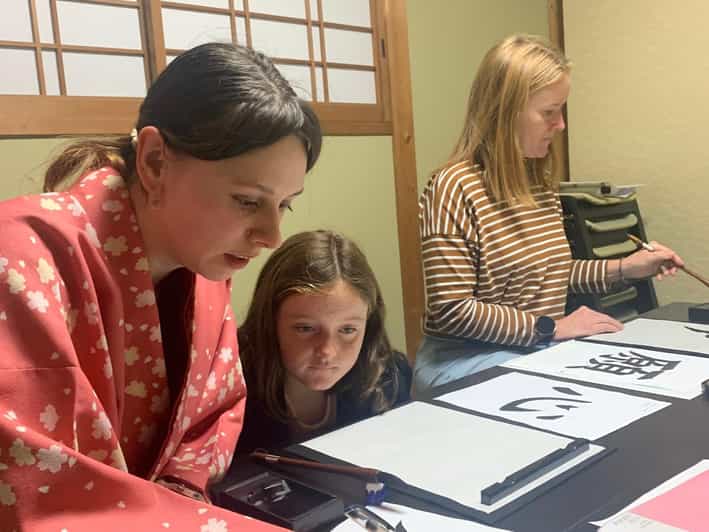
At $49 per person, this is not the cheapest short activity in Kyoto. You are paying for an instructor, the use of traditional tools, a guided cultural lesson, the booklet, and a finished piece of calligraphy. The price makes more sense if you value close instruction and a genuine hands-on activity.
The location adds practical value. You can combine the class with Kiyomizu Temple and Ninenzaka instead of making a separate journey across Kyoto. The 50-minute length also protects your sightseeing schedule. You can fit it between major stops without giving up an entire afternoon.
The value is weaker if you only want a quick souvenir photograph or if you already have strong brush skills. You may feel limited by the short session, especially if you hope to write several detailed characters. In that case, a longer workshop would offer more practice for the money.
For a first experience, I consider the price fair. You receive more than a demonstration, but less than a full lesson series. The best comparison is with other small cultural activities where the instructor’s attention and the take-home work matter as much as the clock.
Who Will Enjoy This Experience Most?
This class suits adults and children aged 10 and older who enjoy quiet, focused activities. You do not need Japanese language skills, drawing ability, or prior calligraphy practice. The teacher starts with the basics, so a complete beginner can follow the process.
It is a good choice for couples, friends, and families with older children. The shared process gives you something to talk about afterward, and each person produces an individual piece. The small class setting also makes it easier to ask questions rather than simply watch.
It works particularly well for anyone who wants a pause from temple visits and busy shopping streets. Calligraphy asks you to sit still and pay attention. That change can make the activity feel refreshing during a full Kyoto day.
I would not choose it for children under 10, since they are not permitted to join. It is also a poor match if you need to bring a stroller, wheelchair, electric wheelchair, large bag, or luggage. Non-folding strollers and non-folding wheelchairs are specifically not allowed.
The rules also prohibit pets, smoking, alcohol, drugs, selfie sticks, and loud noise. These restrictions fit the quiet townhouse environment, but they are worth noting before you arrive.
Planning Your Visit Near Ninenzaka
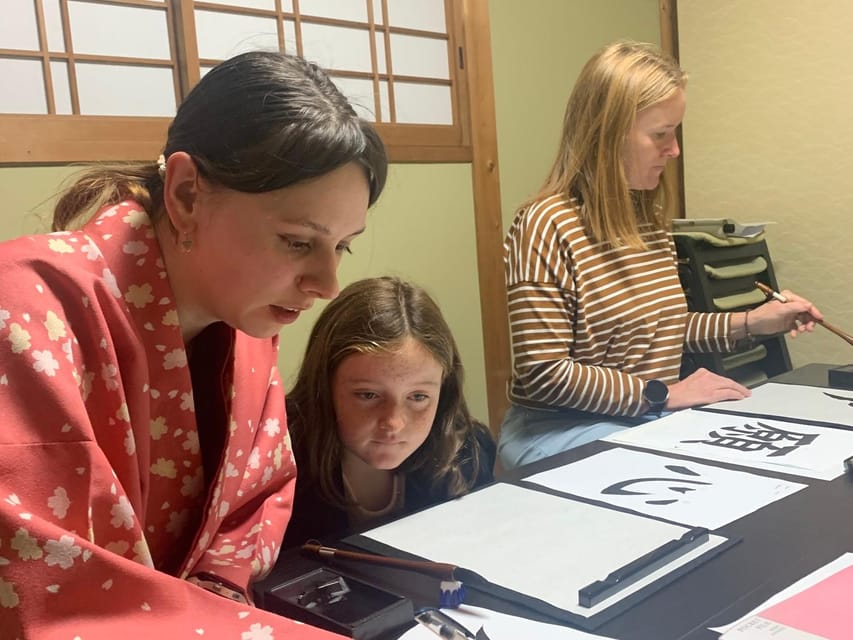
No transportation to the venue is included, so you make your own way to the Ninenzaka meeting point. Plan the class around your route to Kiyomizu Temple, and leave enough time to reach the alley beside the Starbucks and find the entrance at its end.
Do not arrive carrying your main suitcase or a large shopping bag. Large bags and luggage are not permitted, and the traditional setting is better enjoyed with only what you need.
Wear comfortable clothes that may get ink on them. Socks are required, and the provider can supply socks for a fee if you arrive without them. That small charge is easy to avoid, so pack socks in your day bag.
The class offers free cancellation up to 24 hours before the scheduled time, with a full refund. You can also reserve now and pay later, which helps if your Kyoto schedule is still changing. Same-day and next-day reservations may have language limitations, so booking earlier is sensible if you want the smoothest arrangement.
Should You Book the Calligraphy Class?
Book it if you want a calm, hands-on cultural activity near Kiyomizu Temple, especially if you are new to Japanese calligraphy. The patient master and assistant, small-class feel, English instruction, and handmade kanji souvenir give the session real value.
Skip it if you want advanced training, a long workshop, or a free-roaming activity. Fifty minutes goes quickly, and the restrictions on young children, large bags, and mobility equipment may make it inconvenient for some groups.
For most first-time visitors, I would place it in the category of short Kyoto activities worth fitting between major sights. You learn how the tools work, practice the basic movements, and leave with something made by your own hand. That is a good deal of culture in less than an hour.
FAQ
Where is the Japanese calligraphy class held?
The meeting point is near Kiyomizu Temple, at the end of the alley beside the Starbucks on Ninenzaka in Kyoto.
How long does the class last?
The class lasts 50 minutes.
Is the class suitable for beginners?
Yes. No Japanese language or art experience is required, and the instructor provides guidance on tools, brush handling, basic strokes, and simple kanji.
What language is used during the class?
English is available. For reservations made the day before or on the same day, the class may be conducted in English if another language cannot be arranged.
What should I bring?
Bring socks and clothes that can get dirty. Socks are required, and socks can be provided for a fee if you do not have them.
Are children allowed to join?
Children under 10 are not suitable for this activity. Participants aged 10 and older may attend, subject to the activity requirements.
Just added around Kyoto
- Kyoto: Gion Night Walking Tour with Geisha Insight★ 5.0 · 39 reviews
- Kyoto: Private Customizable Day Trip by Car★ 5.0 · 38 reviews
- Kyoto: Full Day Bike Tour★ 4.9 · 39 reviews
- Private Japanese Calligraphy in Kyoto – Learn Shodō with a Master★ 5.0 · 39 reviews
- Kyoto: Gion Evening Walk with Hidden Gems, Geisha & Sake★ 5.0 · 41 reviews
- Experience a tea ceremony in an authentic tearoom, in Kyoto!★ 4.5 · 41 reviews
- Kyoto Private Photo Shoot & Tour by SnapKyoto★ 5.0 · 41 reviews
- The Way of Tea: Kyoto Crafts, Hidden Temples & Wabi-Sabi Walk★ 5.0 · 41 reviews
Japanese Calligraphy Classes, compared.
Calligraphy class at Buddhist temple in city center
Read our review →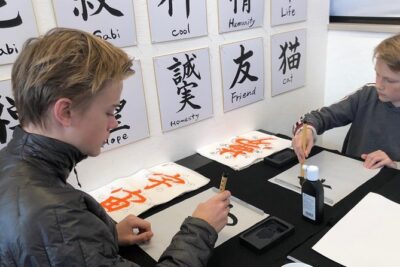
Let’s experience calligraphy in YANAKA, Taito-ku, TOKYO !!
Read our review →
Calligraphy Workshop & Original T-Shirt Creation
Read our review →
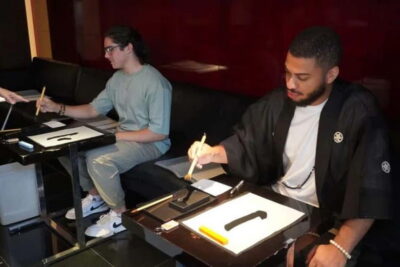
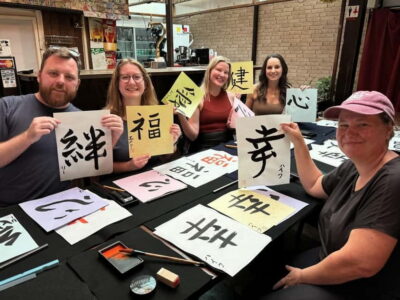
Calligraphy Workshop & Original T-Shirt Creation
Read our review →Browse the lists this tour appears in