
Reviewed · WORKSHOPS
Manga Lesson with a Professional Japanese Manga Artist in Nakano
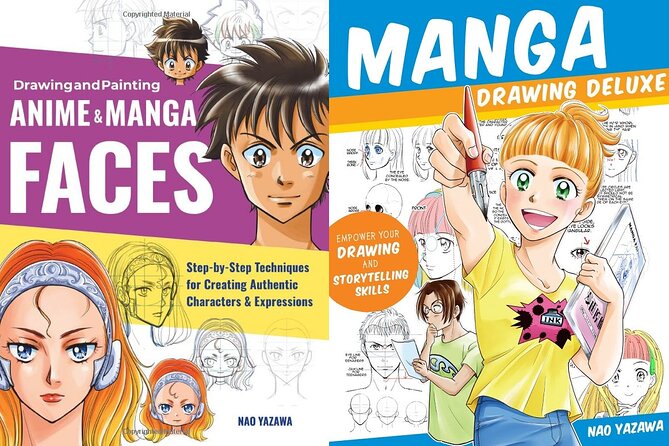
Draw manga with the real tools. This two-hour lesson in Nakano gives you hands-on practice with dip pens, ink, screen tones, and manga paper, rather than a quick cartoon sketch. I like the step-by-step teaching, which works for complete beginners and practiced artists alike. I also like that you finish a piece to take home. The main consideration is that finding the school may take patience, so allow extra time before class.
This is a private class for your own group, with one-person tuition available for solo visitors and group tuition for two to four people. The instructor can teach in English without an interpreter, and past lessons with Nao Yazawa have been especially praised for patience and clear guidance. Still, the exact meeting details and start time are confirmed after booking, so check your messages carefully.
In This Review
- Five things to know before you book
- Why a manga lesson in Nakano is worth two hours
- Arriving at Manga School Nakano
- The opening talk: manga as a working craft
- Trying the pens, ink, and screen tones
- Building your character one stage at a time
- How the instructor adapts to beginners and artists
- What families and solo artists can expect
- The $67.77 price and what you receive
- A few practical drawbacks to keep in mind
- Who should book this Nakano experience
- Should you book the manga lesson?
- FAQ
- How long is the manga lesson?
- Where does the class take place?
- What is the price?
- Are manga tools provided?
- Can beginners join?
- Can experienced artists take the class?
- Is the class private?
- Is the lesson taught in English?
- Do I take my drawing home?
- What is included, and are drinks provided?
- How do I choose a preferred start time?
- Can I cancel for a refund?
Five things to know before you book
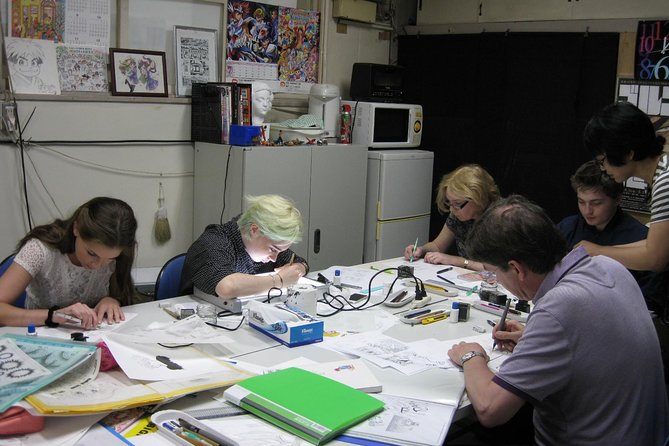
- You use authentic manga materials: Try screen tones, ink, manga paper, and three types of specialized pen nibs.
- The lesson follows a real production process: You move from pencil draft to inking, black areas, corrections, white highlights, and screen tones.
- Nao Yazawa may teach your class: Her patient, friendly instruction has been a major part of many memorable sessions.
- Private teaching gives you room to learn: Solo visitors and groups of two to four choose the appropriate tuition format.
- Your finished artwork goes home with you: The final drawing becomes a useful souvenir, not just a photograph of an activity.
Why a manga lesson in Nakano is worth two hours
Tokyo offers plenty of pop-culture shopping, but shopping alone only gets you so close to the craft. At Manga School Nakano, you handle the tools used to make traditional manga pages and learn why each one matters.
That difference is important. A standard drawing workshop might ask you to copy a character with ordinary pencils and markers. Here, the process includes dip pens, black ink, correction work, white ink, and adhesive screen tones. You get a small lesson in how manga is built, not just how manga looks.
I especially like the balance between instruction and making. You listen to a short talk about manga techniques and its development, then put those ideas to work on your own character. The class is not a long lecture disguised as an activity. Most of the two hours is spent drawing, receiving corrections, and trying the next step.
The finished page also gives the experience a clear purpose. Even if your lines wobble, you leave with something made by your own hand. That is a better Tokyo souvenir than another mass-produced key chain.
More anime and Akihabara tours:
- Official Street Go-Kart Tour – Akihabara
★ 5.0 · 1,578 reviews - Tokyo Go Kart: Asakusa, Skytree, and Akihabara **IDP MUST**
★ 5.0 · 988 reviews - Tokyo Studio Ghibli Museum and Ghibli Film Appreciation Tour
★ 4.5 · 421 reviews
Arriving at Manga School Nakano
The meeting point is Manga School Nakano at Japan, 165-0026 Tokyo, Nakano City, Arai, 2-chōme713 南国ビル. The school is near public transportation, but the directions may not feel obvious once you reach the neighborhood.
I would not cut your arrival close. One family had trouble locating the school and found the instructions needed improvement. The staff may speak limited English outside the lesson itself, so save the address, booking details, and activity messages on your phone. A mobile ticket is provided, and your confirmed time and meeting information arrive through the booking message system.
The start time is not simply something to assume. You are asked to provide your preferred departure time during checkout, and the local supplier will suggest another option if your first choice is full. Confirmation comes within 48 hours, subject to availability.
The activity ends back at the school. That makes it easy to continue exploring Nakano afterward, though the class itself is the main event rather than a neighborhood tour.
The opening talk: manga as a working craft
Your instructor begins with a short explanation of manga techniques and the development of the art form. This introduction helps you understand the tools before you pick them up.
The class can use manga references and original art from published manga as visual material. Beginners may choose a reference to copy with help from the instructor. That is a useful option if you arrive with enthusiasm but no clear idea what to draw.
You do not need to arrive with a polished character design. The teacher reviews your work and helps you make decisions along the way. For a first-timer, this removes the most stressful part of drawing: staring at a blank sheet and wondering where to begin.
Families also benefit from this opening. Different ages can work on different references, while everyone learns the same basic process. Past sessions have worked for children, teenagers, parents, adult couples, and even three generations in one group.
Trying the pens, ink, and screen tones
The tools are a big reason to book this class. You get to test manga pens and ink, including three different specialized nibs. Each creates a different feel on the page, and learning that through your fingers is more useful than reading about it.
Screen tone is another special feature. These sheets add gray areas, textures, shadows, and visual effects to black-and-white manga. Many visitors know the look from printed comics but have never handled the material. Pasting it onto your page makes the traditional production method much easier to understand.
The class supplies the manga tools, so you do not need to pack art equipment from home. Drinks are not included, but this is a short indoor lesson, and the focus stays on the work table.
The equipment can also help you decide if traditional manga art suits you. You may arrive expecting to love the pens and discover that the careful, physical process takes more patience than digital drawing. That is still useful knowledge, especially if you already sketch or create comics.
A few more Tokyo experiences worth weighing up
- Sushi Making Tokyo Roll and Authentic Japanese Sushi Class
★ 5.0 · 3,971 reviews - Tokyo: Roll and Authentic Sushi Making Class in Asakusa
★ 4.9 · 1,957 reviews - Tokyo Shinjuku Chopsticks Making Class
★ 5.0 · 1,763 reviews - Tokyo: Sushi Making Class in a Happi Coat near a Famous Spot
★ 4.9 · 1,377 reviews
Building your character one stage at a time
The main drawing portion proceeds in stages. First comes the pencil draft. You establish the character, pose, expression, and main shapes before committing to ink.
Next, you ink over the drawing and erase the pencil lines. Then you fill the black sections, correct mistakes, and add highlights with white ink. Screen tones come last, adding gray areas, textures, and effects.
This order makes the lesson easy to follow, but it also reveals why manga pages can take so much time. A clean-looking face may depend on several separate decisions. A dark jacket, a bright eye highlight, and a gray background effect each use a different part of the process.
The instructor demonstrates each stage and checks your work as you go. That personal correction is more valuable than a general demonstration, because the advice responds to your drawing rather than an imaginary student.
A solo lesson can move quickly. One solo participant completed drawing basics, expressions, and inking in a compact session. If you want more practice on a particular skill, say so early and make use of the private format.
How the instructor adapts to beginners and artists
This lesson is designed to meet you at your current level. A complete beginner can use references and follow demonstrations. A more experienced artist can focus on traditional tools, manga-specific line work, expressions, or the production sequence.
The strongest teaching reports center on patience and personal attention. Nao Yazawa has been praised for guiding children and adults at different levels, correcting drawings without making the class feel pressured, and explaining the basics in a clear way.
That matters if you are booking for a mixed group. A parent may be comfortable with drawing while a child is still learning proportions. One sibling may want a character reference, while another prefers to work from imagination. A private lesson can accommodate those differences better than a large public workshop.
The tone also seems friendly rather than formal. You can discuss favorite manga and anime while choosing characters and working through the page. That conversation is part of the pleasure, especially for families who already share an interest in Japanese comics.
Still, keep your expectations realistic. Two hours is enough to complete one piece and learn the basic stages. It is not enough to master anatomy, perspective, storytelling, and professional page production. Think of it as a strong introduction with a finished result.
What families and solo artists can expect
For families, this is one of the more practical creative activities in Tokyo. Children do not need prior drawing skills, and adults do not have to sit on the sidelines. Everyone gets a chance to work with the tools and produce a page.
The activity has suited children as young as 11, teenagers, adult couples, parents, and older family members. Past sessions have included groups of four, with the instructor adjusting the level and pace for each person.
Young manga fans may get the biggest thrill from drawing a favorite type of character, but the lesson is not limited to children. Adult beginners can enjoy the process without feeling they are entering a children’s craft class. Experienced artists may appreciate learning the traditional materials even if the final drawing feels basic.
Solo visitors should select single-person tuition rather than joining a group option intended for two to four people. The private setting can be especially useful if you want focused correction or wish to move through the stages at your own speed.
The $67.77 price and what you receive
At $67.77 per person, the value depends on what you want from a Tokyo activity. You are paying for about two hours of direct teaching from a professional manga artist, use of specialized tools, manga references, and a finished drawing.
That is a fair price for a hands-on class with supplied materials and private participation. The instructor’s attention is the key benefit. You are not simply watching an artist draw while a large group waits for a turn.
The value is strongest for manga fans, aspiring artists, and families who want to make something together. If you only want a quick souvenir or a general introduction to Japanese pop culture, shopping in Nakano may cost less and give you more freedom.
You should also factor in the finished page. Your drawing is not a separate paid add-on, and the tools needed for the lesson are included. Drinks are not included, though that omission matters little during a two-hour art class.
A few practical drawbacks to keep in mind
The school’s location is the clearest weak point. The address is supplied, but one family found it difficult to locate the building and felt the directions could be better. Save the exact meeting information and do not arrive at the last minute.
The class time is also subject to availability. You provide a preferred time, but the local supplier may offer an alternative. Wait for the confirmed activity details before fixing a tightly timed reservation afterward.
English instruction is available without an interpreter during the lesson. However, communication before or around the activity may be less smooth, so keep your booking messages easy to access.
Finally, the class is about traditional manga production. If you prefer digital illustration, painting, or a broad art lesson, the focus may feel narrow. If you want to learn how ink, nibs, correction fluid, highlights, and screen tones work together, that narrow focus is exactly the point.
Who should book this Nakano experience
I would book this for:
- Manga and anime fans who want to move beyond collecting
- Families with children or teenagers who enjoy drawing
- Couples looking for a creative activity in Tokyo
- Solo artists who want individual feedback
- Beginners who need a calm, guided first lesson
- Practiced artists curious about traditional manga tools
- Visitors who value a handmade souvenir
I would think twice if your schedule is very tight, you dislike careful drawing, or you expect a full professional course in two hours. The lesson offers a satisfying introduction, not a certificate or long-term studio program.
The 99 percent recommendation rate and 4.9 rating from 77 reviews point to a consistently strong experience, with praise focused on the instructors, patience, useful demonstrations, and ability to teach different skill levels. The single serious complaint involved a payment and refund problem, not the drawing lesson itself. Be careful at checkout and keep your confirmation details.
Should you book the manga lesson?
Book it if you want a personal, creative Tokyo experience and like the idea of taking home something you made yourself. The strongest reason to go is not simply that a professional artist teaches you. It is that you get to handle authentic manga materials and complete the full process from draft to screen tone.
I would give yourself extra time to find Manga School Nakano, choose the correct tuition type, and wait for the confirmed activity time. If you do that, this $67.77 class offers good value, especially for families and manga fans who want more than a quick photo stop.
FAQ
How long is the manga lesson?
The lesson lasts approximately two hours.
Where does the class take place?
It takes place at Manga School Nakano in Arai, Nakano City, Tokyo, at Japan, 165-0026 Tokyo, Nakano City, Arai, 2-chōme713 南国ビル.
What is the price?
The listed price is $67.77 per person.
Are manga tools provided?
Yes. The class includes manga tools such as manga pens, ink, manga paper, screen tones, and specialized pen nibs.
Can beginners join?
Yes. All skill levels are welcome, including people with no previous drawing experience.
Can experienced artists take the class?
Yes. The instructor can adjust the lesson for practicing manga artists who want to improve their skills.
Is the class private?
Yes. Only your group participates. Solo visitors should choose single-person tuition, while groups of two to four should select the group tuition option for that size.
Is the lesson taught in English?
The class offers precise English guidance without an interpreter.
Do I take my drawing home?
Yes. You finish a manga drawing during the lesson and take it home as a souvenir.
What is included, and are drinks provided?
A professional manga artist and manga tools are included. Drinks are not included.
How do I choose a preferred start time?
You can provide your preferred departure time in the Special Requirements box at checkout. If that slot is unavailable, the local supplier will contact you with another option.
Can I cancel for a refund?
You can cancel at least 24 hours before the experience start time for a full refund. Cancellations or changes made less than 24 hours before the start time are not accepted for a refund.
Just added around Tokyo
- Tokyo 6hr Instagram Highlights Private Tour with Licensed Guide★ 5.0 · 38 reviews
- Tokyo Small Group Tour with Guide★ 4.5 · 38 reviews
- Tokyo Sumo Experience with Live Show & Audience Challenge★ 5.0 · 38 reviews
- Japanese Food Cooking Class in Asakusa, Tokyo★ 5.0 · 39 reviews
- Very popular in Harajuku♡Animal petting zoo★ 4.6 · 39 reviews
- Ramen Making from Scratch with Tokyo Mom(Vegan Option Available)★ 5.0 · 39 reviews
- Tokyo JDM Night: 600hp C63s AMG Edition 1 (Private)★ 4.9 · 39 reviews
- Tokyo: Kimono Rental inside Shinjuku Gyoen National Garden★ 4.9 · 39 reviews
Workshops, compared.
Sushi Making Tokyo Roll and Authentic Japanese Sushi Class
Read our review →

Roll and Authentic Sushi Making Class in Asakusa
Read our review →
Ramen Cooking Class at Ramen Factory in Kyoto
Read our review →
Sushi Making Class in a Happi Coat near a Famous Spot
Read our review →
Sushi Making Osaka Roll and Authentic Japanese Sushi Class
Read our review →Browse the lists this tour appears in