
Reviewed · CASTLE TOURS
Nijo Castle and Imperial Palace Visit with Guide
Kyoto’s power story unfolds in two grand stops. This 2.5-hour tour links Nijo Castle, the Tokugawa shogun’s Kyoto base, with Kyoto Imperial Palace, the home of Japan’s emperors. I like the small-group format and the fact that your guide handles both admission and the public transport between sites. I also like the morning or afternoon choice, which makes it easier to fit around temples, meals, and jet lag. The main drawback is simple: one hour at each site is brisk, and the tour finishes at the palace rather than returning you to the castle.
The guide can make or break a history tour, and this one has earned strong praise for guides including Mia, Mie, Choko, and Mike. Mia in particular is often singled out for her humor, visual aids, and clear explanations of the shogunate, Emperor Meiji, and the symbols tucked into both buildings. Wear comfortable shoes, since the two sites involve plenty of walking.
In This Review
- Key points to know before booking
- Why these two Kyoto sites belong together
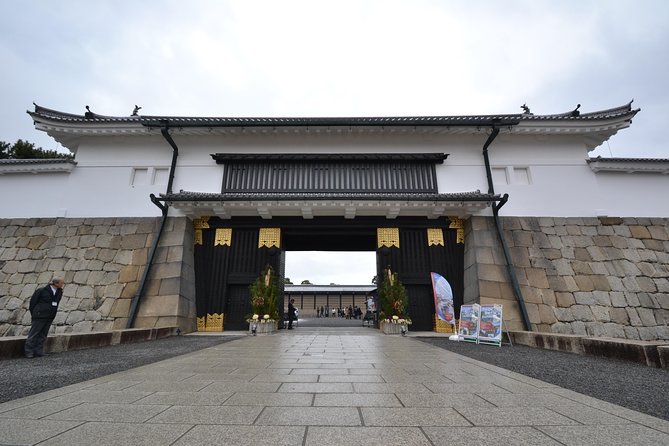
- Starting at Nijo Castle’s white main gate
- The public transport transfer is part of the experience
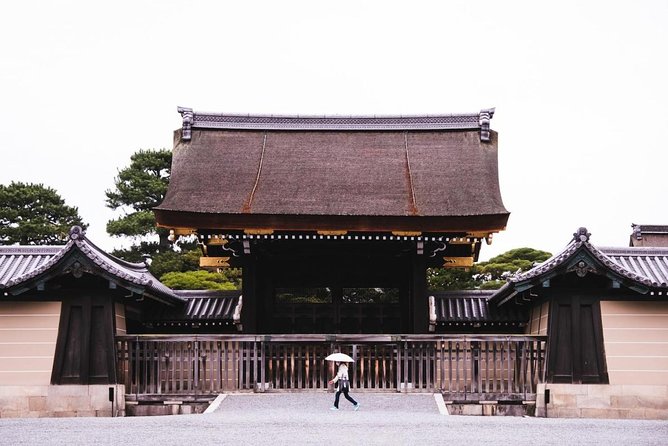
- Kyoto Imperial Palace and the imperial court
- The guide is the main reason to choose this tour
- Is $79.18 a fair price?
- Who will enjoy this most?
- What you should know before meeting the guide
- Should you book the Nijo Castle and Imperial Palace tour?
- FAQ
- How long does the tour last?
- Is the tour private?
- What sites are included?
- Are entrance fees included?
- Is public transportation included?
- Where does the tour begin and end?
- Can I cancel for a full refund?
Key points to know before booking
- See two centers of power in one morning or afternoon: Nijo Castle represents shogun rule, while the Imperial Palace connects you with Japan’s imperial family.
- Your guide joins you on public transport: The transfer from Nijo Castle to the palace is included, so you do not have to work out the route alone.
- Nijo Castle includes an interior visit: You are not limited to the grounds. The castle buildings and their historical details form a major part of the tour.
- The group is intended to stay small: The tour is described as private for your party, with a small-group arrangement of fewer than eight in the itinerary and a maximum of 11 overall.
- Guides add context beyond dates and names: Expect explanations of the Tokugawa shogunate, Emperor Meiji, political change, Japanese culture, and the meaning of visual details.
- The end point is different from the start: You meet at Nijo Castle and finish in front of the Imperial Palace inside Kyoto Gyoen National Garden.
Why these two Kyoto sites belong together
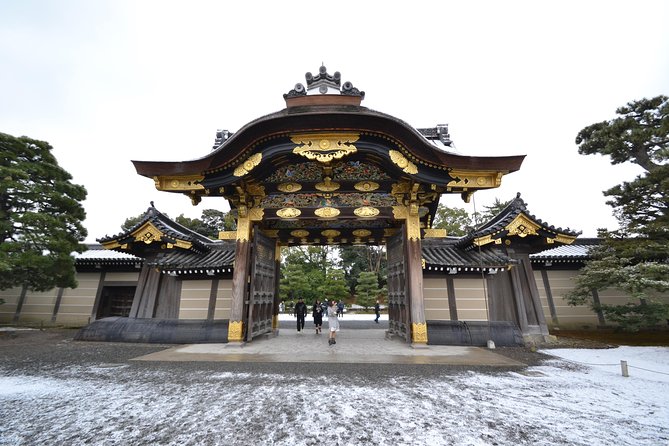
Nijo Castle and Kyoto Imperial Palace tell two parts of the same political story. You begin with the military government of the Tokugawa shoguns and finish with the imperial court. That contrast gives the tour a useful shape, especially if Japanese history feels like a blur of emperors, shoguns, and shifting capitals.
A self-guided visit can show you beautiful rooms and gardens, but it may not explain why the buildings matter. Here, the guide connects the castle to the Edo period, when the shogunate controlled Japan, then explains the later transfer of power back to the emperor. Several guides have been praised for making the transition to Emperor Meiji understandable rather than leaving you with a list of unfamiliar names.
I especially like this pairing for a first visit to Kyoto. You get architecture, political history, gardens, and cultural background without spending an entire day on one subject. If you have watched a drama such as Shogun, the castle may feel especially evocative, though the guide supplies the historical setting rather than treating the visit as a film location tour.
More Castle Tours in Kyoto
- Kyoto: Nijo-jo Castle and Ninomaru Palace Guided Tour
★ 4.7 · 1,020 reviews - Kyoto: Nijo Castle, Kiyomizu & Fushimi Inari Guided Tour
★ 4.7 · 700 reviews - Kyoto: Imperial Palace & Nijo Castle Guided Walking Tour
★ 4.7 · 453 reviews
Starting at Nijo Castle’s white main gate
The meeting point is in front of the large white main gate at Nijo Castle, at 541 Nijojocho in Nakagyo Ward. That is a practical place to begin because the gate is easy to identify, and the tour does not require hotel pickup. You should plan your own way to the castle using Kyoto’s public transport system.
The first hour focuses on Nijo Castle. Admission is included, so you can concentrate on listening rather than sorting out tickets. The castle is important not just for its size and grounds, but for what it says about the shogun’s authority in Kyoto, the old imperial capital.
The interior visit is a real strength. You can expect your guide to explain the rooms, political meetings, and details that are easy to pass without help. One guide, Mia, has been praised for explaining where shogun meetings took place and for pointing out symbolism inside the castle. Another guide used visual aids to clarify historical figures and events, a useful touch when the story involves several generations and changes in power.
The famous interior features are best understood with that political background. Rather than simply admiring painted panels or formal spaces, you learn how the building worked as a place of ceremony and control. Your guide may also answer questions about Japanese customs and culture as they arise.
The castle portion lasts about one hour, so do not expect every corner of the grounds or a slow, unhurried museum visit. The tour gives you an informed overview with time for questions. If Nijo Castle is your main reason for booking, you may wish you had longer there. If you want a broad introduction to Kyoto’s political past, the one-hour limit keeps the day moving.
The public transport transfer is part of the experience
After Nijo Castle, you travel with the guide to Kyoto Imperial Palace by public transportation. The transport cost is included in the tour price, which removes one small but annoying part of Kyoto planning.
The transfer also helps tie the two places together. You are not simply jumping from one attraction to another in a taxi. Your guide can continue explaining the city and the change from shogun authority to imperial rule while you move between the sites.
The exact route and timing are not specified, so you should allow a little flexibility around the stated 2.5-hour duration. The published schedule allocates roughly one hour to each site, with the remaining time covering the meeting, transfer, and movement through the grounds. If you have a tightly timed lunch reservation or train departure, do not schedule it too close to the end.
You should also remember that the tour does not include food, drinks, or hotel transportation. Start with what you need for the morning or afternoon, especially water, since comfortable walking matters more here than special equipment.
Kyoto Imperial Palace and the imperial court
The second guided portion lasts about one hour at Kyoto Imperial Palace. The tour ends in front of the palace in Kyoto Gyoen National Garden, at 3 Kyotogyoen in Kamigyo Ward.
The palace offers a useful counterpoint to Nijo Castle. At the castle, the emphasis is on the shogun and military government. At the palace, the guide turns to the emperor’s family, court life, and the line of imperial descendants. Several guides have been praised for explaining the imperial family and for showing how the transfer of power changed Japan.
The palace grounds are also attractive in their own right. One account praises the lovely garden beside one of the historic sites, while another describes both the castle and palace as beautiful. Still, this is not simply a garden stroll. The value comes from hearing what the spaces represented and how the imperial institution fit into Kyoto’s long political story.
An hour is enough for a clear introduction, but not for every building, path, and historical detail. You will need to stay with the group and keep moving. That is a fair trade if you want context and a manageable schedule, but independent visitors who enjoy lingering may prefer to return separately.
There is one practical uncertainty to keep in mind. A past tour had to deal with the Imperial Palace being closed for an event, while Nijo Castle still went ahead. That does not mean closure is usual, but official functions and site conditions can affect access. The experience requires good weather, and if poor weather causes cancellation, you are offered another date or a full refund.
A completely different kind of day out in Kyoto:
- PERFECT KYOTO 1-Day Bus Tour
★ 5.0 · 13,518 reviews - Kyoto: Fushimi Inari, Kinkakuji, Bamboo Grove 1 Day Bus Tour
★ 4.8 · 4,316 reviews - Kyoto: Tea Ceremony in a Traditional Tea House in Kiyomizu
★ 4.9 · 3,519 reviews - Kyoto Geisha Walking Tour: Gion District & Hidden Gems
★ 4.7 · 3,273 reviews
The guide is the main reason to choose this tour
The strongest part of this experience is the human explanation. The site information praises guides such as Mia, Mie, Choko, and Mike, with Mia receiving especially warm attention for her humor, clear English, visual aids, and ability to answer detailed questions without drowning you in facts.
That balance matters. Japanese political history can become hard work when every name sounds new. A good guide gives you the basic structure first, then adds the details that make the buildings memorable. You can ask about the shogun, the emperor, Japanese culture, or a particular object rather than trying to guess what matters from a printed sign.
The best guide accounts describe an animated style that remains respectful toward national treasures. That is a useful combination. You want a person who can make the past understandable and enjoyable, but not someone who turns solemn places into a comedy routine.
The guides also seem willing to personalize the visit. One guide offered a restaurant recommendation that led to a memorable Kobe beef meal. That is not a promised part of the tour, of course, but it shows the kind of practical local conversation that can make a guided walk more useful than an audio guide.
Because the product is described both as private for your party and as a small group of fewer than eight, check the final group arrangement when you book. The maximum listed size is 11. If you are a family or a couple and value personal attention, ask for clarification so your expectations match the confirmed booking.
Is $79.18 a fair price?
At $79.18 per person, this is not the cheapest way to see Nijo Castle and Kyoto Imperial Palace. You are paying for a professional English-speaking guide, both entrance fees, and the public transportation between the sites.
The value is strongest if you care about historical meaning. A self-guided visit may cost less, but you would need to organize transport, pay admission separately, and supply your own explanation of the shogunate and imperial court. For a first visit, that guidance can make the two-hour-and-thirty-minute schedule far more productive.
The price also works better for a small party than for one person on a strict budget. A family can share the experience while asking questions suited to different ages and interests. A solo visitor may still find the guide worthwhile, particularly if Japanese political history is a priority, but should compare the cost with ordinary admission and transport before booking.
The perfect score from 53 ratings and the 100 percent recommendation figure are encouraging, especially because the praise is specific. People repeatedly focus on the guides’ warmth, humor, English, historical explanations, and ability to answer questions. That pattern suggests the tour’s value depends less on special access and more on the quality of the person leading it.
Who will enjoy this most?
I would choose this tour if you want a clear introduction to Kyoto’s political history without committing a full day to museums and palaces. It suits first-time visitors, families, couples, and anyone who prefers asking questions to reading every sign.
It is also a good fit if you are curious about the Tokugawa period, the shogun, the emperor, or the political shift associated with Emperor Meiji. The guide’s explanations can help you understand how the castle and palace relate to one another.
You should think twice if you dislike group pacing or want long stretches of quiet exploration. Two hours at major historic sites is efficient, not leisurely. You may also prefer an independent visit if you have already studied the history and mainly want photographs or extra time in the gardens.
Comfortable shoes are important. The tour includes substantial walking through the castle, grounds, transfer, and palace area. Bring water and allow extra time after the end point if you need to reach another appointment.
What you should know before meeting the guide
You can select a morning or afternoon departure. Meet directly at Nijo Castle, not at your hotel, and look for the guide by the huge white main gate. The tour finishes at Kyoto Imperial Palace, so plan your next activity from Kyoto Gyoen National Garden rather than from Nijo Castle.
Confirmation is sent within 48 hours of booking, subject to availability. Service animals are allowed, the sites are near public transportation, and most people can participate. Since the tour requires good weather, keep your schedule flexible if rain is likely.
Free cancellation is available up to 24 hours before the start time for a full refund. Cancellations or changes made less than 24 hours before the start are not accepted for a refund.
Should you book the Nijo Castle and Imperial Palace tour?
Book it if you want the two sites explained as parts of one story, and if you value a friendly guide more than a rock-bottom price. The included admission, public transport, and small-group setup make the fee reasonable for a focused introduction, particularly when you get a guide like Mia, Mie, Choko, or Mike.
Skip it if you want to explore at your own pace, stay longer at one site, or keep your schedule extremely tight. For most first-time Kyoto visitors with an interest in history, though, this is a smart pairing. You see the shogun’s castle, visit the imperial palace, and leave with a clearer idea of how Japan’s centers of power changed over time.
FAQ
How long does the tour last?
The tour lasts approximately 2 hours and 30 minutes.
Is the tour private?
The experience is described as private for you and your party, while the itinerary also describes a small group of fewer than eight people. The listed maximum is 11 travelers, so check the confirmed group arrangement when booking.
What sites are included?
The tour includes Nijo Castle and Kyoto Imperial Palace.
Are entrance fees included?
Yes. Entrance fees for both sites are included in the tour price.
Is public transportation included?
Yes. Public transportation between Nijo Castle and Kyoto Imperial Palace is included.
Where does the tour begin and end?
The tour begins in front of the main gate of Nijo Castle at 541 Nijojocho, Kyoto. It ends in front of Kyoto Imperial Palace in Kyoto Gyoen National Garden.
Can I cancel for a full refund?
Yes. You can cancel at least 24 hours before the local start time for a full refund. Changes and cancellations made less than 24 hours before the start are not accepted for a refund.
Just added around Kyoto
- Kyoto: Private Customizable Day Trip by Car★ 5.0 · 38 reviews
- Kyoto: Gion Night Walking Tour with Geisha Insight★ 5.0 · 39 reviews
- Kyoto: Full Day Bike Tour★ 4.9 · 39 reviews
- Private Japanese Calligraphy in Kyoto – Learn Shodō with a Master★ 5.0 · 39 reviews
- Experience a tea ceremony in an authentic tearoom, in Kyoto!★ 4.5 · 41 reviews
- Kyoto: Gion Evening Walk with Hidden Gems, Geisha & Sake★ 5.0 · 41 reviews
- Kyoto Private Photo Shoot & Tour by SnapKyoto★ 5.0 · 41 reviews
- The Way of Tea: Kyoto Crafts, Hidden Temples & Wabi-Sabi Walk★ 5.0 · 41 reviews
Castle Tours, compared.
Tokyo Castle & Imperial PalaceーShogun Walking Tour
Read our review →
Nijo-jo Castle and Ninomaru Palace Guided Tour
Read our review →
Ultimate Osaka Walking Tour: Castle, Dotonbori & Hidden Gems
Read our review →Tokyo Castle & Imperial PalaceーShogun Walking Tour
Read our review →
Nijo Castle, Kiyomizu & Fushimi Inari Guided Tour
Read our review →
Osaka Castle Walking Tour and Castle Tower Admission
Read our review →
Imperial Palace East Garden and Edo Castle Walking Tour in Tokyo
Read our review →Browse the lists this tour appears in