
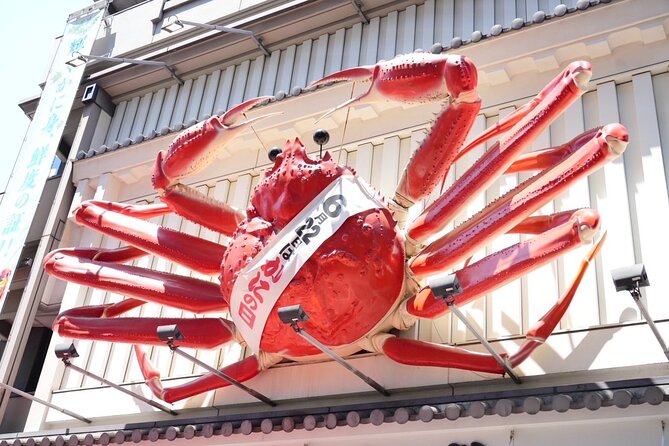
Reviewed · MORNING
Osaka Early Morning Tour with English-Speaking Guide Dotonbori
Osaka rewards early risers. This four-hour walk links Osaka Castle, Kuromon Market, and Dotonbori with several lively neighborhoods in between, giving you a useful first look at the city rather than a single postcard stop. I like the small maximum of eight people, and I like that the guide helps you understand what you are seeing, not just point at it. The main catch is that you will pay for public transportation and any castle admission separately.
I also like the food break, which includes one Osaka street food item and one drink, alcoholic or non-alcoholic. Guides such as Shizuka, Yusuke, Satsuki, Hikaru, Ryoichi, and Arisa have earned praise for friendly explanations, flexible pacing, and help choosing food. Plan for a fair amount of walking, several subway rides, and a tour that ends at the famous Glico Sign rather than returning you to the starting point.
In This Review
- Key Points at a Glance
- Why This Tour Works as an Osaka First Look
- Meeting at Osaka Castle Park
- Shinsekai: Osaka’s Older, Quirkier Side
- Kuromon Market and the Included Food Stop
- Nipponbashi Denden Town for Electronics and Anime
- Doguyasuji and Osaka’s Food-Service Culture
- Hozen-ji Temple in the Middle of the City
- Dotonbori and the Glico Sign Finish
- Price, Transport, and What You Really Receive
- Group Size, Guides, and Communication
- Who Should Book This Osaka Tour?
- My Booking Advice
- FAQ
- How long does the Osaka Early Morning Tour last?
- Where does the tour begin?
- Where does the tour end?
- Is food included?
- Are public transportation fares included?
- Is admission to Osaka Castle included?
Key Points at a Glance
- Osaka Castle begins the morning: You explore the castle grounds and learn how the fortress fits into Japan’s unification period.
- A small group keeps the tour personal: The maximum is eight people, and some departures may feel almost private.
- Food is part of the lesson: You receive one street food item and one drink, with guidance on local choices.
- The route crosses several sides of Osaka: Shinsekai, Kuromon Market, Denden Town, Doguyasuji, Hozen-ji, and Dotonbori each offer a different mood.
- Public transport is part of the plan: The listed fare is ¥430 per person, but the route uses trains or subways several times.
- The tour finishes at the Glico Sign: You can continue exploring Dotonbori or ask the guide for help reaching Namba Station.
Why This Tour Works as an Osaka First Look
Osaka can feel scattered at first. The castle is northeast of the central entertainment districts, while Shinsekai, Kuromon Market, and Dotonbori sit farther south. This tour makes that spread useful by connecting major areas in one morning.
You get history, food, shopping, religious culture, pop culture, and city views in one compact route. I like this mix because Osaka is not only a castle city or a food city. It is also a place of merchant streets, postwar nostalgia, kitchen-supply shops, anime stores, canal-side neon, and small religious corners.
The English-speaking guide is the difference between simply moving through these districts and understanding them. Several guides have been praised for clear communication and personal stories. Ryoichi, described as an Osaka native, shared local memories alongside historical facts. Satsuki and Hikaru were praised for creating a genuine, easygoing introduction, while Yusuke was noted for clear directions before the tour and flexible handling of group interests.
The pace appears to be manageable for most people. One guide adjusted the route for a participant with a recent knee injury, and another allowed time to enjoy the stops without rushing. Still, this is a walking tour with multiple neighborhood changes. Comfortable shoes matter more than stylish ones.
A few more Osaka experiences worth weighing up
- Kyoto Early Morning Tour with English-Speaking Guide
★ 5.0 · 1,427 reviews - Kyoto: Early Morning Tour with English-Speaking Guide
★ 4.9 · 1,128 reviews - Kanazawa: World Heritage Shirakawa-go Morning Guided Tour
★ 4.9 · 988 reviews
Meeting at Osaka Castle Park
The tour begins at 9:30 a.m. outside Starbucks Coffee at JO-TERRACE OSAKA in Osaka Castle Park. This is a practical starting point because the first hour focuses on one of Osaka’s major symbols.
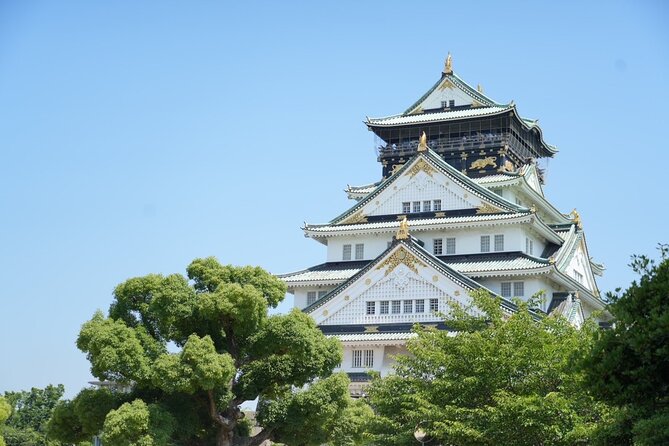
The castle was built in the late 16th century and played an important part in the unification of Japan. Your guide explains the political story behind the fortress while leading you around its architecture and surrounding grounds. The setting includes gardens and open areas, so this first section is more than a quick photo stop.
One useful point needs to be clear: the tour does not necessarily take you inside Osaka Castle. The admission ticket is not included, and the experience focuses on the grounds and exterior sights. A line for the castle can also be long. If entering the building is a priority, ask your guide how much time your group has and be ready to pay separately.
I see the exterior visit as a sensible choice for a short orientation tour. You learn the main story, see the castle from different angles, and avoid spending the entire morning indoors. A guide may also point out photo spots, seasonal sights, or smaller details you could miss on your own. One tour even located a quieter cherry blossom spot near the castle for a group.
Shinsekai: Osaka’s Older, Quirkier Side
After Osaka Castle, the route moves toward Shinsekai. The listed stop lasts about 30 minutes, and admission is free.
Shinsekai is useful for showing you another face of Osaka. The district is known for nostalgic streets, older-style shops, and casual places to eat. It has an old-meets-new feel, with daily life unfolding beside signs, eateries, and local businesses.
Your guide gives the area context, which matters here. Without explanation, Shinsekai can look like a collection of colorful streets. With a local guide, you get a better sense of how the district fits into Osaka’s past and present.
This is not a long stop, so you should not expect a full meal or extended shopping time here. Instead, treat it as a quick orientation. Pay attention to the atmosphere and ask your guide where you might return later. That is one of the tour’s practical strengths: several people were given suggestions for places to eat, shop, and explore after the four hours ended.
Kuromon Market and the Included Food Stop
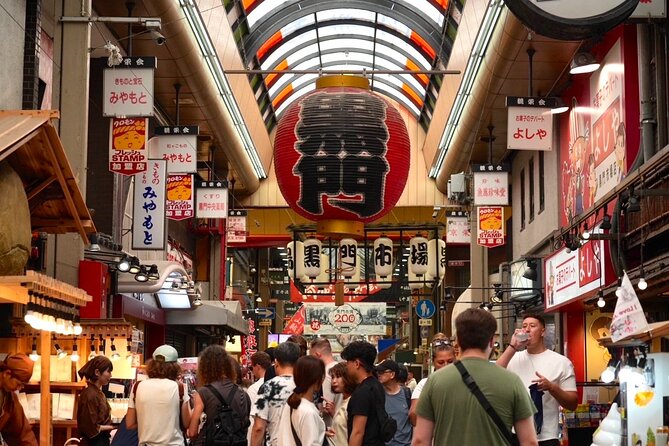
Kuromon Market is known as Osaka’s Kitchen, and it is one of the most useful stops for anyone who wants to understand the city through food. The market carries fresh seafood, produce, and ready-to-eat items. The scheduled visit lasts about 30 minutes.
The tour includes one street food item and one drink. That is enough for a taste, not a full market lunch. Some guides help you choose from the available food, and one participant especially appreciated having assistance with local choices. This is valuable if you are unsure what to order or do not read Japanese menus easily.
I recommend treating the included item as a starting point. Look around, notice what the stalls are selling, and ask your guide what locals commonly choose. The market can tempt you into extra purchases, so carry some yen if you want to sample more. Any additional food is your responsibility.
The market is also a place where the small group size pays off. A group of eight or fewer can pause without blocking as much space as a large organized party. Your guide can explain food customs, point out items of interest, and keep the stop from becoming a hurried walk past stalls.
One limitation is time. Thirty minutes passes quickly in a food market. If you are serious about eating your way through Kuromon, return later with an empty stomach and more time.
A completely different kind of day out in Osaka:
- Osaka Go Karting Tour with Funny Costume
★ 5.0 · 2,658 reviews - Osaka Castle: Museum and Tower Entry Ticket
★ 4.5 · 2,380 reviews - Osaka: Shinsekai Food Tour with 13-15 Dishes at 5 Eateries
★ 4.8 · 2,204 reviews - Osaka Food Tour: 13 Dishes at 5 Local Eateries
★ 5.0 · 2,149 reviews
Nipponbashi Denden Town for Electronics and Anime
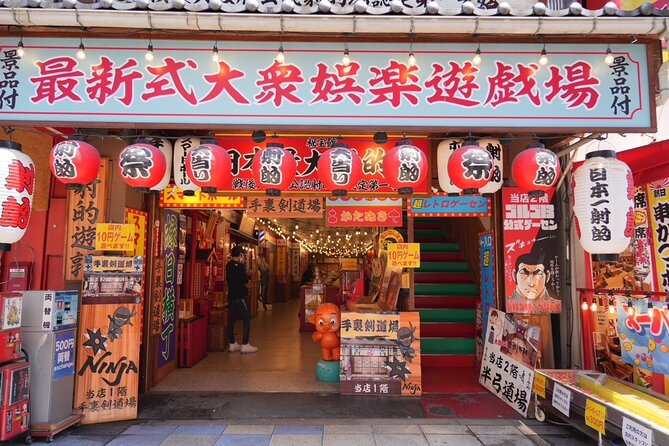
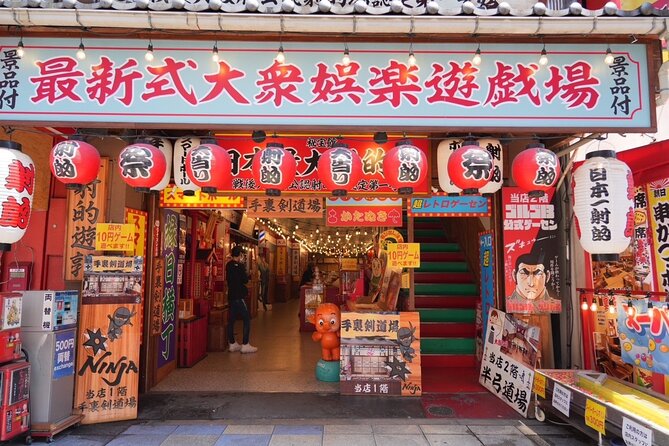
The next stop lasts about 20 minutes in Nipponbashi Denden Town. This is Osaka’s main area for electronics, anime, gaming, and related pop culture.
This section gives the tour a welcome change of pace. Osaka’s story is not only temples and castles. Denden Town shows the city’s modern interests through shops filled with electronics, games, anime goods, and collectibles.
Twenty minutes is enough to understand the district, but not enough for serious shopping. If you collect anime goods or want to browse gaming stores, mark the area on your map and return after the tour. The guide can help you identify the main streets and explain what the district is known for.
I especially like this stop for mixed-interest groups. One person can enjoy the technology angle while another simply takes in the signs and shop displays. It also helps prevent the tour from feeling like a standard sequence of historic monuments.
Doguyasuji and Osaka’s Food-Service Culture
Sennichimae Doguyasuji Shopping Street is a short 15-minute stop, but it adds a detail many city tours skip. This street specializes in kitchenware, chef tools, cooking equipment, and unusual culinary gadgets.
You may find items for professional restaurants alongside goods that suit home cooks. Even if you do not plan to buy anything, the street explains something important about Osaka’s identity as a food-focused city. Restaurants need tools, dishes, signs, and supplies, and this shopping street serves that working side of the food trade.
The brief timing means I would not plan a major purchase here. Instead, look for practical souvenirs or simply enjoy the specialized shopping. If your guide points out something useful, ask about packing and shipping before buying.
Hozen-ji Temple in the Middle of the City
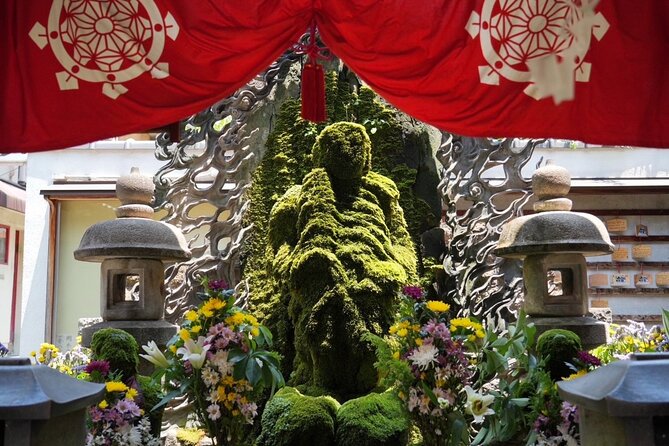
Hozen-ji Temple offers a quieter pause before the final Dotonbori section. The stop lasts about 15 minutes and is free to enter.
The temple is known for its moss-covered statue of Fudo Myo-o. Traditional cobblestone lanes surround the site, creating a sharp contrast with the commercial streets nearby. This is a small stop, but it may be one of the most atmospheric parts of the morning.
I like the way Hozen-ji changes the rhythm. After markets, electronics, and kitchen shops, you get a moment for a shrine-like setting and a closer look at local religious practice. The guide can explain the statue and the surrounding lanes, making the visit more meaningful than a quick photograph.
Keep expectations realistic. This is not a large temple complex, and the scheduled time is short. Its value comes from the setting and contrast, not from the number of buildings.
Dotonbori and the Glico Sign Finish
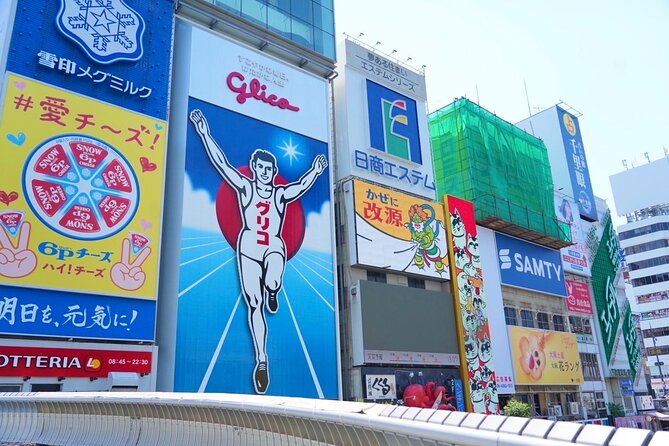
The route ends at Dotonbori, with about 30 minutes around Dotonbori Tsuribori and Ebisu Bridge. The final meeting point is in front of the famous Glico running man sign.
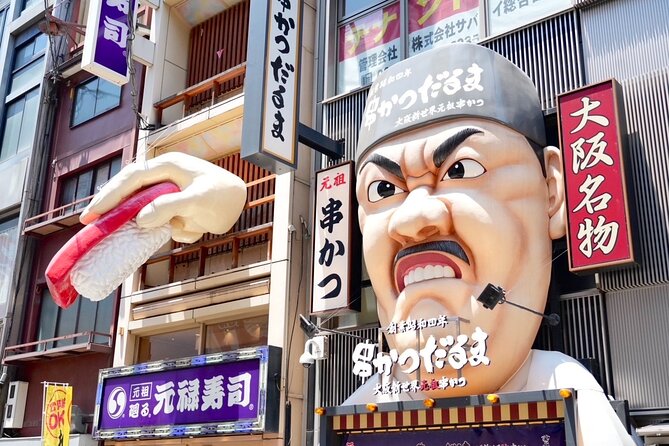
Ebisu Bridge gives you views over the Dotonbori Canal and puts you in the heart of Osaka’s best-known entertainment area. It is a fitting finish because the tour begins with a fortress and ends with neon, food signs, bridges, and canal traffic.
This is where the tour becomes especially useful for the rest of your day. You can continue through Dotonbori, look for lunch, or walk toward nearby attractions. If you need help finding Namba Station, the guide can assist.
The end point is also a practical drawback for anyone expecting a circular tour. You must arrange your own way back, although Dotonbori is well connected and the guide can help with directions. I would not schedule a tight airport transfer immediately after the tour unless you allow plenty of extra time.
Price, Transport, and What You Really Receive
The price is $60.78 per person. For that fee, you receive an English-speaking guide, one street food item, and one alcoholic or non-alcoholic drink. You do not receive attraction admission or public transportation.
The listed transportation cost is ¥430 per person, and the route uses trains or subways several times between neighborhoods. Several people found an IC card such as a Suica useful, while an all-day train pass may also work depending on your plans. The important point is to arrive ready to pay transport costs separately.
I consider the price reasonable if you value orientation and local explanation. You are not paying simply for a ride between landmarks. You are paying for route planning, history, food help, neighborhood context, and the ability to ask questions in English. The value improves when the group is small or when the guide adapts the route to your interests.
The price is less attractive if you prefer exploring independently, plan to spend a long time inside Osaka Castle, or want a full food tour. The included food and drink are modest, and extra purchases add to the total.
Group Size, Guides, and Communication
The maximum group size is eight people. That is small enough for questions and conversation, but the actual feel depends on the booking date. Some couples have ended up with a private tour, while other departures include a small group.
Guide quality is a major strength. Shizuka was praised for her history explanations, kindness, and care with a knee injury. Yusuke was noted for his clear English, flexibility, and useful messages about meeting details. Satsuki, Hikaru, Ryoichi, Arisa, Susan, Kanji, Ryosuke, Taira, Ryo, and Aya were also praised for warmth, local insight, or the ability to tailor the outing.
Some guides are college students, which can make the experience feel relaxed and personal. That may appeal to you if you prefer conversation and local perspective over a formal lecture. If you want a very polished, academic presentation, the style may vary by guide.
The tour has a perfect five-star rating from 110 reviews and a 100 percent recommendation rate. Those figures suggest strong consistency, though the exact guide and group can change. I would focus less on expecting one particular guide and more on the tour’s clear strengths: small groups, English support, flexible pacing, and a broad route.
Who Should Book This Osaka Tour?
I would recommend it for a first morning in Osaka, especially if you have only a day or two in the city. It gives you a working map of several districts and helps you decide where to return later.
It suits people who enjoy walking, casual food, local stories, and a mix of old and new Osaka. Families can benefit from the photo opportunities and varied stops, while anime and gaming fans get a short introduction to Denden Town.
It may not suit you if you have limited mobility, although guides may adjust the pace. It also may not suit anyone seeking a deep visit inside Osaka Castle, a long market meal, or uninterrupted shopping time. This is an overview, not a single-site tour.
Free cancellation is available up to 24 hours before the 9:30 a.m. start time. Changes or cancellations inside that window are not refundable, so keep your plans firm once the deadline approaches.
My Booking Advice
Book this tour if you want a friendly, efficient introduction to Osaka and like having a local guide handle the route. The mix of castle grounds, market food, older neighborhoods, pop culture, kitchen shops, temple lanes, and Dotonbori is unusually broad for four hours.
Skip it if you already know Osaka well or want to spend most of your time at one attraction. For a first visit, though, the small group, useful food stop, and final arrival at Dotonbori make this a strong way to get your bearings fast.
FAQ
How long does the Osaka Early Morning Tour last?
The tour lasts approximately four hours and begins at 9:30 a.m.
Where does the tour begin?
It begins at Starbucks Coffee in Osaka Castle Park, at JO-TERRACE OSAKA in Osaka’s Chuo Ward.
Where does the tour end?
The tour ends in Dotonbori in front of the famous Glico Sign. The guide can help you find Namba Station if needed.
Is food included?
Yes. The tour includes one Osaka street food item and one drink. The drink may be alcoholic or non-alcoholic.
Are public transportation fares included?
No. Public transportation costs are separate. The listed fare is ¥430 per person, and the route uses trains or subways between some areas.
Is admission to Osaka Castle included?
No. Admission tickets are not included. The tour focuses on the castle grounds and exterior areas, and you should confirm with the guide if entering the castle is important to you.
Just added around Osaka
- Osaka Food Tour with 10 Classic Japanese Tastings & Drinks★ 5.0 · 38 reviews
- Osaka: Highlights & Hidden Gems Private Walking Tour★ 4.7 · 38 reviews
- Kyoto private tour (Shore excursion available from Osaka or Kobe port)★ 5.0 · 39 reviews
- Osaka Private Day Trip – Enjoy Your First-Time Visit to Osaka!★ 5.0 · 39 reviews
- Kyoto & Nara & Uji: Full Day Sightseeing Tour from Osaka or Kyoto★ 4.5 · 39 reviews
- Authentic SUSHI Course Cooking Class★ 5.0 · 39 reviews
- Osaka: Mind & Spirit Balance Temple Reiki Healing★ 5.0 · 41 reviews
- Osaka Afternoon Walking Tour with Osaka River Cruise★ 3.5 · 42 reviews
Morning, compared.
Kyoto Early Morning Tour with English-Speaking Guide
Read our review →Early Morning Tour with English-Speaking Guide
Read our review →
World Heritage Shirakawa-go Morning Guided Tour
Read our review →
Nara Early Morning Tour (Kyoto or Osaka Departure Available)
Read our review →
Hiroshima in a Nutshell: Morning Bike Adventure
Read our review →
Browse the lists this tour appears in