
Reviewed · FOOD & DRINK
Osaka Walking Tour to Local Gems, Food & Culture
Osaka makes a fine first walk. This 2.5-hour tour moves from Shinsaibashi and Amemura through Dotonbori, Hozen-ji Temple, Kuromon Market, Nipponbashi, and Dōguya-suji, giving you more than the usual neon-photo stops. A licensed guide adds local context, food advice, and a look at the subcultures that shape the city.
I like the route’s mix of famous Osaka sights and less polished neighborhoods. I also like the small group limit of 12 people, which gives you a better chance to ask questions and keep pace with the guide. The main drawback is that the tour covers a lot of ground quickly, and the $25 price does not include snacks or food tastings.
In This Review
- Key points to know before booking
- Why this Osaka walk works well on your first day
- Starting in Shinsaibashi and Horie Park
- Amemura and Osaka’s youthful edge
- Namba Hatch and the transition to central Osaka
- Dotonbori in a quick ten-minute burst
- Hozen-ji Temple and a quieter corner
- Kuromon Market and the food side of Osaka
- Nipponbashi and Osaka’s pop-culture district
- Dōguya-suji, where cooks shop for tools
- What the $25 price really gives you
- Timing, pace, and who should book
- Should you book this Osaka walking tour?
- FAQ
- How long does the Osaka walking tour last?
- Where does the tour start?
- Where does the tour finish?
- What areas does the walking tour visit?
- Are food and snacks included?
- How many people can join the tour?
- Are morning and afternoon tours available?
Key points to know before booking
- Amemura shows Osaka’s youth culture: Expect shops, cafés, restaurants, and local subcultures in the American Village district.
- The route covers eight distinct stops: You see parks, entertainment areas, a temple, a market, an electronics district, and Osaka’s kitchenware street.
- Food advice is part of the value: Snacks are not included, but guides can point you toward places to eat and explain local food culture.
- The group is capped at 12 people: That is a useful size for an urban walk with regular stops.
- Morning and afternoon departures are available: You can fit the tour around your Osaka plans.
- Comfortable shoes matter: The walk is manageable, but you will be on your feet for most of the 2.5 hours.
Why this Osaka walk works well on your first day
Osaka can feel confusing at first. Shinsaibashi, Namba, Dotonbori, Nipponbashi, and Kuromon Market sit close together on a map, yet each area has a different mood and purpose. A guided walk helps you connect them instead of seeing each district as a separate photo stop.
I especially like this route for a first or second day in Osaka. You get a quick sense of how the city mixes shopping, food, entertainment, religion, pop culture, and practical trade. The guide can also help you decide where to return later, which may be more useful than trying to sample every attraction in one afternoon.
The tour has earned a 4.9 rating from 103 reviews, with 97 percent recommending it. The strongest praise centers on the guides’ humor, clear explanations, local suggestions, and ability to answer questions. Jay receives especially warm praise for connecting Osaka’s history with its modern subcultures, while Matt is noted for helping people choose places to shop and eat.
Guide assignments can change. Other named guides include Calvin, EJ, and Jai, so you should not book on the assumption that one particular person will lead your walk. Still, the repeated comments about punctuality, communication, storytelling, and good pacing suggest that the guide is a major part of the experience.
More Food Tours in Osaka
- Osaka: Shinsekai Food Tour with 13-15 Dishes at 5 Eateries
★ 4.8 · 2,204 reviews - Osaka Food Tour: 13 Dishes at 5 Local Eateries
★ 5.0 · 2,149 reviews - Hungry Osaka Street Food Tour:15 Tastings & 3 Drinks with a Local
★ 5.0 · 1,727 reviews
Starting in Shinsaibashi and Horie Park
The meeting point is Apple Shinsaibashi in Nishishinsaibashi, near public transit. This is a practical place to begin because Shinsaibashi is one of Osaka’s main shopping and entertainment areas, and the tour then heads toward nearby neighborhoods rather than wasting time on a long transfer.
Horie Park is the first stop, with about 20 minutes set aside. The park offers a change from the surrounding streets, with greenery, walking paths, and maintained gardens. It is not the kind of stop that requires a major detour, but it gives the group a calm opening before the denser parts of the route.
This first section can also help you settle into the walking pace. If you arrive early, use the meeting instructions carefully because the starting point is given at a specific Apple location in Shinsaibashi.
Amemura and Osaka’s youthful edge
Amemura, or American Village, is one of the most distinctive parts of the walk. You have about 20 minutes here to see a district shaped by youth fashion, music, independent shops, cafés, and restaurants. The name points to its American influence, but the area has developed its own Osaka personality rather than simply copying the United States.
This is where the tour moves beyond major landmarks. A guide can explain what is popular now, how local subcultures fit into Japanese city life, and why the district attracts both residents and tourists. Jay’s background and personal connection to Osaka were praised for adding useful insight into local culture and Japanese subcultures.
Keep your expectations realistic. Twenty minutes is enough for orientation and discussion, not a full shopping session. If Amemura interests you, make a note to return after the tour when you can browse at your own speed.
Namba Hatch and the transition to central Osaka

The next stop is Namba Hatch, a live-event venue with room for about 1,200 people. The tour allows around 20 minutes here. You may not spend that whole time inside the venue, but the stop places you in the Namba area and gives the guide a chance to discuss Osaka’s entertainment side.
Namba Hatch hosts concerts, performances, and other events. Its inclusion helps show that Osaka is not only a food destination. It is also a city where music, nightlife, shopping, and public gathering spaces sit close together.
For some people, this will be a brief orientation point rather than a major highlight. That is fair. The stop works best as part of the route’s overall variety, not as a stand-alone attraction.
More Walking Tours in Osaka
- Osaka: Hotspots & Hidden Gems Walking Tour Private or Group
★ 4.9 · 1,300 reviews - Osaka Local Foodie Walking Tour in Dotonbori and Shinsekai
★ 5.0 · 985 reviews - Osaka Bar Hopping Night Walking Tour in Namba (3 bars, 6 tastes)
★ 5.0 · 958 reviews - Osaka: Deep Backstreets Walking Tour with Dinner Option
★ 4.9 · 902 reviews
Dotonbori in a quick ten-minute burst
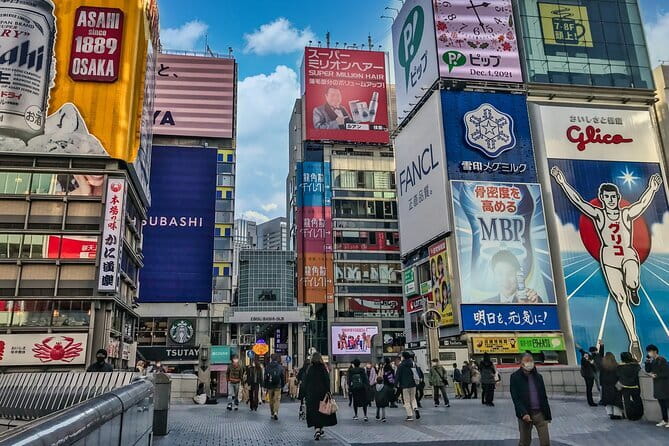
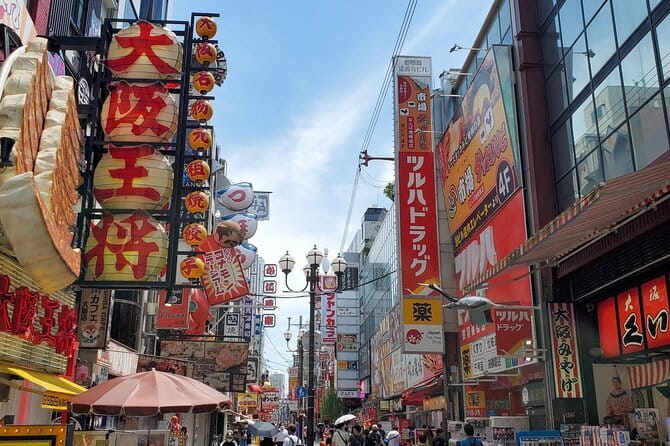
Dotonbori is the most instantly recognizable part of the route. Neon signs, the canal, entertainment venues, and restaurants create the Osaka image most people expect. The scheduled stop is only about 10 minutes, so think of it as a compact introduction and photo opportunity.
That short timing is both useful and limiting. You get a guide’s explanation of the area without spending half the tour in one crowded entertainment district. On the other hand, you will not have time to explore every side street, compare restaurants, or stop for a full meal.
I would use this moment to ask practical questions about returning later. Guides can point you toward food ideas, and the walk’s strongest value is often knowing which areas deserve a second visit. Since snacks are not included, plan to buy food separately if something catches your eye.
Hozen-ji Temple and a quieter corner
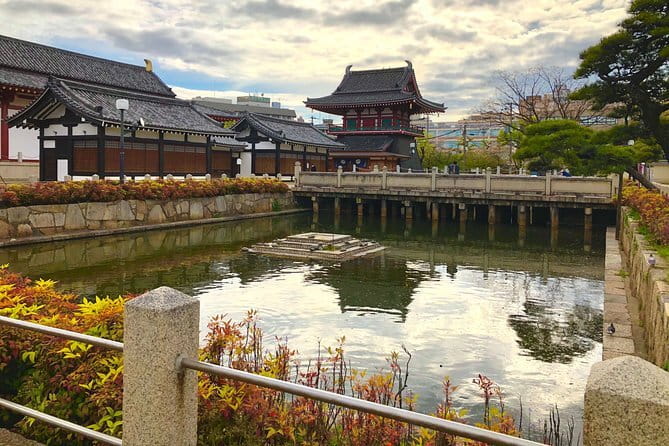
Hozen-ji Temple provides a sharp contrast with Dotonbori. Founded in 1637, the temple is known for its moss-covered statue of Fudō Myōō, a fierce Buddhist deity. The statue’s worn, green surface gives this small religious site a very different mood from the bright signs and restaurant fronts nearby.
You have about 20 minutes here. That is enough for the guide to explain the temple’s place in Osaka and for you to take in the statue without rushing through it. The stop also shows how older religious spaces remain part of daily city life even in the center of a major entertainment district.
Hozen-ji is a good example of why a guide helps. Without context, you might see a small temple tucked into a busy neighborhood and move on. With an explanation, the contrast becomes the point.
Kuromon Market and the food side of Osaka
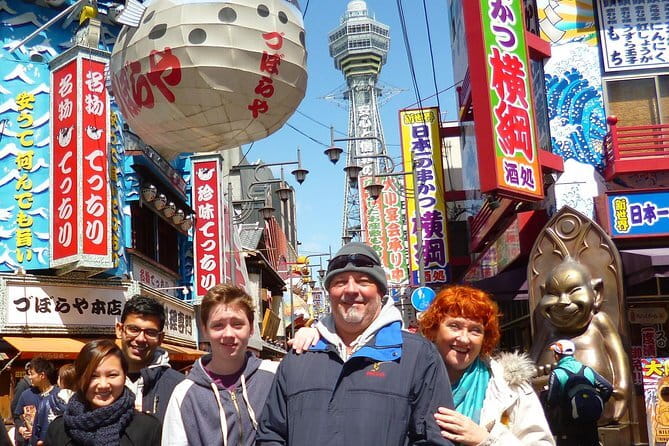
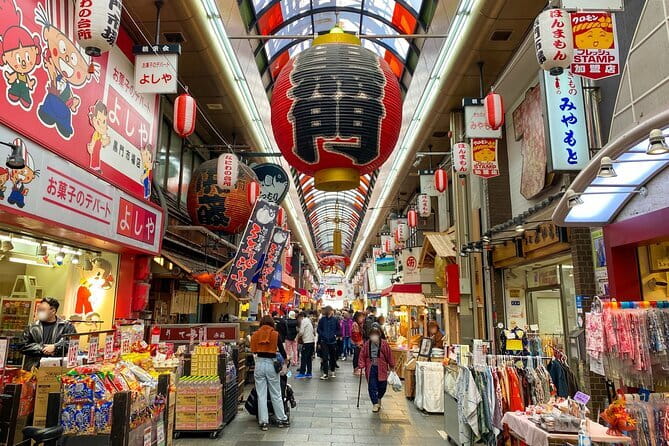
Kuromon Ichiba Market receives the longest stop, about 30 minutes. That makes sense. The market is known for seafood, produce, and local foods, and it is one of the best places on this route to understand Osaka’s reputation as a food-focused city.
The tour does not include snacks, so your food purchases are your own expense. That arrangement keeps the base price low, but you should budget extra if you want to taste something at the market. The guide can help explain what you are seeing and offer suggestions, which is useful when stalls display unfamiliar ingredients or prepared foods.
Thirty minutes is enough to get oriented and sample something if you choose. It is not enough for a slow market lunch. If you want to shop, eat several items, or take photographs, return independently after the walk.
I like this stop because it links food with everyday commerce. You are not simply being taken to a restaurant chosen for a tour group. You are seeing a working market and receiving advice that can help you make your own choices.
Nipponbashi and Osaka’s pop-culture district
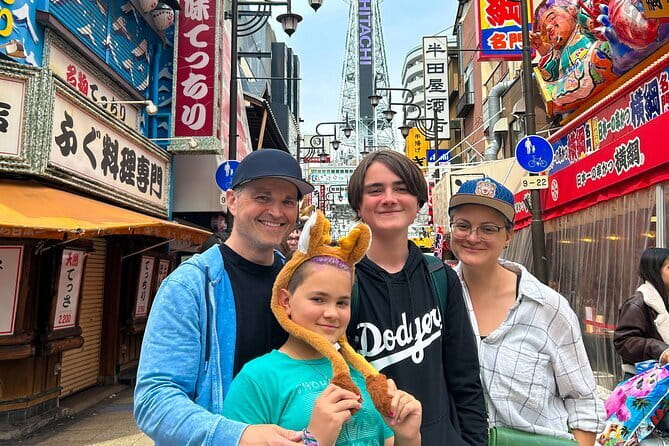
Nipponbashi gets about 10 minutes. This area is associated with electronics, anime, manga, and otaku culture, giving the walk another change of subject. The district fits naturally after Kuromon Market because both areas are close to Namba, yet they appeal to very different interests.
The brief stop is best for orientation. If you are looking for detailed shopping advice or want to browse electronics and anime goods, you will need more time later. The guide’s role here is to explain what makes Nipponbashi distinct and how it fits into Osaka’s modern identity.
Families with teenagers may find this section especially helpful. One family review described the tour as enjoyable for two teens, and that makes sense because the route includes more than temples and food. It gives younger visitors a chance to connect Osaka with current fashion, entertainment, and pop culture.
Dōguya-suji, where cooks shop for tools
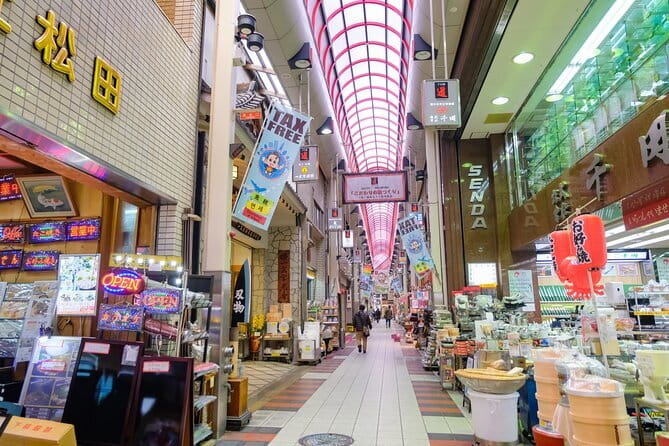
The final stop is Dōguya-suji, also called Kitchenware Street, with about 20 minutes allotted. The street is lined with shops selling kitchen tools, restaurant equipment, home goods, and cooking supplies. It is also known as the place where many of Osaka’s chefs go to buy knives.
This is one of the route’s most useful shopping stops. You may find items that are difficult to notice in a department store, from professional tools to ordinary household goods. The tour gives you a quick introduction, but serious shoppers should return with enough time to compare products and ask store staff questions.
The walk ends at Namba Grand Kagetsu, at 11-6 Nanbasennichimae. That finish works well if you plan to continue exploring Namba, return to Kuromon Market, or make your way to another part of central Osaka.
What the $25 price really gives you
At $25 per person, this tour is priced as an orientation walk rather than a food tour with tastings. All fees and taxes are included, as is the licensed guide. Snacks are not included, so the main extra cost depends on what you decide to buy at Kuromon Market or elsewhere.
I consider the price good value if you want a clear introduction to several Osaka districts in one sitting. You are paying for route planning, local explanation, and practical suggestions, not for admission tickets or a long meal. Since the stops are all public areas, the guide’s interpretation is the central product.
The small group limit of 12 improves that value. In a crowded city, a huge group can make street crossings and questions awkward. A group of this size should be easier to manage, although the actual experience can still depend on the day’s conditions and the assigned guide.
Timing, pace, and who should book
Morning and afternoon tours are available, so you can choose the time that fits your schedule. An afternoon walk may place you near Dotonbori and Namba as the area grows busier, while a morning departure may feel more relaxed. The supplied information does not promise a particular crowd level, so choose based on your wider plans rather than expecting a quiet route.
Wear comfortable shoes. The walk lasts about 2.5 hours and includes eight stops, with several sections through shopping and entertainment districts. One guide specifically recommended comfortable footwear, and that is sensible advice even though the tour is described as an easy walk.
The tour suits you best if:
- You are visiting Osaka for the first time.
- You want food suggestions without committing to a full food tour.
- You enjoy a mix of history, shopping, pop culture, and city streets.
- You are traveling with teenagers or adults who prefer variety.
- You want a guide to explain local districts instead of only pointing out landmarks.
It may not suit you if you want long visits at each stop, a formal tasting menu, or extensive shopping time. You will need to return on your own for those activities.
Confirmation is provided at booking. The tour is near public transportation, service animals are allowed, and most people can take part. Free cancellation is available up to 24 hours before the start time, while later cancellations and changes are not accepted.
Should you book this Osaka walking tour?
I would book it for an early Osaka day, especially if you want food ideas and a quick grasp of how Shinsaibashi, Namba, Dotonbori, Kuromon, and Nipponbashi fit together. The route has a useful balance: neon streets, a quiet temple, a market, youth culture, and the city’s famous kitchenware shops.
The main thing to remember is that this is a guided introduction, not a slow-paced food crawl. Bring comfortable shoes, keep money aside for snacks, and mark the places you want to revisit. At $25, a licensed guide and a 12-person maximum make this a practical way to get your bearings before exploring Osaka on your own.
FAQ
How long does the Osaka walking tour last?
The tour lasts approximately 2 hours and 30 minutes.
Where does the tour start?
It starts at Apple Shinsaibashi in Nishishinsaibashi, Osaka, at 1-chōme 5-5, Urban BLD Shinsaibashi.
Where does the tour finish?
The tour ends at Namba Grand Kagetsu, 11-6 Nanbasennichimae, Chuo Ward, Osaka.
What areas does the walking tour visit?
The route includes Horie Park, Amemura, Namba Hatch, Dotonbori, Hozen-ji Temple, Kuromon Market, Nipponbashi, and Dōguya-suji Kitchenware Street.
Are food and snacks included?
No. Snacks are not included, although the guide can provide food suggestions along the route.
How many people can join the tour?
The maximum group size is 12 people.
Are morning and afternoon tours available?
Yes. You can choose between morning and afternoon tour options.
Just added around Osaka
- Osaka Food Tour with 10 Classic Japanese Tastings & Drinks★ 5.0 · 38 reviews
- Osaka: Highlights & Hidden Gems Private Walking Tour★ 4.7 · 38 reviews
- Kyoto private tour (Shore excursion available from Osaka or Kobe port)★ 5.0 · 39 reviews
- Osaka Private Day Trip – Enjoy Your First-Time Visit to Osaka!★ 5.0 · 39 reviews
- Kyoto & Nara & Uji: Full Day Sightseeing Tour from Osaka or Kyoto★ 4.5 · 39 reviews
- Authentic SUSHI Course Cooking Class★ 5.0 · 39 reviews
- Osaka: Mind & Spirit Balance Temple Reiki Healing★ 5.0 · 41 reviews
- Osaka Afternoon Walking Tour with Osaka River Cruise★ 3.5 · 42 reviews
Food & Drink, compared.
Shinjuku Food Tour (13 Dishes at 4 Local Eateries)
Read our review →
Tokyo Tsukiji Fish Market Food and Culture Walking Tour
Read our review →
Shinsekai Food Tour with 13-15 Dishes at 5 Eateries
Read our review →
Osaka Food Tour: 13 Dishes at 5 Local Eateries
Read our review →
Shinjuku Food Tour (15 Dishes and 4 Eateries)
Read our review →
Best of Shinjuku: Izakaya Food Tour (4 Stops, 14+ Tastings)
Read our review →
Kyoto Night Foodie Tour in Gion (9+ dishes + 6 Sake tastings)
Read our review →
Hungry Osaka Street Food Tour:15 Tastings & 3 Drinks with a Local
Read our review →Browse the lists this tour appears in