
Reviewed · SAMURAI & NINJA EXPERIENCES
Samurai Ninja Museum Asakusa: Samurai Sword Lesson & Tour
Pick up a sword, step into another age. The Samurai Ninja Museum Asakusa combines a hands-on katana lesson with a guided look at samurai and ninja culture, making it more than a costume photo stop. I especially like the chance to wear hakama, armor, and a helmet, then learn a short sword routine with instructors such as Sensei Ryo. I also like the mix of history, photos, and ninja weapon practice. The main trade-off is time: two hours goes quickly, and some sessions can feel rushed when the group includes many young children.
The experience costs about $63 per person and has earned a strong 4.8 rating from 306 reviews. It works particularly well for families, first-time visitors to Japan, and anyone who wants to do something active in Tokyo rather than simply look at displays. Children under six cannot enter, and the maximum group size is 16, though private and small-group options are available.
In This Review
- Key points to know before you book
- What the two-hour experience is really like
- Getting dressed in hakama and samurai armor
- Learning the katana from Sensei Ryo and other instructors
- The Samurai and Ninja Museum tour
- Ninja weapons and shuriken practice
- Photos that are worth making room for
- Is $63 a fair price?
- Who will enjoy this most?
- Practical tips for a smoother visit
- Should you book the Samurai Ninja Museum Asakusa?
- FAQ
- How long does the Samurai Ninja Museum Asakusa experience last?
- How much does the experience cost?
- Is the tour conducted in English?
- Are costumes and equipment included?
- Can children participate?
- Does the experience include ninja activities?
- Can I cancel or pay later?
Key points to know before you book
- A real hands-on lesson: You learn basic katana handling and a choreographed routine rather than only posing with a sword.
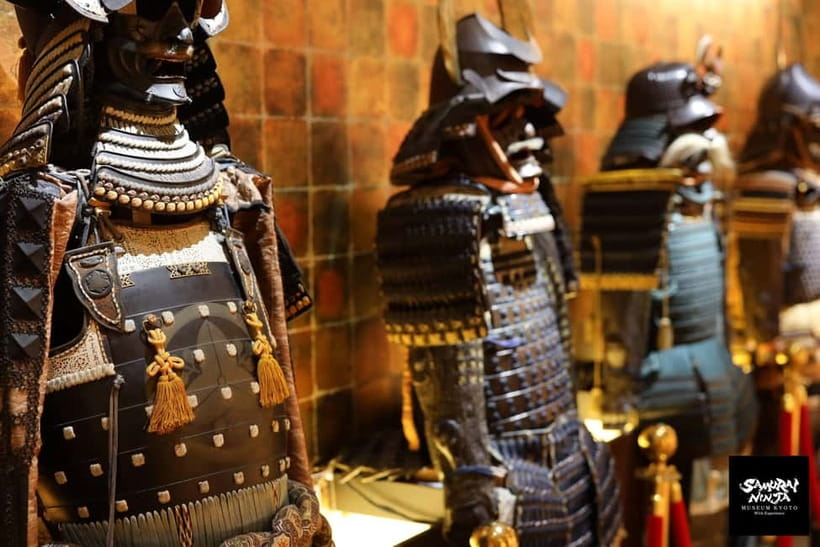
- Traditional clothing included: Hakama, samurai armor, and a helmet are provided for the workshop and photographs.
- History with lively guides: The museum tour covers samurai and ninja culture in English, with guides such as Ren, Momo, and Nao praised for making the subject accessible.
- Family-friendly sword play: Supervised practice with foam swords gives children and adults a playful way to try the movements.
- Ninja activities add variety: You can try throwing shuriken and, depending on the session, other ninja weapons.
- Plan for a compact venue: The space is described as small, so the atmosphere is intimate but movement can feel limited with a full group.
What the two-hour experience is really like
This is a short cultural activity with a clear rhythm: dress up, learn, play, look around, and take photographs. You are not signing up for a formal martial arts course, and you will not leave with advanced sword skills. You will, however, get a memorable introduction to samurai traditions in a format that keeps children and adults involved.
The English-speaking staff guide the activity from start to finish. The exact order can vary by option, and the meeting point may differ depending on the booking you choose, so check your confirmation carefully. The maximum group size is 16, while private and small-group formats are also offered.
The strongest part of the experience is the balance between watching and doing. A museum tour alone might suit a history enthusiast, but the sword lesson gives you something physical to remember. A costume session alone might produce good pictures but little context. Here, the two parts support each other.
More Museum Visits in Tokyo
- Tokyo: teamLab Planets TOKYO Digital Art Museum Entry Ticket
★ 4.6 · 9,779 reviews - Tokyo: Samurai Ninja Museum Guided tour and Experience
★ 4.6 · 1,010 reviews - Ninja Experience (Family Friendly) at Samurai Ninja Museum TOKYO
★ 5.0 · 441 reviews
Getting dressed in hakama and samurai armor
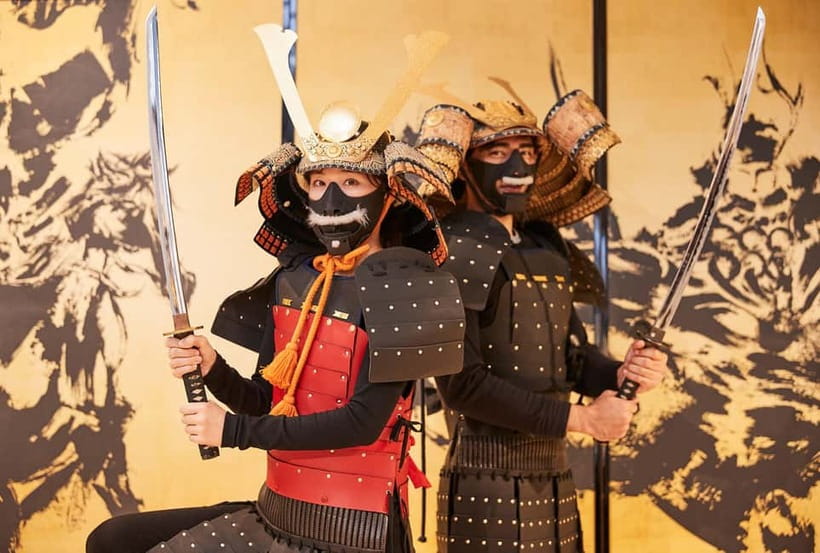
The activity begins with the visual transformation. You put on hakama, the traditional pleated garment associated with samurai dress, along with samurai armor and a helmet. This is where the experience becomes especially appealing for families, since children can quickly move from observing to playing a role.
The clothing is included in the price, as are the themed photo opportunities. You can pose against samurai-style backgrounds and create pictures that look quite different from the usual Tokyo sightseeing snapshot. The helmet and armor also help you understand how much of the warrior image came from clothing, equipment, and ceremony, not only sword fighting.
Allow yourself a little patience during this part. Dressing several people takes time, particularly in a family group, and the overall schedule is only two hours. The payoff is worthwhile, but you should not expect unlimited time for costume changes or elaborate photography.
The venue has been described as somewhat small. That can make the session feel personal, but it also means the room may become tight when everyone is dressed and taking pictures. If your group includes very young children or anyone who dislikes crowded indoor activities, a private or smaller option may be more comfortable.
Learning the katana from Sensei Ryo and other instructors
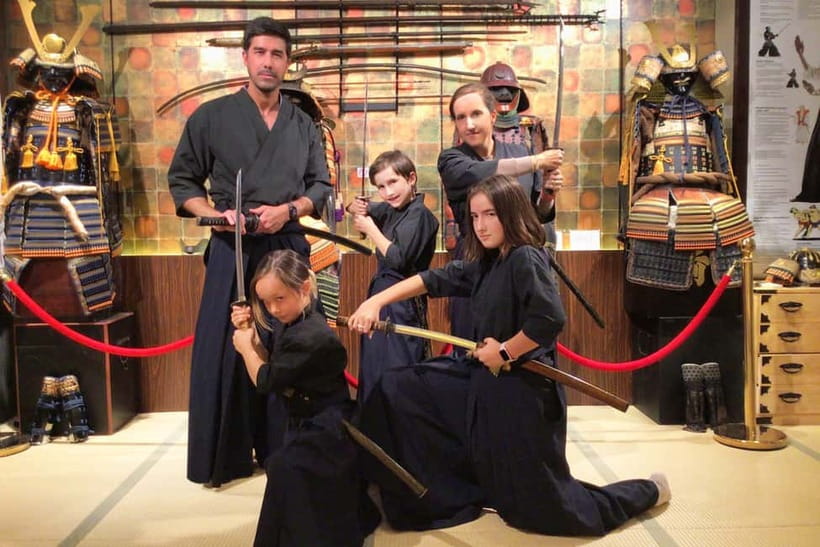
The sword lesson is the heart of the experience. The instructor demonstrates how to hold the katana and introduces basic movements before leading the group through a simple routine. Several people singled out Sensei Ryo for his patience, professionalism, humor, and ability to teach complete beginners.
That last point matters. You do not need previous martial arts experience or special coordination. One parent described being worried about coordination but still managing to follow the routine with clear instruction. The lesson is designed to make beginners feel successful quickly.
The routine has a choreographed quality rather than being an actual combat class. You practice controlled movements, and some sessions finish with a sword dance or a longer sequence. The sense of achievement comes from remembering the order and performing it together, not from mastering a fighting system in a single visit.
You may also take part in a supervised, family-friendly sword contest using foam swords. This is the part that turns the lesson into a shared activity. Adults can join children, couples can play against one another, and nobody needs to treat it too seriously. The sword play is described as fun rather than aggressive, but you should still follow the instructor’s safety directions closely.
A small caution: the length and pace of the lesson can vary. Some people felt they wanted more time to practice, while one comment said a very short family-friendly lesson did not feel like a full class. In a larger group, the instructor may need to keep the routine moving so everyone gets a turn.
The Samurai and Ninja Museum tour
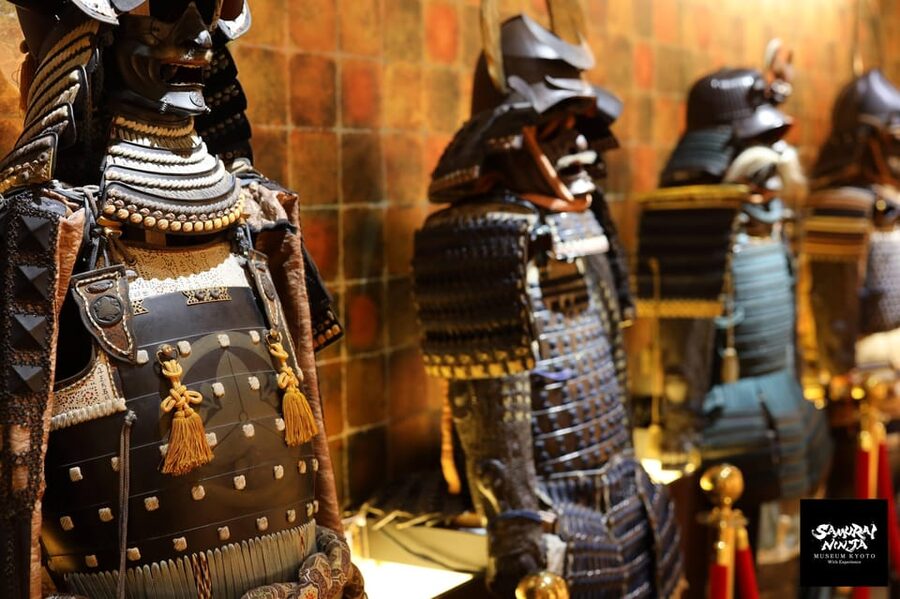
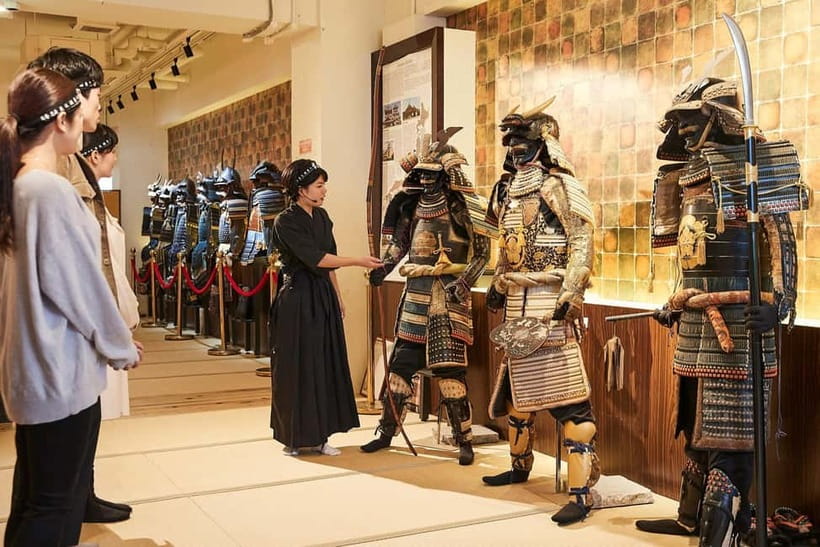
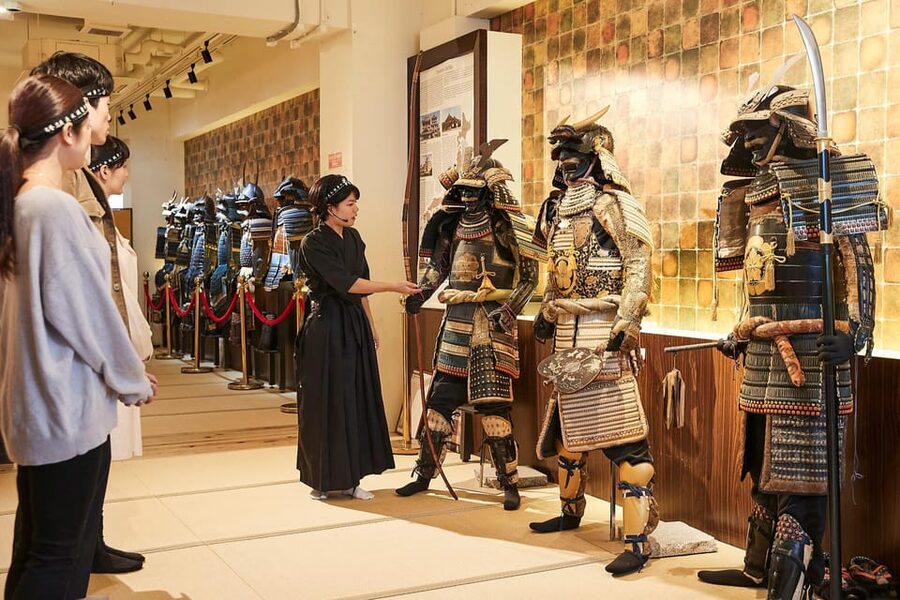
The museum portion gives the activity its historical purpose. Guides explain the development of samurai and ninja culture, from early origins through the end of the samurai era and into modern times. The displays include samurai antiques and ninja-themed items, offering a compact introduction rather than a large museum visit.
I would set your expectations correctly. This is a small collection in a dedicated experience venue, not a major national museum with room after room of objects. Its strength is the guide. Ren has been praised for lively explanations, while Momo and other English-speaking guides are described as friendly and engaging with children.
The tour can add surprising value if you have already spent the day seeing Tokyo landmarks. One family expected mainly a sword lesson and found that the museum explanation taught them more about Japanese history than some city tours. That is a useful reminder that the guide-led context is not just filler between activities.
The history is presented for a general audience. You get the broad story and key ideas without needing prior knowledge. If you want detailed discussion of individual armor pieces, sword-making techniques, or the political structure of every period, you may find the tour too brief.
Some people also felt the museum section was rushed. That criticism is fair, especially when the lesson, dressing, photos, and ninja activities all share the same two-hour slot. Pay attention during the explanation, and ask questions when the guide invites them, since there may not be much spare time at the end.
More Samurai & Ninja Experiences in Tokyo
- Tokyo: Samurai Restaurant Show Ticket with 2 Drinks
★ 4.5 · 1,307 reviews - Tokyo: Samurai Sword & Archery Class from Samurai Descendant
★ 5.0 · 603 reviews - Best Samurai Experience in Tokyo
★ 5.0 · 458 reviews - Tokyo: Samurai Entertainment Night Show in Kanda Shrine
★ 4.6 · 417 reviews
Ninja weapons and shuriken practice
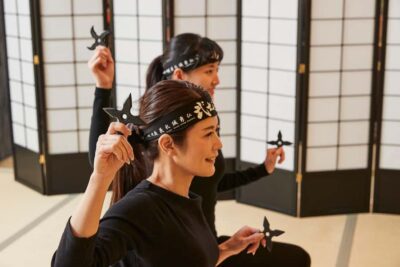
The ninja portion gives the program a second style of fun. You can try throwing shuriken, the star-shaped weapons often linked with ninja imagery, at a target. Some sessions also include a ninja weapons trial.
This activity is a good change of pace after the more precise katana routine. The sword lesson asks you to remember controlled movements, while shuriken throwing is a quick, competitive challenge. Several family groups enjoyed the game element, and one session ended with a small competition.
The ninja segment is also useful for mixed-age groups. A child who is less interested in the historical talk may become attentive once there is a target to aim at. Adults often enjoy it for the same reason: it is simple, a little silly, and easy to share.
Do not expect a long ninja training course. The activity is an introduction and a playful trial, not professional instruction. The amount of time available depends on the schedule and group size.
Photos that are worth making room for
The photo session is not an afterthought. The themed backgrounds, armor, helmet, and hakama create some of the most distinctive pictures you can take during a Tokyo trip. You can photograph the whole family as a group, then take individual portraits if the schedule allows.
I recommend deciding in advance which photos matter most. If you try to photograph every possible pose, you may lose time needed for the sword lesson or museum tour. A few well-planned group pictures will give you better memories than a rushed collection of nearly identical shots.
The costume also gives children a concrete souvenir of the activity, even though no physical item is included. They can see themselves as part of the story for a few minutes, which is often more memorable than looking at a display behind glass.
Is $63 a fair price?
At $63 per person, this is not the cheapest short activity in Tokyo. The value depends on how much of the package you use. You receive the sword lesson, hakama, armor, helmet, museum tour, themed photo opportunities, and ninja weapon practice in about two hours.
For a family, the price pays for several kinds of entertainment at once. You are not simply buying admission to a museum. You are paying for instruction, costumes, staff-led activities, and a shared experience that can suit adults and children together.
The price looks less attractive if you mainly want a serious museum visit or a long martial arts class. The museum is compact, and the sword practice is introductory. You should book it for the combination, not for any single element.
I think the package is strongest for families with children aged six and older, couples who enjoy playful cultural activities, and first-time visitors who want a simple introduction to samurai and ninja culture. It is also useful on a rainy Tokyo day because the program is indoors, though the supplied information does not describe the exact venue layout or facilities beyond wheelchair accessibility.
Free cancellation is available up to 24 hours before the activity for a full refund, and you can reserve now and pay later. Those terms are useful when you are arranging a busy Tokyo schedule, but the start time and meeting point depend on the option you select.
Who will enjoy this most?
Families are the clearest match. Children aged seven to nine have enjoyed the ninja practice, while older children and teenagers have responded well to the sword lesson, history, and competition. The guides are used to keeping younger participants involved, and the activity includes enough movement to prevent the museum section from feeling too long.
Adults should not assume it is only for children. The instructors add humor, the clothing makes good photos, and the routine gives grown-ups a chance to take part rather than supervise from the side. Couples have enjoyed the foam sword play, especially when they are willing to look a little ridiculous together.
It also suits visitors who want a cultural activity without committing to a full-day excursion. Two hours is easy to fit between sightseeing in Asakusa and other Tokyo plans. The short format is both its strength and its limitation: you get a lively introduction, but not extensive study.
You may want to skip it if you dislike dressing up, staged photographs, group games, or short guided talks. It is also not suitable for children under six, who cannot enter the venue.
Practical tips for a smoother visit
Book a small or private group if the experience is important to your trip and you want more room for questions and practice. A full group can still be enjoyable, but the schedule may feel tighter, particularly when many small children are present.
Wear something comfortable beneath the provided clothing. The activity includes dressing, standing, sword movements, photos, and weapon practice, so restrictive clothing would make the session less pleasant.
Ask about the order of activities when you arrive. Some sessions begin with photos and dressing, then move to the sword lesson and museum tour. Others may arrange the elements differently. Knowing the plan helps you decide when to take pictures and when to focus on the guide.
Keep your expectations centered on fun and basic skills. The instructors can teach you a short routine, but two hours is not enough to develop advanced technique. Treat the sword play as controlled performance and cultural recreation.
The English-language guidance is a major practical advantage. Instructors including Ryo, Kenny, Koki, Kai, and others have been praised for clear teaching and friendly manner. Staff names and assignments can vary, so do not book solely to meet one particular instructor.
Should you book the Samurai Ninja Museum Asakusa?
I would book this if you want an active, family-friendly Tokyo experience that mixes culture with play. The best parts are the costume session, the carefully taught beginner sword routine, the lively English explanations, and the chance to share the activity with your children or partner.
I would book the small-group or private option if you have room in your budget and care about practice time. If you choose the standard session, arrive ready to participate and accept that the museum tour and lesson may move briskly.
At $63, the value is good for the full combination of activities, especially for families. It is not a substitute for a large museum or a serious martial arts course, but it offers something those options do not: you get to put on the armor, hold the sword, try the movements, and leave with photographs that show you did more than look at Tokyo.
FAQ
How long does the Samurai Ninja Museum Asakusa experience last?
The activity lasts two hours.
How much does the experience cost?
The listed price is $63 per person.
Is the tour conducted in English?
Yes. The live tour guide and activity instruction are provided in English.
Are costumes and equipment included?
Yes. Hakama, samurai armor, a samurai helmet, and equipment for the sword lesson are included.
Can children participate?
Children can participate if they are at least six years old. Children under six cannot enter the samurai venue.
Does the experience include ninja activities?
Yes. The package includes a ninja weapons trial, including shuriken throwing in the described activities.
Can I cancel or pay later?
You can cancel up to 24 hours in advance for a full refund. Reserve now and pay later is also available.
Just added around Tokyo
- Tokyo 6hr Instagram Highlights Private Tour with Licensed Guide★ 5.0 · 38 reviews
- Tokyo Small Group Tour with Guide★ 4.5 · 38 reviews
- Tokyo Sumo Experience with Live Show & Audience Challenge★ 5.0 · 38 reviews
- Japanese Food Cooking Class in Asakusa, Tokyo★ 5.0 · 39 reviews
- Very popular in Harajuku♡Animal petting zoo★ 4.6 · 39 reviews
- Ramen Making from Scratch with Tokyo Mom(Vegan Option Available)★ 5.0 · 39 reviews
- Tokyo: Kimono Rental inside Shinjuku Gyoen National Garden★ 4.9 · 39 reviews
- Tokyo JDM Night: 600hp C63s AMG Edition 1 (Private)★ 4.9 · 39 reviews
Samurai & Ninja Experiences, compared.
Samurai Ninja Museum Guided tour and Experience
Read our review →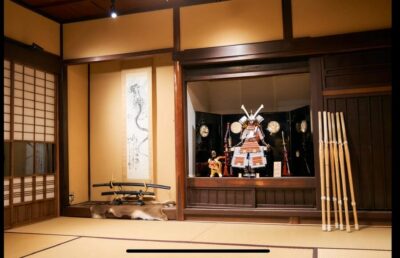
Kendo and Samurai Experience with Uniform and Gear
Read our review →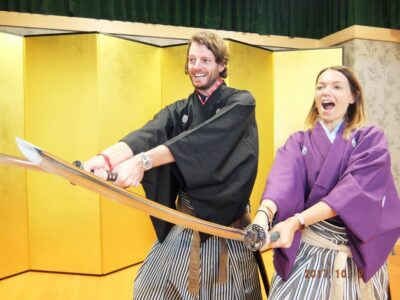
Samurai Sword Class by Experts in Traditional Arts
Read our review →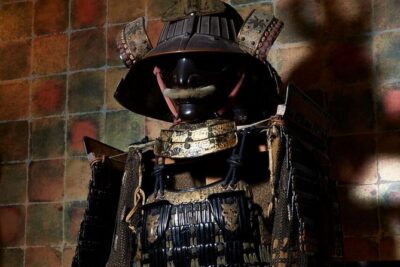
Skip the lines Basic Ticket at SAMURAI NINJA MUSEUM KYOTO
Read our review →
Samurai Sword & Archery Class from Samurai Descendant
Read our review →
Browse the lists this tour appears in