
Reviewed · WORKSHOPS
Tokyo Keen Japanese Knife and Sashimi Workshop
Sharpen steel, then eat your lesson. This Tokyo workshop makes Japanese knife culture practical, with a hands-on sashimi session and a satisfying tuna zuke-don lunch. I especially like the mix of knife technique and cooking, plus the patient instruction from chef Naoya and interpreter Hiromi. The main consideration is the $130.78 price, which is fair for a two-hour class with lunch and sake, but high if you only want a quick cooking demonstration.
You will learn more than how to slice fish. The class covers how Japanese knives are made, how to sharpen one on a whetstone, and how cutting style affects sashimi. The group is capped at eight, which should give you a better chance to practise. Still, the experience is focused on knives and one rice bowl, so it may not suit you if you want a broad Japanese cooking class.
In This Review
- Key points before you book
- Why this Tokyo knife workshop feels different
- Arriving at Kappodo H.Q. in Nishiazabu
- First lesson: how Japanese knives are made
- Watching the sashimi cutting demonstration
- Taking your turn with the Japanese knife
- The whetstone lesson while the fish marinates
- Making tuna zuke-don for lunch
- What the $130.78 price really covers
- Who will enjoy this class most
- Practical booking advice for Tokyo
- Should you book the Japanese knife and sashimi workshop?
- FAQ
- Where does the workshop take place?
- How long does the experience last?
- How many people can join the class?
- Is lunch included?
- Are drinks included?
- Are tools and an apron provided?
- Can I cancel for a full refund?
Key points before you book
- You sharpen a Japanese knife yourself: The whetstone lesson turns an abstract skill into something you can practise at home.
- You cut sashimi by hand: An instructor first demonstrates the technique, then you use a Japanese knife yourself.
- You make tuna zuke-don for lunch: The marinated fish bowl gives the class a tasty finish and a reason to pay attention to the preparation.
- Chef Naoya and interpreter Hiromi lead the class: Instruction is given in Japanese and English, with hands-on demonstrations and patient explanations.
- The group is limited to eight people: This is a useful size for asking questions and getting repeated practice.
- The $130.78 fee includes practical extras: Tools, an apron, lunch, tea, original sake tasting, a participation certificate, and 10% off the same-day shop are included.
Why this Tokyo knife workshop feels different
Many Tokyo food classes focus on making a dish. This one begins with the tool itself. You learn about Japanese knives, the way they are made, and the customs connected with them before you start cutting fish.
That order matters. A knife is not treated as a disposable kitchen item here. You get a sense of why sharpness, angle, and controlled movement matter so much when preparing sashimi. Even if you never buy a Japanese knife, the lesson can change the way you handle your own kitchen tools.
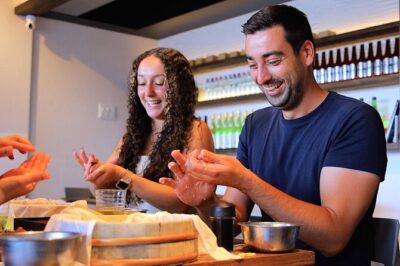
The class also avoids the usual split between watching and doing. You observe a professional demonstration, then take your turn with the knife. The practical work is not an optional extra. It is central to the session.
The maximum group size is eight people. That is small enough to make the class feel personal without requiring a private booking. You should still expect a shared lesson rather than one-to-one coaching, but repeated practice and questions are part of the experience.
A few more Tokyo experiences worth weighing up
- Sushi Making Tokyo Roll and Authentic Japanese Sushi Class
★ 5.0 · 3,971 reviews - Tokyo: Roll and Authentic Sushi Making Class in Asakusa
★ 4.9 · 1,957 reviews - Tokyo Shinjuku Chopsticks Making Class
★ 5.0 · 1,763 reviews
Arriving at Kappodo H.Q. in Nishiazabu
The workshop starts at Kappodo H.Q., also identified as the Tokyo D Kitchen Studio and Cooking Workshop. The address is DK Building, Nishiazabu 2-chome 21-12, Minato City, Tokyo 106-0031. It is near public transportation, and the activity finishes back at the same meeting point.
That return to the starting point keeps the logistics simple. You do not need to arrange transportation between a restaurant, a kitchen, and a separate knife shop. Private transportation is not included, so you will make your own way to the studio.
Allow enough time to find the building. The address includes several names, and the Japanese address format may look unfamiliar if you are reading it on a phone. A mobile ticket is included with the booking, so keeping the confirmation easy to access should help.
The workshop lasts about two hours. It is a compact choice for a day when you also want to visit Nishiazabu, Roppongi, or other parts of central Tokyo. The short format also means the class moves with purpose. You will not spend half a day making several dishes.
First lesson: how Japanese knives are made
The opening explanation sets up the rest of the class. You learn how a Japanese knife is made and hear about the culture and customs surrounding Japanese knives.
The value here is context. If you only watch someone cut sashimi, you may copy a movement without understanding it. Learning about the knife first gives you a better reason to pay attention to blade sharpness, the way the knife is held, and how the cut is made.
This portion may appeal most to cooks, food lovers, and anyone interested in Japanese craftsmanship. It is also useful for beginners because you are not expected to arrive with technical knowledge. The class is designed to explain the basics before asking you to work with the knife.
The available information does not specify the exact knife model or whether you take a knife home. Do not book this experience expecting a knife purchase to be included. The tools used in the lesson and the apron are provided for the class.
Watching the sashimi cutting demonstration
Next, the instructor shows how to cut sashimi with a Japanese knife. This is where the difference between ordinary chopping and sashimi preparation becomes clear.
Sashimi cutting calls for clean, controlled movement. The goal is not to saw through the fish or hack it into pieces. You watch the professional technique first, then try it yourself. That demonstration-and-practice pattern was one of the most praised parts of the class, with repeated practice helping participants feel more comfortable.
The format is friendly to people from outside Japan. Chef Naoya teaches with support from Hiromi, the interpreter, and instruction is given in both Japanese and English. A useful detail from the experience is that the instructor and interpreter explain patiently and answer questions, rather than rushing through the technical parts.
You should not expect to become a sashimi professional in two hours. You will, however, leave with a better grasp of how a Japanese knife is used and why the cutting style differs from what you may know at home.
A completely different kind of day out in Tokyo:
- Mt Fuji and Hakone 1-Day Bus Tour Return by Bullet Train
★ 5.0 · 26,383 reviews - 1-Day Tokyo Bus Tour
★ 5.0 · 14,250 reviews - Tokyo: TOKYO SKYTREE® Admission ticket
★ 4.5 · 11,192 reviews - Tokyo: teamLab Planets TOKYO Digital Art Museum Entry Ticket
★ 4.6 · 9,779 reviews
Taking your turn with the Japanese knife
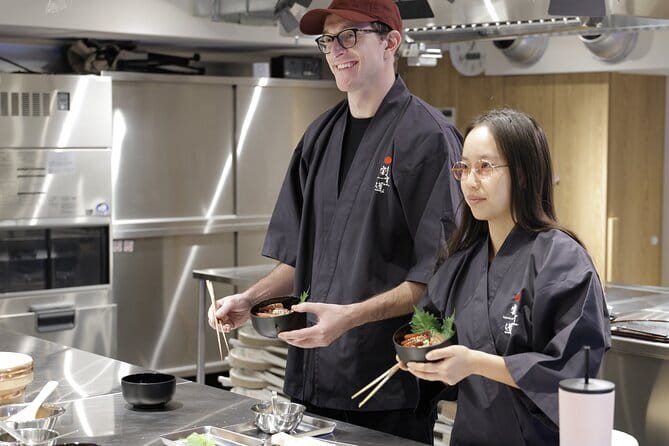
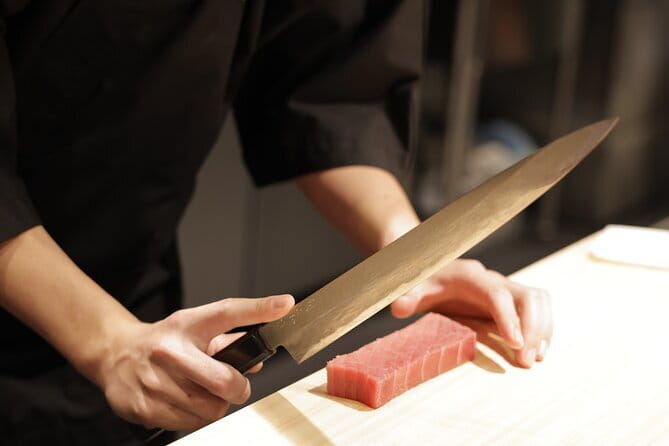
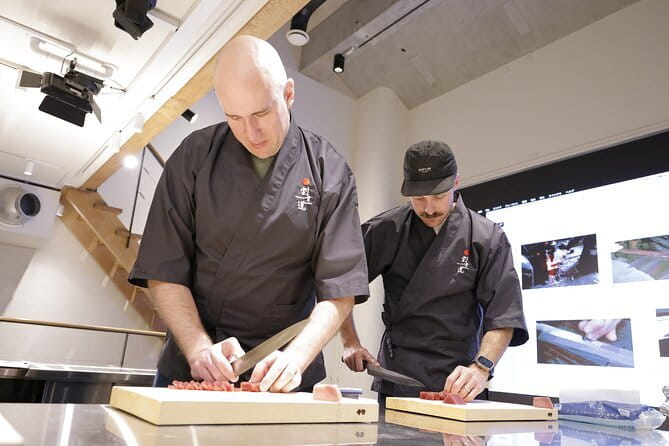
The hands-on cutting section is the real test of the workshop. You use a Japanese knife to cut sashimi and can feel how sharp it is. That physical sensation teaches something a lecture cannot.
For a first attempt, the work may feel precise and unfamiliar. The class style is different from the way many home cooks use a Western chef’s knife. Rather than forcing speed, you can focus on the movement and follow the instructor’s corrections.
Repeated attempts are especially valuable. The teaching approach allows you to practise until the motion makes more sense. That makes this a better choice for a curious beginner than a class where you simply make one cut for a photograph.
The experience information does not state whether participants handle raw fish before the instructor demonstration or how much fish each person receives. It does make clear that you practise sashimi cutting and use the result in the meal. If you have dietary restrictions, check with the provider before booking, since the included lunch centers on marinated sashimi.
The whetstone lesson while the fish marinates
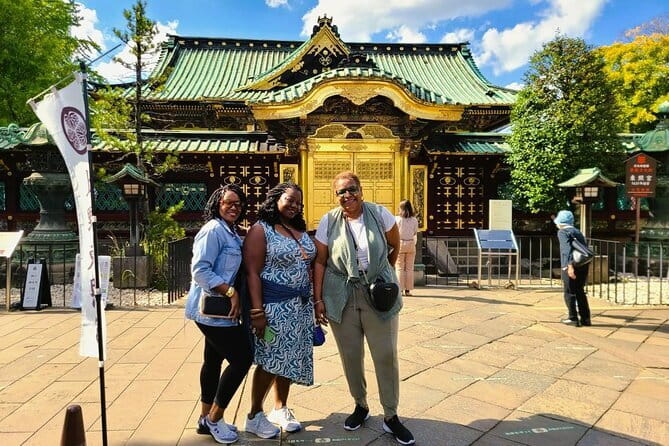
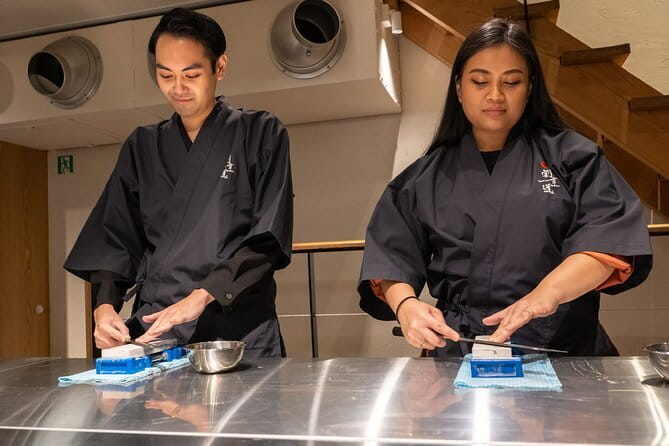
While the fish is marinating, the focus shifts back to the knife. You learn how to sharpen a Japanese knife using a whetstone.
This is one of the strongest reasons to choose the class. Sharpening is often the part of knife ownership that gets ignored. A good knife can perform poorly if its edge is dull, and replacing a knife is not the same as learning how to maintain it.
The class welcomes beginners to the whetstone lesson, with the instructor helping you through the process. You learn by using the stone, not just watching a short explanation. That makes the skill easier to remember when you return home.
The exact whetstone brand, sharpening angle, and maintenance schedule are not specified, so you should treat this as an introduction rather than a full knife-maintenance course. Still, the lesson gives you a practical starting point and a better feel for the care Japanese knives require.
Making tuna zuke-don for lunch
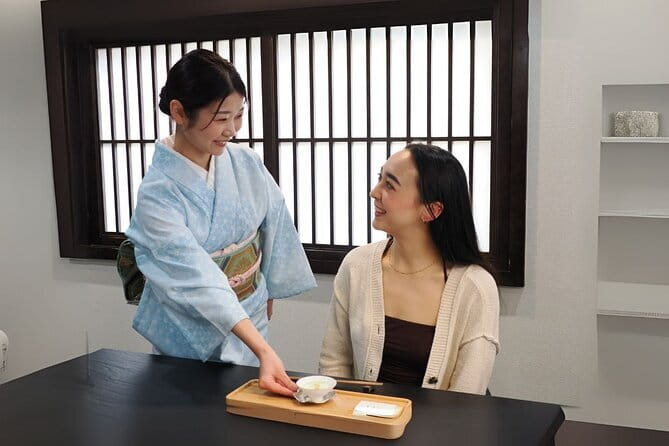
After the knife work, you prepare zuke-don. This is a bowl of rice topped with marinated sashimi, usually tuna, although the fish may change according to availability.
The class uses the marinating time well. You learn knife sharpening instead of waiting around, then return to assemble the meal. That keeps the two-hour schedule full without making the experience feel like a race.
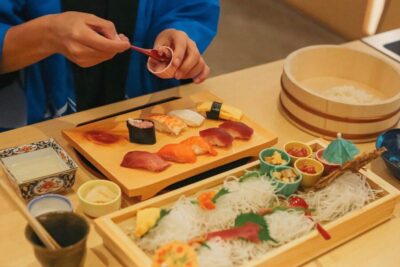
The final dish is tuna zuke-don, served with miso soup. You eat the bowl you made, which gives the earlier cutting and marinating lessons a clear purpose. The meal is not simply a snack added to the booking. It is the result of the work you completed in the studio.
Tea and an original sake tasting are also included. The sake is a tasting rather than a full drinks service, so you should not approach this as a bar experience. It is a pleasant Japanese touch at the end of a food-focused class, and the non-alcoholic tea gives you another option.
The fish can vary depending on supply. If tuna is important to you, keep that qualification in mind. The advertised dish is tuna zuke-don, but the workshop reserves the right to use another available fish.
What the $130.78 price really covers
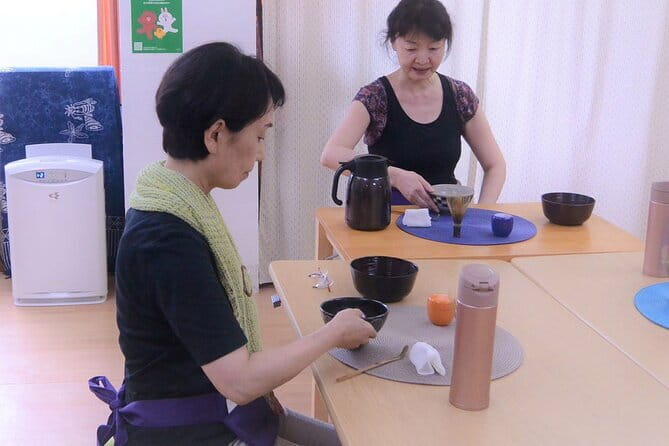
At $130.78 per person, this is not a budget activity. The better question is what you receive for the fee.
You get roughly two hours of instruction, all lesson tools, an apron, knife-making background, sashimi practice, whetstone sharpening, a cooking lesson, lunch, miso soup, tea, an original sake tasting, a guide, and a certificate of participation. You also receive 10% off items in the first-floor shop on the same day.
That package can offer good value if you are genuinely interested in Japanese knives. The hands-on practice is the key. A meal alone would not justify the price for many people, but a meal combined with instruction, equipment, and supervised technique is easier to assess as a worthwhile splurge.
The certificate is a small extra, not a professional qualification. The shop discount may matter if you plan to buy a knife or related item, but do not let it drive your decision. Buy only if you understand what you need and can manage the practical issues of transporting and caring for a Japanese knife.
Group discounts are available, which may improve the value for families or friends booking together. The class is also booked, on average, 46 days in advance. That suggests you should plan ahead, especially if your Tokyo dates are fixed.
Who will enjoy this class most
I would recommend this workshop to you if you fit one or more of these descriptions:
- You cook at home and want a better understanding of knife care.
- You are interested in sashimi preparation, not just eating it.
- You enjoy learning a specific craft in a small group.
- You want a food experience with cultural context.
- You like taking home a skill rather than only a photograph.
- You are comfortable spending $130.78 for a focused two-hour activity.
It is also a good fit for a couple, a small group of friends, or a solo participant who enjoys structured instruction. The eight-person limit should make it easier to take part than a large cooking class.
I would think twice if you dislike raw fish, cannot drink alcohol, or want a broad menu with several Japanese dishes. The main food is sashimi zuke-don, and the class stays tightly focused on knives, sashimi, and one rice bowl.
Practical booking advice for Tokyo
Confirmation is provided at booking, and the experience accepts a mobile ticket. The meeting point is near public transportation, but private transportation is not part of the package. Check the exact address carefully because the studio is presented under more than one name.
Free cancellation is available until 24 hours before the local start time for a full refund. Changes or cancellations inside that 24-hour window are not accepted for a refund. The workshop also requires a minimum number of participants. If that minimum is not met and the class is canceled, you can receive a full refund or be offered another date or experience.
The class is suitable for a planned Tokyo itinerary rather than a last-minute filler. With an average booking time of 46 days ahead, reserve early if you want a particular date.
Should you book the Japanese knife and sashimi workshop?
Book it if you want an active food lesson with a clear Japanese focus. The best parts are the real knife practice, the whetstone instruction, and the chance to eat the zuke-don you prepare. Patient English support from Hiromi and chef Naoya’s demonstrations make the class approachable for international participants.
Skip it if you are looking for a cheap lunch, a large menu, or a general introduction to Japanese cuisine. At $130.78, this is a specialist workshop, not a casual cooking stop. For home cooks and knife enthusiasts, the focused instruction and included meal make the price easier to justify. For everyone else, Tokyo offers less expensive food activities.
FAQ
Where does the workshop take place?
The workshop starts and ends at Kappodo H.Q., also called Tokyo D Kitchen Studio and Cooking Workshop, at DK Building, Nishiazabu 2-chome 21-12, Minato City, Tokyo 106-0031.
How long does the experience last?
The workshop lasts approximately two hours.
How many people can join the class?
The activity has a maximum of eight participants.
Is lunch included?
Yes. You make and eat a tuna zuke-don bowl, served with miso soup. The fish may vary depending on availability.
Are drinks included?
Yes. Tea and a tasting of the provider’s original sake are included.
Are tools and an apron provided?
Yes. All tools and aprons used during the lessons are included.
Can I cancel for a full refund?
Yes. You can cancel at least 24 hours before the local start time for a full refund. Cancellations or changes made less than 24 hours before the start time are not accepted for a refund.
Just added around Tokyo
- Tokyo 6hr Instagram Highlights Private Tour with Licensed Guide★ 5.0 · 38 reviews
- Tokyo Small Group Tour with Guide★ 4.5 · 38 reviews
- Tokyo Sumo Experience with Live Show & Audience Challenge★ 5.0 · 38 reviews
- Japanese Food Cooking Class in Asakusa, Tokyo★ 5.0 · 39 reviews
- Very popular in Harajuku♡Animal petting zoo★ 4.6 · 39 reviews
- Ramen Making from Scratch with Tokyo Mom(Vegan Option Available)★ 5.0 · 39 reviews
- Tokyo JDM Night: 600hp C63s AMG Edition 1 (Private)★ 4.9 · 39 reviews
- Tokyo: Kimono Rental inside Shinjuku Gyoen National Garden★ 4.9 · 39 reviews
Workshops, compared.
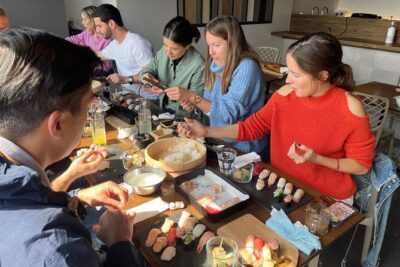
Sushi Making Tokyo Roll and Authentic Japanese Sushi Class
Read our review →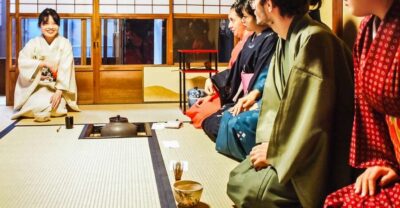

Roll and Authentic Sushi Making Class in Asakusa
Read our review →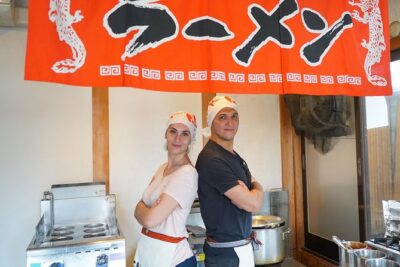
Ramen Cooking Class at Ramen Factory in Kyoto
Read our review →
Sushi Making Class in a Happi Coat near a Famous Spot
Read our review →
Sushi Making Osaka Roll and Authentic Japanese Sushi Class
Read our review →Browse the lists this tour appears in