
Reviewed · TRADITIONAL CRAFT WORKSHOPS
Tokyo: Kintsugi Art Repair Workshop
Broken pottery gets a second life in Tokyo. This small-group kintsugi workshop lets you practice a traditional Japanese repair craft with an English-speaking instructor and take home your own finished piece. I like the hands-on format and the calm, careful teaching, especially for first-time crafters. I also like that the session lasts only 90 minutes, so it fits neatly into a busy Tokyo day.
The main consideration is that this is a shortened modern workshop, not the full months-long lacquer process used in traditional kintsugi. Your finished piece is mainly decorative, and if you bring your own vessel, the repair may not be finished on time if the damage is too large.
In This Review
- Key points at a glance
- What kintsugi means beyond gold lines
- Finding the Nihonbashi meeting point
- A quiet class with close instruction
- The 90-minute kintsugi process
- Choosing a piece or bringing your own
- What you take home
- Is $125 a fair price?
- Who will enjoy this most
- Practical advice before you book
- The strongest reasons to book
- Should you book the Tokyo kintsugi workshop?
- FAQ
- How long does the kintsugi workshop last?
- How much does the workshop cost?
- Where does the workshop meet?
- How far is the meeting point from Asakusa?
- Is the workshop taught in English?
- How many people can join the class?
- What should I bring?
- Can I bring my own pottery to repair?
- Can children join the workshop?
Key points at a glance
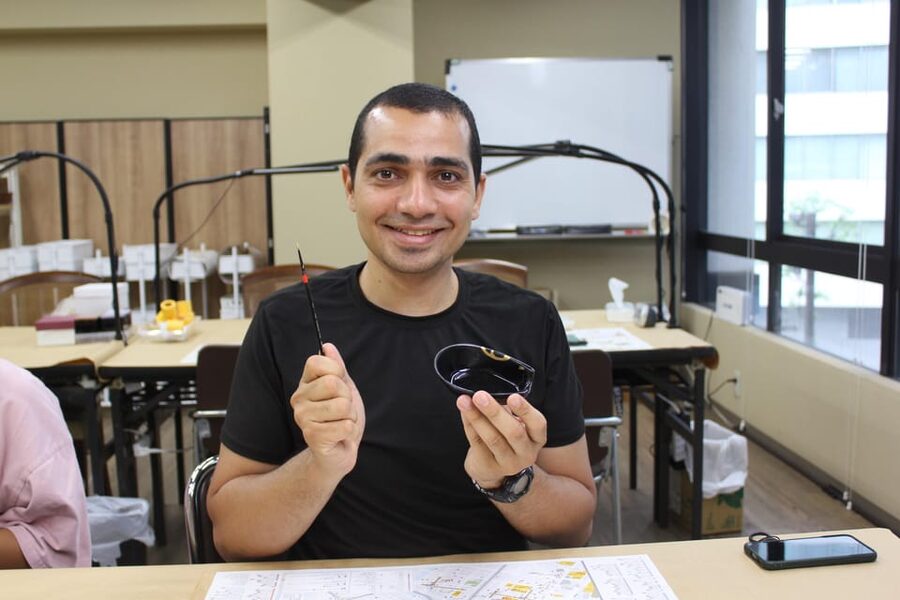
- Small classes of up to five: You get close guidance instead of being lost at a large craft demonstration.
- A real hands-on repair: You may work through joining pieces, filling gaps, sanding, and adding metallic color to the seams.
- English support: Instruction is available in English, with Japanese craft teaching supported by interpretation when needed.
- A useful Tokyo location: The meeting point is in Nihonbashi, about 15 minutes by subway from Asakusa.
- A souvenir you make yourself: You take home a repaired ceramic piece rather than a mass-produced gift.
- Bring your own item carefully: Only ceramic vessels qualify, with limits on size, cracks, chips, and handles.
What kintsugi means beyond gold lines
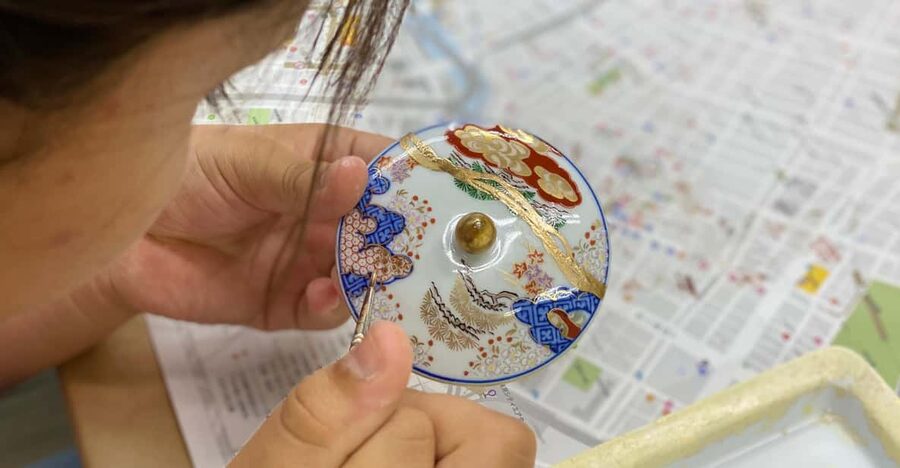
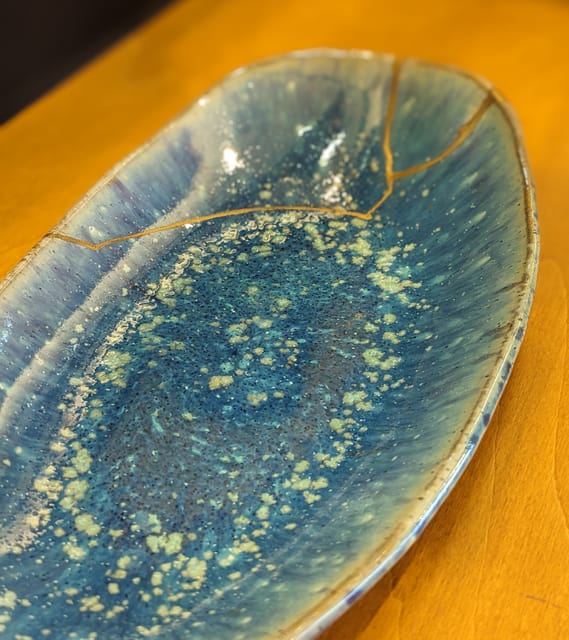
Kintsugi is the Japanese art of repairing broken pottery with lacquer and metallic color, often gold. Instead of hiding a crack, the repair draws attention to it and makes the object interesting in a new way.
That idea gives this workshop more weight than a standard souvenir-making class. You are not simply painting a bowl or assembling a craft kit. You are working with an object that has been damaged, then turning the damage into part of its design.
I especially like that the workshop gives you a small taste of the craft without asking you to commit a month of your holiday. Traditional kintsugi can take much longer, while this session uses a shortened method suited to visitors with limited time.
The shortened format also creates a limit. If your main goal is to study the complete traditional process, this class will feel like an introduction rather than professional training. If your goal is to understand the basic steps and leave with something made by your own hands, the format makes good sense.
More Craft Workshops in Tokyo
- Tokyo Shinjuku Chopsticks Making Class
★ 5.0 · 1,763 reviews - Kintsugi Experience: Art of Golden Joinery in Tokyo
★ 5.0 · 467 reviews - Authentic Pure Gold Kintsugi Workshop with Master Taku in Tokyo
★ 5.0 · 217 reviews
Finding the Nihonbashi meeting point
The workshop meets at Nihonbashi Mutoh Main Store, in the Nihonbashihoncho area of Chuo City. The listed address is 1-8-13 Nihonbashihoncho, Tokyo 103-0023.
The location is convenient for a day that includes central Tokyo. It is about 15 minutes by subway from Asakusa, making it easy to pair with sightseeing in the older eastern part of the city. You will want to allow a little extra time to locate the building, especially if you are unfamiliar with Tokyo station exits and compact side streets.
Arrive at least five minutes early. The class begins at the scheduled time, and the end time cannot be extended for people who arrive late or work slowly. That matters here because the activity has several stages, and losing even 10 minutes can reduce the time you have for the final decoration.
The store itself adds interest before and after the class. It carries kintsugi pieces, ceramics, lacquerware, and practical Japanese gifts such as tenugui, chopstick sets and rests, table linens, and bento boxes. You can browse without making shopping the main purpose of your visit.
A quiet class with close instruction
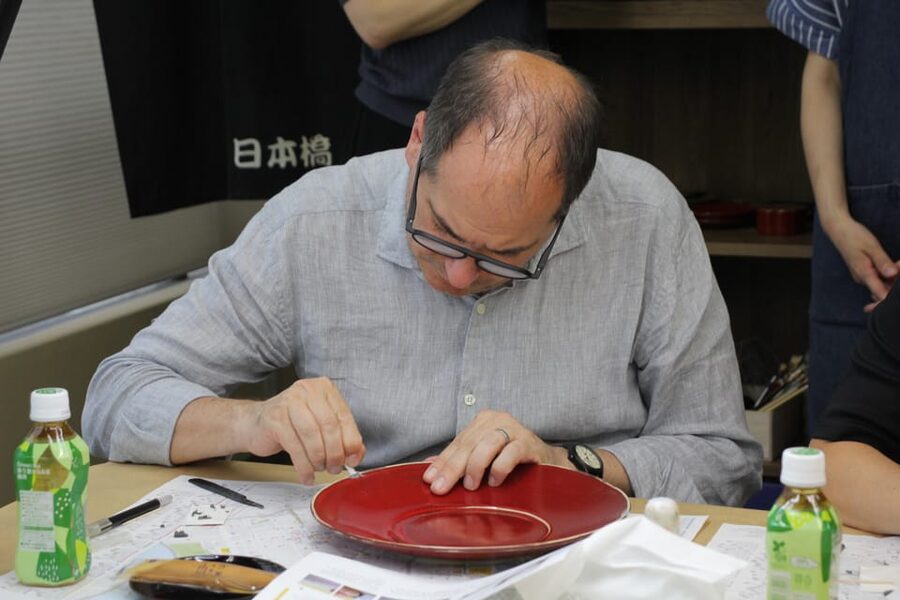
The group is limited to five people. That is one of the strongest features of the workshop because kintsugi requires small, careful movements. A large class would make it harder to ask questions or get help at the right moment.
The teaching setup may include a Japanese craft instructor and an English-speaking guide or interpreter. Hijiri receives particularly warm praise for being patient, kind, helpful, and clear. Other sessions have included two instructors, with one explaining the craft in Japanese and another providing English interpretation.
This arrangement can actually add to the sense of place. You hear the craft explained by someone working within the Japanese tradition, while the English support keeps the instructions clear. You are not left trying to follow a silent demonstration or a translated instruction sheet.
The mood is quiet and relaxed. Several participants describe the work as calming, almost like a short period of meditation. That makes it a welcome change from Tokyo’s stations, shopping streets, and packed sightseeing schedule.
You should still expect active instruction, not a lecture. One useful point from the class format is that the instructor may provide materials in small amounts and refill them as needed. That keeps the work controlled and avoids wasting supplies.
The 90-minute kintsugi process
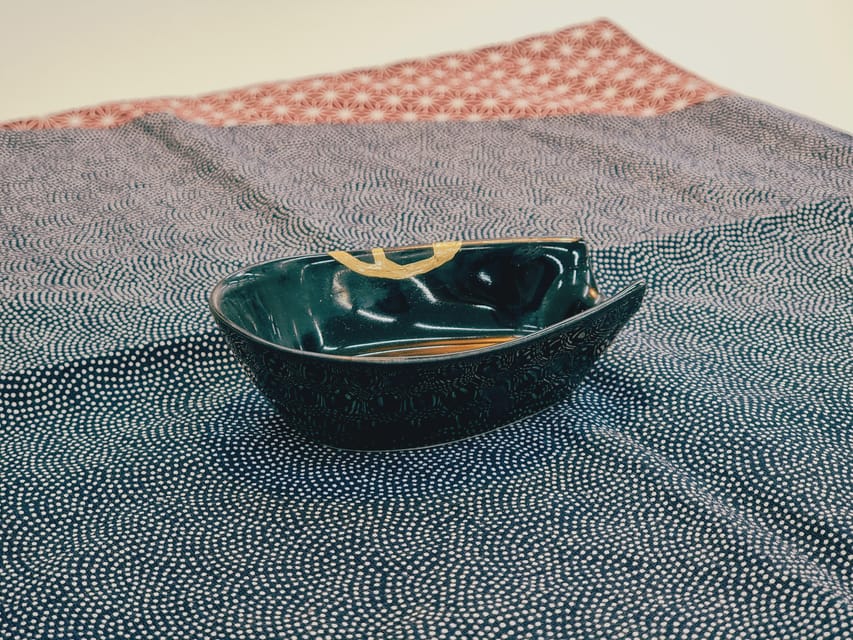
The exact object and steps can vary, but the session introduces the main actions involved in a small repair. You may choose from available ceramic pieces, or you may bring a suitable item from home.
A typical repair may include:
- Replacing or joining broken pieces
- Holding the pieces together while adhesive sets
- Filling small gaps with putty
- Smoothing the surface by sanding
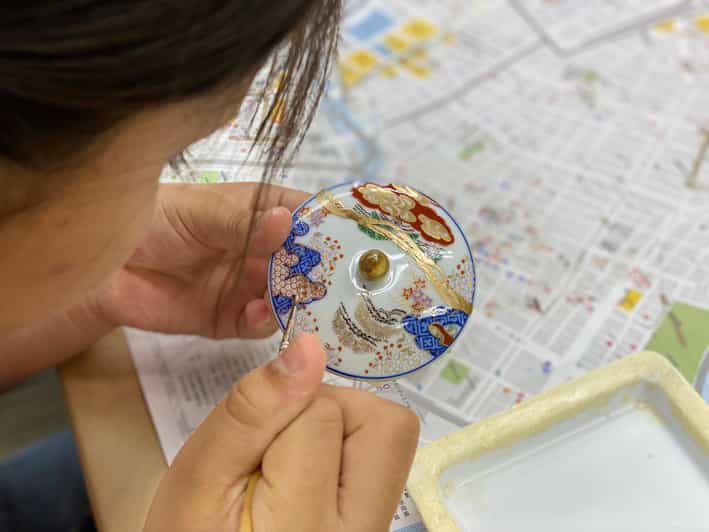
- Painting the repaired seams with metallic color
The process is more physical than it first sounds. You are not simply brushing gold over an existing crack. You may need to line up pieces, check the shape, fill uneven areas, and work slowly so the final seam looks intentional.
The instructor guides you step by step. This matters for beginners because the finished piece depends on patience more than artistic talent. You do not need to arrive with prior pottery or craft experience, and the small class size gives you room to ask for help.
The final gold or metallic lines are the visual payoff, but they work best when the earlier steps are handled carefully. A rough join can remain part of the character of the piece, yet the class still teaches you how to make the repair neat and attractive.
The 90-minute time limit keeps the session lively, but it also means you need to stay focused. Some people may finish quickly, especially when working on a simple piece. Others may need the instructor’s help throughout. If you work slowly, do not expect extra time after the official end.
A completely different kind of day out in Tokyo:
- Mt Fuji and Hakone 1-Day Bus Tour Return by Bullet Train
★ 5.0 · 26,383 reviews - 1-Day Tokyo Bus Tour
★ 5.0 · 14,250 reviews - Tokyo: TOKYO SKYTREE® Admission ticket
★ 4.5 · 11,192 reviews - Tokyo: teamLab Planets TOKYO Digital Art Museum Entry Ticket
★ 4.6 · 9,779 reviews
Choosing a piece or bringing your own
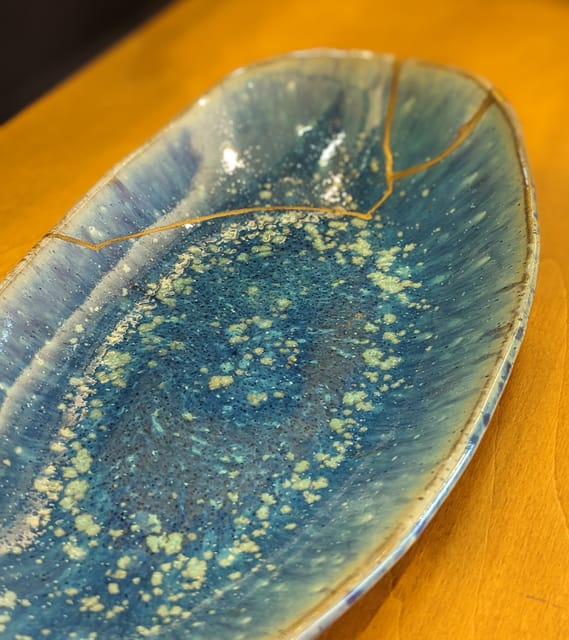
For the simplest visit, use a piece supplied for the workshop. All materials and experience fees are included, and you do not need to bring tools or craft supplies.
The available pieces give you a practical way to learn without risking a beloved object. You can concentrate on the method, then take home a small ceramic work with visible signs of your own effort.
Bringing your own vessel can make the activity more personal, but you must follow the restrictions. The item must be ceramic, measure no more than 15 centimeters in diameter and 15 centimeters in height, and have one or two cracks. Chipped or cracked mug handles cannot be repaired.
Large chips or complex breaks may not be completed within 90 minutes. One participant brought an item for repair and received help with it, while also working on workshop pieces. That can be a good way to combine a meaningful object with a manageable first project, but you should not assume every damaged vessel will be accepted or finished.
If you bring something from home, pack it carefully. The workshop information does not promise that every object can be restored, so choose a small ceramic vessel with simple damage. A treasured but badly broken mug may be better treated as a display object than as a timed class project.
What you take home
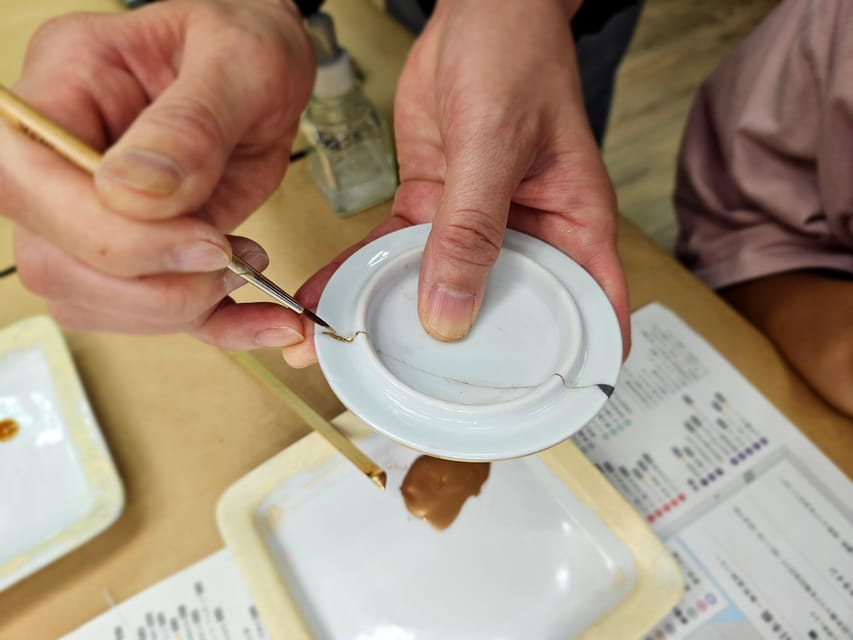
Your completed work is included as part of the activity. That gives the $125 price a different value from a sightseeing stop where you only take photographs.
You leave with a handmade souvenir that carries a story: where you made it, what it looked like before, and how you changed it. The result may not have the polish of a professional studio piece, but that is part of its appeal. The visible repair shows that you made it during your time in Japan.
The finished vessel is mainly for decoration. It can hold dry food items, but it is not intended as an everyday food-serving bowl or a general-purpose kitchen container. Keep that in mind if you are hoping to use it regularly after returning home.
Some repairs need time to cure. When a piece is not ready to travel immediately, the staff may box it carefully for protection. Do not assume the item will be ready for normal use as soon as the workshop ends.
The shop gives you another way to extend the visit. You may find finished kintsugi works, new ceramics, lacquerware, and Japanese textile goods for sale. Buying something is optional, but the displays help you see how a finished repair can look when done by an experienced maker.
Is $125 a fair price?
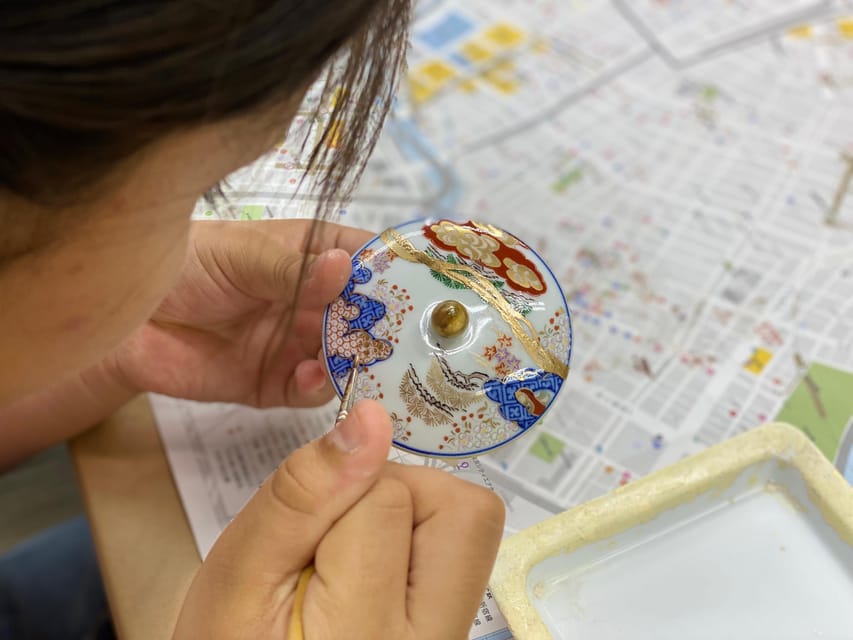
At $125 per person, this is not a cheap craft activity. The price makes more sense if you value instruction, a small class, included materials, and a take-home piece rather than simply wanting a quick souvenir.
You are paying for more than 90 minutes of access to a table and some supplies. The fee includes a professional instructor, the experience itself, materials, and a souvenir. English support is also important for many international visitors, since the steps require clear guidance.
The small class size improves the value. With no more than five people, you can receive direct help during the delicate parts of the repair. Some sessions may be even smaller. A class with only two participants can feel almost private, while a full group of five still remains manageable.
The price is harder to justify if you mainly want a brief cultural activity and do not care about learning the craft. One participant finished in about 35 minutes and felt the class gave limited attention to traditional theory. That is a fair warning: the workshop is practical and condensed, not a long seminar on Japanese craft philosophy.
I would book it for someone who values making a personal object and prefers a quiet activity to another major attraction. I would skip it for someone looking for a bargain, a full professional course, or a guaranteed repair of a badly damaged family heirloom.
Who will enjoy this most
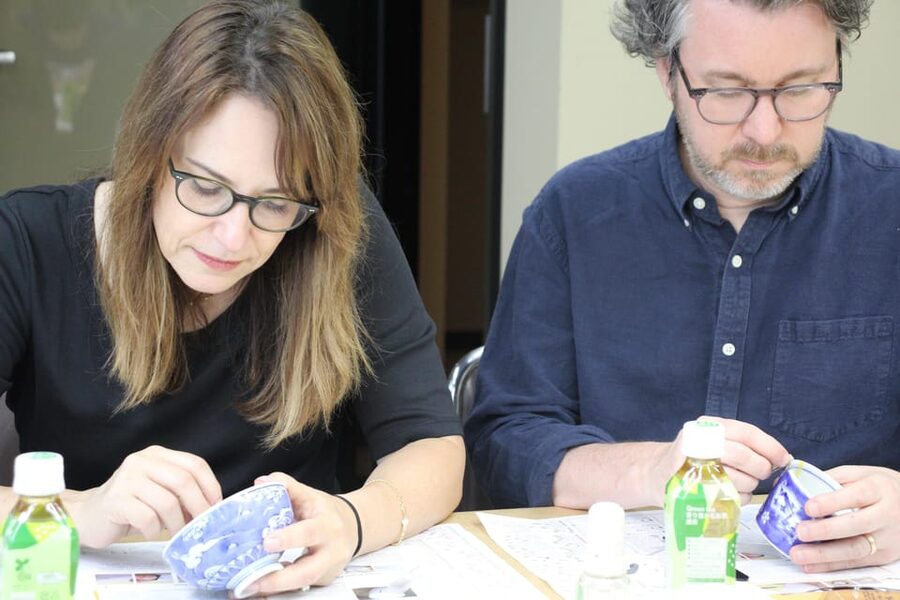
This workshop suits visitors aged 13 and older who like art, Japanese design, thoughtful souvenirs, or calm activities. Teenagers can take part, but minors must be accompanied by a guardian.
It works well for couples, friends, and solo visitors. The session gives you something to discuss while you work, but it does not require constant conversation. If you prefer a peaceful activity with clear guidance, you should feel at home here.
It is also a good choice for a rainy afternoon or a break from temple visits and shopping. The 90-minute length leaves room for other plans before or afterward.
I would be cautious about booking it for young children. The minimum age is 13, and the work involves patience, precision, and a firm end time. It is also not ideal for someone who wants a completely free-form art class, since the instructor directs you through a set repair process.
Practical advice before you book
Wear comfortable clothes. You do not need to bring materials, but clothing that allows you to sit and work carefully is the sensible choice.
Read a little about kintsugi before arriving if you want more cultural context. The workshop focuses mainly on doing the work, so a small amount of preparation will help you appreciate the ideas behind repairing instead of hiding damage.
If you are bringing your own piece, check every condition first:
- Ceramic only
- No more than 15 centimeters in diameter
- No more than 15 centimeters high
- One or two cracks
- No chipped or cracked mug handles
- Damage small enough to address within 90 minutes
Plan your day around the fixed finish time. Do not schedule a train departure or timed attraction immediately afterward, especially if you want to browse the store.
Cancellation is flexible enough for normal itinerary planning: you can cancel up to three days before the activity for a full refund. Starting times vary, so check availability when selecting your date.
The strongest reasons to book
The best part of this activity is the combination of clear instruction and personal effort. You are guided through a real sequence of repair tasks, but the final appearance still comes from your choices and your hands.
The second major strength is the atmosphere. The setting is quiet, the groups are small, and instructors such as Hijiri are praised for patient, friendly support. That makes the class approachable even if you have never worked with ceramics.
The souvenir also has more meaning than a standard purchase. You do not just carry home an item from Tokyo. You carry home a reminder of a specific morning or afternoon spent learning a Japanese craft.
The main weakness is the compressed format. You will not master the full traditional technique in 90 minutes, and the class may feel too brief if you want a detailed account of every material and stage. Still, for a first introduction, the limits are understandable.
Should you book the Tokyo kintsugi workshop?
Book this activity if you want a small, calm, hands-on cultural class that fits into a tight Tokyo schedule. The $125 cost is reasonable for the personal instruction, included materials, English support, and handmade ceramic souvenir, especially in a group of two to five people.
Bring your own vessel only if it meets the size and damage rules. For the safest result, choose a simple ceramic piece or use one provided at the workshop.
Skip it if you want a full traditional apprenticeship, a cheap activity, or a practical food-use bowl. For everyone else, this is a thoughtful way to spend 90 minutes in Tokyo and return home with an object whose flaws are part of its beauty.
FAQ
How long does the kintsugi workshop last?
The workshop lasts 90 minutes. Starting times vary, so you should check availability for your chosen date.
How much does the workshop cost?
The price is $125 per person.
Where does the workshop meet?
It meets at Nihonbashi Mutoh Main Store, Nihonbashihoncho Bldg., 1-8-13 Nihonbashihoncho, Chuo City, Tokyo 103-0023, Japan.
How far is the meeting point from Asakusa?
The meeting point is about 15 minutes by subway from Asakusa.
Is the workshop taught in English?
Yes. English instruction is available, with English interpretation supporting the Japanese craft instruction when needed.
How many people can join the class?
The group is limited to five participants.
What should I bring?
All materials are provided. You only need to wear comfortable clothes and arrive at least five minutes before the scheduled start.
Can I bring my own pottery to repair?
You may bring your own ceramic vessel if it is no more than 15 centimeters in diameter and height, has one or two cracks, and does not have a chipped or cracked mug handle. Large or complex damage may not be completed in 90 minutes.
Can children join the workshop?
The activity is for ages 13 and up. Minors must be accompanied by a guardian, and children under 13 cannot participate.
Just added around Tokyo
- Tokyo 6hr Instagram Highlights Private Tour with Licensed Guide★ 5.0 · 38 reviews
- Tokyo Small Group Tour with Guide★ 4.5 · 38 reviews
- Tokyo Sumo Experience with Live Show & Audience Challenge★ 5.0 · 38 reviews
- Japanese Food Cooking Class in Asakusa, Tokyo★ 5.0 · 39 reviews
- Very popular in Harajuku♡Animal petting zoo★ 4.6 · 39 reviews
- Ramen Making from Scratch with Tokyo Mom(Vegan Option Available)★ 5.0 · 39 reviews
- Tokyo JDM Night: 600hp C63s AMG Edition 1 (Private)★ 4.9 · 39 reviews
- Tokyo: Kimono Rental inside Shinjuku Gyoen National Garden★ 4.9 · 39 reviews
Traditional Craft Workshops, compared.
Chopsticks Making Workshop in Gion with Engraving Option
Read our review →
Kintsugi Experience: Art of Golden Joinery in Tokyo
Read our review →
Authentic knife making experience at a blacksmith in Kyoto
Read our review →
Traditional Mochi Pounding Experience with Tasting
Read our review →
Authentic Pure Gold Kintsugi Workshop with Master Taku in Tokyo
Read our review →
Roketsu dyeing experience: M course Roketsu Dyeing Experience
Read our review →Browse the lists this tour appears in