
Reviewed · WORKSHOPS
Tokyo Manga Drawing Workshop Guided by Active Pro Manga Artist
Your souvenir can start as a blank page. This Tokyo manga workshop gives you about two and a half hours with an active professional artist, from first idea to finished artwork. I like the personal guidance and the fact that you keep a real piece of manga art, not a factory-made trinket. I also like that beginners and experienced artists can work side by side. The main caution is practical: the meeting address can be tricky, and the minimum charge is for two people.
You’ll work in a small group of no more than eight, with tools and screen tone supplied. The class costs $132.10 per person, which is not cheap for a two-hour activity, but the price includes instruction, materials, and a personalized keepsake. It makes the most sense for manga fans, families, and creative people who want to learn a skill rather than simply watch a demonstration.
In This Review
- Key points before you book
- What this Tokyo manga class actually offers
- From a blank page to your own manga character
- Sketching, outlining, and adding the manga look
- Meeting active manga artists, including Masa and Chie Sensei
- The finished artwork is the real souvenir
- Why the small group size improves the lesson
- Location, timing, and the address issue
- Who will get the most from this workshop
- Is $132.10 a fair price?
- Should you book the Tokyo Manga Drawing Workshop?
- FAQ
- How long does the manga drawing workshop last?
- Where does the workshop start and finish?
- Do I need previous drawing experience?
- Are drawing materials provided?
- How many people can join the class?
- Can I cancel for a full refund?
Key points before you book
- Work with a real manga professional: The class is led by an active manga artist, with help available from an English-speaking translator or assistant.
- Start with your own idea: You can choose a favorite character, draw a pet, turn a family photo into manga-style art, or follow suggestions from the instructor.
- Learn traditional manga tools: The session includes drawing tools and screen tone, the patterned material used to add texture and shading.
- Small groups mean useful help: The maximum group size is eight, allowing for individual advice at the drawing table.
- Bring only your imagination: All materials are provided, and you leave with your own artwork.
- Check the address carefully: The listed meeting point is at Ishikawa 3-chōme-8-11 in Shibuya, while the activity is also described as being near Ebisu Station.
What this Tokyo manga class actually offers
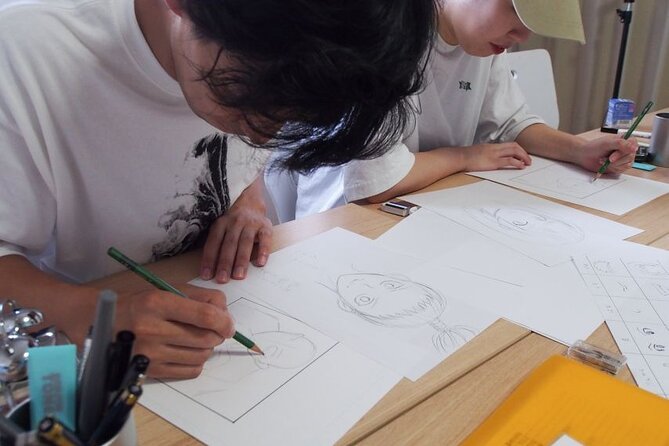
This is a hands-on art lesson, not a studio tour or a short demonstration. You sit down with a professional manga artist and work through the basic stages of creating an illustration.
The class covers idea development, sketching, outlining, adding color, and using manga-specific techniques. You are not expected to arrive with polished drawing skills. The instructor can guide a complete beginner through the process, while someone with more practice can adapt the drawing to a personal style.
That flexibility is the best part of the experience. One person can draw a recognizable anime character, while another can create something much simpler. A parent who claims not to be able to draw can still finish a piece, while a teenage manga fan can ask more detailed questions about technique.
The activity is aimed at a maximum of eight people. That matters. Manga drawing involves small decisions about lines, proportions, shading, and composition, so a giant class would turn the session into follow-the-leader art school. Here, the artist and assistant can look at your work and offer direct help.
The experience has a 4.9 rating from 62 reviews, with 100 percent recommending it. Those numbers point to a very consistent strength: the instructors make the class approachable and enjoyable even when ability levels differ.
More anime and Akihabara tours:
- Official Street Go-Kart Tour – Akihabara
★ 5.0 · 1,578 reviews - Tokyo Go Kart: Asakusa, Skytree, and Akihabara **IDP MUST**
★ 5.0 · 988 reviews - Tokyo Studio Ghibli Museum and Ghibli Film Appreciation Tour
★ 4.5 · 421 reviews
From a blank page to your own manga character
The first stage is deciding what you want to draw. You can pick a character from a series such as One Piece, Naruto, or My Hero Academia, or create something personal.
I strongly suggest thinking about your subject before you arrive. The class can give you ideas, but you will get more from the time if you already know whether you want to draw a character, pet, person, or scene. One participant specifically found it useful to transform a family photograph into manga-style art. Another chose a pet.
You do not need to bring reference material, and all drawing supplies are provided. Still, having a character or image in mind can save valuable minutes. A two-hour session moves quickly once the actual drawing begins.
The instructor may suggest a composition or provide a starting sketch. That support is especially useful if you freeze in front of a blank page. A beginner might trace or adapt a guide drawing, while a more experienced artist can revise the sketch to suit a preferred style.
This is not a strict paint-by-numbers activity. The strongest descriptions of the class point to genuine instruction in manga methods, including storyboarding, outline work, and the use of traditional tools. You still make choices about the final result.
Sketching, outlining, and adding the manga look
After choosing an idea, you work through the basic drawing stages. The artist demonstrates how to build the image, then helps you apply the technique to your own page.
If you already draw, you can use the instructor’s sketch as a base and change it to your taste. If you have little experience, the artist can offer more direct help. One useful example involved an experienced participant and a complete beginner working together. The experienced artist adjusted a suggested sketch, while the beginner traced a version and received help finishing it.
That kind of flexibility makes the workshop suitable for mixed groups. You do not need to worry that a talented teenager will be bored, or that a parent with no art background will be left behind.
The class also introduces the tools used in manga production. Screen tone is included with the supplied materials. This thin patterned material adds shadows, textures, and visual weight to a drawing. It is one of the details that makes the activity feel connected to real manga production rather than ordinary sketching.
The instructor and assistant can help you place these elements and finish the image. The process rewards patience, especially for children. The class has been enjoyed by children as young as nine, but the techniques require care and concentration. Younger children may need steady adult help.
Meeting active manga artists, including Masa and Chie Sensei
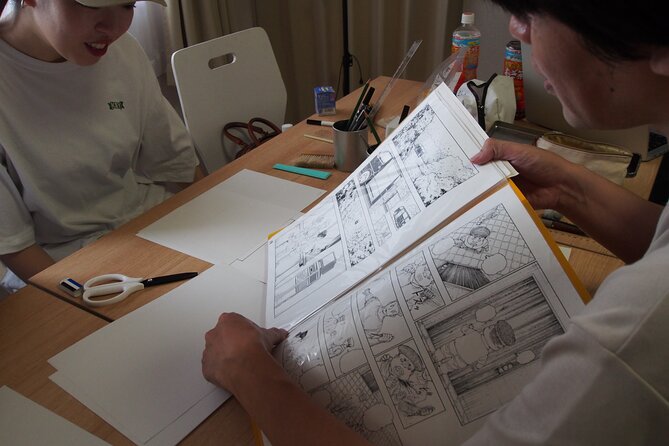
A major reason to book this class is the people leading it. Masa and Chie Sensei are named in the experience feedback, and the teaching team is praised for being patient, funny, friendly, and encouraging.
The artist is not simply handing out worksheets. You get the chance to ask about the process of making manga and the tools used by professional artists. One instructor has worked on Hunter x Hunter, which adds a memorable connection for fans of that series.
An English-speaking translator or assistant helps explain the artist’s instructions. The language support is important because drawing advice can be hard to follow when it involves subtle details. The assistant also helps keep the pace moving and can answer questions about the process and manga culture.
French and Spanish language support has also been reported during some sessions, but you should not assume every class will have the same language arrangement. The supplied information confirms English translation support, so that is the safest expectation.
The atmosphere sounds relaxed rather than formal. The teachers encourage questions and help rescue drawings that are not going as planned. That is valuable in an art class, where a small mistake can make you want to abandon the page. Here, the goal is to help you finish something you will feel good about.
A few more Tokyo experiences worth weighing up
- Sushi Making Tokyo Roll and Authentic Japanese Sushi Class
★ 5.0 · 3,971 reviews - Tokyo: Roll and Authentic Sushi Making Class in Asakusa
★ 4.9 · 1,957 reviews - Tokyo Shinjuku Chopsticks Making Class
★ 5.0 · 1,763 reviews - Tokyo: Sushi Making Class in a Happi Coat near a Famous Spot
★ 4.9 · 1,377 reviews
The finished artwork is the real souvenir
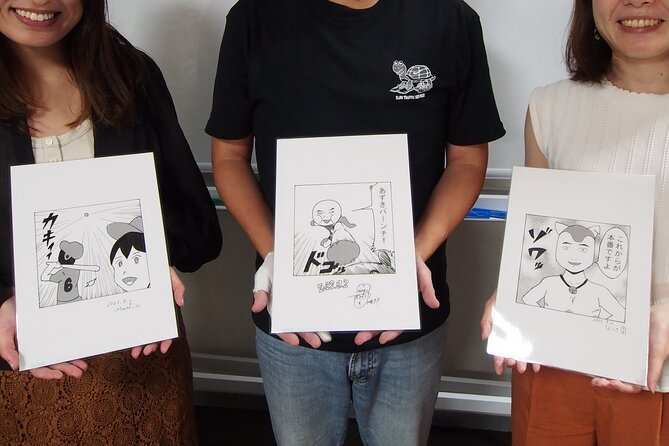
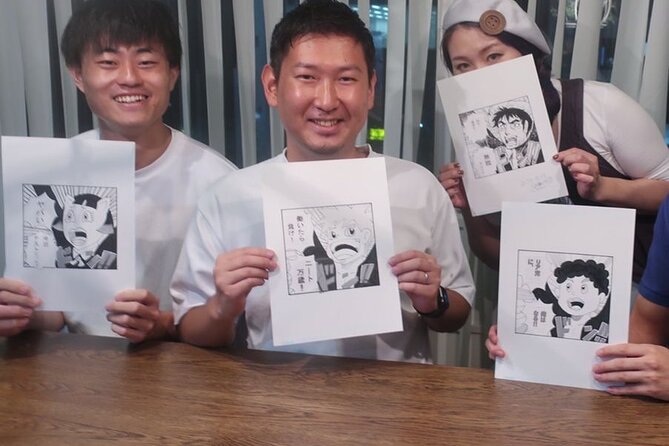
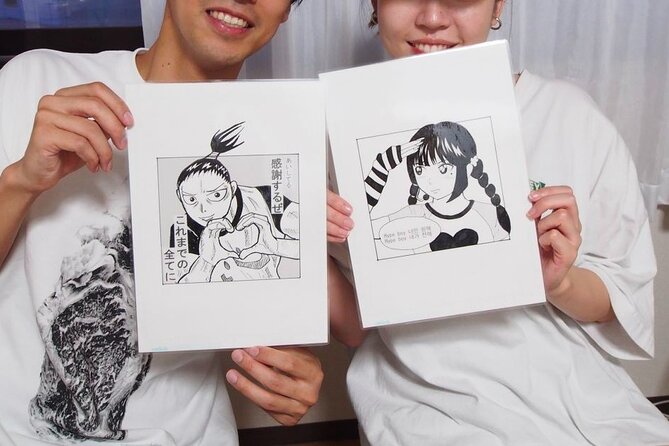
At the end, you take home your own manga artwork. That gives the class more lasting value than an activity that disappears as soon as you leave.
The final piece can be personal. You might draw an anime character, a pet, a family member, or an original idea. One family created different kinds of artwork, including a My Hero Academia character and a family image converted into manga style.
The finished drawing is described as being laminated in at least some sessions, making it easier to protect in your suitcase. You should treat that as a helpful possibility rather than a guaranteed feature for every booking, since the exact finishing process may vary.
I like the fact that your souvenir also records an experience. You can remember the artist’s advice, the tools on the table, and the moment the flat drawing started to look like manga. Some participants were inspired to buy additional drawing equipment and continue practicing after class.
The instructors can suggest places in Tokyo to buy more manga tools. That is useful if the workshop gives you the itch to continue. You leave with more than one finished page, you leave with a starting point for a new hobby.
Why the small group size improves the lesson
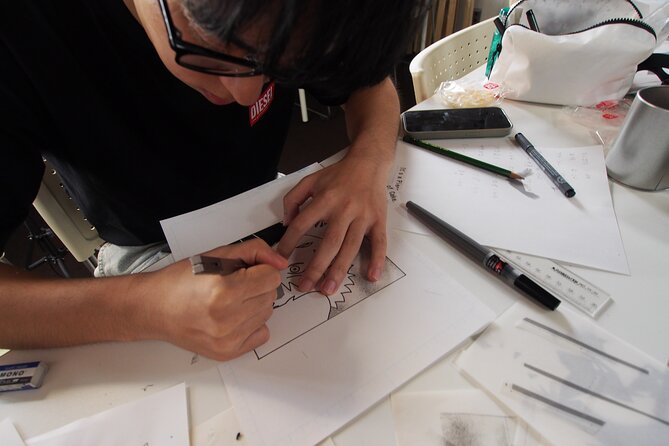
The maximum of eight people is a practical advantage. Drawing instruction works best when the artist can look closely at each person’s page.
A small group also suits families and couples. You can compare results without everyone being forced to copy the same picture. One person might be skilled, another hesitant, and another mainly interested in the cultural side of manga. The class can accommodate all three.
The experience has a minimum charge equal to two participants. In plain terms, you need at least two people for the booking, and a solo participant still pays the equivalent of two places. That is an important cost detail for anyone visiting alone.
For a pair, the price is about $264.20 total. For a family of four, it reaches about $528.40 before any other spending. That is a serious part of a Tokyo holiday budget, so I would not describe it as a bargain.
The value improves if you care about manga, want personal instruction, or are looking for a special family activity. You receive professional guidance, materials, a small-group setting, and a finished drawing. If you only want a cheap craft activity, the price may feel high.
Location, timing, and the address issue
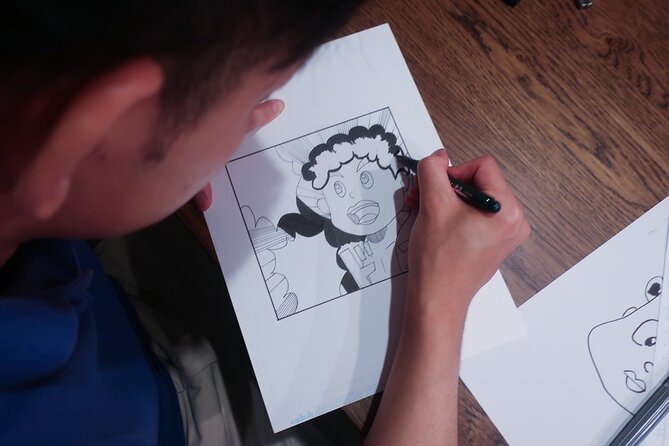
The session lasts about two and a half hours, although the core drawing class is described as a two-hour experience. Allow extra time around the activity so you are not rushing to or from another reservation.
You make your own way to the studio. Public transportation is nearby, and the experience is connected with the Ebisu and Shibuya area. The listed meeting point is Ishikawa 3-chōme-8-11, Shibuya, Tokyo 150-0002.
This is where you need to pay attention. The general description says the studio is close to Ebisu Station, while some booking directions have pointed people toward an office in Ebisu and then required them to continue to another location in Shibuya. One class began late for several people because the address was unclear.
My advice is simple: check the confirmation details immediately after booking, verify the address again on the day, and contact the provider if anything looks inconsistent. Do not rely on the phrase near Ebisu alone. Tokyo’s station areas can be confusing, and a wrong exit or incorrect office can cost half an hour.
The class ends at the same meeting point. There is no hotel pickup, drop-off, bottled water, or snack service, so eat and drink before you arrive if needed.
Who will get the most from this workshop
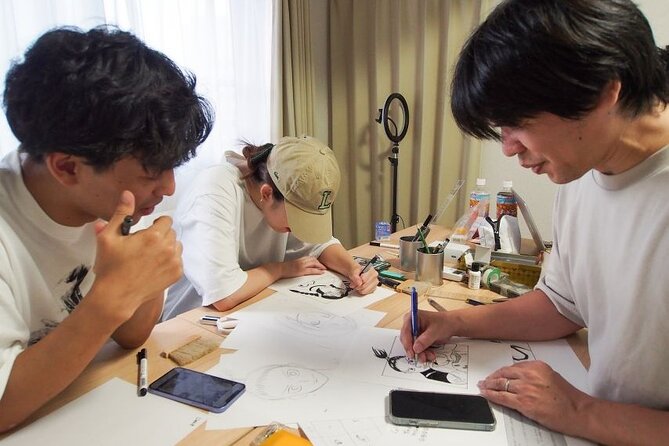
This is an easy choice for serious manga and anime fans. You can draw a favorite character, learn how professionals approach the page, and talk with people who work in the field.
It is also a strong family activity. The class works for mixed abilities, and the finished drawings give parents and children a shared souvenir. Children around nine and older may enjoy it, though younger participants need patience and careful adult support. Teens have especially good reason to book, since the activity combines fandom with a real creative skill.
You do not need to be an artist. Several examples show beginners finishing work they felt proud of, with the instructors helping with sketches, composition, and technical details.
You might enjoy it less if you dislike sitting and drawing for an extended period, or if you expect a polished professional illustration without doing much yourself. The teachers can guide and assist, but the workshop still asks you to participate.
It also may not suit a tight sightseeing schedule unless you are comfortable giving up a solid block of about two and a half hours. The class is short enough to fit into a busy Tokyo visit, but it is not a quick drop-in activity.
Is $132.10 a fair price?
At $132.10 per person, this is a premium activity. You are paying more than the cost of basic art supplies or a casual museum visit.
The price makes more sense when you count what is included. You receive manga drawing tools, screen tone, instruction from a professional artist, translation support, and a completed artwork to take home. The group size is also limited to eight, which supports individual attention.
For a manga fan, that combination is meaningful. You are not just buying paper and pencils. You are paying for access to a working artist, an introduction to industry techniques, and the chance to create a personalized Japanese souvenir.
I would compare it with the cost of another structured cultural activity, not with a free sightseeing stop. If you and a friend or family member are genuinely interested in manga, the class can become one of the most memorable parts of your Tokyo visit. If only one person in your group likes drawing, think carefully about the minimum two-person charge and the total cost.
Free cancellation is available if you cancel at least 24 hours before the local start time. Changes or cancellations inside that window are not accepted for a refund, so keep your schedule firm once you are within a day of the class.
Should you book the Tokyo Manga Drawing Workshop?
I would book this if you want a personal, creative Tokyo experience and have at least two hours to spare. The combination of active manga artists, traditional tools, translation help, and a finished drawing gives the class real substance.
It is particularly good for families with older children, anime fans, couples who want a shared activity, and anyone who would rather make a souvenir than buy one. Complete beginners are welcome, and experienced artists can still ask useful questions and adapt the work.
Before paying, confirm the exact meeting address. That is the one recurring practical weakness, and it is avoidable with a careful check.
FAQ
How long does the manga drawing workshop last?
The experience lasts approximately two hours and thirty minutes. The main drawing session is also described as a two-hour class, so allow about two and a half hours overall.
Where does the workshop start and finish?
The listed meeting point is Ishikawa 3-chōme-8-11, Shibuya, Tokyo 150-0002, Japan. The activity ends back at the meeting point.
Do I need previous drawing experience?
No. Complete beginners can participate, and the instructor guides you through the process step by step. People with drawing experience can adapt the suggested sketches and techniques to their own style.
Are drawing materials provided?
Yes. Manga drawing tools, including screen tone, are provided. Bottled water and snacks are not included.
How many people can join the class?
The maximum group size is eight travelers. The minimum number of participants is two, and the participation fee alone is the same as the fee for two people.
Can I cancel for a full refund?
Yes, if you cancel at least 24 hours before the experience starts, based on local time. Cancellations or changes made less than 24 hours before the start are not accepted for a refund.
Just added around Tokyo
- Tokyo Small Group Tour with Guide★ 4.5 · 38 reviews
- Tokyo 6hr Instagram Highlights Private Tour with Licensed Guide★ 5.0 · 38 reviews
- Tokyo Sumo Experience with Live Show & Audience Challenge★ 5.0 · 38 reviews
- Very popular in Harajuku♡Animal petting zoo★ 4.6 · 39 reviews
- Japanese Food Cooking Class in Asakusa, Tokyo★ 5.0 · 39 reviews
- Ramen Making from Scratch with Tokyo Mom(Vegan Option Available)★ 5.0 · 39 reviews
- Tokyo: Kimono Rental inside Shinjuku Gyoen National Garden★ 4.9 · 39 reviews
- Tokyo JDM Night: 600hp C63s AMG Edition 1 (Private)★ 4.9 · 39 reviews
Workshops, compared.
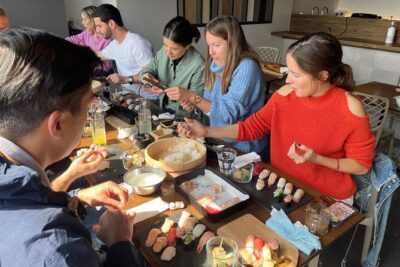
Sushi Making Tokyo Roll and Authentic Japanese Sushi Class
Read our review →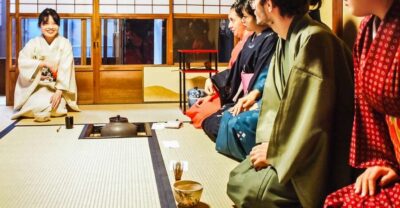

Roll and Authentic Sushi Making Class in Asakusa
Read our review →
Ramen Cooking Class at Ramen Factory in Kyoto
Read our review →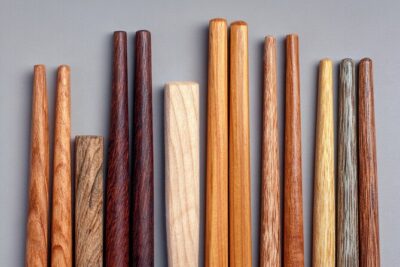
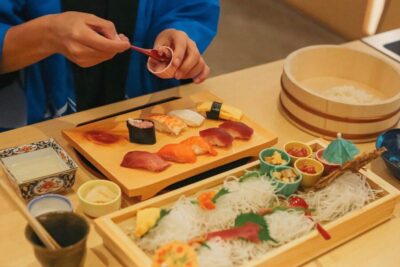
Sushi Making Class in a Happi Coat near a Famous Spot
Read our review →
Sushi Making Osaka Roll and Authentic Japanese Sushi Class
Read our review →Browse the lists this tour appears in