
Reviewed · WORKSHOPS
Tokyo: Manga Drawing Workshop Guided by Pro Manga Artist
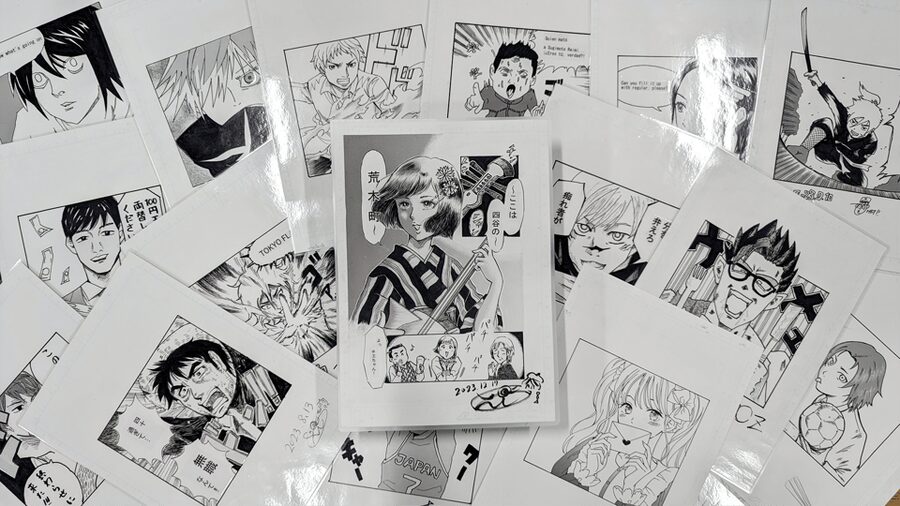
Your manga dream can fit on one page. This 150-minute workshop in Shibuya gives you a practical look at how Japanese comic art is made, from the first rough idea to ink, screen tones, and speech bubbles. I especially like the patient professional artist and the small groups of no more than eight people. The main point to consider is that the finished artwork may be guided quite closely by the instructor, so confident artists should not expect unlimited freedom to create a completely independent page.
You do not need drawing skills, Japanese language ability, or special equipment. An interpreter is included, all materials are supplied, and you leave with a laminated manga panel. At $129 per person, this is not a cheap casual craft class, but the price makes better sense if you value personal instruction, traditional Japanese tools, and a souvenir you actually made rather than simply bought.
In This Review
- What Makes This Workshop Worth Your Time
- From Shibuya Street to the Manga Studio
- Choosing Your Manga Idea
- The Rough Sketch: Where the Artist Adds Real Value
- Pencil, Ink, Black Areas, and Screen Tones
- Speech Bubbles and the Finished Panel
- The Manga Artist and Interpreter Make the Difference
- A Good Choice for Families, Couples, and Solo Visitors
- Is $129 a Fair Price?
- Timing, Accessibility, and Booking Flexibility
- Tips for Getting the Most from the Class
- Who Should Book This Manga Workshop?
- FAQ
- Where does the manga drawing workshop meet?
- How long does the workshop last?
- Do I need previous drawing experience?
- Which languages are available?
- Are drawing materials included?
- What will I do during the session?
- Can I keep what I draw?
- Is the workshop wheelchair accessible?
- Is hotel pickup included?
- Can I cancel for a refund?
- Should You Book It?
What Makes This Workshop Worth Your Time
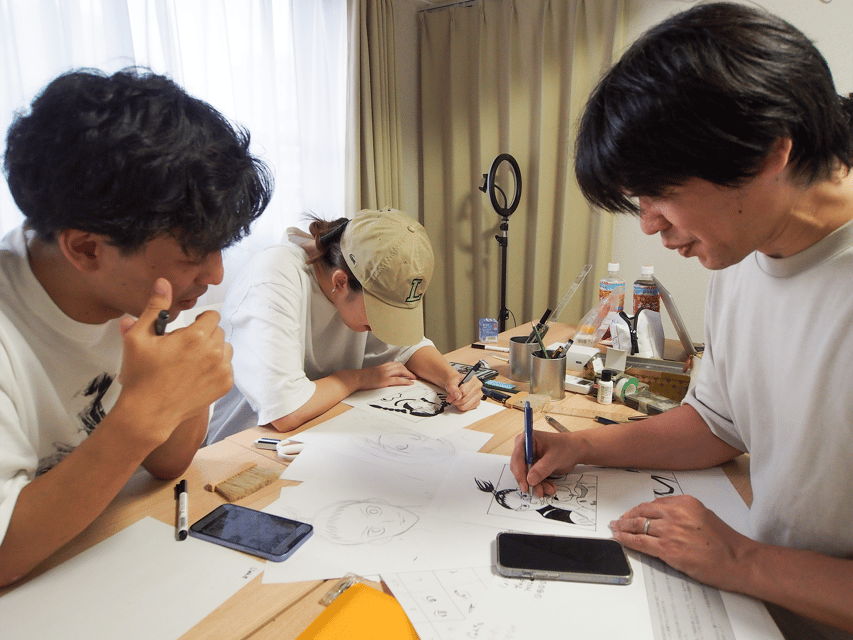
- You follow the full manga-making process: Move from an idea and rough sketch through drafting, inking, solid blacks, screen tones, and speech bubbles.
- A working manga artist teaches the class: Instructors have decades of experience, with artists such as Shige Matsumori, Rokkaku-sensei, Kousei-sensei, and Hiroshi appearing in recent sessions.
- Beginners can finish a polished panel: The artist helps turn a simple prompt, character, or photo into a workable manga composition.
- The interpreter is part of the teaching team: Madoka, Machi, Ai, Hanae, and other interpreters have helped explain techniques and answer questions about manga work in Japan.
- You keep a physical souvenir: The finished piece is laminated, making it easier to carry home and display.
- The setting is intimate: A maximum of eight participants allows more individual attention than a large group demonstration.
From Shibuya Street to the Manga Studio
The meeting point is on the sixth floor of the Shibuya 3-chome TR Building at 3-8-11 Shibuya, Shibuya-ku. The building is black and relatively thin, so it may not be instantly obvious among the surrounding streets.
Give yourself extra time to find it. Two separate people specifically noted that the location can be tricky, and one family had trouble reaching the building because a political rally was taking place near Shibuya Crossing. The staff helped them locate the studio, but this is still a good reason not to cut your arrival close.
The workshop is in the Shibuya area, a useful location if you are already planning time around Shibuya Crossing. Pickup is not provided, so you are responsible for getting there. Food and drinks are also not included, though the 150-minute session is short enough that you can easily eat before or afterward.
The small-group format matters here. Eight people is the maximum, and some sessions have had only one or two participants. That can make the class feel more like a personal lesson than a standard tourist activity. It also means the pace may vary, depending on how quickly each person works.
More anime and Akihabara tours:
- Official Street Go-Kart Tour – Akihabara
★ 5.0 · 1,578 reviews - Tokyo Go Kart: Asakusa, Skytree, and Akihabara **IDP MUST**
★ 5.0 · 988 reviews - Tokyo Studio Ghibli Museum and Ghibli Film Appreciation Tour
★ 4.5 · 421 reviews
Choosing Your Manga Idea
The first creative decision is choosing what to draw. You may select an image from a set of examples or bring an idea of your own. Some people have used familiar manga characters, while others have worked from personal characters, family ideas, photographs, or even pets.
This is a useful balance. If you arrive with no plan, the sample images give you a starting point. If you already draw, you can bring a stronger concept and ask for help adapting it to the page.
Do not make your first idea too complicated. One participant requested a V-tuber character and found the design more demanding than expected because such characters often have many details. Another person created a panel featuring two dogs, while other participants worked with their own characters or selected figures.
I would prepare one or two simple ideas before arriving. Think about the character, facial expression, pose, and mood you want. A clear idea helps the artist guide you quickly and leaves more time for the hands-on stages.
The Rough Sketch: Where the Artist Adds Real Value
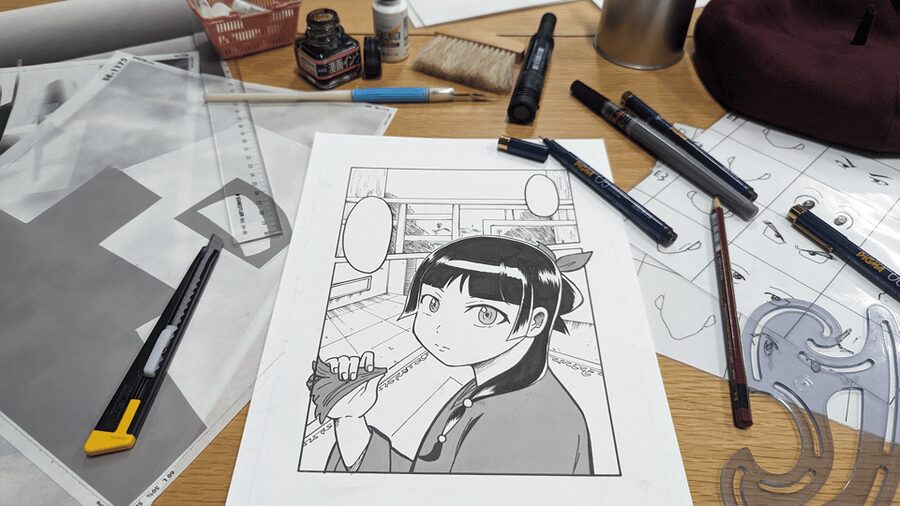
Once you settle on a concept, the manga artist helps establish the composition. In some sessions, the artist creates a rough outline for you to develop. You then adjust it with a pencil, making changes with guidance from the instructor.
This is the point where the class feels most accessible to beginners. You are not being asked to invent perfect anatomy or perspective from nothing. The artist helps you see how a rough idea can become a readable manga panel.
That support also benefits experienced artists. One digital artist used the class to return to traditional drawing after years away and learned about tools and screen tones. Another participant with professional art experience appreciated being able to create an original piece while asking technical questions.
The balance is worth understanding. Several people described the artist as helping them bring their ideas to life. One less enthusiastic assessment felt the class involved tracing much of the instructor’s work, followed by adding effects and stickers. Your experience may depend on your skill level, the artist leading the session, and how much creative independence you request.
If you want a relaxed introduction, this structure is helpful. If you want a fully open studio critique, tell the instructor early that you would like to do more of the drawing yourself.
Pencil, Ink, Black Areas, and Screen Tones
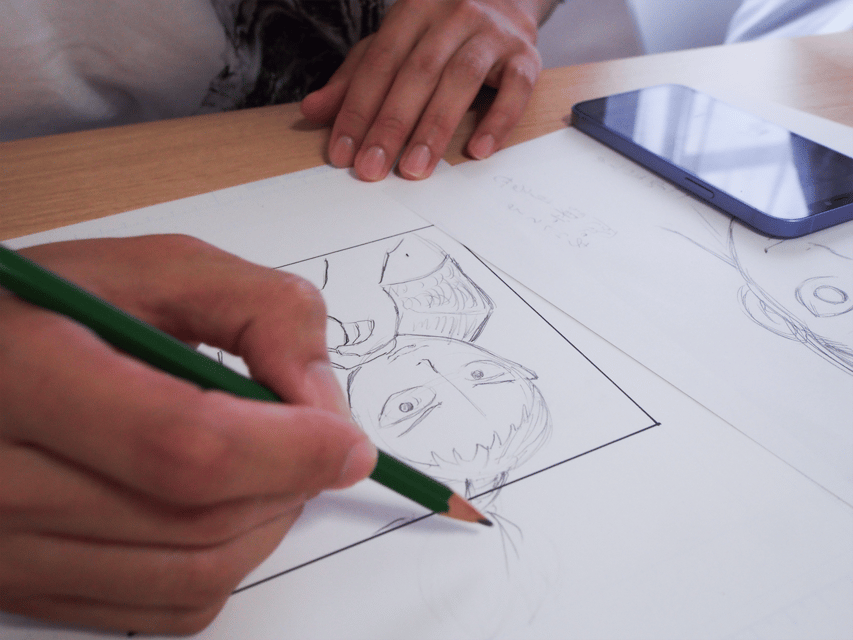
The workshop follows traditional manga production methods rather than a digital drawing process. After the rough sketch, you work over the lines with ink. You then erase the pencil marks and add solid black areas with a brush.
The tools make a difference. One participant was surprised by how much the proper pencils, paper, ink, and brushes improved the result. You do not need to bring supplies because the materials are included, and the artist shows you how to use them.
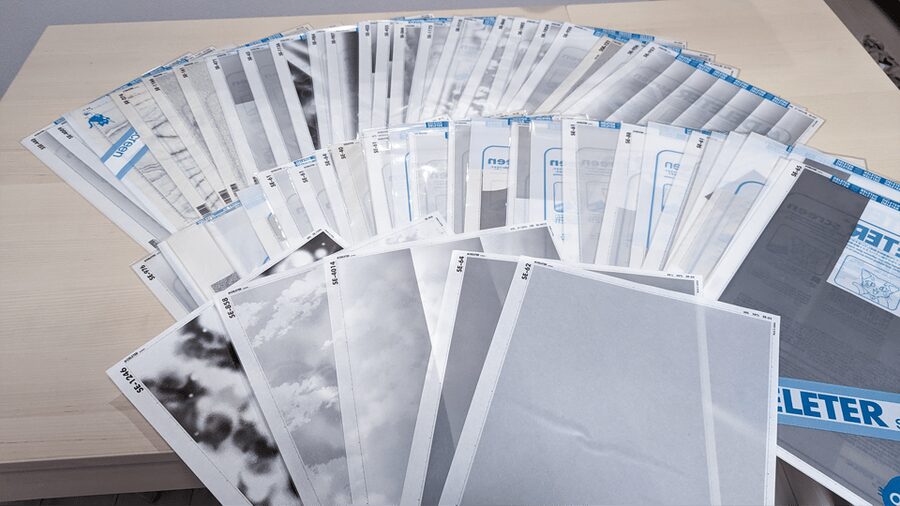
Screen tones are one of the most distinctive parts of the class. These are sheets of patterned or shaded material applied to the page to create grey areas, texture, and visual effects. You cut and place them by hand, a process that gives you a feel for older manga production methods that existed long before digital illustration became common.
For many people, this is the most educational part. You are not simply drawing a character. You are learning how a black-and-white page gains depth, atmosphere, and movement through controlled areas of ink and tone.
The cutting stage requires care. It is a hands-on technique, and you may need the instructor’s help to apply it cleanly. That is not a weakness in the class. It is one of the reasons the artist and interpreter are useful throughout the session.
A few more Tokyo experiences worth weighing up
- Sushi Making Tokyo Roll and Authentic Japanese Sushi Class
★ 5.0 · 3,971 reviews - Tokyo: Roll and Authentic Sushi Making Class in Asakusa
★ 4.9 · 1,957 reviews - Tokyo Shinjuku Chopsticks Making Class
★ 5.0 · 1,763 reviews - Tokyo: Sushi Making Class in a Happi Coat near a Famous Spot
★ 4.9 · 1,377 reviews
Speech Bubbles and the Finished Panel
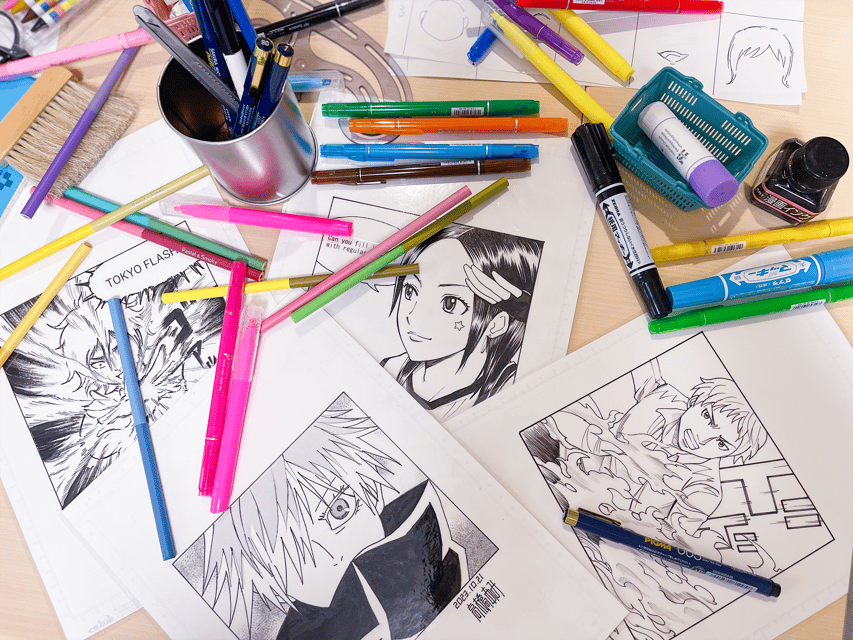
Near the end, you add speech bubbles and other comic-style effects. These small elements help turn an illustration into a manga panel with a sense of action or story.
The artist may also help with final touches, depending on your drawing and the amount of time available. Participants have finished panels based on their own concepts, selected examples, and personal images. Some have received an additional sketch from the sensei, which makes the finished piece feel more personal.
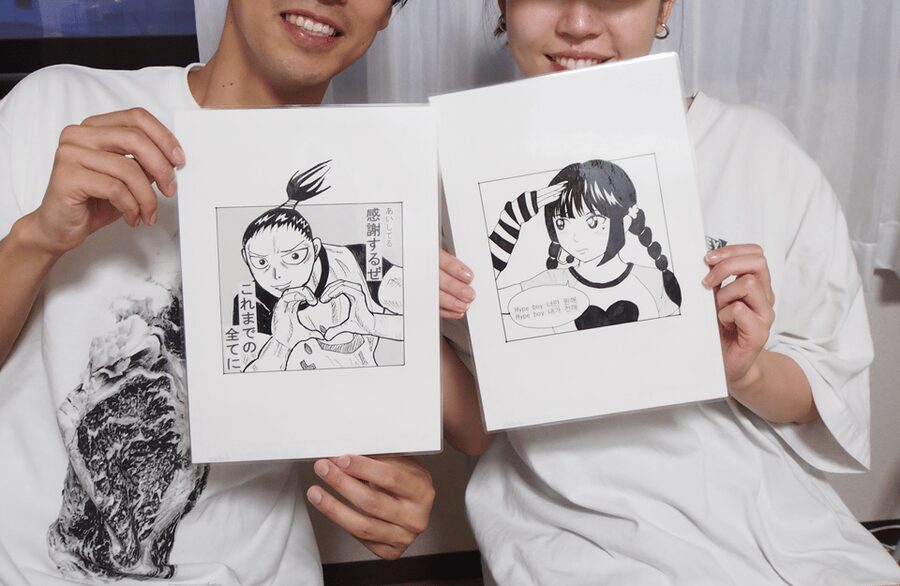
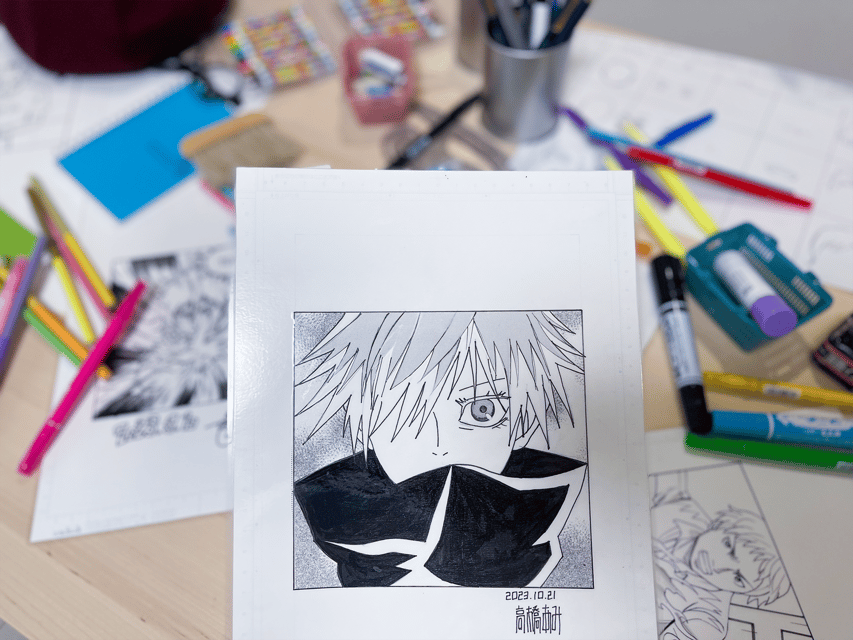
The final artwork is laminated for you to take home. This is a practical touch. A loose ink drawing can easily bend in a suitcase, while a laminated panel is easier to carry and display. Several families planned to frame their work, and one couple treated the piece as a honeymoon keepsake.
Your result will not necessarily look like professional manga art without assistance. That is not the right standard for judging this activity. The value is seeing the stages, trying the tools, and ending with a finished page that has your decisions in it.
The Manga Artist and Interpreter Make the Difference
The instructor is the heart of the workshop. Recent classes have included artists identified as Shige Matsumori, Rokkaku-sensei, Kousei-sensei, Hiroshi, and Kamaya Katsuki. The exact artist may vary, but the teaching style described across the sessions is consistent: patient, encouraging, technically skilled, and willing to answer questions.
One instructor sketched two dogs quickly for a participant, which became a memorable part of the session. Another artist explained manga creation and the business behind it while helping participants with their artwork.
The interpreter is not simply there to translate a few instructions. People have praised interpreters including Madoka, Machi, Ai, and Hanae for keeping conversation flowing, explaining terminology, and making it easier to ask questions. Topics can range from tools and techniques to the artist’s career, influences, and working methods.
Language support is listed in English and Japanese. One older session needed occasional help from Google Translate, but the interpreter still made the class workable. If detailed technical questions matter to you, phrase them simply and allow a little time for translation.
A Good Choice for Families, Couples, and Solo Visitors
The class has worked well for a wide age range. Two 11-year-old boys stayed engaged because the instructors kept the mood positive and encouraged questions. A 10-year-old and a parent also completed artwork together with clear translation.
It also suits mixed-skill groups. One partner can be an experienced artist while the other is a complete beginner. The artist can adjust the level of help, and both people can leave with a finished panel.
Couples may find the souvenir especially appealing. One newlywed couple planned to hang their drawings at home, and another couple booked the class because one person was a serious manga fan while the other had little experience. The activity does not require everyone in your party to be equally enthusiastic about drawing.
Solo visitors can also fit comfortably into the format. One participant was the only person booked that day and enjoyed the extra conversation with the interpreter and sensei. A small class can be a pleasant way to meet people without the pressure of a large social group.
You do not have to be a devoted One Piece or Naruto fan. The workshop uses manga methods, but the basic creative process can appeal to anyone interested in illustration, Japanese culture, or making something with their hands.
Is $129 a Fair Price?
At $129, the workshop costs more than a quick souvenir-making activity. You are paying for a 150-minute session, a professional manga artist, an interpreter, traditional art materials, and a finished laminated panel.
The strongest value comes from the instruction. If you only want a printed anime image, Tokyo offers cheaper options. If you want to understand how a manga panel is built and receive help from an artist with more than 20 years of experience, the price is easier to justify.
The small group also affects the value. With no more than eight participants, you have a better chance to receive personal help than in a large class. On a day with only two people, the experience can feel close to a private lesson.
Still, expectations matter. The class is not necessarily a free-form masterclass for advanced artists. Some participants have felt that the artist’s drawing and tracing process takes up a large part of the work. If your main goal is complete artistic control, this may feel restrictive.
For most first-time visitors, I would treat the price as payment for three things: a guided cultural activity, access to traditional manga tools, and a durable personal souvenir. That package is more useful than a basic drawing demonstration, especially if manga is an important part of your reason for visiting Japan.
Timing, Accessibility, and Booking Flexibility
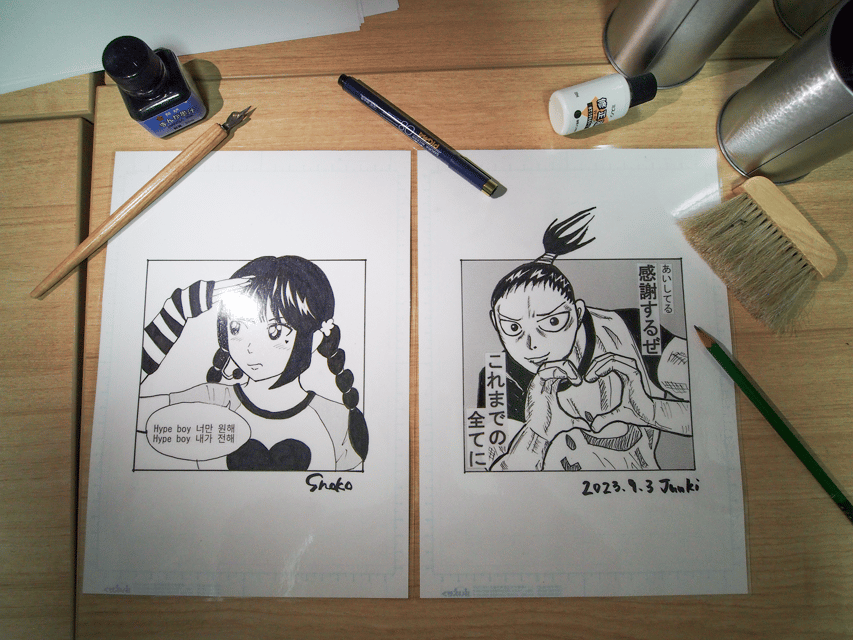
The activity lasts 150 minutes, or two and a half hours. That is long enough to complete a panel without turning the day into an exhausting art course. Starting times vary, so check the available session before planning other Shibuya activities.
The experience is listed as wheelchair accessible. Pickup is not included, and you should plan your own route to the sixth-floor meeting point. Because the building can be easy to miss, arriving early is sensible.
You can cancel up to 24 hours in advance for a full refund. A reserve-now, pay-later option is also available, which helps if your Tokyo schedule is still changing. Those policies are useful for a tightly planned Japan trip, where weather, jet lag, and rail delays can affect your plans.
Tips for Getting the Most from the Class
- Bring a simple idea: A clear character or pose is easier to complete in 150 minutes than a crowded scene.
- Tell the artist your skill level: Say if you are a beginner, a digital artist, or someone hoping to work more independently.
- Ask about screen tones: This is one of the most unusual techniques in the class, and you will learn more by asking how and why they are used.
- Arrive early: The black, narrow building can be hard to spot, especially during events around Shibuya Crossing.
- Use the interpreter freely: Ask about the artist’s career, tools, manga production, and anything else that interests you.
- Plan to protect the artwork: Lamination helps, but keep the finished panel flat in your luggage.
- Do not compare your page with the sensei’s: The point is to learn the process and make a piece that reflects your own choices.
Who Should Book This Manga Workshop?
I would recommend it most strongly to anime and manga fans who want more than shopping for merchandise. It is also a good fit for families, couples, solo visitors, and mixed-skill groups.
Beginners receive enough support to finish something attractive, while experienced artists can ask about traditional materials and screen tones. The class also works for people who are curious about Japanese creative culture but do not know every famous series.
I would hesitate only if you want complete freedom from the first line to the last. The instructor’s guidance is a major benefit for beginners, but it may feel too structured for an advanced artist seeking an entirely self-directed project.
FAQ
Where does the manga drawing workshop meet?
The meeting point is on the sixth floor of the Shibuya 3-chome TR Building at 3-8-11 Shibuya, Shibuya-ku, Tokyo. The building is black and relatively thin.
How long does the workshop last?
The session lasts 150 minutes, or two and a half hours.
Do I need previous drawing experience?
No. The workshop is designed for people with no previous skills, and the professional artist provides step-by-step help.
Which languages are available?
The activity is offered in English and Japanese. An interpreter is included to help with explanations and conversation.
Are drawing materials included?
Yes. Manga drawing materials are provided, so you do not need to bring your own equipment.
What will I do during the session?
You work through the manga process, including ideation, rough sketching, drafting, inking, adding solid blacks, applying screen tones, and placing speech bubbles.
Can I keep what I draw?
Yes. You take home your finished manga artwork, and the piece is laminated.
Is the workshop wheelchair accessible?
Yes. The activity is listed as wheelchair accessible.
Is hotel pickup included?
No. Pickup is not included, so you need to make your own way to the meeting point.
Can I cancel for a refund?
You can cancel up to 24 hours in advance for a full refund.
Should You Book It?
Book this workshop if you want a personal, hands-on connection to manga rather than another passive sightseeing stop. The professional instruction, interpreter, intimate group size, traditional tools, and laminated artwork give the experience a clear purpose.
Go in with a manageable idea and an open mind. You may not leave as a mangaka, but you can leave with a better sense of how manga is built, a few techniques worth practicing, and a souvenir that carries your own fingerprints.
Just added around Tokyo
- Tokyo 6hr Instagram Highlights Private Tour with Licensed Guide★ 5.0 · 38 reviews
- Tokyo Small Group Tour with Guide★ 4.5 · 38 reviews
- Tokyo Sumo Experience with Live Show & Audience Challenge★ 5.0 · 38 reviews
- Japanese Food Cooking Class in Asakusa, Tokyo★ 5.0 · 39 reviews
- Very popular in Harajuku♡Animal petting zoo★ 4.6 · 39 reviews
- Ramen Making from Scratch with Tokyo Mom(Vegan Option Available)★ 5.0 · 39 reviews
- Tokyo JDM Night: 600hp C63s AMG Edition 1 (Private)★ 4.9 · 39 reviews
- Tokyo: Kimono Rental inside Shinjuku Gyoen National Garden★ 4.9 · 39 reviews
Workshops, compared.
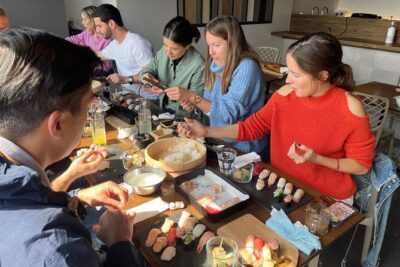
Sushi Making Tokyo Roll and Authentic Japanese Sushi Class
Read our review →

Roll and Authentic Sushi Making Class in Asakusa
Read our review →
Ramen Cooking Class at Ramen Factory in Kyoto
Read our review →
Sushi Making Class in a Happi Coat near a Famous Spot
Read our review →
Sushi Making Osaka Roll and Authentic Japanese Sushi Class
Read our review →Browse the lists this tour appears in