
Reviewed · SUSHI-MAKING CLASSES
Tokyo Sushi Making Experience & Japanese Cooking Class
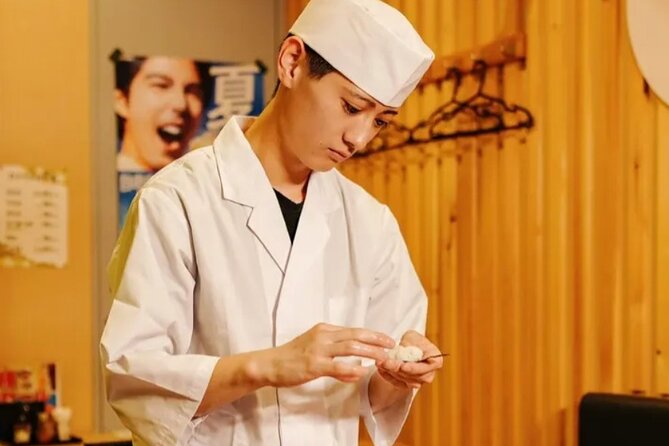
Roll up your sleeves for a tasty lesson in Tokyo. This 90-minute class in Shinbashi gives you a practical introduction to sushi culture, etiquette, and technique while you make several popular styles yourself. I like the English-speaking instruction and the chance to work with ingredients such as tuna, salmon, squid, and flying fish roe. I also like that you eat what you prepare rather than simply watching a chef work.
The price is $59.46 per person, which is fair for a short, hands-on food activity in central Tokyo. The main consideration is the brief format. You will learn useful methods, but this is an introductory class, not a full Japanese cooking course. Drinks such as sake and shochu cost extra, and bottled water is not included.
In This Review
- What makes this class worth your time
- Arriving in Shinbashi for the 90-minute class
- Learning why sushi is more than raw fish
- Making maki sushi with tuna, salmon, and roe
- Shaping temari sushi into small edible rounds
- Trying nigiri and learning the balance of rice and fish
- Eating what you prepare, with optional sake or shochu
- Friendly help, photos, and a family-friendly pace
- Is $59.46 a good price in Tokyo?
- The main drawbacks to consider before booking
- Who should book this sushi lesson?
- Should you book the Tokyo sushi class?
- FAQ
- How long does the sushi-making experience last?
- Where does the class meet?
- Is the meeting point near public transportation?
- What types of sushi can I learn to make?
- What ingredients are used?
- Is the class taught in English?
- Are drinks included in the price?
- What is the minimum age for participants?
- Can I cancel for a full refund?
What makes this class worth your time
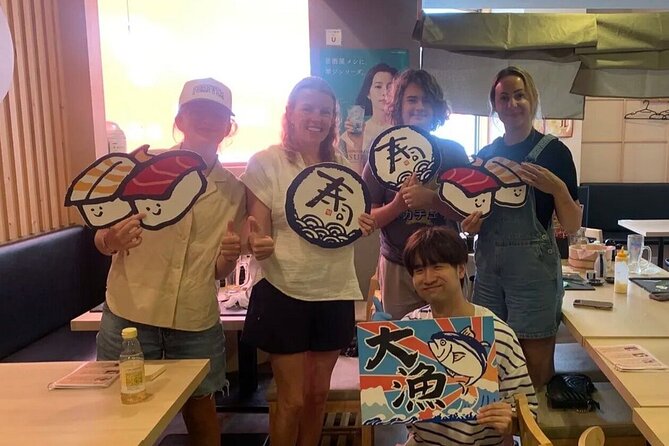
- You make several sushi styles: Depending on the class format, you may prepare maki and temari, or maki and nigiri.
- Fresh ingredients are part of the lesson: Tuna, salmon, squid, and flying fish roe help you understand how different toppings and fillings work.
- English and Chinese support is available: Instruction is offered in English, Traditional Chinese, and Simplified Chinese.
- The group stays manageable: The maximum is 15 participants, allowing for personal help without making the class completely private.
- You finish with your own meal: The sushi you prepare is served as part of the experience, along with snacks.
- Photos are included in the experience: Staff help take commemorative pictures, a useful souvenir for families and first-time cooks.
Arriving in Shinbashi for the 90-minute class
The meeting point is at S-PLAZA Yayoi II, 2-15-10 Shinbashi, Minato City, Tokyo 105-0004. The location is near public transportation, so you can reach it without arranging a special transfer. Your mobile ticket is accepted, which keeps the arrival process simple.
I would allow enough time to find the exact building. Shinbashi has many streets, signs, and office buildings, and the address uses a Japanese format that may look unfamiliar on your phone. Keep the booking confirmation open before you arrive rather than trying to load it at the last minute.
The class lasts about 1 hour and 30 minutes. That is long enough to learn the basic movements and enjoy the food, but short enough to fit into a busy Tokyo day. You could schedule it between sightseeing in Ginza, Shiodome, or the Tokyo Tower area, though you should leave some breathing room around the start time.
The class ends back at the same meeting point. That matters if you are planning your next stop, since you will not need to arrange a separate return journey.
More Cooking Classes in Tokyo
- Ramen & Gyoza Cooking Class in Tokyo with Local Supermarket Visit
★ 5.0 · 823 reviews - Tokyo: Easy Ramen Cooking Experience in Kabukicho, Shinjuku
★ 4.6 · 321 reviews - Ramen and Sushi Cooking Class with Sake Pairing Set in Tokyo
★ 5.0 · 291 reviews
Learning why sushi is more than raw fish
The first part of the experience introduces sushi history and culture. This gives the class some needed context. Sushi is often reduced to raw fish and rice, but the balance of rice, seasoning, texture, shape, and presentation is just as important.
You also hear about sushi etiquette. That can make the meal more enjoyable, especially if you are new to Japanese dining customs. The class is not only about producing something that looks like sushi. It also explains how to approach each piece and why the food is prepared in certain forms.
The instruction is provided by staff who speak English or Chinese. This is a major advantage for an activity built around hand movements. A recipe sheet can tell you what to add, but a live instructor can show you how much filling to use, how to shape the rice, and how to avoid making a roll too loose.
The small-group setup should help here. With a maximum of 15 participants, you are not signing up for a large demonstration where it is hard to see the work surface. You should still expect to share attention with others, but the format allows staff to help when your sushi starts to look more like a rice project than a neat roll.
Making maki sushi with tuna, salmon, and roe
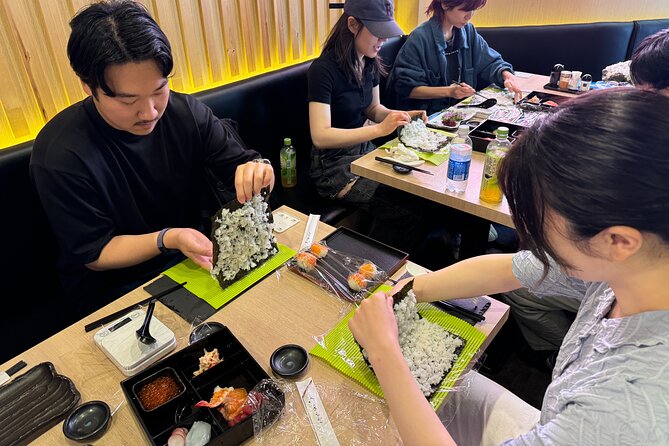
Maki sushi is the familiar rolled style wrapped in seaweed. You will work with fillings such as tuna, salmon, squid, and flying fish roe, though the exact combination can vary with the class format and available ingredients.
This is likely the most approachable part of the lesson. You spread rice, add the filling, and roll the sushi into a firm shape. The trick is restraint. Too much rice or filling makes the roll difficult to close, while too little leaves you with a narrow snack.
I like maki as a teaching choice because the technique is easy to recognize once you return home. You can repeat it with ingredients from a supermarket, even if your first rolls are not perfectly round. The class gives you a method you can practice rather than just a meal you can remember.
The activity is also suitable for families with children aged four and above. A published account from a family with two children praised the hosts for being friendly and patient, which is useful information if you are considering this with younger participants. Children may need help with the rolling and shaping, but the hands-on format gives them a clear job to do.
Shaping temari sushi into small edible rounds
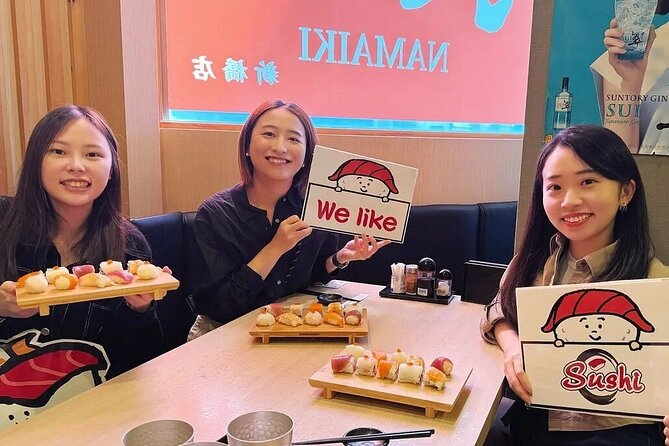
Temari sushi is shaped into small, rounded pieces. It is different from the more familiar long roll and gives you another way to think about sushi presentation.
This style can be especially appealing if you care about appearance. The pieces are compact and decorative, and the shaping process helps you see how sushi can be formed without a bamboo rolling mat. It is also a good contrast to maki, since you are learning two different ways to combine rice and toppings in the same short class.
The exact menu may offer maki and temari, or maki and nigiri. You should check the available option when booking if one style matters to you. The supplied details do not promise that every session teaches all three forms, so do not assume you will make maki, temari, and nigiri in one sitting.
More Sushi-Making Classes in Tokyo
- Sushi Making Tokyo Roll and Authentic Japanese Sushi Class
★ 5.0 · 3,971 reviews - Tokyo: Roll and Authentic Sushi Making Class in Asakusa
★ 4.9 · 1,957 reviews - Make Sushi and Create Unforgettable Memories in Tokyo
★ 5.0 · 1,413 reviews - Tokyo: Sushi Making Class in a Happi Coat near a Famous Spot
★ 4.9 · 1,377 reviews
Trying nigiri and learning the balance of rice and fish
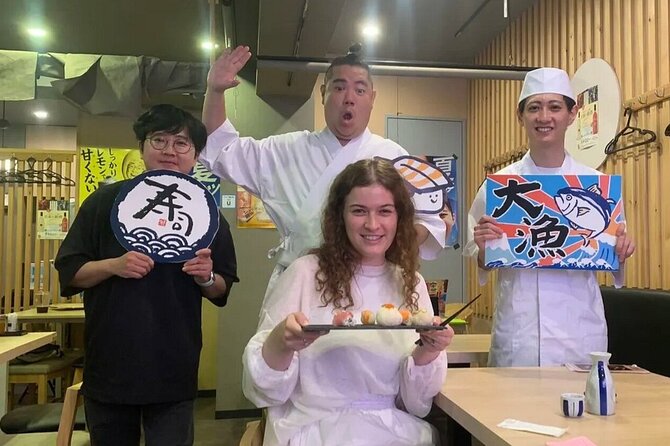
Nigiri sushi pairs a small mound of rice with a topping placed on top. If your session includes nigiri rather than temari, the lesson will focus more on shaping rice and placing the fish cleanly.
Nigiri looks simple, but the small size leaves little room to hide mistakes. The rice needs to hold together without becoming dense, and the topping needs to sit neatly. That makes instructor guidance particularly useful.
The class uses fresh seafood ingredients including tuna and salmon, along with other items such as squid and flying fish roe. The ingredient list gives you a taste of different textures and colors, though it does not specify a fixed menu for every booking.
You should approach the class as a basic skills session. It will not turn you into a sushi chef in 90 minutes, and it does not claim to do so. What it can do is show you the building blocks: rice handling, rolling, shaping, topping, and serving.
Eating what you prepare, with optional sake or shochu
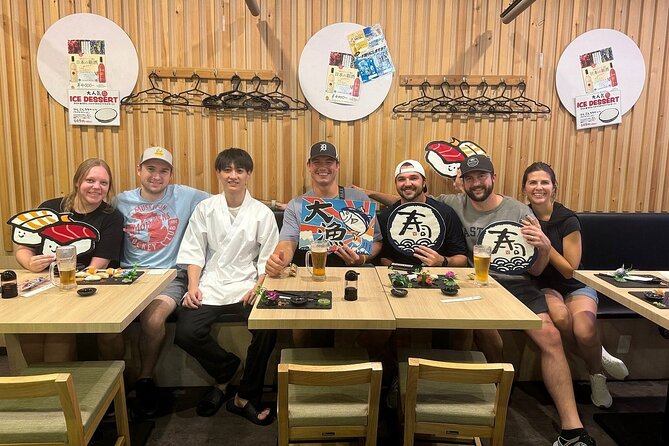
After the making comes the best part: you eat your sushi. Snacks include the sushi you prepare, with examples such as maki and temari made with tuna, salmon, squid, and other ingredients.
This changes the feel of the class. You are not rushing away after a demonstration. You get to see how your work tastes and compare the different forms. It also gives families and couples a natural way to share the experience instead of treating it like a technical lesson.
Sake, shochu, juice, and other drinks can be ordered separately. They are not included in the base price, and bottled water is not provided. I would budget for a separate drink if you want the meal to feel more complete.
The legal drinking age in Japan is 20. If you order alcohol, bring valid identification that proves your age. This applies even if you look older, so do not leave your passport or another accepted form of identification behind if you plan to add sake or shochu.
The drink option is a nice extra, but it is not essential. The central value of the experience is the instruction and the food-making. If you are watching your budget, skip the alcohol and you will still receive the main activity.
Friendly help, photos, and a family-friendly pace
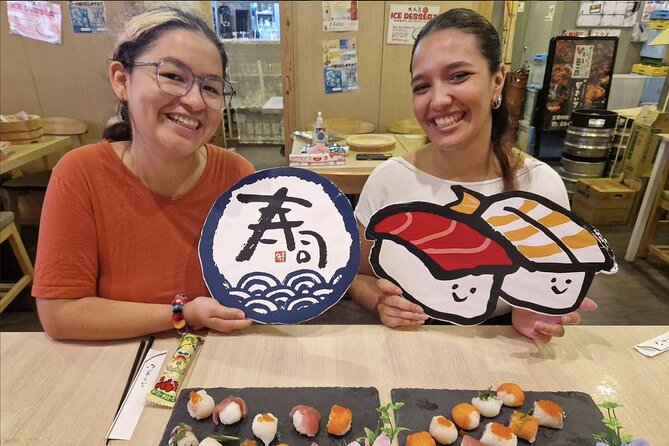
The staff assist with sushi preparation and commemorative photographs. That is a small but worthwhile feature, especially if you are the person who usually takes every picture and ends up missing from your own holiday record.
The available information does not name individual instructors, but it does specify English, Traditional Chinese, and Simplified Chinese support. The language options make this class easier to follow than a standard cooking lesson conducted only in Japanese.
The positive family feedback is worth noting. A family with two children found the hosts friendly and patient, and enjoyed eating with the other people in the class. That suggests the mood is social rather than formal, though you should still expect to share a work area and follow the instructor’s pace.
The age minimum is four. Younger children may enjoy the shaping and decorating, while older children and adults may take more from the explanations of sushi culture and etiquette. Since the class is short, it should not demand the stamina of a longer cooking workshop.
Is $59.46 a good price in Tokyo?
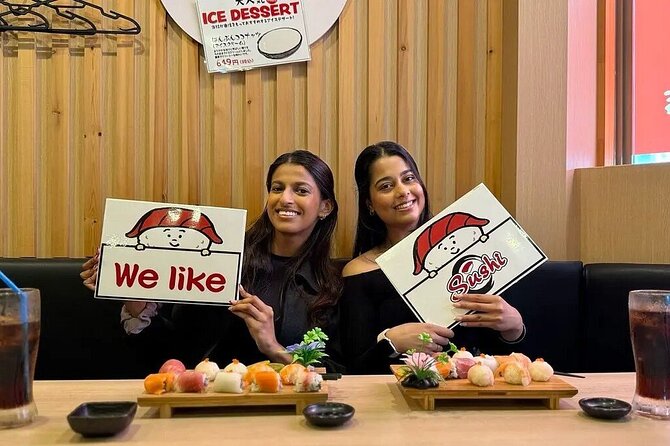
At $59.46 per person, this class offers reasonable value if you want an activity rather than only a restaurant meal. You receive instruction, ingredients, a meal based on your own work, language support, and help with photos.
The price is less attractive if you are looking only for the cheapest sushi in Tokyo. You could spend far less on a simple meal. The difference is that here you are paying for access to a teacher, a prepared workspace, fresh ingredients, and the chance to repeat the techniques at home.
The 90-minute duration keeps the cost from becoming a major time commitment. I would choose this class when you want a break from temples, department stores, and train stations, and when you prefer an activity that produces something you can eat.
The class is commonly reserved about 54 days ahead. That suggests you should not leave it until the final days of a popular Tokyo trip, particularly if you need a specific date or time. Confirmation is normally received at booking, but reservations made within two days of the activity may take up to 48 hours to confirm and remain subject to availability.
The main drawbacks to consider before booking
The first limitation is the short schedule. You will get an introduction, not a detailed course covering every sushi style or advanced knife technique. If you already make sushi at home, you may find the lesson basic.
The second is menu uncertainty. The class may teach maki and temari, or maki and nigiri. If you have your heart set on one particular combination, confirm the session details before paying.
The third is the extra cost of drinks. Sake and shochu fit the theme, but they are optional purchases. Juice and other drinks also cost extra, and bottled water is not included.
Finally, the activity requires a minimum number of participants and can be canceled because of poor weather. If that happens, you are offered another date or experience, or a full refund. The weather condition may seem unusual for a cooking class, but it is part of the stated policy, so keep your schedule flexible.
Cancellation is free up to 24 hours before the start time. Inside that window, the payment is not refunded and changes are not accepted. The cut-off uses Tokyo local time.
Who should book this sushi lesson?
I would recommend it to first-time sushi makers, families with children aged four and above, couples, and anyone who wants a short cultural activity with food at its center. It is also a good choice if you value instruction in English or Chinese and want a group small enough for personal help.
You should book it if you like learning by doing. The class gives you a skill to take home, even if your homemade rolls later come out uneven. It also suits a Tokyo itinerary that needs a practical indoor activity lasting less than two hours.
I would look elsewhere if you want a full-day cooking course, a private chef, a guaranteed lesson covering all three sushi styles, or drinks included in the price. This is a friendly introduction, not a specialist training session.
Should you book the Tokyo sushi class?
Yes, if you want an affordable, hands-on introduction to sushi culture in central Tokyo. The strongest reasons are the English-speaking instruction, fresh ingredients, small maximum group size, and the chance to eat what you make. The family-friendly hosts and patient teaching also make it a sensible pick for a mixed-age group.
Book ahead, leave time to find the Shinbashi meeting point, and check whether your session includes temari or nigiri. With those details in mind, the $59.46 fee buys more than lunch. It buys a useful Tokyo memory, a few practical sushi skills, and photographic proof that your first roll did, in fact, stay together.
FAQ
How long does the sushi-making experience last?
The class lasts approximately 1 hour and 30 minutes.
Where does the class meet?
It starts and ends at S-PLAZA Yayoi II, 2-15-10 Shinbashi, Minato City, Tokyo 105-0004, Japan.
Is the meeting point near public transportation?
Yes. The meeting point is near public transportation.
What types of sushi can I learn to make?
You can learn to make maki sushi and either temari sushi or nigiri sushi, depending on the class format.
What ingredients are used?
Ingredients may include tuna, salmon, squid, and flying fish roe.
Is the class taught in English?
Yes. Guide support is available in English, Traditional Chinese, and Simplified Chinese.
Are drinks included in the price?
No. Bottled water is not included, and juice, sake, shochu, and other drinks must be ordered separately.
What is the minimum age for participants?
The minimum age is four years old.
Can I cancel for a full refund?
Yes. You can cancel at least 24 hours before the experience start time for a full refund. Cancellations made less than 24 hours before the start time are not refunded.
Just added around Tokyo
- Tokyo 6hr Instagram Highlights Private Tour with Licensed Guide★ 5.0 · 38 reviews
- Tokyo Small Group Tour with Guide★ 4.5 · 38 reviews
- Tokyo Sumo Experience with Live Show & Audience Challenge★ 5.0 · 38 reviews
- Japanese Food Cooking Class in Asakusa, Tokyo★ 5.0 · 39 reviews
- Very popular in Harajuku♡Animal petting zoo★ 4.6 · 39 reviews
- Ramen Making from Scratch with Tokyo Mom(Vegan Option Available)★ 5.0 · 39 reviews
- Tokyo JDM Night: 600hp C63s AMG Edition 1 (Private)★ 4.9 · 39 reviews
- Tokyo: Kimono Rental inside Shinjuku Gyoen National Garden★ 4.9 · 39 reviews
Sushi-Making Classes, compared.
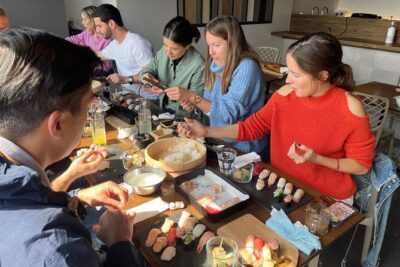
Sushi Making Tokyo Roll and Authentic Japanese Sushi Class
Read our review →
Roll and Authentic Sushi Making Class in Asakusa
Read our review →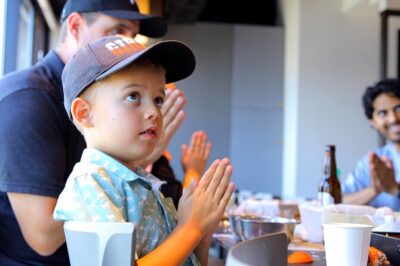
Make Sushi and Create Unforgettable Memories in Tokyo
Read our review →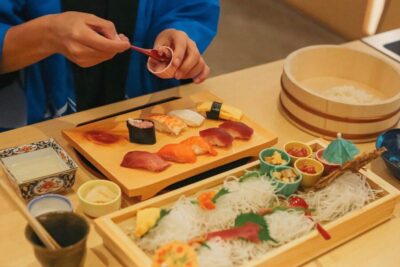
Sushi Making Class in a Happi Coat near a Famous Spot
Read our review →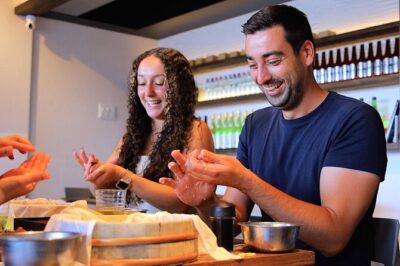
Sushi Making Osaka Roll and Authentic Japanese Sushi Class
Read our review →
Tokyo Sushi Making Class in Tsukiji with Professional Chef
Read our review →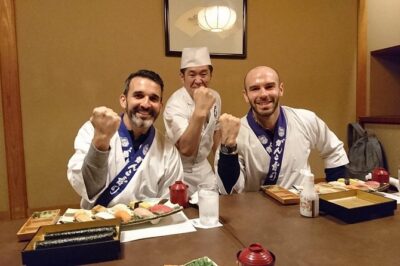
Tsukiji Fish Market Guided Tour and Sushi Making with Pro Chef
Read our review →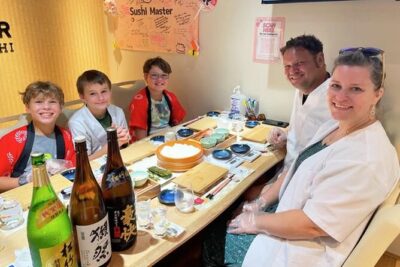
Sushi Making in Kyoto! Same-day bookings welcome!
Read our review →Browse the lists this tour appears in