
Reviewed · SAMURAI & NINJA EXPERIENCES
Tokyo Sword Experience – includes Museum Ticket/Ninja Experience
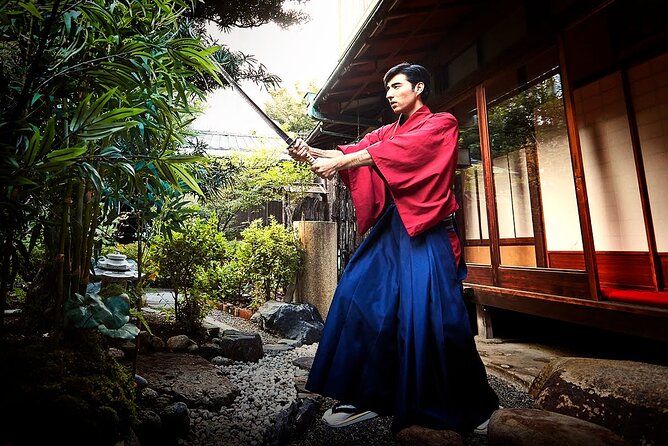
Samurai dreams get a safe, practical workout here. This Asakusa experience combines hands-on iaido practice with hakama dressing, sword poses, a samurai and ninja museum visit, and a playful ninja-star session. I like the clear step-by-step instruction and the way the activity gives you more than a costume photo. I also like the helpful staff, including instructors such as Ryo, Akira, Hector, Ren, Leon, Koki, and Santo, who have been praised for making the session both funny and informative.
The main caution is important: you do not use a real sword or sharp blade under the current description. Some older accounts describe cutting tatami mats with an authentic katana, but the current experience specifically says it uses replica swords because of Japanese law. Group size can also change the feel, since busy sessions may include more people than expected.
In This Review
- Key points before you book
- Arriving at the Asakusa samurai venue
- Putting on hakama and posing like a samurai
- Learning basic iaido with a replica sword
- A necessary note about real swords and tatami cutting
- Touring the small samurai and ninja museum
- Throwing ninja stars and changing the mood
- How group size changes the experience
- Is $84.23 a fair price?
- Who will enjoy this experience most?
- Booking, cancellation, and practical advice
- FAQ
- How long does the Tokyo Sword Experience last?
- Where does the experience begin and end?
- Do I use a real samurai sword?
- Can children take part?
- What is included in the price?
- Can I cancel for a full refund?
- Should you book the Tokyo Sword Experience?
Key points before you book
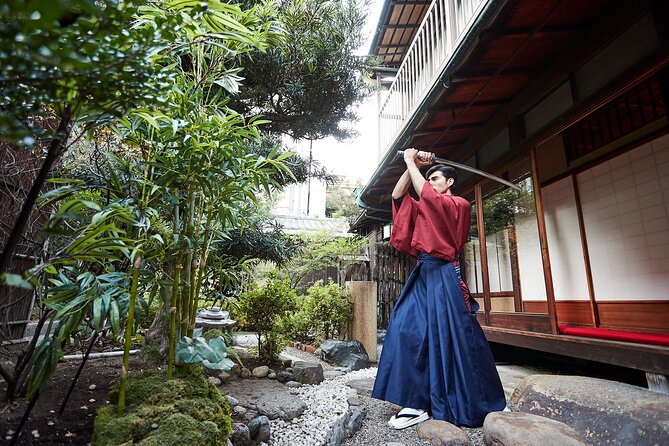
- Hakama dressing comes first: You put on traditional-style clothing and pose with swords against samurai-themed backgrounds.
- The sword lesson is the main event: You learn basic iaido movements with a safe replica sword, then try a controlled practice fight.
- The museum is small but useful: A guide explains samurai and ninja history, though the amount of detail can depend on the pace and group size.
- The ninja portion adds family fun: Plastic ninja stars and simple activities lighten the more serious sword instruction.
- Plan extra time if you do everything: The advertised sword session lasts about 1 hour 15 minutes, but complimentary activities can extend the visit considerably.
- Age rules matter: Children under 6 cannot enter the samurai venue, and the current information does not promise real-sword cutting for younger visitors or teenagers.
Arriving at the Asakusa samurai venue
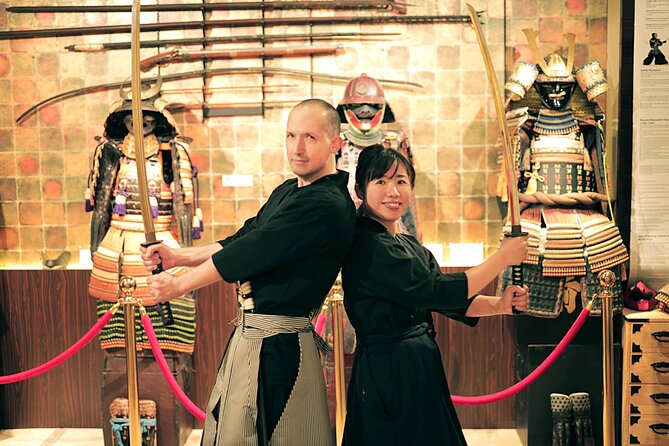
The meeting point is the Samurai Ninja Museum Asakusa Tokyo at 1-chōme-8-13 Nishiasakusa, in Taito City. You finish at the same place, so you do not need to arrange transport between activities.
The location works well with a day in Asakusa. The venue is near public transportation, and you can pair the activity with the area’s major temple district. One useful scheduling tip is to leave breathing room after the session. The basic activity is listed at roughly 75 minutes, but several parts may run longer when the museum tour, dressing, photographs, and ninja activities are included.
I would not book a restaurant immediately after the stated end time. Some sessions have stretched to two hours, and a few have taken much longer when several complimentary activities were included or when the group was large. If you have a fixed reservation, tell the staff early that you need to leave at a particular time.
The experience is offered with a mobile ticket, and confirmation is provided at booking. You should arrive at the exact address rather than relying only on a general map pin, since a little location confusion has been reported.
More Museum Visits in Tokyo
- Tokyo: teamLab Planets TOKYO Digital Art Museum Entry Ticket
★ 4.6 · 9,779 reviews - Tokyo: Samurai Ninja Museum Guided tour and Experience
★ 4.6 · 1,010 reviews - Ninja Experience (Family Friendly) at Samurai Ninja Museum TOKYO
★ 5.0 · 441 reviews
Putting on hakama and posing like a samurai
The opening activity is theatrical, but it has a useful purpose. Once you put on the hakama, the clothing changes your posture and helps you understand why samurai training placed so much emphasis on controlled movement.
You can pose with swords in front of studio backdrops or samurai-themed backgrounds. Staff help with the clothing and take photographs, and Leon has been praised for assisting with dressing and pictures. The costumes are designed for the activity rather than museum-grade historical display, so you should expect modern fittings and practical clips instead of perfectly authentic armor.
That distinction matters. If you want polished professional portraits or historically exact armor, this may feel basic. If you want a few memorable photographs and a chance to look the part, it works well.
The dressing area can feel crowded during busy periods. Taking photographs becomes harder when several groups are changing and posing at once. Families and couples should decide in advance who wants pictures, since the photo portion can take time when everyone wants a turn.
Learning basic iaido with a replica sword
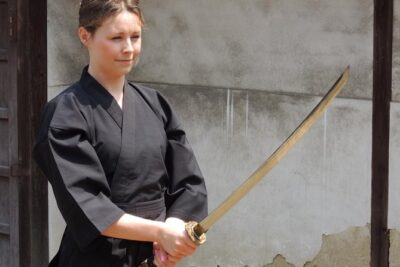
The sword lesson gives the experience its focus. An instructor demonstrates how to hold the replica sword, how to position your feet, and how to perform simple movements. You then repeat the sequence under direction.
This is not a full martial-arts course. In roughly 30 minutes of instruction, according to the provider’s explanation, you get an introduction to posture, attack movements, and safety rather than a deep study of swordsmanship. That is enough to make the activity feel active instead of passive, especially if you follow directions carefully.
I like the serious tone of the lesson. The instructor may correct your grip or stance directly, which is useful here. The experience works best when you accept that correction as part of the fun rather than treating the sword as a toy.
The controlled practice fight adds energy. You use safe replica or foam swords, learn a simple sequence, and face a partner under supervision. Ryo-sensei, in particular, has been praised for teaching a kata and leading a friendly sword duel. This is a choreographed activity, not free sparring, so you should expect rules and repeated movements rather than a wild fight.
You need moderate physical fitness, but the activity is not described as demanding. Standing, holding the sword, moving through basic patterns, and following instructions are the main physical requirements. Wear clothing that allows comfortable movement underneath the hakama.
A necessary note about real swords and tatami cutting
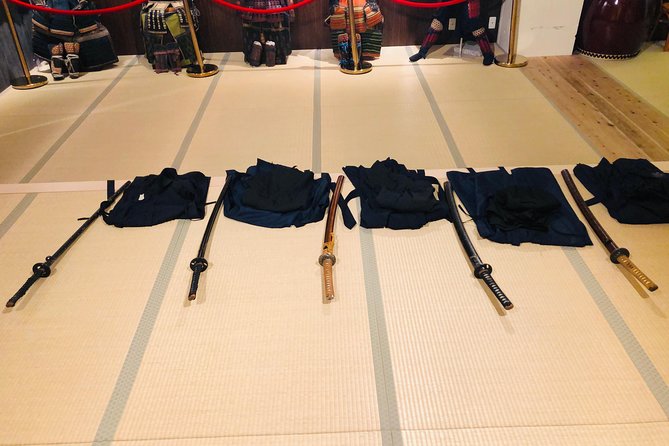
This is the most important point in the entire review. The current description says that the activity does not use a real sword or sharp blade. It also explains that Japanese law now bans facilitating or selling activities involving a real sword.
Some earlier descriptions of this experience refer to using an old katana and cutting a tatami target. Those accounts also describe two attempts at cutting and, in some cases, bamboo cutting. Because the current terms specifically rule out real swords and sharp blades, you should not book this activity expecting tatami cutting.
If real-sword cutting is your main reason for booking, contact the provider before paying and ask exactly what will be available on your date. The advertised experience now centers on replica-sword technique and controlled practice. That may disappoint anyone expecting a live-blade demonstration, but it makes the activity safer and more suitable for a wider range of adults.
The mismatch between older descriptions and the current safety notice is not a minor detail. It changes the value calculation. At $84.23 per person, the experience should be judged as a combined cultural activity, costume session, museum visit, and replica-sword class, not as a real-katana cutting lesson.
More Samurai & Ninja Experiences in Tokyo
- Tokyo: Samurai Restaurant Show Ticket with 2 Drinks
★ 4.5 · 1,307 reviews - Tokyo: Samurai Sword & Archery Class from Samurai Descendant
★ 5.0 · 603 reviews - Best Samurai Experience in Tokyo
★ 5.0 · 458 reviews - Tokyo: Samurai Entertainment Night Show in Kanda Shrine
★ 4.6 · 417 reviews
Touring the small samurai and ninja museum
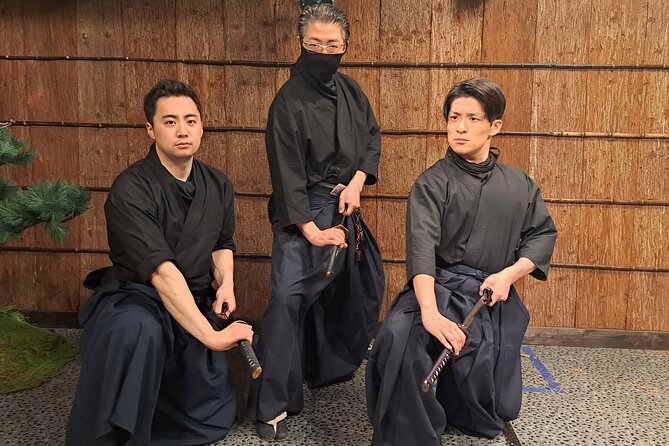
The museum visit is complimentary and guided. You learn about samurai and ninja traditions while seeing artifacts in a compact setting. Guides have been praised for adding humor and facts that many first-time visitors do not know.
The museum is not a large institution with hours of displays. One description characterizes it as a small, four-room space. That makes the visit easy to fit into an Asakusa day, but it also means the tour depends heavily on the guide.
English ability can vary by staff member. Several guides are described as fluent or easy to understand, while one museum guide was harder for a visitor to follow. I would treat the museum as a short introduction rather than a substitute for a major Japanese history museum.
Children may enjoy the costumes and ninja activity more than the talking portion. The museum has limited interactive material, so younger children could lose interest during the historical explanation. Adults and older children who enjoy context will get more from this part.
The best version of the visit links the museum talk to the lesson. Once you hear about samurai discipline and then practice a formal movement, the activity has more meaning than a simple dress-up photo.
Throwing ninja stars and changing the mood
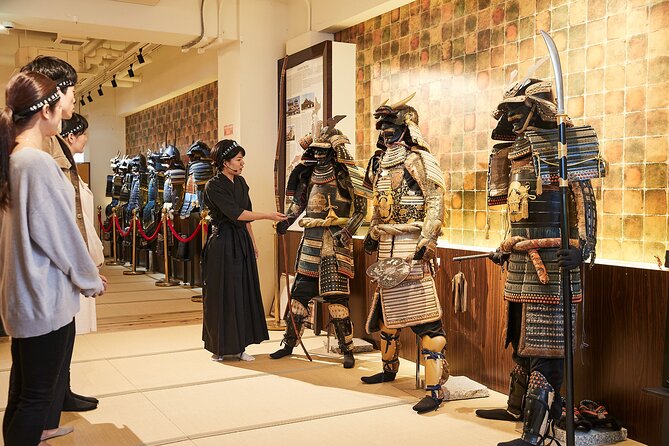
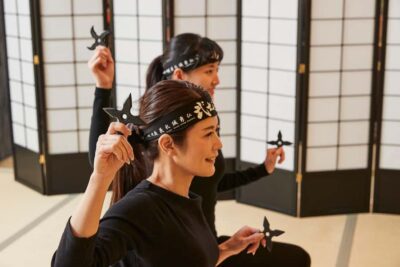
The ninja segment is lighter and less serious. You throw plastic ninja stars at polystyrene targets, following staff instructions. It is not a test of historical ninja skill, but it gives the visit a welcome change of pace.
Koki has been praised for teaching samurai movements and leading the ninja-star activity. The plastic equipment keeps the activity controlled, though you still need to follow directions and wait your turn.
This is especially useful for families or mixed-age groups. Someone who is less interested in sword forms can still enjoy the ninja portion. It also gives you another photo opportunity and prevents the experience from feeling like one long lecture.
You can likely skip some complimentary portions if you are pressed for time, but confirm this with the staff when you arrive. The provider has explained that the free museum, armor, and ninja activities may be optional. Clear communication at the start is the best way to avoid missing a train, meal, or reservation.
How group size changes the experience
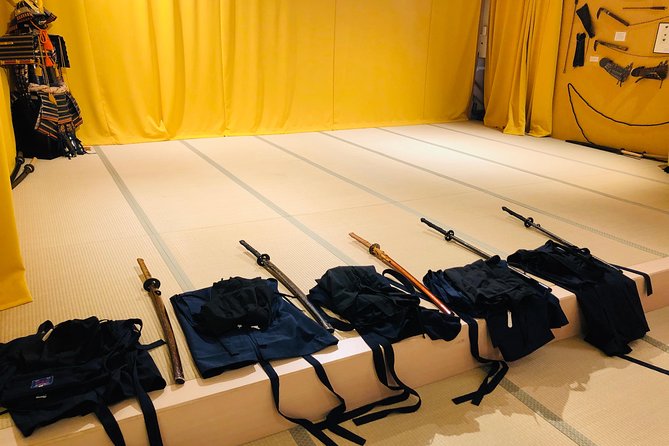
The advertised capacity is inconsistent in the supplied details. One section says the activity has a maximum of four people, while another says bookings through the platform can be made for up to five. The provider also says that other booking channels are accepted and that additional participants may join.
In practice, group size appears to vary. Some sessions have averaged around eight people, while busy periods have reportedly grown much larger. A crowded room affects the experience in three ways: you wait longer for photographs, you watch more people take their turns, and the instructor has less time to focus on each person.
The sword class itself is more enjoyable with a small group. You get more space, clearer demonstrations, and less standing around. If you have flexibility, book a less popular time and avoid rainy-day peaks, when indoor activities can draw larger numbers.
A larger group is not automatically a failure. The instructors can still keep the activity moving, and a lively room may suit families and social groups. But anyone seeking a quiet, personal lesson should ask about expected attendance before booking.
Is $84.23 a fair price?
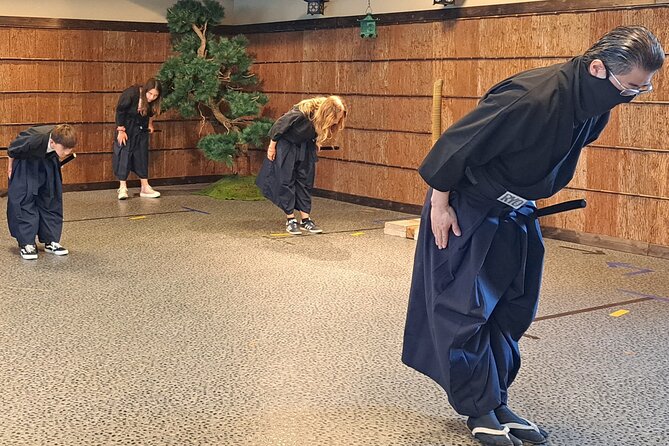
At $84.23 per person, this is not a cheap photo stop. The value depends on how much of the program you use.
You are paying for several linked activities:
- Hakama dressing and sword poses
- Basic iaido instruction with a replica sword
- A controlled sword-fight exercise
- A guided samurai and ninja museum visit
- Ninja-star throwing
- Staff assistance and photographs
If you complete the full program, the price compares more favorably with a simple costume session. You receive a cultural explanation, physical instruction, and several activities in one stop. The convenient Asakusa location also helps if you are already visiting the temple area.
The value drops if your session is crowded or rushed. Waiting for other people to take turns can make the activity feel expensive, particularly if you expected a private or small-group lesson. The value also drops sharply if your main goal is cutting tatami with a real blade, since that is not part of the current description.
I would call the price reasonable for visitors who want a packaged samurai-and-ninja activity, but not a bargain for a serious martial-arts student. The advertised average booking time of 31 days suggests that popular dates can fill early, so you should reserve ahead if your Tokyo schedule is tight.
Who will enjoy this experience most?
I would recommend it most strongly to first-time visitors interested in samurai culture but looking for something more active than a museum. Couples, families with older children, and groups of friends can all find something to enjoy.
It is also a good choice if you want photographs without booking a separate studio session. The hakama and samurai backgrounds create a clear souvenir of your Tokyo visit, even though the costumes are modern and theatrical rather than historically exact.
Older children and teenagers may enjoy the ninja stars and replica-sword work. However, you must check the age rules carefully. Children under 6 cannot enter the samurai venue, and one important complaint involved teenagers being unable to take part in a cutting activity. Since the current description does not advertise real-sword cutting, confirm exactly what participants under 18 can do.
I would be more cautious about recommending it to someone seeking private instruction, serious historical detail, or a genuine blade experience. You may find the museum too small, the costumes too playful, or the group too large.
Booking, cancellation, and practical advice
The experience offers free cancellation when you cancel at least 24 hours before the local start time. Cancellations or changes inside that window are not refunded or accepted.
Service animals are allowed, and the venue is near public transportation. Children under 6 cannot enter. The activity calls for moderate physical fitness, mainly because you will stand, dress in layered clothing, and practice controlled movements.
Before booking, I would ask three direct questions:
- How many people are expected in my session?
- Which activities are included on my date?
- Will the sword work use only replicas, with no tatami or bamboo cutting?
That last question protects you from the biggest possible misunderstanding.
FAQ
How long does the Tokyo Sword Experience last?
The listed duration is approximately 1 hour and 15 minutes. The full visit can take longer if you participate in the museum tour, dressing, photographs, ninja activities, or other complimentary portions.
Where does the experience begin and end?
It begins at the Samurai Ninja Museum Asakusa Tokyo, located at 1-chōme-8-13 Nishiasakusa, Taito City, Tokyo 111-0035. The activity ends back at the same meeting point.
Do I use a real samurai sword?
The current description states that the activity does not use a real sword or sharp blade. It uses safe replica equipment. Ask the provider before booking if you need precise details about the equipment offered on your date.
Can children take part?
Children under 6 cannot enter the samurai venue. Age restrictions may also affect specific sword activities, so confirm the rules for every participant under 18 before booking.
What is included in the price?
The experience includes hakama clothing, sword poses, basic replica-sword instruction, a controlled sword-fight activity, a guided samurai and ninja museum visit, and ninja-star throwing. Transportation is not included.
Can I cancel for a full refund?
Yes. You can receive a full refund if you cancel at least 24 hours before the experience start time. Cancellations or changes made less than 24 hours before the start are not accepted for a refund.
Should you book the Tokyo Sword Experience?
Book it if you want an entertaining introduction to samurai culture with costumes, instruction, photographs, museum context, and a bit of ninja play. The strongest part is the supervised replica-sword lesson, especially when the instructor takes time to correct your movements and explain what you are doing.
Skip it if you are paying mainly for real-katana cutting, a private lesson, or a large museum. Also think twice if your schedule cannot absorb delays caused by extra activities or a crowded session.
For the best value, reserve early, allow at least two hours despite the shorter advertised duration, and confirm the current sword policy and expected group size. With those expectations in place, this is a lively Asakusa add-on that lets you do more than look at samurai artifacts. You get to put on the clothing, learn the basic motions, and take home a few very good Tokyo memories.
Just added around Tokyo
- Tokyo 6hr Instagram Highlights Private Tour with Licensed Guide★ 5.0 · 38 reviews
- Tokyo Small Group Tour with Guide★ 4.5 · 38 reviews
- Tokyo Sumo Experience with Live Show & Audience Challenge★ 5.0 · 38 reviews
- Japanese Food Cooking Class in Asakusa, Tokyo★ 5.0 · 39 reviews
- Very popular in Harajuku♡Animal petting zoo★ 4.6 · 39 reviews
- Ramen Making from Scratch with Tokyo Mom(Vegan Option Available)★ 5.0 · 39 reviews
- Tokyo: Kimono Rental inside Shinjuku Gyoen National Garden★ 4.9 · 39 reviews
- Tokyo JDM Night: 600hp C63s AMG Edition 1 (Private)★ 4.9 · 39 reviews
Samurai & Ninja Experiences, compared.
Samurai Ninja Museum Guided tour and Experience
Read our review →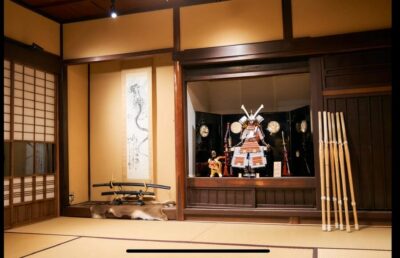
Kendo and Samurai Experience with Uniform and Gear
Read our review →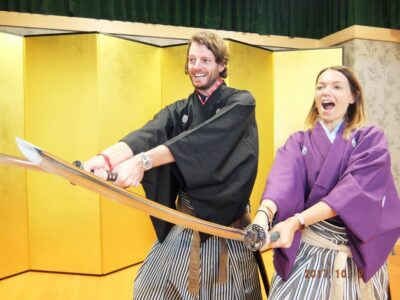
Samurai Sword Class by Experts in Traditional Arts
Read our review →
Skip the lines Basic Ticket at SAMURAI NINJA MUSEUM KYOTO
Read our review →
Samurai Sword & Archery Class from Samurai Descendant
Read our review →
Browse the lists this tour appears in